Tag: Sony Pictures

  • Sony Pictures Animation hires DreamWorks’ Kristine Belson as prez

    Sony Pictures Animation hires DreamWorks’ Kristine Belson as prez

    MUMBAI: Sony Pictures Entertainment has appointed Oscar nominee Kristine Belson as president of Sony Pictures Animation (SPA).


    In her new role, Belson will lead the development and production of original material as well as current and future franchises, focusing on creating an environment that nurtures animators and artists. She will report to Sony Pictures Entertainment co-chairman and Sony Pictures Entertainment Motion Picture Group chairman Amy Pascal.


    Belson joins Sony Pictures Animation after spending nearly a decade at DreamWorks Animation, where, most recently, she executive produced How to Train Your Dragon and produced The Croods, for which she was nominated for an Academy Award for Best Animated Feature. She joined DreamWorks Animation in 2005 as head of development, where she oversaw the development and acquisition of all feature film projects for the company.


    “I’m thrilled to have Kristine join the studio – I know she has a first-rate sense of story and a great eye for material. But she’s more than that: Kristine is a visionary who will make our animation studio a home where the animation industry’s best talent can come and make the films they want to make. I am confident Kristine will help SPA become an even more vital component of the way we construct our overall slate,” said Pascal.


    Belson added, “Ten years ago I was lucky enough to join DreamWorks Animation, where I developed a deep understanding and love of the artistry of animation. I am now so charged up to be able to bring my experience and perspective to Sony Pictures Animation, to build on what they’ve begun and to reach new heights. I am deeply grateful to Amy, my first mentor, for giving me this incredible opportunity.”

  • Sony admits it is investigating its India operations

    Sony admits it is investigating its India operations

    MUMBAI: Sony Corp has admitted that investigations are on at its India unit – Multi Screen Media (MSM) – for alleged corruption in business practices.


    In an email sent out to media, Sony Corp today stated that “this investigation is ongoing… Sony Pictures is strongly committed to business ethics and the investigation of allegations of wrongdoing that might arise anywhere in the world. If wrongdoing is identified, we take appropriate action.”


    The Sony Pictures Entertainment email was sent out in response to a Bloomberg report on alleged business malpractices at MSM based on emails leaked following the hack on the electronics and entertainment giant’s IT infrastructure late last year.


    The Bloomberg report stated that the leaked emails revealed that Sony ordered an investigation, led by Ernst & Young, to look into its India business practices, which in turn revealed evidence of wrongdoing. And the hacked emails revealed that E&Y had allegedly uncovered fraudulent business practices in the case of the Sony and Discovery Communications joint venture (TheOneAlliance). Cases of fraudulent bids, kickback and excessive handouts to government officials came to light in the investigation by E&Y, said the Bloomberg report.


    It may be recalled that the Sony-Discovery JV company – TheOneAlliance – was allegedly dissolved on 1 January, 2015 due to the new regulations by the Telecom Regulatory Authority of India (TRAI), which stated that distributors could no longer bundle channels from different broadcasters while selling content to various platforms such as cable operators and direct-to-home (DTH) companies.


    Additionally, as per the Bloomberg report, an email from Sony Pictures Entertainment senior vice-president and compliance counsel Cindy Salmen  in early October stated that “further investigations be conducted, employees be re-trained and that some workers face disciplinary actions, including termination.”


    She cited four areas of concern in a memo, the Bloomberg report states. The first related to TheOneAlliance as a distributor of television channels to cable TV or DTH operators. The second to carriage or retransmission fees.  The third was linked to potential gifts and entertainment to government officials.  And finally the fourth referred to customs payments.  All these were investigated by E&Y.


    And on the first area of concern, the probe revealed that the process of appointing vendors for distribution through competitive bids was suspect. In some instances some of those who bid did not exist and those who won had ties to those who lost. Employees were aware of the practice, the Bloomberg report has the memo saying.


    E&Y stated that it received allegations that both MSM and MSM Discovery were receiving kickbacks from cable TV operators and distributors ranging from 10-15 per cent of carriage fees.  This apart, MSM Discovery recruited employees who were fired by other rivals for receiving kickbacks. 


    On the third probe, the memo pointed out that government officials were given expensive IPL tickets and laptop bags, much beyond the MSM Discovery limits.  As far as payments to customs by MSM Discovery’s marketing group were concerned, the memo stated that E&Y found some communication which was questionable.


    Sony Pictures senior vice president for global investigative and forensic services Raymond Smith had called for an investigation with regards to the alleged malpractices and policy violations in September. Emails from him revealed that he was planning to travel to India along with his colleague Mike Ornelas (executive director for global investigative and forensic services) to investigate the matter in October 2014, said the Bloomberg report.


    The report added that the leaked emails disclosed that “alleged” corruption at MSM as well was being investigated. This followed  an anonymous email to Sony Pictures Television worldwide networks president Andy Kaplan and to Sony Pictures Home Entertainment boss Man Jit Singh who headed  the India venture until last year.  The email alleged that MSM India deputy president Sneha Rajani was allegedly routing all movie acquisitions for the channel via an external agent namely Manish Shah of Goldmines Telefilms, which in turn raised the cost of buying by as much as 35 per cent. The email further alleged that Rajani also communicated to movie producers, who wanted to sell satellite rights for their films, to route their proposals through Shah.


    When Indiantelevision.com contacted MSM officials no one was willing to come on record. But a senior manager called the allegations against Rajani as a total fabrication or motivated by a disgruntled fired employee. 


    Goldmines Telefilms owner Shah stated that “it was a bunch of crap. Let the investigations continue. I have been dealing with all the broadcasters not just Sony. So I am not worried. We have been very transparent.”


    No one was available to comment from MSM Discovery at the time of writing the report.


    With heavy charges of malpractice and company policy violations, it remains to be seen what the outcome of the probe throws up and more importantly, what it means for the people, whose names are involved.

  • Sony Pictures’ ‘The Interview’ applauded by International Press Academy

    Sony Pictures’ ‘The Interview’ applauded by International Press Academy

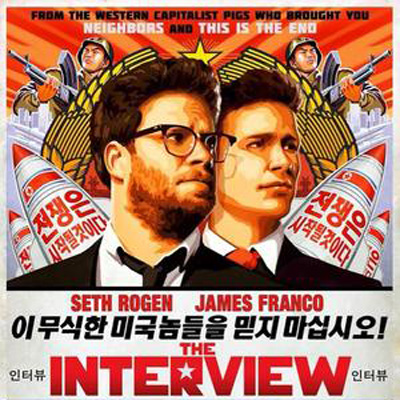
    NEW DELHI: Even as the film has run into controversy in some countries, the Executive Board of the International Press Academy has applauded and commended Sony Pictures for having announced the release of the comedy film The Interview on Christmas Day.


    The Board also acknowledged and thanked actor-writer-director George Clooney for spearheading the fight for Freedom of the Press and Free Speech among the Hollywood community.


    In 2005, the IPA honored Clooney in its first-ever Auteur Award, which recognises individual voices of filmmakers and their personal impact on the industry. Later honorees include Paul Williams, Peter Bogdanovich, Baz Luhrmann, Julian Schnabel, Alex Gibney and Robert Altman. The IPA also gave Clooney a Satellite Award for the Best Original Screenplay Award for Good Night, And Good Luck, which charts the era of McCarthyism through the eyes of TV news great Edward R. Murrow.


    “We think it is wonderful that Sony is brave enough to stand up for Free Speech, and that they are going to let the public see this movie. We are not judging the merits of the movie, but we are congratulating James Franco, Seth Rogen and the filmmakers, as well as Sony Pictures, for standing up for the release of their movie,” said IPA President Mirjana Van Blaricom, who screened the movie recently.


    The International Press Academy is one of the largest coalitions of domestic and international entertainment journalists that gives its Satellite Awards in all categories of entertainment—cinema, television and new media.


    “And, we are always in support of George Clooney, and his continuing support of free expression and innovation in the entertainment industry,” Van Blaricom added.


  • Sony mulls alternate distribution options for ‘The Interview’

    Sony mulls alternate distribution options for ‘The Interview’

    NEW DELHI: Sony Pictures is still considering options for distributing controversial comedy The Interview following the decision to pull its theatrical release in the wake of a rumoured North Korean hacking attack.


    David Boies, speaking on NBC’s Meet the Press, said Sony had “only delayed” any release. “Sony has been fighting to get this picture distributed. It will be distributed,” Boies claimed. “How it’s going to be distributed, I don’t think anybody knows quite yet, but it’s going to be distributed.”


    Midweek, following the theatres owners’ decision not to screen the movie, Sony Pictures said it had “no further release plans for the film,” and company representatives declined to elaborate on Boies’ remarks.


    Nevertheless, Sony did refute a New York Post report that it was seeking to release the film for free via ad-supported online video site Crackle, which it owns. “No decisions have been made. Sony is still exploring options for distribution,” said a spokesman.


    Sony Entertainment CEO Michael Lynton told CNN on Friday 19 December that the studio had not “given in” to pressure from hackers and was still considering ways to distribute the movie.


  • Sony Pictures unveils exciting 2015 line-up

    Sony Pictures unveils exciting 2015 line-up

    MUMBAI: Starting the year with the comedy Sharafat Gaye Tel Lene hitting theatres on 16 January 2014, Sony Pictures has a fantastic lineup of movies that include Hollywood comedy The Wedding Ringer about a best man on hire, starring top comic Kevin Hart, Josh Gad and Kaley Cuoco-Sweeting.


    That is not all! Neill Blomkamp’s Chappie with Sharlto Copley, Dev Patel and Hugh Jackman is next on the list, featuring a story about a robot with the ability to think and feel for himself.

    Summer releases include the successful horror franchise Insidious, which takes the story back to the beginning. This will be followed by Pixels, a unique action comedy about aliens, directed by Chris Columbus and the comedy Grimsby, co-written by Sacha Baron Cohen.


    After which, the film, Ricki and The Flash directed by Jonathan Demme will feature a story about an ageing rocker played by Meryl Streep.

    The last quarter of the year will see Robert Zemeckis’ The Walk starring Joseph Gordon-Levitt and Ben Kingsley, based on the true story of high-wire artist Philippe Petit’s attempt to cross the Twin Towers of    the World Trade Center in 1974.


    The year ends with a bang with the highly anticipated James Bond film, Spectre releasing in early    November, followed by the Genndy Tartakovsky-directed follow-up to the record-smashing Hotel Transylvania.

    Sony Pictures India managing director Kercy Daruwala said, “In 2014 we released the biggest film of the year with The Amazing Spiderman 2 and consolidated our leadership position with five out of the top ten Hollywood films in India of all time. Our 2015 line-up promises an even more exciting year ahead, with the distribution of some local films, the scope of a sure-shot blockbuster like Spectre plus a very rich variety of other promising titles.”

    Sony Pictures India director of marketing Divya Pathak added, “2014 was a very exciting and challenging year for us in which we took movie marketing where it’s never gone before, to all corners of the   country, with franchises like Spider-Man. We are enthusiastic about   our diverse and unique 2015 line-up and look forward to reaching new heights in marketing innovation.”

    Sony Pictures India director of sales Appu said, “Our fantastic slate in 2015 holds equal promise for both audiences and exhibitors. With the Bond film slated for a release in the next diwali season, we intend to literally light up the box office.”

  • Sharafat gayi tel Lene to be released by Sony Pictures

    Sharafat gayi tel Lene to be released by Sony Pictures

    NEW DELHI:  The fun “con-com” film Sharafat Gayi Tel Lene produced by Devinder Jain and Akhilesh Jain and directed by Gurmmeet Singh is to be distributed by Sony Pictures India.


    The film starring Zayed Khan, Rannvijay Singh, Tina Desai and Anupam Kher with music by Meet Bros Anjjan and Dhruv Dhalla, will release pan India on 16 January 2015.

    The film is about Prithvi Khuranna (Zayed Khan), a middle class working professional who walks into an ATM booth and discovers that his bank balance has jumped from less than Rs. 5000 to over Rs. 100 crores. Obviously this windfall comes at a huge price. He receives a call from underworld’s most notorious don, ‘Dawood’.


    Sharafat Gayi Tel Lene is a comic caper set in the nation’s capital as the lives of three youngsters go topsy-turvy when they try and track down the origin of this mysterious money. The catchy first song “Selfiyaan” is already out online and is a tongue-and-cheek commentary on the ubiquitous social phenomenon of selfies.

    Trinity Group was established in 1979 and has a diverse businesses portfolio of Insurance, Re-insurance, infrastructure, retail and have now ventured into the entertainment industry. Sharafat Gayi Tel Lene is their maiden venture. The producers are excited about this film and assure total entertainment for the masses worldwide.

  • Sony Pictures acquisition Red Army to be screened at Mumbai Film Festival

    Sony Pictures acquisition Red Army to be screened at Mumbai Film Festival

    New Delhi, 13 Oct:

    The film ‘Red Army’, based on hockey, is being screened at the Mumbai Film Festival commencing tomorrow.
     
    The Festival, which continues till 21 October, is divided into nine sections: International Competition for the First Feature Films of Directors, World Cinema, Indian Frame, Dimensions Mumbai, Retrospectives, Above the Cut, New Faces in Indian Cinema and The Real Reel.
     
    Red Army is a feature documentary about the Soviet Union and the most successful dynasty in sports history, the Red Army hockey team. Told from the perspective of its captain, Slava Fetisov, the story portrays his transformation from national hero to political enemy.
     
    From the USSR to Russia, the film examines how sport mirrors social and cultural movements. It parallels the rise and fall of the Red Army team with the Soviet Union.
     
    Whether he was pitted against enemies in the political arena or on the ice, Fetisov’s story provides a rare glimpse behind the Iron Curtain of the 1970s and ’80s by mirroring the social and political forces at work in the world around him.
     
    While helping pave the way for his nation to cross over into the next century, this one man demonstrated how sports could not only be an avenue for creative expression in a world determined to suppress it, but also be something so inextricably intertwined with a nation’s cultural and political identity.
     
    The film, which has been acquired by Sony Pictures Classics, features Mark Deakins and Vyacheslav Fetisov who are among the erstwhile’s most-decorated athletes.

  • Iconic video game comes together as classic characters in ‘Pixels’

    Iconic video game comes together as classic characters in ‘Pixels’

    NEW DELHI: An extraordinary number of iconic video game companies, whose classic characters – including PAC-MAN, Donkey Kong, Centipede, Galaga, Frogger, Q*bert, and Space Invaders – will be featured in the highly-anticipated action comedy Pixels by Sony Pictures Entertainment.


    Pixels stars Adam Sandler, Kevin James, Michelle Monaghan, Peter Dinklage, Josh Gad, and Brian Cox, and directed by Chris Columbus. The film will be released in the United States on 15 May next year.


    In Pixels, when intergalactic aliens misinterpret video-feeds of classic arcade games as a declaration of war against them, they attack the Earth, using the games as models for their various assaults. 


    President Will Cooper (James) has to call on his childhood best friend, 1980s video game champion Sam Brenner (Sandler), now a home theatre installer, to lead a team of old-school arcaders (Dinklage and Gad) to defeat the aliens and save the planet. Monaghan plays the team’s unique weapons specialist. 


    The action-comedy is directed by Chris Columbus from a story by Tim Herlihy and a screenplay by Tim and Timothy Dowling, based on the original short film of the same name by Patrick Jean. The film is produced by Adam Sandler, Chris Columbus, Mark Radcliffe, and Allen Covert.  Executive producers are Barry Bernardi, Michael Barnathan, Jack Giarraputo, Heather Parry, Tim Herlihy, Steve Koren, Patrick Jean, Benjamin Darras, Johnny Alves, Matias Boucard, Seth Gordon, and Ben Waisbren. The film, a Columbia Pictures presentation in association with LStar Capital, is a Happy Madison / 1492 Films production in association with One More Production. 


    Companies with classic arcade games that are teaming with Sony Pictures on the film include Atari Interactive: (Asteroids, Breakout, Centipede and Missile Command); Konami Digital Entertainment Co., Ltd. (Frogger); BANDAI NAMCO Games Inc. (PAC-MAN, Galaga, and Dig Dug); Nintendo (Donkey Kong)’ Columbia Pictures Industries, Inc. (Q*bert); Taito Corporation (Space Invaders); and Warner Bros. Interactive Entertainment (Joust, Defender, Robotron and Wizard of Wor).


    Commenting on the announcement, the film’s director Chris Columbus said, “There would be no way to make the movie without these legendary characters – they are as important to the film as the roles that Adam, Kevin, Michelle, Peter, Josh, and Brian are playing.  It was a real thrill to see everything come together exactly as we envisioned it, and we’re grateful to have all of these fantastic companies on board.”


    Producer Allen Covert added, “These classic characters are part of the DNA of the project, so it was critical that we work together to bring them on board.  Fortunately, they were all extremely receptive.  We approached them with a deep love for their characters and a respect for the elements that make them unique and iconic, and we’ve worked with the companies to incorporate those elements into the film.” 


     “There’s no better way for the core Comic-Con audience to interact with the movie than to get a hands-on refresher on the games that will be a part of it,” concluded Sony Pictures president, theatrical marketing Dwight Caines. 

  • Reliance MediaWorks bags ‘Best Laboratory of the Year’ Award for ‘Mandrake Mandrake’

    Reliance MediaWorks bags ‘Best Laboratory of the Year’ Award for ‘Mandrake Mandrake’

    MUMBAI: The field of technology for visual enhancement of filmed content is rapidly evolving in India. A company that is constantly innovating itself and working towards an enhanced cinema viewing experience is Reliance MediaWorks – the media and techno-creative solutions provider and a part of the Reliance Group.


    Adding to its kitty of numerous awards and accolades is the recently achieved ‘Best Laboratory Award’ in the cinematography category for the film Mandrake! Mandrake!


    Produced by the National Film and TV Institute of India, the diploma film is the story of a young man, who transforms a rundown warehouse into an Aladdin’s cave through the fun and frolic of the moving image, where magic, mystery and adventure become possible. Reliance MediaWorks is solely responsible for the processing of this film.


    Reliance MediaWorks handled the colour correction, processing and printing of the entire film. Reliance MediaWorks CEO Venkatesh Roddam said, “Awards and recognition always feel good, because it is a validation of the commitment to the industry and hard work at Reliance MediaWorks.”


    Added Reliance MediaWorks president, post production services Krishna Shetty, “Among other honours, a national award feels even more special since it is the highest honour instituted by the government of India and thus, yes winning this award for the lab makes me really happy. That we have been winning this award several times over the last few years, is again a reinforcement of the quality, commitment and difference that we at Reliance MediaWorks make to the process of filmmaking through our consistent efforts. Yes it is the 16th award, and the third one in a row now. In the past as well, we have won this award for successive years, once for six years in a row.”


    The company that recently completed 400 films has revolutionised the way films are processed in India and has worked with production houses such as Dharma Productions, Yashraj Films, Balaji Motion Pictures, Red Chillies Entertainment, Disney and Sony Pictures amongst others. Its consistent effort has helped reduce the cost of films and increases the speed of overall production.

  • Our aim is to roll up all the taxes under one GST: Uday Singh

    Our aim is to roll up all the taxes under one GST: Uday Singh

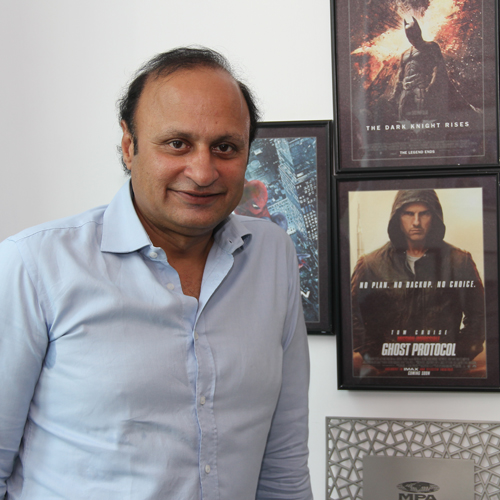
    The word piracy sends shivers down the spines of all content owners, but there is one man who has made it his mission to eradicate piracy from the media and entertainment space. That man is none other than Motion Picture Distribution Association (India) managing director Uday Singh.


    With over 28 years of sales, marketing and general management experience in scaling up operations and building business from start up for MNCs in India and attaining a leadership position in the market and business with significant turnaround and change management; Singh has done it all.


    He has key experience in media entertainment, consumer electronics, domestic appliances and multimedia industries. He has had stints at Philips, Sony Pictures Entertainment (India) and PVR Pictures earlier.


    Being a creative and result driven executive with expertise in setting up new markets developing and delivering strong results; Singh has been ensuring in getting the various industry stakeholders together to fight against piracy.


    Speaking to indiantelevision.com’s Sidharth Iyer, Singh dwells on various perennial issues like piracy, high taxation, specific copyright laws and the difficulties that MPDA faces in propagating anti-piracy in the country.     


    It’s been five years since MPDA India has been present in the industry, how has the journey been? Highlight your roles and responsibilities.


    There are three aspects: first there is the legislative side where we look into getting a specific legal framework into place which can protect copyright. Next we take care of the enforcement, which is basically keeping a check on people who steal content and monetise from the same by redistributing it across the globe and finally the outreach, how do we best reach out to our first line of defense – which is the cinema staff and theatre owners – educating them on piracy and how it works, so that they can recognise it and nip it at the bud.


    On the legislative side we have carried out a lot of initiatives. 90 per cent of all pirated copies are camcorded in cinema halls, and an Ernst & Young 2008 report claims that as much as Rs 16,000 crore is lost every year due to piracy and as many as 577,000 direct jobs are also lost as a result of theft and piracy, afflicting India’s entertainment industry.

    We have been working with local bodies and try and implement the global best practices out here. We have also observed that many jurisdictions like in US, Philippines and other regions in the Asia Pacific as well, specific camcording legislations have made a big difference in getting piracy down and we intend to bring that practice to India as well.


    Is there a set guideline for understanding the copyright laws in the country? Have you managed to reduce the taxation on films?


    We have been lobbying with the government to have provisions made for the same, and the cinematography bill does carry some provisions because only very specific provisions can make a difference, as our copyright laws tend to be very broad and its only best to have specifics in place to better understand and implement the copyright law in the country.


    The other major hurdle for films is the taxation levied on them, and being one of the highest taxed industries it does take a toll on the budget and revenue scale. We have been working with other industries and the government to rationalise those taxes and eliminate some of them if possible and hopefully roll them all into a single goods and services tax (GST).


    However there is a service tax on the input side, so some of the studios that are producing the movie domestically have to face it by increasing its production costs. Currently there are three levels of taxes; the service tax, the entertainment tax and the local body tax. Thus, our recommendation and appeal to the government and the authorities is to roll it all into one single GST to avoid any duplication.


    What are the challenges faced by MPDA and how do you overcome the same?


    There have been issues in the television side of things, where we have been talking to the government and making our submissions on issues such as, liberating the pricing, the must provide and must carry provisions, among others.


    It was also heartening to see that the foreign direct investment (FDI) in the television and broadcast sector also witnessed a hike. So, we look at very generic issues and how the government can better regulate the media and entertainment sector, primarily focused on where our studios feel where we should get involved on the legislative side.


    We also have the Los Angles Film Council, where we have been lobbying for the ease of shooting and working with the government for getting to a single window clearance, there are 70 clearances otherwise required before even shooting a single frame.


    Our efforts and initiatives will be again presented in an E&Y report, which talks about how to simplify, incentivize and further how to promote film tourism. The plan is to promote film tourism in a big way and we have some great examples of how it has been done in other places like Canada and Thailand. Keeping in mind that we have some great technicians and production crews here, India can become an important destination for films as well in the near future.


    On the enforcement side, we are no longer chasing the guys on the streets as it has all moved online and it’s now gotten into camcording. We have managed to eliminate quite a few significant release groups, who have been copying and redistributing a lot of the films. 


    MPDA has played a big role in ensuring that piracy is looked at as a serious offence, how do you intend to put an end to this evil?


    Our intention is not to catch a kid who’s taking a trophy shot in front of the screen, but the people who actually steal the content and make a living out of it. After 2012, there have been almost 67 incidents where we have apprehended pirates who used to capture the video and slap on a different audio and export it to other neighbouring countries.


    We also work with cinema staff and have educated nearly 1,400 of them on what are the best practices to propagate anti-piracy, by putting up signs in the surroundings of the theatre. They have also been educated on how best to deal with incidents of camcording. We have also tried to sensitise various law enforcement authorities on the various issues and problems due to piracy and how they can help in preventing such occurrences.


    I believe, unlike ever before, we have been able to work hand-in-hand with the local film industry and really come together as stakeholders of the industry and really put an end to this evil.


    In the recent past you have associated with the Anti-Video Piracy Cell of Andhra Pradesh, and also carried out various initiatives on the ground, your thoughts on the same…


    The Anti-Video Piracy Cell (AVPC) of Andhra Pradesh has been one of our brightest spots in the fight against piracy. It’s been a very proactive cell and very aware of the changing trends in the space of piracy. They have an in-house team for the mapping of sights, and we found a great ally in them for our fight against piracy.


    With AVPC, we only thought that the need is to contemporize the way we catch hold of the pirates and with the ‘Indian Movie Cop’ and other such applications we have tried to keep a check on digital piracy.


    The app really helps in educating everyone on piracy and the laws of the land, and to keep it interactive we also put up trailers of upcoming releases just to give the user that extra bit to help serve a larger cause among other reward schemes.


    It is a known fact that there have been leakages on the cable TV front, how do you plan to overcome the issue?


    Digitisation has really helped on this front and it has certainly not been an easy process, but a large step by the government to clearly make this decisive move to get to know who the subscribers are and get to know where they are.


    Over a period of time, the broadcast industry has taken interest to resolve the problems relating to cable leakages. It used to be very robust in the analogue world, and still continues to happen, but like the film industry, the broadcast industry too needs to come together to address this perennial issue.


    With a lot of Hollywood studios currently operating in the country, does it help in better promotion of their interests among local production houses?


    Largely, these are decisions taken by the individual studios and it’s for them to be able to decide with whom they want to tie-up. There have been instances in the past three to four years where a lot of studios have taken an active part in the local productions.


    But, again it’s their own strategy on how they best want to enter the market. And once we address larger issues like taxation, ease of operation or piracy, we would be able to provide a substantially better climate for them to come in here.


    Is the regulation in India strong enough to support your initiatives? If not, what is lacking?


    There is a combination of issues; the laws are very generic in nature – while they may have served their purpose – increasingly we have seen that when there are specific laws for specific issues there are better results.


    When we talk about the copyright amendment, we are talking about the technological protection measures. There is an access control and a copy control and barring of hacker tools. In our current legislature, we are talking about copy protection and not about the access; so with the evolving technology, it took almost 10 years to pass that bill.


    So legislation is always going to be a long time consuming process and what we have to do is ensure in bringing to the government’s notice how other jurisdictions have handled these issues and what have been some of the best practices.


    The second aspect of it is enforcement; in terms of the police force they are certainly overburdened and we all recongnise that, with copyright figuring in the lower priority offences. But wherever we have gone and educated them about the issues relating to piracy, they have responded well.


    There are cases where we find the judiciary more proactive in a particular area like Delhi, but in recent history we have had judgments from Mumbai, Chennai and Kolkata as well.  So almost all the high courts are getting up to speed on all the copyright issues.


    And with the piracy now moving online, there is a need for a lot of hand holding to make content distributers and owners aware of how rapidly the landscape is changing. And we can’t ignore the fact that a lot of these offenders are linked to other organised crimes too, thus becoming difficult to track them down.


    Can there be a stop to piracy globally? What preventive measures can be taken?


    There can’t be a total bullet proof plan for this; it’s very similar to other crimes. But, what we can clearly do is to create a favourable environment where if not eradicate then at least we can apprehend the criminals.


    Eventually you will find that there are only a few people who are causing most of the damage and they are part of much more organised syndicates. There also needs to be an updation of the loss due to piracy report as there has been a huge increase in the number of internet connections since 2008.


    The need of the hour is to also educate the film industry on how things work, with most films being made available online just hours after its release. There have been attempts made to resolve this issue, but to no avail.


    There are two ways by which this has been kept under check internationally, one to have an administrative relief and the other a judicial relief. We have noticed that these work in blocking content from getting leaked outside the authorised personals’ hands.    


    Recently there has been a rampant emergence of rogue sites like Torrentz, what is MPDA’s take on them? Also, your thoughts on user generated content sites like YouTube.


    These rogue sites are primarily designed to steal content and monetise by making it available online. Mostly they make money through advertising and in certain cases even through subscriptions. It’s surprising to find that a lot of advertisers who are associating their brands with these rogue sites are only creating a bad impression of themselves on people who then associate them with supporting piracy. They may be having subscriptions, because they may have a camcorded print and they put it up very quickly and start building a premium subscription revenue model.


    To counter these sites, what we have done is listed out the legitimate and licensed sites from where movies can either be streamed or downloaded with a cost attached to give the people the option of viewing legitimate content and also getting the content owner his rightful due.


    Coming to the user generated content sites commonly known as UGCs have brought in a lot of mechanisms to deal with piracy among other issues, but still it’s not been enough. Lot of them have their filters and they have been trying to work with the industry on how best it can work. But in many cases we find that without the permission of the user, any site that puts up that content is something that we are not comfortable about.


    Eventually what I believe is, with more and more filters coming in and more and more legitimate sites coming up the whole content distribution and exhibition will undergo an evolution.


    In the past, physical copies of pirated VCDs and DVDs were available on streets. You don’t find many of these pirates nowadays, what has MPDA done to eradicate this problem?


    Actually in the past few years, we have not really focused much on that front. In the 1990s we were really going after each and every pirate on sight and almost 5,000 to 6,000 cases were being registered, but without a single conviction.


    We realised that the source was through camcording and three major areas where it was taking place was Ahmedabad, Indore and Ghaziabad. As we started making inroads and worked with the police and the theatre owners to eradicate these rogues from the streets, they went deeper into the heartlands.  


    The DVD is practically dead… so what is the way forward for moviemakers to monetise their content?


    The consumption of movies has not gone down, but the way the movie is being consumed has evolved. And technology is allowing us to give legitimate content. For example with Apple TV the user can simply just click on the movie that he wants to watch and buy it or rent it.


    So the consumer is looking at all kind of content, for the big screen, mobile screen, content on the go, and something wherever he can watch. Thus, to cater to the user’s interests we too are changing our business models to accommodate the demands and supplement those demands with supplies.


    In India the video market never really took off like in other parts of the globe. The time when we were looking at buying VCDs, DVDs came into play and now Blu-Rays are in the market, so with constant evolution taking place, the best thing is to move along with the choice of the user and it also helps as we can directly skip to the digital era.


    What is MPDA’s plan for the year 2014?


    In FICCI Frames 2014 we launched a report with Deloitte on the economic contribution of the motion pictures business in India. We have seen that the media and entertainment sector contributed substantially, almost Rs 50,000 crore in 2013 and generates almost 1.8 million jobs.


    It is very important that when we talk to the government they realise the potential of this sector and given the right inputs, it has the potential of proving more employment and also contribute handsomely to the GDP growth of the country.


    Currently, it’s at a growth rate of 12 per cent, which is almost two and a half times our GDP growth and it can grow at a faster rate if given the proper impetus.


    During the year we will continue to simplify the process for films by getting in the single window clearance. So our next step will be to closely look at it and incentivising and finally promoting the initiative. And we would help the industry flourish and get to its optimum potential.