Tag: Sony Pictures Networks

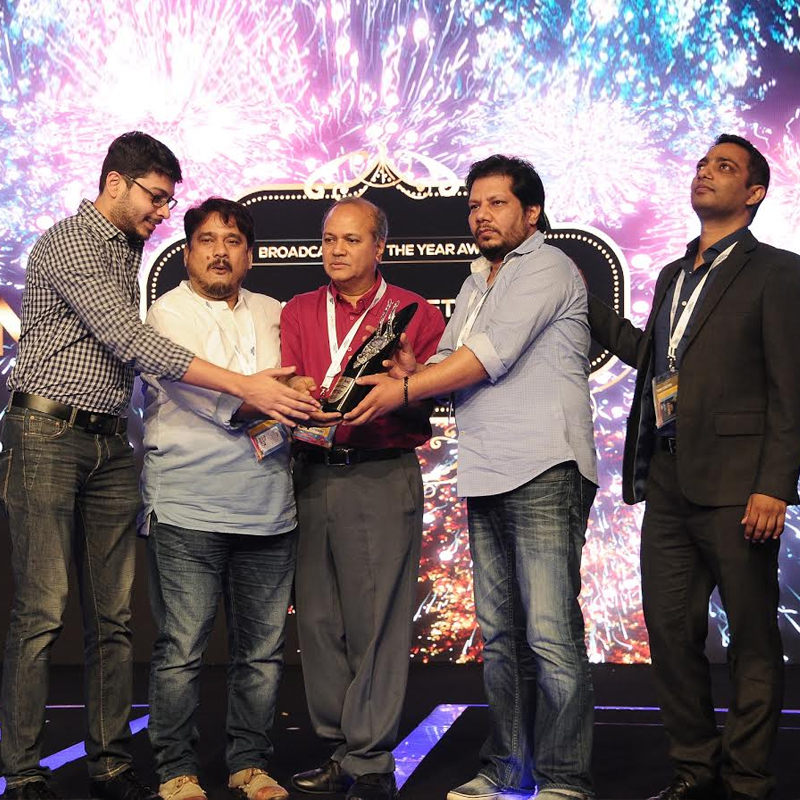
  • SPN becomes broadcaster of the year at Abby 2018

    SPN becomes broadcaster of the year at Abby 2018

    GOA: After an engaging second day of Goafest 2018, that brought about creative discussions and knowledge sharing amongst stalwarts across consulting, technology, creative arts, marketing, news media and policymakers, the 50th Abby Awards continued.

    As the last rays of the sun kissed the Goan sand on day two, it was time for the presentation of the broadcaster, public relations, still craft, video craft, design and direct Abbys. The awards celebrate the best-in-class creative geniuses and works of stellar significance in creativity. While Sony Pictures Networks led the tally for the Broadcaster Abbys with six metals, it was ZEEL that took home the gold for the night.

    While Design Abbys showed favour to Open Strategy and Design with six metals including one gold, Pi Communications took home four metals where direct specialist Abbys was concerned. While a total of 13 gold were handed out to top honours in public relations amongst other metals, it was Value 360 Communications that ate into the pie with a total of eight metals.

    Still Craft Abbys saw dominance by The Social Street who grabbed four metals including two gold. But the happiest faces for the night clearly belonged to Early Man Film Pvt Ltd, who took home a whopping 16 metals in the video craft specialist category which included five gold, four silvers and seven bronzes!

    With industry-specific conclaves to expert seminars, the Goafest Abbys 2018 presented by The Advertising Club and The AAAI has once again set the benchmark high in celebrating excellence in creativity across media platforms and genres.


  • SonyLIV creates film with IndiaFirst life insurance

    SonyLIV creates film with IndiaFirst life insurance

    MUMBAI: SonyLIV, the premium OTT platform of Sony Pictures Networks India (SPN) has crafted a new short film for IndiaFirst Life Insurance. The promotional film titled ‘Tera Mera Pyaar Amar’ is a humorous take on life after death and how the protagonist, who is now a ghost, has made sure he protects his family’s future in his absence.

    The story is about, Amar, who has his life as well as death planned. It is an amusing take on how, if one has prepared for all the certainties of life (and death) then it becomes easier for their loved ones to deal with their death. Through a compelling storyline and relatable characters, the film drives home the insurance company’s core message that life can be full of certainties if we plan, in advance.

    The 11.5 minutes long film stars Namit Das and Sandeepa Dhar in the lead roles, supported by Kabir Sadanand and Kunal Kumar.

    Sony Pictures Networks (SPN) EVP and head of digital business Uday Sodhi says, “At SonyLIV we strive to tell compelling stories that mirror society’s trends. We are very happy to partner with IndiaFirst Life Insurance and help them take their brand message to the masses. We are humbled that brands believe in us and we will continue to create content which will resonate with the new age digital consumer.”

    IndiaFirst Life Insurance director of sales and marketing Rushabh Gandhi adds, “The exponential growth of digital media has changed the way our audience consumes content. Earlier the shelf life of short films was limited to tele-films and film festivals but now smartphones and apps have revolutionised our lives, giving us access to a plethora of content on-the-go. Players like SonyLIV create path-breaking content that helps reach a wider target audience and we are delighted to be associated with this interesting short film – Tera Mera Pyar Amar. This association is close to our heart as the storyline is in-line with IndiaFirst Life brand messaging”

  • ‘Porus’ viewership soldiers on

    ‘Porus’ viewership soldiers on

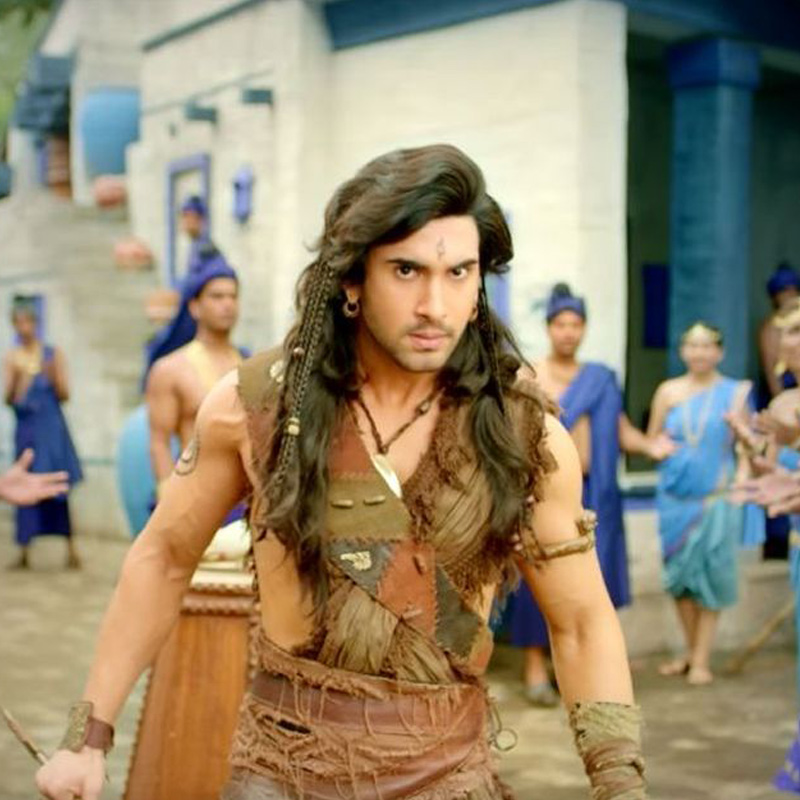
    MUMBAI: Sony’s magnum opus Porus has been the talk of the town–first for being the first show wherein the IP is with the creator and later for its not-so-spectacular viewership. In fact, rumour mills were abuzz that the show would struggle to shrug off its sluggish start and build on its viewership. Broadcast Audience Research Council (BARC) data for the show, however, paints a different picture.

    According to the data, the ratings (U+R) of the show are significantly higher than the ratings of the channel’s prime time daily soap Rishta Likhenge Hum Naya (Rishta Likhenge) and another prime-time show Vighnaharta Ganesh. While Porus is aired at 8.30 pm, Vighnaharta Ganesh precedes it at 8 pm, whereas Rishta Likhenge is shown at 9 pm on weekdays.

    Porus’ launch week bagged it 3.6 million impressions in week 48 of 2017’s BARC data. The second week saw a drop of 0.6 million impressions. After 10 weeks of being on air, the latest ratings of week 5 for 2018 show Porus at a consistent 3.3 million impressions.

    On the flip side, the week 48 of Vighnaharta Ganesh garnered 3.4 million impressions and Rishta Likhenge got 1.9 million impressions. There was no impact of Porus on Vighnaharta Ganesh’s ratings that was apparent in week 49, whereas Rishta lost 0.1 million impressions from week 48.

    Swastik Productions founder Siddharth Kumar Tewary says, “Porus has been consistent in its ratings since its launch and this was our plan to be consistent in the beginning and then grow slowly. We held on to our ratings from the beginning to now. The first episode was a one-hour content and now we are showing 22 minutes content.” He says that comparing the current 3.3 million figure with the initial 3.6 million one shows that the show has actually grown. “We have made Porus with a huge amount of conviction. People have really appreciated us for keeping the promise of giving them differentiated concept and the way of storytelling,” he adds.

    “Porus is a premium product. We have been happy with the viewership we have got and we are expecting it to grow up by 20 percent from February onwards,” said Sony Entertainment Television EVP and business head Danish Khan. During the ten weeks, the highest impressions that Vighnaharta Ganesh holds is 3.8 million impressions, Porus has 3.6 million impressions, and Rishta has 2.1 million impressions.

    SonyLiv EVP & digital business head Uday Sodhi says, “Porus is very popular and among the best performing shows like Taarak Mehta, Yeh Un Dinon Ki Baat Hai and Super Dancer on SonyLiv. The scale and impact of the show is amazing. It is perfect for digital audiences and it is able to capture the scale & the size fruitfully. We are seeing significant consumption of the show on SonyLiv. There is a huge jump in the month of January over December. The viewership of Porus has grown 30 per cent in January as compared to December.” 

    Porus has successfully travelled to Sri Lanka with a new name Digvijaya. The buyer for the 260-episode series is Maharaja Television (MTV) and the show will be dubbed in Sinhala. Earlier, Porus was acquired by Workpoint Entertainment of Thailand for exclusive TV and non-exclusive digital rights.


    Weeks

    VIGHNAHARTA GANESH

    PORUS

    RISHTA LIKHENGE HUM NAYA

    Week 48

    3.4 million Impressions

    3.6 million Impressions

    1.9 million Impressions

    Week 49

    3.4 million Impressions

    3.0 million Impressions

    1.8 million Impressions

    Week 50

    3.6 million Impressions

    3.3 million Impressions

    1.9 million Impressions

    Week 51

    3.3 million Impressions

    2.8 million Impressions

    1.7 million Impressions

    Week 52

    3.8 million Impressions

    3.1 million Impressions

    1.7 million Impressions

    Week 1

    3.3 million Impressions

    3.1 million Impressions

    1.7 million Impressions

    Week 2

    3.8  million Impressions

    3.4 million Impressions

    2.1  million Impressions

    Week 3

    3.8 million Impressions

    3.2 million Impressions

    1.8 million Impressions

    Week 4

    3.3 million Impressions

    3.0 million Impressions

    1.7 million Impressions

    Week 5

    3.4 million Impressions

    3.3 million Impressions

    1.8 million Impressions


    Also Read :

    ‘Porus’ launched as ‘Digvijaya’ in Sri Lanka

    Thai broadcaster Workpoint acquires TV rights for Porus

    ‘Porus’ will alter the economics of the ecosystem, says SET’s Danish Khan 

  • Broadcasters, DPOs oppose TV channel auction proposal

    Broadcasters, DPOs oppose TV channel auction proposal

    NEW DELHI: Most big and small broadcasting companies owning and operating TV channels in India, along with distribution platforms, have categorically opposed any move by the government to auction satellite TV channels as a complete package similar to FM radio channels.

    Leading the opposition charge is the broadcasting sector’s domestic industry body Indian Broadcasting Foundation (IBF). Decrying having similar regulatory approach of auction for radio and satellite TV broadcasting as “completely undesirable,” IBF said auctions would not only breach certain privileges granted under Fundamental Rights by the Indian Constitution but would also go against the ethos of international commitments made by India to organisations such as the ITU.

    “Costs are likely to increase manifold [if the government went ahead with auctioning of satellite TV channels] because of lack of supply of ISRO launched geo-stationary satellites. This would squeeze out smaller operators resulting in artificial entry barriers. In fact, the auction of TV licenses will also have a cascading effect on larger corporations, which may also have to rationalise the number of channels that they run as the cost of operating all the channels will spiral, making the business unviable,” IBF highlighted the economic downside of the proposal in its response to a TRAI consultation paper exploring the feasibility—or the non-feasibility—of auction of satellite TV channels and other related issues.

    Weighing in with the IBF argument against auctioning of satellite TV channels, Star India, probably India’s biggest broadcasting company in terms of revenue, said successful broadcasting of channels required coordinated use of the uplinking space spectrum, satellite transponder capacity and downlinking space spectrum, which cannot be “auctioned together” as they are not controlled by the same entity or even the Indian government.

    Many TV channels targeting India’s 183 million TV universe uplink to ITU-coordinated foreign satellites owing to Indian space agency ISRO’s inability to keep pace with the growing demand for satellite transponder capacity, apart from other commercial considerations.

    “The introduction of an auction route for channels would necessarily require the auction of the spectrum bundled with the satellite transponder allocation [and] complexity of [the] process would not justify the negligible revenue that may be anticipated [by the government/Ministry of Information and Broadcasting] from such auction,” Star India said in its submission to TRAI, adding to artificially limit a commodity, satellite spectrum that is not scarce, would be a “brazen attempt at maximising revenue” by the government that would ultimately harm the media and entertainment industry of the country.

    According to the Subhash Chandra family-controlled Zee, TRAI was “erroneously” attempting to treat broadcasters such as Zee, Star India, Sony, Viacom18, BBC and Discovery as entities subject to the Indian Telegraph Act [that, incidentally, was drafted sometime in the late 19th century].

    “Under the uplinking and downlinking guidelines notified by MIB, an up-linking/downlinking ‘permission’ is granted to a TV channel by MIB and not any ‘licence’ [is given] as sought to be suggested by TRAI in the present CP [consultation paper]. Permission is granted under the executive instructions/guidelines notified by MIB and not under any statute. These executive instructions/guidelines do not have any statutory basis/source. Thus, any attempt to levy revenue-based licence fee on broadcasters on the premise that they are licencee[s] under the Indian Telegraph Act would not only be fallacious, but also without any legal sanction,” Zee noted while punching legal holes in the government thinking.

    While Sony Pictures Networks India opined imposition of additional fees for satellite spectrum usage and mandating use of Indian satellites would have “unforeseen outcomes” owing to “economic pressures,” Times Network said the auction model may be suitable for the digital terrestrial TV transmission (DTT) when introduced but not for satellite TV.

    Viacom18, operating over a dozen TV channels and also a studio business, felt that the operation of satellites for broadcasting cannot be compared with operations of FM radio channels simply because spectrum for the latter (radio FM) is limited and rare as against satellite spectrum that is in abundance and would continue to increase over a period of time with the increase in the number of satellites.

    “Auction is appropriate only for such natural and rare public resources as for FM [radio],” the joint venture between US’ Viacom and Reliance Industries-controlled TV18 Broadcast submitted.

    In its independent submission, TV18/Network18 (both entities controlled by Mukesh Ambani’s Reliance Industries), while giving international examples of countries such as Greece and Thailand where auctioning of TV channels had failed to get desired results, said auctioning will have an economic impact on the broadcast business.

    Pointing out that an auction would “unduly increase the cost of grant of permissions and the cost of permits”, costs that would have to be passed on to end subscribers/viewers making content expensive all across the distribution chain, TV18 exhorted the government to “focus on increasing the number of satellites,” which will increase competition and not “create entry barriers” that will impede competition.

    Comparatively, smaller broadcasters operating on tight budget and limited distribution budgets such as Odisha TV Network said it was “not in favour of auctions.” Global companies such as BBC Global News submitted that TV channels were inherently different from FM radio broadcasting and such a move could “adversely impact small broadcasters” like BBC as it would amount to an anti-competitive move favouring some big players. Channels like News24, too, echoed similar sentiments.

    Distribution platform IMCL was of the opinion it was not possible to auction uplink spectrum “like in the case of FM [radio].” DTH player Dish TV added that “discrimination and/or restrictions in the licencing conditions” should be done away with and there should be no differentiation between usage of Indian and foreign satellites. Players should be given the right to choose as to what was best for their services, it added. Similar comments came from other DPOs like DEN.

    Some other industry organisations such as Broadband India Forum and Hong Kong-headquartered CASBAA, too, stated that auctioning of satellite TV channels was not feasible.

    CASBAA, while supporting an open policy regarding satellite capacity usage for downlink and uplink, said restricting the use of foreign satellites just so an auction can be conducted would be a “most undesirable” outcome.

    “The Indian broadcasting sector has flourished in no small part because of the ample and competitive supply of satellite capacity–both foreign and domestic–made available for broadcasting purposes under the existing policy guidelines. Indeed, investments in foreign satellite capacity over India have contributed mightily to the growth in this sector to date. An attempt to restrict use of foreign satellites now would cause immeasurable harm to this currently ‘vibrant’ sector,” the Asian pay TV and satellite industry organisation said. Similar sentiments were expressed by other international organisations such as GVF, ASPCC and ESOA.

    ALSO READ:

    MIB to collect data on satellite capacity needs, digital chatter

    2017 was a regulatory roller coaster and the ride continues

    MIB, DoS nudge TV channel to use Indian satellites

    MIB reverts to earlier norms of seeking nod from ISRO on uplink/downlink of TV channels
  • Baahubali 2 to premiere on Sony Max on 8 Oct

    Baahubali 2 to premiere on Sony Max on 8 Oct

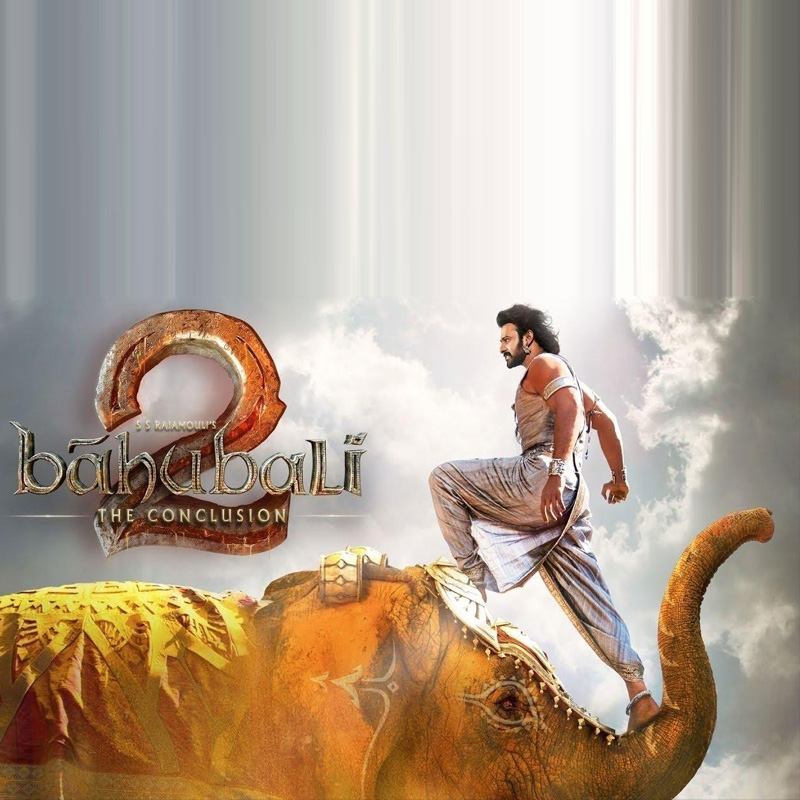
    MUMBAI: Sony MAX, a Hindi movies channel from Sony Pictures Networks, is  bringing the epic saga from the Kingdom of Mahishmati, Baahubali 2: The conclusion. Directed by the showman of southern India movies, S.S. Rajamouli, this extravagant heroic tale of Baahubali will be premiering on Sony MAX on 8 October at 1pm.

    Boasting of awe-inspiring finesse, this larger than life story of Baahubali’s unfinished tale will reveal the biggest question of why Kattappa killed Baahubali. Creating a new landmark for Indian cinema, this magnum opus gives viewers a glimpse into the fairytale world while Kattappa narrates the story of Mahishmati.

    Starring Prabhas, Rana Daggubati and Anushka Shetty in pivotal roles, this revenge drama is a visual treat for viewers while it takes them through a flashback into life of Baahubali.

    S.S. Rajamouli says: “Sony MAX had done a brilliant job in the way they promoted & marketed Baahubali in 2015 and we were hoping that they get the telecast rights this time too.  We are more than delighted to know that India’s No.1 Hindi movie channel is going to be our television partners once again. They treated our film like their own baby and we couldn’t have asked for a better partner to showcase our movie across millions of households.”

    Actor Prabhas says: “TV has a greater connect with the masses and I really feel that the impact of a film gets extremely enhanced as it reaches out to millions through television. It definitely guarantees a better reach and a lot of people out there tune in to Sony MAX to watch movies. I’m extremely happy about the world television premiere of ‘Baahubali 2’ on Sony MAX and I am excited that more people will get to watch the movie.”

    Actor Rana Daggubati says: “It takes a lot to do a film like Baahubali. A large part of this is actually allocated to the camaraderie that the entire team shared. All of us stuck to a vision Rajamouli had given us. We really belonged to a world, we just believed in Rajamouli’s vision. We knew this was the biggest visual spectacle coming out.”

    public://Untitled-4_5.jpg

  • Star bids highest for BCCI’s IPL media & digital rights and is the winner

    Star bids highest for BCCI’s IPL media & digital rights and is the winner

    MUMBAI: Star India has been investing heavily in Indian sport. And that investment – and promise to invest more – got the vote of confidence from the Board of Control for Cricket in India (BCCI) when its  offer of Rs 16,3475 million or Rs 16347.5 crore or approximately $ 2.55 billion proved high enough for it to snare the five year global consolidated (telecast & digital) rights for the most lucrative and prized cricket league in the world – the Indian Premier League (IPL). 

    Star India’s offer was about Rs 5000 million more than the consolidated highest individual bid total which stood at Rs 15,8195.1 million.  The bidding rules had made it clear that the global rights  (Rs 16,347.50 crore) bid would get precedence over the individual bids if the latters’ sum total (Rs 15,8195.1 million) was lower than the former.  For viewers, what this means is that they will be watching IPL action on Star India’s sports channel bouquet and VOD platform Hotstar for the next five seasons of the IPL (2018 to 2022).

    Though 24 companies picked up the offer documents, only 14 turned up for the bidding process early this morning, from which BAM Tech was disqualified. Those who took part included:  beIN, Star India., Followon Interactive Media, Sony Pictures Networks (SPN) , Times Internet, Supersport International, Reliance Jio, Gulf DTH, Econet Media, Facebook, DAZN / Perform Group, Yupp TV, Airtel and BAM Tech.

    Star India and SPN India were the only two bidders for the Indian subcontinent TV rights and the latter’s  bid  of Rs 11,0500 million was much higher than Star India’s Rs 6,1969. million.  Facebook India was the highest bidder for digital Indian subcontinent rights with its offer of Rs 3,9000 million. It beat back telcos Jio, which bid Rs 3,0757.2 million, and  Airtel’s offer of Rs 3,2800 million, and even Star India that had bid Rs 1,4430 million. The Rest of World A (Austrailia, New Zealand & rest of world) telecast rights saw a bid of Rs 700.1 million by Followon emerging as the highest offer, ahead of Times Internet Ltd’s  (TIL’s) Rs 533 million and Star at 178.8 million. 

    The beIN bid of Rs 3900 million for the Rest of World B (Middle East) rights  was much higher than OSN’s Rs 2112.5 million, YuppTV’s Rs 1001. million and Star India’s Rs 650 million.

    Supersport came out tops on the Rest of World C (South Africa) rights with its bid  of Rs 1202.5 million as against Econet’s Rs 845 million and Star India’s Rs 617.5 million. The Rest of the World D (UK) rights  had only one bidder: Star India with its offer of Rs 487.5 million, the only territory for which it emerged as the highest  individual bidder.

    The Perform group led the race for the Rest of the World E (US) rights by bidding Rs 2405million leaving YuppTV (Rs 2346.5 million), TIL (Rs 1852.5 million) and Star India (Rs 491.6 million) far behind.  The consolidated figure for the highest bids for each individual right thus worked out Rs 15,8195.1 million.

    Almost all the cricket ecosystem players were cock-a-hoop with delight about the successful global bid placed by Star India.

    Said BCCI acting president CK Khanna in a press release:  “We are happy to announce Star India as our new global media and digital partner. We thank all the bidders that participated in the process. We have ensured that transparency of the highest form was maintained throughout the process. I would like to thank cricketers and franchises for making the league one of the eminent sporting leagues in the world. I would also like to thank all the fans for showing their continuous support for the VIVO IPL for the last 10 years.”  

    Added BCCI acting secretary Amitabh Choudhary:  “We welcome Star India on board as our broadcast and digital partner. Cricket as a sport has evolved over the years, and today’s bids were a reiteration of VIVO IPL’s growing global popularity.”

    Star India chairman & CEO Uday Shankar too expressed his excitement about his company’s successful bid. Said he:  “We are honoured to be selected as IPL’s global media rights partner and we thank BCCI for conducting such a transparent process. The VIVO Indian Premier League is undoubtedly one of the most exciting sporting leagues in the world and this acquisition of media rights reaffirms our commitment to serve cricket fans and make cricket even bigger than it is. We are delighted that in Star, IPL has found its natural home. We look forward to bringing this exciting format to our audiences across the world in a quality that all our viewers are accustomed to both on television as well as on digital on Hotstar.”

    Shankar further added, “At Star India, we believe that Indian sports have barely scratched the surface of its potential. Both the viewership of sports and more importantly participation in sports is something that we would like to grow substantially over the next few years. The acquisition of these rights is symbolic of our commitment to not just cricket but to the growth of a wider sports culture in the country.” Not to let go of a chance like this, Shankar also added that Star would have to come up with solid business proposal to monetise the IPL property over a period of five years as pay TV revenues — read tariffs — were highly regulated in India.

    BCCI CEO Rahul Johri expressed:  “We are grateful to the Supreme Court, the Committee of Administrators and the office bearers of BCCI. We are also thankful to Deloitte and our legal partners Cyril Amarchand Mangaldas for their support in carrying out a fair and transparent bidding process efficiently. We would like to welcome Star India on board as our IPL global media and digital partner.  We believe this is a global benchmark and all the stakeholders of IPL will significantly benefit from this association with Star India.”

    Sportingly, SPNI congratulated and wished Star India all the best in its endeavor to shape the  IPL over the next five  years.  Said the previous rights holder in a press note:  “SPNI  has nurtured the IPL since its inception and within a span of 10 years established it as one of the most popular sporting properties in the world. We would like to thank all those who supported us in curating the lineage and legacy of IPL.  At the same time, we take this opportunity of wishing STAR India the best as they shape IPL over the next five years. With our recent acquisition of the Ten Sports network, the sports network of SPNI holds the broadcast rights to five cricket boards, guaranteeing that our channels will continue to offer a strong mix of programming for cricket fans.”

    Also Read:


    IPL tender submission & result date rescheduled

    IPL chief Shukla recuses from ‘live-streaming’ media rights auction

  • Hat-trick: Sony Pictures Distribution among best Indian media companies

    MUMBAI: Sony Pictures Networks Distribution India Pvt. Ltd. (SPND), the distribution arm and wholly owned subsidiary of Sony Pictures Networks India (SPN), has been ranked as one of the best company to work for in the media industry by the Great Place to Work® Institute, for 2017. Sony Pictures Networks Distribution has been recognized as INDIA’s GREAT MID – SIZE WORKPLACES 2017 and ranked at the 5th position, amongst the TOP 50 companies. SPND is the only media company to be featured on this list for the third time in a row. This award was presented by the global research organisation – Great Place To Work® Institute, India in association with Mint.

    The Great Place to Work® Institute is a firm that assists organisations to identify, create and sustain great workplaces through the development of high-trust cultures. In its 14th edition, India’s Best Companies to Work For study attracted participation from 219 organisations, ranging across industries, including a 7% participation from the media industry alone. This study was done with the most rigorous, credible and comprehensive methodologies to identify organizations in achievement of their goals.

    Sony Pictures Networks Distribution India Pvt. Ltd. undertook the Trust Index Survey & Culture Audit People Practices assessment – a two lens model that measure employees’ perception and assesses management practices. Once again SPND surpassed the average industry percentage of positive responses measured through five parameters – credibility, respect, fairness, pride and camaraderie and raised the bar of their people practices over last year

    According to the Institute’s research, a Great Place to Work® is one where the company’s framework is employee-centric and inculcates a sense of trust, pride and camaraderie amongst the employees. It is an indisputable fact today that creating a great workplace is an integral part of an organisation’s strategy. SPND believes in empowering its employees to achieve dynamic results which comes with the commitment towards the social, economic and intellectual growth of its diverse employees in an evolving ecosystem.

    Sony Pictures Networks India CEO NP Singh: “Every organization is shaped by its employees and for us to be recognised as a Great Place To Work is as best as it can get. This award is of immense significance to us as it resonates with our goal to Go-Beyond the ordinary and script the future that we want to belong to. Our values are co-shared by our employees and it reflects in our performance as well. I am extremely humbled by our employees’ commitment to our goals and determination to excel in every sphere.”

    SPNI president – distribution and sports business Rajesh Kaul: “Being among the great places to work in India for a third time in a row is both, an honour and a responsibility. Our endeavour has always been to make Sony Pictures Networks Distribution an organization which nurtures employees as family and expresses its care for them not only via friendly policies but also by fulfilling their career expectations. We are privileged to receive this award and will continue to go-beyond in our endeavour to excel our own standards.”

    SPNI director – HR Hema Malhotra: “Great minds make SPND a Great Place to Work where our employees are the biggest asset of our organization, coupled with effective leadership, compelling employer brand and a high-performance culture. Our initiatives around learning and development, wellbeing, diversity and Inclusion are progressive and note-worthy, which are some of the tools to engage, motivate and retain employees. All this coupled with employee friendly practices create agility through innovation and help the organisation Go-beyond the ordinary.”

  • SPN India-SITI Networks dispute: TDSAT directs SITI to sign SPN RIO agreement (updated)

    MUMBAI: In a dispute between cable TV MSO SITI Networks and Sony Pictures Networks (SPN) India, the Telecom Disputes Appellate Tribunal (TDSAT) has ruled that the former should sign the existing reference interconnect Offer (RIO) of the latter.

    SITI Networks had approached the arbitrator saying that India’s leading broadcast network was threatening to disconnect its signals from it. And that it was imposing an “unjustified subscription fee hike” to renew its channel carriage agreement with it. This at a time when the nation is under the spell of SPN India’s biggest property the highly popular and most watched Indian Premier League (IPL).

    The MSO’s counsel appealed to the tribunal that SITI should be permitted to avail of the signals of the channels of SPN India on the same terms and conditions of the expired agreement till the latter publishes a new reference interconnect offer (RIO) as per the new TRAI regulations.

    SPN India’s counsel retaliated by saying that the MSO cannot seek an entitlement to the earlier subscription rates of the expired agreement for the former’s channels as its subscriber base had grown and the broadcast network deserved an increase in subscription fees.

    SPN India’s counsel further argued that since there is no valid agreement, the signals to SITI Networks platform should be disconnected unless the MSO executed the existing RIO as per the TRAI regulations.

    The TDSAT then directed SITI Networks to sign the existing SPN RIO within one week of the order (to avoid disconnection of signals) and with a provision to switch to the new RIO once the same is published as per the new TRAI regulations.

    The tribunal also asked both SITI Networks and SPN India to submit their detailed statements of accounts within the next 10 days so that it could help them settle their dispute on outstanding dues.

    Even as SPN India claimed that it had won a favorable order from the tribunal (no official comment was, however, available from it), a SITI Networks official spokesperson responded to indiantelevision.com saying that the “unjustified hike in subscription fees demand has been turned down by TDSAT and the court has directed to sign the agreement on a RIO basis in accordance with the prevailing regulations.”

    In addition to this, SITI Networks also appeared pleased that the tribunal has “asked the parties to submit their statement of accounts and the related invoices in reference to the outstanding issue.”

  • Ten Sports: Sony Pictures Networks completes first phase of acquisition

    MUMBAI: Sony Pictures Networks India (SPN) and its affiliates have completed the first phase of a two-phase acquisition of the Ten Sports Network from Zee Entertainment Enterprises Limited (ZEE) and its subsidiaries.

    Following the completion of this phase of the acquisition, SPN’s cluster of nine sports channels will now include:

    Sony Six and Sony Six HD
    Sony ESPN and Sony ESPN HD
    Ten 1, Ten 1 HD, Ten 2, Ten 3, and Ten Golf HD

    Certain other operations and assets will be included in the final phase of the acquisition, subject to certain closing conditions, which is expected to be completed in the next few months.

    SPNI CEO NP Singh said, “I am delighted that the teams from SPN and ZEE have completed this core phase of the transaction in good time. SPN is now equipped, better than ever, to offer its viewers premium sporting content with a sports portfolio that includes every major sport and many international as well as domestic leagues. We are now stepping into the integration process to facilitate a seamless transition.”

    ZEEL managing director Punit Goenka said, “Great job done by the teams from SPN and ZEE in facilitating the closure of this phase of the transaction. I am confident that the TEN Sports Network will reach new levels of consumer engagement under the nurturing guidance of SPN. I wish them the best. I’ll be tuning in regularly.”

  • Sony strengthens weekday programming; launching four shows by July ’17

    Sony strengthens weekday programming; launching four shows by July ’17

    MUMBAI: After strengthening the weekend programming with Super Dancer, Sony Entertainment Television is all set to bring one of its iconic shows — Indian Idol — back.

    “Sony has traditionally done very well as far as the weekend is concerned. So, when we started rebuilding this channel a year ago, the aim was to make Sony the number one weekend destination. I am happy to say that we have achieved that. Weekday programming is where we are going to focus now. We have launched Beyhadh which received a good opening. Weekday is a habit which will take time to be cultivated, and can’t happen in one go,” said Sony Entertainment Television EVP and business head Danish Khan.

    Khan added, “There are three-four launches between January and July in 2017, and, in July, people will see a very healthy weekend. It will be gradual, step by step, but, like you have seen in the weekend, you will see weekday of Sony fulfilling expectation of the audience very soon.” Sony’s much talked about historical drama Peshwa Bajirao is slated to launch in January.

    Indian Idol is the first step in bringing back the old iconic shows of Sony. The show will be aired from 24 December on Saturday and Sunday at 8pm.

    The channel has roped in Vivo as the title sponsors, and KUV 100 and Quick Heal as the ‘Co-powered By’ sponsors. According to sources, a 10-sec ad rate for the show has been sold for Rs 1 lakh each.

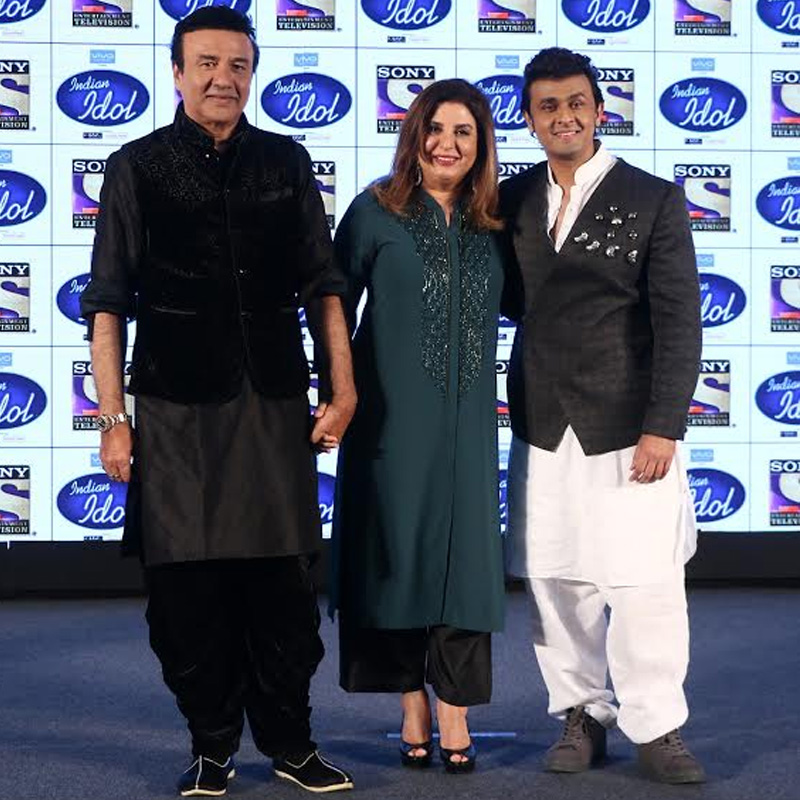
    This season also marks the comeback of its original trio of judges, Farah Khan, Sonu Nigam and Anu Malik, which has come together on the platform once again, after 12 years. Their chemistry and unique style of interaction with the participants holds promise — to make this season an ultimate entertainer on the Indian television.

    While the contestants impress viewers with their talent, the judges will also mark them on three most important factors that define the Indian Idol platform – Riyaaz, Awaaz and Andaaz. The legendary singing sensation of India, Sonu Nigam, will focus on the contestants’ ‘Riyaaz’, the maestro Anu Malik will be keenly observing their ‘Awaaz’, and known for her distinguished style, Bollywood’s ace choreographer-turned-director Farah Khan will judge their ‘Andaaz’.

    The show will begin with audition episodes from across the country; episodes that witnessed lakhs of talented singers competing to make it into the top 110. Hosting the ninth season will be the charming Karan Wahi and Paritosh Tripathy.

    Speaking to Indiantelevision.com, Sony Pictures Networks CEO NP Singh said, “It’s an authentic talent hunt show with authentic talent. Indian Idol is a show which broke new ground a few years ago, and in many ways changed the landscape of reality shows in India. It worked really well for us.”

    Post the fantastic success of its most popular show Super Dancer, the channel now brings to the fore one of its biggest properties — Indian Idol. Khan informed, “We have created a dedicated time of 8pm on weekends that will continue to bring unseen talent to our viewers. Super Dancer saw some amazing dancers and now, with Indian Idol, we intend to take this legacy ahead. The original trio of judges is a wonderful combination in the world of music and their chemistry coupled with outstanding singers will surely create magic on screen.”

    Said FremantleMedia India business head Vidyuth Bhandary, “The global phenomenon of the Idol format — launched in 52 territories worldwide and rated as the No 1 show 48 times — has been watched by half a billion viewers globally, making it one of the world’s most loved shows. We are proud of our strong partnership and collaboration with Sony Pictures Networks India, and happy to announce the launch of the 9th season of Indian Idol. It’s been 12 years since the first season of Indian Idol was launched on SET making it the longest-running reality show in India with unprecedented participation.”

    The channel will soon bring back all its iconic shows such as — KBC and Dus Ka Dum.

    “Indian Idol has been a torch-bearer of sorts in terms of the non-fiction programming slate for Sony, and has proved to be a war-horse when it comes to TVR numbers. Thus, it’s great news for Sony that the show is making a return after a rather long hiatus and what’s better is that they have gone back to the earlier panel of judges, which allows the audience to find an instant connect from the word go. What’s worked for the show earlier is the platform that it has provided for stars of the future, but the fact that the show wasn’t around for four years has allowed other shows like ‘The Voice’ to create ample room for competition. It will be a great battle to be witnessed between Indian Idol’s return along with a new format in Colors’ Rising Star on the small screen in the coming days,” said a senior media planner.