Tag: Sony Pictures Networks India

  • Bidding takes BCCI home matches’ media rights to a new high

    Bidding takes BCCI home matches’ media rights to a new high

    MUMBAI: The race is on to capture the five year media rights to the Indian cricket team’s home matches (102 matches in India from June 2018 to March 2023)

    On offer are the television and rest of the world digital rights (GTVRD), Indian subcontinent digital rights (ID), and the global consolidated rights (GCR). And by end of yesterday (3 April), only three bidders – Reliance, Star India and Sony- were left in the fray in the e-auction for the GCR. The reason: the other bidders like Google and Facebook were disqualified as they did not have both a TV and digital presence.

    The BCCI on its Twitter handle, through the day, announced which way the price graph was headed. Star India, which had the rights from 2012 to 2018, had breasted the tape by quoting Rs 3851 crore for a total of 96 matches across formats and included internet as well as mobile rights.

    But according to BCCI’s Twitter handle, the e-auction bidding commenced with a price of Rs 43 crore per match and an annual payout of Rs 774 crore (in 2018-19); Rs 40 crore per match with an annual payout of Rs 1040 crore in 2019-20, Rs 40 crore and Rs 580 crore in 2020-21, Rs 40 crore per match and Rs 920 crore for 2021-22, Rs 42 crore per match and Rs 882 crore annually giving a total GCR bid of Rs 4176 crore.

    That bid was bettered soon with an offer of Rs 4201.20 crore. Another offer of Rs 4244 crore came in according to the BCCI Twitter account.

    Reports at the end of the day stated that the bidding went further northward with offers of Rs 4303 crore, Rs 4328.25 crore and Rs 4442 crore being the final quote just as the e-auction for day one ended. BCCI is being assisted by MJunction Services, Deloitte Haskins & Sells and Cyril Amarchand Mangaldas to ensure transparency and compliance.

    The online auction will now resume today, 4 April at 11 am from the same stage.

    Experts opine the BCCI media rights figure could climb rapidly tomorrow and expectations are that bidders could up the rates to between $800 million to $1billion

    The BCCI would surely approve.

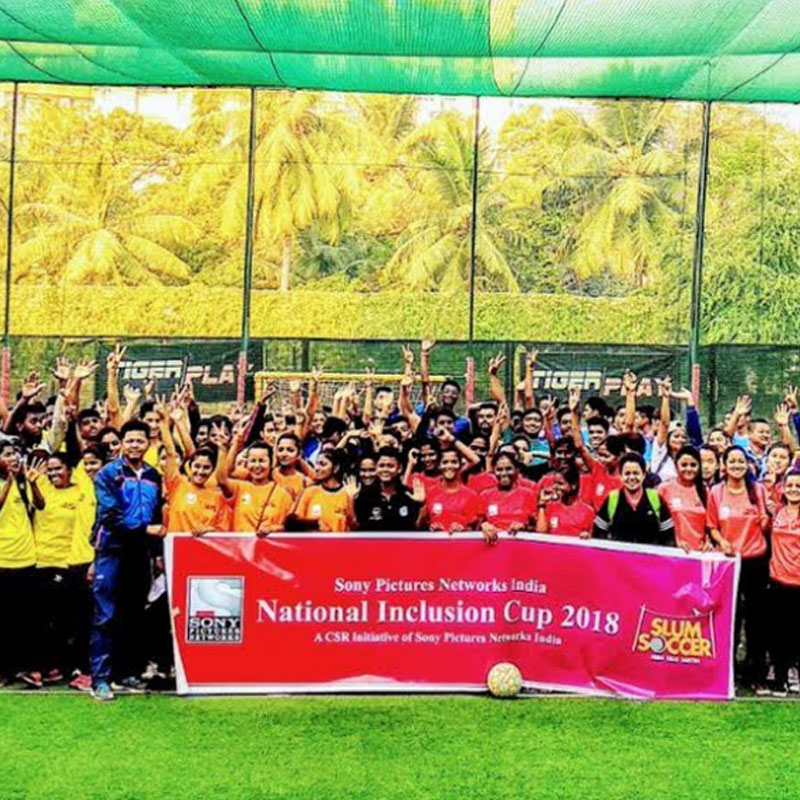
  • The National Inclusion Cup 2018 a CSR initiative of Sony Pictures Networks India

    The National Inclusion Cup 2018 a CSR initiative of Sony Pictures Networks India

    MUMBAI: Sony Pictures Networks India (SPN) is proud to be sponsoring the 2nd edition of the National Inclusion Cup (NIC), which is the only national football tournament of its kind for underprivileged youth. The NIC is being held from 20th-23rd Feb’18 at Tiger Play, Lokhandwala, Mumbai and is organised in partnership with the NGO, Krida Vikas Sanstha (Slum Soccer).

    The first edition of the NIC in Feb 2017, saw participation of 40 teams (24 men and 16 women) from different states of India and a team from Nepal.  The best performing players from the NIC were selected to represent India in the Homeless World Cup 2017, in Oslo, Norway. A portable pitch along with sidings was also imported from Scotland through SPN support to help them practice for the Homeless World Cup. Team India had their best performance ever in the tournament as the Indian women’s team ranked 7th and men’s team stood at 18th. 

    This year the number of teams have increased from 40 teams last year to 50 teams including two teams from Nepal, covering close to 500 youth. There are 8 new states added to the tournament and representation from the North East has increased. With the aim of having equal representation of women, the second edition of NIC has successfully achieved an increase in the number of women’s team from 16 to 25. Several Youth leaders (about 12-14) who underwent another SPN supported ‘Game Changers’ program for building community leaders, are either leading some state teams or actively involved in bringing the teams together. This year the tournament is being played on two pitches in parallel, as compared to one last year. 

    Teams from the following states are participating this year:  Maharashtra, West Bengal, Assam, Tamil Nadu, Andhra Pradesh, Madhya Pradesh, Haryana, Jharkhand, Chhattisgarh, Vidharbha, Orissa, Gujarat, Delhi, Jammu and Kashmir, Uttar Pradesh, Kerala, Meghalaya, Punjab, Telangana, Uttarakhand, Goa, Manipur, Bihar, Rajasthan as well as Nepal.

    Slum Soccer also invites entries from organizations like Ekjut, Childreach International, United women’s football, North East Indian goal, Maher, Narmada group of institution and Sportskedia to participate in the event.  

    Empowering India’s youth through sports is a key focus for SPN as it aims to influence the sports narrative in India through its on air and off air initiatives. Through its partnership with Slum Soccer, SPN aims to be a cornerstone of support in helping shape the lives of underprivileged youth through football. With SPN’s constant support, the Slum Soccer team has been able to encourage participation, increase reach and provide top notch training to the participants. 

    SPN is committed to co-creating India’s social development agenda through its focus on education, empowerment and environment. The objective of SPNs social impact initiatives is to promote the spirit of ‘Ek India Happy Wala’.

  • Sony Pictures Networks India inaugurates its first music room at Bhondsi Jail, Gurugram

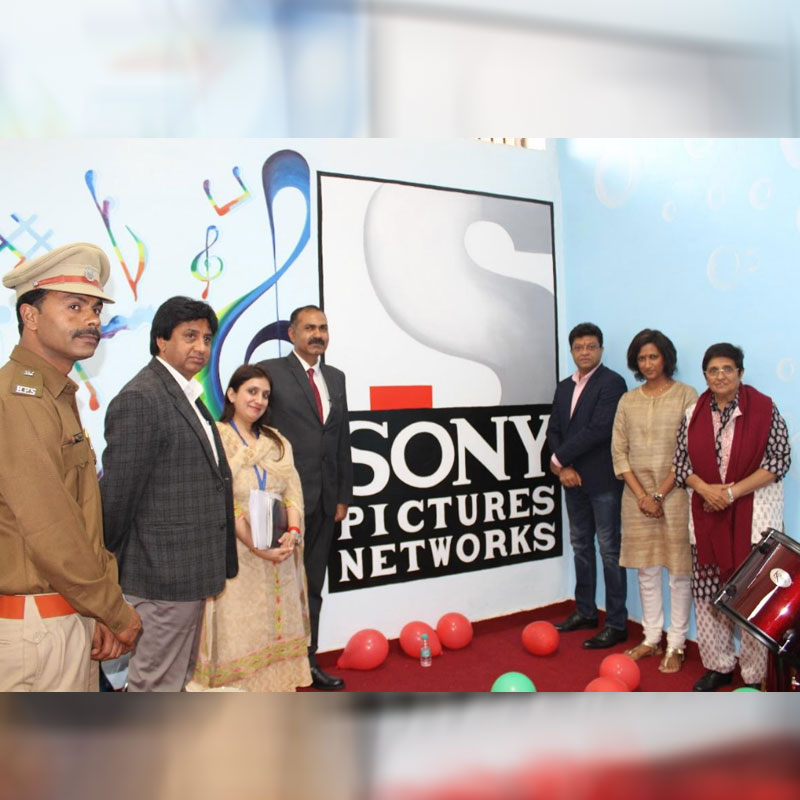
    Sony Pictures Networks India inaugurates its first music room at Bhondsi Jail, Gurugram

    MUMBAI: Staying true to its CSR commitment of Ek India Happywala, Sony Pictures Networks India (SPN) has partnered with India Vision Foundation to launch its first music training room at the Bhondsi jail in Gurugram. SPN’s CSR programme focusses on creating a positive impact in our ecosystem and is built around 3 pillars; empowerment, education and environment. The Dhun Project falls under the pillar of empowerment through music that was initiated in 2016, to celebrate the 5th anniversary of Sony MIX.

    In the second year, ‘The Dhun Project’ aims to use the powerful medium of music for the rehabilitation of prison inmates, thus preparing them for a successful reintegration into society post their prison term. By believing that music can bring about harmony, SPN along with the India Vision Foundation is working towards inducing change in the mind-set of prison inmates, by helping them discover their talent and hone their music skills.

    Through ‘The Dhun Project’, SPN will also be setting up training centres in four additional prisons across the nation – Rothak & Sonipat of Haryana Prison and Dasna & Kasna prison in Uttar Pradesh. Furthermore, the network along with India Vision Foundation have appointed special trainers (vocal and instrumental) who will visit the music centre on a regular basis to train the prison inmates. The training centre is well-equipped with instruments such as a drum set and pad, tabla, dholak, harmonium, guitar and electric keyboards.

  • Sony to launch Marathi GEC

    Sony to launch Marathi GEC

    MUMBAI: Sony Entertainment Television (SET) is prepping up to launch a new regional language general entertainment channel Sony Marathi. Sony’s Ajay Bhalwankar will lead the channel, according to a source at SET.

    The channel is at the development stage and the company is building the team by hiring more employees for the new channel. The launch date has not been announced yet but the channel is likely to make its debut after March, said another source.

    Sony is seeking to tap diverse regions of the country by expanding its offerings with a variety of content and by expanding its channel library. Sony Marathi will be the network’s second regional channel after Sony AATH, its regional channel.

    SET had brought Bhalwankar on board as chief creative director in April 2014 to provide creative leadership and direction for SET and lead the programming and on-air production teams. The new channel will run under Bhalwankar guidance.

    Recently, the good times have been rolling for Marathi channels as they are attracting good viewership. The Marathi GECs in the market that currently are doing well are Colors Marathi, Zee Marathi and Star Pravah. The genre has surprisingly turned out some of the most viewed channels in the television space. In week 41 in 2015, the genre had registered 242 million impressions, whereas in week 50 of 2017, the viewership was 594 million impressions, an increase of 145 per cent in the weeks compared.

    Currently, Sony Pictures Networks India has SET, Sony SAB, Sony AATH, Sony TV HD, Sony SAB HD and Sony Pal in the GEC genre.

    Also Read:

    ‘Prithvi Vallabh’ is 20% history, 80% mystery: Anirudh Pathak

    Man Jit Singh, Andy Kaplan to depart Sony Pictures following restructure

    ‘Porus’ launched as ‘Digvijaya’ in Sri Lanka

    Sports fans power 35-40% of traffic on SonyLiv

  • Comment: Does Star stand to gain or lose by sharing IPL with DD?

    Comment: Does Star stand to gain or lose by sharing IPL with DD?

    MUMBAI: On a balmy September afternoon, while some reps from bidding companies blew smoke in the air (and the tensions, too, probably) at a five-star hotel in South Mumbai’s Colaba, some senior executives of Star India were lounging in a room in the same hotel-not as anxious as some of the smokers outside, a person familiar with the settings chirped. Soon, the Indian cricket board, BCCI, announced that Star had won the broadcast rights to the money-spinning IPl cricket tournament for five years for Rs 16,3475 million (Rs 16347.5 crore) or approximately $ 2.55 billion.  

    Cut to a fortnight or so earlier to New Delhi where the August summer was refusing to relent and the temperature fluctuated in a room in Supreme Court where the learned judges observed that India’s pubcaster Prasar Bharati cannot freely re-transmit TV signals of sports or cricketing events to other distribution platforms where the rights were held by a private broadcaster or a TV channel and was being shared with Doordarshan under a legislation of the country.

    In both the cases cited above the common factor was Star India (a subsidiary of Rupert Murdoch-controlled News Corp/21st Century Fox), probably the biggest broadcasting company in India in terms of revenues.

    Champagne should have been popped on both the occasions. Probably it was, but privately. And, the public reactions were cautious. Even in his interview to indiantelevision.com mid-September, Star India chairman and CEO Uday Shankar was cautiously optimistic about IPL win and India’s regulations relating to the media sector.

    Almost 70 days after winning the IPL rights — somewhere in between hectic consultations would have happened between Star India top leadership and company’s promoters — reports surfaced in media that Star India probably would have to share the IPL telecasts with pubcaster DD that will air the cricket matches on its terrestrial network and FTA DTH platform, DD FreeDish.

    What’s the gist of these reports in the media? IPL cricket matches would be telecast live on Star Sports channels and also a DD channel that would be available terrestrially and on DD FreeDish. This would be made possible — as and when the government formally issues a directive as both the law  and information & broadcasting ministries were being consulted — under a regulation called the Sports Broadcasting Signals (Mandatory Sharing with Prasar Bharati) Act, 2007. Some tweaks would have to be made and IPL categorized as a tournament of national importance at par with other sporting events like Olympics, Commonwealth Games and Wimbledon for the sharing to be mandated.

    Indiantelevision.com must admit, though, till the time of writing this piece everything’s in the realm of conjectures and possibilities. While Star and BCCI did not comment on emails on the issue sent to them by us, even the government sources quoted in the media as having articulated on the possible development were unnamed.

    It makes one thing clear: that nothing is clear as of now or set in stone. It’s also possible that as a trade-off for the Supreme Court directive barring  free re-transmission of shared TV signals of sporting events where rights were held by a private broadcaster, Star India could be mulling sharing IPL matches with DD — and also part of the advertising revenue.

    According to Financial Express newspaper, which quoted industry estimates, Sony Pictures Networks India (SPN), the official broadcaster (till 2017) of the T20 tournament since its inception, had crossed the Rs. 1,300 crore (Rs. 13,000 million)-mark in terms of ad revenue. The newspaper also stated that IPL’s season 10 garnered 1.25 billion impressions as per BARC data, gaining 24 per cent more viewership (compared to last year) on Sony channels.

    Writing a guest column in indiantelevision.com after Star won the IPL bid in September, senior business journalist and author of two books on IPL, Alam Srinivas, observed: “In 2009, when the IPL rights were renegotiated, Sony agreed to pay Rs 82,000 million for a nine-year period or Rs 9,111 million a year. At a simple inflation rate of 10 per cent, the figure will escalate to Rs 17,311 million over nine seasons. At a compounded rate of 10 per cent, the figure will be Rs 21,483 million. Star agreed to pay Rs 32,695 million per year, or a sizeable over 50 per cent higher than the 10 per cent compounded figure. This indicates that the IPL’s valuation has shot up, or at least the stakeholders think so.”

    Given this scenario, the following questions arise:

    Question No. 1: Is IPL that crucial (versus Test cricket, for example) to be designated as a sports of national importance to be shared with the pubcaster?

    Question No. 2: If that’s made possible, how will the technicalities of different TV feeds play out?

    Question No. 3: Will Star gain or lose financially having dished out $ 2.5 billion for a five -year rights?

    Question 4: Will sharing of the IPl matches with DD impede or affect Star’s usual high-octane marketing campaigns aimed at monetization of high-value events and will it set a precedent?

    The answers are not easy to frame as possible explanations are not forthcoming in the absence of any formal and official confirmations or denials.

    If we have to answer Q. 1, then prima facie, the answer would be ‘no’. IPL is a domestic cricket tournament having played out for 10 years with DD showing (officially) minimum interest. That IPL’s popularity has increased shouldn’t be reason for it to be shared with pubcaster, especially when the pubcaster has mostly shied away from airing Test cricket, which is a five-day affair over seven hours daily, and even when India featured in such matches.

    But then in an age of social media, when many games are played on the basis of perceptions, giving a huge swathe of Indian population easy and practically free access to IPL matches on DD could also mean scoring points with a big voting bank. After all, TV services or even entertainment are not categorized under essential services (like some utility services) that need not be subsidized by the government or access made free. Still in India, politics and sports have had a history of an intricate and, at times, incestuous interplay.

    Question 2 and 4 are easier to attempt. Simply because if Q1 and Q3 are sorted out — amicably — then these issues don’t matter much. TV feeds have been shared with DD and AIR by private broadcasters in the past on few occasions. What would be important is that DD adheres to the Supreme Court verdict and ensures that its free signals are not illegally carried by any unauthorized distribution platform(s) in the case of IPL matches.

     This brings us to Q.3 on which hinges Star’s fortunes despite being mandated by a regulation that can smack of strong-arm tactics by the government.

    However, it has to be admitted, again, that DD’s reach is tantalizing — at least theoretically. The FreeDish FTA DTH platform has an estimated 22 million subscribers, mostly in non-urban areas, while DD channels on the terrestrial network supposedly cover over 80 per cent of the approximate 1.26 billion Indian population.

    Given these numbers — clamour amongst private TV channels to be on the FTA DTH platform could be an indication — sharing of IPL matches with the pubcaster may not be such a big loss for Star.

    In an imagined world, Star could agree to share the IPl matches, forced under a regulation, but insist that it would retain the rights for marketing and ad sales of the matches  shown on DD channel too, sharing 25 per cent of the ad revenue— again as per stated law.

    This move could help Star not only increase the reach of IPL matches by at least 25 per cent, but also do some imaginative and aggressive ad sales with sponsors on digital and linear TV spaces. A marketing guru did admit in private that most FMCGs and big global spenders are now more looking at non-urban markets, which DD’s platform guarantees.

    In conclusion, we might say there are too many straws in the wind presently. A word of caution: this can set a precedent that may not always be healthy for the rightful rights owners. But then, as the boss, the government is always right, as the folklore goes.

    ALSO READ:  

    Guest Column: Star India’s IPL deal raises three crucial questions

    Star bids highest for BCCI’s IPL media & digital rights and is the winner

    IPL has come to the rightful home of cricket in India: Star’s Uday Shankar

    Star’s Uday Shankar on distribution challenges, IPL, FTA vs. pay TV, innovations, Made in India content…and much more

    With IPL rights, Uday Shankar gambles audaciously, must plan pragmatically


  • ATF 2017 attracts Indian  content studios, both big and small

    ATF 2017 attracts Indian content studios, both big and small

    MUMBAI: Singapore-based Reed Exhibitions’ Asia TV Forum (ATF) is round the corner and the buzz around the event only seems to be ramping up. This year, the forum will see around 60 countries from all over the globe. From 28 November to 1 December 2017, more than 90 thought leaders will deliver fresh insights at over 24 ATF conference sessions, discussing present-day issues such as big data, movement in the over-the-top (OTT) scene, new monetisation strategies, unscripted entertainment formats and kids content.

    Indiantelevision.com founder Anil Wanvari has been working on developing opportunities for India’s animation and live action sector – whether for TV or OTT – over the past three years at ATF as its representative for the regions of India, Pakistan, Sri Lanka and Bangladesh.

    “We have seen the presence from south Asia grow from a small 20-30 to around 140 this year since I was given the task of working closely with the region’s content creators, buyers and distributors,” says Wanvari. “I and the team which works with me have been happy to help catalyse their presence on Asian and global stages. ATF has a strong presence of smaller buyers, producers, distributors from the region apart from the big name players from Europe and the US. It has become a must visit event for the content executive.”

    The major Indian satellite TV networks Sony Pictures Networks India, Star India, Indiacast-Viacom18, and Zee Telefilms have their syndication and licensing teams exhibiting in the Marina Bay Sands venue. Other noteworthy exhibitors include: format and content syndication company GoQuest, Swastik Productions’ One Life Studios which is hawking its mega budget Porus and homegrown formats, One Take Media which is selling its kids animation and cookery shows, film and digital content creator and distributor Rajshri Entertainment, infotainment channel EPIC TV, kids content pioneer Green Gold.

    “This is probably the highest exhibitor strength India has managed at ATF ever,” says Wanvari. “The country’s content selling industry has come a long way despite the oft repeated statement that our TV shows are not good enough to cut the international grade.”

    Among the initiatives that Wanvari and Reed Exhibitions have supported is the building up of delegations from India and south Asia. The first of these has been the one which has been growing under the umbrella of the Media & Entertainment Association of India (MEAI). The association’s secretary Ankur Bhasin has cobbled together a delegation of 11 small and medium enterprises (SMEs) consisting of 13 delegates in the content creation and distribution spaces.

    Says Bhasin, “Fueled by improved connectivity and mobile explosion, Asia-Pacific is experiencing the fastest growth worldwide in terms of growth of time spent consuming media online – about 6.7 per cent consistently year on year compared to global average of 2.9 per cent. Although the average consumption of three plus hours per day for the Indian audience and about six hours per day for Chinese viewers is still relatively low compared to western countries, with over 60 per cent of the world population concentrated here, that is a substantial change on how media is being consumed. It is no surprise that this explosion is resulting in a growing demand for content in the APAC market.”

    Wanvari points out there are many commonalities in culture that India shares with east Asian countries like Singapore, Malaysia, Indonesia, Vietnam, Japan, south Korea, Sri Lanka, Pakistan and Bangladesh. “We all share Asian sensibilities and values,” he says. “Hence, we can relate to each other’s content.”

    Bhasin believes ATF is a very important market to target Asian buyers as well as to look for co-production opportunities. “Increasingly, there has been demand from MEAI members to focus on markets in the east and this has resulted in a growing delegation to ATF from MEAI. MEAI hopes this will materialize into a pavilion next year to give a fixed presence to the delegation being put together by the association with the support of Anil and his team,” Bhasin adds.

  • Zee TV new logo unveiled; refreshed digital platform Zee5 launch soon

    Zee TV new logo unveiled; refreshed digital platform Zee5 launch soon

    MUMBAI: Celebrating its silver jubilee at a grand event here on Saturday, India’s first private satellite TV channel, Zee TV, unveiled a new logo aimed at representing its journey for the next 25 years, while its parent Zee Entertainment Enterprises Ltd (ZEEL) used the occasion to also showcase the logo of its new digital platform Zee5, which is to be launched over the next few weeks.

    Speaking during the Zee Rishtey Award, organised on Saturday and telecast on Sunday that was attended by the company bigwigs, television stars and a “3,400-strong Zee family”, ZEEL MD and CEO Punit Goenka said that not only Zee was the world’s “biggest joint family”, but is committed to keep entertaining and innovating over the next 25 years also, which is reflected in the new channel logo (tagline being `aaj likhenge kal’ or ‘we’ll write our future today’).

    The stage was perfect to unveil a teaser of Zee group’s soon-to-be-launched new digital platform in the form of its logo. The OTT service, to be called Zee5, is a completely refreshed version of the group’s existing digital services and will ultimately subsume with itself the likes of dittoTv and Ozee. Incidentally, the digital platform logo was dedicated to Zee group chairman- founder-promoter and media baron-turned-Member of Parliament Subhash Chandra.

    “The new identity (of Zee TV) is not an evolution, but a revolution of the belief of being stronger as one family. The new colour of the logo is a sign of transformation,” Goenka was quoted by Zee sibling and newspaper DNA as saying, adding, “Over the next few weeks, we will see the rollout of Zee5 across India and other global markets.”

    ZEEL is a worldwide media brand offering entertainment and news content to diverse audiences. With a presence in over 172 countries and a reach of more than a billion people around the globe connecting in 19 languages, it is among the largest global content companies across genres, languages, and platforms, spanning presence across broadcasting, movies, music, live entertainment, digital and talent businesses.

    Holding forth further on Zee5, DNA quotes Goenka (Chandra’s eldest son) as saying, “Zee5 is poised to be the largest digital platform for Indian entertainment in the world, bringing the best of live television, Indian and international TV shows, movies and videos to viewers in the language of their choice and across all internet connected devices.”

    According to ZEEL CEO, international broadcast business Amit Goenka, “I see excitement in the air. We are progressing towards a new global destination. Zee5 is a digital platform that is born out of passion to create something new for the industry, and we are going to create a new history in the coming 25 years.”

    Meanwhile, Chandra tweeted two photos on Saturday from the 25th birthday bash of Zee with the message: “Then: Interacting with my colleagues when we completed 150 days. And Now: Interacting with colleagues tonight while we celebrate 25 years.” Incidentally, Chandra is one of those few businesspeople in the world who, as a local partner, managed to buyout Rupert Murdoch in three joint ventures in a cash and stock deal.

    Speaking on the occasion, Chandra, in what could be a direction to colleagues now managing the affairs of ZEEL, said, “We have to keep going, as it is not written in our fate to stop.”

    “I remember when we celebrated the first anniversary of Zee TV back in 1993. I had only 50 people (around) those days, and today, in 2017, we have more than 3,000 individuals who are a part of Zee. I believe that human resource is the biggest infrastructure that one has, and that is one of the biggest plus points for our nation,” he reminisced.

    public://PG Announcing Zee TV Logo2.jpg

    Over the last 18 months, ZEE has been restructuring its business portfolio shedding unattractive properties like the sports channels, which was sold to Sony Pictures Networks India, and buying GEC channels of Reliance Broadcast as also FM radio channels to expand reach and business that add value to its core value as a corporate entity.

    public://SC at Zee bash-Then and Now.png

    ALSO READ:

    ZEEL to unveil new look of Zee TV on 15 Oct

    Zee South biz head Prabhakaran says: “Growth trajectory is our focus”

    Ditto TV has the largest paid OTT subscriber base in India, says Zeel’s Z5 head Archana Anand

    ‘Chawal’ to channel: Zee’s 24 years of a memorable roller-coaster ride

  • MIB, Prasar Bharati mulling B-school help on DD & FreeDish biz models

    MIB, Prasar Bharati mulling B-school help on DD & FreeDish biz models

    MUMBAI: The government is exploring seeking help of an Indian Institute of Management to suggest ways on revitalising Doordarshan, including studying the existing business model of national broadcaster’s FTA DTH service DD FreeDish and whether further suggested improvements could be implemented.

    According to government sources, the move is part of ministry of information and broadcasting (MIB)’s efforts to shore up the bottomlines of Prasar Bharati, an autonomous body that manages India’s two pubcasters, Doordarshan and All India Radio.

    A B-school may be roped in to study the business model of DD FreeDish — that at present auctions slots on the platform to private broadcasters too — and explore whether if private sector TV channels are bumped off DD can generate revenue on the strength of its own channels, many of them also distributed terrestrially.

    As per some media reports, DD not only put on hold the latest round of e-auctions for slots on FreeDish in August 2017 on an advisory from MIB, but has also stopped renewing agreements of TV channels, which are presently on the DTH platform but are faced with a blackout once their annual contract comes to an end.

    A top Prasar Bharati official is said to have made a presentation to MIB minister Smriti Irani recently on how the DD set-up could be revitalised, including rejigging the business model for DD FreeDish, amongst other things.

    Though most big private sector broadcasters like Star India, Zee, Viacom18 and Sony, all having their channels on FreeDish, have not yet officially reacted to DD FreeDish keeping in abeyance the e-auctions for administrative reasons, smaller TV channels may feel the pinch. One of them, Cinema 24×7, has moved the telecoms and broadcast disputes tribunal TDSAT seeking interim relief as its contract expired in September 2017 and, according to its petition, it failed to get clarifications from DD on future auctions.

    The magic of DD’s FTA platform was discovered by TV channels a couple of years back with the battle for a slot intensifying in the last one year or so, egged on by BARC India starting to measure non-urban and rural audience. On DD FreeDish, it’s not pubcaster’s channels that top the list in terms of audience ratings, but mostly those belonging to the private broadcasters.

    A TV executive, on the condition of anonymity, explained that while Doordarshan, as a statutory body, survives on annual grants from the government, in 2016-17, DD FreeDish recorded revenues of about Rs 2641.7 million, a 47 per cent increase from a year ago. Hence efforts to revamp the current business model for DD FreeDish, having almost 52 per cent rural viewership that attracts private TV channels willing to pay hefty carriage fee, could prove detrimental for the pubcaster’s revenue, the exec added.

    Former MIB minister Manish Tiwari, while criticising DD’s reported moves to change the existing revenue models for DD FreeDish by putting on hold a transparent mechanism like e-auctions, told Indiantelevision.com, “DD FreeDish benefits from the presence of private TV channels on its platforms as it provides diversity of content to non-paying rural audiences.”

    ALSO READ ;

    WOW Cinema petitions TDSAT on delayed auctions for DD FreeDish slots

    Govt to help revitalise DD under ‘autonomous Prasar’, dubs censors as ‘facilitators’ within law

  • Star’s Uday Shankar on distribution challenges, IPL, FTA vs. pay TV, innovations, Made in India content…and much more

    Star’s Uday Shankar on distribution challenges, IPL, FTA vs. pay TV, innovations, Made in India content…and much more

    From the thirty seventh floor room, consisting of a table for the occupant to stand and work, some thought-provoking books and a huge TV screen, apart from other knick-knacks, the city life and environs below look scenic. Rather, most of the surrounding sea-facing skyscrapers in between the  green patches of land that could be seen below belie the image that it’s India. Until a Mumbai local train passes by, giving away the address of  Urmi Estate (which houses Star India’s Hq) , it could have been located anywhere in Hong Kong or Singapore for that matter.

    But in sharp contrast to the tranquil view of Mumbai from behind big glass windows of the thirty seventh floor, in most of the other 14 floors occupied by Star India in a tony building in South Mumbai’s Lower Parel business area, there is a sense of urgency — and excitement. And, why not? After all one of the biggest media companies in India — some say it’s the largest in terms of revenues — has many things on the plates of every employee, including the top honchos residing in the top floor. Bagging the global media rights for the  much-coveted IPL  is just one of the many issues engaging Star India’s employees. Though, in all fairness, it won’t be wrong to state that IPL probably could be one of the most important issues presently. Simply because, as the dust settles on the euphoria of this massive win , the difficult task of planning for returns on  the investment of $ 2.55 billion starts now.

    Ushered into the room with a view, its occupant and Star India chairman and CEO Uday Shankar shakes my hand warmly, exuding the same camaraderie that he did almost three decades back when we used to meet as journalist colleagues sometimes in the New Delhi house of one of his early mentors, Siddharth Ray (India’s first general manager  for Star TV  – yes, in the 90s it carried that name officially). Over tea (for him) and strong Espresso coffee for Indiantelevision.com’s consulting editor Anjan Mitra, a wide range of media matters were debated for about 90 minutes. Edited excerpts from a free-wheeling interview follow. Read on:

    How do you view the Indian broadcast and entertainment industry as of today?

    There are two or three things that I feel very strongly about. From a consumer point of view it’s a great time for them because large volumes and range of domestic and global content is being made available to them at increasingly competitive prices. But when it comes to the industry itself, it’s a bit of a mixed bag. Though the industry has grown dramatically in terms of the number of players in the last several years, the business case of the industry looks under pressure. When I say business case, I don’t mean just the profit model, which is under pressure for a large segment, but the sustainability itself for the whole industry. 

    I think, the IPL bidding is a very interesting case in point and an indicator of things to happen in future in the media sector.  This is probably the only place and example where for a major content right, the contenders included two very strong media companies (Star and Sony Pictures Networks India), two big telecom companies (Airtel and Reliance Jio) and a couple of global digital/technology companies (including Facebook). And, they all valued the property almost equally as important and almost in the same ballpark.

    So, media is no longer the sole domain of traditional media companies. We have heard this being said for some time now, but it played out for the first time in broad day light here. What is more significant is that such competitive bidding for content has not happened in the UK or the US, which are considered mature and big media markets with good broadband infrastructure, but in a country where the digital distribution of content is of very recent vintage.

    I think in some way we set ourselves up for such high inflation by creating Hotstar, which led everybody to realize that there is a value in that kind of a business model. So, for the industry this is time to wake up and take note.

    Third, while parts of the media and entertainment businesses have leaped forward as has the consumer, the distribution and the regulatory models remain locked up in legacy issues and that’s creating a bit of a mismatch. That’s a challenge that we need to solve together as an industry.

    What are the problems besetting video content distribution in India?

    There are various aspects. If you are talking about it in the digital domain, I think with the launch of Reliance Jio there has been a huge disruption. But access to data still remains limited and expensive. The broadband infrastructure has improved in the last 12 months or so, but is still nowhere where it should be. The number of smart phones has grown dramatically in India, but is still a small percentage of the total mobile penetration.

    On the TV side, the industry has done a great job on many fronts. Still, we have to realize that we are competing with global companies with great resources and scale, and the benchmarks too are global. Whether it is story telling or quality of production or marketing or brand strategy, benchmarks are global. So, we the content industry need to step up our game.

    The competition for Star will not be only from similarly placed media companies in India but will come from technology and other global companies; from the likes of Amazon, Alibaba, Google and Facebook. Are we ready for that as an industry? Individual companies may be ready for such competition, but I am not sure if we are ready as the content industry.

    Part of the problem is because the monetization models haven’t evolved much. We still have regulatory issues, which are challenges, though I don’t want to go into too many details on that aspect.

    Still, the entire TV distribution industry, according to me, has done an amazing job of creating 180+ million connected homes. Now that segment has to make sure each one of those homes is going up the value chain rather than trying to offer them discounts, etc. The stakeholders are competing only on the price front. If you are competing only on the price point, then you are compromising on the consumer experience and soon the consumer will start questioning whether it is worth having a cheap service, minus the experience. So, there is this whole challenge of getting the consumer up the value chain.

    Where do you see Star India placed in the scenario that you have painted where both challenges and the opportunities abound?

    There are things that an individual or a company can do with its own enterprise. Then there are things that all of us can do as an industry. I believe that if the whole industry is not progressing, individual companies can only progress so much. In that context, at Star India, we have done a good job and I am satisfied. Can we do more? Of course we can always do better. But we have managed to create a fairly deep and diverse entertainment platform on television and have leadership in a large number of entertainment markets.

    To give you an example of the enterprise we have shown, take sports for instance. Five years ago we got into sports (management and broadcasting) and have created, perhaps, some of the most exciting franchises anywhere in the world. We have not limited ourselves to the sport that guarantees success (cricket), but have gone and experimented too. We have put our faith behind new initiatives in sports whether they are kabaddi or badminton or hockey or football. Our mission is to try turning India from a one-sport nation to a multi-sport one, while maintaining the pre-eminence of cricket. Some progress in that direction has been made and it’s satisfying.

    Can Star make it a mission to get India the Olympic gold considering its continued investments in sports?

    Star is a media and entertainment company and I would not want to have the arrogance to say we can make India win an Olympic gold medal. All I can say is that we’d be happy to partner with any agency or initiative that is designed to get India closer to the Olympic gold(s). Our job is to make sure that we showcase sports’ growth and breakout stories. I think we have done that job very well. I would like to believe that with Star Sports we are able to showcase the new (sporting) heroes far more prominently today than what we could have done few years back. If national team members of various sports, who were relatively unknown, now are recognized by ordinary citizens, I think we have done our job — in fact we are doing just that.

    That being said, I would like to add that private investment in sports ought to be welcome as it is this investment that helps sporting organizations plough funds into infrastructure, training and facilities, which in turn contribute to sporting success.

    What are the changes on the content distribution front that you have seen and what are the continuing challenges for the industry, considering Star has had limited exposure to the distribution business?

    If you look at how much we have moved in the last 10 years, it’s an impressive story.  The problem is that the process of digitization, which started essentially with DTH, and then picked up steam in 2011-2012 hasn’t delivered the full value.

    Digitization still remains an unfinished agenda though it was meant to have been over quite some time back. It was supposed to have meant that people had access to better content at competitive prices and for good content to get easier distribution avenues. That hasn’t happened. The idea of digitization was also to allow content creators like us to offer integrated services to the consumers. That too hasn’t happened and the story has really not moved. Broadband access may have improved dramatically, but the participation of cable and DTH sector in that is miniscule.

    public://Uday Image--1_1.JPGDigitisation still remains an unfinished agenda. People should have access to better content at competitive prices, and for good content to get easier distribution avenues

    To put it bluntly, a bunch of people, who have got used to the idea of benefitting from an economy of shortages or scarcity, continue to create scarcities or continue to create conditions of scarcities (of content) and benefit. Fundamentally, it hurts the society and the industry. That is the disappointing side of the distribution business.

    Star could have continued contributing by remaining a stakeholder in the distribution business. Comment.

    While we were a minority shareholder (in Hathway) our ability to influence the business was limited. That is why we decided to get out because we were not shaping the (distribution or the company) agenda. We do have a minority investment in Tata Sky, but, again, our ability to set the agenda of that company is limited.

    Will Star review its distribution business exit or its paring down, now that the government has liberalized investment norms for the DTH and cable sectors?

    Government has allowed (increased FDI in DTH and cable companies) only at a headline level. The problem is that we were restricted even before the FDI investment limits went to 100 per cent. I think the Prime Minister has eased the investment norms facilitating more FDI in this sector, but we are hampered by other regulations. Cross media restrictions, which in any case is a discriminatory piece of regulation, has only blocked a company like Star from investing in the distribution sector more aggressively. This restriction is applicable only to DTH/HITS ventures but not to cable or IPTV, which in itself appears to be an arbitrary measure. And, we don’t want to skirt around regulations to create business entities to be in a business. We don’t want to invest and create a value when our say in a company remains locked. In that sense, our ability to invest more in Tata Sky is still restricted.

    Is the business model in India changing for content aggregators and owners like Star? Has it now boiled down to free-to-air (FTA) vs. pay TV?

    I am glad you asked this question. It is amazing how in this country we indulge in polarized arguments where none needs to exist.  Where does the question on pay TV versus FTA arise? Why should it exist at all? In most other countries, there is a place for FTA and pay TV businesses. The problem starts arising when they start competing with each other and that does not need to happen. In this country, a major part of the broadcasting business that developed in the last 20 years was primarily done by pay TV broadcasters. As access to FTA broadcasting, which is mostly terrestrial, was not open to private broadcasters it remained in the hands of the public broadcaster. Until Doordarshan FreeDish came along.

    Now technology has opened up an opportunity creating a space for FTA and pay TV broadcasting.  I personally believe that the two should and could co-exist in this country — pay TV for those who want to pay and have access to a much diverse and richer range of content and FTA platform for those who don’t want to pay as much for all of it but still want to get some basic content.

    Does it happen vice versa too when pay TV content or channel is brought onto a free platform just to botch up the competitor’s business plans?

    I think that should not happen. My public position has been that we should not take pay TV content onto a free platform (like DD FreeDish) because it not only undermines a pay TV consumer, but also a pay TV platform. In my opinion that is a wrong strategy. I personally started a dialogue between platforms and broadcasters to stop such a practice but it has not been too fruitful. We launched Star Bharat on the FreeDish platform, but it has fresh content.

    Q: Will Star Bharat continue to remain a pay channel also as per media reports?

    Don’t trust everything that you read in the media. However, there is nothing that prohibits a channel being available on DD FreeDish and on pay TV platforms. A whole bunch of channels in the past have done this; almost the entire language news category is on pay TV and FreeDish platforms at the same time. A whole bunch of entertainment channels too have followed that practice. So, what you hear about Star Bharat is simply mischievous.

    Q: Please clarify whether for Star Bharat a consumer will have to pay if available on DTH or cable platforms?

    Yes, a consumer of a DTH service or a cable platform will continue to pay for Star Bharat just as he did for Life OK for the time being. We sought permission from the government saying the channel will be rebranded as Star Bharat and would be offered on DD FreeDish as well. So, the pricing issue remains where it is.  Some people have chosen to find a problem with Star Bharat, while being totally comfortable with their own friendly channels. We are the only ones to have fresh original content for a channel on FreeDish like Star Bharat. Quality of production is high on Star Bharat as we are spending the same amount of money per hour or per half hour that we would have spent on Star Plus, which is a premium channel.

    Q: James Murdoch said in an investor call that Star India is on course for $ 500 million EBIDTA for year 2018 and that cricket bids would have to be disciplined. Do you agree?

    (Smiles) If my bosses have said that we are on course, then I would have to follow the directions. However, those statements were made in a responsible manner as we do have a plan and are working towards the goal. If the Indian economy remains on course, we are on course for all that.

    As far as disciplined bids (for cricket rights) are concerned, of course it was a disciplined bid for IPL. Everybody has seen how close it was where the margin of victory was just three per cent. So, what more can I say in defense? Six years ago when we signed up for BCCI rights (media rights to Indian cricket), we paid Rs. 430 million (per match). At that time critics said Star had probably paid too much. It turns out now that we didn’t and that worked out really well for us. Today that (figure) has become the new normal. Now people are saying we are paying too much for IPL (US $ 2.55 billion for a five-year global media rights) only because 10 years ago it went at a much lower price. But then ten years ago the world was different, India was different and IPL was an untested product.

    Q: Would you agree with Indiantelevision.com’s analysis that Star actually got a good bargain for the $ 2.55 billion it bid for IPL rights?

    I don’t understand why people are so excited about it. Hardly ever a sports media rights been awarded at such a close margin. Why are people asking ‘why has Star paid so much’? Clearly there were a whole bunch of people who were willing to pay and it was evident in the bidding numbers.

    public://Uday Image--2_2.JPGEach media company has its strengths. I respect Zee enormously

    As an aside, my personal view is that BCCI (Indian cricket board) lost a lot of value because of the duration of the contract. If it had been for 10 years, the value would have gone up dramatically. And, I am not just saying so because of the length (of the contract). Had it been for a longer period, per year value too would have increased tremendously —shorter the period, lesser is the flexibility. 

    Q: What are your plans to monetize the IPL property?

    These are still early days, so you have to give us time to think through our strategies, which will unfold in due course. But I certainly won’t share with the media what I am trying to do.

    Whether we have bid high or not will be judged by the fans of cricket. All I know is that IPL’s a very powerful tournament and cricket runs really deep in everybody’s bones in this country. To be successful, you just need to work on intensifying and heightening the experience of cricket further.

    I believe that power of sports is such that you don’t need to give it steroids. You just need to be true to the spirit of the game and make sure that the experience for the fans is evolving continuously.  That is where our strength comes in and I would like to believe that as Star is the company that successfully created a few sports franchises that didn’t exist in the public domain earlier. We should be able to do that with IPL too. With cricket it’s not a one shot affair, it’s a process where you need to continuously evolve and we will work on that.

    Q: Will you continue to work on Pro Kabaddi League too and bring it up to the IPL level?

    We have brought PKL already in the limelight. But to be honest, though PKL still has some distance to travel to reach the levels of IPL, its growth has been phenomenal. When we were looking for franchisees for the inaugural edition, it took Anand Mahindra’s personal charm to get people in. This time round, when we added four new teams, there was a problem of plenty — a large number of top corporate houses and individuals were extremely keen to get associated with PKL. So, clearly people believe in what we are trying to do. Look at the Indian Super League (soccer) story, which is in partnership with Reliance Industries. Except a few loyal pockets in the country, football nowhere figured in the country’s psyche or much in public debates. However, we have managed to turn the passion for football into a serious commitment for fans all over the country.

    Q) Is that why you are picking up another indigenous game kho-kho to try its rediscovery?

    Are we? We haven’t taken a decision on that sport yet. 

    Q) Which media company is the closest competitor of Star whom you respect?

    Each media company has its strengths. I respect Zee enormously.  I think it is very strong on discipline and doesn’t get distracted by what others are doing. It works hard to execute a plan it has. Similarly, other companies have their own strengths.

    This is a business where competition is very dynamic and the power lies in the hands of the consumer. One half hour gone wrong can swing things away from you. As we have such a diverse portfolio, it is not about one competitor. Even if we are the leaders in one segment, in some other part of the business we are facing heat. But the entire business, hopefully, will not face heat from any one competitor.

    Q: So Star is in a dominant position.

    I don’t like the `dominant’ word. Especially because I feel this whole idea of dominance in a business — especially a media business — is a spurious claim. Either it comes from a complete lack of understanding of the business or it’s a mischievous allegation. Simply because there is no one product called Star India. For viewers and advertisers, it is a combination of multiple TV channels and each of those channels consist of large number of shows. You may have a show at 8 pm that is chart-busting and then at 8.30 pm you may have a show that nobody is watching, which usually is the case. A show that was doing really well three months ago can go into a total free fall if one artist is not there or there’s twist in the story-line.

    Take sports, for example, again. You go and get rights of a property for a number of years and after that it goes to the public when anybody else can also bid for the rights and participate. On the digital front, the competition is even crazier. So this argument of anybody building dominance, not only Star, is totally mischievous and spurious.

    Q: Let us rephrase the question. Isn’t it a great feeling to continue being a leader?

    In some parts of the business, we continue to stay ahead and that’s because we work harder. We spend more money on our content and are less focused on profits. We reinvest (in the business) more than probably anybody else in this sector in the country. Media and critics have written for the last five years or so that Star was not making profits in sports after investing heavily in sports content and now people are saying otherwise. We have now started investing in Hotstar, a digital platform. I think the one big difference between us and everybody else, and which gives us leadership and a little more of steadiness, is that we are always trying out new things.

    We have tried to explore new horizons and boundaries. Not all such initiatives have been successful, though. I would like to believe that we have pushed the creative envelope in a responsible way far more than what has been done in the past. Are we trying to future-proof ourselves, as you ask? I wish it could have been possible. But, yes, we are investing in the future.

    Q: Critics and some industry players feel that Star India has become so big that it can challenge the sector regulator too. Comment.

    First, we have not taken on any regulator. We have had some fundamental and limited issues, which became sharper in the new tariff order (of TRAI, the broadcast regulator). Our understanding of the TRAI Act says that the regulator has jurisdiction over distribution/transmission of content, but not the content itself, which in our case can be determined only under the ambit of the copyright law of the country. The law of the land gives every aggrieved person the freedom to go to a court for adjudication. And, that’s what we have done. There is nothing like challenging the jurisdiction of the TRAI.

    Q: Is the India market over regulated compared to some other markets in Asia or the west?

    I would not make such a blanket statement. There are parts of the market that are over regulated and there are parts which are not. All I would like to humbly submit is that there are some parts in the existing regulations — especially those dealing in relationships between distributors and content owners — that are debatable. If the proposed regulations were to come into effect today as they are, any new entrant to the Indian broadcast industry would find it a difficult and expensive proposition.

    Q: What more would you like the government and regulator to do to be a bigger facilitator of doing business apart from what they have already done?

    We don’t have to create a shoe to fit every foot as there are different feet sizes. Similarly, there are different needs for different set of people in terms of content. However, let me make it clear that I am not making a case for smut because Star doesn’t do sleazy content.

    TV is a family medium and we should be mindful of that; Star certainly is. There may be families where kids also watch television along with elders, but there are homes where there are no kids. Hence, the need (for content) of the latter family might be different and mature. So, content creators should be allowed to factor in all such diversities and create a spectrum of content rather than just uniform content in a one shoe-fits- all model. TV is an instrument of change and also a huge driver of employment and wealth creation.

    While agreeing there are areas where some restrictions are needed, I would say policy-makers should allow the whole eco-system to come together and be more flexible. Take, for example, the number of people who are dependent, formally or informally, on the TV industry as a category. That number would be around five million if the whole value chain is taken into consideration. I feel the number can increase manifold.

    Q: How do you see the Hotstar growth story now that it has been launched in the US and Canada?

    I find that space very exciting. It’s a market with an affluent South Asian diaspora with huge appetite for Indian content whether sports or drama or movies. They pay high subscription money presently to watch Indian content on American platforms as the structure for getting access to South Asian content is complicated and expensive. We think with Hotstar we can make a difference by offering people living abroad high quality content and world class experience at prices far more competitive than what they are paying now.

    Q: Does Star have a time frame, say 12 months, to rollout Hotstar worldwide?

    I don’t have a hard and fast deadline. For me it is more important to first build a business, stabilize it and then scale it up. We are not playing a valuation or a stock market game. I would like to build things on a solid foundation. So, to answer your question, I think it is clearly not going to happen in one year’s time.

    Q: How closely is IPL’s monetization linked with Hotstar?

    We have got the global rights for IPL and we will explore internally what trade-offs we can do. We would have to examine whether we can get better business value by offering it (IPL) ourselves or we should license it to other companies. The financial case will influence those decisions.

    Q: Is Star still in the lookout for properties to acquire to fill gaps?

    We are not a big M&A company. In my 10 years at Star India, we have acquired MAA TV and before that Asianet (both companies located in South India).  In this company, my bosses, my colleagues and I like to build things ourselves as that way we can shape the business the way we want to. Such initiatives are also more sustainable and self-sufficient and, remember, we have an exceptionally high quality plan execution team.

    However, I would admit there are always gaps, but you need not fill all of them. Also, there are not many quality assets available in the media space presently.

    Q: What about the regional space? No opportunities there?

    There would always be opportunities, but I don’t think we are considering any (M&A) in the regional language side in the foreseeable future and going deeper in the regional markets. We already have much on the plate.

    Q: Would Star like to review an earlier decision and return to news business in India?

    There is no plan to get back into the (television) news business. Moreover, with my limited understanding, news on television globally faces challenges these days as second on second updates are available on one’s hand-held devices. So, what new proposition can one create for people to come back night after night, 365 days on television, to spend some time watching you? Those who had created a brand on news television and are carrying on can continue to benefit from a legacy habit. But creating new news brands on television is lot more difficult today than in the past. People also have access to news on digital platforms as there is so much news available in one form or the other, including professionally produced and user generated. So, at the moment there are no plans to revisit our decision to exit news business in India.

    Q: Hotstar seems to have a special affinity for Republic TV and is it filling Star’s news need?

    (Smiles) In the same way Hotstar offers Sky News, Republic too is offered to consumers. If others are interested, we will give them a platform too. Don’t read too much into the agreement with Republic TV; it’s a simple distribution arrangement.

    Q: Would you agree that because of the audience ratings game, entertainment is becoming news and news is becoming entertainment in India?

    I would, rather, not get into that argument at all. However, since you have asked, I don’t think TRP(s) is a bad word. In the business that we are in, which is called mass media, if you take out the mass there is no business left. If it is mass media, measurement of the masses comes from ratings. The question is: what all would you do to get ratings? The answer lies in each individual and each company’s value systems. At Star, we have decided that we would do certain things and we would never do certain other things to get ratings. Some other people have defined that differently.

    Q: You have said in the past media and entertainment industry is not throwing up young talents because of inadequate human resources R&D. Do you still believe so and what has Star done to counter the inadequacy?

    The industry was not geared for creating so much of output as it is today between films and TV. Look at these small shops that have mushroomed all over.  We have been unable to expand the pipeline of training creative talent whether it is at the MCRC or the FTII, for example. In the meantime, requirement has grown manifold.

    I, generally, believe that our ability to compete with companies that are modern, resourceful and global will depend on the (human) resources and talent we create in the country. In a country where formal institutions are not geared to identify and shape new talent, the industry has to do it. I have been an advocate of that for a long time. Though we need to do this collectively as an industry, a beginning has been made by Star. We have created a big academy where we have got a respected name from Hollywood to be based in India to teach.

    Q: What are your thoughts on Made in India content for the world market?

    We are doing some things on that front by creating products that we can take outside India. We have succeeded in that endeavour with few Hindi films like `Neerja’ and ‘Dhoni’.  Hopefully, we will be able to open up that market more. At some stage, hopefully, some of the sports leagues that we have created, especially kabaddi, will be of interest to people outside India.

    public://60371509.jpg

    Technology has created space for FTA and pay TV. The two could co-exist — pay TV for those who want diverse and richer content, FTA for those who want basic content

    However, I don’t see Indian drama in its current form travelling outside India for a long time. Such shows are culturally too specific and too rooted in our family culture. Moreover, our business model is different that works the best when we offer large number of episodes. When you do that, given the monetization model, limited revenue comes from the investments made in a show with huge number of episodes. Until a totally distribution driven business model for premium content comes along, I think Indian entertainment content would not be competing in the global market.

    Q: What’s your perception on linear TV continuing as a medium in India?

    In this country TV will continue for a long time. I am not one of those who believe that linear TV would disappear in five years time and people would go completely digital. First, in a country where the family values are still strong, TV continues to act as glue for the family to get together. I don’t think, and hope, it would change very soon. Second, TV’s biggest comparative advantage comes from it being very affordable. Despite prices of broadband having dropped, if you take into account the cost of data and content, a digital platform is still way more expensive than TV. For anything between Rs 150-Rs 400, people can get more content than they can ever watch on TV.

    Then there is a long tail of households that is still waiting to get into the television world. The question is: can we create innovative price models for different user groups so it’s a win-win for the creative people and the business too? 

    It is also a mistake to think that television is only competing with television. No. TV also competes with digital platforms and people only have finite time to spend watching shows. Again, are we innovating enough? I think we are not innovating enough for TV to be at the cutting edge of competition with digital.

    Q: In terms of management of Star’s Indian operations some structural changes happened two years ago. Are some more in the offing?

    We created a new structure, as you have said, where we pushed decision making further down. I think Star India is, probably, the most decentralized media company in this country. We have different CEOs for sports, entertainment, digital and South Indian markets, and a head for international business. Not only it is fairly deep, but also diverse and aimed towards creating more entrepreneurship.

    Q: Having begun your career as a print media journalist, you have gone on to head Star India, an entertainment company. What would be the achievements over the last 10 years for the company, people and you?

    We have created a healthy and robust company with a bench of high quality talents across all segments of our business. Not only at Star we have encouraged innovation and entrepreneurship, but have created serious consensus on a whole bunch of issues in the industry ranging from content creation to brands. Personally, I take a lot of satisfaction in driving initiatives like self-regulation in content, etc. Above all, it is a matter of huge satisfaction that we have taken initiatives that have gone beyond the remit of a traditional media company like Star — like create and build sports leagues.

    I keep talking about it (various sports leagues) only because it’s only a matter of time before other companies will also get into it and then the transformation would really impact the country. I would like to see the same transformation in India that has been seen in places like parts of Latin America, Africa and Europe where the power of sports has acted as a social glue to create opportunities for people who would otherwise be totally on the margins of society. Being able to be part of such a transformation has been hugely motivating for me all these years.

    Q: Where do you see yourself five years from now?

    I am typically the kind of person who doesn’t forget his background and my base has been in news where I was extremely focused on tonight’s headlines as tomorrow is another day. So, I am very focused on clarity for today without worrying about tomorrow. I believe that one thing leads to another. Honestly, I have never planned my life, but it has been a great ride till now.

    ALSO READ:

    Major restructuring in Star India; Uday Shankar, chairman & CEO, Sanjay Gupta, MD

    Comment: With IPL rights Uday Shankar gambles audaciously, must plan pragmatically

    TRAI can only regulate transmission, not broadcast material: Star tells Mds HC

    Jawahar Goel raises alarm of emerging Star cricket monopoly (updated)

    Life OK rebranded as Star Bharat may start from 15 Aug
  • Guest Column: Star India’s IPL deal raises three crucial questions

    Guest Column: Star India’s IPL deal raises three crucial questions

    “Astronomical”, “whopping” and “staggering” were some of the words used to describe Star Group’s consolidated global bid of $2.55 billion for the media rights of the Indian premier League (IPL). Several newspapers described it as the “costliest” cricket property in the world.

    It seems to be an opportune time to look at the truth behind the numbers, and answer a few relevant questions. Was Star’s “all or nothing” bidding strategy exceptionally brilliant or extremely stupid? Does the seemingly-high price reflect the enormous and growing valuation of the IPL? Are IPL’s media rights costlier than those for the Indian national team?

    The Board of Control for Cricket in India (BCCI) allowed two kinds of bids – a consolidated global bid for the seven rights, including TV and digital, through a consortium, or individual bids for the specific rights. For example, a company could bid for the TV rights for the sub-continent only or only for the ‘Rest of the World’. Another could bid for two, three or four of the seven rights. A fourth could bid for all the seven rights separately. A fifth could do this, and also put in a consolidated global bid through a consortium.

    All-or-nothing Strategy

    From the information that’s available, Star was the only bidder to exercise the last option – a consolidated bid and separate bids for the seven rights. The others chose to focus on specific rights based on their strengths. Sony, which held the IPL TV rights for the first 10 years (2008-2017), put almost all its budgeted payment – over 99 per cent — on the TV rights for the sub-continent. Facebook, Airtel and Reliance Jio had huge, but single, bids each for the digital rights.

    The second component of Star’s “all or nothing” strategy was to bid really high for its consolidated bid, and fairly low for the specific rights. The idea was simple: make sure that it had a relatively higher chance to bag the composite bid, and ensure that if it got only a few individual rights, it paid much less. This is clear from the bid amounts. Star’s consolidated bid was Rs 163,475 million for five years. However, the sum of its bids for the seven individual rights was only Rs 788,247 million, or less than half of the former amount.

    Take a look at the comparative individual bids by the various players to understand Star’s game plan.

    Its bid for the subcontinent TV rights was Rs 61,969 million or much less than Sony’s Rs 110,500 million. Its price for the digital rights was Rs 14,430 million, or even lesser in percentage terms than Facebook’s Rs 39,000 million, Airtel’s Rs 32,800 million, and Reliance Jio’s Rs 30,757 million. Thus, Star made certain that it wouldn’t overpay for the individual rights.

    But Star was willing to go overboard for the consolidated and overall rights. The reason for this was obvious: BCCI’s tender stated that a combined bid could win only if the amount was higher than the sum of the highest bids in the individual categories. The latter figure, as it turned out, was Rs 158,195 million, or just over 3 per cent lower than Star’s consolidated bid of Rs 163,475 million. It was a lucky break for the winner – if its bid had been four per cent lower, it would have got only a puny ‘Rest of the World’ right that was worth Rs 487.5 million.

    Seeking Synergies

    In the future, the “all or nothing” strategy may turn out to be exceptionally brilliant or extremely stupid.

    This can be explained by two examples. When entrepreneurs opt for mega takeovers, they generally have two kinds of plans. The first is to sell off the various assets as they feel that the sum of the parts will be considerably higher than the whole. The other is to leverage and extract synergies that will result in a higher valuation for the whole.

    Both can work, but will the latter strategy work for Star? The quick answer: only if it knows the art and science of synergies.

    Over the past several years, sports organizers, media rights-winners (bidders) and advertisers have explored ways to take advantage of sport viewers’ habits in the age of convergence. According to a 2016 working paper by the Harvard Business School, some of the organizers, like UEFA (football), have successfully integrated “commercial activities and resources of sponsors into sports events” to improve “audience experience”.

    According to a 2016 piece by Patrick Hanavan, Chief Client Officer, Extreme Reach, a cloud technology platform, “There is increasing evidence that consumers are pairing their TV watching with ‘second-screen’ behaviour on social media….” This provides advertisers with “more opportunities for synergy between their TV buys and video buys… and potentially more cost-effective inventory.”

    public://BCCI_1.jpg

    Given such trends, a rights-holder, who has combined and comprehensive TV and digital rights presence, is ideally-placed to woo a larger set of audience, reach more advertisers, grab more spend from the same advertiser, and work closely with the sport organizer. The global trend is towards a seamless ‘rights’ strategy that encompasses TV, digital, broadband and social media.

    Although it’s not strictly similar, Turner Sports’ handling of the NBA media properties is an example. According to a report, Turner’s handling of the NBA’s digital business became so extensive to encompass “everything from mobile and social to broadband and the NBA’s out-of-market package”. Add TV to this mix, and what you have can be a winning combination.

    Star can easily drive, rather than merely woo, IPL traffic to its different properties. Star owns Indian cricket as it has the crucial rights for IPL and national team (the Indian cricket rights are with Star till first half 2018). It can extract cricket synergies if it innovates and thinks differently. Over time, the IPL viewership can translate into increased audience for non-IPL content on Star’s properties like Hotstar. The net result: higher returns on overall investment.

    Unfortunately, such grand strategies can unwind easily. Star’s attempt to drive traffic internally can drive it away. Seamless integration requires time, and five years may not be enough to translate the objectives into reality. Moreover, the fresh bidding for the Indian team’s rights will take place in 2018, and Star may lose them. It will be left with the IPL rights for a short summer period.

    Crucially, competition will keep nipping at Star’s heels, and may overtake it in the future. Next year, Sony, Facebook, Airtel and Reliance Jio will bid more aggressively. This will definitely happen when fresh tender for the IPL bids are floated in 2022. The story of how the bidding for the IPL digital rights has panned out is an indicator. The last time, Star won them for mere Rs 3,030 million for three years or Rs 1,010 million a year. This time, FB bid Rs 39,000 million for five years or Rs 7,800 million a year. It implies that the annual worth has gone up by nearly 225 per cent. Clearly, the social media network hopes to ride the cricket wave. The next time, Star’s “all or nothing” may come to nothing.

    Worth of IPL

    In 2009, when the IPL rights were renegotiated, Sony agreed to pay Rs 82,000 million for a nine-year period or Rs 9,111 million a year. At a simple inflation rate of 10 per cent, the figure will escalate to Rs 17,311 million over nine seasons. At a compounded rate of 10 per cent, the figure will be Rs 21,483 million. Star agreed to pay Rs 32,695 million per year, or a sizeable over 50 per cent higher than the 10 per cent compounded figure. This indicates that the IPL’s valuation has shot up, or at least the stakeholders think so.

    Of course, if one accounts for the rupee devaluation between 2009 and 2017, the math will be different. In 2009, the dollar averaged Rs 46, and is now just over Rs 64.

    A similar 10 per cent inflationary calculation for the price paid per match for the national team (the contract was bagged by Star in 2012) and IPL (2017 deal) will reveal that the conclusion that IPL is more expensive isn’t correct. If one looks at the overall scenario from a different perspective, IPL’s valuation has come down. A couple of years after the inaugural season, the league’s value was $4.1 billion in 2010. In 2016, Duff & Phelps found that it was still worth the same — $4.16 billion.

    Only this year did Duff & Phelps upgraded the valuation of IPL to $5.3 billion. Even this signifies an increase of 29 per cent over seven years, or less than what you can earn on fixed deposits. In fact, according to Brand Finance, the value of the league has diminished from a high of $4.1 billion to $3.8 billion now, after reaching a low of $2.9 billion in 2012.

    But at the same time, other deals indicate that the stakeholders still have faith in IPL. Recently, IPL title sponsorship was sold for Rs 22,000 million or twice the figure for the Indian team sponsorship.

    Only time will tell whether Star India can convert the opportunities to shore up its bottomlines further, considering its financial clout and business acumen.

    ALSO READ:

    Star bids highest for BCCI’s IPL media & digital rights and is the winner

    IPL has come to the rightful home of cricket in India: Star’s Uday Shankar


    public://Alam_Srinivas.jpg(Alam Srinivas, a senior business journalist and Executive Editor of Patriot, has authored two books on IPL, `IPL: Cricket and Commerce’, and `Cricket Czars: Two men who changed the gentleman’s game’. The views expressed are personal and Indiantelevision.com need not necessarily subscribe to them.)