Tag: Sony India

  • Sony India Expands the family of professional BRAVIA displays

    Sony India Expands the family of professional BRAVIA displays

    Mumbai: Sony India’s family of professional BRAVIA displays is growing with the introduction of the essential EZ20L series, which rounds out a full portfolio suited for commercial environments. With an extensive set of choices to meet a variety of requirements and budgets, Sony’s professional BRAVIA displays now support high-end, mid-range, standard, and entry-level uses.

    The EZ20L 4K series, ideal for corporate and retail applications, will offer sizes ranging from 43 to 75 inches. They are built upon the robust usability, installation flexibility, picture quality, and sustainability common to all of Sony’s professional BRAVIA display products. As the introductory offering in the lineup, the EZ20L models will provide basic professional features including simplified pro-settings for streamlined setup and maintenance, as well as RS-232C support, standard IP control, 16/7 operation, and 350 nits of brightness for high visibility indoors.

    The EZ20L lineup consists of: FW-75EZ20L (75-inch), FW-65EZ20L (65-inch), FW-55EZ20L (55-inch), FW-50EZ20L (50-inch) and FW-43EZ20L (43-inch)

    Sony India deputy, managing director Nakashima Tomohiro, said, “Customer demand is what drives our development and expansion, and in this case, our users sought a more accessible and budget-conscious display optimised for corporate, education, and retail environments. With the addition of the essential EZ20L series, our complete range of options now supports the exacting requirements of various businesses and spaces and takes advantage of the quality and feature set inherent to Sony’s professional displays,”

    Additional highlights of the EZ20L series include a free, pre-installed BRAVIA Signage app, administrative functionality to turn off inputs, built-in mirroring directly from a user’s device, a slim bezel, flexible installation options, a wide viewing angle, a powerful 4K processor X1™, 4K X-Reality™ PRO for upscaling content, as well as sustainability features including the use of recycled plastic materials, more environmentally friendly packaging, and power-saving mode.

    With the launch of EZ20L Series, Sony India officially announced the partnership of professional display solutions business with Zeetaminds, a digital signage software solutions provider based in Chennai. They offer both cloud-based and on premise-based signage solutions for customers in India and abroad.

    Zeetaminds co-founder Balaji Kamineni, said, “Zeetaminds is delighted to partner with Sony professional displays, our digital signage software seamlessly integrates with pro BRAVIA models. Doing business with Sony means integrity at the highest level, a value we hold of utmost importance,”

    Sony’s latest lineup of 4K HDR professional BRAVIA displays

    These new additions to the professional BRAVIA portfolio augment Sony’s recently announced BZ50L, BZ40L, BZ35L, and BZ30L lineup of 14 fully featured 4K HDR displays, which serve as a step-up from the EZ20L models. Each series has a set of common benefits including exceptional image quality, a wide viewing angle, helpful professional features, and a powerful system on a chip (SoC) platform, as well as differentiators that cover a wide range of needs and price points. Included in the family of displays is the distinctive BZ40L series, which features a Deep Black Non-Glare Coating that offers both high haze and low reflection, while maintaining deep blacks and high contrast.

    The flagship 98-inch BZ50L with Sony XR processing and unrivaled picture quality boasts 780 nits of brightness in a larger-sized display. The high brightness, non-glare BZ40L series (55 to 85 inches) with 4K HDR X1 processing achieves 700 nits at a high 47 per cent haze with anti-reflection (except for the FW-85BZ40L, which achieves 650 nits at 58 per cent haze), without loss of contrast. The enhanced BZ35L series (55 to 75 inches) features increased storage, 550 nits of robust brightness, and an X1 processor. The complete BZ30L series offers a full range of sizes (43 to 85 inches), 4K HDR X1 processing and 440 nits of brightness.

    Price and availability:

    The EZ20L 4K series is available via Sony authorised distributors in India. The new series features a 3-year standard warranty and can be purchased through Sony authorized distributors.


    Model best buy.  ( in Rs ) availability date
    FW-75EZ20L (75-inch) 275,000/- available now
    FW-65EZ20L (65-inch)  175,000/- available now
    FW-55EZ20L (55-inch) 125,000/- available now
    FW-50EZ20L (50-inch) 110,000/- available now
    FW-43EZ20L (43-inch) 90,000/-  available now
  • Merger terminated, Sony demands $ 90mn termination fee

    Merger terminated, Sony demands $ 90mn termination fee

    Mumbai: Sony India terminated the merger agreement with Zee Entertainment Enterprisers on 22 January 2024, seeking a termination fee of $ 90mn on account of alleged breaches of merger cooperation agreement (MCA) terms by Zee, invoking arbitration and seeking interim relief against Zee. Zee has denied all such assertions by Sony regarding the alleged breach of the MCA, including the latter’s demand of termination fee. Zee is evaluating all available legal options to contest Sony India’s claims.  

    Stiff competition from digital media and RIL/Disney merger

    We believe the above termination may hit both the parties as both are facing stiff competition from digital media as also potential threat from the merger of RIL-Disney, near term. Zee has reported muted growth/profitability performance in the past two years, as revenue growth has converged (flat in FY20-23) and EBITDA margin dipped to 10.7 per cent (6MFY24), due to: 1) losses in the OTT segment and 2) lower growth in linear TV segment.        

    On the brink of multiple legal proceedings

    Zee had also signed a contract with Disney for sub franchise of sports rights (ICC tournaments) in linear TV. We had estimated related annual losses of ~Rs 15.2bn in FY25E and beyond, given: 1) hefty content cost, 2) lower sports ad revenue and 3) cricket content being available free on OTT. Zee may now not fulfil this commitment (cash balance of mere Rs 6bn, versus potential contractual obligation of Rs 40 bn per year) as it was entered into given its strategic-synergistic contiguity with Zee-Sony merger. Also, Zee could see a hit from related penalty/legal proceedings due to 1) battle with Sony over the non-compete fee, 2) ongoing legal proceedings by various creditors of the Essel group (Axis Finance, IDBI Bank etc.) and 3) dishonouring of contract with Disney.

    Valuation: Downgrade to sell; TP pared to RS 170

    Zee may see a sharp de-rating in P/E valuation of its broadcasting business to at least 10x one-year forward or lower, due to the unfinished merger, as: 1) linear TV growth has converged sharply, 2) Zee may not have any potential to scale-up OTT offering in a highly fragmented market, 3) lower profitability – EBITDA margin, ex-Sports losses, could converge to 14 per cent and 4) any further write-offs on the inventory side or matters pertaining to related parties’ creditors or not honouring the sports contract with Disney (ICC tournaments – Zee could have potentially paid half of the $ 3bn value for TV rights). Merger with Sony was the key valuation driver to move up in the past two years. But given the termination, we downgrade Zee to Sell with March 2025E TP pared to Rs 170 from Rs 340. But if the Disney contract is honoured, TP may move to Rs 130, citing losses in the sports segment. We value the broadcasting business at 10x one-year forward P/E and OTT at 3.0x one-year forward EV/sales. Possibility of any other strategic/financial partner buying majority stake in Zee could provide respite to valuation multiples.

    The credit of this article goes to Elara Capital SVP Karan Taurani.

  • We were stuck in comedy and it’s difficult to sustain comedy, says Sony’s Neeraj Vyas

    We were stuck in comedy and it’s difficult to sustain comedy, says Sony’s Neeraj Vyas

    Mumbai: Sony Sab has rebranded itself by moving away from being known as ‘a family-centric comedy channel’ to a channel that provides family-centric shows. Sony Sab is in an essential stage of development as it transforms into a channel that presents stories that connect with people’s everyday lives while appealing to the whole family. Currently, Sony Sab has a 20 per cent market share in the Hindi-speaking market (HSM).

    Rebranding

    The man behind this rebranding of Sab from “Haste Raho India” to “Khushiyon Waali Feeling” is Sony Sab, PAL, and Sony MAX business head of movie cluster Neeraj Vyas.  Three years ago, Vyas and his team realised that being a full-fledged comedy channel was not working for Sony Sab and they were stuck in comedy and they had to come out of their comfort top zone to deliver content which would resonate with families and rebrand their channel.

    While speaking with Indiantelevision.com Vyas shared insights on rebranding, challenges, and opportunities for television content in India.

    Vyas said, “Sony Sab has entered a new phase as the brand is undergoing metamorphosis with its content and brand strategy. We are looking for stories and insights from the daily lives of people. We believe it is a very significant milestone in the journey of the brand, and we feel that it symbolises a lot of what we stand for as a network compared to everybody else.”

    “As creators, we are constantly looking for new themes and new insights that reflect the trends and what people are going through, staying ahead of consumers and their changing lives,” he added.

    Stuck in comedy

    While talking about the phase of being known as a comedy channel, Vyas expressed, “We were pressured to do comedy shows, and two years ago I realised it was impossible to create around eight shows in a day. Comedy is a very difficult genre to make shows. In our ecosystem, we have very few good comedy writers who can write shows every day. It is slapstick and repetitive; it is not funny either. In the TV industry, there are no brilliant comedy actors as well to give justice to good writing.”

    Vyas had to persuade everyone that there was a flanker, one singing or dancing show that could work, but he refused.

    He said, “We did an on-ground survey; we went to tier II cities like Pune, Satara, Nashik, and Chandigarh where TV is still watched primarily. There is a myth in India that TV is dying but it is not. It’s still watched by many, but on-ground reality is different. We met people, learned about their lives, and understood what they wanted.”

    On-ground survey findings

    While doing the on-ground survey, Vyas found out that the pandemic changed people’s lives and made them miserable; their aspirations and roles have also changed; most people rely on 1.5 GB of data, and wi-fi has not yet reached everywhere and is not affordable.

    Vyas believes that Sony Sab is perceived as a very happy channel, and that is an advantage for the channel. “I’ve always believed that only if there is a niche audience for the content should we cater that content; otherwise, it’s a waste and just adds to the pile of content,” he said.

    Vyas is very cognitive about rating where he quipped that the representation of 200 million people is 40, 000 boxes. He said, “If you completely restrict yourself to creating content for 40,000 people then you will fall into a trap. It’s a vicious cycle, then we will never be able to create content. If we go by rating we will create different content decided by a group of people which I don’t want.”

    “We believe that real stories work and resonate with people, not high drama or sensationalism. In India, people value relationships and watch shows that have values in them,” he added.

    Content is king

    While talking about content being king, Vyas explained how the channel is focusing more on the content. “We’ve seen only growth; there are objectives beyond the obvious ratings. Everyone will have to keep the big picture in mind, at least we are going to be that content-driven channel. The critical action for us is to make sure that we get more and more people. We make this distinction that we have noticeably been just making differentiated content, and we have to make sure we market it aggressively. We probably must be one of the most active marketers all around.”

    “It’s a combination of us wanting to do something different and, at the same time, having the opportunity. So, I think we’ve come at the right time; we are flowing against the tide,” he added.

    Target audience

    He spoke about the target audience, and he was very clear. “Segmentation is a reality on which we have to focus. I will focus on what I want to focus on, which is the slightly elite audience, which is what the advertiser also wants. He wants to know the premium audience. My attempt is to get that audience and create the whole zone for it,” specified Vyas.

    “Every large advertiser has a very robust internal mechanism to measure the popularity of television and digital. They have their own way; they have their own questionnaires, which they constantly send to consumers,” he added.

    He further informed us that this year television advertising is likely to grow anywhere between 10 and 14 per cent, whereas digital advertising will grow because digital is at a nascent stage in the growth phase.

    What about a Sab App in the future?

    Vyas hinted at launching a separate Sony Sab app. “Five years down the road, I could have an independent app called Sab, but for that, I need to cater to the audience who needs content, and I have to produce such content irrespective of medium — it’s going to be platform agnostic,” he explained. “If I decide to be available as an independent app on some digital platform, then people should come to the brand to see that this brand gives you this kind of content, and this is the only place where I’ll get to see content.”

    He further talked about how YouTube helps attract young audiences. “YouTube is largely offering some kind of sampling option, more than anything else. So there is a large segment of people who watch short clips in shorts. I could be available on YouTube as an independent app. I could completely change my business model,” he pointed out.

    Vyas believes TV has a great future as OTT is a very private space for users, and his channel is more focused on family-friendly content. “A lot of people watch our shows with their families. OTT has its dedicated OTT audience, which is a different audience, and decides to pay for that app to watch shows privately. A lot of the content has bad language, nudity, and violence, so OTT apps know their audience — family is not the one.”

    With rebranding, the channel is entertaining the audience with shows like Maddam Sir, Wagle Ki Duniya, Pushpa Impossible, Dharm Yoddha Garud, and the recently launched Alibaba Dastaan-e-Kabul, as well as its most watched show, Taarak Mehta Ka Ooltah Chashmah. The channel will soon launch a new show based on migration, where the theme will be how old people are left alone every year because of migration.

  • Eros Now Partners with Sony India

    Eros Now Partners with Sony India

    KOLKATA: Eros Now today announced its collaboration with one of the leading and most trusted television brands, Sony India, to provide unlimited online entertainment to consumers in India. This alliance between the two renowned household brands enables a large base of existing (BRAVIA E series and newer TV models) as well as prospective Sony BRAVIA customers to access Eros Now's pre-installed app seamlessly on their smart TVs and enjoy its massive content catalogue on high definition, superior quality screens.

    Indian families have been watching television together more frequently since the coronavirus lockdown began in March. At a time when consumers are increasingly enjoying content along with their families on smart screens, this partnership caters to the demand of audiences across demographics.

    India's smart TV market has witnessed exponential growth in recent times, and it demonstrates the growing trend of co-viewing in the country. According to Counterpoint research, in 2019 India has seen a substantial 25 per cent growth in demand for smart televisions fuelled by overall industry growth of 15 per cent, to a record 15 million units per annum.

    Under lockdown, with homes transformed into theatres, the audience can now binge-watch Eros Now's original shows, over 12,000 movie titles, music videos, short-format content Quickies and more on the Eros Now app on their Sony BRAVIA TVs most evenings, with their entire family.

    Commenting on the announcement, Eros Now CEO Ali Hussein said, "The recent surge of online video streaming on smart TVs offers a massive opportunity for leading OTT players and Smart TV manufacturers to join hands and picture a new growth story. There is a vast audience base across demographics who have now started enjoying online video content, and smart TV is boosting this habit. Thus, the partnership with Sony TV helps in further increasing the co-viewing experience in India with family-friendly video content offered on Eros Now platform becoming a growing trend and resonating across all age groups."

    Sony India BRAVIA Business head Ranvijay Singh added, "Our consumer-centric approach led us to partner with one of India's leading OTT player, Eros Now. Eros Now's massive movie library, originals and music will certainly add to the entertainment services on Sony BRAVIA smart TVs and offer wholesome entertainment to our audience seamlessly."

  • Sony India rejigs top leadership at Sony LIV, SET

    Sony India rejigs top leadership at Sony LIV, SET

    MUMBAI: Sony LIV, the digital business arm of Sony Pictures Networks (SPN), the media conglomerate that manages 29 TV Channels in India, today announced big changes in its top leadership.

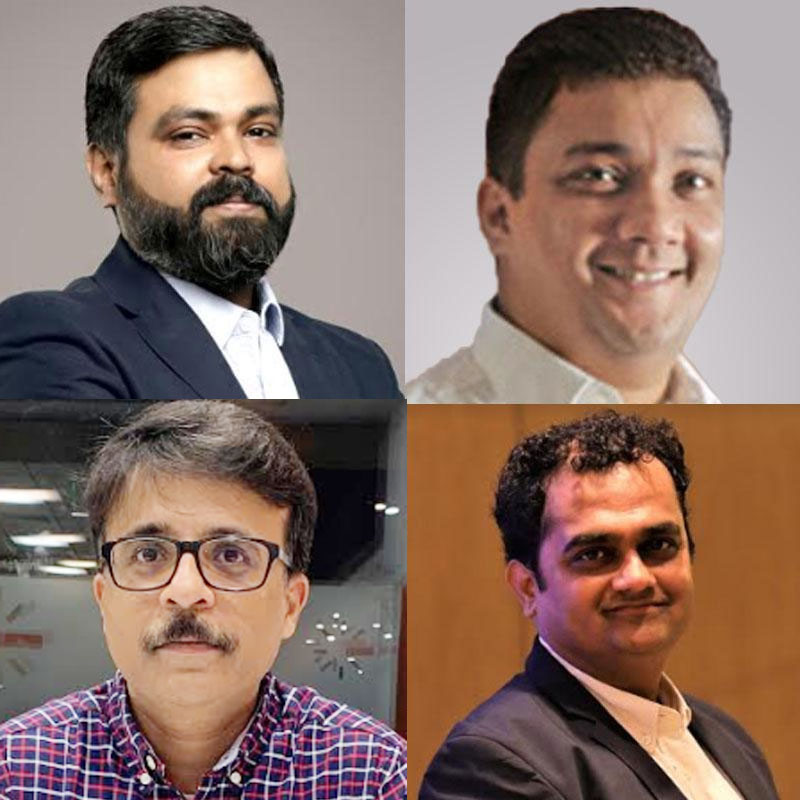
    Ashish Golwalkar who has led the content portfolio for SET and has played a pivotal role in the success of its tent pole properties and the creation of two new non-fiction formats, has been given additional responsibility of Sony LIV. Effective immediately, he will manage content for both SET and SonyLIV as Head – Content, SET & Digital Business.

    Aman Srivastava, who has played an important role in the rebranding and positioning of SET will move to Sony LIV as Head – Marketing, Digital Business.

    Amogh Dusad as Head – Programming and New Initiatives, Digital Business will handle Strategic Planning, Operations, Viewership Management and Analytics for Sony LIV.

    As the digital business of SPN gears up for transformation, its agenda will be led by some of India’s finest entertainment minds, under the leadership of Danish Khan, the company said in a statement.

    Besides, Amit Raisinghani has been elevated to Head – Business Planning and Communications, SET. In this new role, reporting to Danish Khan, Amit will be responsible for Marketing, On Air Promotions and the Communications portfolio along with Programming Strategy, Insights and Operations.

    Sony Pictures Networks India (SPN), is an indirect wholly owned subsidiary of Sony Corporation, Japan.  SPN has several channels including Sony Entertainment Television (SET), one of India's leading Hindi general entertainment television channels; MAX, Sony Six, Sony Ten, among others.

  • Sony India acquires Cricket Australia’s subcontinental media rights for six years

    Sony India acquires Cricket Australia’s subcontinental media rights for six years

    MUMBAI: Sony Pictures Networks India (SPNI) has acquired the exclusive media rights for all men’s international matches played in Australia, beginning with the Magellan Ashes Series starting from 22 November to 8 January 2017( five test matches). The term of the deal is six years and will cover multiple Indian tours and visits by Pakistan, South Africa and the Ashes of 2021 – 22.

    Separately, SPN has also acquired the media rights for women’s international cricket played in Australia, beginning with the Commonwealth Bank Ashes later this month, along with the KFC BBL (Big Bash League) and the Rebel WBBL (Women’s Big Bash League).

    SPN will have extensive access to content from Cricket Australia’s archives and some original programming from the newly-created CA Productions team. The agreement for the Indian subcontinent covers a number of countries, including Pakistan and Sri Lanka, and SPN will broadcast Australian cricket via its sports network of 11 channels.

    SPN India CEO, NP Singh said, “SPN is committed to redefining the sports broadcasting landscape in the Indian subcontinent by curating a multi-sport culture. Our sports network comprising of 11 channels will offer something for everyone. Cricket enjoys a high viewership in India and with the acquisition of the media rights of Cricket Australia, we are ensuring that the viewer has continuous cricketing action, all through the year.”

    Cricket Australia CEO James Sutherland said, “Sony understands the global value of Australian cricket. We’re also delighted with their support of our national women’s team, and the men’s and women’s Big Bash. Our summer of Big Bash will continue to expand and highlight the excitement and quality of our game. One of Australian cricket’s key strategies is to ensure it has a sustainable approach to investment, so that we can keep growing the game, and the six-year deal with SPN is part of that strategy.”

    SPN India president sports and distribution business Rajesh Kaul said, “Cricket Australia complements our existing portfolio of five International Cricket Boards further positioning us as the premier destination for the sport. The content line-up across the six boards strengthens our position in cricket broadcasting. Cricket fans can look forward to a full season of cricketing sporting action on our network.”

    Cricket Australia executive general manager of broadcasting, digital Media and Commercial Ben Amarflo said, “CA’s Media Rights and Broadcasting team is thrilled to have inked a deal with Sony as the new media rights partner for the subcontinent region, taking in key markets such as India, Pakistan, Sri Lanka, Bangladesh and Afghanistan. We will have numerous tours by India over the next few years, along with Australia playing against other subcontinental cricket teams.”

    “Sony has done an exceptional job growing cricket in India with its ground-breaking broadcasting of the IPL and its widespread coverage of international cricket. To have our international and domestic cricket carried on such a premium sports platform as SPN is important to the continued growth and promotion of Australian and bilateral cricket in the region. We are looking forward to being a part of Sony’s elite cricket stable and it all kicks off next month with the Ashes,” Ben Amarflo added.

  • Net neutrality: Sony India finds analogy in MSO packaging of prioritising content

    Net neutrality: Sony India finds analogy in MSO packaging of prioritising content

    NEW DELHI: While opposing differential pricing for data services, Sony Pictures Networks (SPN) India has – like Star India earlier – said that this replicates the system where the multi-system operators (MSOs) and not the customers had been prioritising the content to be carried on their cable platforms.


    In its response to the Telecom Regulatory Authority of India’s (TRAI) Consultation Paper of 9 December on ‘Differential Pricing for Data Services,’ SPN India said such a differential pricing regime would also create a system, “which replicates the harmful effects of arrangements between carriage and content playing out in the cable and satellite space wherein MSOs instead of consumers have been prioritising the content to be carried on their cable platforms, the basis of such prioritisation being the carriage and placement fees being paid by content owners.”


    The broadcaster said this anti-competitive behaviour by MSOs has led to small content providers being hit the most as carriage and placement fees act as entry barriers for new content providers. Differential pricing with regard to data would inevitably create the same concerns as in the MSO and content space.


    SPN India said, “It is submitted that differential pricing, is a discriminatory regime of charging different consumers different prices for the same product or services and is antithetical to the fundamental rationale of openness and equality. Differential pricing of data services is conceptually the very antitheses of net neutrality, and competition. Providing sponsored or subsidised data to consumers is a prime example of a differential pricing regime since it involves charging different consumers different prices for the same product or services.”


    Even though service providers have suggested time and again that any concern of market abuse/discrimination, should be addressed on a case to case basis rather than by imposing a blanket ban on any particular business model/pricing innovation, SPN India submitted that differential pricing is against competition and a level playing field and cannot be addressed by placing adequate safeguards.


    Differential pricing leads to restriction of access to information, SPN India said. It enables telecom service providers to play the role of “gate-keepers” to the internet where they are in a position to differentiate between data packets.


    SPN India said the principle of net neutrality “clearly prohibits any blocking, differentiation or prioritisation of data packets based on their type. Once differential tariffs for data are in place, the principles of net neutrality no longer hold valid since such tariffs are based on differentiation of data packets. While they may be portrayed as means of subsidising costs of accessing the internet, it needs to be understood that such subsidisation is also a way of differentiation, which can distort the equilibrium of the internet as it is enjoyed today, where everybody has unrestricted access and also has equal opportunities.”


    According to the company, allowing TSPs to charge differently for different uses of data essentially would essentially create a tariff regime where TSPs would have the right to create different classes of subscribers based on the kind of content they want to access and determine different prices for different websites, applications and platforms. Such differential pricing would thus allow TSPs to fundamentally alter the nature of competition between these websites, applications and platforms in a manner not linked to the quality of the services they deliver to consumers, but on the business arrangement between the TSPs and the websites, applications, platforms etc.


    The possibility of competition between different companies could be subverted if competitors could collude with TSPs. Such collusion would invariably result in financially able entities paying carriers to ensure that a competitor’s website loads slowly, or is inaccessible altogether, or the use to it is more cost intensive.


    Saying this would also end up distorting and altering the primary role of TSPs, SPN India submitted that a differential pricing arrangement in addition to having the effect of directly determining the price of data would also limit or control access to or control of the provision of data services while having an appreciable and adverse effect on competition, which does not form a part of such an arrangement.


    It said such activities in addition to being anti-competitive and unfair, would also give rise to increasing market entry costs for non-participating entities, using dominance in the market to abuse the same through service tie-ups and predatory pricing.  


    Thus, any such differential pricing arrangement for data services between the TSPs and websites, applications, service, content providers etc would be violative of the provisions of the Competition Act, 2002.


    As an example, SPN India said that in recent times it had been seen that a prominent TSP in the country was providing access to one of the foremost social media networking sites on a zero rating plan. Such an arrangement would have an appreciable and adverse effect on competition, which does not form a part of such an arrangement. Sony added that such service tie-ups and predatory pricing would ensure that there is an increase of market entry costs for non-participating entities, which incidentally did not exist when the said social media networking site itself was a start-up.


    SPN India also felt that the TRAI should seek the opinion of the Competition Commission of India (CCI) to understand the anti-competitive effects of the differential price regime.


    It gave the example of other countries where TSPs had been fined for zero-rating certain internet-based services. Furthermore, differential pricing as a model has been banned in countries such as Japan, Chile, Norway, Netherlands, Finland, Iceland, Estonia, Latvia, Lithuania and Malta.


    Differential pricing of data services would enable large incumbents to create a framework with TSPs that allow them, covertly or overtly, to create different versions of the Internet which they package and control. This would inevitably result in various versions of the internet, with or without all features, including ones that are available at lower prices and include only the content and the service providers that have chosen to play by the regime established by the large incumbents, and another version being the less privileged one which would be expensive, more difficult to discover, and occupied by the smaller players who don’t have the financial ability and muscle to take on their powerful counterparts.


    While stressing that its stand on differential pricing for data services was not meant to stifle an innovative data regime, SPN India said it, “strongly believes that while there is an urgent need to connect a billion unconnected people and narrow the digital and developmental divide, we certainly believe that there are other transparent and more effective ways of achieving that goal.”


    The broadcaster suggested that investing in infrastructure for common access and providing subsidised and non-discriminatory access directly to the consumers could be some of the ways that could be explored. Subsidised time based models, creations of public or community networks are some of the other routes available to expand access to the Internet.


    Additionally, local data centre requirements could also reduce costs of accessing the internet. Local data centre requirements mandate that enterprises establish a data centre within a country as a condition of being permitted to provide certain digital services in that country.


    Such requirements prevent data form being produced, stored, and processed anywhere. Brazil, China, Indonesia, Malaysia, South Korea, Venezuela, and Vietnam are among the many countries that have imposed or are considering imposing local data centre requirements. We could also consider having similar data centre requirements in India.


    Additionally, SPN India said any such requirement would also have the added advantage of enhancing security of data since they would lie on servers within the country.


    SPN India added that the TRAI paper does not talk about Big Data, a broad term, which is generally used to refer to the use of predictive analytics or certain other advanced methods to extract value from data. In the differential pricing regime, since the TSPs would be acting as gatekeepers to certain packets of data, based on their business arrangement, they would also tend to obtain sensitive information of consumers such as their data usage patterns. Such data patterns in addition to raising issues of privacy would effectively make it easier for sellers to identify new customer segments and target those segments with customised marketing and pricing plans.