Tag: Sony-Ericsson

  • New cell phone software for live crick updates

    New cell phone software for live crick updates

    MUMBAI: With an all important India Pakistan series which is currently underway, cricket mania seems to be rubbing off on almost everybody. The latest to cash in on the series is Chakra Interactive (gaming company based in Mumbai) which launched a revolutionary software system for mobile phones called CricketPal especially for the India-Pakistan ODI series.

    CricketPal will enable mobile subscribers to get live and complete scoreboards on their mobile phones at the press of a button. Also a boon for subscribers is that they need not pay for the numerous and tedious SMS to get latest score updates.
    What’s the score?

    Unlike the dull SMS text score updates, the CricketPal software is rich media based – having vibrant colors and sounds. Once CricketPal is downloaded into your mobile phone, all one needs to do is press one button to fetch latest score updates with live commentary. The system can also be set to auto-fetch latest score every five or 10 minutes.

    “CricketBar is a well formatted, detailed, dynamic complete scoreboard in the palm of your hand,” says Chakra Interactive CEO Vishal Lamba who is the man behind the revolutionary idea. “Cricket lovers can now enjoy ODI’s where-ever they are. The system even makes sounds when a four or six is hit, or when a wicket falls! It’s just a much more fun way of enjoying the game than SMS is.”
    Technology at its best

    CricketPal can be downloaded from www.CricketPal.com. At the website, all one needs to do is to enter their mobile phone number and phone model for the download to take place. The online system will then send CricketPal to their mobile phone over-the-air. The cost of CricketPal is $9.95.

    The phones that support CricketPal are Nokia 40 Series: 3100, 3200, 3300, 5100, 6100, 6610, 6800, 7210, 7250. In the Nokia 60 series: 3650, 3660, 6600, 7650, N-Gage. The versions for other devices like Motorola, Siemens, Sony-Ericsson, Sharp, Panasonic and LG phones will be available shortly.

  • Sam Ahmed moves on from Rediffusion Y&R

    Sam Ahmed moves on from Rediffusion Y&R

    MUMBAI: After only an eight-month stint, the Rediffusion Y&R vice chairman and CCO Sam Ahmed has decided to go back to film making.

    He will leave the agency in December this year.

    Ahmed was brought on board early January this year from Y&R Dubia where he had worked for 14 years on brands such as Ford, P&G, Nestle, Pepsi, Colgate-Palmolive, Citibank, Skoda, Land Rover, Jaguar, Sony Ericsson, HTC, Apple and World Gold Council.

    Rediffusion Y&R made noise recently for its catchy campaign for Tata Nano, which repositioned the product as an ‘awesome’ youth brand.

    Ahmed has also won over 200 international awards, which include Epica, Clio, Cannes Lions and New York Festival.

  • ‘India is one of the few markets where making positive impact is possible’ : Wolff Olins MD Charles Wright

    ‘India is one of the few markets where making positive impact is possible’ : Wolff Olins MD Charles Wright


    Q. Why has Wolff Olins not set up shop in the rapidly growing market of India when it has caught the attention of every big global agency?
    We have no such plans to enter India soon as Mumbai is a very expensive real estate city. We do work for a lot of clients in India. But we have created Dubai as a hub from where we serve a much wider region. We service India from Dubai as a base.


    Q. So how do you get a feel of the local needs of the Indian clients?
    In our Dubai office, we have Westerners, Indians and Arabs working together. The mix is very important. If we only have an American or European team, there would have been huge cultural misunderstandings. So what we are offering clients is the best of both worlds. The benefit from this is that clients can be assured that while we are adding an international flavour, we are also taking into account the local needs.

    Q. Isn’t India a difficult market from a brand perspective as it is very price sensitive?
    I think we have now figured out a model for working in India. You have to, if you are to do business here. Everyone here likes to negotiate. People will bargain even if they don’t need to. I have seen people haggle when you think “why are you even bothering?” But I guess it’s a cultural thing.

    Q. So how do you deal with this?
    Initially, it was irritating but now I enjoy it. That is, perhaps, because Indian businesses do not have the luxury of money. The idea of everything being done frugally is something I have learnt from here. If you were working for a big corporation in America, you would be accustomed to spending large amounts of money. So you could do all sorts of things which here would be considered to be frivolous. It’s something like an athelete that has trained hard and we have now become fitter at running the race the Indian way.

    ‘We have no such plans to enter India soon as Mumbai is a very expensive real estate city. We have created Dubai as a hub from where we serve a much wider region‘

    Q. What other lessons have you learnt from here?
    Having Indians on the team have helped because people are direct even with me and say, “Don’t do that!” What I have learnt working here is that while in Europe modesty is a virtue, here modesty is a weakness. We have to be more forceful. As a foreigner, one might mistake forcefulness for rudeness, but it’s not so! It’s being just honest. I am still learning to be much more direct. There is a big positivity that comes from working in India.

    Q. What about growth?
    There are a number of clients that are super ambitious. Here more than most of the countries I have worked in, making positive impact is possible. It’s not easy, but it’s possible.

    Q. Do Indians value brands as much as the matured consumer markets?
    The word brand identity has been devalued today to mean logo – not just in India but everywhere. Having said that, I find there is a lot of interest in branding in India. You have special supplements and shows about advertising and branding. In the US, which is the most developed market, there are no TV shows on this topic. There are columns in the newspapers and trade magazines like Advertising Age, etc. Perhaps the reason behind this is that the stuff is fairly new here following liberalisation. More people can afford more things, so there is that interest in the topic. There is a curiosity about lots of things. India is like a sponge soaking up stuff not just about branding but a lot of things.

    Q. Isn’t that good news for a branding company?
    Being a branding company, we create or refresh brands. What makes us special is that first of all we try to work for companies that are ambitious and want to do something important. From our point of view, we also want that the work has a big impact. Our internal line is that we are optimistic and ambitious for our clients. So we are looking for clients that are looking at doing good for the world rather than just making money.

    Q. Are Indian brands receptive to this? 
    Hero is a company we have worked with and if you see the ads, they all tell a story or sing a song about how each of us is a hero. I think where we got to our work is that the motor bike isn’t the point. The point is what the two-wheeler or the bike can do for the guy. This ad is a dramatic example of what I am talking about; it reflects the optimism and the ‘doing good for the world’ concept. When you give a young guy or a young couple a bike when they get married, their life takes a different shape. And that, in a small way, is about celebrating the common man as opposed to the high fancy stuff, which to my mind is brilliant.


    In a similar way but in a different segment, Tata Docomo talks about enabling ordinary people to do stuff that they couldn’t do before. The common thread in these two brands is the positive impact we are trying to create.


    I would love to do work in the healthcare sector and financial services. Why is there no big financial group from India like in America and Europe? How come so many families do not have access to clean water? We would love to work with companies that are addressing the big issues of our times. We want to do stuff which has positive impact.

    Q. How do you select brands?
    We want to work with ambitious Indian clients. It could be a small company of designers or it could be companies that know about digital stuff. But they should allow us to do interesting stuff in tune with our philosophy.

    Q. Doesn’t this sound like you were born in a different age and era?
    The company is a child of the 60s. It was the decade of the Beatles in England. In fact, they were one of the first clients of the company. That was the time when the mood was for optimism, equality and freedom. One of the characteristics of the 60s was a desire to do good. There is a sense that the culture from back then has still lived on. These kind of things get us excited – and the good news is that there is lots of such work to do in India.

    Q. With such independent thinking, wouldn’t you have been better off staying separate rather than selling to Omnicom?
    A small group of us actually bought out the company in the mid 90s from the founders. We had an office in London and were active in Europe. We had another office in Spain and one in Portugal. But we had the dream of going fully international. We, thus, set shop in New York and started doing business in Japan because we thought that Asia would be the future.


    America, however, was a very tough market. So we approached Omnicom and told them that we needed their help to go international. We were willing to be acquired but wouldn’t want to be bulldozed because it’s the way that we work that makes us successful and not the size of what we do. So if we get acquired, it is on the understanding that the culture is what makes us successful and Omnicom has to trust us on this one.


    Omnicom agreed to our terms. The way it works is that at the start of the year we tell them what we are going to achieve and as long as you do that, they leave you alone. It is a very fertile environment for us.

  • Maria Sharapova to endorse Samsung Electronics

    Maria Sharapova to endorse Samsung Electronics

    MUMBAI: Tennis diva Maria Sharapova has inked a three-year sponsorship deal with Samsung Electronics covering her native Russia and the Commonwealth of Independent States after her deal with Sony Ericsson expired last year.

    The sponsorship agreement, which includes mobile phones, tablet computers and television sets, may go global next year.

    Sharapova’s manager at IMG Worldwide Max Eisenbud believes Russia is a largely untapped market for tennis, what with Sochi hosting the Olympic Games in 2014.

    “Maria really hasn’t been marketed that much in Russia. It’s important to her because that’s where her roots are. I also felt that was a really untapped market, with the 2014 Sochi Olympics coming up.”

    According to Forbes magazine, the 24-year-old Tennis star earns around $25 million a year in endorsements.

    She endorses a number of brands which include Unilever’s Clear shampoo, US fashion label Cole Haan, French mineral water brand Evian, sports equipment maker Head, American sportswear brand Nike, American jewellery and silverware company Tiffany & Co and Swiss luxury watchmaker Tag Heuer.

  • Sony Ericsson hires PHD to handle its global media account

    Sony Ericsson hires PHD to handle its global media account

    MUMBAI: Sony Ericsson has given its global media duties to PHD in an open pitch process.

    The agreement comprises all Sony Ericsson‘s media investments globally for an initial period of two years. The cooperation will commence 1 January 2012.

    The incumbent media agency was MEC. 
     
    Sony Ericsson CMO Steve Walker said, “PHD has impressed us with their comprehensive strategic thinking and insight. Moreover there is a strong cultural and structural connection between our two teams. Our Xperia(TM) smartphone portfolio will be a cornerstone of Sony‘s four-screen experience, and PHD is the right agency to partner with in bringing consumers an experience that goes beyond smartphones”.

    PHD Worldwide CEO Mike Cooper said, “At present there are few categories more dynamic than the global mobile handset market. Sony Ericsson is an incredibly vibrant and future facing company and is in a great position with its latest Xperia(TM) products. This combined with PHD‘s renowned strategic capabilities and track record for innovative and creative thinking is a formula for a winning partnership.”

    The agreement with PHD replaces a successful 10-year global partnership between Sony Ericsson and the media agency MEC.

  • Marching to a new tune

    Make no mistake about it, 2007 was a b-a-a-a-d year for the industry.

    That’s no doomsayer sounding the deathknell for the music industry, but one of the opening remarks of a series of year end insights put out on MTV.com. Globally, the biggies of the music industry have had to contend with dipping physical sales graphs, even as the indies and sharp eyed innovators in the digital world have been snapping up the advantages offered by the Internet, live performances and merchandise.

    The low tide hit Indian shores too in 2007. Internet downloads however did not hit the Indian industry as hard as did the rapidly growing mobile phone industry, where music entertainment was one of the prime drivers of the value added services industry here. FM, which boomed this year, was one of the biggest applications utilised over the mobile phone, aided in no small measure by scaled down prices for FM enabled mobile phones.

    Physical sales plummet…
    Indians purchased more music on their mobile phones than they did physical music products like CDs and cassettes in 2007, says a Soundbuzz report. Mobile music products, in fact, will be purchased nine times more often than physical within the next 18-24 months, the report adds. One doesn’t need to look far for the reason. The region is experiencing an exploding mobile market, virtually dominated by consumers under the age of 30 who are generating and sharing content on a spectrum ranging from pure entertainment, to self projection, to self expression and self actualization.

    While experts within the industry differed on the quantum of mobile music sold during the year, claiming that it could not have surpassed the Rs 600 crore worth of physical sales, most agreed that India is now part of the Asian juggernaut – 50 per cent of all music purchases in Asia in 2006 were digital – online or mobile, and the figures only spiralled in 2007.

    Hardly surprising, considering industry estimates that in the next 12 months, 12 per cent of the world’s population will comprise of young singles in Asia who will command a purchasing power of about US$150 billion.

    The mobile industry taps into music to grow
    Music in 2007 became one of the key value adds that helped the mobile phone industry to grow.

    By the end of July 2007, India had 192.98 million wireless subscribers, a number expected to grow to 250 million handsets by the year end. As if the rapid penetration of the mobile in the country wasn’t enough, global companies like Nokia, Sony Ericsson, Motorola and Samsung strove neck-to-neck to come up with handsets loaded with FM radios, MP3 players and a good memory capacity.

    Today, around 35 per cent of their Indian handset products feature downloadable music applications and Sony’s Walkman phone accounts for 65 per cent of total revenues. Sony is also toying with expanding its chain of Expression Stores, which feature phones and music download stations.

    Nokia too set up college sponsorship deals and collaborated with music companies to buy the rights for free downloadable songs on some of their handsets to encourage the use of digital music. Some of Nokia’s N-series handsets, with a 3,000 song capacity, offer 100 preloaded songs free; just to make a mark, and money of course, in this segment. Most of the major handset makers have tie-ups with music content sites such as Soundbuzz.com and OnMobile.com as well as revenue-sharing deals with local telcos and music companies.

    VAS – the big deal
    Mobile value added services (VAS) in India stood at Rs 2850 crore at the end of 2006, and according to a IAMAI and IMRB study, by end 2007 it stands at nearly Rs 4560 crore, a growth of 60 per cent. Ringtone downloads contribute over 35 per cent of the whole. These comprise the spectrum of mono and polyphonic ringtones, apart from caller ring back tones, true tones – all of which borrow heavily from either Bollywood, devotional or regional music.

    The innovations
    While the industry lamented the downward trend in sales, labels continued to innovate, expand and diversify, tapping into newer arenas.

    Companies like Saregama introduced mobitune cards for ringtones, a pilot project across Bangalore, Chennai and Hyderabad, for music downloads at Nokia outlets. The company said there were 8000 music downloads against 4000 handsets sold at the 25 Nokia outlets during the trial period.

    Companies also tried to expand by signing exclusive deals with mobile operators and others in this segment, with everyone realising that five years down the line, this segment will be a very important source of income and revenue.

    Companies like T-Series and Yash Raj turned out to be key players in the digital music segment, with Yashraj beginning to offer music downloads online. Other music labels like Saregama also launched its own online music store. Others may follow suit in the coming year, although the domestic market for net downloads is still abysmal.
    Regardless of the discovery of new artistes and tuneful Bollywood compositions that made their mark in 2007 – compilations of old Bollywood music continued to contribute significantly to companies’ bottomline. 2008 should see the witness the continued slow but steady rise of spiritual music, which many leading labels tried their hand at.

    The new launches
    Despite sluggish revenues, the industry perceived enough to launch some new labels. Reliance’s Big Music and Home Entertainment was the first off the block early this year. Starting off with Bollywood music, Big Music now plans to reach into regional music in a big way next year. Regional music will also be the focus of Times Music’s new label, Junglee music that launched at the fag end of the year with the music of Nadiadwala’s Welcome. After a fallout with Big, UTV decided to go ahead and launch its own music label for its forthcoming production, Jodhaa Akbar.

    Piracy – the demon’s talons refuse to get trimmed
    Pirated music CDs and illegal Net downloads apart, mobile chip piracy became the latest demon to haunt the Indian music industry. The Indian Music Industry estimates that the size of the music market on mobile phones is around Rs four billion, including products like ring tones – monophonic and polyphonic; True Tones; Ring back Tones; Full song mobile downloads; Music videos.

    Considering royalty, for the music industry, on products like full songs download at approximately Rs five per download and assuming one illegal transfer per phone per month, the loss amounts to Rs 12.5 million per month, says the IMI. Digitized music can be easily copied from any storage device like computer hard disc or USB drive, mobile phone with stored music etc. into the built in memory of a mobile phone or on memory cards or chips which can be further inserted into other mobile phones.

    Individual companies like Shemaroo continued their own campaign against piracy, raiding illegal CD burning outfits and bringing culprits to book with the help of the police. The Phonographic Performance Limited, the licensing wing of the IMI, also did its bit by launching awareness campaigns about the need to procure licenses to play music at events and venues.

    India – the new destination
    The number of international artistes wanting to perform live in India continues to grow. Nelly Furtado kicked off the year’s musical proceedings by performing at the Nokia New Year’s Night eve in Mumbai. Shortly thereafter, Shakira, Aerosmith, Beyonce, 50 Cent, Iron Maiden, America and the Scorpions, among others, performed to packed crowds in venues as diverse as Shillong and Chennai. Obviously, the music lovers’ demand here is huge – Iron Maiden will start their ’08 world tour with a performance in Mumbai.

    The new tunes in ’08
    Globally, music delivered to mobile phones via operators’ networks (mobile music) will jump from the current 13 per cent of global recorded music retail value to 30 per cent by 2011.

    “Looking to emerging markets, mobile could become the number one platform for music, where packaged CDs haven’t gained traction due to piracy and lack of hardware ownership,” says a recently released report by Understanding & Solutions.

    Experts say that in India, ringtones which are the dominant digital format, will continue to remain so till 2009. Mobile music growth will however be fuelled by additional formats, including ringback tones, caller id tones plus full track audio adn video downloads. These forms of mobile music will grow dramatically to achieve 3.9 billion USD in sales in Asia by 2009, up from 210 mn USD in 2005. Online sales will remain relatively static in the coming three years, point out experts.

    Regional could well be the new flavour for music labels, that want to tap the huge interiors. They could well be wary of artistes and music directors, who are slowly taking the production route themselves – turning producers or launching their music directly on the Internet a la Radiohead. As technolgy advances by leaps and bounds, the sky’s the limit for the creators of music in the country.

  • RPG Cellucom makes quiet entry with select stores

    RPG Cellucom makes quiet entry with select stores

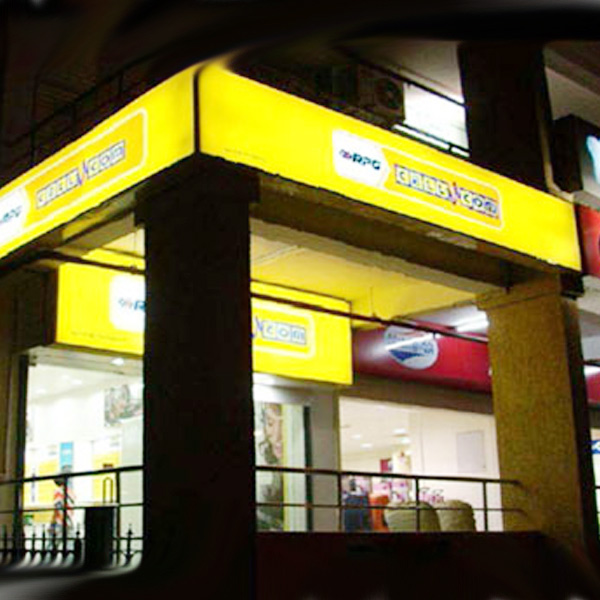
    MUMBAI: RPG Cellucom, a part of RPG group retail sector has made a quiet entry into the growing mobile and IT products retail market in India.

    An official press release, RPG Cellucom has developed a distinctive retail concept directed at engaging the consumer and expanding their knowledge of mobile technology.

    SRPG Cellucom has also made a quiet entry with the launch of its retail outlet in Gurgaon. The company plans to open over 500 exclusive retail outlets by end 2007.

    The retail outlets will be in stand-alone as well as shop in shop formats. The chain recently opened its first stand-alone outlet in Sahara Mall, Gurgaon and has identified several other properties in the capital to expand the retail chain.

    Through phased expansion, RPG Cellucom aims to cash on the growing mobile and IT products market in India. The company has opened its shop-in-shop format at Shopper’s Stop in Mumbai and Spencer’s in Pune.

    ERPG Cellucom outlets will showcase a wide variety of mobility products in the communication space from leading brands like Nokia, Motorola, Acer, HP, Samsung and Sony Ericsson amongst others.

    The retail outlets will offer customers a wide range of hi-tech and state of the art technology products ranging from mobile phones, laptops, accessories, pen drives and various other IT peripherals. In addition to showcasing these products, RPG Cellucom retail outlets will also offer customers after sales service and exclusive product demonstrations.

    Says RPG Cellucom CEO Sunil Bhagat “RPG Cellucom stores are a one stop shop for all techno-savvy customers. Along with providing the customer with a wide range of IT and communication products from different brands, we also provide them with after sales services and product demos at our exclusive showrooms across the country. So now the customers will not have to run around the city to make choices.”

    Cellucom was set up as an exporter of leading mobile phone brands, with operations in Dubai and East Africa. Today, thanks to the keen attention and rapid response to the customer’s needs, the company has evolved to become one of the largest distributors of digital devices and mobility solutions in the Middle East and Africa region.

  • Infomedia launches gadget magazine ‘T3’ in India

    Infomedia launches gadget magazine ‘T3’ in India

     MUMBAI: Infomedia India Limited has unveiled T3 (Tomorrow’s Technology Today), the gadget magazine in India. The Indian edition of T3 is published under a licensing arrangement with Future Publishing, UK’s special interest publishers, and is the 23rd international edition of T3.

    T3 is aimed at early adopters and gadget aware audiences abreast with the latest in the gadget universe. It uses photography and a blend of news, reviews and features to bring readers up to scratch with the fast paced world of consumer technology. It spans different areas including lifestyle, consumer products, cars, hi-fi, mobile, video gaming products and leisure products, informs an official release.

    The cover story of the first issue Gadgets 2.0 focuses on the new generation of gadgets taking over the world. The story covers the spectrum of digital entertainment devices from the Sony PS3 to Toshiba HD DVD Player to the Sony Ericsson W950 mobile phone.

    Other sections include a sneak peek at the N95 and the Asus Lamborghini Laptop, over 30 pages of gadget reviews and an entire section on home entertainment media. The first issue will feature supermodel Deepika Padukone as the T3 cover girl. T3 tops this up with a first-ever interview with Bollywood superstar Shah Rukh Khan and film director Farhan Akhtar on their favourite gadgets.

    The monthly issue of the magazine will be available on newsstands and will be priced at Rs 100.

    Infomedia India MD Prakash Iyer said, “It gives me immense pleasure in launching the first edition of the world’s best gadget magazine in India. Our main objective to launch the magazine is to convey to the gadget crazy community that here is a magazine that is celebrating their passion. “

    Previously editor of hi-fi magazine AV Max, Nishant Padhiar is editor of T3.

    Padhiar adds, “With increasingly high disposable incomes and the start-ups of new concept tech stores, the consumer electronic industry is booming. We feel it is the right time to educate the consumer and T3 will provide all the information needed to do so.”

  • SDC unveils innovative mobile media product strategy for 2007

    SDC unveils innovative mobile media product strategy for 2007

    MUMBAI: SDC (Secure Digital Container), the leading, fully label-approved provider of technology for Digital Rights Management (DRM), today announces its vision and new product strategy for the mobile music market in 2007.

    SDC’s next-generation mobile DRM technology is supported on over 100 mobile devices and is able to simplify the user experience and reduce cost and complexity for carriers by using one unique application and one DRM system for all music and video related services.

    New SDC products scheduled for launch in early 2007 include updated Mobile Players and its new PC Player Version 2.0 for various carriers around the world.

    With music-enabled handsets currently outshipping iPods at a ratio of two-to-one*, SDC predicts that pay-per-download, over-the-air, full-track music and video mobile services will soon be deployed throughout all major markets worldwide, while subscription-based “all you can eat” services will grow in popularity with both carriers and consumers. The integration of existing WAP services into player applications will continue to create an easy browsing and purchasing experience for consumers.

    A vital element of such services will be a mobile media solution that can consolidate a number of functions – music and video player, web browser, download manager, search and recommendation functionalities, radio player and device content management – into a single, carrier-branded application, while also offering the ability to seamlessly sideload content to PCs and other devices.

    This solution is able to simplify usage of different types of rich-media content such as music and video for consumers by integrating all services into a single user interface. It is also able to reduce cost and complexity for carriers by using one unique application and one DRM system for all music and video related services, and is a vital tool in helping carriers achieve significant uplift in ARPU from next generation data services.

    SDC has already rolled-out an integrated service with Telus Mobility in Canada by integrating Shazam Entertainment’s music recognition application into SDC’s Java Music Player. SDC developed players combining both pay-per-download and subscription services for Telus and French operator SFR in 2006.

    SDC’s new PC Player Version 2.0, due for launch in the first quarter of next year, will offer carriers a highly-customisable, white label player and single DRM technology for both PCs and mobile devices that will be compatible with all common mobile operating systems (Brew, Java, Symbian and Windows) and codec formats (AAC/AAC+, MP3, MPEG4 and WMA).

    “2007 is set to be a high-growth year for the mobile music industry, as more and more consumers choose to download music to their phones, rather than traditional media players,” says Michael Bornhäusser, CEO, SDC. “In order to maintain ease-of-use for consumers it is vital that carriers use a single application and user interface for all entertainment services and content. Only SDC is truly able to deliver this today.“

    SDC’s unique mobile DRM solution, which enables secure video, full length music and other rich media content distribution across wireless devices and PCs, has been adopted and deployed by an unprecedented 16 major carriers worldwide to date.

    Current customers include T-Mobile (Germany, UK and Czech Republic), O2 (UK & Ireland), 3 (UK), SFR (France), Amena (Spain), TELUS (Canada), Telstra (Australia) and Hutch (India).

    SDC also has partnerships with all of the world’s major handset manufacturers, including Nokia, Motorola, HTC, Sony Ericsson and Samsung.

  • Zee Sports to telecast Sony Ericsson world tennis championship

    Zee Sports to telecast Sony Ericsson world tennis championship

    MUMBAI: Zee Sports will telecast the season ending Sony Ericsson Championship from Madrid Arena, Madrid from 8 November to 12 November, 2006. The Sony Ericsson Championship gather the Top eight singles players and top four doubles teams from the regular 2006 Sony Ericsson WTA Tour season as they battle it out for the season ending titles and a share of the $ 3 million prize money.

    The top eight women players who have qualified for this edition of Sony Ericsson World Championship are Justine Henin Hardenne, Amelia Mauresmo, Maria Sharapova, Svetlana Kuznestsova, Nadia Petrova, Elena Dementieva, Martina Hingis and Kim Clisters. The defending champions are Amelie Mauresmo (singles) and Lisa Raymond and Samantha Stosur (doubles), the release adds.

    Four former champions and five number ones are in Madrid this week for arguably the most competitive season-ending Championships in Sony Ericsson WTA Tour history, which also features the first-ever three-way battle for the year-end number one ranking. Honoring the host nation, the two Groups have been named Yellow and Red, with four players from the elite eight – who qualified based on their results during the regular 2006 Sony Ericsson WTA Tour season – randomly placed in each group.
    The world’s top two players –number one Amélie Mauresmo and number two Maria Sharapova – head the Yellow and Red Groups respectively. Completing the Yellow Group is world number three Justine Henin-Hardenne, number five Nadia Petrova and number eight Martina Hingis. The remainder of an almost all-Russian Red Group consists of number four Svetlana Kuznetsova, number six Kim Clijsters and number seven Elena Dementieva. For the first time in Sony Ericsson WTA Tour history, there is a three-way battle for the year-end number one ranking, with incumbent Mauresmo up against Sharapova and Henin-Hardenne for the coveted achievement, the release states.

    The round robin stage of the Sony Ericsson Championships will be conducted over four days between Wednesday and Friday, with each player meeting the other three women in their Group. The top two performers in each Group advance to semifinals, with the final scheduled for Sunday.

    Catch the action LIVE and EXCLUSIVE on Zee Sports

    Sony Ericsson World Championship
    Nov 8, 2006
    10:30 pm onwards

    Sony Ericsson World Championship
    Nov 9, 2006
    10:30 pm onwards

    Sony Ericsson World Championship
    Nov 10, 2006
    10:30 pm onwards

    Sony Ericsson World Championship
    Nov 11, 2006
    6:00 pm onwards

    Sony Ericsson World Championship
    Nov 12, 2006
    9:00 pm onwards