Tag: Sony

  • Dentsu AMP turns up the volume on video creativity

    Dentsu AMP turns up the volume on video creativity

    MUMBAI: Move over film reels, it’s time for feel reels. Dentsu India has launched Dentsu AMP, a next-generation, video-first content engine that fuses AI innovation with human storytelling to help brands create videos faster, sharper, and smarter.

    Leading the charge are Dhruv Abrol and Tarika Gulabani, appointed as managing partners. The duo, who earlier co-led TVA, bring a mix of digital business acumen and entertainment flair from stints at Myntra, Tata Cliq, Sony, and StarPlus. They will report to Dentsu Creative & Media Brands CEO South Asia Amit Wadhwa.

    “Dentsu AMP is built for a world where stories must move as fast as audiences do,” said Wadhwa. “It unites craft, content, and technology to deliver creativity that performs.”

    With over ten in-house studios across India, Dentsu AMP covers everything from video production and motion graphics to sound and 3D design. Its AI backbone powers every stage of production, from ideation and editing to targeting, helping brands scale cinematic campaigns and snappy social content alike.

    Brands such as Aditya Birla Fashion, Flipkart, Myntra, and Groww are already onboard, banking on AMP’s ability to merge creativity, data, and speed.

    “We’re building a modern content engine,” said Abrol and Gulabani. “From high-impact films to daily social posts, AMP helps brands make more content, faster, without losing quality or consistency.”

    Sitting alongside Dentsu Lab and the Dentsu Podcast Network, AMP strengthens the agency’s innovation ecosystem. With expansion plans across major metros, Dentsu is clearly turning up the volume on creativity, where imagination scales, and every frame counts.

  • Sony and LiveU zoom in on future with bonded IP breakthrough at IBC 2025

    Sony and LiveU zoom in on future with bonded IP breakthrough at IBC 2025

    MUMBAI: When Sony meets LiveU, the broadcast world gets a sharper focus. At IBC 2025, the two tech titans announced a first-of-its-kind collaboration that promises to change how stories get from the field to the newsroom fast, reliable, and without the usual workflow headaches.

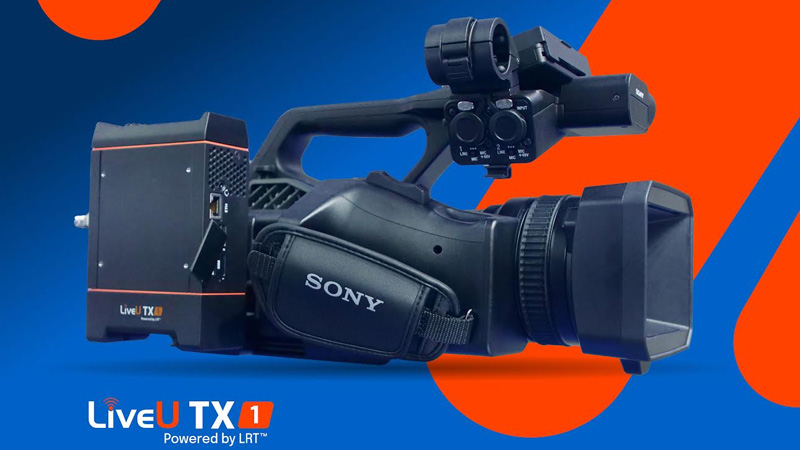
    The star of the show? The new LiveU TX1, a compact transmission unit built specifically for Sony’s professional camera range. Think of it as a tiny powerhouse: it clips neatly onto cameras like Sony’s freshly launched PXW-Z300, turning them into mobile broadcast hubs. With its small form factor, TX1 slashes production timelines by offering ultra-fast file transfers and bonded IP connectivity on the go.

    At its core is LiveU’s patented LRT (LiveU Reliable Transport) protocol, famed for keeping live feeds smooth, stable, and sharp even in tricky conditions. By combining multiple network connections, TX1 ensures resilient video performance that broadcasters can actually trust for mission-critical operations.

    “Our customers want to be able to deliver files shot on camcorders from wherever the story takes them, back to their galleries, easily, swiftly and reliably,” said Sony Corporation head of media solutions business Masakazu Murata. “Through our collaboration with LiveU, the leading company in video-over-bonded-IP transmission, we are now able to offer customers a workflow integrated with Sony’s ecosystem even for mission-critical operations that require bonding. We look forward to working with LiveU to further streamline workflows and make a significant contribution to the broadcast industry.”

    LiveU CEO and co-founder Samuel Wasserman said, “We are proud to announce this important collaboration with Sony, the global leader in electronics, gaming, entertainment, and imaging technologies. This partnership represents a strong vote of confidence in LiveU’s cutting-edge technology and the innovation we bring and will continue to bring to the market. I would like to thank the Sony team for their professional and collaborative spirit and wish us all great success on our shared journey.”

    The deal signals more than just a shiny new gadget. It’s the start of a broader roadmap where Sony’s camera heritage and LiveU’s connectivity know-how combine to shape the next phase of broadcast production. Journalists, content creators, and live producers can expect fewer cables, faster turnaround, and workflows that keep pace with the news cycle.

    While the TX1 made its debut at IBC 2025, broadcast professionals will need a little patience: the unit will be available through Sony’s accredited distributors and resellers, with release details scheduled for 2026.

    For now, though, one thing is clear, when it comes to capturing the moment and sending it back in real time, Sony and LiveU are keeping the world’s broadcasters firmly in the picture.

  • Sony cards speed past limits with blazing 1800 MB/s read and 1700 MB/s write

    Sony cards speed past limits with blazing 1800 MB/s read and 1700 MB/s write

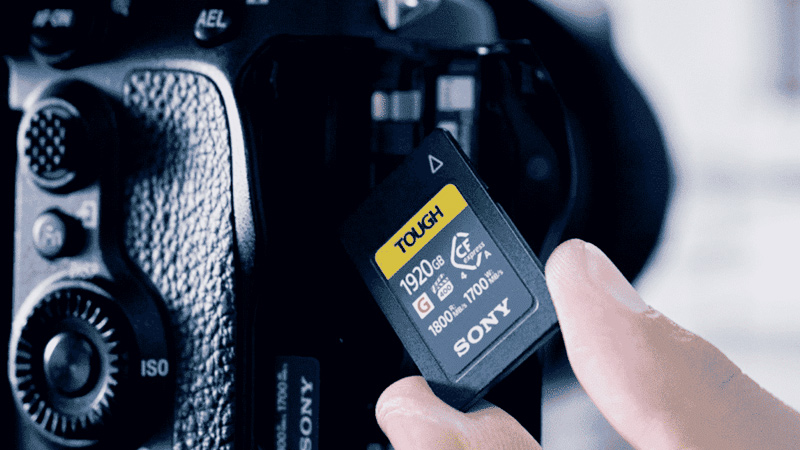
    MUMBAI: When it comes to speed, Sony just hit fast-forward. The tech giant has launched its Cfexpress 4.0 Type A cards in India, promising blistering performance for professional creators with read speeds up to 1800 MB/s and write speeds up to 1700 MB/s more than double their predecessors.

    The new CEA-G1920T (1920 GB, Rs 97,490) and CEA-G960T (960 GB, Rs 59,990) cards, along with the MRW-G3 card reader (Rs 17,990), hit stores and e-commerce platforms on 20 August 2025. Built for Sony’s Cinema Line and Alpha cameras, the cards are designed to handle the ever-demanding world of high-bitrate 4K and above video, long shoots, and instant data transfer.

    The upgrades aren’t just about speed. With a minimum sustained write speed of 400 MB/s, these cards guarantee uninterrupted recording of cinematic-quality footage. Their durability has also been levelled up, the reinforced resin body is five times stronger than previous models and can survive drops from 7.5 metres. Bend resistance has been enhanced to withstand forces up to 150 newtons, making them ready for the chaos of on-location shoots.

    The compact design means portability without compromise, supporting lightweight camera bodies while packing in serious storage muscle. Meanwhile, the MRW-G3 reader, built exclusively for Cfexpress Type A, supports USB 40 Gbps transfer speeds, ensuring that even massive files fly from card to system in record time. With its heat-dissipation design, the reader is also engineered for stability during prolonged workflows.

    For photographers, videographers, and filmmakers juggling huge files under pressure, Sony’s latest launch isn’t just storage, it’s a workflow accelerator. With capacity, speed, and ruggedness in one pocket-sized package, these cards ensure creators spend less time waiting and more time making.


  • Motorola dials up ‘Big billion moto rush’ with record-low festive smartphone deals

    Motorola dials up ‘Big billion moto rush’ with record-low festive smartphone deals

    MUMBAI: The big billion buzz is here, and Motorola is leading the charge. Motorola has announced its ‘Big billion moto rush,’ unveiling its lowest-ever prices on bestselling smartphones during Flipkart’s big billion days sale 2025, which kicks off at midnight on 23rd September (early access from 22nd September).

    Leading the charge is the motorola edge 60 pro, a flagship powerhouse featuring a Pantone-validated triple 50MP camera system, the world’s most durable 6.7” 1.5K true colour quad-curved display, and a 6000mah battery with blazing 90W turbo-power charging. With motoAI and deep integration with Google Gemini, Microsoft Copilot, and Perplexity, it packs cutting-edge AI tools at festive special prices starting Rs 24,999.

    The motorola edge 60 fusion, dubbed the “all-rounder under Rs 20,000,” lands with a Pantone-validated 1.5K display, Sony LYTIA 700C camera, and military-grade durability, available from Rs 19,999.

    In the mid-range, the moto g96 5G brings a 144Hz curved Poled display, Snapdragon 7s Gen 2 processor, and 50MP OIS Sony camera for just Rs 14,999, while the moto g86 power shines with the segment’s brightest 1.5K display and a 6720mAh battery, priced at Rs 15,999.

    Style meets smarts in the motorola razr 60, India’s most stylish flip under Rs 40,000. With a gesture-controlled video camera, titanium-reinforced hinge and the largest 3.6” Poled external display in its class, it’s available at a festive steal of Rs 39,999.

    But the savings don’t stop at phones. Motorola is also offering festive-first discounts on its moto buds ‘Loop’ and ‘Bass’ earbuds, moto pad 60 pro, and even laptops, TVs and washing machines.

    With flagship specs trickling down to mid-range prices, Motorola is clearly setting the tone for a blockbuster festive season.

  • Sony to push Crystal LED Capri at IBC 2025, slashing costs for virtual production walls

    Sony to push Crystal LED Capri at IBC 2025, slashing costs for virtual production walls

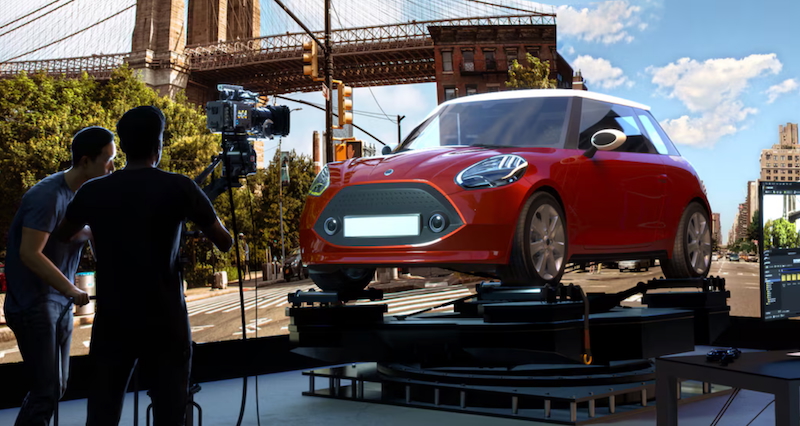
    MUMBAI: Sony has taken aim at the booming virtual production market with its latest LED wall series, the Crystal LED Capri—a more affordable sibling to its flagship Verona line. Capri promises the same high-end visuals, but at a price that opens the doors to smaller studios, broadcasters and rental companies.

    The Capri models—ZRD-VS25FB and ZRD-VS25FM—boast a 2.5mm pitch, 1,500 cd/m? brightness, and a refresh rate of up to 7,680Hz. Colour coverage crosses 98 per cent of the DCI-P3 gamut, while anti-reflection coatings and real-time off-axis colour correction (from v3.0 of Sony’s virtual production tool set) promise studio-grade consistency even in curved or ceiling-mounted configurations.

    Fully compatible with Brompton’s Tessera SX40 and Megapixel’s Helios controllers, Capri integrates seamlessly into the virtual production workflows already in place across the industry. Its flexible 1:1 cabinet design, tool-free assembly, and rugged frame make it ideal for temporary setups and fast-moving shoots.

    “We’ve broadened our line-up to support high-quality virtual production at every level,” said Sony Europe business development head Sebastian Leske. Sony Electronics professional display solutions vice-president  Rich Ventura added: “With Capri, we’re giving a wider range of users the tools to create spatial content in high fidelity.”

    Capri complements rather than replaces Verona. Both series share controllers and luminance levels, allowing studios to combine walls and ceilings seamlessly—a common configuration where Verona serves as the main wall and Capri goes overhead.

    Sony will showcase the Crystal LED Capri series at Stand 13.A10 during IBC 2025, to be held from 12–15 September at the Rai, Amsterdam.

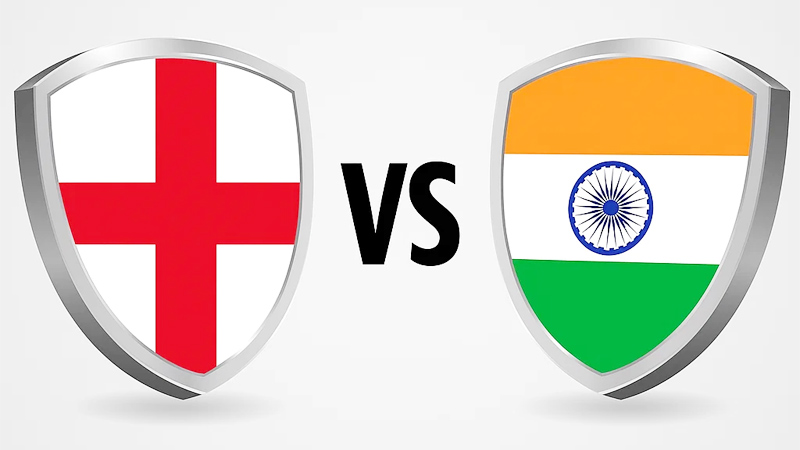
  • Delhi High Court blocks rogue sites from streaming India–England series

    Delhi High Court blocks rogue sites from streaming India–England series

    MUMBAI: In a significant win for content rights holders, the Delhi high court has restrained multiple rogue websites from illegally streaming the India tour of England 2025 (ITE 2025), following a copyright infringement plea filed by JioStar India Pvt Ltd (formerly Star India Pvt Ltd).

    Justice Saurabh Banerjee granted a ‘dynamic+’ injunction, enabling real-time blocking of infringing websites during live match broadcasts.

    The five-Test series between India and England is scheduled from June to August 2025 and JioStar holds exclusive digital media rights for ITE 2025 under a licensing agreement with Culver Max Entertainment Pvt Ltd (Sony).

    JioStar alleged various third party websites of streaming IPL 2025 illegally and were likely to do so again during the England tour.

    As per the court’s orders:

    . Immediate suspension of the four listed rogue domains by their respective registrars, including Namecheap Inc., Sav.com LLC, and Tucows Domains Inc.

    Direction to internet service providers — including Airtel, Jio, and Vodafone Idea — to block access to these websites within 72 hours.

    Permission for JioStar to notify additional infringing websites on affidavit during the series, without the need for separate court orders.

    Coordination mandated between the Department of Telecommunications (DoT) and the Ministry of Electronics and Information Technology (MeitY) to ensure ISP compliance.

    Inclusion of unnamed infringers as John Doe defendants to allow future enforcement.

    This comes after the court addressed the growing challenge posed by “hydra-headed” piracy websites, which routinely mask ownership and replicate via mirror domains.

    “The rights of an intellectual property holder cannot be rendered otiose in this world of rapidly developing technology,” the order observed.

    The judgement referenced recent rulings such as Universal City Studios v. Dotmovies.baby and Applause Entertainment v. Meta Platforms, reflecting evolving judicial strategies to curb digital piracy. The matter is scheduled for the next hearing on 13 October 2025. In the interim, JioStar has been directed to file regular affidavits identifying any new infringing domains during the India–England series.

  • Global media titans converge, creator economy ignites as NAB Show 2025 concludes

    Global media titans converge, creator economy ignites as NAB Show 2025 concludes

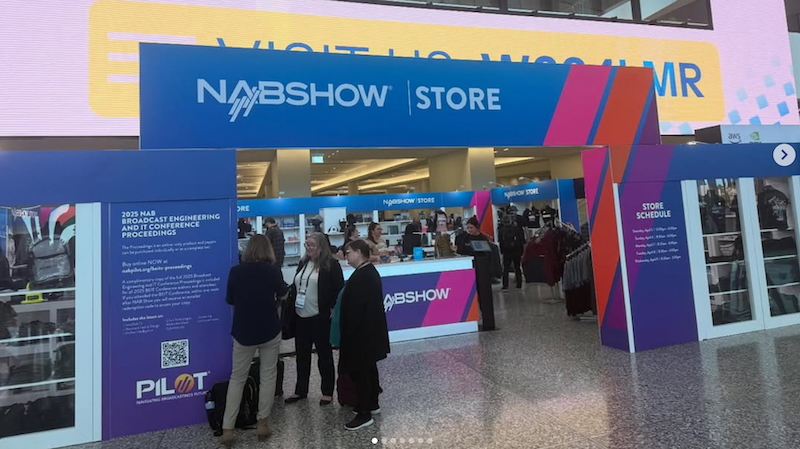
    MUMBAI:  The National Association of Broadcasters (Nab) Show 2025 concluded on 9 April, solidifying its position as the premier global platform for technology for the media and entertainment industry. The event drew 55,000 registered attendees from 160 countries, demonstrating its international reach and influence.

    Nab Show executive vice president  Karen Chupka highlighted  the show’s role in showcasing the latest advancements in storytelling and technology. A significant 26 per cent of attendees travelled from outside the United States, and 53 per cent were first-time participants, highlighting the show’s expanding appeal.

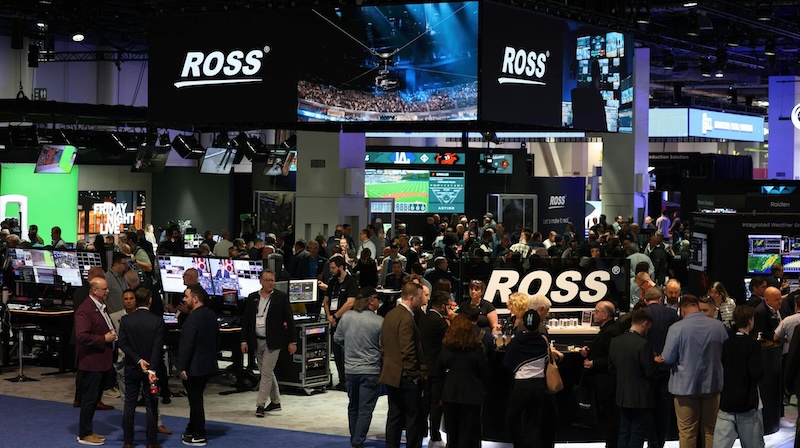
    The exhibition floor, spanning an area equivalent to eight football fields, featured nearly 1,100 global exhibitors, including 125 new companies. Industry giants such as Adobe, AWS, Canon, Sony, and Verizon Business presented their latest innovations, driving forward the evolution of content creation and distribution. David Ross, CEO of Ross Video, described the show as a crucial platform for showcasing their entire product portfolio.

    Key trends at the show included artificial intelligence, the burgeoning creator economy, and the convergence of sports and technology. High-profile speakers, including Gotham Chopra from Religion of Sports, Jody Gerson of Universal Music Publishing Group, and WWE executives Nick Khan and Paul “Triple H” Levesque, engaged audiences with insights into the future of media. Dhar Mann and Steven A. Smith also captivated attendees with their perspectives on content creation and sports media.

    The show featured over 550 conference sessions and more than 1,000 speakers, addressing critical industry topics. The inaugural Sports Summit explored the intersection of sports, media, and technology, while the Business of Entertainment track, in partnership with The Ankler, examined media dealmaking and content strategies. Sessions on AWS, artificial intelligence, and sports streaming saw high attendance, reflecting the industry’s focus on emerging technologies. The Creator Lab provided a dedicated space for digital creators to explore new tools and resources.

    Nab launched its Creator Council, an advisory group comprising influential creators and thought leaders, to amplify creator voices and guide Nab’s engagement with the creator economy. This initiative underscores Nab’s commitment to supporting the evolving needs of content creators.

    Major company announcements included Sony’s unveiling of the HDC-F5500V and HDC-P50A cameras, and Verizon Business’s introduction of a portable Private 5G Network framework designed to streamline live broadcasting.

    The Nab Show will return to New York from 22 -25 October 2025, and to Las Vegas from 18 to 22 April  2026.

  • NAB Show 2025: Las Vegas event focuses on future of content and entertainment

    NAB Show 2025: Las Vegas event focuses on future of content and entertainment

    MUMBAI: NAB Show 2025, began on Saturday, 5 April, while exhibits opened on 6 April, showcasing innovations in content and entertainment. The event, being held at the Las Vegas Convention Center, is featuring technologies driving industry changes, including AI-driven tools, the creator economy, sports technology, cloud virtualization, and streaming/OTT platforms.

    NAB  executive vice president of global connections and events Karen Chupka, stated the show aims to be a central point for content creators across various mediums. Over 60,000 attendees are expected.

    The exhibit floor features nearly 1,100 companies, including 125 new exhibitors. Notable brands such as Adobe, AWS, Blackmagic, and Sony are participating. New exhibit areas are highlighting  emerging technologies and startups, including the “Startup Stage” in PropelME, the “AI Innovation Pavilion,” “Premiere Park,” and the “Sports Business Hub.”

    The conference program includes 550 sessions covering business, creativity, production, and technology. New session tracks include Business of Entertainment, produced in partnership with The Ankler, and Sports Summit: The Future of Sports Rights and Fan Experience.

    Over 1,000 industry leaders are slated to speak across more than 20 stages. Featured speakers include Dhar Mann from Dhar Mann Studios, Nick Khan and Paul “Triple H” Levesque from WWE, Gotham Chopra from Religion of Sports, and representatives from organisations such as NPR, Universal Music Publishing Group, the Women’s Tennis Association, the NFL, NASA, and ESPN.

    Interactive experiences are available, including the “Creator Lab” and the AWS Racing Simulator.
    NAB Show 2025 is projected to attract over 60,000 attendees from 160 countries, with 50 percent being first-time attendees. The show facilitates significant business connections, with nearly $17 billion in business generated annually.

  • Sony’s New Strategic Vision: Inside CEO Gaurav Banerjee’s Transformation Plan

    Sony’s New Strategic Vision: Inside CEO Gaurav Banerjee’s Transformation Plan

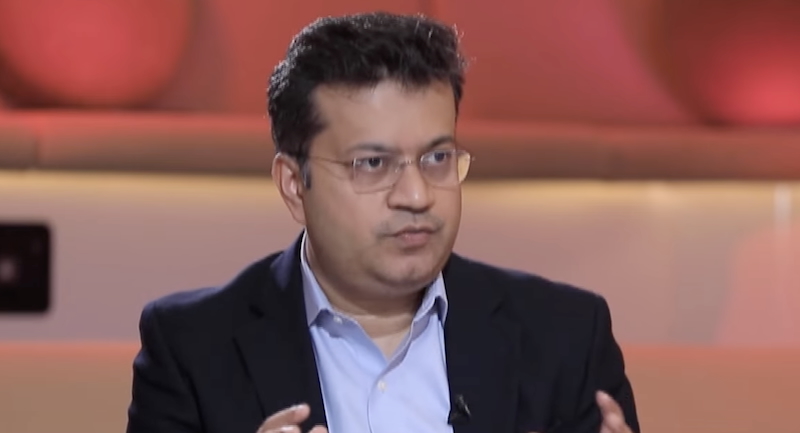
    MUMBAI: Six months into his tenure as CEO of Sony Pictures Networks India, Gaurav  Banerjee (GB as he is called internally and by those who know him)  is orchestrating a remarkable turnaround of the media giant’s Indian operations. In a detailed conversation with CNBC-TV18, GB  outlined his vision for revitalising Sony’s presence in both traditional television and digital streaming.

    Under Banerjee’s leadership, Sony Entertainment Television (SET) has witnessed a dramatic 70 per cent surge in ratings, climbing from the early 50s to the late 80s. This transformation has been driven by strategic content decisions, most notably the revival of the iconic crime drama CID, which achieved the channel’s strongest fiction launch in seven years.

    “Our flagship channel had not been doing well,” GB  acknowledged. “Some of that identity had got diluted”. 
    His response was decisive: streamline programming to reinforce Sony’s distinctive identity whilst reinvigorating successful formats. The strategy has paid dividends, with Indian Idol recording a 30 per cent increase in ratings compared to its previous season.

    “Programs like Shark Tank in its latest season were tweaked and put on the streamer  only and it has notched up a jump in viewership and viewers. 

    GB shocked
    Contrary to industry pessimism about traditional television, GB  remains bullish on linear TV’s prospects in India. “There is no evidence of TV’s decline. In fact, there is substantial evidence that TV is set to grow in our country”, he asserts, pointing to India’s massive television audience of 700 million viewers. This optimism is reinforced by continued support from major advertisers like Hindustan Unilever, who recognise television’s unique brand-building capabilities.

    For Sony as a group, GB  has implemented a four-pillar strategy encompassing sports, television content, original productions, and regional expansion. The company has secured rights to premium sporting events, including three Grand Slam tennis tournaments and 35 days of top-tier cricket coverage. Original content continues to be a priority, building on the success of acclaimed series like Scam and Rocket Boys.

    Addressing the aftermath of the failed Zee merger, GB  maintains a forward-looking stance. “The Sony group is a big believer in the potential of India”, he states, emphasising the company’s commitment to the market. On the competitive landscape of cricket rights, he advocated a measured approach: “We need to have an eye on profitability… Having two different revenue streams is very important Hence, SonyLiv will not be free.”

    GB  who previously held senior positions at Disney Star, brings a clear vision for Sony’s future: “We’re not here to count subscribers; we’re here to build a product.”

    This philosophy underpins his approach to both traditional and digital platforms, focusing on premium content creation and sustainable growth.

    GB refused to be drawn into any conversation about reviving discussions with Zeel about any merger possibilities in the light of the emergence of the JioStar megabeast. 

    “I think me and my team have a job on our hands and we are focused on that. What ever had to be said about it, has been,  before I entered this building,” he reparteed when pushed. ”I want us to build a great portfolio of amazing content and that’s what all of us in this building are focused on now. We have got great brands in-house and we have to grow them in Hindi and in other Indian languages. We have to grow them on television, we have to grow them on digital.” 
    GB smiling
    Looking ahead, Sony’s strategy under GB  appears focused on leveraging its strong heritage while embracing digital innovation. With significant improvements already visible in his first six months, the CEO’s vision for Sony India combines strategic content development with pragmatic business decisions, positioning the company for sustained growth in India’s evolving media landscape.

    “Entertainment isn’t just relaxation-it shapes society”, GB  reflects, highlighting the broader significance of his role in steering one of India’s major media enterprises. 

    As Sony continues its transformation, the early results suggest that Banerjee’s strategic repositioning is successfully reconnecting the brand with Indian audiences across both traditional and digital platforms. Viewers will agree he is the best man to remind India why it fell in love with Sony in the first place.

     If the past six months are anything to go by, Gaurav Banerjee and his team are just about getting started.

  • DD Free Dish concludes Mpeg 2 e-Auction, securing 60 television channels for 2025-26

    DD Free Dish concludes Mpeg 2 e-Auction, securing 60 television channels for 2025-26

    MUMBAI: Pubcaster Prasar Bharati  has successfully concluded its annual DD Free Dish MPEG-2 slot e-auction, allocating spaces to 60 television channels for the period of 1 April 2025, to 31 March 2026. Major broadcasters securing slots include: Sony, JioStar,  Zee, Sun TV. Some of the prominent channels on FreeDish include  names such as Colors Rishtey, Sony Pal, and several leading news channels including Aaj Tak, ABP News, and Republic TV Bharat.

    The auction process, initiated on 9 January, introduced a structured categoriastion system comprising six distinct buckets, each tailored to specific channel genres and languages. The pricing strategy implemented a two-round system, with initial reserve prices ranging from Rs 3 crore for regional channels to Rs 15 crore for Hindi/Urdu general entertainment channels. The second round saw these figures increase incrementally, with the highest bracket reaching Rs 16 crore.

    To ensure quality content delivery, Prasar Bharati has instituted a new 75 per cent alignment rule, mandating that three-quarters of a channel’s content must align with its declared genre and language. The broadcaster maintained its standard eligibility criteria, requiring participating channels to possess valid ministry of information and broadcasting permits for Indian distribution.
    LIST

    The auction’s participation structure included a Rs 1.50 crore fee for MPEG-2 slots, while MPEG-4 slots commanded Rs 3 lakhs. Notably, the framework extended participation rights to international public broadcasters operating under relevant guidelines.

    This auction follows a successful 2024 edition which generated Rs 1,156 crore through the sale of 64 slots, indicating the platform’s sustained commercial viability in India’s broadcasting landscape. The slight reduction in allocated slots from 64 to 60 suggests a possible strategic recalibration of the platform’s capacity utilisation.
    The successful conclusion of this auction reinforces DD Free Dish’s position as a significant distribution platform in India’s television market, particularly for reaching audiences in regions where paid television penetration remains limited.