Tag: Son Pari

  • Star Utsav spells magic this Children’s Day

    Mumbai: “A little glitter, a little shine, that’s what I always ask fairy God mother of mine……”, this, is what 215 kids of Shri Manav Seva Sang an NGO wished for this Childrens day. Their wish echoed and reached the ears of Star Utsav who spelt magic and turned it into reality and brought them their very own God Mother-Sonpari.


    For the very first time, 215 little beaming faces spent an afternoon with their Sonpari. The air was filled with laughter and fun as children played games and were given little goody bags making it a memorable day for everyone present there.


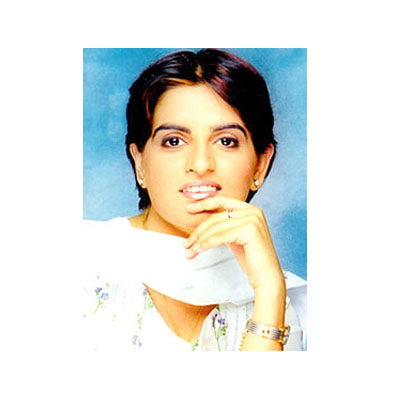
    Says, Mrinal Kulkarni (Son Pari), “I am truly honoured to be a part of this Children’s day celebration. These little children have not only touched my heart but have left me speechless with their warmth and love”.


    Says Shruti, age 6 “It has been my dream to meet pari ma and share a magical evening with her. I enjoyed playing with Fruity. I also liked the flower dance put up by my friends for this occasion.”


    Fun, surprise and joy was the agenda of the day and keeping that in mind, Shri Manav Seva Sang’s children surprised Son Pari with a Flower dance followed by the traditional Lavani. 20 children all dressed for the occasion danced to their hearts content and filled the afternoon with music and laughter.


    Says Fruity, “It was so much of fun meeting and making so many friends. I was pleasantly surprised seeing their performance which by far was the best I have seen. Hours flew by just cracking jokes and laughing.


    As part of its children’s day celebrations, the channel also announced the “Mera Jaduee Dost” contest, wherein, kids can vote for their favorite Jaduee Dost through SMS, Dial Net (IVR) or through Tele voting. The lucky winner gets to spend a magical evening with their Jaduee Dost. Competing for the first prize are the channel’s most loved Jaduee Dost’s–Sonpari from Sonpari, Sanju from Shaka Laka Boom Boom, and Vikraal from Vikraal aur Gabraal.


    Shaka Laka Boom Boom is the story of a magic pencil and a young boy named Sanju. Like any other boy his age, he leads a normal school-going life until the day he discovers a pencil by accident. Would you call Sanju your favourite Jaduee Dost? If yes, then SMS Dost A to 7827 or dial 1902 424 2222 01


    Son Pari is the story of a young girl, Fruity, who meets a fairy. Fruity and Appy’s mother passes away, leaving a void in their lives that their father, Rohit, desperately tries to fill. Fruity meets Son Pari, a fairy, and forms an emotional bond with her. Achieving a unique fusion of fantasy and reality, Son Pari is a delight to watch. So is Sona Aunty your favourite Jaduee Dost? To vote for her type Dost B and send your SMS to 7827 or dial 1902 424 2222 02


    Vikraal aur Gabraal, a tale of ghosts, black magic, monsters and creepy creatures under your bed,” is a unique brand extension of the two most popular characters of Shhhh… Koi Hai. Does Vikraal stand to be your favourite Jaduee Dost then SMS Dost C to 7827 or dial 1902 424 2222 03.

  • “Some might think I am too young, but I believe risk taking abilities are more important” : (Part II)

    “Some might think I am too young, but I believe risk taking abilities are more important” : (Part II)

    If there is a list drawn up of the hottest young television professionals in India, her name will surely figure in it.

    Coming from a family of bureaucrats, Monisha Singh has blazed a trail wherever she has been. Whether it was as an anchor for a DD show when in college. Or whether it was at Balaji Telefilms, in its early days, where as creative director she played a large hand in helping Ekta Kapoor build the fledgling production house.

    Or whether it is at UTV where she has, as a creative director for the past two years, been steering the diversified media firm’s creative for a handful of television shows, which are among the more successful ones it churns out.

    All this and she is just 26.

    The bubbly young lady loves being in the thick of it, at the centre of it all. Not for her the command centre, she has to be in the trenches, motivating her team of producers and eepees (executive producers) like a captain egging on his soldiers on the battlefield.

    The economics graduate and mass communications post graduate is itching to do things, to move on to newer fields to conquer.

    Indiantelevision.com’s Vickey Lalwani caught up with her and spoke with her over several days to understand Monisha Singh, the television professional.

    Excerpts from a two-part interview:

    What was your experience at the fledgling Balaji Telefilms? What is the production house all about? What makes it tick in your opinion?
    Balaji Telefilms was an amazing experience; it was like a family. I saw it grow from a small team of 10-12 people to a Rs 100 plus crore (Rs 1 billion plus) production giant. It was there that I learnt how to use my creativity and weave it into a web that works for television.

    It can be one of the most grueling experiences and yet one of the most enriching ones for anyone interested in creating content for television. According to me five months at Balaji are equal to five years at most other production houses. The pace, logistics, hard work, team effort and creative drive exposes you to real television.

    They have learnt to maximize the creative and the production resources that they have, cut costs and yet give the final product a fantastic look. It is the clever use of money that they have mastered. Agreed that they get higher budgets then most others in the industry do, but then their shows get higher TRPs, which is not unfair. They don’t waste this extra money, they utilise it intelligently. Overall, there is a creative energy flowing through the organization courtesy Ekta.

    While the environment was energizing and fulfilling, I had to get further up the learning curve and expand my portfolio. And opportunity came my way in the form of UTV, which was as mature as Balaji was young.

    What excited you about UTV? What were the challenges?
    UTV is the big daddy of television; one of the oldest and most successful production houses. What it offers creative people is a huge library of creative knowledge accumulated over the years of dealing with almost every channel and genre.

    It has pioneered and created some of the more successful game shows, reality shows, soaps, comedies, quiz shows, action-based shows, thrillers and kids shows. Since I had primarily been involved with soaps, UTV attracted me as it would give me the opportunity to explore many more genres.

    UTV isn’t just looking at television, it is in almost every field of entertainment be it in advertising film making or commercial cinema or non-fiction or animation. It makes for a huge learning.

    Has your one and a half years of experience at UTV lived up to your expectations?
    Yes, and in every sense. As a creative director my job was not just to visualize and create, but to also make sure that it is rightly executed. I had to strike a balance between operations and creative, which is to keep the budgets in check and above all make sure that the show does well in the rating game.

    We started Shakalaka Boom Boom, a kids daily show on Star Plus. It became my baby. I was involved in character creation, casting, sets, packaging, editing, keeping costs under control and making it gel well with kids who were its viewers. From what I know, it became a cult with them.

    I was also shaping Kehta Hai Dil, which was earlier episodic but later took on a linear story format. Being a weekly it offered me a different set of challenges. It is easier to make a daily a habit. In a weekly, the content has to be that much more compelling, stronger, to get the viewer back six days later. On top of that Keha Hai Dil is a one hour format, which is a further challenge as you have to keep the viewer glued to it for an hour when her attention span is so short because of competitive options. And I believe, going by its ratings and popularity, I, along with my team, have managed to make a success of it.

    UTV has helped me sharpen my people management skills as most of the professionals working here are more senior and experienced than I and they report to me.

    I have developed several multigenre concepts for television, have been reading exciting film scripts, and now with UTV coming up with a channel for the young, I am also involved in broadcasting.

    Could you elaborate on that?
    Sure. UTV is launching a channel for the young, and the main focus is going to be localised programming dealing from drama, fantasy, game shows to animation series. We would also be acquiring foreign content and dubbing it, but the focus will largely be local programming.

    Research has indicated that there is a huge gap in the market for kids programming. The current set of channels do not cater enough to the needs of kids. General entertainment channels have kids shows like Son Pari, Shararat, Shaka Laka Boom Boom, Hatim and The Magic Box. While these are hugely popular, there is nothing more to it. It is enough indication that there is a gap for kids content.

    Our agenda would be to appeal to every child viewer. Advertisers have accepted the growing influence of kids on purchase decisions for products as varied as cars to computers to mobile phones. Gone are the days when they were just being targeted for toothpaste and chocolates. Therefore they are looking for media vehicles to carry their advertising. And our kids channel will offer them just that ideal vehicle.


    “There is no set pattern or formula to spot a winner. Research helps us get the ingredients together but at the end of the day, it is gut feel and that instinct that helps you differentiate between a winner and a loser”

    What are the challenges you face as a creative professional? How do you overcome them?
    The day-to-day challenges are about operations and creative, which I have talked about earlier. On the second level, it is being able to forecast foresee trends, innovations and pioneer a trend, and stay ahead of the competition. Whoever thought that a Jassi would come up and cause so many ripples?

    Also we have to keep up with changing times and flavour of the month. With the election mood in the country, we have an elections plot being woven into Kehta Hai Dil.

    One has to keep churning out compelling content day in day out, so that the viewer does not shift to sports or news or whatever.

    On a personal level, the challenge is to enrich oneself creatively during the day-to-day bustle.

    How do I face up to the challenges? Well, they are a part of the job. And one deals with them.

    Do you think creativity in television is encouraged in India or is it mediocrity?
    Whoever said commercial television is only about creativity! Look at the west, television there is a creative science. Somebody comes up with a good idea, then armies of professionals – be it writers, script doctors, producers, directors or the suits – swoop in and work at making it a product that has a chance at success. Creativity for creativity’s sake is not television. Within the framework of making a successful, watchable product, you can experiment with creativity. And that’s how it should be.

    Generating a product doesn’t mean you are guaranteed success. You have to market it, do promotions, PR, even then you are not guaranteed success.

    Creativity is encouraged in India within these parameters. I cannot create a show that is going to be watched just by me. At the end of the day, we are here to create programming that generates mass viewership, better TRPs for our shows. Be it following a formula or breaking the mould, the result has to be better TRPs. One has to cater to the needs of the viewer.

    But the viewer is only going to view what we want him to view. If we don’t think out of the box, how do we get the viewer to sample. There were experiments like Josh, and Astitva.

    Yes, we need to get in more genres, we need to open our minds to handling some taboo subjects and issues, but we need to do so within our cultural sensibilities and sensitivities. We need better budgets and better advanced planning to make a better product, be it in the area of cinematography or story or art direction – basically the look and feel.