Tag: SoHo

  • Printer TVC shows printing cheaper than price of toffee per page

    Printer TVC shows printing cheaper than price of toffee per page

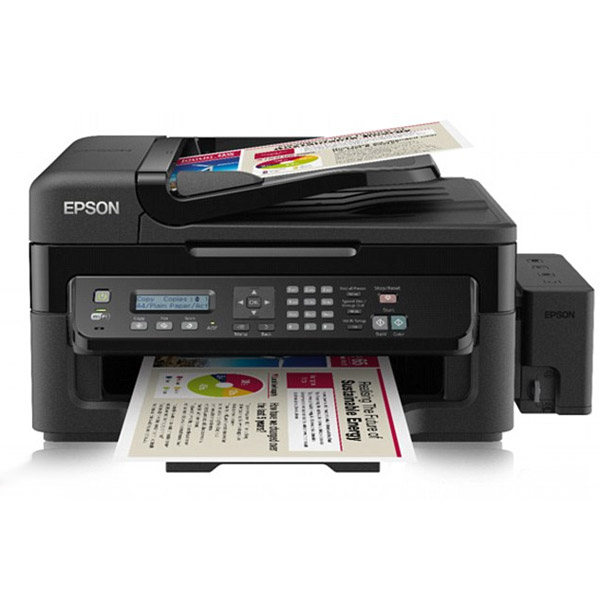
    New Delhi: Digital Imaging and printing solutions company Epson has launched a new TVC for what it terms as its ‘revolutionary’ InkTank Inkjet printers in India.

    The new commercial targets value-conscious working professionals with children who have their own printing needs (SOHO, small office, self-employed) and who are keen for their child to be ‘ahead’ and to ‘have the best’. The key message for the TVC is focused on the unified cost advantage (8 and 28 paise per print), which now allows everyone to print without any worries.

    Epson says its ultimate objective is to develop a brand Image as a ‘lifestyle technology brand’ and to grow brand affinity (or ‘likeability’) with a wider audience base. The creative idea was intended to communicate with anyone who has a printing requirement, across segments, with a bias towards the Home/SOHO/Professional segment.

    The television commercial was conceived by Bangalore-based OpusCDM, Epson’s Brand and Marcom agency for several years, and produced by Mumbai-based Equinox. 

    Epson India Brand & Communication senior general manager Tushad Talati said, “Having made massive, successfully inroads into the business and commercial market with our InkTank printers we felt the time was right to open up the larger home market to the benefits of ultra-economical and convenient Epson InkTank printing. While a large number of evolved consumers had caught on early and were already buying Epson InkTank printers for home use, we needed to get the message out to a larger base of home users in a simple, effective and easily understood way. The “Keya” commercial very simply and effectively conveys the benefit of low cost printing to the home user while continuing to appeal to the existing base of commercial and business users. The response to the ad so far has been phenomenal and we expect to build on our current market share of 51% in the Inkjet printer segment.”

    OpusCDM strategy planning Nagesh Manay said, “Printers is a challenging category – consumer involvement is low, consumable buying is an issue, and it historically ran on price points. Epson took a bold leap by introducing InkTanks at a higher-than-traditional price point, forcing a dramatic shift in the category. The key in this film is, of course, the toffee that Keya holds. We discovered that people don’t really know how much it costs for a print. Everyone’s been using expensive cartridges but never quite knew how many prints it gave them and at what cost. The toffee is the trigger for low cost, and it’s something everyone can relate to.  Keya is more than just a little girl. She is a metaphor for the freedom we wish to exercise everyday. Smart and obvious. This is where our creative connect from product to consumer was. Not to have to say that choosing an Epson is the smart and obvious thing to do, but to show it. That’s why she has an attitude that’s easy and witty. Keya is relevant even to the little DTP shop owner. We had quite a task finding the right actor for the film, someone who could pull off the conversation with the somewhat absurd, theatrical context and inter-play. We needed a natural, instinctive child who is not fazed by moment, and Nitin Parmar, the director, did a great job in making it all come alive.”

    While the idea was to convey that the freedom to print without thinking or worry is now truly here, it was essential to lift the low cost per print advantage to an everyday benefit. This is done with a little girl called Keya, who clearly has a mind of her own. She has an almost normal conversation with an unseen adult male, but instead of responding to his questions with her voice, she uses words and symbols on printouts, holding them up instantly, without thinking.

    This drives home the ease of printing, emphasized by her saying in one of her printouts – “it’s more fun this way”. Finally, when she is asked about why she is wasting her father’s money, she whips out a colourful condiment from her pocket, licks it, and says, “no no, it costs less than my toffee!” This introduces the benefit in a simple way for everyone, people young and old and across regional boundaries, to understand. This was an important consideration in the creative approach. Keya has today become the “cheeky toffee girl with the infectious laugh” as the commercial, which has been aired in multiple languages, has resonated with consumers across various markets.

    A combination of media – with TV for affinity, and Print and Online for rationale, creates a complete, optimum, emotio-rational connect. On the ground, the Keya campaign has been extended into retail as well.

    With a market share of close to 80% in the Business and Commercial segments, Epson intends through its new television commercial to expand its appeal to the Home & SOHO segment as well, without disturbing its core business and Commercial franchise.

  • Printer TVC shows printing cheaper than price of toffee per page

    Printer TVC shows printing cheaper than price of toffee per page

    New Delhi: Digital Imaging and printing solutions company Epson has launched a new TVC for what it terms as its ‘revolutionary’ InkTank Inkjet printers in India.

    The new commercial targets value-conscious working professionals with children who have their own printing needs (SOHO, small office, self-employed) and who are keen for their child to be ‘ahead’ and to ‘have the best’. The key message for the TVC is focused on the unified cost advantage (8 and 28 paise per print), which now allows everyone to print without any worries.

    Epson says its ultimate objective is to develop a brand Image as a ‘lifestyle technology brand’ and to grow brand affinity (or ‘likeability’) with a wider audience base. The creative idea was intended to communicate with anyone who has a printing requirement, across segments, with a bias towards the Home/SOHO/Professional segment.

    The television commercial was conceived by Bangalore-based OpusCDM, Epson’s Brand and Marcom agency for several years, and produced by Mumbai-based Equinox. 

    Epson India Brand & Communication senior general manager Tushad Talati said, “Having made massive, successfully inroads into the business and commercial market with our InkTank printers we felt the time was right to open up the larger home market to the benefits of ultra-economical and convenient Epson InkTank printing. While a large number of evolved consumers had caught on early and were already buying Epson InkTank printers for home use, we needed to get the message out to a larger base of home users in a simple, effective and easily understood way. The “Keya” commercial very simply and effectively conveys the benefit of low cost printing to the home user while continuing to appeal to the existing base of commercial and business users. The response to the ad so far has been phenomenal and we expect to build on our current market share of 51% in the Inkjet printer segment.”

    OpusCDM strategy planning Nagesh Manay said, “Printers is a challenging category – consumer involvement is low, consumable buying is an issue, and it historically ran on price points. Epson took a bold leap by introducing InkTanks at a higher-than-traditional price point, forcing a dramatic shift in the category. The key in this film is, of course, the toffee that Keya holds. We discovered that people don’t really know how much it costs for a print. Everyone’s been using expensive cartridges but never quite knew how many prints it gave them and at what cost. The toffee is the trigger for low cost, and it’s something everyone can relate to.  Keya is more than just a little girl. She is a metaphor for the freedom we wish to exercise everyday. Smart and obvious. This is where our creative connect from product to consumer was. Not to have to say that choosing an Epson is the smart and obvious thing to do, but to show it. That’s why she has an attitude that’s easy and witty. Keya is relevant even to the little DTP shop owner. We had quite a task finding the right actor for the film, someone who could pull off the conversation with the somewhat absurd, theatrical context and inter-play. We needed a natural, instinctive child who is not fazed by moment, and Nitin Parmar, the director, did a great job in making it all come alive.”

    While the idea was to convey that the freedom to print without thinking or worry is now truly here, it was essential to lift the low cost per print advantage to an everyday benefit. This is done with a little girl called Keya, who clearly has a mind of her own. She has an almost normal conversation with an unseen adult male, but instead of responding to his questions with her voice, she uses words and symbols on printouts, holding them up instantly, without thinking.

    This drives home the ease of printing, emphasized by her saying in one of her printouts – “it’s more fun this way”. Finally, when she is asked about why she is wasting her father’s money, she whips out a colourful condiment from her pocket, licks it, and says, “no no, it costs less than my toffee!” This introduces the benefit in a simple way for everyone, people young and old and across regional boundaries, to understand. This was an important consideration in the creative approach. Keya has today become the “cheeky toffee girl with the infectious laugh” as the commercial, which has been aired in multiple languages, has resonated with consumers across various markets.

    A combination of media – with TV for affinity, and Print and Online for rationale, creates a complete, optimum, emotio-rational connect. On the ground, the Keya campaign has been extended into retail as well.

    With a market share of close to 80% in the Business and Commercial segments, Epson intends through its new television commercial to expand its appeal to the Home & SOHO segment as well, without disturbing its core business and Commercial franchise.

  • Rising number of SMEs drives growth of Asia-Pacific VSAT market

    Rising number of SMEs drives growth of Asia-Pacific VSAT market

    MUMBAI: The Asia-Pacific VSAT (very small aperture terminal) market is firmly in its growth stage, and has come to represent the new battleground for global VSAT players who are faced with declining growth in other regional markets.

    VSAT services are beginning to gain greater acceptance among the SME (small and medium enterprise) and SOHO (small office/home office) segments. The continuous expansion of corporate VSAT networks is also beckoning the next stage of growth for satellite services.

    New analysis from global growth consulting company, Frost & Sullivan reveals that revenues of VSAT customer premise equipment (CPE) – covering 13 major Asia-Pacific economies – totaled US$73 million in 2005 and is forecasted to reach an estimated US$109 million by end-2012. The total installed base for VSAT applications is likely to grow to over 900,000 sites by end-2012, from the approximate 300,000 recorded in 2005.

    “Future growth in the corporate and enterprise VSAT segment will result from the booming number of SMEs and the associated demand for easily deployable, reliable broadband connections in areas underserved by terrestrial services,” notes Frost & Sullivan research analyst James Lye.

    Growth of the VSAT market is also likely to be driven by the increasing deployments of rural telecommunications, telemedicine and distance education programs across the region. Rural telecommunications, in particular, is expected to contribute significantly to growth in this segment as many rural communities in emerging markets of the region still lack modern telecommunication access. Most governments in the region have universal access programs that set aside funds and subsidies to tackle this issue. Such developmental subsidies help to partially offset the initial capital expenditure required to deploy wireless and satellite infrastructures.

    VSAT service providers in Asia-Pacific will however need to brace themselves for increasing competition from telecom service providers. Sensing the same opportunities in the underserved areas, terrestrial telecommunication providers have been rolling out infrastructure as fast as they can justify it. These telcos are furthermore emphasizing the managed services model among enterprise customers, which increases revenue per customer and builds very strong loyalty due to the provision of complete solutions.

    “Telecom service providers often wait until the local market is sufficiently developed before moving in with lower pricing to oust the VSAT providers,” explains Lye. “The hardest hit segment is where VSAT is used solely to deliver broadband access.”

    The overall Asia-Pacific VSAT market is expected to experience continued and steady growth over the next few years, offering considerable opportunities for both VSAT equipment vendors and satellite service providers. India and Indonesia are seen as markets with high growth potential. Indonesia’s geography, combined with the lack of foreseeable terrestrial infrastructure build-out has already created a lucrative SME market in the corporate VSAT segment.

    While growth in India’s VSAT sector will come mainly from the myriad of small and medium businesses that are flourishing as the country opens-up its economy with the liberalization of regulatory barriers to foreign players.