Tag: Softbank

  • Mythik brings Disney and Amazon veteran Gunjan Bhow on board

    Mythik brings Disney and Amazon veteran Gunjan Bhow on board

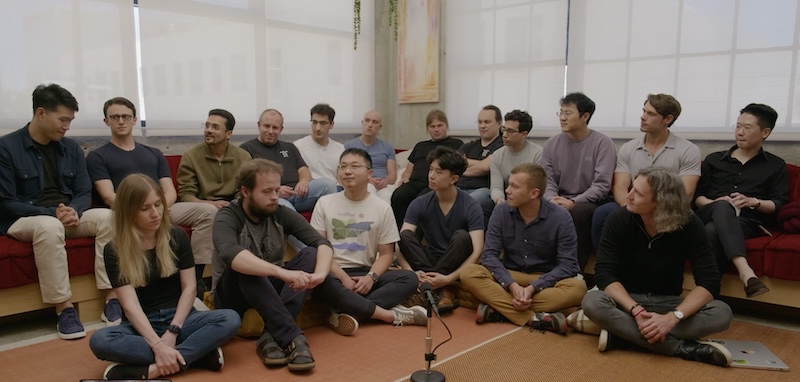
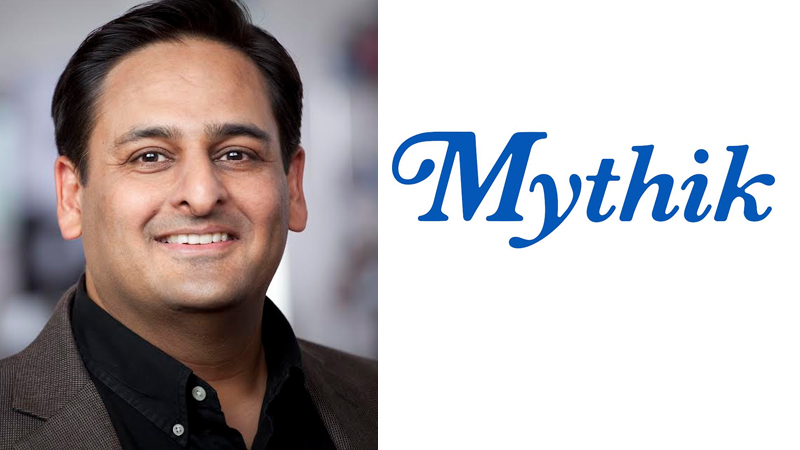
    MUMBAI: Mythik, the tech-first entertainment company aiming to become the “Disney from the East”, has appointed Gunjan Bhow, a veteran of Disney Plus, Amazon Prime Video and Fire TV, to its global advisory board.

    Bhow joins an illustrious panel of leaders from Softbank, Disney, Marvel, Amazon, BBC and Crunchyroll, who together bring decades of experience in scaling some of the world’s biggest media, entertainment and technology businesses.

    A global figure in digital entertainment, Bhow served as senior vice president and general manager at The Walt Disney Company, where he led direct-to-consumer platforms including Disney Plus, Disney Movies Anywhere and Disney Movie Club. Before that, he played a key role at Amazon in shaping the growth of Prime Video, Fire TV and Fire TV Stick, redefining subscription models in the process.

    Currently a board member at the BBC and broadband company Wide Open West, Bhow also advises organisations on AI, media innovation and customer experience. He has held senior roles at Microsoft and Walgreens Boots Alliance and is an inventor on over 20 patents.

    “Gunjan’s leadership in scaling iconic direct-to-consumer businesses makes him an exceptional addition to Mythik’s advisory board,” said Mythik founder and chief executive Jason Kothari. “He embodies the mix of technology, creativity and consumer focus that defines our vision.”

    Bhow added, “Mythik stands at the intersection of technology, storytelling and audience behaviour. I’m excited to help bring timeless stories from the East to the global stage.”

    He joins a powerhouse board that includes Alok Sama (Softbank), Kun Gao (Crunchyroll), Nick Van Dyk (Disney), Bill Jemas (Marvel), John Lynch (Amazon Studios) and Gui Karyo (Marvel and Dapper Labs).

    Mythik aims to reimagine Eastern mythology, history and folktales for global audiences through technology-led storytelling, backed by a founding team drawn from Disney, Netflix, Amazon Studios, Jio and Tencent.

  • OpenAI raises $6.6 billion in funds to accelerate AI drive

    OpenAI raises $6.6 billion in funds to accelerate AI drive

    MUMBAI: This is one fund-raise which is likely to have an impact on several aspects of our lives, and even on the media and entertainment ecosystem globally.  Despite a lot of naysayers about the spread and use of artificial intelligence, OpenAI  – the company behind ChatGPT – announced on 2 October that it has completed a deal to raise over $6.6 billion in new funding, giving the company a valuation of $157 billion post money raise. The money will be used to accelerate its efforts to become the premier generative AI technology.
     

    According to reports, among the companies which have committed to pump in the funds include: Joshua Kushner’s Thrive Capital, which led the round, Microsoft, Nvidia, SoftBank, Khosla Ventures, Altimeter Capital, Fidelity, Tiger Global and MGX.

    The latest fund raise clearly shows that the technology industry is continuing with its belief in artificial intelligence, despite the fact that its research and development is  burning billions of dollars and concerns have been raised about its safety and its effectiveness. In fact, investments in artificial intelligence in AI startups had slowed down, even though tech leaders like Google, Amazon and Microsoft were going ahead unperturbed.

    Reports have stated that the Sam Altman led OpenAI is on course to generate $3.6 billion this year, though its losses might end up at a massive $5 billion. Revenues are expected to treble by end next year. It has about 1,700 employees, adding more than 1,000 in the past nine months. It has also gone through some turbulence on the leadership level with chief scientist & cofounder Ilya Sutskever, CTO Mira Murati, chief research officer Bob McGrew, vice-president research Barret Zoph leaving or announcing their departures.

    OpenAI which began as a non-profit, but was later converted to a capped-profit company  by Altman is said to be undergoing a restructure to become a for-profit company, a commitment which it has made to investors. Timelines are however not clear.

    The company made a post on its website. Read on to know what it said:

    We are making progress on our mission to ensure that artificial general intelligence benefits all of humanity. Every week, over 250 million people around the world use ChatGPT to enhance their work, creativity, and learning. Across industries, businesses are improving productivity and operations, and developers are leveraging our platform to create a new generation of applications. And we’re only getting started.

    We’ve raised $6.6B in new funding at a $157B post-money valuation to accelerate progress on our mission. The new funding will allow us to double down on our leadership in frontier AI research, increase compute capacity, and continue building tools that help people solve hard problems.

    We aim to make advanced intelligence a widely accessible resource. We’re grateful to our investors for their trust in us, and we look forward to working with our partners, developers, and the broader community to shape an AI-powered ecosystem and future that benefits everyone. By collaborating with key partners, including the US and allied governments, we can unlock this technology’s full potential.

    (Pix: courtesy open AI)

  • Moneycontrol to Congregate Leading Voices at ‘Startup Conclave 2024’

    Moneycontrol to Congregate Leading Voices at ‘Startup Conclave 2024’

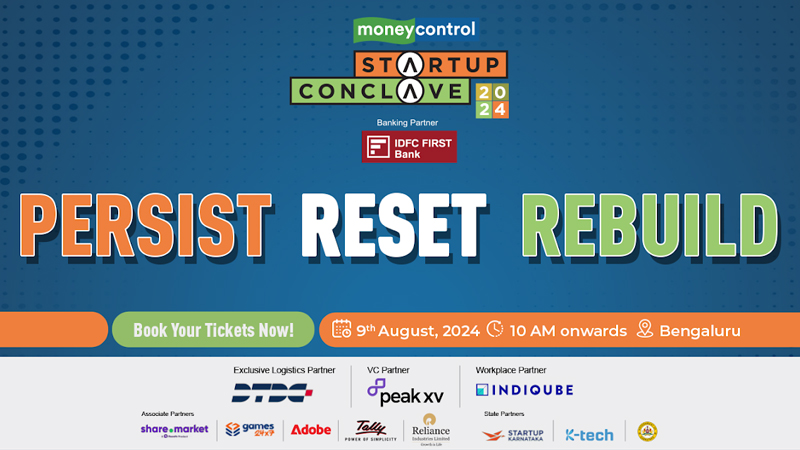
    Mumbai: Moneycontrol, a financial news platform, has announced the second edition of the Moneycontrol Startup Conclave 2024. This premier event, set for 9 August 2024, at ITC Gardenia, Bengaluru, is dedicated to fostering a sustainable and resilient startup ecosystem in India. The conclave will bring together a diverse group of policymakers, investors, leading startup founders, industry leaders, and emerging entrepreneurs for an engaging exchange of ideas and strategic insights.

    Following a challenging two-year funding winter, India’s startup landscape is witnessing a remarkable resurgence marked by increased profitability, late-stage funding, a vibrant secondary market, and numerous tech IPOs. Themed “Persist | Reset | Rebuild” this year’s conclave will emphasize the resilience and adaptability of startups in the face of an AI-driven world and evolving regulatory frameworks. The event will delve into the future of India’s startup ecosystem, providing essential insights for the next wave of entrepreneurial success.

    Moneycontrol Startup Conclave 2024 will feature a series of insightful sessions led by prominent figures including Karnataka Minister for IT-BT and science & technology Priyank Kharge; Karnataka Government, department of electronics, information technology, biotechnology and science & technology, secretary Dr Ekroop Caur; India’s G20 Sherpa Amitabh Kant; Narayana Health, founder and chairman Dr Devi Prasad Shetty; SoftBank, head of India and EMEA Sumer Juneja; PhonePe, co-founder and CEO Sameer Nigam; Swiggy, co-founder Sriharsha Majety; Sorin Investments, founder and chairman Sanjay Nayar; Games24x7, co-founder and co-CEO Bhavin Pandya; Tally Solutions Pvt Ltd, chief of engineering Nabendu Das; IndiQube, co-founder Rishi Das; Adobe, head of sales channel & SMB, digital media India & SA Ajay Joseph; DTDC Express, CEO Abhishek Chakraborty; Peak XV Partners, MD Shailesh Lakhani.

    Moneycontrol has been instrumental in nurturing the startup community, sharing compelling narratives of innovation, success, failure, and resilience. Through initiatives like the Moneycontrol Startup Conclave, the platform continues to champion the entrepreneurial spirit and support the growth of India’s dynamic startup ecosystem.

    Moneycontrol Startup Conclave 2024 is supported by banking partner IDFC FIRST Bank, exclusive logistics partner DTDC, VC partner Peak XV, workplace partner IndiQube, and associate partners Games24x7, Share.Market, Adobe, Tally, Reliance India Ltd, state partner KITS, luxury partner Da Milano Italia and event technology partner Townhall.

    The event will commence at 10:00 am on 9 August 2024, at ITC Gardenia, Bengaluru, and will be livestreamed for a global audience.

  • SoftBank’s Paroma Roy Chowdhury joins Dream Sports

    SoftBank’s Paroma Roy Chowdhury joins Dream Sports

    New Delhi: Soft Bank Group’s former senior director Asia communications and public affairs Paroma Roy Chowdhury is joining Dream Sports as chief communications and advocacy officer.

    Dream Sports is the parent company of Dream11, the recent sponsor of IPL 2020 and the leader in fantasy sports category. 

    Chowdhury stepped down from her role in 2020.

    She has over three decades of experience and has worked as a journalist and communications head across multiple brands such as GE Capital, HP, Bharti Airtel, Google India and SoftBank.

    Founded in 2008, Dream Sports include brands such as FanCode, sports accelerator program DreamX, and sports-focused tour agency DreamSetGo. The company has more than 100m users, capitalising on the passion for cricket in the world's second-largest internet market. 
     

  • Oyo expands footprint in China

    Oyo expands footprint in China

    MUMBAI: Indian budget hotel company Oyo Rooms has forayed into China to cater to the country’s burgeoning hospitality industry. Oyo Rooms.

    The Softbank-backed Oyo in China will have 11,000 exclusive-franchise or merchandised rooms across 26 cities. The service will be available in Xiamen, Kunming, Shenzhen, Chengdu, Nanjing, Xian among others.

    The company will compete with already established players in the market including Home Inns, GreenTree and Motel 168.

    Oyo founder and CEO Ritesh Agarwal says, “The country’s tourism industry is on the cusp of booming and flourishing wherein it enjoys a strong influx of both domestic and international tourists; also the market is as fragmented as the Indian hotel market. With our expertise in managing chain of hotels backed by technological innovations, we will further continue to strengthen our footprint while empowering neighbourhood hotels to emerge in the same league as the big boys of hospitality.”

    The company is looking at expanding its footprint in international markets, with Dubai and Indonesia being high on its priority. Agarwal is also said to be exploring opportunities in the UK and US markets.

  • BSNL inks deals with SoftBank-backed OneWeb for satellite capacity

    BSNL inks deals with SoftBank-backed OneWeb for satellite capacity

    MUMBAI: Government-run telecommunications company Bharat Sanchar Nigam Ltd (BSNL), which markets its broadband service as Data One, is talking to Greg Wyler’s proposed OneWeb satellite constellation about leasing capacity, according to Advanced-television.com.

    The plan is reportedly to “revolutionise” India’s broadband coverage by taking capacity from Japanese media conglomerate SoftBank, which is backing OneWeb. BSNL has reportedly signed a memorandum of understanding (MoU) with SoftBank.

    BSNL is quoted as being extremely enthusiastic about the prospects with chairman Anupam Shrivastava saying: “OneWeb is a newly conceived idea. SoftBank is coming up with 850 LEO satellites to cover every nook and corner of the earth with each satellite facing a land mass every time.” He added that: “If it succeeds, it has the potential to disrupt all telecom service providers worldwide. This technology will only need a gateway to pump bandwidth and distribute anywhere in the world.”

    Also Read :

    Feb-18: Mobile broadband numbers increase as wired internet subscribers decline

    Jio shifts focus to wired broadband

  • India’s taxi war may be headed for a truce

    India’s taxi war may be headed for a truce

    MUMBAI: Gone are the days when we had to book a cab by calling a local can agency, and that’s because cab aggregators in India have completely changed the way we book a cab.

    Back in the day, while Mumbai had its distinguished kaali-peelis, Delhi had its metro whereas Bengaluru didn’t have a great public transport system. Cabs were never a mode of transport in India until a few years ago.

    India’s first official cab service began in Mumbai in 2007 with Meru cabs, who were extremely high priced but came in handy during airport and long-distance travels. It was in 2011, when cab service provider TaxiForSure eased the booking process by starting an online portal, aggregating multiple cab agencies. They grew in popularity by including an Android-based GPS system, which helped customers track their ride.

    ONLINE-TAXI-MARKET-INDIA_1.jpg

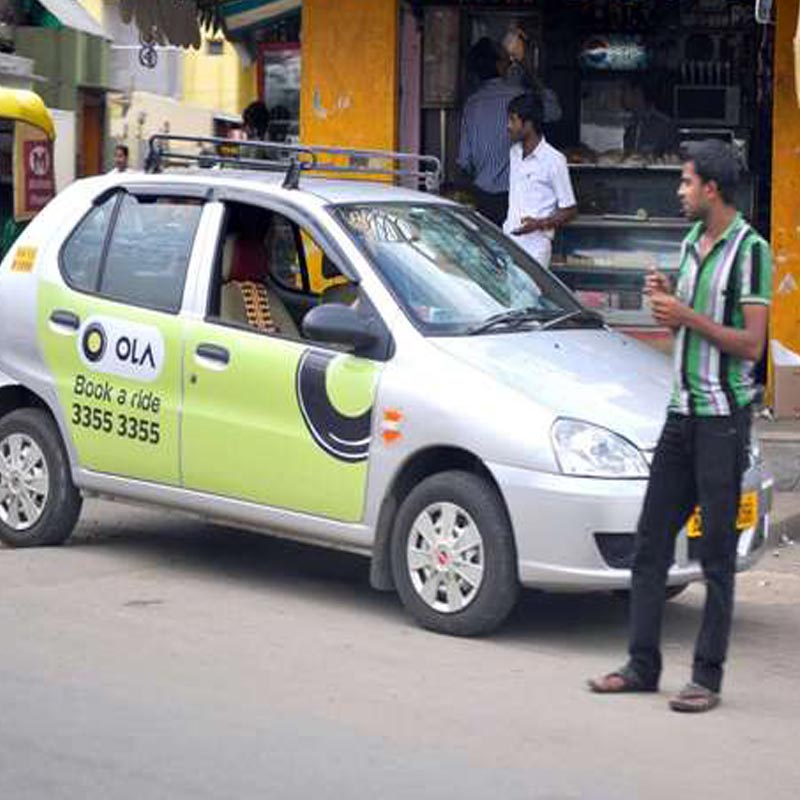
    Meanwhile, Ola, which started in 2010, was following a different model by associating directly with cab drivers, thereby eliminating the need for cab agencies. The company gained popularity only in 2013 as in the initial years, people couldn’t relate with the idea of talking to the driver directly on booking a cab and questioned the model’s authenticity. It was around the same time that global taxi market leader Uber entered the Indian market but failed to connect with the audience as it only allowed credit cards as a mode of payment.

    Over the years, a lot has changed in the Indian cab aggregator sector, where some had to shut shop or were bought over due to bankruptcy and increasing losses. In March 2015, OlaCabs acquired TaxiForSure for approximately US $200 million and Geotagg, a trip-planning applications company, for an undisclosed sum. The company also acquired Foodpanda’s business in India in 2017. 

    The segment has gained a lot of attention due to huge funding, highly competitive pricing (Ola-Uber on-going price war), security issues of women passengers and tussle with the government for license and permits.

    Today, Ola clocks an average of more than 150,000 bookings per day and commands 60 per cent of the market share in India, while Uber’s shares have slipped from 42 per cent in July 2017 to 40 per cent in December 2017.  According to Japanese multinational conglomerate, SoftBank, the organised taxi sector in India may be worth $7 billion by 2020.

    In 2016, Uber made a deal with its Chinese rival Didi Chuxing to exit the Chinese market, after the duo fought hard for the country’s huge customer base Uber also exited Russia and Eastern European markets last year after reaching a similar deal with Yandex, giving Uber 36.6 percent of the entity formed by the two companies. 

    SoftBank has made major investment in Ola and Uber who has also invested in Grab, which is Uber’s rival in South East Asian countries. Ever since Uber inked the deal with SoftBank, there have been speculations that Uber would pull out of those markets and it turned into a reality earlier this year where Uber sold its business in SEA to Grab.

    Now, news is doing the rounds in market that a possible merger between Ola and Uber may be on its way in India. Since the Ola-TaxiForSure acquisition, the Indian market has essentially been a two-horse race and now, were the Uber-Ola deal to work out, we'd witness a monopoly situation like never before as Uber and Ola, together hold nearly 95 per cent of the market today. 

    public://INDIAN-CAB-MARKET-OVERALL.jpg

    If the merger does happen, we may see increase in advertising and marketing for the new merged entity as Ola and Uber are India’s two major cab aggregators with pockets filled. Ola has a robust advertising budget for television and print whereas Uber has an upper hand at digital and social media marketing. The combined entity would indicate 360-degree advertising including print, out of home, television and digital. 

    While Uber has always had an elite and urban vibe to it, Ola has a stronger presence across smaller towns and segments. The Indian firm operates in 110 cities, far more than Uber’s 31. The merged entity would ensure a better penetration in rural as well as urban markets as the customer base for both the apps would be aligned together. 

    public://TIER-2,-TIER-3-MARKET-SHARE.jpg

    This would also mean the prices would be kept in check as currently, Ola is assumed to be comparatively cheaper and affordable than Uber. But this could also go the other way, as a monopoly could lead to price tampering and exorbitant charges.

    But the merger will also open the field for newer players to enter in the segment which will only help in competitive prices and all of them striving to serve better in order to acquire and retain customers. 

    All said and done, when and how the merger will unfold is a story for another day but if there’s one thing, it will definitely be an interesting tale to tell.

    Also Read :

    2018 will be a year of video campaigns: WATConsult's Rajiv Dhingra

    Going from clicks to bricks

    Kohli brand driving on the up

    Competing with consumer activities not brands: Kingfisher's Sheikhawat

    Cinema advertising begins to take centre stage

  • Hike unveils ‘No Formality’ campaign for Diwali

    Hike unveils ‘No Formality’ campaign for Diwali

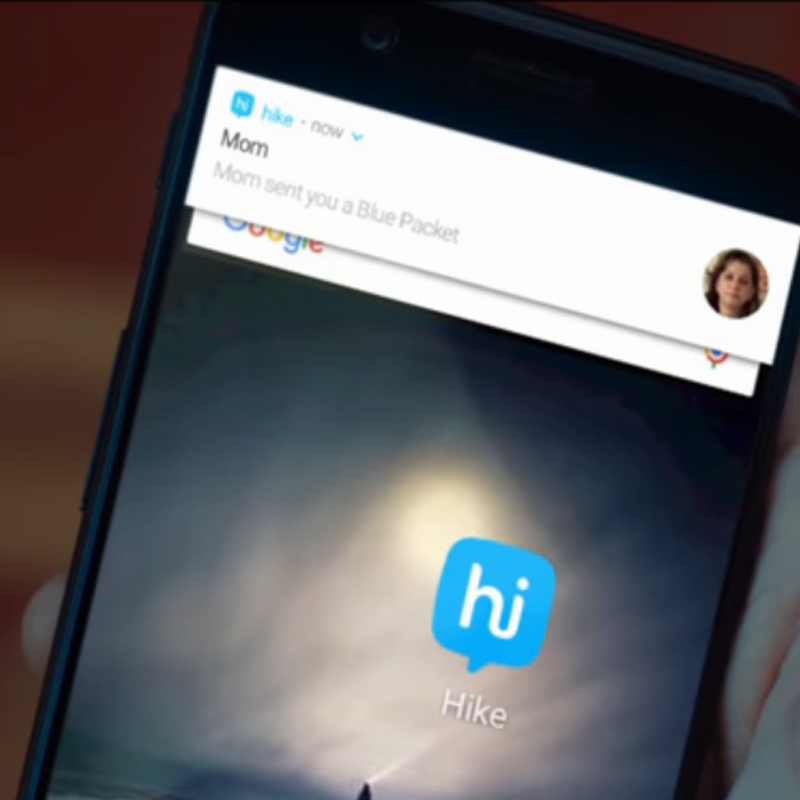
    MUMBAI: Hike Messenger, India’s homegrown messaging platform, has announced the launch of its new marketing campaign “No Formality.”

    According to a Hike spokesperson, “No Formality is a way of life that emphasises that you should simply be yourself without any formalities or pretence – a way of celebrating traditions without formality.” He further added,“It is about accepting that we all need to treat each other as equals in a fun and easy manner. And ‘No Formality’ is an expression of that spirit. ‘No Formality’ cuts across culture, language, and geographies and is a reflection of our society.”

    The campaign kicked off with one and there would three three films. The campaign will run till December on digital, social and traditional media. It will be available in five languages – Hindi, Telugu, Kannada, Malayalam and Tamil across 16 states.

    In the countdown to Diwali, the campaign highlights scenarios related to the festival. For instance, the homecoming film is based on the fact that Diwali is usually celebrated with family.

    Even if someone does not want to go back but wants to spend it with his or her friends, tradition demands you have to go back home. The campaign of Hike, investors of which include Tencent, Foxconn, Tiger Global, Softbank and Bharti, will be amplified across social channels using #NoFormality.

    The homecoming film shows a young boy travelling back home for Diwali and there is an entire build-up of emotion as it shows him on the journey back home. But, there is a complete anti-climax when he reaches home: The Homecoming.

  • Ola shutting down TaxiForSure, adds value-based services for customer convenience

    Ola shutting down TaxiForSure, adds value-based services for customer convenience

    MUMBAI: Ola has taken a leap in saving cash burn rate by shutting down TaxiForSure, the Banglore-based cab service it acquired last year. It has removed about 700 employees in the process of reworking its business model.

    Ola is taking measures to widen its lead over Uber and crown itself as the space leader in India.

    The web based cab service has launched value added services like providing free WiFi for customers of its premium Prime service. It also launched the mini cab service, the cheapest cab option.

    In the process of shutting down TFS, employees from call centres, business development and driver relations were removed from their positions. The Integration is complete with TFS driver-partners and customers coming on board the Ola app.

    According to the management, they have employed as many TFS employees for open roles in Ola to support our growth. For positions that cease to exist as a result of this transition, Ola has offered a three-month salary compensation.

    Ola, backed by Softbank acquired TFS in 2015 at the cost of $200 Million with the intention of competing with Uber and widen its presence.
    The competition is expected to intensify further in the coming months as Uber expands its focus on the Indian market after selling off its China operations to Didi Chuxing. Interestingly, Didi is a minority investor in Ola and also shares a common investor in SoftBank.

    The functions of TFS slowed down right after taking over. It is learnt that the company has been unclear about brand positioning of TaxiForSure and so the TFS fleet was transferred to Ola supply. Insiders say the incentive for Ola was more lucrative for Ola than TaxiForSure. According to reports, the company will save about Rs 30 crore every month by shutting down TFS. The option for TaxiForSure will phase out from Ola App over time.

  • Ola shutting down TaxiForSure, adds value-based services for customer convenience

    Ola shutting down TaxiForSure, adds value-based services for customer convenience

    MUMBAI: Ola has taken a leap in saving cash burn rate by shutting down TaxiForSure, the Banglore-based cab service it acquired last year. It has removed about 700 employees in the process of reworking its business model.

    Ola is taking measures to widen its lead over Uber and crown itself as the space leader in India.

    The web based cab service has launched value added services like providing free WiFi for customers of its premium Prime service. It also launched the mini cab service, the cheapest cab option.

    In the process of shutting down TFS, employees from call centres, business development and driver relations were removed from their positions. The Integration is complete with TFS driver-partners and customers coming on board the Ola app.

    According to the management, they have employed as many TFS employees for open roles in Ola to support our growth. For positions that cease to exist as a result of this transition, Ola has offered a three-month salary compensation.

    Ola, backed by Softbank acquired TFS in 2015 at the cost of $200 Million with the intention of competing with Uber and widen its presence.
    The competition is expected to intensify further in the coming months as Uber expands its focus on the Indian market after selling off its China operations to Didi Chuxing. Interestingly, Didi is a minority investor in Ola and also shares a common investor in SoftBank.

    The functions of TFS slowed down right after taking over. It is learnt that the company has been unclear about brand positioning of TaxiForSure and so the TFS fleet was transferred to Ola supply. Insiders say the incentive for Ola was more lucrative for Ola than TaxiForSure. According to reports, the company will save about Rs 30 crore every month by shutting down TFS. The option for TaxiForSure will phase out from Ola App over time.