Tag: social media

  • India – South Africa match garners 2 billion impressions: TO THE NEW report

    India – South Africa match garners 2 billion impressions: TO THE NEW report

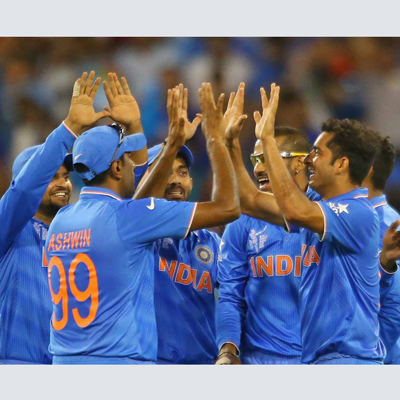
    MUMBAI: India’s stellar performance against South Africa during the Sunday match did not enthral fans at just the stadium and homes but also set social media abuzz. Digital services provider – TO THE NEW has come up with a comprehensive report on the post match analysis of India versus South Africa that trended on social media platforms.


    According to the report, the match generated an estimated two billion impressions, which were garnered from 4,16,339 Twitter mentions by 3,18,041 users. Close to 77 per cent of these came from males while 23 per cent was by females.


    When the conversation is further broken up, 58 per cent (2,40,509 mentions) came from re-tweets, 39 per cent (1,62,852 mentions) came from regular tweets while the remaining three per cent (12,978 mentions) were from replies.


    In terms of tweet volume, the top five cities from where tweets came from are Mumbai (25 per cent), New Delhi (19 per cent), and Bangalore (10 per cent). Pune and Chennai complete the list with five per cent each volume.


    The report also provides the geographical breakup of the social media buzz. India stands at 73.80 per cent followed by Saudi Arabia at a distant 9.40 per cent. Neighbouring Pakistan is placed at 4.50 per cent, USA at two per cent while other countries put together made up for 7.40 per cent.


    When these tweets were analysed in terms of sentiments, a majority of 75 per cent of the tweets were positive in nature while 23 per cent were negative. A minor two per cent were neutral in nature.


    When it came to player mentions M.S Dhoni topped the Indian list as the Indian captain was the most mentioned on Twitter. The list is then followed by Ajinkya Rahane, Shikhar Dhawan, Suresh Raina and Mohammad Shami. From South Africa, Hashim Amla topped the charts followed by AB de Villiers, Dale Steyn, Imran Tahir and Quinton De Kock.


    The top trending hash tags were #INDvsSA, which received 145,356 mentions, #CWC15 received 38,636 mentions. The hash tag #SAvsIND came third with 7,777 mentions. The other prominent hash tags were #maukamauka, #wontgiveitback, #dhawan, and #poonampandeykobulao.


    The report also states that compared to the pre-match buzz, there is around 7,384 per cent increase in mentions around the hashtag #INDvsSA.

  • RCom and Twitter partner for Cricket World Cup 2015

    RCom and Twitter partner for Cricket World Cup 2015

    MUMBAI: Reliance Communications has partnered with Twitter to provide customers with the most comprehensive platform to follow the excitement and global commentary as the world’s 14 cricketing nations compete for the tag of the champion team.


    By allowing its users new ways to connect and engage on Twitter and follow the six week tournament, Reliance Communications will look to drive internet adoption and usage during this iconic event, and help drive greater recharges and create stickiness around data usage.


    Reliance Communications consumer business CEO Gurdeep Singh said, “We are delighted to partner with Twitter to offer this unique service to all cricket fans for a unique World Cup experience.”


    “Cricket is best enjoyed with friends and the fun doubles when you can share exchange with all friends instantly. It is with this thought that Reliance has made Twitter free and inclusive, so that our customers can get the most of this World Cup,” he added.


    One unique aspect of this service is that customers who do not have a Twitter account can also access cricket related Tweets by logging on towww.rcom.co.in/cricket on their mobile phones throughout the duration of this global event.  RCom customers can engage with players, commentators and celebrities, watch exclusive pictures and videos and of course remain updated with all the latest scores without incurring any data charges.


    On the other hand Twitter India and SE Asia director of business development Arvinder Gujral commented, “As a platform for live, public conversations, Twitter has changed the way people connect with sporting and global events including cricket tournaments. All the exciting action on and off the pitch as well as the roar of the Indian cricket fans from Jamagar to Itanagar, and Srinagar to Coimbatore, will be heard on Twitter. Through this partnership, Reliance Communications will enable millions of subscribers across the country to join this cricket party for free and in real-time via Twitter.”


    Customers will also be able to follow their favourite accounts and get updates without any data charges from Team India, BCCI and its players, including skipper MS Dhoni, or vice-captain Virat Kohli, the voice of Indian cricket Harsha Bhogle, as well as international legends like Vivian Richards  and Shane Warne, amongst many others. Reliance will also encourage users outside the Reliance network to participate in various interactive contests on Twitter on its account @RelianceMobile. Participants could win miniature bats as souvenirs.


    In addition to this, Reliance has launched an exclusive Cricket Portal wherein Reliance customers can download exciting content related to the event like match highlights, commentary, and behind the scenes images. All a customer has to do is go to ICCCWC2015.rcom.co.in.


    Reliance has also announced an exciting and fun recharge offer where customers who recharge with certain data packs will get free data depending on the runs scored by India during their games. So for a Rs 177 data recharge (Circle-specific MRP), each run India scores will give them an additional 2MB of extra data absolutely free. And if India wins the match, the free data will be doubled.


    Through its initiatives and offers, RCom will bring its customers right into the action as the greatest cricketing spectacle takes center stage.

  • Social media: An alternate playground for World Cup 2015

    Social media: An alternate playground for World Cup 2015

     MUMBAI: While Australia and New Zealand are the epicentre of the ongoing ICC Cricket World Cup 2015, social media platforms like Twitter and Facebook too are planning to make the most of the event by not only introducing a host of innovations but also seeing a number of mentions on these platforms.


    Since sports is the ultimate real-time experience, fans on Twitter are getting live updates from their favourite teams, players, coaches, writers, celebrities and fellow fans.


    For these reasons, the micro blogging site has created a special Cricket World Cup 2015 timeline called as #CWC15 timeline. According to twitter the most followed players from each of the 14 countries are Mohammad Nabi of Afghanistan, Shakib Al Hasan of Bangladesh, Virat Kohli of India, Ross Taylor of New Zealand, Michael Clarke of Australia, Kyle Coetzer of Scotland and Stuart Broad of England. From team Ireland Kevin O’Brien is the most followed from the country and from team South Africa AB De Villiers is the most followed on twitter.


    Kumar Sangakara is the most followed cricketer from the island country while Shahid Afridi has made it to the list from neighbouring Pakistan. Chris Gayle is the most followed from West Indies while Brendan Taylor is the most followed from Zimbabwe. 


    The micro blogging site has also come up with a twitter dream team. This dream team is composed of the most-mentioned players on the site over the past 12 months, forming a first XI. Those who made to the coveted list are Ahmed Shehzad of Pakistan, Virat Kohli of India, Younis Khan of Pakistan, M S Dhoni from India, Mitchell Johnson from Australia, James Anderson and Stuart Broad from England, Shahid Afridi from Pakistan, Moeen Ali from England, Michael Clarke from Australia and Rohit Sharma from India.


    With the Board of Control for Cricket in India (BCCI) and Twitter partnering for the World Cup, the cricket body’s account provides access to the players, and it’s where they will be posting photos, videos and breaking news from inside the camp of the Men in Blue. 


    Speaking about the same, Twitter India and Southeast Asia market director Rishi Jaitly says, “In India, Twitter is focused on reaching every person with a mobile phone and this product is in service of that goal. We applaud the BCCI for taking the initiative to make it even more accessible for fans to stay in touch with the latest on Indian cricket.”


    Twitter has also introduced digital innovations for the coveted tournament. For instance it has come up with a daily recap video on the native video player. If one has missed any of the live action, ICC will send a native video tweet at the end of every match day. This is exclusive to people following the account and will have some of the best action from the game and expert views. The five minute show will go out each evening showcasing each key element of that day’s match.


    Meanwhile digital service provider  ‘TO THE NEW’ has come up with some trends it picked up during India’s clash against Pakistan, where the neighbouring country were thrashed bitterly by the Men in Blue. According to the report, the most number of tweets came from India (74.5 per cent), Pakistan ( 5.8 per cent ), Saudi Arabia (4.4 per cent), USA (4.3 per cent) and UK (2.8 per cent) while that of the other countries put together stood at 8.1 per cent.


    The report further states that 79 per cent of the tweets were by males while females made up for 21 per cent of the tweets during the match.


    According to Twitter India, there were a total of 118.3 million live tweet impressions during the clash of the titans. The top three tweets per minute were when India became victorious by 76 runs (9,987 tweets per minute ). Two, when Virat Kohli scored a top notch century (7,159 tweets per minute) and when Kohli was dismissed by 107 runs (6,916 tweets per minute).


    The report also states that the most mentioned players from India were Virat Kohli, M S Dhoni, and Suresh Raina. From Pakistan Misbah-ul-Haq, Shahid Afridi, and Sohail Khan made it to the list.


    Facebook too has become an alternate stadium for the World Cup. Globally nine million people had 25 million interactions about India’s victory over Pakistan. One can join the conversation by posting about the match one is watching by tapping the smiley icon before one shares a post, select the option “watching and choose the specific match.


    Through a “Weekly Corner with Cricket Legends,” it has come up with a six part video Q&A series with some of the world’s leading cricketers. For this one will hav e to keep an eye on the ICC Cricket World Cup page each Monday to see interviews with Shane Warne, Yuvraj Singh, and more. Fans can also find in match highlights on the Star Sports’ Facebook page.


    The Facebook blog post can be accessed here: http://media.fb.com/2015/02/16/the-cricket-world-cup-on-facebook/ 


    Cricket on Facebook

    Indian Cricket Team

    Star Sports India

    ICC Cricket World Cup page

    ESPN Cricinfo

    Aaj TakHeadlines TodayIndia Today

    CNN-IBNIBN7

    SKY Sport NZ

    FOX Sports Australia

    Liv your fame

    Being Indian Channel

    BigFM Radio

  • Twitter makes first acquisition in India with Zip Dial

    Twitter makes first acquisition in India with Zip Dial

    MUMBAI: Twitter India has acquired the Indian marketing start up Zip Dial, in order to make the micro blogging site more accessible to people in India and around the world. This is Twitter’s first acquisition in India and is pegged close to $30-$35 million. ZipDial was co-founded by Valerie Wagoner, Amiya Pathak and Sanjay Swamy.


    Making the announcement on the micro-blogging site, Twitter India and Southeast Asia market director Rishi Jaitly said, “On behalf of our India operations, I’m delighted to welcome Zip Dial’s leadership, employees and a new office in Bangalore to the spirited team that is Twitter India.”


    With the new deal in the kitty, Jaitly added that their primary mission was to reach out to every Indian with a mobile device in order to facilitate a relevant Twitter experience. “We believe Twitter – a platform invented for SMS and rich in media – is a perfect match for India, a mobile-first country with a celebrated media heritage,” he said.


    Twitter and Zip Dial already have a history of getting content to Indians. In recent times Bollywood actors like Shah Rukh Khan, Amitabh Bachchan and Rajinikanth have partnered with Twitter and Zip Dial to allow users to follow these celebrities by making a toll-free “missed call” to a designated phone number. Callers then started receiving inbound content on their phone in real time through voice, SMS or an app notification.


    During last year’s general elections, the two national political parties, Bhartiya Janata Party (BJP) and Indian National Congress (INC) worked in tandem with both the partners to make their accounts accessible to all users in India on any phone, on any network and in any language.


    Jaitly concluded by saying that with the Cricket World Cup around the corner and more Indian icons joining the platform every day, 2015 promises to be another big year for Twitter in India.


  • Censor Board members who quit are “rebels without a cause”: Arun Jaitely

    Censor Board members who quit are “rebels without a cause”: Arun Jaitely

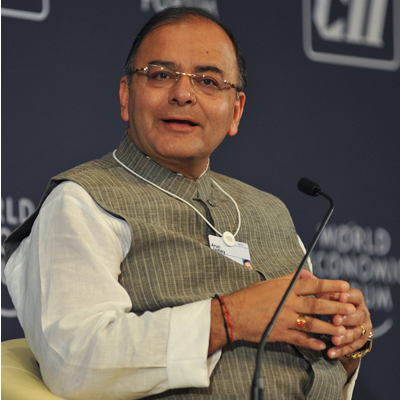
    MUMBAI: The theatrics between the government and Central Board of Film Certification (CBFC) continues. After the resignation of CBFC chief Leela Samson and thirteen other board members, Minister of Finance, Minister of Corporate Affairs and Minister of Information and Broadcasting Arun Jaitely has now called all of them ‘Rebels Without A Cause.’


    In a note put up on social media, Jaitely acknowledged that the chairperson of the Censor Board – Samson – sent her resignation to the Government as have some other members, alleging interference by the Government and corruption in the Board.


    “Along with my colleague Shri Rajyavardhan Singh Rathore, I look after the Ministry of Information & Broadcasting. At no point either of us have communicated with any Member of the Censor Board or desired that any bureaucrat to do the same. I have not met or spoken to any Member of the Censor Board nor authorised anyone to do the same. It is the UPA appointed Central Censor Board, which has since continued. If there is any corruption, the UPA appointees have themselves to blame. I only wished that the fact of corruption had been communicated even once by the Chairperson of the Censor Board to me. The non-functional Chairperson never did so. The charge that meetings of the Censor Board are not being held is a self condemnation. The meetings are to be convened not by the Minister or the Secretary but by the Chairperson. If the meetings are not being convened, it is for those responsible for non-functioning who must blame themselves. I have checked up from officials of the Ministry who informed that the funds for the Censor Board have been returned to the Ministry as unspent by the Board,” Jaitely lashed out in this no-holds-barred note.


    He further went on to say that the legal regime with regard to the functioning of the Censor Board is clear. “It is the Censor Board alone which decides issues within its jurisdiction. The aggrieved producer has a right to move to the Appeal Tribunal. The Congress Party has politicised even membership of the Appeal Tribunal. We have restored its dignity by appointing a former judge of high credibility as Chairperson. If an Appeal Tribunal disagrees with the Board, it is a part of the due process of law and not an onslaught on Board’s autonomy. Can a subordinate judicial authority ever cry foul if its decision upset by an appellate authority? The NDA Government maintains arms length distance in all matters relating to film certification,” he wrote.


    Lashing out at the UPA Government, Jaitely said that the UPA had politicised the Censor Board. “In 2004 they dismissed the existing Censor Board headed by an eminent film actor Anupam Kher merely on the ground that he was appointed by the earlier Government. We did not wish to do that. It is regrettable that the UPA appointees have decided to politicise routine issues,” he said.


    As was reported earlier by Indiatelevision.com, the controversy arose over the film ‘Messenger of God’ (MSG), made by and starring Dera Saccha Sauda head Gurmeet Ram Rahim Singh.


  • Raghav Bahl on why digital is the next big medium for journalists

    Raghav Bahl on why digital is the next big medium for journalists

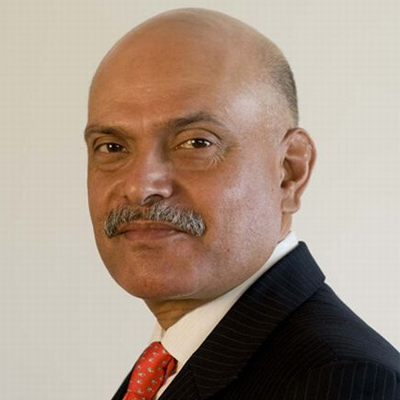
    MUMBAI: Raghav Bahl, who recently launched his venture The Quint, is quite bullish about the booming digital ecosystem in India. In a self written note published on social media, the media mogul lists the various opportunities offered by social media platforms.


    According to Bahl, first and foremost there is immediate threat to the editor but in order to survive, he must adapt to evolving needs in the digital environment. For starters, he will have to ensure that content is not text heavy but crisper and sharper and focused towards the consumption patterns of “millennials”. For the uninitiated the term stands for those individuals reaching young adulthood by the year 2000 or simply known as ‘Generation X’.


    In his second point, Bahl explains how in the current day “journalistic scoops,” which give an exclusive edge and add the “I broke it First” feeling to a journalist, will be over time replaced by scoops that are released first online and distributed to the public. He provides examples of how infamous outfits like the Boko Haram have been releasing detrimental videos online.


    Moving further Bahl is of the opinion that social media and its blue eyed platforms namely Facebook and Google, will be an independent journalist’s best friend instead of a newspaper and TV, which have limited reach. He compares the strength of the digital medium a force that offers ‘viral velocity’ to a newsman’s work.


    In his fourth point, Bahl elaborates about the two way communication model involved in the cyber space, which allows content creators, journalists and opinion leader to receive real time feedback. Thanks to the algorithmic trend sheets and tools a journalist can very well be equipped to know exactly how to spark argumentative conversations that can help fuel fruitful debates.


    In conclusion, Bahl says that the new team at Quint has taught him to learn valuable lessons at daily edit meets as he grasps the new lingo of Generation X.


    The full article can be read here: https://www.linkedin.com/pulse/quint-six-months-flat-raghav-bahl?trk=mp-reader-card


  • World Kabaddi League features in top sporting properties in inaugural year

    World Kabaddi League features in top sporting properties in inaugural year

    MUMBAI: After its initial season, the Wave World Kabaddi League (WKL) attracted an aggregate reach of just over 101 million individuals as per TAM India in its very first edition placing it among the top five sporting properties in India, claim the organisers.


    This is both in terms of viewers as well as visibility to sponsoring brands. The league, which was telecast live on Sony Six, also garnered 1.5 million views on YouTube with 60 per cent of the views coming in from the diaspora in United States, Canada, UK and as far as Italy. Additionally an estimated 50 million reach was acquired through international feed in Pakistan, Middle East, Europe, US and Canada.


    WKL CEO Raman Raheja said, “We are overjoyed with the response to the WKL in its very first year. The idea of keeping the latter and final parts of the WKL in India, where the sport is extremely popular, also paid rich dividends in terms of TV exposure for the sponsors. We are now looking to a bigger event in the second edition.”


    Repucom, a research company that measures ROI for all sports across the world, gave an interesting comparison of WKL’s sponsored property exposure on TV as compared to other sports. Repucom India analyzed that the 86 matches played during the first season garnered as many as 143 hours of screen exposure, which translated into an hour and 40 minutes of exposure per match.


    The event as a whole received media value worth Rs 301,02,60,323 for 86 matches with an average worth of Rs 3,50,03,027 per match.  Wave Infratech’s media value was put at Rs 135,90,62,603 for all the matches at an average Rs 1,58,03,054 per match.


    Title sponsors, Wave Infratech, earned maximum visibility and ROI with 45 per cent of share compared to all the other sponsors exhibited during the event. Among other main properties, the static board earned 37 hours on screen exposure (18 per cent share compared to other sponsors) and the  Jersey front was the second leading property with 22 hours on screen exposure (19 per cent share compared to other sponsors).


    Repucom South Asia/India director and senior vice president- Joseph Eapen said, “We recommend that teams acquire more sponsors on the team apparels like jersey front, jersey back, jersey side, chest logo and trousers to cash the exposures and value from apparels.”


  • Foiwe aims 40 per cent growth in revenue in next 2-3 years

    Foiwe aims 40 per cent growth in revenue in next 2-3 years

    KOLKATA: Foiwe, an information technology (IT) and ITES organisation providing services in the areas of outsourcing, consulting, technology, content moderation and social media management, aims to report at least 40 per cent growth in revenue in the next 2-3 years.

     “We have had a steady growth in the past and so in the next 2-3 years, we expect 40 per cent growth in terms of revenue if not more. We have some new contracts in the pipeline for 2015,” said Foiwe founder and managing director Suman Howlader.

     The primary focus area for the company is its enterprise content management and moderation services. Users across the globe are generating billions of kilobytes of content and are publishing over the internet in various forms such as text, images, videos, blog posts, reviews, feedback etc.

     “Sometimes users may generate bad content which can potentially impact the brand reputation. To safeguard brands online, it is important that these user generated contents on website, forums or blogs are appropriate and managed well. When user generated contents are controlled efficiently, one’s online presence becomes more credible amongst its users,” he added.

     “Currently we have a team of about 60 computer engineering graduates as employees and we are still hiring. The 100th recourse should be onboard by mid 2015,” he said.

     The team comprises experienced technologists and consultants working on complex business problems. “We help our clients to support more than 90 million end users across the globe,” informed Howlader.

     With its headquarter in Bangalore, Foiwe has its other two offices in Kolkata and Ahmedabad. Foiwe organises its services and people in these three primary cross-functional groupings.

     “We are in the process of having another branch office near Kolkata by end of 2015. We are also planning for our presence in USA and Europe by 2016,” he concluded.


  • 2014: An astonishing year for regional cinema

    2014: An astonishing year for regional cinema

    2014 was an interesting year. It started with a great deal of promise but at the end there is a feeling of unfulfillment too.

    What started with new films of different and interesting genres doing well at the box office ended slightly unsatisfied with some big film with a lot of expectation underperforming slightly.

    English content though continued to perform well with a lot of Hollywood’s big films doing really well at our BO. There is an increasing anticipation for these films and every year we are seeing more dubbed languages adding to the size of the release.

    Regional cinema, especially Marathi, has had an astonishing year. Audiences have clearly chosen to enjoy these films because they are telling intimate stories close to their heart. Still lessons were learnt and I think 2015 again holds great promise.

    There were also various trends in content in 2014; perhaps these trends didn’t follow through that well in the second half of the year. Content is certainly king right now and audiences are becoming very selective of the films they see. This is something that will continue, I think as prices for the content rise, people will become more and more elastic, choosing only films that they really want to see.

    I think next year has a lot of terrific looking films lined up and I expect films to build on this expectation to push audiences to the cinemas.

    Social media and the connected mediums will continue to drive a lot of reaction and indeed influence content. This trend will continue to get stronger as more and more people join the medium. Content viewing online is something that will also grow strongly. Without doubt this is an area where mobile internet will help greatly and the promise of 4G will fuel the need for content and the desire to consume it.

    I also think the trend of over-marketing films will also continue. Maybe for a short term but at the moment I truly feel marketing budgets are out of sync with the feasibility of a lot of the films they are being spent on and this is a slightly worrying trend. Sadly, there are no trends this year that have died out! I think there are always trends that die out and then slowly re-emerge as a ‘new’ trend again a few years later but I don’t think trends die out completely.

    Old wine in a new bottle is what our films are based on and I don’t think our audience will tire of that anytime soon.

    (These are purely personal views of Mukta Arts MD Rahul Puri and indiantelevision.com does not necessarily subscribe to these views.)

  • “How India is leading the way in BBC innovation”

    “How India is leading the way in BBC innovation”

    It is always exciting to be in Delhi, to catch up with the latest political news and see a city that changes every time you visit. But for the BBC, India isn’t now only a fascinating story and a place with a large audience that is deep in the heart of the BBC. India is now a thriving hub of media and technology innovation.


    Yesterday, I visited the instant messaging app firm Line, in Gurgaon. It has 30m users in India, with just five employees here. The BBC, I’m proud to say, is the first news organisation to distribute its content via Line. I had a fascinating conversation with Line about how it’s very young users react to the news, using the emoticons or emojis which chat apps are famous for. We discussed whether serious news and emoticons go together. But if users want to react to BBC News emotionally that’s fine by me. Images that say “amazing news”, “scary news”, “funny news”, “important news” can only show the power of BBC news’ impact on people.


    For those of you who are users of chat apps and social media I hope that your reaction to my speech today about how well the BBC is innovating today in India will be, in the language of the chat app, smiley, smiley, smiley, smiley.


    I’m going to speak about some of the BBC’s innovative projects in India and how they stand as a symbol of a revitalised and modernised BBC World Service throughout the world. And I will give you a glimpse of the further reinvention of the BBC that will be seen in India and globally in future years. I believe that the greatest days for the BBC around the world are yet to come, based on the incredible transformation that has happened in recent years.


    First, let me detail the basis of the recent strength of the BBC. When I started my role as the director of BBC World Service Group in 2009, we had an estimated weekly audience of 238m globally. 177m of our audiences, the majority, were radio listeners and 82m were TV viewers and only 16.4m were online users. Six years on, our weekly radio audience has declined to 127m, but the TV audience has massively increased to 126m and online users have sharply risen to 46m, almost three-fold. Although our radio audience has declined sharply as Shortwave listening fades, our overall global audience now stands at 265m. Despite losing 50m radio listeners our total audience has gone up by over 10 per cent. We have achieved this through offering distinctive content via new platforms, in response to rapidly changing technologies and audience behaviours.


    But while we develop onto new platforms the BBC’s core strengths remain – our accuracy, our impartiality, our independence. And those values mean we continue to be rated the world’s most trusted news brand – that’s something that I hope is never going to change.


    In India trust in the BBC is still high and we remain a key player. Our BBC News website is the top international news site in India. The number of its page views is equal to the number of pages viewed by users of CNN, the New York Times and Huffington Post combined. Relied on by millions to understand the world and see how the world sees India, it serves a mainly young population. 73 per cent of users of BBC News website are under 35. We provide Indian audiences with a dedicated international homepage for BBC.Com, which curates the breadth of the BBC for Indian audiences – whether in News or in our world-beating factual genres like BBC Earth. Our BBC News app has an average of 11m page views per month in India.


    BBC World News is one of the highest rated international news channels here. It reaches around 32m households in India, which constitute over 8 per cent of BBC World News’s total household distribution globally. And our Hindi services have grown on new platforms – TV, online and mobile.


    Amongst its international competitors in India, the BBC is not only the most trusted, but research shows it is perceived to be relevant, high quality, unbiased, distinctive and providing a clear global view.


    So I believe the BBC has a growing role but it is one that will differ significantly from the heyday of shortwave radio. To understand how that role is inevitably altering let me give you a quick tour of the global media context, as seen from BBC News.


    In recent years the challenges in reaching global audiences have been intensifying. The platform on which BBC World Service historically was strongest – shortwave radio – has come under great pressure as FM radio, TV and mobile phones offer audiences compelling alternatives. In India, BBC Hindi is still available on shortwave and achieves an audience of 5.5 million which the BBC greatly treasures, but that audience has been declining fast as audiences switch to more audible radio and other platforms like TV.


    Globally, state-funded and commercial players are investing heavily to increase their reach and influence. In the past decade, we have witnessed a host of new international players emerging, including Qatar’s Al Jazeera and China’s CCTV. While many news organisations, including the BBC, have to operate in a very tight financial environment, countries such as China are spending billions pumping news to audiences around the world.


    At a local and regional level, news provision is rapidly increasing. India, for example, has nearly 800 TV channels, more than 240 private FM radio stations and over 94,000 registered periodicals.


    The Indian audience has grown, recovering from the last few years of decline. This comes thanks to investments in digital and TV for the Hindi Service, including the launch of the Global India programme on TV, which pulls in 6m weekly viewers. These increases now more than offset the loss of shortwave listeners to the Hindi Service. Our services in India, shifting from old platforms to new ones, are a strong illustration of a shift going on all over the world. In this, as in other areas, India is leading the way.


    This success has been mainly the result of our investment in digital and TV, and changing the way we work. However, we need to do a lot more to materialise our ambition, which is to double our international audience to half a billion by 2022.


    The massive shift of news consumption towards mobile and social media demands we work in different ways in a modernised operation.  Users consume our journalism everywhere, increasingly in real time on mobile devices and across social media. Working in platform based silos won’t work anymore. 


    Our London and Delhi newsrooms are a mix of talents from around the world and its output is enhanced by contribution from highly skilled journalists from our language services. We have individuals who come from the countries we are reporting, speaking the relevant languages fluently. They are bilingual reporters who work with our globally known English News teams, able to operate in English and their own language in various platforms.


    We believe this is one of the most ambitious and innovative undertakings in international journalism. It is cost effective but, much more importantly, it means our agenda which already strives to be truly and even-handedly global, is driven further by our multinational, multilingual approach.


    We have also been restructuring our overseas bureaux into multimedia, multilingual production units to work in an integrated way across platforms and languages. And the BBC Delhi bureau is also leading the way on this.


    In Delhi we have created a new digital first newsroom. It consists of a single multimedia team, which is working across languages for bbchindi.com and bbc.com/news. And that means that the story of India is increasingly being told to the world through our brilliant Indian teams, including from BBC Hindi, alongside the traditional high class ex-pat correspondents. It is vital that the BBC’s global output reflects the world it is reporting on. And I am delighted by the way the BBC India teams are contributing to that.


    As a result of our innovative ways of working and our distinctive editorial agenda we have been able to produce some unique output, covering topics that other media find uncomfortable to cover. I am particularly proud of our coverage of gender issues in India. I give you a few examples to illustrate this.


    Since the Delhi bus rape in December 2012, we have consciously kept gender issues high on our agenda. The incident triggered an ambitious, highly popular season of programming called ‘100 Women’, in October last year and this year. The aim was to turn the spotlight on women’s lives around the world and feature more women’s voices and women’s stories on the BBC’s global news channels.


    We have published moving pieces by our bilingual reporters in India, including a piece by Rupa Jha who highlighted the stigma and taboo around the issue of menstruation in the country. She reported on how women are considered impure and even cursed during menstruation and how at least one in five girls drop out of school during their periods due to lack of access to sanitary products.


    In another piece, our Delhi-based bilingual reporter, Divya Arya, looked at how lack of toilets in rural India is endangering the safety of women who have to walk long distances to go to open-air toilets in the fields. She travelled to a village less than 50 miles from Delhi to speak to women who have to wait for the dark and move in groups to keep safe when going to toilet.


    And our teams do original reporting and stage discussion on other important aspects of India.


    Last week the BBC broadcast an extended debate from the India International Centre here in Delhi on India’s role in World War One. In conjunction with our partners the British Council we brought the often neglected enormous sacrifice of Indians in WW1 to a global audience. The pride of the descendants of those Indian soldiers was wonderful to hear.


    And the BBC’s unrivalled network of correspondents around the world can keep an increasingly global India in touch with how the world sees it. For instance when PM Modi was in New York in September our reporter based there was able to tell the world of the powerful reaction to the PM, broadcasting in English, Hindi and Urdu, for BBC on TV, radio and online. (We keep our reporters pretty busy these days).


    All of our strongest stories about India are produced in Hindi and English. Local reporters who tell the stories from their country to the whole world are now an essential part of the BBC’s international newsgathering approach. They provide a depth and subtlety of understanding that complements the indispensable insights of the BBC’s “ex-pat” foreign correspondents. This shift to bilingual journalism is one of the most important changes in the BBC’s face to the world in recent years. It is an historic and irreversible shift.


    We are also innovating in our use of social media. BBC Hindi is operating as ‘Social First’, meaning social platforms are as important as publishing on its own homepage. BBC Hindi Facebook page has a fan base of 2.7 million and is growing faster than most of its competitors. BBC Hindi breaks news on Twitter and other social platforms first and produces infographics exclusively for social media.


    New Products


    Developing new digital products for mobile apps and web is a key priority for us. More than half of BBC World Service markets are “mobile first”, which means over 50 per cent of users’ first point of access to the internet is through their mobile phones. More than 70 per cent of BBC Hindi’s Unique Visitors online access our content through mobile devices. 


    Given the explosion in different types of mobile devices, all BBC World Service websites have been converted to responsive design, which adapts a site according to the device it’s being viewed on. BBC Hindi’s responsive mobile browser site was launched in March 2013 and its desktop went responsive in September this year. This has contributed to a rapid and steady growth of the Hindi website’s traffic. The number of Hindi’s monthly unique visitors across all platforms has jumped from 1.3m in April 2013 to 4.5m in October 2014 – remarkable tripling of audience in 18 months.


    In editorial terms, we’ve adapted our storytelling approach. The Hindi service has been one of the first services to pilot a “mobile first” strategy this year, making the stories shorter and punctuated with more pictures and graphics.  There was a 20 per cent uplift in mobile traffic after the first month of piloting these new editorial techniques.


    For the coverage of the Indian general elections earlier this year, we used two new platforms, WhatsApp and WeChat, to reach Indian voters and the Indian diaspora globally. We used these chat apps, which are widely used in India, to create a new editorial service in English and Hindi.


    This was the first time any international news organisation had used these platforms in this way. We had thousands of subscribers across both platforms and it meant we were able to deliver trusted news content, which was a big issue for many Indian voters with regards to domestic news providers, straight onto people’s mobile phones.


    Last month we launched a new ‘lifeline’ Ebola service for people in West Africa on Whatsapp, based on that innovation in India. This was the first time the BBC has used a chat app specifically for health information content.


    Recently BBC Hindi also made its content available on smartphone instant messaging platform Line, which is one the world’s top five chat apps. The launch of the BBC Hindi LINE app follows the recent launch on LINE of an English language BBC News account which has already acquired 300000 subscribers globally and over 100000 in India.


    Last year, we launched a number of innovative programmes global programmes, based on social media. For instance, we set up a new social media unit, BBC Trending, to spot and investigate social media trends around the world. The team produces a weekly World Service radio programme, a blog and a unique video product which is built to be shared.  Trending’s content is enhanced by BBC Monitoring and language services’ contribution which gives it a truly global flavour. Due to BBC Trending success, we have been expanding it to other languages including Arabic and Mundo and we hope also to launch in Hindi.


    I would like to give you some examples of how BBC Trending works and goes behind the stories.


    BBC Trending picked up the growing tension over the ‘’kiss of love’’ protest in Kerala at its very early stages and contextualised the social confrontation in India between young people and the conservative cadres of religious groups for a global audience.


    Last week, BBC Trending made a video on the “We are South of India’’ song, which became a YouTube hit and was made by a comedy group from the south of the country to educate northern people about the diversity of their culture down south. This is an example of the conversation India is having with itself and shared with the wider world through BBC Trending.


    When the newly elected Indian Prime Minister, Narendra Modi, launched a campaign to encourage Indians to clean up the country, there was a huge fanfare. But despite the huge coverage on the day, no other media outlets checked if it actually worked on social media.  BBC Trending looked at the lack of spread of the trend forensically.


    And those BBC Trending stories get reported back to India in both English and Hindi.


    Partnership


    We see editorial partnerships as a key way to reach a wider audience, enhance our content and help raise media standards around the world.


    We have built a network of FM partner stations around the world.  Here in India – we have a partnership with ETV which broadcasts the BBC Hindi TV programme, Global India, on its channels across the Hindi-speaking states. We have received encouraging indications of the substantial audiences already being achieved by Global India. I think this reflects a hunger among Indian audiences for content that relates India and the world, content that is largely missing from local providers who tend to be ruthlessly focussed on an India-only view of the world. The BBC can play a vital role in opening the eyes of audiences to the world.


    However, although partners are important to the BBC on TV and in digital, there is one area where the BBC is not able to rebroadcast its news content in India – on FM radio.  Since the election of the new government the former Minister for Information and Broadcasting, Prakash Javadekar, said this on deregulation of news on FM radio:


    “About (broadcasting) news on FM radio, it is an issue close to my heart. Sometimes I am unable to understand the government logic. When 24×7 news channels have the freedom to show news the way they want to…, what have radio channels done that they can’t air news? “


    “Why only restrict radio channels to AIR (All India Radio) bulletins (feed)? There can be three-four more options. We are looking at this issue very positively and we will take a decision soon.”


    That was an encouraging statement and we hope the new minister will take this idea forward.


    India is a highly modern and open society in so many ways. Its economically liberal IT sector, with an open internet at its core, is a huge advantage to the growth of India. But India’s out-dated approach to the control of news on FM radio betrays an unconfident approach. The BBC hopes that indications of reform from the Minister of Information are followed through with real action.


    The components of a dramatically modernised BBC World Service are clear: a commitment to distinctive journalism that reports stories that others won’t, with utter fairness; delivering that journalism on any platform that audiences use; a global editorial ethos based on a multilingual and diverse global workforce; and the systematic use of social media to engage with audiences, to gather their news and anticipate their information needs.


    But how will the BBC evolve further? It will need to continue to change as fast, even faster. I believe that if it does so, with the right support from the wider BBC, the best days of the World Service are yet to come. The remarkable advantage of committed public funding, a revitalised ethos of global journalism, the talents of the global BBC team and a commitment to technological innovation give the BBC inestimable advantages.


    Here are some clues for what we will do in future in India and around the world:


    The rapid proliferation of digital devices, the growth of digital video viewing and the declining cost of bandwidth create huge new opportunities for the BBC – an organisation with the strongest video news in the world. We are no longer constrained  by the time limits of TV news bulletins. BBC teams are experimenting with a variety of technologies that will produce continuous video news streams for digital devices on the subjects and places that most interest the world.


    Do you want news about the South Asia region? Do you want Asian business news? Do you want to know about new global developments in health technology? Do you want to know about Indian success stories in the UK and around the world? Each of those subjects will be able to be delivered as a video stream to your specification. We call this “channel in a box” – in other words a channel, or a visit stream, made in a black electronic box not a studio.


    And our multilingual teams are prototyping new techniques to produce these video streams in multiple languages. I expect all the services I mentioned should be able to be delivered in Hindi, Tamil, Urdu and Bengali and possibly other South Asian languages.  We will be organising our teams in multilingual subject-based global teams that make full use of our journalistic skills from across the world. This will shortly create the most innovative global content production of any news organisation in the world.


    In recent months the BBC World Service has started to add languages rather than cutting them, as happened over previous decades. We launched an emergency service in Thai after the military coup in Bangkok. And just this week we started a temporary crisis offer, funded through BBC Media Action, in Liberian English to help tackle the Ebola crisis.


    But I believe that with new technology and low cost translation methods the BBC could be producing content in 50 languages in five years’ time, with video streams/channels in about half those languages. That will help in achieving the BBC’s aim of a 500m global audience. More importantly, it would mean that in a world that has too much inaccurate, distorted and sensationalist news there will be a truthful news source available to a high proportion of the global population.


    As you may know, I will shortly be leaving the BBC. But I believe that the robust health of the BBC around the world, along with the ideas I have mentioned and the innovation that is already in train, provide a firm platform for continued success. All that is needed is for the BBC, the politicians who ultimately decide about the World Service and the British public who now pay for it, to realise that it is within their grasp to create the greatest days of the BBC World Service.


    If the BBC seizes that opportunity it will be following the example of many of the innovations by the BBC’s teams in India. In this, as in many other areas, India is helping to lead the way to help create the Future of the BBC World Service.


    (These are purely personal views of BBC World Service Group director Peter Horrocks and indiantelevision.com does not subscribe to these views.)

    (Peter Horrocks was speaking at the Observer Research Foundation)