Tag: social media

  • WhatsApp adds multi-calling feature

    WhatsApp adds multi-calling feature

    MUMBAI: WhatsApp has finally launched multi-calling feature for both voice and video calls. It is being rolled out to Android and iOS users globally. Facebook confirmed the group video calling feature at its annual F8 conference. 

    Once a call gets connected, a new ‘add participant’ icon at the top right corner of the call screen can be clicked to add more participants from the contact list. The icon gets disabled after a third participant is added. Calls can have up to four participants including the person who started the call.

    Earlier WhatsApp had to face criticism for issues related to fake news and disinformation that has been rampant on the platform in the last couple of months. It added a new feature in July which puts a limit to the number of messages forwarded by a user.

    Any message that is forwarded without editing will display the word ‘forwarded’ and it also restricted sending such messages to more than five contacts at a time.

    The Facebook-owned service has come under harsh criticism from even the government of India regarding several of its features.

  • UIDAI to monitor social media, media coverage of Aadhaar

    UIDAI to monitor social media, media coverage of Aadhaar

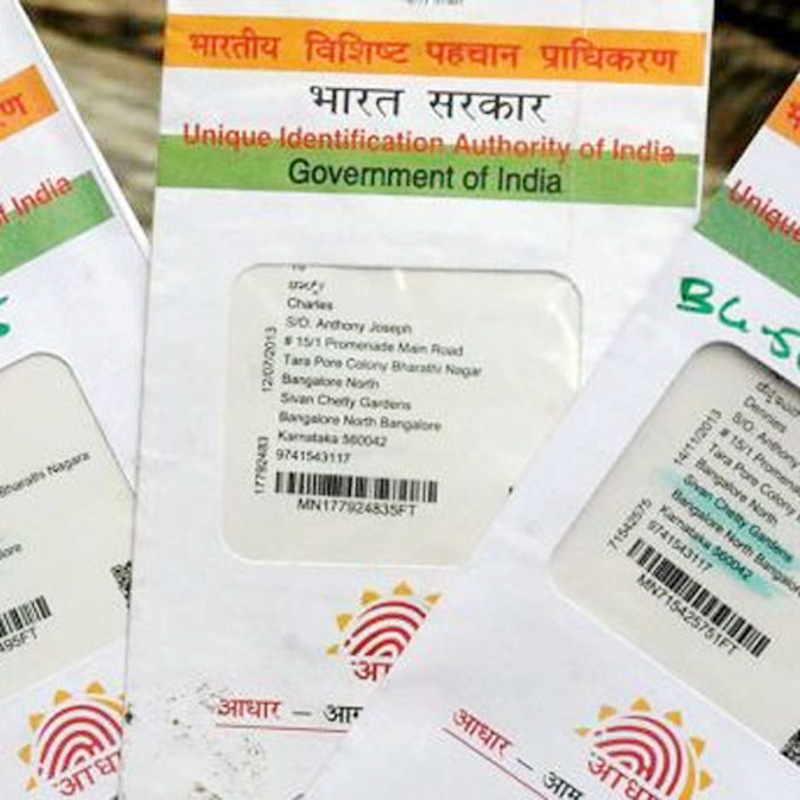
    MUMBAI: There have been endless controversies on social media, speculations on news media around Aadhaar’s relevance and constitutional validity. Now, the Unique Identification Authority of India (UIDAI) wants to monitor media coverage of Aadhaar as well as social media conversations, according to media reports. Based on the information, it will run campaigns to “neutralise” the “negative sentiments” on social media.

    UIDAI posted a bid on 18 July seeking to hire a social media agency that will employ “online reputation management” and “social listening” tools. Then another bid posted on 19 July was to hire a media monitoring agency to monitor Aadhaar-related post across print, electronic and digital media.

    The media monitoring agency shall conduct a comprehensive media search on daily basis and present an update report within prescribed time limits on appropriate news reports and content with regards to UIDAI, Aadhaar and other related issues as per the requirements of UIDAI, as per the proposal.

    On the other hand the social media agency has to segregate Aadhaar-related conversations into “problematic and non-problematic” categories and highlight the “incidences” that may have a “negative impact on the Aadhaar brand”.

    The agency will also provide weekly “online reputation management reports” to UIDAI, which will have details of “top detractors, top influencers and the net sentiment related to Aadhaar”.

    “This monitoring activity shall extend to social media platforms, websites (news and others), blogs/ forums, etc. so that issues related to Aadhaar can be understood,” the tender document states.

    “The tools shall be capable of doing a sentiment analysis of all such conversations and flag any discrepancy in sentiments’ trend. Additionally, the service provider will draft a plan to work out and neutralise negative sentiments,” it adds.

    However, the Supreme Court’s final verdict on the constitutional validity of Aadhaar is yet to come.

  • Vodafone U launches new digital campaign #SortedHai

    Vodafone U launches new digital campaign #SortedHai

    MUMBAI: Digital platform Vodafone U has launched a new marketing campaign to welcome college students to the new academic year with some exciting propositions. The campaign features social media sensation, Mithila Palkar, in a web series ‘Mithila’s SortCuts’. Connecting with the young folks, Mithila shares some interesting tips to make college life #SortedHai.

    #SortedHai is conceptualised on a commonly used hook phrase amongst the youth. With Vodafone’s latest proposition of 50 per cent off on Amazon Prime subscription, Mithila shares tips on having movie nights #SortedHai with Vodafone U, apart from this offer, there are also many other exciting offers available to young consumers every Wednesday, Thursday and Friday in both the phone recharges as well as deals in F&B, fashion and other youth-centric spaces.

    Taliking about first digital campaign, Vodafone India Marketing EVP Siddharth Banerjee  said, “As youngsters most of us have faced challenges of coping with a new academic year and looked for some resourceful hacks. Taking this insight,#SortedHai campaign aims to engage with youngsters to help them make the most of their campus life with some exciting propositions under the Vodafone U umbrella. Mithila Palkar represents the mobile-savvy youth and help us engage with the college students digitally.”

    Ogilvy and Mather ECD Kiran Antony added, “The youth today have limited pocket money and plenty of wishes. Vodafone U enables them through relevant offers, to experience most of it. We tapped into the social currency of today’s youth, our campaign idea #SortedHai is based on this understanding.”

    To ensure maximum connect with youngsters, the campaign is live on digital platforms like Facebook and Instagram. Vodafone U will also engage with college students at their campuses to further amplify the #SortedHai messaging.

  • Facebook to end discriminatory ad targeting

    Facebook to end discriminatory ad targeting

    MUMBAI: Facebook has signed an agreement with the state of Washington to stop third-party advertisers from excluding protected groups and minorities from seeing their ads.

    The social media platform has announced that the move is part of a long process to make sure that the tools and filters used to target ads on Facebook are fair, civil and safe, according to Reuters. 

    “We’ve removed thousands of categories related to potentially sensitive personal attributes — like race, ethnicity, sexual orientation and religion — from our exclusion targeting tools,” the company said in a statement. 

    Washington attorney general Bob Ferguson said, “Facebook’s advertising platform allowed unlawful discrimination on the basis of race, sexual orientation, disability and religion.”

    Now, Facebook will have to make the necessary changes on the platform nationwide within 90 days.

    The agreement will also include a 20-month investigation by Washington State’s office that began after non-profit ProPublica published an article on Facebook’s advertisement targeting alleging advertisers could exclude users by race.

    Facebook vice president of state and local policy Will Castleberry said in a statement: “Discriminatory advertising has no place on our platform, and we’ll continue to improve our ad products so they’re relevant, effective, and safe for everyone.”

    Facebook has faced several legal actions over its advertising policies. In March this year, National Fair Housing Alliance sued the social media giant for excluding groups of people based on characteristics such as family status or sex from receiving ads about housing.

  • Online media regulations: action shifts to IT Ministry from MIB

    Online media regulations: action shifts to IT Ministry from MIB

    MUMBAI: If online media is readying the champagne to pop, then hold on to your exuberance. The government hasn’t given up its resolve to explore regulations for online media and content. It is only attempting to be on the right side of laid down rules and cut down on duplication of work.

    In short, the main action will be shifting from the Ministry of Information and Broadcasting (MIB) to the Ministry of Electronics and Information and Technology (Meity), while other things remain constant, which means the mandate will continue to be the same.

    A government official admitted, without saying so in so many words, that as a Meity committee, set up earlier, has the mandate to explore regulations for online media to facilitate its expansion, MIB will work along with its counterparts bringing in more synergy.

    The official insisted that the MIB committee, set up to explore regulations for online media in April 2018, is officially not being dissolved, but will work along with the Meity panel that comprises similar members.

    The 10-member panel, constituted by the MIB headed by Smriti Irani, was criticized by experts on the ground that it was outside the jurisdiction of MIB to explore regulations for online media, including OTT services, as the matter fell within the ambit of Meity — something that MIB Minister Rajyavardhan Rathore had reiterated in Parliament too. A big criticism was that a panel formed to look into matters relating to online media didn’t have a single online player as a member.

    When the MIB panel was announced it had as its members the following: MIB Secretary– Convener; Secretary, MeitY; Secretary, Ministry of Home Affairs; Secretary, Department of Legal Affairs; Secretary, DIPP; CEO of MyGov and representatives of Press Council of India, News Broadcasters Association, Indian Broadcasting Foundation, apart from representation from any other government organization or industry body deemed fit by the convener.

    The terms of reference of the committee were:

    i. To delineate the sphere of online information dissemination which needs to be brought under regulation, on the lines applicable to print and electronic media.

    ii. To recommend appropriate policy formulation for online media / news portals and online content platforms including digital broadcasting which encompasses entertainment / infotainment and news/media aggregators keeping in mind the extant FDI norms, Programme & Advertising Code for TV Channels, norms circulated by PCI, code of ethics framed by NBA and norms prescribed by IBF, and

    iii. To analyze the international scenario on such existing regulatory mechanisms with a view to incorporate the best practices.

    As criticisms mounted, the government has done what it is best at doing — located another government panel with similar or near-similar mandate in the relevant Ministry (Meity) and shifted the onus of exploration of regulations for online media to the rightful department, thereby blunting critics.

    Indiantelevision.com has always been of the opinion that rolling back of orders relating to fake news even if the Prime Minister’s Office intervened, and other such backtracking was akin to testing the waters for a bigger move to have norms for online media where content is continuously getting more edgy and experimental.

    Meity Minister Ravi Shankar Prasad, who also happens to be the Law Minister, yesterday said that it was time to talk to online stakeholders to explore formulation of policies that would govern the online media, especially social media and free messaging platforms like WhatsApp that are being blamed for incidents of lynching in the country.

  • Fake news on social media: Law & IT Minister favours evolving a policy

    Fake news on social media: Law & IT Minister favours evolving a policy

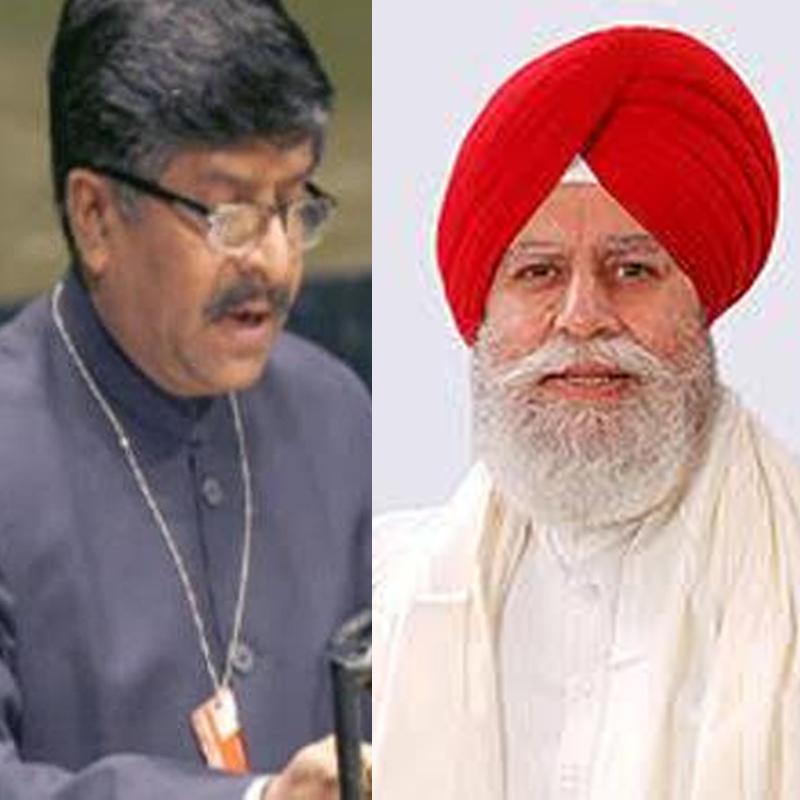
    NEW DELHI: The Indian government seems to be speaking in two voices over the menace of fake news. While law and IT Minister Ravi Shankar Prasad today said he would hold talks with stakeholders to evolve a policy, his junior SS Ahluwalia on Wednesday had told Parliament that the government doesn't propose to bring in regulations for social media.

    Law and IT Minister Ravi Shankar Prasad informed the Rajya Sabha (Upper House) yesterday that he will hold discussion with stakeholders, including political parties, to evolve a policy to deal with the misuse of social media, according to a PTI report, which also quoted a government statement saying it has been conveyed to WhatsApp in "unmistakable terms" that it was a very serious issue that "deserves a more sensitive response".

    The government yesterday also  shot off another notice to WhatsApp asking it to come out with effective solutions to curb the menace of fake news beyond just labelling forwards. It also warned the company that mediums used for propagation of rumours are liable to be treated as 'abettors' and can face legal consequences if they remain "mute spectators", the PTI report said.

    Facebook-owned WhatsApp has been under fire from the Indian government over fake news and false information being circulated on its messaging platform. The government had in the past too issued a stern warning to the company to clamp down on hoax messages designed to "provoke" and "instigate" people.

    "When rumours and fake news get propagated by mischief mongers, the medium used for such propagation cannot evade responsibility and accountability. If they remain mute spectators they are liable to be treated as abettors and thereafter face consequent legal action," a PTI report quoted an IT Ministry statement as saying. The ministry said it has approached WhatsApp to bring more effective solutions to the table, to ensure greater "accountability and facilitate enforcement of law" beyond the existing efforts towards labelling forwards and identifying fake news.

    The Supreme Court, earlier this week, asked Parliament to consider enacting a new law to effectively deal with incidents of mob lynching, saying "horrendous acts of mobocracy" cannot be allowed to become a new norm. 

    “Government doesn't regulate content on social media sites": IT Ministry's SS Ahluwalia,  

    On Wednesday, the Indian government admitted it doesn’t plan to regulate content on social media, as of now, despite the menace of fake news affecting the societal fabric. However, the government is quiet on the future of a committee set up under the Ministry of Information and Broadcasting (MIB) that has the mandate to explore regulation for online content, including those on OTT platforms.

    “Government does not regulate content appearing on social media sites, and law enforcement and security agencies may take action on specific case to case basis as per law in force,” junior Minister for Electronics & Information Technology (MEITY) SS Ahluwalia informed Parliament on Wednesday, emphasizing that the government was fully “committed to freedom of speech and expression” and “privacy” of its citizens as enshrined in the Indian Constitution.

    Ahluwalia was asked about the steps being taken by the federal government to address the problem of fake news and whether there were any plans to monitor and regulate social media content.

    According to the Minister, the Information Technology (IT) Act, 2000 has provisions for removal of objectionable online content that was “harmful, defamatory, hateful, libelous, objectionable” and affected minors, apart from the national security.

    However, as the Minister was not asked, he did not dwell on the future of  a committee —comprising representatives of various government organisations and few industry bodies too — set up under the MIB to explore online content regulations. The setting up of the panel was criticized as it was outside the remit of the MIB as the issue concerned came under the jurisdiction of MEITY.

    The said committee, helmed by MIB Secretary, is reported to have met a few times since its formation, but the details of those meetings are not public yet. Nor is the fact whether it would be disbanded or taken out MIB’s jurisdiction in favour of MEITY.

    MIB Stresses on Self-Regulation To Fight Fake News Menace On TV

    On Thursday, MIB Minister Rajyavardhan Rathore stressed on existing safeguards in laws and self-regulation to say that there was also no proposal to indulge in pre-censorship of TV channels to stop them from allegedly spreading fake news.

    “The [Cable Television Networks Regulation] Act [1995] does not provide for pre-censorship of any programmes and advertisements telecast on TV channels. However, it prescribes that all programmes and advertisements telecast on such TV channels should be in conformity with the prescribed Programme Code and Advertising Code enshrined in the aforesaid Act and the rules framed thereunder,” Rathore informed fellow parliamentarians who were concerned about some TV channels spreading fake news.

    Earlier, MIB, under minister Smriti Irani, had attempted to bring in regulations to control fake news, which had to be aborted as the Prime Minister's Office intervened in the aftermath of nation-wide criticism. Still, some critics feel that the botched attempt to bring in rules to rein in media critical of the government was testing of waters for future norms.

  • Govt. mulls norms tweak on women’s portrayal in digital media

    Govt. mulls norms tweak on women’s portrayal in digital media

    NEW DELHI: The Indian government is proposing to amend relevant laws relating to representation of women in mass media with a view to make the law contemporary and keep pace with changing technologies like OTT and other digital services.

    The India government had enacted the Indecent Representation of Women (Prohibition) Act (IRWA), 1986 to prohibit indecent representation of women through advertisements, publications, writings, paintings, figures or in any other manner. Since the enactment of the Act, technological evolution has resulted in the development of new forms of communication, such as internet, multi-media messaging, cable television, over-the-top (OTT) services and applications like Skype, Viber, WhatsApp, Chat On, Snapchat and Instagram.

    According to a statement put out by the government, technological advancements has necessitated widening the scope of the law so as to cover all forms of media. The proposal to amend the Act was introduced in Parliament in 2012, which referred the issue to a Parliamentary Standing Committee.

    The Ministry of Women and Child Development (WCD) has proposed amendments to widen the scope of Indecent Representation of Women (Prohibition) Act (IRWA), 1986 keeping in mind the recent technological advancement in the field of communications.

    Based on the observations made by the Parliamentary Standing Committee and recommendation made by the National Commission for Women and wide consultations with civil society groups, the following amendments have been recommended, amongst other things, by the ministry:

    Amendment in definition of term advertisement to include digital form or electronic form or hoardings, or through SMS and MMS.

    Amendment in definition of distribution to include publication, license or uploading using computer resource or communication device.

    Penalty similar to that provided under the Information Technology Act, 2000.

    Creation of a centralized authority under the National Commission of Women (NCW). This body will have representatives from Advertising Standards Council of India, Press Council of India, Ministry of Information and Broadcasting and one member having experience of working on women issues.

    This centralized body will be authorized to receive complaints or grievances regarding any programme or advertisement broadcast or published and investigate/examine all matters relating to the indecent representation of women.

    Also Read :

    Women portrayal: Better days are emerging

    Women employment in film and television industry drops: Study

  • IT minister says won’t allow India to be centre of data pilferage

    IT minister says won’t allow India to be centre of data pilferage

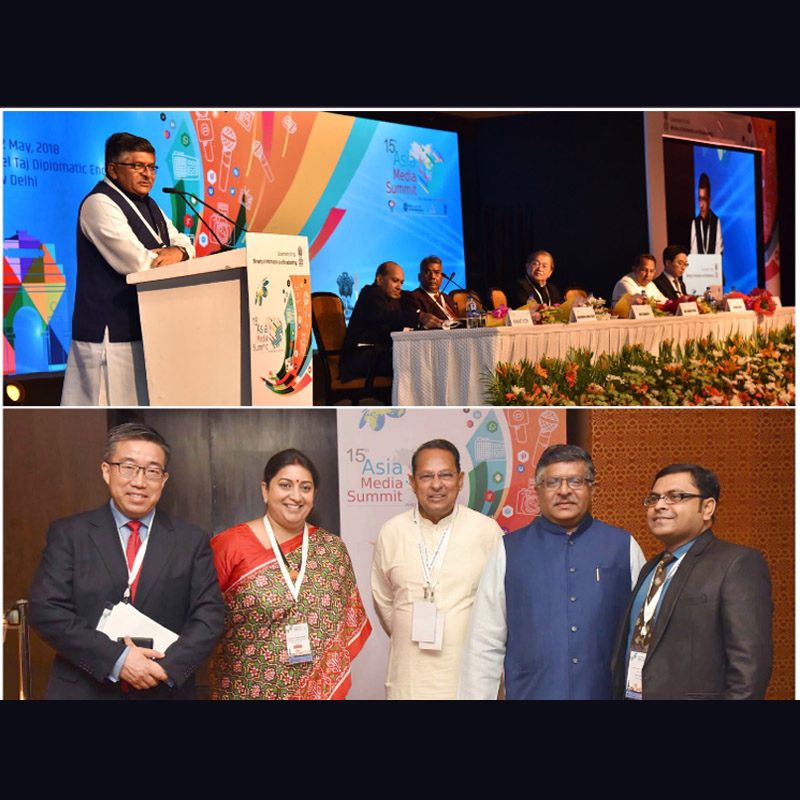
    MUMBAI: The country’s Electronics & IT and Law & Justice minster Ravi Shankar Prasad has come down sharply on data misuse. Speaking at the 15th Asia Media Summit, he said that the government would not allow the country to become a centre of data pilferage and data commerce that, through collusive methods, would be used to influence its electoral process.

    He added that all online companies, which were in the business of data commerce, must understand the nuances of accountability. When the recent controversy surrounding data privacy cropped up, with the Facebook-Cambridge Analytica scandal, the government took a firm stand. Since it is expected that India will be a big centre of data analytics, there is a need to have a proper coordination on data availability, data utility, data innovation, data anonymity and data privacy. Prasad also mentioned that a committee headed by a retired Supreme Court judge was looking into the issues and would soon come out with a data protection law.

    Though social media poses several challenges, Prasad said that the government was committed to the freedom of press but there was a need to segregate the real from the dangerous. The media, he said, had all the rights to inform, circulate, criticise, advice and counsel but the constitution allows for reasonable restrictions to be placed.

    He stated that he was in favour of self-regulation by media along with adherence to the IT Act, which says that content should not be dangerous, libellous or impinge upon the security and integrity of a country or encroach upon copyrights.

    Also Read :

    Efficient digital transition; MyGov.in pockets citizen engagement award

    FB reveals CA harvested data of up to 87 mn people

  • Guest column: How to leverage social media for advertising

    Guest column: How to leverage social media for advertising

    At a time when social media’s exact worth for most businesses continues to be hard to pin down, trying to comment on trends that will ‘make or break your business’ can sound like puffery.

    And yet, the last couple of years have shown that dominance of social media can shape the destiny of the world’s largest democracies, swing elections (even when not aided by Russian interference) and change the world quite literally.

    If it works for them, it just might work for you. It is therefore vital that you have the most updated maps of these ever-shifting but powerful forces. Here are the key drivers for the next few months:

    VIDEO (+ LIVE VIDEO)

    While there is a lot of action and froth in video (and mobile data), and consumers are reeling from the unprecedented oversupply of high-end content, the trend is undeniable. Brands have absolutely no reason to stay on the sidelines. This is the year to go all in with your DVCs, webisodes, video podcasts, guides, unboxings, ‘virals’ – just do it. And do it now, because live video is another growing in-demand feature on Instagram. It is still a bit more complex to work with, so use sparingly.

    NEW PLATFORMS: WHATSAPP AND MORE

    WhatsApp has become substantially more business-friendly, and even more change is around the corner. Ignore this behemoth at your own risk. It is time to look at all the presentations and plans you made for chatbots, Twitter, social CRM etc. because WhatsApp can be all those things and more.

    Meanwhile, Twitter continues to attempt doing push-ups while still in the ICU. It is getting harder to justify this in a marketing plan (apart from scoring brownie points with a trend). Snapchat is still an edge-case for the cool kids, who now seem just as comfortable with Instagram. The one dark horse to put money on this year may be Reddit. The strong community moderation makes it a much easier place to hang out, the interface is getting better, and the Indian early-adopters have already seen some success stories emerge.

    VOICE

    Indians traditionally do not like to speak to appliances – no voice mail, no answering machines, and definitely not those dreaded customer service voice portals. But Alexa and her counterparts are rapidly bringing us out of our shells. Formal opportunities for marketing are still emerging, but globally, brands have already started to guerrilla their way in. At the same time, listening to voice aka audio podcasts has grown from being a geek-and maven stronghold to a content form with legit commercial-grade numbers and mainstream hits. Not to be conflated with radio/digital radio, podcasts are a low-cost, high-engagement form of content. While the landscape is still relatively less crowded, it may be a good time to give a call to experts like IVM to evaluate opportunities.

    NEW CONTENT FORMATS: STORIES

    Even as we got used to the relaxed 280-character tweets that made things easier for content writers, we ran head-on into the ‘status update’ or ‘story’ (depending on which platform you were on). Disposable, time-limited updates that built for rapid consumption, restricted engagement and minimal intellectual overhead. This new weird creature, evolved from Snapchat, is here to stay on Instagram, on Facebook, and even WhatsApp. They are even selling ad inventory around it, for crying out loud. The challenge will be to rapidly create content for these, because it doesn’t fit into well-established content processes between clients and agencies. These stories need to be fresh, near real-time to be effective. Fortunately, you needn’t update this like clockwork, ‘sporadic’ and ‘irregular’ work just fine as posting intervals.

    SECURITY

    While you may not have to worry about Russian operatives infiltrating your company just yet, you can’t afford to ignore the other risks that have exponentially increased: comment spam is just an irritant now, but things rapidly get more sinister with malicious code injections into your blogs, social media impersonation, and debilitating ransomware blockades. The challenge is that these issues are black-swan events for most businesses, so there are no processes to address them quickly and effectively, especially when they can often fall into the canyon between client responsibility and agency scope.

    MOVEMENT

    Consumers are loving brands that take proactive stands and taking responsibility for improving the world. Burger King talking about net neutrality can’t have really sold many burgers, but it drew global respect for their gentle activism. Brands don’t have to grandstand, even small gestures like a no-creepiness ad targeting policy can build respect. The important thing is to do, not talk.

    BEST PRACTICES AND PROCESSES

    For a domain that goes through a sea-change every three months, benchmarking can be a moving goalpost. Recent structural changes like Facebook reducing organic reach for branded content may, ironically, help create a more stable world. As ‘hygiene’ posts lose their raison d’être, clients and businesses should consider how to best utilise their agency best. Here is a test structure for the coming future:

    • The agency becomes a content marketing brand custodian, handling ‘spikes’ and campaigns with analytics and listening, design/UX, plus media buying.

    • Taking a page from classic B2B practices, hygiene content becomes an in-house deliverable – hire smart creators who haven’t yet hit fame levels (example, talent from the ATKT college creator community, or the talent house network). With such talent, casual content like Instagram stories become easier, with faster turnarounds and more depth.

    • The corporate communication team can be the right strategic base for these.

    • Develop branded entertainment with publishers that have deep community roots (or sponsor it) and let it deploy from the creator/publisher pages rather than from your restricted reach brand pages.

    public://Saurabh-Kanwar_Co-founder-of-ATKT.jpg

    The author is the co-founder of ATKT.in. The views expressed here are his own and Indiantelevision.com may not subscribe to them.

    Also Read :

    Guest Column: Invest NOW in Indian TV industry

    Guest column: Remarketing and its significance for brands

  • YouTube views for Hindi dub of ‘Sarrainodu’ soar

    YouTube views for Hindi dub of ‘Sarrainodu’ soar

    MUMBAI: Telugu actor Allu Arjun as well as the South Indian film industry has hit a new milestone. Telugu-language action film Sarrainodu, after being released in 2016, was dubbed in Hindi and Malayalam. The Hindi dubbed version has been raking in the views becoming one of the most watched Indian movies on YouTube.

    Since the day the Hindi version was uploaded on YouTube, it was super hit and created new records. In a span of nine days, the film garnered 25 million views with 1.75 lakh likes.  Now, after six months, 145 million viewers have watched the Hindi version on YouTube. Moreover, the movie now has more than 5 lakh likes.

    The success of the film again proves that the increased use of social media is helping regional content to reach audiences across the country. The success of Sarrainodu has banked, to a large extent, on Allu Arjun’s increasing following in North India. The success of the movie also indicates the Indian audience’s growing affinity for video-streaming services.

    Other than social media, the Boyapati Srinu-directed film was also a hit at the box office. According to reports, back in 2016, the film raked in Rs 127 crore at the box office. It was the fifth South film to enter the Rs 100 crore.

    Also Read:

    100 mn hrs of YouTube viewed on TV: Google CEO Sundar Pichai

    YouTube, FB to corner major ad spend globally over 5 years