KOLKATA: ALTBalaji has acquired 17.5 per cent stake in the online celebrity digital engagement platform, Tring. With this investment, Tring’s valuation rose to about Rs 100 crore in the short period since its inception earlier this year.
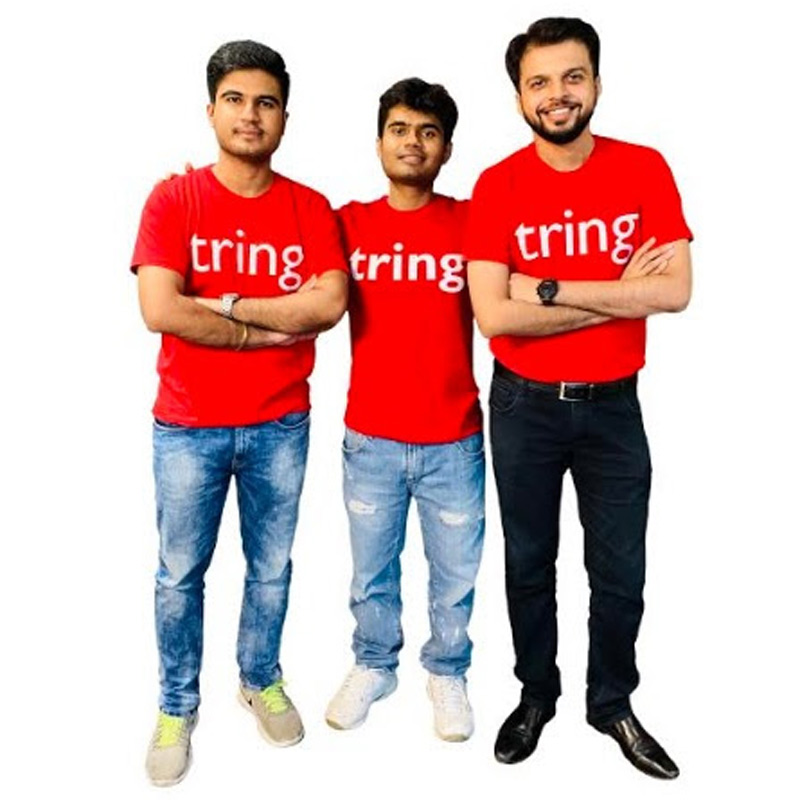
The celebrity shout-out and engagement platform was started in February 2020 by Akshay Saini, Rahul Saini and Pranav Chabhadia. Tring has over 2000+ celebrities and offers a wide range of digital services like personalized video shoutouts/messages, live video calls, DMs on Instagram, etc. for two-way engagement between celebs and their fans.
As part of this transaction, ALTBalaji will be entitled to appoint one board member to represent them on the board of B. D. Inno Ventures Pvt. Ltd. (the parent company of Tring). The investment reinforces ALTBalaji’s presence in the lucrative celebrity commerce business in India.
Commenting on the new development, Balaji Telefilms Ltd joint managing director Ekta Kapoor said, “Having been in the business of entertainment for more than two decades now, we value the bond between celebrities and their fans. Both ALTBalaji and Tring work with talent and try to bring them a step closer to their fans and vice-versa. We believe this synergy will work in favour of both the brands and help each other widen our reach.”
Balaji Telefilms Ltd managing director Shobha Kapoor said, “This investment in Tring allows us to better connect with audiences across India. The team at Tring has done a tremendous job in such a short period, and we are confident that with our investment and support, they will scale much faster, bringing audiences closer to the celebrities they adore.”
Speaking on this investment round, Tring co-founder Akshay Saini said Balaji’s investment in Tring will help the platform continue its market penetration and better reach the masses. “We have just begun, it is day one,” he added.
Tring’s existing investors include ace-photographer and movie producer Atul Kasbekar, along-with industry-leaders and super angel investors viz. Kalyan Krishnamurthy CEO Flipkart, Sujeet Kumar CEO Udaan, Gaurav Munjal CEO Unacademy, Roman Saini, Hemesh Singh, Sumit Jain, Dinesh Godara (Founding team Unacademy), Keshav Sanghi (Ventureworks India), Dalbir Saini (Chairman BDI Group) amongst others.
NEW DELHI: Last week, #BabaKaDhaba went viral and showed the positive impact social media can have when used constructively. However, this week the internet was once again caught in a digital storm, divided on an ad posted by Titan Group’s Tanishq. The popular jewellery brand recently launched a new ad titled Ekatvamto celebrate “unity in oneness.”
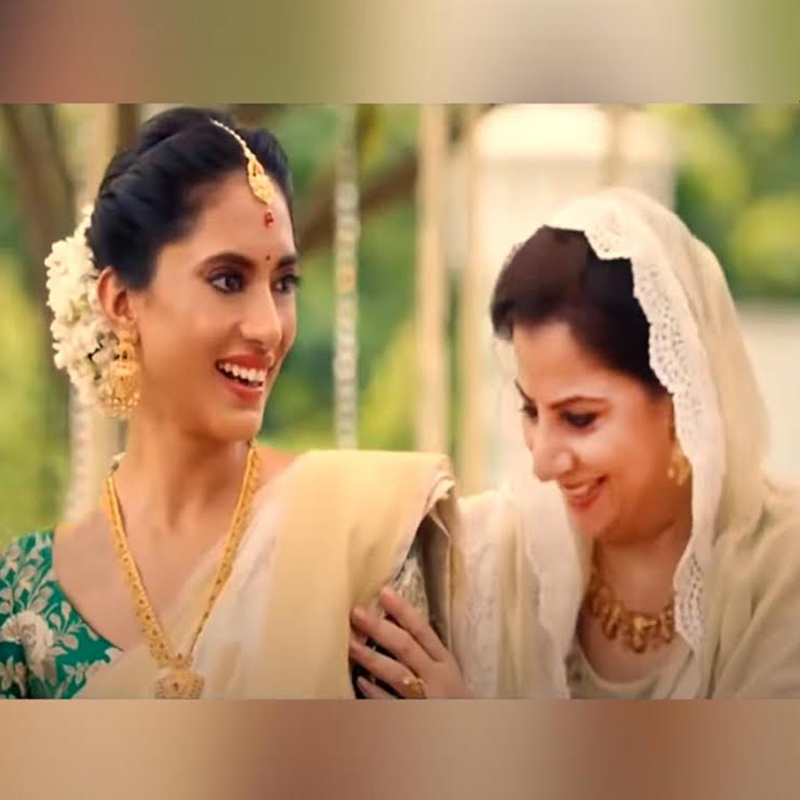
The 45-second Tanishqspot, released ahead of the festive season, showed a baby shower being thrown by a Muslim family for their daughter-in-law, who is a Hindu. In the video, the young woman, realising that the ceremony has been organised conforming with Hindu traditions, anxiously asks her mother-in-law: "Par yeh rasam toh aapke ghar mein nahi hoti hai na? (But this ceremony is not observed at your place, is it not so?)," to which the latter replies, "Bitiya ko khush karne ki rasam toh har ghar mein hoti hai na? (The ceremony to make the daughter happy is held in every house, isit not so?)"
The description of the Tanishq commercial is as follows: “She is married into a family that loves her like their own child. Only for her, they go out of their way to celebrate an occasion that they usually don’t. A beautiful confluence of two different religions, traditions, and cultures.”
No sooner was the ad posted than it met with vicious trolling and expletives by a section of social media users who alleged that it promoted ‘love jihad’ and began trending the hashtag #BoycottTanishq.
However, another section of users on Twitter also supported India’s most trusted jewellery brand, lauding its effort to highlight that interfaith marriages can work and upholding the idea of a secular India.
Taken aback by the controversy, Tanishq pulled down the spot, tweeting, “One as a Nation. One as Humanity.’ That is what Ekatvam stands for,” to reiterate the message of communal harmony in the film.
Tanishq has officially withdrawn their ad after being trolled viciously. Here's why this is a very sad state of affairs, and context from other such ads that were trolled (and some, withdrawn) https://t.co/Nb0cSiTPHXpic.twitter.com/sn3IMBqdmC
Yesterday, it once again gave a lengthier explanation on Twitter why it took the extreme step: “The idea behind the Ekatvam campaign is to celebrate the coming together of people from different walks of life, local communities and families during these challenging times and celebrate the beauty of oneness. This film has stimulated divergent and severe reactions, contrary to its very objective. We are deeply saddened by this inadvertent stirring of emotions and withdraw this film, keeping in mind the hurt sentiments and well-being of our employees, partners and store staff.”
Which once again got the trollers annoyed, who stated the boycott Tanishq campaign would continue as the brand had insinuated that the trollers would resort to strong arm tactics, showing “Hindus” in poor light.
Various brands in India have faced a similar situation where they had to buckle to the collective pressure on social media. But should brands bow down to these attacks?
Brand expert N. Chandramouli says that brands that have attempted to take a brave moral stance should anticipate recoil from those on social media. "The portents are not good if a brand takes a step back, as it shows a lack of courage, conviction, and spine."
He further says that a brand may do away with an ad under various circumstances, and not all of them are due to boycott calls. “Sometimes there are certain calls that may get made that pressurise the management. Sometimes, of course, the boycott calls are so vociferous, that the brand does so on its own. However, in both cases, the brand’s image gets tarnished due to the pull-back.”
Brand-nomics MD Viren Razdan has a different take on the issue, when he asks: "If the ad has been pulled down, did Tanishq not foresee any such issues? Or were they okay with the controversy it would kick up? If it’s the latter then it’s really a new brand direction for them.”
Nevertheless, this is not for the first time that a creative product has been brutally trolled for portraying Hindus and Muslims doing things out of the ordinary with each other. In 2019, just before the festival of Holi, Surf Excel had released an wherein a Hindu girl respects a young Muslim boy dressed all in white (going for his prayers) and prevents her friends from spraying him with coloured water. She then rides him to the mosque on her cycle, giving him a shield of protection all the way. Apparently, the film evoked a severe reaction on social media for promoting love jihad and for describing the colours of Holi as daag (stain).
Around the same time, Brooke Bond too got called out on Twitter for “portraying Kumbh Mela in a bad light” and “hurting the sentiments of Hindu pilgrims.”
Boycott karne se pehle dekh lena khareedne ki aukaat hai bhi ya nahi! #tanishq
— Ritu (सत्यसाधक) #EqualRightsForHindus (@RituRathaur) October 12, 2020
Even after producing brilliant creatives and thought-provoking ads, the question that arises in light of the Tanishq episode is: whether advertisers have any space for experimenting or going bold or touching grey areas while expressing oneselfcreatively?
Chandramouli says that owing to the current state of affairs in the country, social media has become highly polarised. Trolls who have seen their actions yield ‘results’ resort to the tactics of provocation and outrage to drive negative sentiment against whatever challenges their biased views. “It must be remembered that when a big brand pulls back, it further encourages the trolls, and sets an incorrect impediment for other brands attempting to venture to do something bold.”
Mirum India director of brand strategy and client services Mohit Ahuja also agrees that Tanishq’s fearful reaction has set a wrong precedent. "It not only bows to the pressure tactics of trolls who get braver by actions like these but also encourages similar action by other brands. It will make communication as a whole poorer. If advertising does not foster love and inclusivity, what will? Is communication like this not the main reason that most of us remain in advertising?"
Using religion and politics in advertising is a ticking time bomb, as it requires a nuanced understanding of how the people of India, beyond one's Facebook friends, think.
Scarecrow M&C Saatchi founder Raghu Bhatt opines that an ad is supposed to create goodwill and sales, not rancour and a product boycott.“If an ad is offending people, every brand will be sensible about it, apologise, and withdraw. The people who are criticising Tanishq for its action have nothing to lose. Unlike brand creators, brands can't have egos. Tanishq is sending a message that it doesn't want to hurt anyone's feelings,” he asserts.
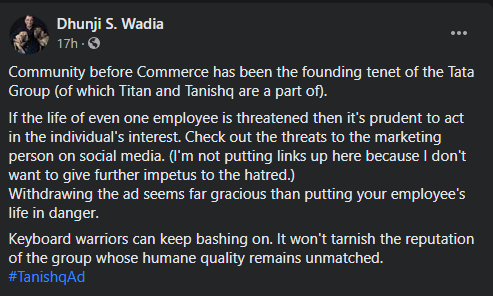
Rediffusion Y&R former president Dhunji S. Wadia wrote on his Facebook page: “Community before commerce has been the founding tenet of the Tata group (of which Titan and Tanishq are a part). If the life of even one employee is threatened then it's prudent to act in the individual's interest. Check out the threats to the marketing person on social media. Withdrawing the ad seems far gracious than putting your employee's life in danger. Keyboard warriors can keep bashing on. It won't tarnish the reputation of the group whose humane quality remains unmatched, #TanishqAd".
Taproot Dentsu chief creative officer and co-founder Santosh Paddy declares that it’s high time that the industry stood together on issues such as these. “Why is our industry being targeted every single time? Creativity is the core of our business and we cannot be pushed in the corner every single time. We are the soft targets as brands are involved. It’s high time we give a hard push back, to theauthorities for this biased behaviour. It’s creative freedom for some and beating for some?”
It's really sad to watch what kind of country we are turning into. An ad uniting two religions has to be taken down in the country which used to be called secular since forever.#tanishqpic.twitter.com/8E7UDl7PeH
indiantelevision.com has compiled a list of ads which have faced criticism in the recent past: –
Anouk Myntra
The ad with the tagline 'Bold is Beautiful' by Anouk fashion brand under Myntra was applauded as well as criticised for taking on the sensitive topic of homosexuality. The ad featured a lesbian couple preparing to break the news to one set of parents.
Kalyan Jewellers
In 2018, Kalyan Jewellers withdrew an ad featuring Amitabh Bachchan and his daughter after it came under attack for creating 'distrust' in the banking system. People threatened to sue the brand for accusing it of "casting aspersion and hurting the sentiments of millions of personnel" through the advertisement.
Amazon
The e-commerce company found itself in the midst of a controversy for allegedly selling products like slippers, doormats, and toilet seat covers with the pictures of Hindu gods and goddesses. The pictures were widely circulated on social media and Amazon was roundly criticised for hurting the sentiments of Hindus. People expressed their displeasure on social media and raised calls to boycott the e-tailer.
Gillette
The brand launched a commercial asking men to be better versions of themselves, which sparked a debate about whether companies should simply stick to promoting their products or sell social causes.
Ola
Ride-hailing app, Ola rolled out an ad a few years back to promote the affordability proposition for its Micro service. The ad featured a young couple out shopping on the streets. The boyfriend, who is paying for his better half, eventually says: “My girlfriend costs Rs 525 per Km but Ola Micro costs just Rs 6 per km". The underlying message was that using an Ola Micro is cheaper than dating a woman. The campaign was attacked on social media for being sexist and was withdrawn by the company.
NEW DELHI: It started, as many viral sensations these days do, with an Instagram post. Only this time, it wasn’t a celebrity’s staged photo-op or a kitten or puppy’s cute antics, but an octogenarian couple struggling to make ends meet.
Food blogger and Instagram influencer, Gaurav Wasan (@youtubeswadofficial) is usually on the lookout for lesser-known eateries around the Delhi. Earlier this week, he happened to stumble upon Baba Ka Dhaba, run by an elderly couple. The owner, Kanta Prasad, said the pandemic had shattered his small business and there were hardly any customers visiting the food joint even after the unlock phase.
A post shared by Gaurav Wasan (@youtubeswadofficial) on
Their despair came to light when Gaurav captured the visuals of the old man breaking down in tears as he related how, even after working for the entire day, he can hardly scrape together Rs 60. Gaurav shared the video on his Instagram page and asked his followers to support the elderly couple, and others in the same predicament, in every possible way.
Within hours, the video went viral – garnering around a million views the same day. People started extending helping hands to support the tiny business. But the real magic happened when Vasundhara Tankha Sharma posted the same video on Twitter and urged netizens to #supportlocal. Sharma’s tweet racked up thousands of retweets, comments, and likes and #BabaKaDhaba started trending. This led other influencers, YouTubers, media houses and content creators to visit the food joint and spread the word. The story got amplified, and long queues were witnessed at the small shop.
Experts feel that the hype built around Baba Ka Dhaba will ultimately fizzle out but it has shown the positive impact and true potential of social media.
Mad Influence founder and CEO Gautam Madhavan was of the view that the number of people standing outside the dhaba will go down, but his business definitely improved and picked up pace compared to before. In short, he will earn and live better than yesterday.
People started searching for #BabakaDhaba and there was a massive interest in the audiences around the subject. The interest levels went from zero-to-hundred in no time.
Filter Coffee Co. creative head Rahim Musani said that the video received one of the most organic reactions and struck a chord with the audience, which showed us all the power of social media and over-night virality.
The video made its way into celebrity circle, with actors like Sonam Kapoor, Raveena Tandon, Randeep Hooda, Swara Bhasker, Nimrat Kaur, cricketer R Ashwin, and many others stepping up to offer financial help. AAP MLA Somnath Bharti met the elderly couple and assured them of support.
This is what happens when we just believes on viral things. Nobody noticed that Kachaudi wala in crowd. He might be needed the same help but ..#BabaKaDhabha
Please Be Vocal For Local. pic.twitter.com/bQeXKlDm4g
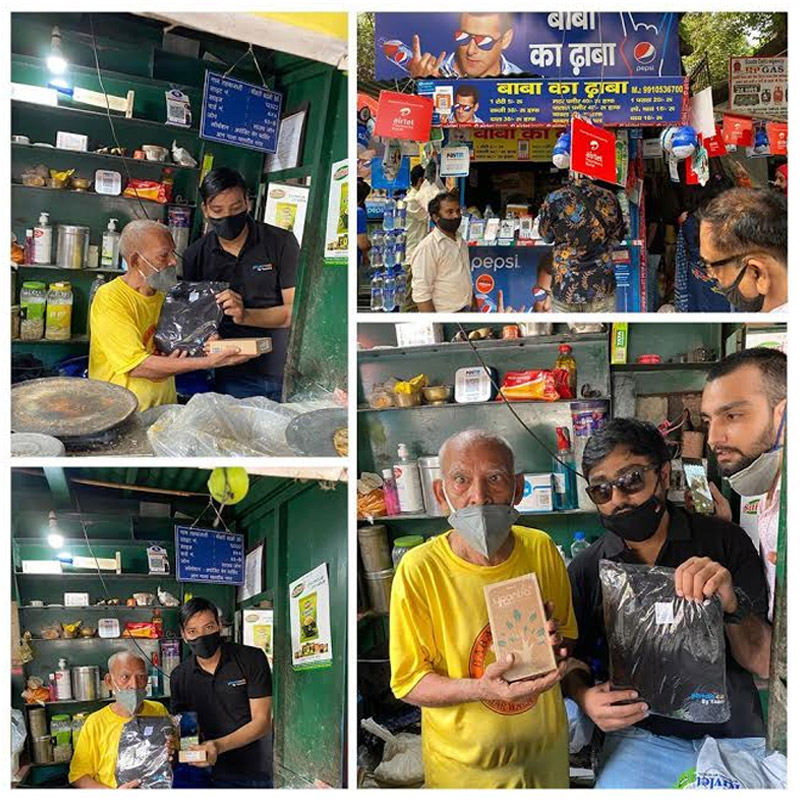
PepsiCo also gifted the old couple a beverage cooler with free stocks of its line of drinks. In fact, the company saw this as an opportunity and revamped the dhaba with Pepsi branding.
Dating app Tinder said in one of its tweets: “We recommend Baba Ka Dhabha for your next date.”
The National Restaurant Association of India (NRAI) has pledged to improve the infrastructure of Baba Ka Dhaba and make it Covid2019 compliant.
As of now, the food outlet and the elderly couple have been sponsored by a beverage, phone, e-wallet, online food, and brands from other categories. They have completely revamped the look and feel of the outlet.
Although it was very clear that brands simply aimed to hop on the popular trend as it generated great earned media for them at an extremely low cost. The news about their associations was promoted in the news outlets -online and offline, and social media pictures.
In professional circles, however, the overarching impression seemed to be that the lifespan of an overnight internet sensation like Baba Ka Dhaba is limited and the buzz around them will be quite short-lived – unless they find a way to make the most of all the exposure both personally and professionally.
According to Whistling Woods International chief technology officer and vice-president Chaitanya Chinchlikar, the Baba Ka Dhaba video isn’t an ideal example of influencer marketing. “It’s an example of the innate strength of social media platforms and the ability of the right content at the right time to capture the attention of millions and spread globally, practically overnight.”
Monk Media Network creative director Adrine D'mello also doesn't consider it a classic case study, but an instance in which netizens collectively showed that the power of social media is immense. “A video that was recorded to just try and get the elderly couple some exposure through the network of friends and family just got bigger and bigger, with celebrities eventually joining in to support the cause,” he said.
The viral video has also prompted several social media influencers and content creators to look for other such food joints who may need support from the people. One such food joint that emerged during the weekend was from Agra.
On the other hand, Wasan, the Instagram influencer has garnered around 30 million views on the video at the time of filing this story. He’s also registered a massive uptick in follower count – from 26k followers a few days ago to 180k followers now.
The organic reach which Wasan got in real-time is astonishing. This particular case study shows the power of the influencer community, what can be achieved if it’s leveraged properly.
“The hype around it will settle down in a few days. However, the video and the name will stay with people. Baba Ka Dhaba has become a landmark and will be remembered like that,” D’mello concluded.
KOLKATA: A few years ago, online gaming was regarded as a mere recreational activity in India. With the digital ecosystem reaching a new pinnacle, the gaming industry has observed rapid expansion in terms of users as well as investment. To keep users hooked and grow the existing base, the industry is shifting its focus to quality user experience. Alongside that, the stakeholders are increasing investment in security too.
In a panel discussion at GEMS 2020, ‘Building a robust backend and infrastructure network’, moderated by indiantelevision.com founder, CEO and editor-in-chief Anil Wanvari, industry experts weighed in on factors that should be considered for user engagement and platform security.
Name of the game is user experience
With India being one of the top five mobile gaming markets in the world, Indian players are acquainted with buttery-smooth gameplay and immersive user interface, courtesy global giants like Tencent, Activision etc. If an app is in any way inferior to this golden standard, the consumers would reject it, said GOQII founder and CEO Vishal Gondal. Loco VP engineering Viral Mehta added that keeping users engaged outside of the core game should be of top priority.
Tata Communications media and entertainment services sales BD head Anand Pimprikar underscored that equal importance be accorded to pre-game and end-game experience. To this end, the use of multi-CDN and the good peering relation of delivery networks can benefit gaming platforms. Moreover, since bandwidth issue has always been a stumbling block in the Indian market, platforms should actively monitor the network to track performance and direct traffic accordingly, he said.
“Serving things through CDN helps a lot and I think a major part is that you have to write some really good fall back mechanisms. Let’s say your user has a really good 4G network and he is travelling and keeps going from 2G to 3G to 4G, you need to have a really good fallback on your backend and client both. And you render less information on his screen when he is on a lower network to make sure the critical part is always there to give him the experience of playing, ” POCKET52 co-founder and chief technology officer Satyam Verma elaborated.
Enhancing security: A work in progress
When there are more fish in the sea, the sharks gather to feast. DDoS attacks are par for the course, but attackers are becoming more and more sophisticated, said Verma. According to him, they read patterns to discover vulnerabilities; in fact, attackers are able to identify and exploit threats even before platforms flag them.
“Hence, you are the best judge for yourself to decide what is healthy traffic. You can identify these are my healthy URLs, healthy traffic, the patterns of traffic. If something is crossing that, it goes into the bad cluster, then we can put some restrictions,” Verma advised.
GAMES24X7 chief technology officer Sandeep Agarwal said there has been not a day without DDoS attack. Agarwal said that his team protects the platform at all levels using advanced software tools. Hosting an open source software on the cloud service provider has greatly helped the company. Overall, the security situation is steadily improving, Agarwal assured.
The strength of a program’s security depends on the ignorance of the user. But pirates are smart, enterprising and persistent. They cannot be eliminated, but that doesn’t mean developers are about to throw up their hands in despair.
“We keep analysing what sort of threat and attacks could come our way and the infrastructure we need to put in place in order to safeguard ourselves. We have third party services keeping those threats away. We have a team that keeps analysing those threats. It’s a continuous development,” Winzo lead backend developer Rahul Sharma said.
‘Social media and security risks go hand-in-hand’
The industry is more concerned about attackers resorting to social media networks to orchestrate security breach, GOQII’s Gondal said. Using social media, attackers can hack user credentials, compromise computers and smartphones with malware, and use phishing tactics to steal credit card, banking and other sensitive information.
Moreover, fake apps are mushrooming as well. Already, over 500 copycat Fauji apps have popped up on the Android and Apple app stores.
“We are massively struggling to get that down. These platforms don’t take any of these requests seriously. Also, there are several accounts on Instagram, Facebook, Twitter that sell you fake ids. At one end, while there is the whole server-side security, the bigger security risk is on the social network side where people are getting fooled. Frauds are happening in real money gaming also through passwords, OTPs,” he added.
The need for cybersecurity in gaming
Online gaming has a unique kind of duality when it comes to cybersecurity. A gamer is a software user just like any other; he or she is subject to the same security risks and threats as any other user. The same security principles are just as effective and important. However, each threat also involves a unique twist, adding a complication that isn’t seen in any other field.
As security threats pose a grave challenge for all parties involved, Supercric co-founder and CEO Arvind Sivdas finds that it is better to formulate a security plan while development is in the nascent stages.
Often, gaming companies tend to overlook security aspects at the initial juncture due to funding concerns, but following the Fortnite fiasco in 2018, they should know better. Even if they cannot fix the threats at that stage, conversations such as this panel at GEMS today may direct them in the proper direction.
“When you understand a pattern of threat, attackers will come up with a new pattern. You can’t overdesign security,” Pimprikar added.
Today, attackers have more options to compromise a player’s security at their disposal than ever before. By knowing which aspects of security are the same and which are different, game companies and their customers can protect themselves, and stay safe in a way of life that’s “just for fun” while avoiding potential for real loss.
NEW DELHI: BharatMatrimony, a leading online matrimony player, is known for contextual content during IPL and often rides on topical news. The brand is again back with its cool contextual posts driving social engagement and this time it is relating cricket with marriage. BharatMatrimony is wooing fans with relationship lessons from cricket and IPL humor besides clever creative content on interesting match moments.
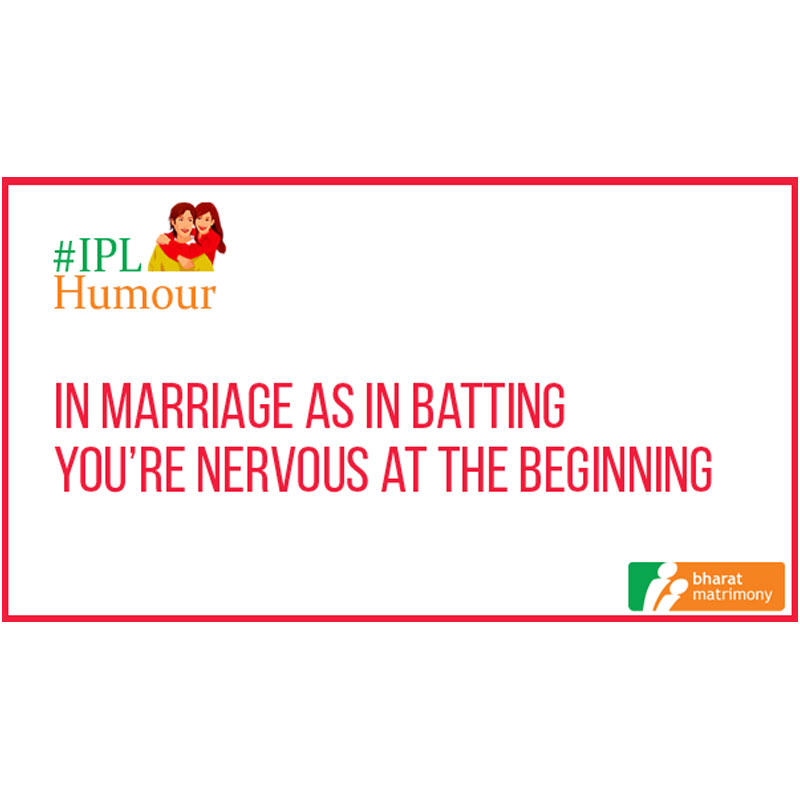
For instance, the brand recently shared a creative that mentions – 'Cricket is a game of two competing sides, in marriage, husband and wife are on the same side.' BharatMatrimony has been sharing such humourous and witty creatives for a few days now.
These creatives are being released on the social media platforms and aim to build a deeper connection of the brand with the audiences through topical marketing.
“IPL came after months of lockdown and we knew that people were going to be glued to the TV. Besides, the rapid pace of digital adoption and the lack of outdoor entertainment during Covid-19 offered a good opportunity for us to ride the buzz by sharing relatable content to the audience. And they seem to be loving it. As a brand, we constantly look for opportunities to spark or add to a conversation. Cricket and BharatMatrimony are a perfect match,” explains Matrimony.com GM – marketing Rajasekar KS.
The matrimony brand is clearly trying to leverage the cricket fever and create traction for the brand. Interestingly, the creatives are a witty take on cricket and unlike a lot other posts and ads doing rounds on social media.
In March 2020 also, the brand garnered a lot of attention from viewers for it's relevant messaging for Covid2019. From "Spread the message, don't spread the virus" on the eve of lockdown to "It's all in your hands" that talks about the choice to stay at home and fight the virus, not to speak of washing hands with soap frequently; to tips on staying safe to sharing helpline numbers, has been posting relevant content to engage with the people.
BharatMatrimony has been a very old hand in this category and has done several interesting campaigns in the past that were well received by the audiences.
KOLKATA: Chingari is a Hindi word which means spark. But Chingari is also a homegrown short format video and user-generated content app which Is firing ahead on all cylinders, attracting millions of users. That too in a short period of time ever since the Indian government placed a ban on TikTok, which had 200 million users in India. Of course, other Indian apps – like Mitron and Roposo – have also stepped into the vacuum created by the Chinese platform’s banishment. However, Chingari has been getting some plaudits as well as funding from investors which have been more than pleased with its performance. It recently raised 1.4 million dollars in funding, even as it was rated as the Best App in the social category in the recently-held #Atmanirbhar Bharat Challenge.
“India is a land of myriad cultures and colours. Each has its own flavour. We have seen many through films and other media. Yet, there’s so much more to explore – The raw talent hidden in the remotest of alleys and quietest of villages,” says Chingari co-founder and COO Deepak Salvi. “The sheer potential of the masses. This makes ours a land of possibilities. All we needed was the right platform. One that was proudly ours.”
Media reports say that within 24 hours of TikTok’s ban, Chingari recorded 26 million video views, with three million videos swiped per hour and 10,000 users per minute. The app pays its users based on the virality of the video. For each video a user shares on the app, the content creator gets points per view, and these points can be redeemed for money.
Salvi says Chingari has attracted over 28 million users on the platform majorly in the 14 to 38 age bracket. The users span across tier-1, 2 and 3 cities. The app has also lured some major social media influencers and content creators, and more and more of them are hopping onto it by the hour.
Chingari is available in English, Hindi, Bangla, Gujarati, Marathi, Kannada, Punjabi, Malayalam, Tamil, and Telugu. The homegrown app recently partnered with Alt Balaji to further aid both the platforms in strengthening their reach and increase their audience base across ‘Bharat.’ The short format video platform will introduce a verified account/page of ALTBalaji through which Chingari users will be able to follow and receive the latest updates from the streaming platform.
“We are getting calls for brand integrations as Chingari gets more acknowledged over time. While it recently entered a partnership with ALTBalaji, the coming months will see many such strong partnerships with brands,” reveals Salvi.
Chingari is not just limited to video-sharing but allows users to read local and international news, check the city-specific weather forecast, play games, participate in quizzes, and win prizes. Media reports say that it has plans to foray into social commerce in the next six to nine months but with the core focus being, making it the best short-form video app platform.
“Believe it or not, but we haven’t spent a single penny on marketing or promotions yet. ‘word of mouth’ publicity has been our best way forward so far. However, as we expand, we have a lot of research-backed innovations and strategies in place which we are ready to roll out, in case the market dynamics require us to,” he added.
Interestingly, the app has investments from some of the biggest names such as Tinder CPO Brian Norgard and OLX founder Fabrice Grinda.
“Within a short span, we were able to raise $1.4 million, which only speaks of our head-strong growth plans and the investors’ faith in us. This list too is certain to see some big names in the months to come,” explains Salvi.
He accepts that the user-generated content platform space is getting red hot competitive as each day passes with Roposo and Moj scaling up steadily and many more pawing on the sidelines to launch. But his belief is that Chingari certainly holds an upper edge from a first and fast-mover perspective.
“Constant up-gradation of content and influencer data and maximum activities to keep them engaged on our platform will always hold top priority to us. Like mentioned earlier, this is just the beginning of a big revolution in entertainment. Soon you will see, not just the nation, but the entire world adopting short video formats of entertainment, at large,” he contends.
Media observers however, aver that it’s early days in the homegrown UGC short format space. “TikTok had finetuned its service over years and with hundreds of millions of dollars being invested in technology, research, and innovation,” says an industry veteran. “The platform was also managing scale operations with hundreds of millions of concurrent users and generating revenue worldwide. Indian short-form video platforms have to climb that learning curve, they have to make mistakes and learn. It’s not an easy space to be in, if one is not careful, cash can burn up pretty fast. Investors will have to have tough as nails stomachs until the platforms scale up and prove their business models and start generating cash. Chingari will have to keep its spark burning bright for some time to come.”
KOLKATA: Homegrown short video app MX TakaTak has clocked 15 mn+ video uploads and has set a new benchmark with its daily video views, growing from 0 to 1 billion+ only within a month of its existence.
MX Takatak, in this short span, has also garnered over 10million daily active users and 45mn monthly active users with the average time spent per user per day being 20 min per user, and generating daily 1 billion+ video views and 100+ video views per user.
MX Player COO Vivek Jain elaborated saying, “Be it nurturing the talent of the young influencers who are associated with us, curating personalized content buckets that millions of users are watching on the app or the advertisers who come onboard to reach out to segmented audiences – MX Takatak has something to offer everybody. We’re overwhelmed by the response the platform has received and we look forward to scaling new heights from here on.”
Currently, it hosts the largest number of 1Mn+ digital influencers including audience favourites such as Gima Ashi, Manjull Khattar, Somya Daundkar, Khusi Punjaban and Ayush Yadav who have all chosen to be a part of the app. Additionally, a lot of community influencers such as Neetu Bisht and Lakhan Pratap Singh have also joined the app.
The app enjoys a 4.1 Star Rating on Google Play and ranks number one in the top free apps category on iOS. It offers short-form content across genres such as Dialogue Dubbing, Comedy, Gaming, DIY, Food, Sports, Memes and many more.
NEW DELHI: Social media has emerged as one of the most powerful tools in elections. All the political parties are making the utmost use of social media platforms during the elections to tilt the opinion in their favour.
From February 2019 till August 24 this year, BJP spent Rs 4.61 crore on Facebook advertisements and Congress Rs 1.84 crore, according to the data available on the social media giant’s spending tracker. Keeping an eye on Maharashtra elections, the ruling Bhartiya Janata Party spent most on this money tp push social issues, elections, and politics.
Four other advertisers, linked to the BJP, also made it to the top 10 list including three that share the same address in Delhi as the ruling party’s national headquarters, according to the tracker.
These four include two community pages, ‘My First Vote for Modi’ (Rs 1.39 crore) and ‘Bharat Ke Mann Ki Baat’ (Rs 2.24 crore); Nation With Namo, which is categorised as a news and media website (Rs 1.28 crore); and, a page (Rs 0.65 crore) affiliated to BJP leader and former MP R K Sinha, who owns Security and Intelligence Services (SIS).
According to Facebook, an ad is categorised under “social issues, elections, and politics” if it is made by or on behalf of a candidate, political party, or advocates an outcome; is about a particular election or referendum; is regulated by political advertising, or is about a local social issue.
In total, these accounts and BJP spent Rs 10.17 crore on advertising, which accounts for 64 per cent of the total amount spent by the top ten rank holders, that is Rs 15.81 crore. The period covered includes the general elections in April-May 2019, which saw the BJP return to power with an overwhelming majority.
Earlier, a report by the Association for Democratic Reforms (ADR), claimed that BJP is by far the richest political party in India. The ADR analysed the audited accounts of the BJP, and six other national parties, including the Congress, for 2016-17. In 2019, BJP earned Rs 2,410 crore.
KOLKATA: Social media platform ShareChat has announced its agreement with India’s largest music label, T-Series to license its music catalogue on the platforms. The collaboration would provide for an enhanced experience on ShareChat and short video platform Moj.
Over 180 million active users on ShareChat and Moj would now be able to explore hundreds and thousands of songs from the T-Series music library, and add to their own videos, it added.
This is ShareChat's first partnership in the music licensing space.
T-Series managing director Bhushan Kumar said this association sets a fresh beginning between us and the social media platforms.“This moment celebrates the contribution of great music to social media, and we commend ShareChat for respecting the copyrights. It's great to see ShareChat agree with our philosophy.”
ShareChat director Berges Y Malu said, “Music brings out the best of emotions and nostalgia to our users as they share their creativity on our platform. Our partnership with TSeries would help our community of users to access thousands of songs from the T-series catalogue on ShareChat and Moj to express their emotions and share content in amazing new ways.”
NEW DELHI: Festivals hold an importance for all. Last week, brands portrayed campaigns on the theme of Raksha Bandhan and this week they are celebrating lord Krishna’s birthday aka Janmashtami.
Dahi Handi events are held with much cheer, especially in Mumbai. However, due to the Covid2019 pandemic, all celebration activities are cancelled and people are enjoying the festival at home. But despite the real celebrations being lower, social media has helped keep up the spirit. This time brands have not launched specific campaigns due to subdued budgets but have invested on digital media.
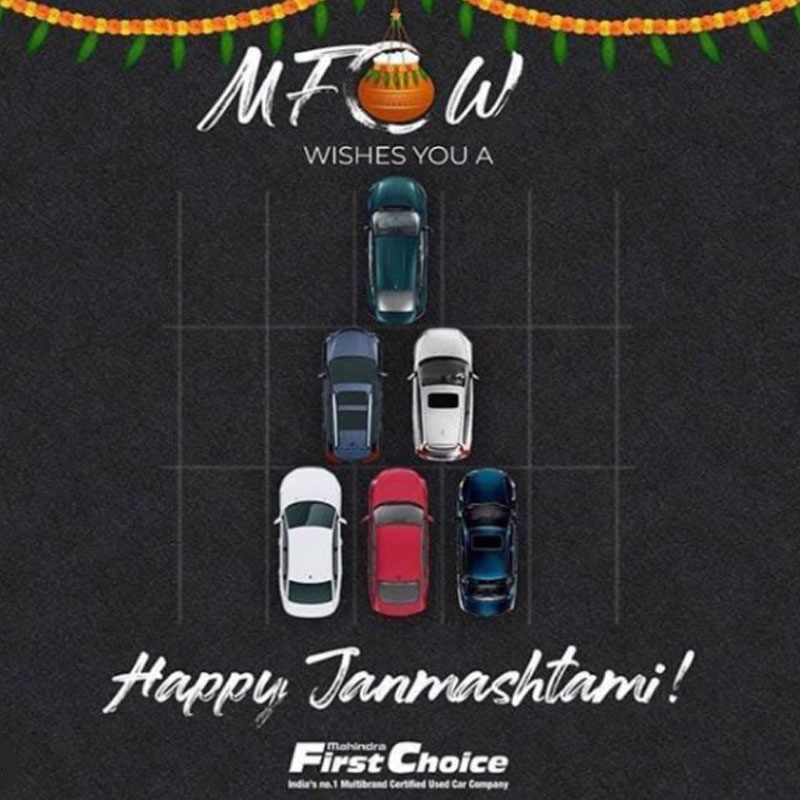
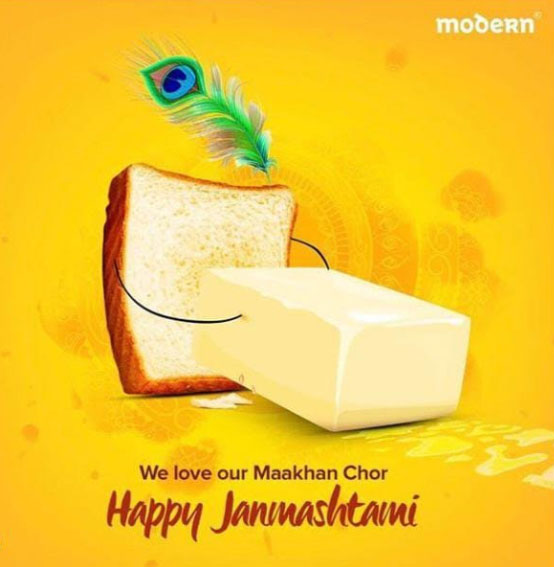
Zomato, Modern Foods, Madhusudan, Maruti Suzuki's First Choice and others have launched interesting creatives on social media platforms.
Brands and their digital agencies hop on these opportunities to engagingly connect with the audience and generate an emotional bonding.
Here’s a look at some of the best creatives from brands on the birth of lord Krishna:
 indiantelevision.com has compiled a list of ads which have faced criticism in the recent past: –