Tag: social media

  • Delhi HC issues notice to Centre on plea challenging new IT rules

    Delhi HC issues notice to Centre on plea challenging new IT rules

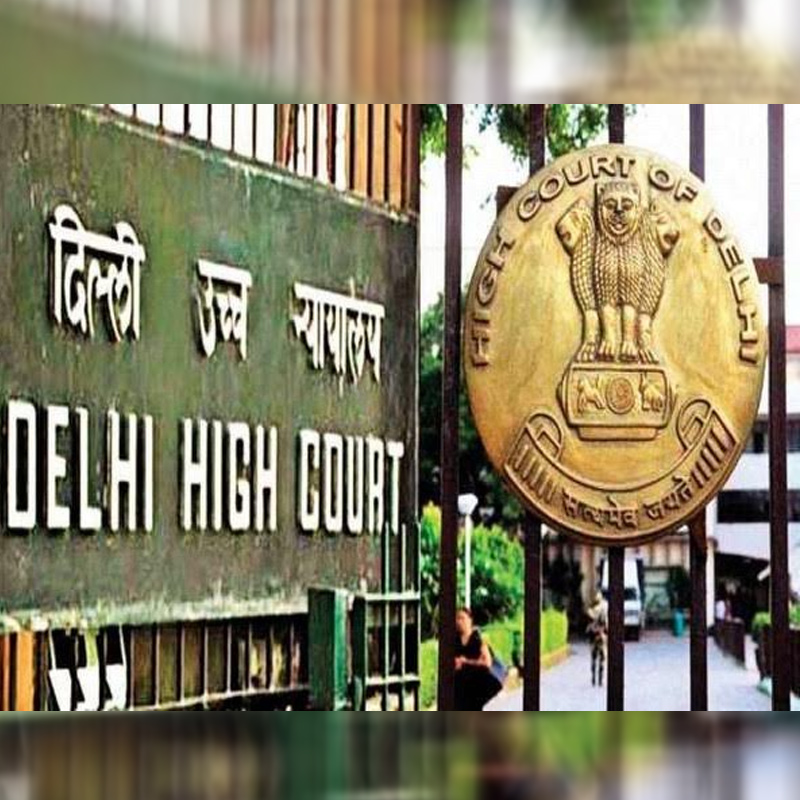
    KOLKATA: The Delhi high court on Tuesday issued notice to the central government in a plea challenging the new rules framed under Information Technology (guidelines for intermediaries and digital media ethics code) Rules 2021.

    A division bench headed by chief justice DN Patel was hearing the petition which has been filed by the Foundation of Independent Journalism (the non-profit company that publishes The Wire). It has sought a response from the ministry of electronics and information technology in the matter and given them time to submit the same.

    The counsel for the petitioners, senior lawyer Nitya Ramakrishnan, stated that the rules have put an additional regulatory burden on news media and current affairs.

    “They cannot place a whole regulatory burden under Section 69A on news and current affairs agencies. 69A only provides for issuing directions to intermediaries,” she argued as quoted in media reports.

    The petition argued that the new IT Rules issued on February 25, 2021, were “palpably illegal” in seeking to control and regulate digital news media when the parent statute nowhere provided for such a remit.

    “The IT Rules, 2021, expand the scope of the Act even further by providing for a Code of Ethics and a three-tier regulatory system to administer a loose-ranging Code of Ethics, that contains wide and vague terms as ‘half-truths’, ‘good taste’, ‘decency’,” the petition said.

    The plea also contended that the oversight mechanism and the inter-departmental committee set up under the new rules would have the power to recommend "draconian measures such as ordering the deletion, modification of content or blocking the same."

    The matter will be heard next on 16 April.

    Several journalists, lawyers and activists have decried the rules as an attempt to muzzle freedom of press by laying the ground for tightening executive control over digital media. The Editors Guild of India last week demanded the repeal of these rules.

    The government laid down new guidelines for social media platforms on 25 February, making a distinction between social media intermediaries and significant social media intermediaries. In a gazette notification, it also specified five million registered users in India as the threshold for significant social media intermediaries.

  • Tips Industries mulling demerger of film division

    Tips Industries mulling demerger of film division

    NEW DELHI: The board of directors of Tips Industries has in-principal agreed to consider the demerger of the film division of the company into a separate entity.

    A demerger committee formed by the board will appoint the valuer, merchant banker for fairness opinion and other intermediaries for this purpose. The board on receipt of the valuation report will study, discuss and initiate the next steps.

    Following this announcement, the Kumar Taurani-led company’s stocks declined 1.2 per cent on the NSE.

    Over the years, Tips’ film division has churned out many popular Bollywood flicks like all three instalments of the Race franchise, Coolie No.1 , Entertainment, Ambarasiya, and Kunwara, to name a few.

    Tips Industries is extremely popular for its large library of music and has a strong forte in music promotion. It recently inked a global deal with Facebook, under which the social media giant has licensed its music for videos and other social experiences across Facebook and Instagram. With the move, Facebook and Instagram users will be able to add Tips' music catalogue to their posts and stories.

  • Facebook’s chief of advertising integrity moves on

    Facebook’s chief of advertising integrity moves on

    New Delhi: Rob Leathern, Facebook's chief of advertising integrity, who handled the company's ad products, stepped down earlier this week after serving the social media giant for over four years.

    He announced the development in one of his tweets where he also thanked his colleagues and talked about the great experience that he had at Facebook.

    Leathern has been in the tech, product, adtech space for over 15 years and was responsible for building the team at Facebook.

    Talking about his future endeavour Leathern tweeted, "What's next? While I'm not going to be working on ads directly, it will be a part of what I work on as I will be staying in the tech/data/privacy space. I will share more about where I'm going in the next week or two," without disclosing where he headed next.

    He also talked about the great work that his team did on US elections and many other projects.

  • The biggest buzz on Facebook in 2020

    The biggest buzz on Facebook in 2020

    KOLKATA: This year brought a wave of surprises which united people across countries and made them realise the power of doing ‘More Together’ while practicing social distancing. As we prepare ourselves to embrace what the coming year has in store for us, Facebook has given glimpses of some of the moments that united people across its family of apps.

    For instance, people came to Facebook to commemorate the figures who left a lasting legacy around the world. Kobe Bryant’s passing was this year's most discussed moment on Facebook, with the US, Mexico and Philippines sharing the most posts and photos celebrating his life. US Supreme Court justice Ruth Bader Ginsburg was commemorated in more than six million posts in one day across Facebook and Instagram, with many using the hashtag #restinpower. The passing of prominent personalities including Irrfan Khan, Rishi Kapoor, Sushant Singh Rajput, S P Balasubrahmanyam, and Pranab Mukherjee echoed deeply in the conversations in India.

    The incident which reshaped the year, Covid2019, was also discussed highly.  Throughout March, more than 1.5 million Spaniards posted to express their gratitude for medical staff using #aplausosanitario. Instagram and Facebook Live views doubled in Italy when lockdowns hit, as residents sang on balconies and broadcasted under quarantine. Meanwhile, in the US, Facebook Live viewership jumped 50 per cent, with many tuning into fitness classes, connecting with artists and more. Live broadcasts in India tripled in June 2020 compared to the same time last year. With the launch of the fundraiser feature in India,  ‘I for India’ fundraiser concert witnessed over 85 artists raise funds for people affected by the pandemic.

     Facebook’s global community elevated important issues that mattered to them more than ever. In the three weeks following George Floyd's death, conversations around Black Lives Matter tripled, with an average of 7.5 million mentions on the platform every day.  With 1.8 million members, The Blackout Coalition — a FB group supporting Black businesses, is the No.1 largest group among US users.

    People used Facebook platforms to build and maintain community, even at a distance. Communities rallied to shop local, as more than 47 million stories using the ‘Support Small Business’ sticker were created on Instagram globally in the past three months. With in-person services on hold due to Covid2019lockdowns, the holiday week of April 6 (Easter and Passover) was the biggest for group video calls on Messenger and the most popular week of Facebook Live broadcasts from spiritual pages, ever.

    With Diwali being a big cultural moment in India and social interactions taking a virtual route, more than four million people across the country made over 7.5 million posts and comments about Diwali on Facebook from 20 October till 10 November. Uniting the whole nation as well as cricket enthusiasts from across the globe, Indian Premier League (IPL) 2020 was a big conversation driver, registering as many as 10 million mentions on Facebook led by fervent fans around the world.

    With stakes high, people came to the platforms to make their voices heard. Kamala Harris’ vice presidential selection announcement was the most mentioned moment in August, drawing more than 10 million posts in one day. Further to that, her Indian lineage acted as a catalyst for conversations in India around her appointment.  Nearly all adults on Facebook and Instagram in the US saw access to our Voting Information Center, which offered authoritative information on how to register to vote, and well as key facts about voting deadlines.

     More than 1.3 million people globally contributed to the years’ largest Facebook fundraiser, its largest ever, raising more than $35 million to provide relief for those affected by the Australian wildfires. To date, more than 2.6 million people have raised more than $87 million through Facebook Fundraisers this year to combat climate change, promote ocean clean up, animal protection efforts, and much more.  In India, communities witnessed fundraiser concerts including ‘#BeForBENGAL’, held on World Music Day to raise funds for the victims of Amphan, along with many others.

  • Media needs ‘auto-correction’, guidelines to restore order: Venkaiah Naidu

    Media needs ‘auto-correction’, guidelines to restore order: Venkaiah Naidu

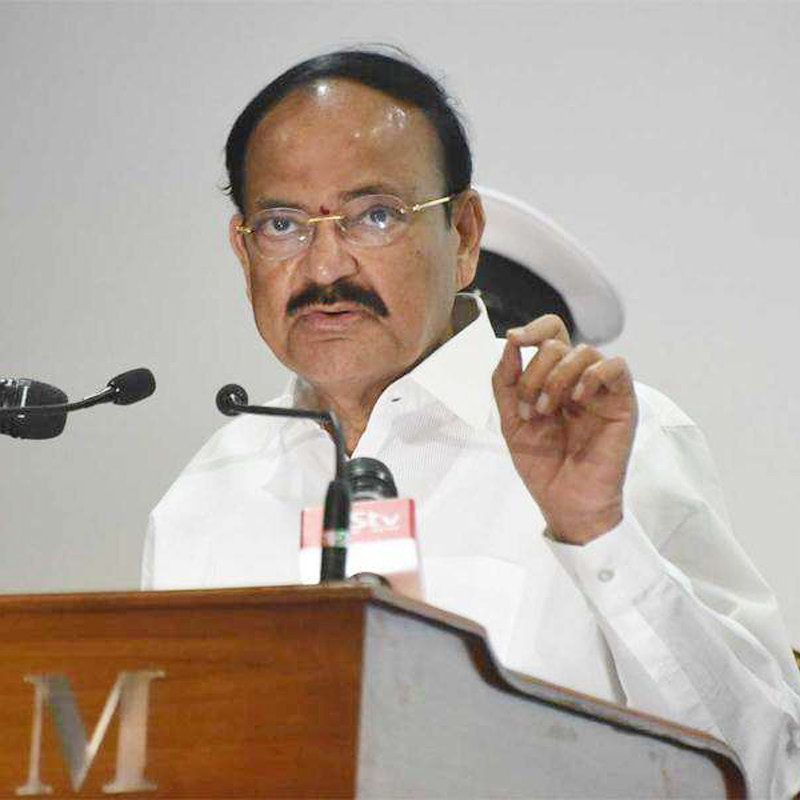
    NEW DELHI: Expressing concern over the future of journalism and the sanctity of news in the face of disruptive technological advances, vice president of India and Rajya Sabha chairman M Venkaiah Naidu urged all stakeholders to ensure credible journalism, since media is an effective tool of empowerment of people for informed public discourse.

    “While the democratisation and decentralisation that followed the rapid expansion of social media enabling freedom of expression are welcome, the world is witnessing the downside of it in the absence of self-regulation and protocols. In this era of saturated information and overabundance of news, the very news is getting devalued,” he pointed out. Naidu was speaking at the MV Kamat Memorial Endowment Lecture.  

    The vice president lamented the side effects of internet driven 'instant journalism' due to which the credibility of fact based journalism has taken a beating. He further noted that technology giants have emerged as algorithmic gatekeepers of information and the web has taken over as the main distributor of news. 

    In particular, he highlighted the financial implications for traditional media like the newspapers when their journalistic products are time and again leveraged by technology giants, who do not share the revenue back with them. 

    Some countries were taking measures to ensure revenue sharing by the social media behemoths like Google and Facebook to the print media. 

    "We also need to take a serious look at this problem and come out with effective guidelines and laws with a consensus to enable print media get their share from the huge revenues of the technology giants," Naidu emphasised. 

    Referring to the crisis situation being faced by the media and journalism for various reasons and uncertain future amidst disruptive changes, Naidu stressed that an ‘auto-correction’ is needed and in fact, inevitable for a better future. He suggested enabling guidelines and regulations for restoring order while maintaining he’s against any restrictive regulations.

    The media has always led the way in reporting and analysing the socio-political and economic transformation of the country. Naidu reminded mediapersons to be consistent in reporting such change instead of using different yardsticks for different periods. 

    He said, “I am not suggesting media to be like a chameleon. Media should use a standard set of reporting and analytical tools that capture the change without imposing respective positions. Media should not be seen by the public as discrediting the change that is happening since such a change is contrary to their long-held positions.” 

    Naidu further listed the concerns about media and journalism as issues relating to; freedom of press, censorship, flouting of norms of reporting, social responsibility of journalists, a decline in the values and ethics of journalism, yellow journalism, journalism of false crusades, reporting for profit, disinformation in the form of fake and paid news, disruptions caused by the internet and the future of media amidst these concerns and challenges.

    “Yellow journalism seeks to cloud the facts by resorting to eye-catching headlines and promotes distortion and misinformation. Journalism based on taking up false crusades as witnessed in the case of suicide of a film actor recently. Both are aimed at increasing readership and viewership and should be avoided,” he said.

    With the rapid rise and use of social media, wherein mobs can be gathered with a WhatsApp message and riots can be sparked off by a tweet, the former I&B minister stressed on the need to ensure sanity given the implications for social harmony, common good, peace, and national security. “Freedom of expression doesn’t mean unfettered outburst of anger and hate against each other that may lead to chaos,” Naidu remarked.

    He urged the media to be a part of the solution and not part of the problem since like every citizen, government and other stakeholders, media too, has a certain responsibility towards the nation.

  • Zee5 partners with XroadMedia to ramp up personalised user experience

    Zee5 partners with XroadMedia to ramp up personalised user experience

    KOLKATA: Zee5 has onboarded XroadMedia to ramp up its hyper-personalised Video on Demand offerings and social media services. Through this partnership, Zee5 will put to use XroadMedia’s innovative back-end solution, Ncanto, to provide multiple content discovery, recommendations and personalisation use-cases to its users. XroadMedia is a leading specialist in building personalisation services and its expertise will also be deployed to scale up HiPi, Zee5’s new short-form-video platform.

    Since HiPi’s beta launch in August 2020, Zee5 has witnessed a massive 30 million new user installs along with 70 million existing Zee5 users upgrading to the short-form-video platform.

    Zee5 expansion projects business head and product head Rajneel Kumar said the platform had benchmarked XroadMedia’s solution for a few months and found adoption and click-through-rates on recommendations were significantly higher along with a substantial increase in average time spent by a user.

    “Zee5 has always believed in the power of great content and powerful technology coming together to offer the best experience to a viewer. We believe gone are the days of broadcast; even the current trend of viewing audiences in clusters and cohorts will soon give way to individual personalisation. And this is where XroadMedia comes in. XroadMedia’s cloud-based services have also provided us with a higher level of flexibility to serve personalisation use-cases and I’m confident this partnership will heighten our seamless content viewing experience, a feat we take great pride in and work tirelessly to maintain,” added Kumar.

    XroadMedia co-founder and CEO Adolf Proidl said the agency is working on several aspects to better streamline the OTT platform, from personalising entire screens in the user interface via creating and managing editorial services, to applying solutions across multiple content types and sources. “We are very pleased with this partnership, as the application of our solution shows how important personalisation is to ZEE5 and I am sure together we will push the boundaries of content discovery and personalisation even further in the future.”

    First launched in India in July, Ncanto provides dynamic personalisation of Zee5’s services based on interests and watching behaviour. Additionally, with the help of Piloto, XroadMedia’s advanced business and service management tool, Zee5 can provide an ever-changing user experience by closely following the user’s entertainment journey. XroadMedia’s cloud-based solution also encompasses a dynamic mix of statistical, editorial and user-based recommendations.

  • How brands celebrated #2020WaliDiwali on Twitter

    How brands celebrated #2020WaliDiwali on Twitter

    NEW DELHI: Every festive season, as people prepare to splurge, brands leave no stone unturned to position themselves in the front line of their consumers’ view. Twitter – given its conversational nature, diverse reach, and ability to seamlessly connect brands with the right audiences – sees a number of brands go all out with their communication efforts to keep their consumers engaged and the brand’s presence felt. 

    Brands use Twitter to establish their identity, connect and engage with their audiences, provide customer support services, and even launch new products. Brands become a part of culture on Twitter as consumers on the service are constantly redefining relationships with each other and brands at any given time.

    With #Diwali2020 inspiring an array of emotions in all of us, brands on Twitter struck a chord with consumers over a number of themes; some humane and some fun.  This year, as digital emerged as the go-to medium for both brands and consumers, Twitter gave brands a stronger reason and opportunity to connect with their audiences virtually. Responding to the call, brands from across sectors such as OTT, e-commerce, OEM, etc., rolled out meaningful and engaging content to connect with their audiences on the service. Here’s a look at what brands on Twitter had to say this #2020WaliDiwali: 

    Inspiring people to be kind and generous

    The uncertainties of this year led people to be thankful for their blessings. Subsequently, many instances of people coming together to help each other surfaced this year. In line with this sentiment, several brands encouraged people to be kind, and continue providing their support to those who need it. 

    Amazon India’s #DeliverThanks campaign, which used a Twitter conversation card to prompt audience to express gratitude towards everyone working behind the scenes, Vivo’s #SmileWalaDiya contest, asking people to ‘light up lives by bringing smiles to people’s faces’, Oppo’s video story of two little friends’ Diwali being brightened by their tutor, which was a heartwarming reminder to #BeTheLight in people’s lives, and Zomato’s #JabDilKare, aimed at granting some of people’s most heartfelt wishes through their @FeedingIndia project, were all testimonies to the goodness people carry within.  


    Finding comfort in family and togetherness
    Festivals like Diwali are the best times, and for some, the only times, when they get to come together with their family and friends to have fun, reminisce about the good gone days and make new memories. 

    This year, as many people could not spend Diwali with their families, Coca-Cola nudged its audience to welcome new relationships into their lives with #DiwaliWithCoke. VolkswagenIndia, by #DeliveringHappiness, also tickled the familial sentiments in people with a video that spoke about the importance of family on all occasions – whether its Diwali, or welcoming one’s first car. 


    Reinstating the spirit of unity

    Among many other things, festivals also bring out the diversity of India. As people gather in celebration, all differences of religion and rituals fade into the lights of festive cheer. 

    OnePlus celebrated Diwali with glimpses of celebrations in different cities across the country shot on the #OnePlus8T5G and showcasing the various colours of India. Morris Garages India’s #SoundsOfIndia, through an audio Tweet, encouraged people to recreate the MG Anthem with an Indian touch.


    What’s Diwali without some fun and entertainment? 

    Sure, family and gifts are important for celebrations, but where’s the fun without some entertainment? To top the festivities with some chill time, Netflix India, as part of its #NetflixMatchMaker campaign, served up festive film recommendations for those planning on ending Diwali day with a movie night. Disney+ Hotstar VIP also invited people to celebrate Diwali with the recently released #Laxmii, wishing them prosperity with #YehDiwaliLaxmiiWali. 


    Shopping and Gifting: It is the season to shop till you drop 
    No Diwali is complete without at least a little bit of shopping and oh, the gifts that we all look forward to. The festivities get everyone to lighten their pockets and wallets, and brands only add to the momentum with festive offers. While HSBC India and HDFC bank lured customers via attractive discounts, Havells India’s #GharWaliDiwali and SBI Card’s #ApnepanKaEhsaas used Conversation Cards to get people Tweeting about the gifts they were planning to exchange this season. 


  • Over three decades, marketing has seen a paradigm shift

    Over three decades, marketing has seen a paradigm shift

    MUMBAI: On a long trip, the mode of travel may encompass an assortment including air, train, road, boat. Even within these legs, the experience could differ significantly, for example driving on a mountain road, versus regular old ride through the city.

    Similarly, a marketer’s journey over the last three decades has seen multiple metamorphoses, entailing a continuous need for change and adaptation.

    Those were the days, when planning media spends was a simple matter of allocating monies between Ramayana, Hindi feature films, and Chitrahaar on DD, with the option of throwing in Krishi Darshan for the adventurous rural marketer. The satellite TV boom, bringing in hundreds of channels and programmes, added complexity to media planning, and forced marketers to slice and dice the communication target group in terms of multiple demographic parameters. “Focused communication” really took shape in the nineties.

    And then the internet explosion, along with the advent of smartphones, dramatically changed the rules of the game. Digital marketing and social media are the buzzwords now. Engaging the viewer is paramount. Communication can now be targeted at a specific age group, even at a micro level of a city. Youth today interact with the world through their devices. TV viewing and print media are almost skipping this generation. Even a few years ago, advertising on live sports telecasts was a sure-fire way of reaching the youth. Today, even that is transitioning to the Hotstar and Cricbuzz of the world.

    This is having a significant impact on consumer buying behaviour, and the purchase decision-making process. The erstwhile classical marketing’s five step process – spanning problem identification, information search, evaluation of alternatives, purchase decision and post-purchase behaviour – is passé. The three Moments of Truth (MOT) theory has been flipped on its head.

    As per traditional theory, the first MOT is when the consumer interacts with the brand for the first time, say, on a supermarket shelf, and decides to pick up a brand, over others. The second MOT is when she experiences the brand, which may be once (for example, in a restaurant), or maybe multiple times (like a shampoo). A few proceed to the third MOT, and become advocates (positive) or critics (negative), based on their individual experiences. This journey has now been collapsed to what is termed the Zero Moment of Truth (ZMOT). Thanks to the explosion in internet usage, every new brand or product is now researched, where consumers are vicariously exposed to the entire journey at one shot, through others’ experiences. Managing social media is critical now. For example, while evaluating options to buy a car, if one comes across half a dozen negative comments about a specific brand, it is very likely that this brand will drop out of one’s consideration set.

    A few decades ago, there was allegedly a thumb rule across the world – that a happy consumer will tell five others, while a dissatisfied consumer will crib to 21 people. Today these numbers have magnified manifold, and are probably in thousands, if not millions, thanks to the power of viral posts in social media.

    30 years ago, fashion and lifestyle trends in the western world would take their own sweet time, maybe two to three years, to catch on in India. Today all brands need to keep pace with global innovations, since consumers are constantly exposed to these. Discerning powers of consumers, thanks to the plethora of information available, have taken quantum leaps. Earlier, ‘value-for-money’ was the key for mass marketing. Today’s informed consumer is willing to pay for value-added features, leading to the ‘money-for-value’ concept.

    Changes, and the necessity to adapt to these, will be keeping marketers on their toes. From print/radio/cinema, to TV (single channel to hundreds), to the internet with its multiple social media platforms, to live streaming and OTT – the milestones and the route map keeps evolving. It’s perhaps foolhardy to even attempt to predict what’s coming next.

    (The author is Navneet Youva stationery division chief strategy officer. The opinions expressed here are his own and Indiantelevision.com may not subscribe to them.)

  • Chennai Super Kings is driving IPL13’s social media popularity: Wavemaker Mesh Report

    Chennai Super Kings is driving IPL13’s social media popularity: Wavemaker Mesh Report

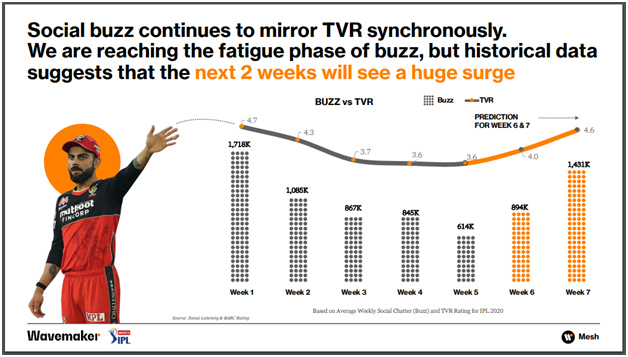
    NEW DELHI:  IPL buzz volume is on track to go two times from the last season, reaching more than 60 million, indicated the Wavemaker Mesh report, released recently. Last year, the buzz volume was 37 million. 

    The report is curated by Wavemaker using real-time data intelligence solution via reading real-time environmental signals on multiple data-points. This season report has data sources from multiple consumer touchpoints across Digital ecosystem ranging from Social Listening, Google Searches, Website visits, BARC, Video analytics in partnership with VIDOOLY, Interaction data points collected from Facebook, Twitter, Instagram, and YouTube.

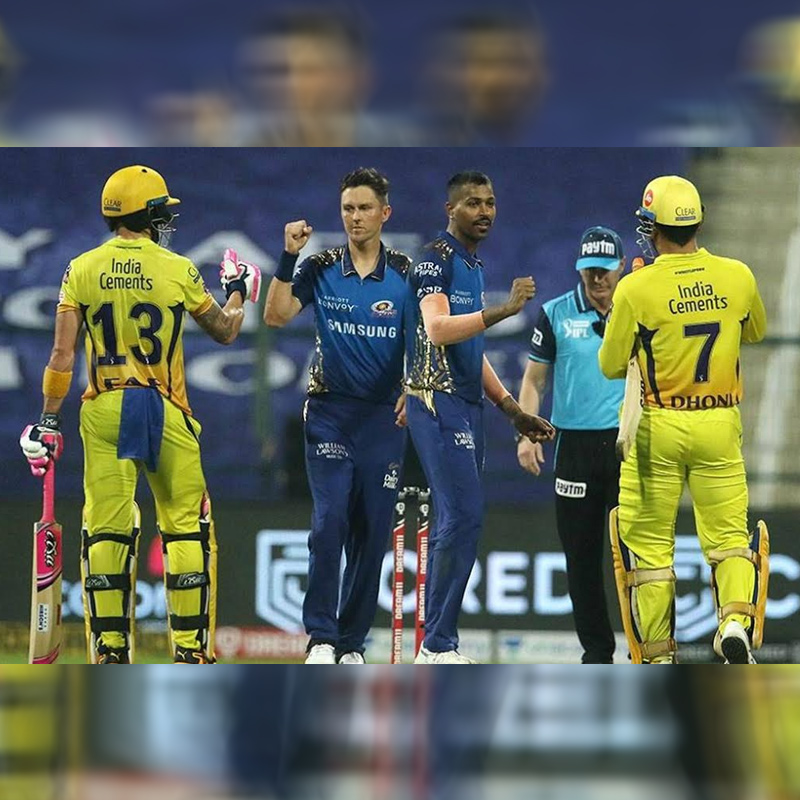
    The report also indicates that the social buzz of the cricketing extravaganza is mirroring TVR and the next two weeks might see a huge surge there, after momentous buzz fatigue. Chennai Super Kings is driving the league’s social media popularity. 

    The report also highlighted the top 10 most loved ads; in pecking order: Dream11, Oppo, Tata Motors, Samsung, Paytm First Games, Gulf Oil, Make My Trip, Lifebuoy, Bingo, and Gamezy. 

    Additionally, cricket fantasy leagues are enjoying never before seen engagement with 90+ million web traffic and 300 million Google searches for the top 5 leagues in September 2020. 


  • How technology has democratised news production

    How technology has democratised news production

    MUMBAI: The newsrooms of today are much evolved than what they were a decade ago. They are spending millions of dollars every year to make systems and processes more efficient so that the news churn out rate is faster and more mobile. Technology is being leveraged in unexpected ways to cater to a dynamic audience.

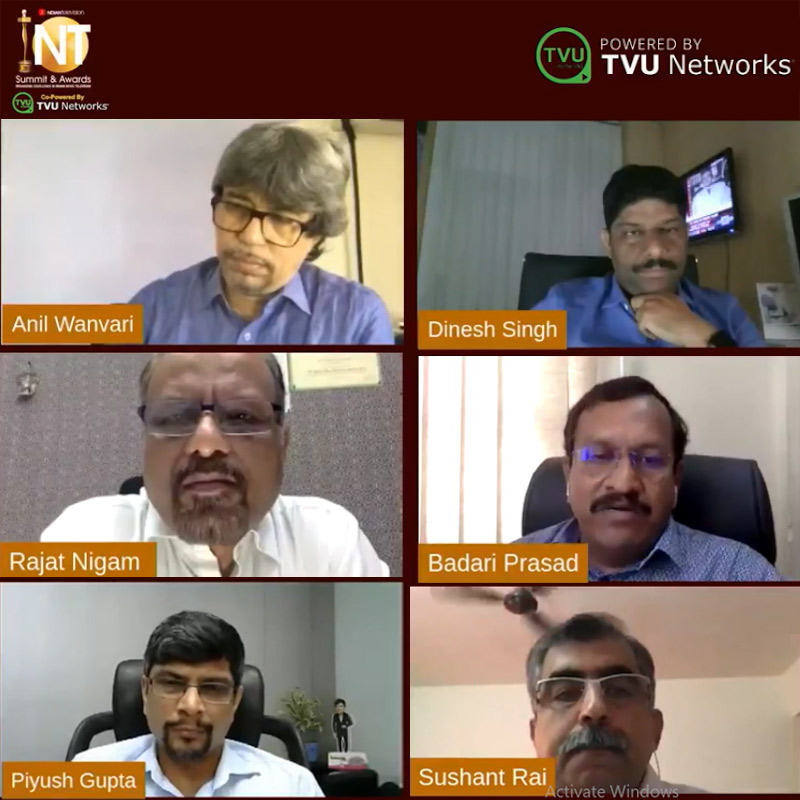
    On day one of the NT Awards 2020 Summit, industry experts came together to examine these unprecedented changes taking place in the news business, and discussed how news organisations are navigating the Covid2019 crisis and strengthening their operations for a better tomorrow.

    The panellists were Network18 group chief technology officer Rajat Nigam; India Today group chief technology officer Piyush Gupta; NDTV Ltd chief technology officer Dinesh Singh; TV9 technical head S Badari Prasad; TVU Networks VP – sales South Asia, Middle East & Africa Sushant Rai. The session was moderated by indiantelevision.com founder, CEO & editor-in-chief Anil Wanvari.

    Badari stated that while challenges exist in the industry, the pandemic has given them an opportunity to learn and experiment with new things, which they never did or thought of before. "We tried remote production, remote graphics, remote editing and luckily many of us have become successful in achieving the output on television,” he said.

    Rai mentioned that the transition to moving beyond legacy devices had started a while ago, and Covid2019 was only the catalyst for bigger changes. “We have been busy through the pandemic addressing these requirements of the clients. For example, we had clients who came back and said we want to reduce costs of going out on the field and using phones. We came up with something called the dual camera capability on the device on the phone rather than carrying two phones to do an interview, two chargers, two batteries, two tripods, etc. We now have the capability to simultaneously record with the front and back cam of a phone. For instance, while conducting an interview, you get the DVE output to get a picture in picture and that output can go with GSM and Wi-Fi to the station. So you reduce your cost and maintain your quality of content while using only a mobile phone on the field.”

    Breakthroughs in technology have led to democratisation of news production, in the sense that reporters and camerapersons no longer need to lug around heavy, expensive equipment, for mobile devices, can serve the same purpose equally well, explained Rai.

    “Look at the iPhone 12, the sensor they have is equivalent to studio cameras. Incidentally, we also do Dolby vision recording in the phone with HDR. You no longer need OB vans to go and cover a story, just take a backpack, connect it with a drone and send it to shoot from a different perspective altogether. have film cameras and video cameras and now you have mobile phones doing it that’s where the news is going,” he said.

    This has resulted in drastic cost reduction: instead of sending a big crew in a van and paying for VSAT connectivity and bandwidth even during non-live hours, the production unit is equipped with mobile phones and directed to the site of coverage. Besides being cost-effective, it has also considerably sped up the production process.

    “Using mobile phones and cloud technology, you get the footage in a minute or two and can immediately push it on social media platforms. This is what's happening increasingly, rather than waiting for the nine o’clock bulletin, which is the legacy way of doing things on the television,” Rai outlined.

    He went on to explain how, in this age of breaking news and viral sensations, latency between acquisition and distribution can make or break a news outlet. Consequently, media groups have stepped up their digital expansion on a war footing.

    India Today group chief technology officer Piyush Gupta said, “Social media is not a competition, it is a distribution channel. Yes, the challenges have gone up because of the opening of this easy medium."

    Rai echoed the view and described social media as an augmentation of a big monetization model. "I think the Aaj Tak digital team has four channels on satellite television, with 17 or 18 digital properties, similarly News18 also has multiple digital properties out there. Everybody is getting their digital properties faster than their regular satellite properties. This is no longer limited to English or Hindi, but extends to various regional languages as well. News has changed now, earlier families used to sit down and watch the 9 o’ clock bulletin to get updates but now you can get the updates at any time you want,” said Rai.

    Gone are the days when editorially controlled content was the domain of TV news, now it’s equally accessible on social media and the digital property of a particular news channel.

    Badari added, “People are not just relying on television for news but also on social media, which is overtaking television. TV has to compete with social media equally and all TV channels are diversifying into online platforms."

    Gupta acknowledged that the competition has increased now, but news organisations are adapting to new technologies through new mediums to generate, produce and distribute content. "The face of news production is changing, news consumption is increasing a lot and social media is one of the very largest mediums for consumers,” he concluded.