Tag: social media

  • Jack Dorsey steps down, Parag Agarwal named as Twitter CEO

    Jack Dorsey steps down, Parag Agarwal named as Twitter CEO

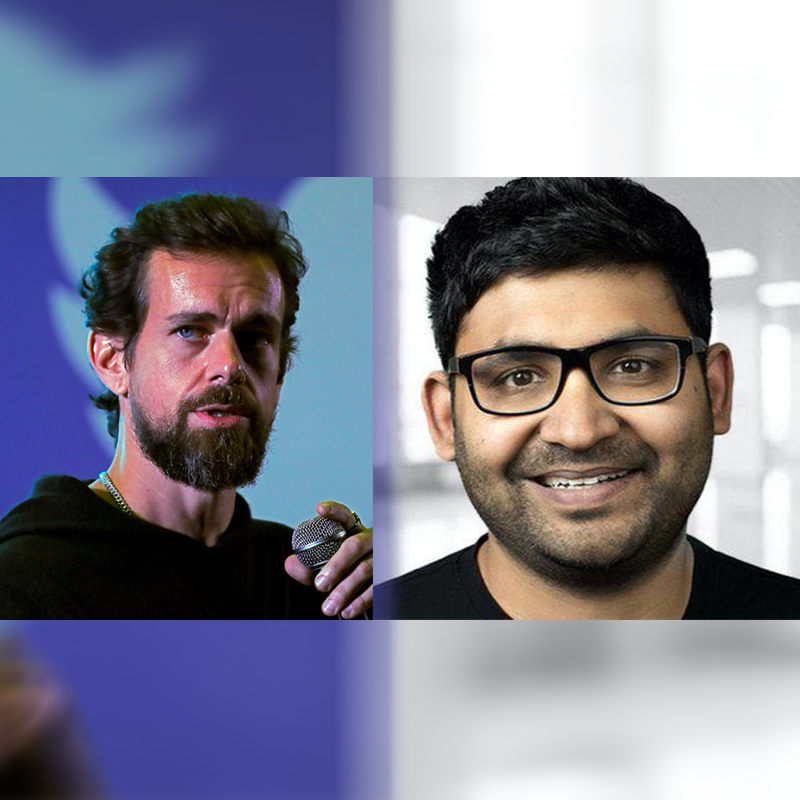
    Mumbai: Microblogging site Twitter has named Parag Agarwal as the new chief executive officer of the company effective immediately. The decision was announced by the outgoing CEO Jack Dorsey who stepped down from his position on Monday.

    Agarwal, an alumnus of IIT-Bombay and a PhD in Computer Science from Stanford University had joined the US company in 2011 as an Ads engineer. He was elevated as the chief technology officer in March 2018. As the CTO, he led technical strategy for the company and oversaw machine learning and AI across its product and infrastructure teams.

    Dorsey would continue to serve on the company’s board until the expiry of his term, which is May, next year. In an email to his employees, which he also shared on Twitter, Dorsey shared that he had worked hard to ensure that the company can break away from its founding and founders. “There’s a lot of talk about the company being founder-led. Ultimately I believe that it’s severely limiting, and a single point of failure,” he wrote, adding that it was the right time for him to leave, and there were three reasons which made him believe so.

    One of the reasons he enlisted was Agarwal, who has been behind every critical decision that helped turn the company around, and deeply understands the company and its needs. “My trust in him as our CEO is bone deep,” he wrote.


    Dorsey along with Biz Stone, Evan Williams and Noah Glass had founded the company in 2006. Dorsey left the company in 2008 to set up his digital payments app, Square, and made a comeback in 2015 and has remained the CEO since.

    “The world is watching us right now, even more than they have before. Lots of people are going to have lots of different views and opinions about today’s news. It is because they care about Twitter and it’s our future, and it’s a signal that the work we do here matters. Lets’ show the world Twitter’s potential,” wrote Agarwal.


  • Koo co-founder Mayank Bidawatka on breaking the language barrier for social media users

    Koo co-founder Mayank Bidawatka on breaking the language barrier for social media users

    Mumbai: Having launched at the outset of the pandemic, home-grown multi-lingual micro-blogging platform, Koo has already garnered over fifteen million users in a short span of twenty months. Pitched as India’s alternative to the US microblogging platform Twitter, the app allows its users to express themselves in their mother tongue, providing its offerings across regional languages.

    “We looked at the existing products and saw there was no platform to openly express oneself in Indian languages,” said co-founder Mayank Bidawatka, an alumnus from the Asian Institute of Management. “That’s when we realised that there’s a very large market out there waiting to be unleashed.”

    The brainchild of founders Mayank Bidawatka and Aprameya Radhakrishna, the home-grown app has added five million users in the last quarter. The Bengaluru-based app currently supports nine Indian languages, namely, Hindi, Kannada, Tamil, Telugu, Assamese, Marathi, Bangla, Gujarati and English, and is in the process of adding three more.

    But, before Koo, the duo had co-founded Vokal- an expert-based Q & A platform in regional languages, an Indian version of Quora. “That time we got a lot of feedback from experts who felt that they were just answering questions that people asked. But, they also wanted to use an open expression platform where they could also share their thoughts freely,” said Bidawatka in an exclusive interview with Indiatelevision.com.

    It is this thought that also forms the core of its first-ever Television campaign Koo Kiya Kya?’ launched during the recently concluded T20 World Cup 2021. Conceptualised by Ogilvy India, the campaign consisted of a series of short-format twenty-second advertisements that delve on the comfort of expressing oneself in one’s native tongue.

    Talking about the objective behind the brand’s latest campaign, Bidawatka said, “To get all the people who are passive creators to become active creators, it was important for them to know what Koo’s about. With this campaign we are trying to drive the thought that ‘if you have anything on your mind, come and say it on Koo’. Hence the line ‘Dil mein jo bhi ho, Koo pe kaho’. Coupled with the slogan ‘Koo kiya kya’ that’s the broad concept behind the campaign.”

    The brand also made a conscious decision not to have a celebrity endorse the campaign. “It needs to cater to the masses. Hence we used common people in the ads to show that anyone could be creating- You don’t need to be a celeb or big guy to create,” said the co-founder.

    The start-up largely depended on online penetration in its initial phase of outreach, but going ahead it plans to make use of both mainstream media as well as digital media in equal measures. “Both of these are important for different reasons. Digital helps us to drive downloads, and mass media aids in creating brand awareness,” he added.

    Building awareness was also top-of-the-mind when the brand decided to use Cricket as a launch-pad for its maiden campaign. “The T20 tournament is one of the most viewed properties of the country, plus if you want mass awareness, it’s one f the best properties to advertise in,” he said.

    When asked about the consumer demographic the platform currently caters to Bidawatka said, “We have people across genders, age-groups, across cities and tier two towns. This product is made for the country at large where people find their topics of interest, their people of interest. Also it’s relatively simple to use.”

    With the growing menace of hate speech on social media becoming a challenge for social media platforms, Bidwatka said, Koo is working on a feature that allows users to self-verify. “This way we’ll know we aren’t dealing with a fake account or someone who’s masked,” he signed off.

  • HistoryTV18’s ‘#RoadTrippinWithRnM’ S6 premieres 20 Nov

    HistoryTV18’s ‘#RoadTrippinWithRnM’ S6 premieres 20 Nov

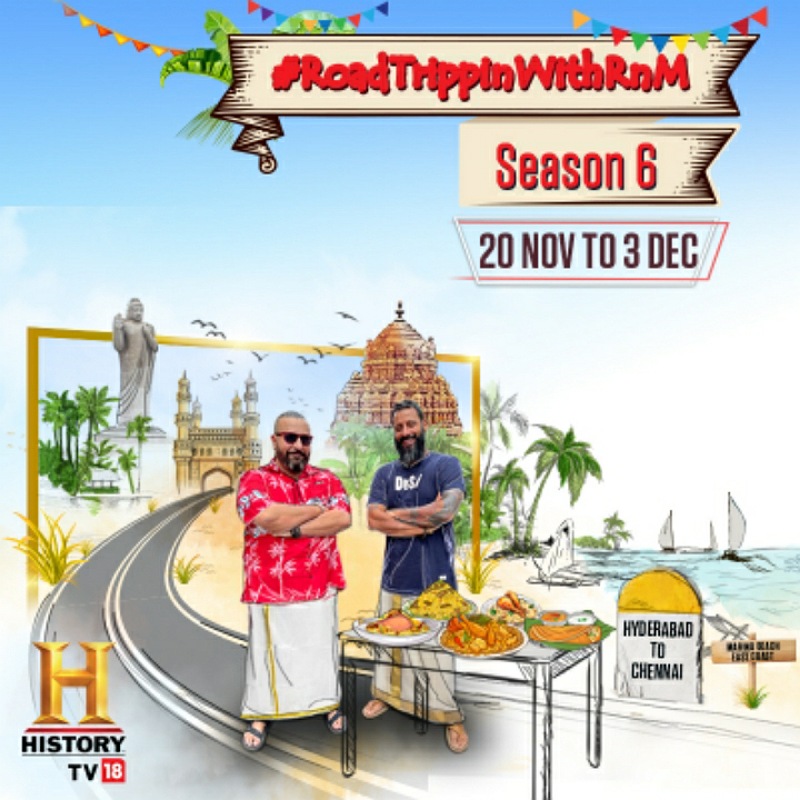
    Mumbai: HistoryTV18 has announced that its digital exclusive travel series “#RoadTrippinWithRnM” will return for a sixth season. The new season will kick off on 20 November and end a fortnight later on 3 December. 

    For the latest season of the show, the hosts will visit offbeat destinations across the three states of Telangana, Andhra Pradesh, and Tamil Nadu. The show will be streaming soon on Facebook, Twitter, Instagram, and YouTube, said the channel in a statement.

    The previous five seasons have been very popular on social media platforms, garnering 147 million video views, 550 million impressions and 5.9 million engagements, it added.

    “The show hosts Rocky and Mayur will visit the ‘City of Nizams’ Hyderabad to the silk hub of Kanchipuram, and from the fast-paced university life of Vellore to the city of the temple megalith – Tirupati. A few of the other hidden gems that viewers can look forward to are Sriharikota – the unassuming town that houses one of the nation’s only two satellite launching stations; Guntur – made famous for its robust and fiery chillies and Machilipatnam – home to the intricate artistry of kalamkari,” said the statement.

    “As the world begins to open its arms to tourism after almost two years and revenge travel is apparent, it’s a joy to watch Rocky & Mayur take to their natural habitat – the open road!,” said A+E Networks | TV18 president – content and communication Arun Thapar.

    “#RoadTrippinWithRnM has been pioneering, in so far as it has brought viewers travel experiences during a drought of fresh content, in near real-time, from location and across multiple social media platforms and screens. The show celebrates the spirit of adventure, optimism and looking ahead, to what new and wonderful things lie around the next bend in the road,” he added.

  • BookMyShow traffic surges to 76% of pre-covid levels with #CinemaIsBack campaign

    BookMyShow traffic surges to 76% of pre-covid levels with #CinemaIsBack campaign

    Mumbai: Entertainment ticket booking portal BookMyShow has witnessed a hockey stick growth in user engagement, traffic and transactions almost nearing pre-covid levels on the platform within just the first ten days of cinemas opening up with a stellar film lineup including Rohit Shetty-helmed “Sooryavanshi,” superstar Rajnikanth’s “Annaatthe,” Marvel’s “Eternals” and Malayali superstar Dulquer Salmaan’s “Kurup.”

    Within the first ten days of films releasing pan-India, daily consumer traffic surged to reach 76 per cent of pre-covid levels on an average while user engagement has been steadily rising the charts already surpassing 66 per cent of pre-covid levels on the ticket booking portal. Consumers from Chennai, Hyderabad, Bengaluru, Mumbai, Delhi, Kolkata and Ahmedabad have been quickest to return back to the films contributing 48 per cent of the traffic recovery, said BookMyShow in a statement.

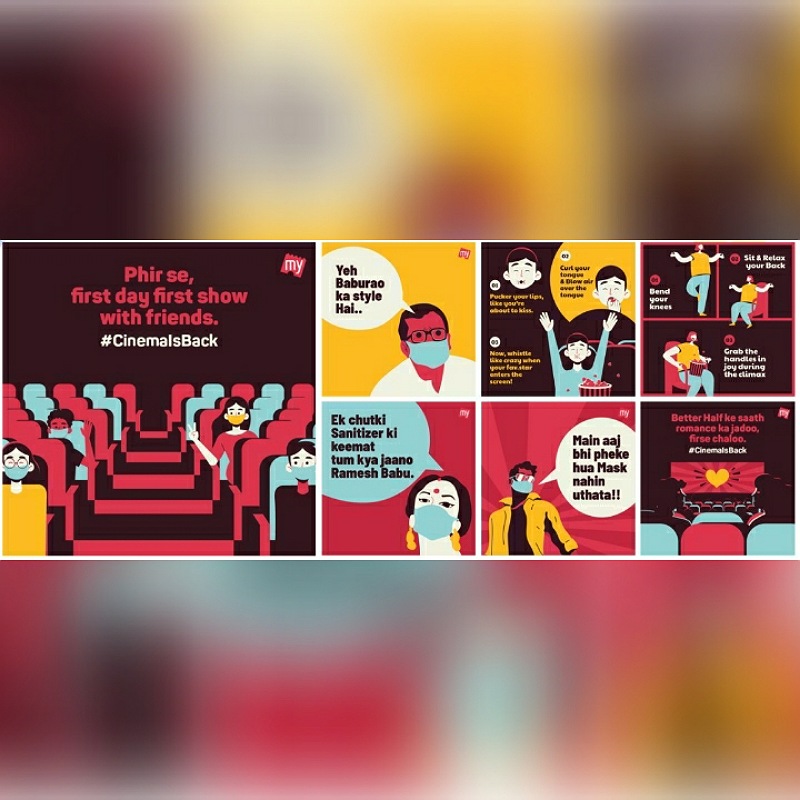
    The boost to consumer sentiment and its recovery has been driven by BookMyShow’s campaign #CinemaIsBack – a six-month campaign to encourage audiences to relive the magic of the big screen experience all over again, with all safety measures intact. Conceptualised and executed by BookMyShow’s in-house team, the campaign aims to target entertainment-lovers across age groups, geographic restrictions notwithstanding, and social setups through various social media platforms.

    “The quirky and nostalgic campaign is a visual, socially engaging and meme-based series executed on digital and social media and will be amplified across BookMyShow’s loyal customer base and potential new audiences both on the platform’s mobile app and website through mailers, push notifications along with social media platforms as also digital media,” said the statement.

    Additionally, as a part of the larger #CinemaIsBack campaign, BookMyShow will onboard up to 300 brand advocates to highlight the safety measures being undertaken at the cinemas and the experience of going back to theatres.

    “With cinemas opening in India coupled with an exciting line up of big-budget movies that have started to hit the screens from Diwali and for the next six months, we are excited to deliver and communicate an authentic, nostalgic and irreplaceable experience through the #CinemaIsBack campaign,” stated BookMyShow head of marketing Vamsi Murthy. “The success of the campaign within the first 10 days itself has been phenomenal, setting the wheels of the business in motion with a tremendous surge in traffic, user engagement, and ticket sales.”

    “Over the next few months, we look forward to welcoming film enthusiasts and cinephiles #BackToTheatres for a safe entertainment experience through this festive season and beyond. We are confident that the stage has been set, for a long-awaited revival of the cinema business in India with all the standard safety protocols in place,” he further said.

    The surge in traffic has also provided a fillip to the business with transactions for “Sooryavanshi,” “Annaatthe,” “Eternals,” and “Kurup” skyrocketing towards a complete recovery. The much-awaited “Sooryavanshi” has been making all the right moves as it crossed 2.6 million tickets sold within the first week while “Annaatthe” (Tamil) crossed 1.3 million tickets sold on BookMyShow becoming the first film to hit the million mark on the platform after the second unlock in 2021. Dulquer Salmaan’s “Kurup” clocked a stellar 800,000 plus tickets sold within the first weekend itself.

    BookMyShow contributed over 40 per cent of Sooryavanshi’s box office collections in India for the opening weekend with the film hitting a peak of 21 tickets sold per second on 6 November becoming the highest ever peak for a Hindi film on the platform. BookMyShow also clocked a stellar 52 per cent contribution for Marvel Cinematic Universe’s Eternals’ box office collections in India with the film crossing 700,000 tickets sold across languages and versions in 3D, IMAX and 4DX across cities in India on BookMyShow, it said in a statement.

  • India tops global Instagram installs in October: Report

    India tops global Instagram installs in October: Report

    Mumbai: India has topped the charts in recording the largest number of installs of social media application – Instagram, according to the latest report by Sensor Tower. As many as 39 per cent of the total app downloads were from India, followed by Brazil at six per cent.

    The social media app was the second most downloaded non-gaming app worldwide, while the short video platform Tik Tok remained at the top with more than 57 million installs for October 2021.

    The countries with the largest number of installs were from Douyin in China at 17 per cent, followed by the US at 11 per cent, reports Sensor Tower. The app was, however, banned in India by the government, along with 58 other mobile applications which were developed by Chinese firms on account of national security.

    Apart from Tik Tok and Instagram, other apps including Facebook, WhatsApp, and Telegram rounded out the top five most installed non-gaming apps worldwide for the month as per the data.

  • #KooKiyaKya asks Koo in its first-ever TVC

    #KooKiyaKya asks Koo in its first-ever TVC

    Mumbai: Homegrown multi-language micro-blogging platform Koo has launched its first-ever television ad campaign during the ongoing T20 World Cup.

    The social media app has partnered with Ogilvy India and developed a creative communication platform – ‘Koo Kiya Kya’ to urge people to express themselves in their mother tongue. The campaign is reflective of users’ desire to leverage social media for self-expression and to connect and engage with their communities in a language of their choice. 

    Launched at the start of the T20 World Cup 2021, the campaign consists of a series of short-format 20-second advertisements that grab viewer attention through their quirks, wit, and humour laced around the tagline #KooKiyaKya. 

    The visuals capture people going about their daily lives, indulging in light-hearted banter, and talking straight from their heart – with catchy idioms that can be Kooed to express themselves online. The ads are woven around a unifying message – ‘Ab Dil Mein Jo Bhi Ho, Koo Pe Kaho.’ The ads are live across leading sports channels and will play during the T20 World Cup matches. 

    “The campaign positions Koo as an inclusive platform, as a platform for self-expression which gives voice to those who have never experienced language-based social media before,” Koo App co-founder Apremeya Radhakrishna said. “With the T20 World Cup 2021 happening right now, the timing is perfect to leverage television as a key channel to put across our message, to help people connect with each other meaningfully.”

    Koo co-founder Mayank Bidawatka added, “A large part of India hasn’t been given an online public platform to express these thoughts in people’s preferred language. That’s what this campaign is about – an invitation to every Indian to start sharing their thoughts in their mother tongue and connect with millions of others on Koo in a meaningful way.”

     Elaborating on the campaign, Ogilvy India chief creative officer Sukesh Nayak said, “Our idea came from life. When talking to our friends or family in our own language we find the comfort to express ourselves the best. Our intent is to ensure whoever sees these films, should instantly think of many such incidents from their own life. And feel comfortable to express the same in their own language with a wider set of audience on Koo.” 

  • Guest Column: ‘Cancel culture’ or ‘mob culture’ – a thin line of difference

    Guest Column: ‘Cancel culture’ or ‘mob culture’ – a thin line of difference

    Mumbai:  What is cancel culture? “Cancel culture is a way of expressing dissent or the practice of withdrawing support for (cancelling) any offensive or objectionable content or action of that person.”

    Cancel culture could actually champion pro-social movements like the fight against gender discrimination or racism.

    Yes, expressing disapproval and freedom of speech is our right, however, this particular culture in India has taken a malicious turn fueled by the political climate breeding intolerance.

    Social media’s penetrating gaze seems like a modern form of mob rule that is bound to have major implications for brands and marketers. The internet, (in particular, social media) provides a platform to share views and offers an outlet for groups excluded from traditional institutions – such as politics, education, economy, and media – to have a say. Every citizen with access to the internet can now write an opinion piece, share their story or behave like a self-appointed member of a jury who rips apart anything that is slightly pointed or uncomfortable. This is making creatives and brands cautious about the choices they make. In fact, anything from the story to the people we use as cast, the names in the story, background setups, and even clothes can cause unrest. But the fact is if someone has to find faults, they will. You can never please everyone.

    We must also remember that internet trolling is time-bound. It will fade almost as soon as the hype it creates. Ideally, brands should just wait until the dust settles. What would be even better is if a brand decides to stick to its ground because it makes a better impact and is looked at as an authentic voice as compared to a brand defending its case or actually listening to faceless trolls and pulling down a communication. Because when brands retract, then it feels as if they didn’t have conviction in what they have put out there. It also makes these trollers and haters stronger and brands weaker. Why? Well HATE is a more powerful emotion than LOVE. And that’s why for Love to win, it needs to work harder. Hate comes easy.

    And brands need to understand that in today’s public viewing people feel compelled to post a response to anything and everything they see. It could be a show, an interview, or an ad.

    Ever since the physical world went into lockdown, people have been spending a serious amount of time online. And this has increased the cultural impact of the internet on society and is bound to have major implications not just for brands but content in general. A single post or a tweet has the power to bring change- from forcing celebs to apologise, to bringing down the market, or holding service brands accountable, and even stirring in a big political debate. Put another way, ‘cancel culture’ represents the voice of the voiceless. But when cancel culture is used negatively, it prevents open debate which is the basis of democracy. After all, different perspectives create social progress.  In an age where you comment first and think later, agencies would do better only when they think through every possible scenario before hitting the share button.

    But to specifically talk about, what happened with Fabindia- it is a clear case of being brainwashed to believe that a language is being marginalised., which it isn’t.  I’m sorry but this is advertising. What looks good is what sells. That’s why we use good-looking people or design things in a particular manner. Similarly, writers choose their styles. Some like hard-hitting, some poetic, and some factual. Doesn’t make any one of them right or wrong.  And popular culture influences advertising, taglines. Why did Hinglish happen? Yahi hai right choice baby. Or No Ullu-Banaoing. Or Ye Dil Mange More…..What are these? Memorable, engaging and effective communication. How come we never said it was the denigration of English or Hindi? We would love to believe that this has nothing to do with the basic grain of our society but it does. We are gradually becoming haters. We all know that Hindi and Urdu have coexisted beautifully over the years. Why is it that we have a problem now? Ever given that a thought? What has changed? Who has changed? And why have we changed? We know languages evolve because of the ease of use, the sonic nature of words, or popular culture influencing the use of a mix of languages.

    We must also remember that the expression – ‘Jashn-e-Riwaaz’ is meaningless. The word is ‘Riwaj’ and not ‘Riwaz’. Replacing the ‘j’ with the ‘z’ sound because someone likes the sonic feel of it is actually not cool but wrong.  Riwaj means ‘ritual’ or ‘repetitive action’ which technically all festivals are. But the point is, if you as a brand believe in communication, stick to it, grow a spine, and don’t get pushed by haters and trollers to change it. Consumer activism is on the rise and brands cannot hide from it. So accept it, move on, and if need be have a crisis management process to fix it. Simple.

    (Anupama Ramaswamy is the managing partner and national creative director, Dentsu Impact. The views expressed in the column are personal and Indiantelevision.com may not subscribe to them.)

  • Facebook faces one of its longest global outages

    Facebook faces one of its longest global outages

    New Delhi: Social media giant Facebook along with its subsidiary platforms, Instagram and WhatsApp experienced one of its longest global outages on Monday night after the services remained non-functional at least for over five hours.

    The exact reason for the outage has not been established as yet. 

    Facebook took to Twitter to acknowledge the problem after several users complained of issues in accessing the social media site. “We are aware that some people are having trouble accessing our apps and products. We are working to get things back to normal as quickly as possible, and we apologise for any inconvenience,” a Facebook spokesperson tweeted.


    India has one of the highest numbers of users of Facebook as well as its other platforms. As per government data shared earlier this year, India has 53 crore WhatsApp users, 41 crore Facebook users and 21 crore Instagram users.


    Facebook chief technology officer, Mike Schroepfer said the social media company was experiencing “networking issues” and teams were working as fast as possible to debug and restore as fast as possible.

    As the Facebook-owned sites remained down, users took to alternative sites, including Twitter, Telegram, and Signal to connect with each other. While there have been similar outages in the past, the issues were resolved within a short time. However, on Monday, the sites remained down for as long as five hours.

    WhatsApp services resumed early on Monday morning, while Facebook and Instagram users continued to face issues.


  • InterMiles announces festive reward programme

    InterMiles announces festive reward programme

    Mumbai: Loyalty and rewards programme InterMiles on Friday announced its festive season sale called ‘InterMiles 300 Million Miles Festival.’ The festival will run for a total of three months including peak festive periods of Diwali, Christmas, and New Years, giving members more earnings and savings opportunities, it said.

    The campaign will be amplified across YouTube, Facebook, and Instagram to educate existing and new members about the different ways in which they can engage with the programme and secure maximum value for their spends, said the brand in a statement.

    “With the festive season around the corner and vaccination drives picking up pace across the country, consumer confidence is higher and discretionary spending is on the rise,” said InterMiles SVP of marketing and customer engagement Ashish Dhruva. “Through our 300 mn Miles Festival we want to reward members for these spends by ensuring that they not only spend smarter and save money but also end up creating a valuable miles fund for their future spends.”

    The festive campaign includes five unique transactions of minimum Rs 2,000 each that can earn InterMiles members assured 15,000 miles. Members can engage with over 200 partners via the InterMiles Super App or the website across programme categories of flights, hotels, shop, dine, and vouchers, said the statement.

    Members will also secure an assured 15 per cent discount on spends and a free upgrade to ‘Silver Tier’ which will give them a complimentary Zomato Pro or Amazon Prime membership plus free gift vouchers of up to Rs 500, it added.

    “Our focus over the last few years has been on consolidating the InterMiles programme to offer our members a broader, more diverse category and partner portfolio to engage with. We have made Miles earnings attainable by broad basing opportunities to include daily lifestyle utilities and have balanced this by introducing multiple, quick micro and macro redemption options for our members to make the most of their miles,” Dhruva further said.