Tag: Snapdeal

  • ASCI upholds complaints against BBC, ET Now, Snapdeal, Ola, Airtel and Uber

    ASCI upholds complaints against BBC, ET Now, Snapdeal, Ola, Airtel and Uber

    MUMBAI: In December 2015, The Advertising Standards Council of India’s (ASCI) Consumer Complaints Council (CCC) upheld complaints against 42 out of 79 advertisements. Out of the  advertisements against which complaints were upheld, eight belonged to the Healthcare category, nine to the Education category, followed by seven in the E-commerce category, three in Telecommunications and broadband category and fifteen advertisements from other categories.

    Here below are a few of the ads against which complaints were upheld by the council:

    In the case of television the following complaints were upheld:
    British Broadcasting Corporation (BBC World News): The claim in the advertisement, ‘BARC says we are India’s No.1 English news brand’, violates the Guidelines of BARC under Measurement & Comparison and also contravenes the ASCI Code.

    Times Broadcasting Ltd (ET Now): The advertisement claims, ‘No.1 Now an Undisputed leader’ and ‘No 1 Week after Week’. ET Now has used weekly data to claim leadership position. This is in violation of BARC India Ratings – Principles of Fair and Permissible Usage, which state that ‘The period of comparison must cover at least four consecutive weeks of data’. Thus, the advertisement promo also contravened Chapter I.3 of the ASCI Code.

    In the ecommerce category, as per the council, the line ‘kahan se kharchega paise, baniye ka jo poot hai, aadhe khakhe diya dhaba jisme dry fruits hai’ used in an OLX India Pvt Ltd (OLX India) advertisement was deriding a certain caste of people (baniya). In another OLX India ad, the visual of ‘a police inspector riding a bike without a helmet’ as shown in its ‘Sell Scooter Buy bike’ advertisement promotes an unsafe practice.  On the other hand Snapdeal’s claim of ‘free delivery’ advertised in its commercials was not deemed sustainable by ASCI.

    Another ecommerce brand that failed to stay true to its advertisement claim was Uber India. The claim in the advertisement, ‘Switch to Uber @ Rs.9/-per km period’, was not substantiated and was also misleading by omission of any disclaimer that other additional charges are also being charged per minute/per trip.

    Koovs advertisement which was also its first brand campaign displaying global fashion titled ‘Step Into Koovs’, also came under the radar. The scenes in the advertisement – ‘a girl jumping from a top floor of a building to a shirt which is hanging in the air, a girl jumping from a balcony and falling down a few floors down across the staircase, a boy jumping down from the balcony straight into the outfit’, without justifiable reasons show and encourage dangerous practices, manifest a disregard for safety and encourage negligence. Regardless of the disclaimer, the advertisement contravened the ASCI Codes due to the objected visuals being shown, shared ASCI.

    In the telecommunications category, three complaints against Bharti Airtel were upheld.

    The advertisement by Airtel showcasing a girl urging users to internet on their phone in the night because they will get 50 per cent cash back the next day, regardless of the disclaimer, the word ‘Cash Back’ in the claim ‘50 per cent cash back on night interne’” was upheld as incorrect and misleading.

    Similarly, the Airtel advertisement that claimed ‘unlimited song downloads for free on Airtel’, is misleading by ambiguity as the data plan is required to be purchased and the ‘download activity’ for the unlimited music is also not free as there is an applicable data charge.

    Another ad was the one from Airtel that claimed ‘50 per cent data offer’ during night time from 12am to 6am. The language of the super in the advertisement was not in Hindi and the hold duration of the disclaimer in the TVC was less than 4 seconds. Thus, the TVC contravened the ASCI Guidelines on Supers.

    To see the full list of complaints upheld by ASCI in December 2015 click here.

  • E-Commerce giants dish out exclusive offers this Leap Year

    E-Commerce giants dish out exclusive offers this Leap Year

    MUMBAI: Even as e-commerce giants lure customers via various discount offers throughout the year, this leap year the companies have found yet another reason to attract more shoppers. 

    With an extra day added to this year in 29 February, e-commerce sites are poised to take advantage in order to boost sales by offering high discount rates. Websites like Askmebazaar.com, Amazon.in, Snapdeal.com, AmericanSwan.com, Zimmber.comand Paytm.com are offering special discounts on 29 February with an aim to pump up sales. 

    Askmebazaar.com, an online marketplace for shoppers has come up with exclusive leap year deals by offering up to 70 per cent off on every item. On the other hand, Snapdeal.com is offering free data and bank discounts on Infocus smartphones.

    Buyers will be able to avail offers of up to 65 per cent off plus 100 per cent cashback on every 29th order on AmericanSwan.com. The leap deal is also available on sites like Jabong where clothing, footwear and accessories have upto 80 per cent off, 20 per cent off and one per cent off respectively. Meanwhile, Shopclues.com is providing flat 77 per cent off on daily essential combo packs. 

    Grand appliances sale by Amazon.in is offering upto 50 per cent off on top appliances. It is also offering 25 per cent off on Lenovo, Asus, dell laptops and two in ones. Not the one to be left behind, Paytm.com is also offering mobile recharge offers where customers can avail Rs 65 cashback on every recharge of Rs 500.

    Moskart.com and Cubishop.com, the marketplace for consumer electronics industry is offering exclusive offers for the year’s extra day. Moskart.com is offering half price on mobile and mobile accessories, whereas Cubishop.com will be selling mobile charger for Samsung and Android mobiles for just Rs 150. 

    Zimmber.com, the only site that provides handyman services like electrical, AC, plumbing et al has come up with mega offers for 29 February by offering flat Rs 444 off on salon spa, car spa and pest control. It is also offering Rs 333 off on sofa spa, Rs 222 off on air conditioner services and Rs 555 off on home spa. 

    The online eyewear portal Lenskart.com is also eyeing more customers by giving customers 29 per cent off plus 29 per cent cashback on every purchase.

  • E-Commerce giants dish out exclusive offers this Leap Year

    E-Commerce giants dish out exclusive offers this Leap Year

    MUMBAI: Even as e-commerce giants lure customers via various discount offers throughout the year, this leap year the companies have found yet another reason to attract more shoppers. 

    With an extra day added to this year in 29 February, e-commerce sites are poised to take advantage in order to boost sales by offering high discount rates. Websites like Askmebazaar.com, Amazon.in, Snapdeal.com, AmericanSwan.com, Zimmber.comand Paytm.com are offering special discounts on 29 February with an aim to pump up sales. 

    Askmebazaar.com, an online marketplace for shoppers has come up with exclusive leap year deals by offering up to 70 per cent off on every item. On the other hand, Snapdeal.com is offering free data and bank discounts on Infocus smartphones.

    Buyers will be able to avail offers of up to 65 per cent off plus 100 per cent cashback on every 29th order on AmericanSwan.com. The leap deal is also available on sites like Jabong where clothing, footwear and accessories have upto 80 per cent off, 20 per cent off and one per cent off respectively. Meanwhile, Shopclues.com is providing flat 77 per cent off on daily essential combo packs. 

    Grand appliances sale by Amazon.in is offering upto 50 per cent off on top appliances. It is also offering 25 per cent off on Lenovo, Asus, dell laptops and two in ones. Not the one to be left behind, Paytm.com is also offering mobile recharge offers where customers can avail Rs 65 cashback on every recharge of Rs 500.

    Moskart.com and Cubishop.com, the marketplace for consumer electronics industry is offering exclusive offers for the year’s extra day. Moskart.com is offering half price on mobile and mobile accessories, whereas Cubishop.com will be selling mobile charger for Samsung and Android mobiles for just Rs 150. 

    Zimmber.com, the only site that provides handyman services like electrical, AC, plumbing et al has come up with mega offers for 29 February by offering flat Rs 444 off on salon spa, car spa and pest control. It is also offering Rs 333 off on sofa spa, Rs 222 off on air conditioner services and Rs 555 off on home spa. 

    The online eyewear portal Lenskart.com is also eyeing more customers by giving customers 29 per cent off plus 29 per cent cashback on every purchase.

  • Snapdeal SVP Srinivas Murthy quits; to launch entrepreneurial venture

    Snapdeal SVP Srinivas Murthy quits; to launch entrepreneurial venture

    MUMBAI: Snapdeal marketing  senior vice president Srinivas Murthy has moved on from his role in the company to embark on an entrepreneurial journey.


    “The entrepreneurial drive has rubbed off onto me. I’m now moving on to become an entrepreneur myself,” said Murthy.


    Not divulging the details of his new venture, Murthy added that he will announce it in the next few months.


    “Srini has decided to begin an exciting new journey as an entrepreneur, and while he will surely be missed, I am delighted to see that he is carrying forward the Snapdeal spirit of entrepreneurship,” said Snapdeal CEO and co-founder Kunal Bahl.


    This is the second major exit at Snapdeal in recent times after the company’s head of strategy Ranjan Kant quit to join Jabong as CMO.

  • FCB Ulka CCO Satbir Singh puts down papers

    FCB Ulka CCO Satbir Singh puts down papers

    MUMBAI: FCB Ulka chief creative officer Satbir Singh has put down his papers and decided to move on.


    Singh has led some memorable work across brands during his short stint with the company. He joined the agency only earlier this year.


    As a parting message Singh said, “It has been a short but enjoyable stint with FCB Ulka. In this brief period I have been fortunate to have worked with some excellent people who created much talked-about campaigns like the ones for Snapdeal, Tata Salt, Zee. From clients to brands to people, 2015 has been a good year.”

  • #SnapdealForIndia faces #AppWapsi after recent Aamir Khan controversy

    #SnapdealForIndia faces #AppWapsi after recent Aamir Khan controversy

    ‘A celebrity endorsement can make or break a brand.’

    Quoted from Countering Brandjacking in the Digital Age by Christopher Hofman and Simeon Keates, the statement strikes a key note with the eCommerce giant Snapdeal’s current situation with its brand ambassador, actor Aamir Khan.

    In a recent interview at the Ramnath Goenka Awards 2015, the actor had spoken about “growing disquiet” in India and had also remarked that his wife had once asked him whether they should move out of the country! Though Khan has come out with an official statement defending his stand on the matter, the damage has already been done.

    An excerpt from Khan’s official statement reads: “Neither I, nor my wife Kiran, have any intention of leaving the country. We never did, and nor would we like to in the future. Anyone implying the opposite has either not seen my interview or is deliberately trying to distort what I have said. India is my country, I love it, I feel fortunate for being born here, and this is where I am staying. To all those people who are calling me anti-national, I would like to say that I am proud to be Indian, and I do not need anyone’s permission nor endorsement for that.”

    The angry netizens however took to Twitter, Facebook and other social media platforms to  protest against actor Aamir Khan’s controversial comment on India’s growing intolerance. Snapdeal, a brand that the actor endorses was also dragged into this by the netizens and the brand has since been facing the brunt of their anger. 

    Lately, Snapdeal has come out with an official statement dissociating the brand’s association of any kind with Khan’s comments.

    “Snapdeal is neither connected nor plays a role in comments made by Aamir Khan in his personal capacity. Snapdeal is a proud Indian company built by passionate young Indians focused on building an inclusive digital India. Everyday we are positively impacting thousands of small businesses and millions of consumers in India. We will continue towards our mission of creating one million successful online entrepreneurs in India,” said a spokesperson from Snapdeal.

    With an all encompassing growth of social media, the common man’s access to celebrities and brands have enhanced, and so did the threats to corporations and brands in both number and variety. Celebrity endorsements doesn’t escape the purview of this double edged sword that the digital platform brings along with its many benefits. Within hours of #AppWapsi going viral on Twitter and Facebook, Snapdeal saw over 70,000 one star ratings being hurled at their app on Google’s Play Store.

    Some even took to the review space to write negative messages to the online shopping platform, explaining their reasons to pull out of the brand’s services.

    Whether the brand will take the threats seriously  and snap the deal with Aamir Khan is a question that remains to be answered.

    A veteran media planner told indiantelevision.com under conditions of anonymity, that it is unlikely that Snapdeal will walk that route.  Moreover, “a major part of the contract tenure has run its course and there is no discussion on reevaluating the endorsement contract or talks of ceasing it,” he says, adding, “Diwali is the main season when it comes to sales, and even for marketing and promotions in this quarter. With Diwali over, we don’t see major changes in Snapdeal’s endorsement contract with Aamir Khan

    Question of the hour is-, has the #AppWapsi campaign brought down Snapdeal’s brand value by any significant score?

    “Snapdeal is a major brand with a huge customer base. I don’t think this campaign will affect the brand that easily. This is a passing phase. Before it affects Snapdeal, it will effect Aamir Khan at the box office, which I feel is less  likely a chance,” points out an expert under promise of anonymity.

    Seconding that opinion is another expert from the industry. “It may influence the brand’s image only temporarily but will fade away as fickle minded mass will move on to another controversy and forget Snapdeal. So yes, there will definitely be an impact on Snapdeal, but I don’t see it last longer. At the end of the day consumers’ relation with Snapdeal is the product and this controversy won’t come in the way of the sales. We aren’t even sure if those angry comments have come from consumers who make a difference in the brand’s sales at all”

    While most market analyst and planners feel that the situation doesn’t call for a knee jerk reaction, Snapdeal’s official statement dissociating themselves from Aamir Khan’s comment shows that the brand isn’t completely unaffected.

    “If the ratings affects the performance of the app, then it will definitely be detrimental to the brand. It may also affect the brand value. The brand needs to communicate their perspective to the consumers. “shares a veteran media analyst and planner.

    Meanwhile, counter argument in favour of Snapdeal has also gained ground over the net, with some supporters belonging to Khan’s fan base. The uncanny of all was the tweet from Snapdeal’s rival, Flipkart’s Sachin Bhansal, who earlier tweeted defending Snapdeal.

    Sachin Bansal @_sachinbansal This is a flawed logic. Brands don’t buy into brand ambassadors personal opinions. @snapdeal shouldn’t face this SnapdealForIndia is the campaign used to counter #AppWapsi, where happy Snapdeal consumers are taking to social media to share how the brand has helped the country in the past. Snapdeal’s official handle on Twitter immediately jumped to retweet posts that spoke well of the brand.

    Infact, the page is running a contest asking consumers to give ‘honest reviews and rankings’ of their app on Google Play to win prizes.

    Whether these efforts will save Snapdeal from being dragged+AKA-further+AKA-into its brand ambassador’s mess, only time will tell.

  • Disney throws birthday party for Mickey Mouse; Snapdeal, Future Group join in

    Disney throws birthday party for Mickey Mouse; Snapdeal, Future Group join in

    MUMBAI: The countdown to Mickey Mouse’s birthday on November 18 was laden with daily celebrations across Disney’s network. The 18-days long extravaganza that started on 1 November culminate on Mickey’s Birthday saw a series of new creative initiatives from the network’s end.

    “This month is special to all our consumers, be it young or old, as everyone has experienced Mickey Mouse’s magic at some point in their lives,” says Walt Disney  India, Content and Communication, VP,  Vijay Subramaniam. “Mickey Mouse is Disney’s biggest revenue making intellectual property,” he adds.

    To further strengthen the Mickey Mouse franchise in the country, the network has rolled out series of varied and engaging content throughout the 18 days, while at the same time making optimum use of its network, both digitally and electronically, to promote and propagate the event.

    Not only did the network run content extensively throughout its Disney branded channels, it also allowed several other broadcasters to use the content for their own Disney special programs, albeit giving content credit to Disney’s in house team.

    “We made some of this Mickey Mouse birthday specials available to other news channels and other content partners on a limited marketing and sharing basis ,” Subramaniam explains, adding that few of the channels have already aired this specials.

    Part of the celebrations were the 90 sec long videos that saw several well-known Bollywood celebrities wishing Mickey Mouse ‘Happy Birthday’ in their own creative way. The who’s who of Bollywood from Shahid Kapoor, Alia Bhatt, Abhishek Bachchan, Akshay Kumar, Farah Khan are few of the celebs who feature in the video titled ‘Stars wish the Superstar a Happy Birthday.

    “We compiled the videos throughout the year from the various shows Mickey had with the celebrities. It was great to see them come together for Mickey. With them on board we were able to reach a wider section of viewers,” Subramaniam points out.

    Further elaborating on the fresh content that the channel had devised for the occasion, Subramaniam said, “In the last couple of years we have witnessed a huge craze for the Mickey shorts we rolled out globally. So for Mickey’s birthday celebration we decided we’d premiere one new short each day,” shares Subramaniam.

    Continuing with its concept of ‘short and sweet,’ the network also released a number of video listicles that aired throughout the network at regular intervals during these last 18 days. “We created fun content around everything that Mickey stands for in a listicle format,” Subramaniam states, citing ‘18 really funny Mickey moments’ as an example.

    Mickey’s birthday celebration wasn’t limited to content alone. Brands didn’t miss the chance in making optimum use of their Mickey Mouse merchandise on the occasion.

    On 18 November, Future Group’s private label  Tasty Treat kick started its  Mickey Mouse birthday celebration across 500 Future Group stores including at Big Bazaar, Food Bazaar, Nilgiris etc. by maintaining a birthday party ambiance with danglers and confetti, photo ops with Mickey cut outs, and even releasing a special Mickey Mouse birthday TVC. The campaign is to continue till 30 November.

    Snapdeal too has added its share to the merchandise promotion by giving discounts on Mickey Mouse products. The online major was also running a Mickey birthday contest on their website and gratifying 20 winners with Disney hampers.

    While Mickey Mouse’s presence in the country is strong, one may argue that the anticipation for his birthday doesn’t compare to the fervour the character enjoys internationally. Subramaniam however finds it unfair to compare the two markets.

    “The fact is that US is the birthplace of Mickey Mouse, with over 80 years of legacy on its side, whereas in India, Disney as a company is only 11 years old. If you think of the numbers, it is amazing how well the company has grown here. The kind of traction that we have enjoyed for last couple of years is beyond impressive. What’s evident is that Mickey as a character is universally loved, and more so when you add a local touch to him, and that’s exactly what we have done this year,” Subramaniam.

    The local flavour that Subramaniam speaks of is a ‘birthday anthem’ compiled by the network that which went on air on 18 November. What makes it even more special is that it has inputs by viewers in from across the country in 18 different regional languages.

    Amongst all their endeavours to connect the local audience with Mickey, the most effective is perhaps the Magic Mix that sees the network do a special rendering of popular Bollywood numbers with animation from their popular series.

    ‘Happy Birthday Mickey Magic Mix’ has taken the popular song Happy Birthday from the Disney produced dance extravaganza ABCD 2 and turned into and entertaining mash up for everyone to enjoy.

    All the content for Mickey Mouse birthday specials, has been heavily promoted and aired extensively across the networks channels. Apart from that, the content is also available on all their digital platforms including their official website, YouTube channel (over 1.3 million subscribers), twitter and Facebook (over 3 lakh likes) pages.

    Adding the cherry to its social media cake is the new application on Facebook that takes digital interaction to the next level.

    “We have done something special on Facebook. Mickey lovers can add Mickey ears on their Facebook page with just a click of a button, by going to the ‘Happy Birthday Mickey’ app that you can access through our Facebook’ page,” Subramaniam adds in parting.

  • Amazon beats others in mega pre-festive online sales: Ugam

    Amazon beats others in mega pre-festive online sales: Ugam

    MUMBAI: In an earlier feature done by Indiantelevision.com, we saw creative and ad gurus giving their opinion on the fiercely competitive campaigns that e-commerce brands launched, with Amazon, Flipkart and Snapdeal leading the pack.

    Be it their display ad wars, or their strategically placed jacket advertisements on newspapers, their digs at each other not only grabbed the consumers’ eyeballs, but have also created a stir within the ecosystem.

    The season was ushered in by two of the top e-commerce players conducting three mega sales in two weeks. Flipkart kick-started the celebrations with its second edition of the Big Billion Days sale, followed by Amazon’s Great Indian Festive sale, and most recently Amazon’s Great Indian Diwali Sale from 26 to 28 October.

    Now that we have Diwali is knocking at our doorsteps, an analysis by global analytics manager Ugam has put a perspective on the entire scenario.

    Ugam recorded Amazon’s pricing and assortment for likely bestsellers in three key product categories – Laptops, Home Appliances and Books – and compared it to Flipkart and Snapdeal to learn which retailer actually had the best offers for the likely best sellers.

    As per their survey, Amazon.in led the sale period, by offering lowers prices in two out of the three categories,  namely home appliances and books.

    While that puts Amazon in the lead, it failed to spoil its consumers for choices. The e-commerce brand didn’t have a larger assortment of products when it came to home appliances and books, though it still led the books inventory.

    Snapdeal dominated the laptop category with 2026 Stock Keeping Units (SKU), and missed the top position in the home appliances category by a small margin, putting Flipkart on the top with 5319 SKUs in their inventory.

    Amazon made up for its lack of variety, by staying better stocked throughout the sale.

    If one were to go by prices, Amazon had a better score as per the data shared by Ugam. While Flipkart had lower prices for their Big Billion Day sales for likely best sellers in the laptop category, Amazon kept their prices low for home appliances and books sections.

    While the survey is inconclusive in revealing the revenue each player made throughout the sale, by tallying the pricing behaviour of the ecommerce players with consumer behaviour one can form an idea on who scored the most in the season of sales.

  • Snapdeal names Aircel’s Anup Vikal as CFO

    Snapdeal names Aircel’s Anup Vikal as CFO

    MUMBAI: Snapdeal has appointed Anup Vikal as the chief financial officer (CFO).


    A seasoned finance professional Vikal brings over 23 years of experience in finance, strategy and corporate governance across multiple industry sectors.


    Prior to his appointment at Snapdeal, he served as CFO at Aircel, where he was responsible for building business through revenue growth, implementing massive cost optimisation, restructuring of debt and capital, improving the Credit Rating of the company as well as interfacing with the government, TRAI and other authorities. 


    Before joining Aircel, Vikal was the group CFO and head of strategy and IT at InterGlobe Enterprises. Earlier, he also served as director and head of finance shared services for Colt Technology for three years and Bharti Airtel where he headed the finance division for close to seven years.


    Snapdeal co-founder and CEO Kunal Bahl said, “We are very excited to have Anup on-board. His wealth of experience in building and executing the financial infrastructure in companies across complex large organisations in the country will further strengthen our leadership team.”


    Vikal added, “In the last few years, Snapdeal has emerged as a leader within the e-commerce and tech space and I look forward to joining the young and energetic Snapdeal family. E-commerce is a dynamic and interesting space to work with and my focus will be to ensure we are financially well positioned yet nimble so that we can continue to create value for our customers, sellers, investors and employees.”


    He will be based out of Snapdeal’s Gurgaon office.

  • E-commerce ad wars are the result of marketing myopia: experts

    E-commerce ad wars are the result of marketing myopia: experts

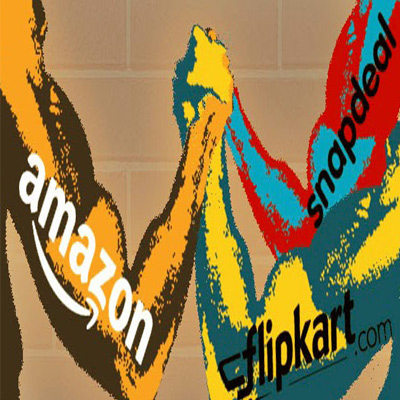
    MUMBAI: Come festival time and brands, backed by their army of creative sleuths, leave no stones unturned to make hay while the sun shines. Using the same peg to sell an item better than the other naturally spells competition, and sometimes this can even lead to ad wars, as was seen recently in the case of e-commerce brands Flipkart, Snapdeal and Amazon’s ad campaigns, where each campaign blatantly took digs at the other to grab eyeballs.


    It’s that time of the year again! With Navaratri, Durga Puja, Ayudha Puja and Diwali knocking on doors, e-commerce brands have gone full throttle to promote their festival offerings.


    Each e-commerce player is vying to outshine the other by their creative campaign and giving away aggressive discount offers to customers. Needless to say, the campaigns are quite aggressive as well, with the latest chapter of ad war unfurling upon the front pages of leading daily newspapers.


    The current buzz in the industry is about the Snapdeal print ad in The Times Of India that reads, “You don’t need a billion offers to amaze you. You just need to snap the best ones. For the best offers this Diwali, shop only on Snapdeal.”


    Reading the lines in isolation probably doesn’t ring a bell. And that’s where its strategic placement on the jacket advertisement page comes in. Placed between Flipkart and Amazon.com, it is very clear that Snapdeal is taking a dig at its rivals.


    While the word ‘billion” reflects on Flipkart’s Big Billion Sale, with the same font and colour, the word ‘amaze’ indicates at Amazon with the same font.


    It is clever use of copywriting skills to get one up on rivals, and at the same time entertain consumers with all the drama unfolding. However, one can’t help but wonder if in the mad race to outdo each other, is creativity being compromised?


    The Social Street founding partner and chairman Pratap Bose is of the opinion that in this game of tag between the major e-commerce ad campaigns, creativity does take a back seat. 


    “There is very little window to react to your competitors if you have to be ahead in this action – reaction war. Unless one is an absolute genius, it is very hard to come up with something new when you are so focused on what your competitors are doing,” he says. 


    Explaining further, he adds, “Festive seasons are an occasion to take advantage of, because purse strings are a bit loose and a lot of consumers do open up their wallets during this time. Having said that, it is the agency and the brand’s responsibility to woo the consumers with their products and offers instead of getting into unnecessary campaign wars against each other. I think that just cannibalises everyone in the ecosystem.”


    Taproot India co-founder and CEO Santhosh Padhi dismisses the on-going ad war between major e-commerce players as ‘short term thinking’ on part of the brands. “All these players have a short term vision. They lack long term vision to build a brand. I call this catalogue advertising and it can only serve the brands for a limited period. You can’t be going at it season after season,” says Padhi.


    The dearth of creativity too is evident from these so called ‘catalogue advertisements,’ he points out. “If you interchange the logos, I bet some can’t even tell which ad campaign belongs to which brand!” he jokes. “It is true that the consumers are interested in the deals, but the deals will stop someday or the brands will run out of them. Then the brand has to connect with its consumers with its USP. I haven’t seen these e-commerce players doing a brand campaign in recent times,” he says.


    On the other hand, R K Swamy Hansa CEO and IAA president Srinivasan K Swamy has no qualms with some clever copywriting war and feels its doesn’t take away from the creative aspect of ad making. “As long as it’s done tastefully, there is nothing wrong with some healthy competition reflected cleverly in their works,” says Swamy. “I don’t feel it reflects any lack of creativity,” he adds


    Swamy, interestingly observes that creators sometimes have fun through these cryptic ads, and it’s all in healthy competition. “Not just the agencies, but even the brands may have fun through these ads and it’s a nice way to grab the consumer’s eyeballs. They are also entertained through these exchanges, and this keeps them glued to the entire drama,” he shares, highlighting that these ad wars engage the consumers who anticipate how a major e-commerce player would respond to their competition. They may even take sides and promote loyalty to the brand through it.


    However, Bose begs to differ. “I don’t really think ad wars help these brands gain any loyal consumers for their products. Pepsi and Coke used to do this, and they continue to do so worldwide. If the digs are strategic like that, I have less issues with it, but I am not sure such is the case with these e-commerce brands. Taking digs at each other just for the sake of it, to say ‘I am better than you’ or ‘my offer is better than yours,’ doesn’t really cut too much ice with the end consumers,” he says, adding that if the agencies just want to have fun with each other at the expense of their client’s money, it is certainly not appropriate.


    “I think sometimes companies are quick to react to their competition, and miss the strategic outlook and their values. They sometimes fail to ask themselves if they have a USP in the market over their competitors. If you believe in your product and your USP, then I don’t think you need to be worried beyond a certain point,” Bose opines.


    Padhi too feels that consumers are much smarter than brands credit them to be. “By playing these pun game they think they have the consumers fooled, but today consumers are much smarter. They know what’s happening in the digital space is much more creative and exciting than these verbal backlash on newspaper front pages,” he says.


    So how should these brands approach the shopping season? “If they want to connect with the consumers long term, they have to connect at a brand level, and think beyond just the limited festive season. Festive promotions can be part of a larger brand campaign,” Padhi simply states.


    He further adds, “There are loyal consumers for brands like Nike and Adidas. They don’t switch brands if there’s a cheaper offer on the other because they have bought the philosophy of the brand. Ask any consumer of these e-commerce brands and they will not hesitate to switch if one site offers them a slightly better sale.”


    Citing the example of London based agency Adam & Eve DDB’s ‘Be Selfish’ Christmas campaign that won them the Grand Prix award at Cannes Lions International Festival of Creativity, Padhi says that festive campaigns can also be creative and trendsetting. “They ran a campaign urging consumers to spend on themselves derailing from the tried and tested, buy gifts for your family angle that most agencies take. It was also a holiday and festive campaign but so different. Why can’t we do something new like that for Diwali, instead of the same old offer formula?” he asks.


    Ogilvy and Mather creative director Sumonto Chattopadhyay is also of the opinion that brands tend to overplay the festive peg sometimes, and lose out on innovation. “The entire ‘capturing the favour of the festivity’ does become a bit repetitive at times. I suggest that we sometimes let go of a more overt way of promoting festive offers, and instead of pegging the campaign around festivities, focus on other things. Approaching campaigns as standalones and not part of the festive propaganda could be another way to stir clear of competition and cut above noise,” he suggests.


    Padhi also points out that a lack of funds sometimes compels a brand to think out of the box. “I feel that because these brands have a lot of money, they have the luxury of taking a dig at each other instead of building their brand value. I am sure if they have a limited funding they would be putting more thought into what’s working, what’s not, and what they should come to the market with,” he says.


    Whether or not these ad wars will lead to brand following by consumers or succumb to today’s ADHD (attention deficit- hyperactivity disorder) generation who are quick to forget and jump to the next bandwagon, only time will tell. But as Ogilvy and Mather chairman and creative director Piyush Pandey puts it, “If you and I sell something for five rupees, which one of us sells it better is decided by our unique ideas.”