Tag: Snapchat

  • Snap and IAS team up to make ads crystal clear

    Snap and IAS team up to make ads crystal clear

    MUMBAI: Snap and Integral Ad Science (IAS) are taking transparency to a new level, giving advertisers something worth snapping about. The duo has expanded their measurement partnership to cover every corner of Snapchat, including the app’s most intimate space, the chat feed.

    The move means advertisers can now measure viewability and invalid traffic (IVT) for sponsored snaps and chat feed ads, ensuring their campaigns reach real users in brand-safe environments. With this update, IAS now offers full coverage across all Snapchat ad formats and devices, from stories to AR lenses.

    “Advertisers want to reach Snapchatters through authentic, measurable campaigns,” said Snap Inc global director, Ad partnerships group Fintan Gillespie. “With Sponsored Snaps, we’re giving brands even more ways to connect, while ensuring trusted third-party verification through IAS.”

    IAS CEO Lisa Utzschneider added, “We’re committed to giving advertisers transparency wherever they spend. Expanding our partnership with Snapchat shows our shared focus on verification, brand protection and campaign performance.”

    IAS’ total media quality solution for Snap gives brands access to advanced metrics like Time-in-View, IVT rates, and brand suitability reports, all powered by machine learning that analyses image, audio and text frame by frame.

    Since joining forces in 2018, IAS and Snap have steadily widened their measurement suite, from viewability and invalid traffic tracking to brand safety and attention measurement. This latest update cements their collaboration as a gold standard for accountable, engaging advertising in the social space.


  • Snap to It Mahabharat Finds a New Lens with Historyverse and Snapchat

    Snap to It Mahabharat Finds a New Lens with Historyverse and Snapchat

    MUMBAI: When Mahabharat meets a Snap filter, you know history’s getting a glow-up. Collective Artists Network’s Historyverse, the tech-driven storytelling platform reimagining India’s past, has teamed up with Snapchat to bring one of the country’s oldest epics to one of its youngest audiences.

    In a first-of-its-kind collaboration, Historyverse’s AI-enabled series Mahabharat: Ek Dharmayudh will now reach Snapchat’s vast Gen Z community in India, giving the timeless saga a modern makeover through the app’s playful digital formats from bite-sized episodes to immersive AR Lenses that let users step right into the story.

    “Our collaboration with Snapchat is a perfect reflection of what we stand for bridging culture, creativity, and technology,” said Collective Artists Network founder and group CEO Vijay Subramaniam. “With Mahabharat: Ek Dharmayudh, we’ve reimagined a story that has defined generations using AI. Partnering with Snapchat lets us take this heritage and introduce it to Gen Z in their own language and on their preferred platform.”

    Snapchat, long considered a digital playground for India’s 70 million-plus Gen Z users, sees this tie-up as a way to merge myth with modernity. “We’re chuffed to partner with Historyverse to bring the world of Mahabharat to our community,” said Snap Inc head of content partnerships & AR Saket Jha Saurabh. “From short-form content to immersive AR Lenses, this gives millions of Snapchatters a unique way to experience one of India’s greatest epics.”

    The AI-enabled adaptation, created under Historyverse and powered by Galleri 5’s homegrown G5 AI Pipeline, is already streaming on JioHotstar and airing on Star Plus from 25 October. The series uses advanced AI-driven storytelling and visual design to retell the Mahabharat with a futuristic flair where timeless dharma meets cutting-edge tech.

    Meanwhile, Historyverse’s presence on Snapchat has been growing at warp speed. Its vertical Sanatani Itihaas has already crossed 100,000 followers, reached 6 million unique viewers in the past month, and racked up 14 million Spotlight views proof that even ancient tales can trend in the age of AR.

    With this collaboration, Snapchat becomes the new Kurukshetra where tradition and technology spar playfully for Gen Z’s attention. For the Mahabharat’s warriors, destiny was written in the stars; for today’s creators, it might just be written in Snaps.

    As Historyverse and Snapchat team up, the message is clear history doesn’t have to stay in textbooks. Sometimes, all it takes is a camera lens, a clever filter, and a little bit of AI magic to make the oldest stories feel brand new again.

  • Animeta’s star power turns influence into real business currency

    Animeta’s star power turns influence into real business currency

    MUMBAI: When influence meets intelligence, the result is Animeta Brandstar’s latest winning streak. The tech-data enabled influencer marketing firm has been scripting campaigns that don’t just trend, they translate into measurable brand outcomes.

    Take Uber India’s campaign with cricket stalwarts Gautam Gambhir and Ravichandran Ashwin. Known for their stern on-field personas, the duo were reimagined in playful avatars, highlighting how Uber flips daily commutes from frustrating to delightful. Animeta managed the marquee talents and execution, sparking chatter across social feeds and proving its knack for stitching stars into relatable, mass-consumption narratives.

    And that’s just one play. Since July 2025, Animeta has rolled out 30 influencer campaigns, activating 1000 plus creators across Instagram, Youtube and Snapchat. In the same period, it has partnered with 20 new brands, while also retaining repeat mandates from stalwarts, a testament to its consistency.

    The roster spans global giants like Amazon Fashion, Starbucks, Warner Music and Uber, alongside homegrown champions such as GCPL and Jyothy Labs, whose everyday staples Cinthol, Maxo, Margo, Exo and Pril have been re-energised through creator-driven storytelling.

    Animeta also helmed influencer rollouts for fresh launches: Shotgun, Fratelli’s carbonated wine label; Ninja, GCPL’s pet food brand debuting in Chennai; and Reposenergy, a doorstep fuel delivery entrant making waves in a nascent category.

    At its core is the Animeta Brandstar platform, which powers creator discovery from a verified pool of 85,000 plus profiles, minimises spillovers, and tracks campaigns in real time. Performance isn’t just judged on reach but also advanced metrics shares, saves, click-throughs and trials linking influencer buzz directly to consideration, leads and even sales. The result: a 30 per cent ROI uplift compared to industry benchmarks.

    “Influencer marketing today is no longer just about amplification, it’s about authenticity, storytelling, and business outcomes. At Animeta, we take pride in servicing diverse categories and partnering with brands at every stage whether they are global leaders, homegrown stalwarts, or ambitious challengers. What sets us apart is our ability to consistently deliver across objectives, from awareness to trials, leads and even creator-led commerce,” said Animeta Brandstar SVP for branded content & creator strategy Biswamitra Ray (Vishu Ray).

    From scaling pop culture with Arijit Singh, Ed Sheeran and Guru Randhawa, to onboarding micro- and nano-creators for hyperlocal impact, Animeta has shown it can flex seamlessly across the spectrum.

    Looking ahead, the company is doubling down on its promise to unlock full-funnel influencer marketing. As advertisers increasingly demand conversion-driven storytelling over vanity metrics, Animeta is positioning itself as the partner that blends data, cultural relevance and creator firepower into campaigns that both trend and transact.

  • Brands queue up for Neeraj Chopra Classic as javelin goes prime time in India

    Brands queue up for Neeraj Chopra Classic as javelin goes prime time in India

    MUMBAI: India’s golden boy of athletics is attracting more than just medals. The inaugural ‘Neeraj Chopra Classic’—India’s first global javelin competition—is drawing serious brand muscle ahead of its 5 July debut at Bengaluru’s Sree Kanteerava Stadium.

    The event is headlined by Bharat Petroleum Corporation Ltd (BPCL) and backed by a power-packed sponsor roster that includes Visa (official partner), Audi India (mobility partner), BodyArmor Lyte ORS (hydration partner), Duolingo English Test (learning partner), and Snapchat (content partner).

    Radisson Hotel Group is the hospitality partner, JioStar the broadcast partner, and FanCode Shop is handling official merchandise—making the NC Classic a 360-degree sporting spectacle both on-ground and online.

    Speaking on the response from brands to the NC Classic, JSW Sports chief commercial officer, Karan Yadav said, “The versatility and range of brands that have decided to come on board with the NC Classic is testament to the potential this competition has. These are the biggest names in world javelin, spearheaded by Neeraj, competing on Indian soil for the first time. The event has all the ingredients to be a blockbuster, and a regular fixture on the world athletics calendar. The response to partner with the event has been fantastic, and it only augurs well for the future of live sport planned to global standards, in India.”

    With the world’s top javelin throwers gearing up to compete, the Neeraj Chopra Classic is shaping up to be more than just a one-off event—it’s India’s blockbuster entry into the world of elite field sports.

  • Akshay Mathur’s new venture promises to turn platform ambition into cold, hard cash across Asia

    Akshay Mathur’s new venture promises to turn platform ambition into cold, hard cash across Asia

    MUMBAI: After two decades of making other people’s platforms profitable, Akshay Mathur has decided it’s time to build his own money-making machine. The adtech veteran has launched Unpromptd, a revenue infrastructure firm targeting digital platforms across Asia’s most lucrative—and complex—markets.

    Mathur, who recently departed his role as chief revenue officer at Tyroo after six years, believes platforms have had quite enough strategy presentations, thank you very much. What they need, he argues, is someone who can actually turn their grand ambitions into recurring revenue streams.

    “Platforms don’t need more strategy decks,” Mathur declared while announcing t the launch. “They need real execution, revenue accountability, and a partner who understands the complexity of scaling in markets like India, southeast Asia, and the Middle East.”

    The timing is hardly accidental. Asia’s digital advertising market has been on a tear, with platforms scrambling to monetise everything from social commerce to gaming. But many stumble when it comes to the nitty-gritty of revenue generation—precisely where Mathur sees opportunity.

    His pedigree suggests he knows whereof he speaks. At Komli Media, Mathur was part of the managing board that engineered a 10-fold jump in net profits before the company’s eventual acquisition by Dentsu Aegis Network in 2017 for an undisclosed sum. At Tyroo, he built monetisation partnerships with the likes of Meta, Twitter, Snapchat, Outbrain and Criteo, helping these global giants crack complex Asian markets.

    The 22-year industry veteran has witnessed first hand how the right operating model can unlock value that often sits tantalizingly out of reach. His new venture promises to be the bridge between platform potential and profit realisation.

    Unpromptd’s mission is straightforward: become the monetisation partner of choice for every digital platform serious about growth in Asia. It’s an ambitious target in a region where local nuance can make or break even the most sophisticated global strategies.

    Mathur’s approach combines hard-won experience with what he calls “precision execution”—a recognition that Asia’s next growth wave will belong to those who move first and move smart. With platforms increasingly desperate to prove their business models beyond user acquisition, Unpromptd arrives at a moment when such expertise commands premium prices.

    The venture launches from Gurugram, positioning itself at the heart of India’s digital economy while eyeing expansion across the broader Asian market. For platforms tired of beautiful presentations that fail to move the revenue needle, Mathur’s promise of accountability over aspiration may prove irresistible.

    Whether Unpromptd can deliver on its bold promises remains to be seen. But with Asian digital advertising spend continuing its relentless march upward, the demand for Mathur’s particular brand of monetisation magic has never been stronger.

  • Australia passes bill banning social media for kids; India’s Vaishnaw calls for stricter regulation

    Australia passes bill banning social media for kids; India’s Vaishnaw calls for stricter regulation

    MUMBAI: No social media for kids. The Aussie house of representatives passed a bill yesterday imposing a ban against Instagram, Tiktok, Facebook, SnapChat, X,  Reddit from allowing kids under 16 from accessing these networking platforms. The onus has been put on social media to ensure that kids don’t use them;  fines up to $33 million will be imposed on them if a kid’s profile is found active. The bill will now require senate approval which it most likely will get and social media  will have  a year to clean up their acts. 

    That was Down Under. 

    In India too, the government would like to bring  social media under tight regulation. 

    While addressing a parliament question during the ongoing session of the Lok Sabha today, union minister of information & broadcasting, railways, and electronics & IT, Ashwini Vaishnaw,  once again highlighted the urgent need to strengthen existing laws governing social media and OTT platforms.

    “We are living in the era of social media and OTT platforms. However, the democratic institutions and traditional forms of the press that once relied on editorial checks to ensure accountability and correctness of content, have seen these checks diminish over time,” he said. 

    He noted that due to the absence of such editorial oversight, social media has become a platform for freedom of press on one hand, but on the other hand, it has also become a space for uncontrolled expression, which often includes vulgar content. 

    Acknowledging the distinct cultural differences between India and the geographies where these platforms originated, Vaishnaw emphasised. “The cultural sensitivities of India vastly differ from those of the regions where these platforms were created,” he said.  

    This makes it imperative for India to make existing laws more stricter and he urged everyone to come to a consensus on this matter.

    The minister also urged the parliamentary standing committee to take up this important matter issue as a priority. “There should be societal consensus on it, along with stricter laws to address this challenge” he said.

    Will Indian society agree? 

  • Gen Z expects brands to be transparent, socially responsible, and engaging: Rohit Sakunia

    Gen Z expects brands to be transparent, socially responsible, and engaging: Rohit Sakunia

    Mumbai: As brands navigate the complexities of a dynamic marketplace, a new trend is emerging: the preference for gen Z individuals in marketing agencies. Born between the late 1990s and early 2010s, they are not just the target audience for most campaigns; they are becoming the architects of those campaigns. Their perspectives on culture, community, and creativity align seamlessly with the demands of a new-age consumer base that values relatability over rigidity.

    This shift towards tapping into gen Z talent is not a fleeting trend. It signals a deeper understanding that those who live and breathe the cultural zeitgeist are best equipped to translate it into compelling brand narratives.

    Indiantelevision.com caught up with Art E Mediatech founder Rohit Sakunia, an independent marketing agency with a presence in Delhi, Mumbai, and Dubai to know more insights on this topic.

    Edited excerpts

    On driving the shift towards gen Z as the preferred target audience for marketing agencies

    The shift towards gen Z as a primary audience is driven by their growing purchasing power and their undeniable influence on digital culture. Being the first digitally native generation, they shape online trends and behaviors, making them critical for brands aiming to remain relevant. What sets gen Z apart is their loyalty—it’s not easily earned but is reserved for brands that genuinely align with their social values and personal identities.

    For instance, brands like Nike have successfully tapped into this by aligning their campaigns with causes that matter to gen Z. At the same time, companies like Glossier have built communities around inclusivity and self-expression. This approach fosters a strong emotional connection and ensures long-term engagement. gen Z’s digital fluency and trendsetting behavior can drive viral success, and when brands resonate authentically with their values, the resulting loyalty is both impactful and enduring.

    On describing the key characteristics of gen Z that make them appealing to marketers

    Working with brands targeting a young, dynamic audience has shown me that gen Z values authenticity, inclusivity, and personal connection. These traits make them incredibly appealing to marketers. In my experience, adapting strategies to embrace these characteristics has been key—like developing influencer partnerships that genuinely align with their values. A great example is how zoomers’ affinity for authenticity drives the popularity of brands like Patagonia, which champions environmental causes transparently and integrates these values into its product lines.

    By focusing on these aspects, I’ve honed my ability to create personalized, community-centered campaigns that truly resonate with this audience. It’s rewarding to see these efforts translate into higher engagement and brand loyalty, underscoring how understanding and embracing gen Z’s unique characteristics can make a real difference for brands.

    On rise of gen Z impacted traditional marketing strategies

    The rise of gen Z has significantly reshaped traditional marketing strategies, and transitioning brands from conventional methods to more agile, digital-first approaches has been a defining part of my career. Managing campaigns on platforms like TikTok and Instagram has challenged me to think creatively and stay adaptive, ensuring our strategies resonate with this audience.

    TikTok’s emergence as a primary marketing platform reflects gen Z’s demand for engaging and creative content, prompting brands to embrace short-form video formats and storytelling styles that feel authentic. This evolution has allowed me to refine my expertise in areas like short-form video content and influencer marketing, both of which are critical for building genuine connections with younger audiences.

    On zoomers use of technology and social media influence their preferences and behaviors

    Gen Z’s use of technology has shaped them into discerning consumers who value accessibility, quick answers, and seamless online experiences. Their reliance on social media platforms like Instagram, Snapchat and TikTok for discovery drives their preference for brands that deliver visually compelling and easily shareable content. This behavior has redefined how brands connect with this audience, emphasizing the importance of creating experiences that are both interactive and engaging.

    For instance, utilising features like filters or challenges on Instagram or TikTok can capture their attention effectively while fostering a sense of community. Social media not only influences their purchasing decisions but also cultivates their need for connection, making community-building a critical component of marketing strategies tailored to this generation.

    On key expectations zoomers has from brands and marketing campaigns

    Gen Z expects brands to be transparent, socially responsible, and engaging. They look for campaigns that align with their personal values, are inclusive, and reflect diversity in meaningful ways. This generation also values quick response times and personalized interactions, expecting brands to actively engage with them on social media and demonstrate authenticity through action rather than just words.

    For instance, companies like Ben & Jerry’s resonate strongly with gen Z by publicly supporting social issues, which not only strengthens their brand image but also builds trust with consumers who deeply value activism and meaningful change. These expectations challenge brands to go beyond traditional marketing and truly embody the values they promote.

    On challenges marketing agencies face when targeting gen Z and overcoming them

    Targeting gen Z presents both an exciting opportunity and unique challenges for marketing agencies. This generation is incredibly discerning, with little patience for inauthentic content, short attention spans, and a high demand for meaningful engagement. To navigate these hurdles successfully, agencies must rethink their strategies—prioritising transparency, crafting bite-sized yet impactful content, and collaborating with relatable influencers over mainstream celebrities.

    For example, the use of micro-influencers has proven effective, as they can authentically engage with niche gen Z communities, creating trust and fostering genuine connections. Pairing this with data-driven insights to craft hyper-personalized campaigns ensures that the messaging resonates deeply with this audience, turning challenges into opportunities for stronger engagement and loyalty.

    On seeing the relationship between marketing agencies and zoomers evolving in the next 5 to 10 years

    In the next 5 to 10 years, I believe the relationship between marketing agencies and gen Z will evolve into a more collaborative and purpose-driven partnership. As gen Z matures, their expectations will continue to rise, particularly in terms of brands being proactive on social issues. This will drive agencies to engage more directly with gen Z consumers, working alongside them to co-create campaigns and experiences that feel authentic and meaningful.

    In addition, agencies will need to embrace new technologies, like augmented reality and AI, to meet gen Z’s increasingly tech-savvy standards. Future campaigns may include interactive AR experiences or community-driven initiatives, where gen Z has a direct voice in shaping brand messaging and even product development. This shift will not only redefine how brands engage with gen Z but also elevate the way they collaborate with this generation to drive long-term loyalty and impact.

  • Snapchat announces new safety features designed to reinforce real friend connections

    Snapchat announces new safety features designed to reinforce real friend connections

    Mumbai: With a focus on fostering a safe and positive in-app experience, Snapchat has introduced a suite of new safety features all designed to strengthen and reinforce the real friend relationships that make Snapchat so unique. These new features aim to further safeguard teens and the broader community from online harms.

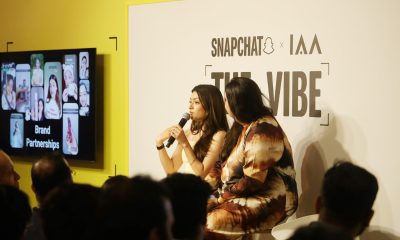
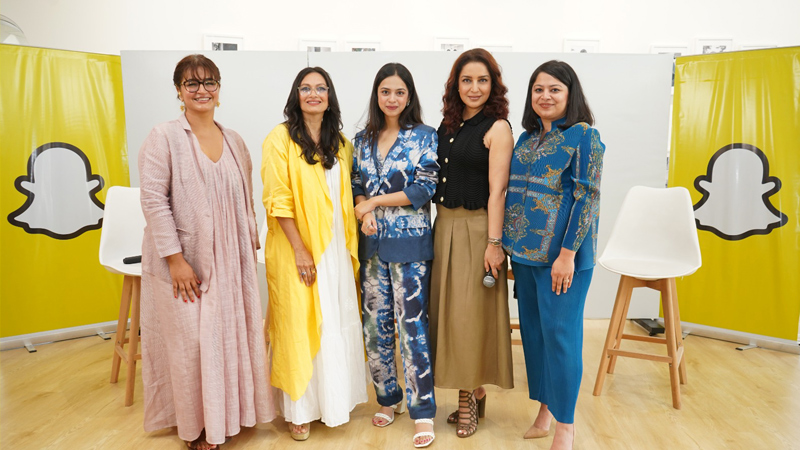
    To kick off an essential dialogue on teen online safety, Snapchat hosted a panel discussion featuring influential parents Tisca Chopra and Maria Goretti, actor and Snap Star Nitanshi Goel,  Aparajita Bharti, co-founder of Young Leaders for Active Citizenship (YLAC) and Uthara Ganesh, head of public policy at Snap. The panel explored critical topics such as the importance of digital literacy, maximizing the use of available online resources, and maintaining open dialogues with teenagers at home.

    The evening concluded with the introduction of Snapchat’s new suite of tools, including 1) improved blocking capabilities 2) simplified location-sharing 3) enhanced friending protections and 4) expanded in-chat warnings. These expanded products build on Snapchat’s ongoing work to make it difficult for strangers to contact people.

    Snap Inc. head of public policy-South Asia  Uthara Ganesh added, “Snapchat has always been a unique space where you can truly be yourself and connect with your real friends. Young people across India love spending time on our platform, and we are dedicated to making it a safe and positive place for everyone, especially teens. Our newest safety features are all about supporting genuine friendships, empowering teens to make smart choices, and ensuring that every Snapchatter feels secure and confident while using our app.”

    Blocking improvements

    The platform has long offered tools for Snapchatters to easily block someone if they no longer wish to be in touch with them. Sometimes, bad actors create new accounts and continue to contact people who have blocked them. To prevent bullying and potential repeat harassment, we’re introducing improvements to our blocking tools: blocking a user will also now block new friend requests sent from other accounts created on the same device, to further limit outreach from other existing or new accounts created by the blocked account.

    Simplified location-sharing and additional reminders

    Snapchatters – including teens – are sent regular reminders to check their account security and privacy settings, and Snapchatters can only share their location with people they are friends with. Now we’re introducing more frequent reminders to make sure that Snapchatters are always up to date on which friends they’re sharing their location with on the Snap Map. We’re also introducing simplified location-sharing, making it faster and easier for Snapchatters to customize which of their friends can see their location.

    Enhanced friending protections

    Previously Snapchat had announced teens will not be suggested in Quick Add or Search unless they have multiple mutual connections in common with the other person. The platform is now adding new friending safeguards that make it much harder for strangers to find and add teens. We will prevent delivery of a friend request altogether when teens send or receive a friend request from someone they don’t have mutual friends with, and that person also has a history of accessing Snapchat in locations often associated with scamming activity. This applies regardless of whether the friend request was sent out by the teen, or sent to the teen from the suspected bad actor.

    This feature is currently available in a select few countries and will be introduced in a more localized form in India soon.

    Expanded in-app warnings

    Snapchat has introduced a pop-up warning when a teen receives a message from someone they don’t already share mutual friends with or have in their contacts. The message informs teens of the potential risk so they can carefully consider if they want to be in contact, and reminds them to only connect with people they trust.

    Now the platform is expanding these in-app warnings to incorporate new and advanced signals. Teens will now see a warning message if they receive a chat from someone who has been blocked or reported by others, or is from a region where the teen’s network isn’t typically located – signs that the person may be a scammer. This feature will be made available in the US, UK, CA, AU, NZ, Nordics, and parts of Europe.  

    Further commenting on Snapchat’s safety features, Tisca Chopra, actor, author & celebrity mom, said, “With teenagers spending so much time online, ensuring a safe digital environment is crucial today. I make it a point to stay informed about my daughter’s digital activities without being too intrusive. I appreciate Snapchat’s focus on safety through its platform design, demonstrating a commitment to protecting young users. By fostering a secure space, Snapchat helps our teenagers interact with confidence and peace of mind. This thoughtful approach also encourages open conversations between parents and their teenagers about responsible digital behaviour, essential for navigating the digital landscape safely.”

    Maria Goretti, actor, TV host & celebrity mom, added, “Our teens are at a sensitive age, and it’s important for us as parents to understand their digital lives while ensuring they know their boundaries. My teenagers use Snapchat regularly, and it’s comforting to know they are in a safe environment. Snapchat’s proactive stance on user safety reassures me that my teens can connect with their real friends in a positive space. Their genuine commitment to protecting users is something every parent can appreciate.”

    These new tools build on the platform’s ongoing commitment to help Snapchatters communicate with their close friends in an environment that prioritizes their safety, privacy, and well-being.

  • Snapchat and Oppo partner for lock screen shortcut and Snap map widget in ColorOS 14!

    Snapchat and Oppo partner for lock screen shortcut and Snap map widget in ColorOS 14!

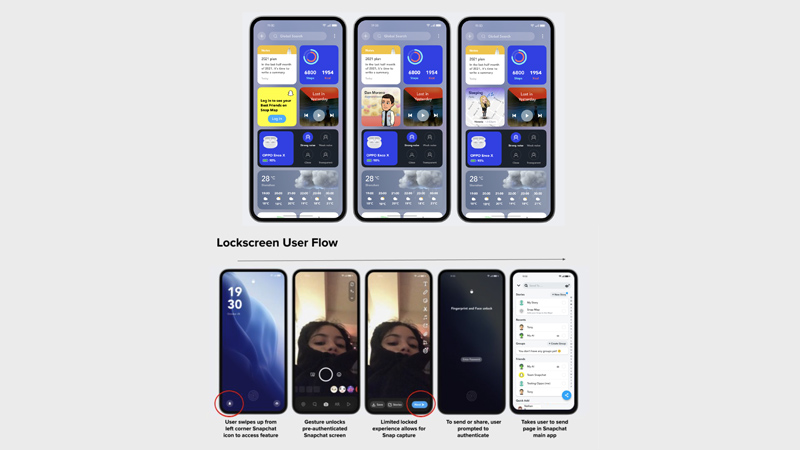
    Mumbai: Snap Inc., in partnership with OPPO, has unveiled two exciting features in the upcoming ColorOS 14 release. Users can open the Snapchat camera directly from the lock screen, allowing them to seamlessly connect to Snapchat without the hassle of unlocking the phone and navigating through the home screen. Additionally, OPPO’s Shelf Card (that houses global search) will feature a Snap Map widget. Tailored for camera lovers, these features are available on OPPO devices powered by ColorOS 14 in India starting today.

    Snapchat icon as a lock screen shortcut

    This latest feature allows users to easily set the Snapchat icon as a lock screen shortcut, located at the bottom left of the screen. With this feature, accessing the Snapchat camera becomes easy. This feature is especially convenient for those who love to quickly capture and share their moments with friends.

    Snap Map Widget on OPPO’s Shelf Card

    Users can now add a Snap Map widget to Oppo’s Shelf Card, a versatile feature of the ColorOS. This widget allows users to conveniently pin a friend’s location, view their latest Snaps and activities and is easily accessible with a simple swipe-down from anywhere in the OS. With this integration, Snapchat becomes one of the first third-party apps to directly integrate into the Shelf Card.

    “Our partnership with Snapchat marks a new exploration into the possibilities of smartphone operating systems,” said OPPOColorOS senior product manager  Haizhou Zhu. “By integrating smart, human-centric features crafted alongside our partners, we are offering a smarter and smoother operating system, enabling users to immerse themselves more deeply in the customized Snapchat experience, along with other beloved features on their OPPO devices.”

    Snap Inc. director of OEM partnerships Juan David Borrero said, “Our collaboration with OPPO  reflects our commitment to building user-friendly experiences. These new features are tailored for our Indian users, who enjoy using the camera to express themselves visually with their friends and family. We can’t wait to see how these additions will elevate their everyday smartphone experience!”

    How to set up these new features:

    Lock Screen Shortcut: Go to Settings/ select ‘Lock Screen’/ choose the option to add shortcuts / Select Snapchat to place it on the lock screen

    Snap Map Widget on Oppo’s shelf card: Swipe down to access the Shelf/ Choose “Add Widget”/ Select Snap Map to pin a friend’s location for easy access

    This latest update is a part of the ongoing partnership between OPPO and Snapchat, which has already witnessed numerous collaborative efforts, such as app preloads, Camera Capability Framework integrations, and Bitmoji Always On Display (AOD) integration, further enriching India’s passion for innovative camera experiences.

    *Disclaimer on images: The images shown here are indicative only. If there is inconsistency between the image and the actual product, the actual product shall govern.

  • Why is social media important for business today?

    Why is social media important for business today?

    Mumbai: Social media has undeniably become an integral part of our lives. Whether it is connecting with friends, sharing our stories, or even conducting business, social media platforms have woven themselves into the fabric of our daily existence. For businesses, social media isn’t just about keeping up with the times; it’s about thriving in a digital world where connectivity, influence, and visibility matter more than ever.

    Before we indulge further in the importance, let’s go back in time and understand the roots of social media. Services like Bulletin Board Systems (BBS) in the 1970s and 1980s allowed users to communicate and share information through digital channels. However, it was in the late 1990s and early 2000s that the concept of social media as we know it began to take shape. The emergence of platforms like Six Degrees (launched in 1997) allowed users to create profiles and connect with others. It was followed by Friendster (2002) and MySpace (2003), which introduced more interactive and personalized features.

    Then, in 2004, Mark Zuckerberg and his Harvard University roommates launched Facebook, a platform that would revolutionize how people connect and share online. Facebook’s success paved the way for other social media giants like Twitter (2006), LinkedIn (2003), YouTube (2005), and Instagram (2010). These platforms facilitated social interaction and became fertile grounds for marketing and business development.

    The evolution of social media has been nothing short of remarkable. Initially, platforms primarily focused on personal connections, but over time, they expanded their features and capabilities to accommodate a wide range of activities, including business promotion.

    Today, social media platforms are incredibly diverse. You have Facebook, with over 2.98 billion monthly active users, providing a comprehensive environment for various types of content. Twitter(now X), known for its concise messaging, is a hotbed for trending topics and real-time engagement. LinkedIn has become a professional network for career development and business-to-business (B2B) connections. Instagram emphasizes visual content, while YouTube is the go-to platform for video content.

    Newer platforms like TikTok (2016) and Snapchat (2011) focus on short-form video and ephemeral content, appealing to younger demographics. This continuous innovation allows businesses to explore different platforms and tailor their strategies to diverse audiences.

    To understand the importance of social media for businesses, let’s dive into some compelling data:

    Facebook: With over 2.9 billion monthly active users, Facebook is the world’s largest social media platform. It offers a vast user base for businesses to reach potential customers.

    Instagram: Owned by Facebook, Instagram has over 2 billion monthly active users. It’s highly visual and favoured by younger demographics.

    Twitter: Twitter boasts 564 million monthly active users. Its real-time nature makes it ideal for quick, concise communication.

    LinkedIn: With 900 million users worldwide, LinkedIn is the premier platform for professional networking and B2B marketing.

    YouTube: As the second-largest search engine after Google, YouTube has over 2.5 billion monthly logged-in users. It’s an excellent platform for video content.

    TikTok: This short-form video platform has grown exponentially since its launch, with over 1 billion monthly active users worldwide.

    India is a global leader in social media usage, with a user base that’s larger than the population of many countries. As of 2023, there were around 467 million social media users in India, and it is expected to keep growing. Besides that, people aged between 16 and 64 used about 8 social media apps monthly. Such statistics underscore the significance of India as a thriving market for businesses seeking to establish a solid online presence.

    How can brands make the most of such a strong user base?

    1. Enhanced Brand Visibility: Social media offers businesses a global platform to reach potential customers. A compelling social media presence can significantly boost brand recognition.

    2. Cost-Effective Marketing: Social media marketing is often more affordable than traditional advertising, making it an excellent choice for startups and small businesses.

    3. Targeted Advertising: Most social media platforms offer robust tools for targeting specific demographics, ensuring your message reaches the right audience.

    4. Customer Engagement: Businesses can engage with customers directly, addressing inquiries, concerns, and feedback promptly.

    5. Content Distribution: Social media is an excellent channel for distributing content, whether it is blog posts, videos, infographics, or other materials.

    6. Community Building: Social media enables businesses to build and nurture a community of loyal followers and brand advocates.

    7. Data and Analytics: Comprehensive data and analytics tools help businesses understand their audience, evaluate the effectiveness of their campaigns, and make data-driven decisions.

    How does one build a solid brand and community on social media?

    1) Understand your target audience’s preferences, behaviours, and pain points.

    2) Regular and consistent posting keeps your audience engaged.

    3) Interact with your followers by responding to comments and messages while creating content that encourages engagement.

    4) Offer valuable, informative, and entertaining content that aligns with your brand’s values.

    5) Visual content, such as images and videos, often performs well on social media.

    6) Encourage your customers to share their experiences and feedback about your products or services.

    7) Collaborate with influencers who align with your brand to expand your reach.

    8) Regularly analyze your social media performance and adapt your strategies based on the results.

    In today’s digital age, the importance of social media for businesses cannot be overstated. It has evolved from being a platform for personal connections to a multifaceted tool for brand expansion, marketing, and customer engagement. With a growing user base and diverse platforms, businesses have an unprecedented opportunity to reach their target audience, build a solid online community, and enhance brand visibility. As social media continues to evolve, businesses that adapt and embrace its potential will be the ones that thrive in this ever-connected world.

    The author of this article is The Hype Capital founder Sachin Shah.

    https://datareportal.com/social-media-users 
    https://datareportal.com/reports/digital-2023-india 
    https://www.statista.com/statistics/272014/global-social-networks-ranked-by-number-of-users/ 
    https://sproutsocial.com/insights/social-media-statistics/