Tag: SN Sharma

  • Digitisation extension 2015: MSOs, LMOs smile; broadcasters sigh

    Digitisation extension 2015: MSOs, LMOs smile; broadcasters sigh

    MUMBAI: It was a decision that most had been anticipating would be taken. But when it did come, it came as a bolt from the blue. Four months before cable TV digitisation had to be completed pan India, the government – through information and broadcasting (I&B) secretary Bimal Julka – announced to industry via indiantelevision.com that a decision had been taken to extend it to December 2015.


    (While this is what Julka has told us, certain sections in the industry have suggested that end-2015 is the analogue sunset date for phase III towns and villages; the date for phase IV regions may end up being December 2016.)


    Earlier this year, the previous UPA government’s Information and Broadcasting (I&B) Minister Manish Tewari had held a task force meet with all the stakeholders to state that digitisation was to go on as planned with phases III and IV being merged. The deadline was December 2014 to implement digitisation in digital addressable system (DAS) phase III and IV while simultaneously implementing billing in phase I and II, which was to have been done much earlier.


    However, the new advancement of the deadline by the current BJP government, comes across as a breather to the beleaguered and unprepared  cable TV industry that claims to be facing a shortage of funds to execute the seeding of 75 million boxes.


    The MSO and LCO fraternity is heaving a sigh of relief following the extension. Says Den Networks CEO SN Sharma: “After long, the government’s commitment is visible and there is clarity of date. For phase I and II we had built the tempo and campaign well in time and now with this announcement, things for phase III and IV will also fall in place. The government is also keen to push indigenous production of set top boxes which will bring out a 15 per cent reduction in prices. These next two phases constitute about 70 per cent of the cable TV base. We are now waiting for STB producers to tell us they can deliver the demand.”


    The new I&B Minister Prakash Javadekar has time and again reiterated the government’s intention to give a fillip to indigenously produced STBs.


    LCOs seem to be a happy lot. Says Maharashtra Cable Operators Foundation (MCOF) president Arvind Prabhoo, “This gives time for the last mile operator (LMO) to plan for a year and execute it as mandated by the Telecom Regulatory Authority of India. Our association will educate LMOs about the benefits of digitisation. We will be able to rope in more investors and manufacturers to come up with schemes for executing voluntary digitisation.”


    Digitisation in DAS I and II areas has also not yet been implemented in the way as had been envisaged. Billing and conditional access systems (CAS) have yet to take off in several DAS I and II towns.


    IMCL managing director and group CEO Tony D’silva feels that the extension does not make much of a difference if the government’s resolve is not strong enough. “Just by postponing or sticking to a date does not change the speed of digitisation. It has to be a much more detailed and flushed out action plan on how the MSO, LCO, broadcaster and the government will be brought together. It is great that they have clarified their position, now there needs to be an actionable plan by putting together a core committee,” he opines.


    However, the most unhappy of the lot are the broadcasters because it delays their dreams of getting higher subscription revenues from MSO, cable ops, and the subscriber by a year. Most feel that the one year delay will lead to everyone in the ecosystem slackening the pace, with delays hitting the process and spread of digitisation once again.


    Colors CEO Raj Nayak is of a similar opinion. Says he, “We were really looking forward to phase III and IV to be completed by December as after much delay and deliberation the sunset date was arrived at. Our business plans were geared accordingly. I am sure there must have been a good reason to postpone and a three month extension would have been understood, but postponement by one whole year is slightly disappointing.


    “Having said this we are glad that the digitisation process is on track and looking at it through a positive lens I am sure this would give the industry an opportunity to learn from the mistakes of phase I and II and hopefully put better systems and processes in place so that the respective stakeholders including the broadcasters get our fair share.”


    News broadcasters are most pained by the excessive carriage fees that are being demanded of them, even as revenues continue to sag. News Broadcasters Association president and NDTV executive vice chairperson KVL Narayan Rao is disappointed with the extension. “Complete digitisation will bring transparency to TV broadcast distribution while delays will only affect that goal,” he states.


    Various reports predict different dates of completion of digitisation in India. Amongst the most recent ones brought out by Singapore-based Media Partners Asia (Indiantelevision.com’s partner for the annual pay TV gathering India Digital Operators Summit)  has stated that by 2017 only 70 per cent of the pay TV market in India will be digitised. 


    We, at indiantelevision.com, believe there are several other measures that could be put in place by the government (read I&B ministry), the regulator, and the industry:


    *For starters, changing the mindset of the cable TV ecosystem that digitisation and true pay TV is useful to all those in it, and not harmful, needs to be communicated effectively.


    *Second, the government could set up a digitisation transition fund, which helps educate, train and provide seed capital to and rewards cable TV operators who walk that path.


    * Third, it puts in place policing and penalising measures to cane those who don’t.


    *Fourth, they need to ensure that valid and correct subscriber information is collected by every cable TV operator or MSO and recorded in their SMS and possibly made available to the authorities.


    * Fifth, once this is done, ensure that a legitimate bill is issued to every subscriber.


    * Sixth, the ministry, the TRAI and the government could announce future-proof (at least for a three to four year period) technical specifications and standards for set top boxes, so that garbage zapper boxes are not dumped on India and on an unknowing and unsuspecting home viewer.


    * Seventh, leave pricing to the market place, rather than mandating 10-15 per cent price increases. Sure broadcasters want to increase subscription revenues, but they would not be so foolish so as to price their channels so high that they drive away consumers, and in the process their collections. Some might choose to have stiff price tags, but their business plans, obviously, will have factored that in, to have a smaller niche subscriber base. Does the government mandate how much a pair of Armani jeans can be priced at?


    * Let cable TV operators be drawn in to deliver broadband – provide them technology, assistance, funding – so that they can be one of the constituents who will help fulfil the Modi government’s grand plan to digitise the country.

    While there are many other measures that could be drawn up and while some may not approve of what we have prescribed, we have decided to stick our necks out and made some suggestions. We would love to hear different perspectives from our readers. Please feel free to let us and others in the industry know by posting your comments below.

  • Den Network’s profit run continues in FY-2014; topline rises

    Den Network’s profit run continues in FY-2014; topline rises

    BENGALURU: At a time when most companies involved in carrying television signals from the broadcaster to the consumer via cable have reported losses and are complaining about poor collections, Den Networks Ltd  (Den Networks) has reported profits, albeit slightly lower by 3.6 per cent as compared to last fiscal’s.


    The company’s assets and liabilities show that its trade receivables in FY-2014 has gone up by 20.4 per cent to Rs 391.92 crore (35.1 per cent of Operating Revenue of Op Rev) as compared to the Rs 325.62 crore (35.6 per cent of Op Rev) in FY-2013 as is obvious, in terms of percentage of Operating revenue vis-a-vis the previous year, the percentage of trade receivables has dropped fractionally.


    Den Networks reported a PAT of Rs 75.14 crore (6.7 per cent of Op Rev) for FY-2014, as compared to the PAT of Rs 77.94 crore (8.5 per cent of Op Rev) in FY-2014. In Q4-2014, the company reported a PAT of Rs 15.21 crore (5.04 per cent of Op Rev), lower by 5.4 per cent than the Rs 16.08 crore (5.9 per cent of Op Rev) during the immediate trailing quarter and 41.7 per cent lower than the Rs 26.08 crore (9.61 per cent of Op Rev) in Q4-2014.


    On the topline front, Den Networks has crossed the Rs 1000 crore operating revenue mark in FY-2014. The company reported Op Rev of Rs 1116.69 crore which was 22.2 per cent more than the Rs 914.05 crore last fiscal. Op Rev for Q4-2014 at Rs 301.86 crore was 10 per cent more than the Rs 274.46 crore in Q3-2014 and 11.2 per cent more than the Rs 271.43 crore in the year ago quarter Q3-2013.


    Here’s what the company has to say in its investor update:


    The company’s income from operations in Q4-2014 at Rs 930.43 crore can be broken in to streams –Rs 281.69 crore from its cable business and Rs 648.65 crore from its distribution business. After cost of distribution rights of Rs 633.57 crore, net revenue from the segment along with other income is Rs 17.44 crore, while the net revenue from the cable including other income is Rs 308.23 crore. The cable business has shown a positive result before tax of Rs 11.78 crore, while its distribution business a negative result or loss of Rs 4.6 crore.


    Consolidated Full Year EBITDA for FY-2014 was Rs 367.71 crore, a 52 per cent jump from Rs 242.70 crore in FY-2013. The Company says that it has incurred expenses of Rs 15 crore (approx) towards broadband and DAS Phase III and IV cities in this year, which have been considered in the EBITDA.


    Full Year EBITDA for FY-2014 Rs 357.51 crore, a 54 per cent jump from Rs 231.72 crore in FY-2013 EBITDA margins stood at 32.1 per cent.


    Subscribers and Set Top Box Deployment


    In Q4-2014, Den Networks claims to have deployed 450,000 set top boxes.  It says that it now has digitised approximately 6.1 million homes of its total subscriber base of 13 million homes. The company says that it has an estimated analog base of 7 million homes in its Phase III and IV markets. It confirms that it is well capitalised to meet the deployment requirements of its existing analog subscriber base in these cities. 


    Click here to read the full report

    Click here for investor update

  • Cisco’s technology in six million digital homes of Den Networks

    Cisco’s technology in six million digital homes of Den Networks

    MUMBAI: As India slowly inches towards 100 per cent digitisation, it is the various cable and multi system operators who are to be applauded for the increase of digitisation in the country. One of the well known technology companies, Cisco has announced that its services have reached to six million pay-TV homes on Den Networks.


    Cisco’s conditional access and middleware has been used by Den Networks since 2008 in its set top boxes. A range of Videoscape technologies from Cisco are used to cater to its subscribers. Den’s digital head-ends, networking routers, switches and set top boxes have been procured from Cisco.


    Earlier this year, Cisco expanded its Videoscape TV services delivery platform to include new cloud video capabilities. This would help media companies increase revenue, reduce operating expenses and enhance agility.


    Den currently has about 30 million viewers across the country and is looking at increasing that number through phase III and IV of digitisation. Commenting on the partnership Den Networks CEO SN Sharma said, “It gives me immense pleasure, in this highly competitive market, to reach out to more than 30 million viewers through our digital cable TV services. We expect this number to increase significantly with the completion of the remaining phases of digitisation. Cisco’s global expertise in managing the end-to-end delivery of digital pay-TV solutions gives us a strong competitive edge and empowers us to enable new services and advanced features, resulting in satisfied subscribers and encouraging growth.”


    Cisco Service Provider Video Software Solutions Vice President Sales Asia Pacific Sue Taylor said, “Cisco is excited by the success of its customers and would like to congratulate Den for reaching such a major milestone. We anticipate that the current digitisation drive will spur us on to achieve many greater milestones, both in roll-out volume and technology deployment, with the introduction of many new features using the latest designs and technologies. This will lead to overall customer enjoyment in terms of the TV viewing experience.”


    Den’s footprint now stretches over 200 cities in India covering markets such as Delhi, Uttar Pradesh, Karnataka, Maharashtra, Gujarat, Rajasthan, Haryana, Kerala, West Bengal, Jharkhand and Bihar.

  • Cricket Packs could become universal

    Cricket Packs could become universal

    MUMBAI: Digitisation is set to change the way television channels are packaged. In addition to the subscriber getting the option to pick and choose channels, multi-system operators too are finding newer opportunities.


    MSOs have found a good business prospect in cricket, the most-watched sport in India.


    With digitisation of cable TV services in 42 major cities, MSOs are increasingly shifting to per subscriber deals with broadcasters instead of making bulk payments.


    Hathway Cable  & Datacom, like direct-to-home television service provider Dish TV, has carved out a Cricket Pack for its subscribers.


    In the case of Dish TV’s India cricket pack, the channel on which live telecast of a match involving Indian men’s cricket team is switched on.


    “Sports channels, by the nature of its programming are event driven. We have an Indian Cricket Pack, which is a cost per subscriber deal with broadcasters,” says Hathway Cable  CEO Jagdish Kumar.


    More MSOs are likely to follow suit and offer Cricket Packs to their customers.


    “Though right now we have entered into a per set top box deal with the sports channel broadcasters, we may also look at Indian Cricket Pack going forward,” informs SitiCable COO Anil Malhotra.


    There are three types of commercial arrangements entered between broadcasters and operators. These are: Fixed deal, in which the operator pays a lump sum amount to the broadcaster; Reference Interconnect Offer, in which operator takes channels based on the choice of the subscribers; and on a per set top box deal, in which the operator shares details of the number of STBs installed with the broadcaster and the number of the subscribers subscribing to a sports channel.


    DEN Networks is currently on a fixed deal with the sports broadcasters. “We are still asking for lump sum because of cash flow issues,” informs DEN Networks CEO SN Sharma.


    While till last year, broadcasters were entering into fixed deals with operators, “now everybody is moving towards cost per subscriber,” adds Sharma.


    When questioned if DEN would also offer Indian Cricket Pack, Sharma says, “Let’s see. Different experiments are happening. With time everything will evolve.”


    According to GTPL Hathway COO Shaji Mathews, broadcasters are entering into fixed deals or negotiate a per subscriber rate.


    “The per subscriber deal has clauses which say that the operator needs to show a minimum number of subscribers who subscribe to the channels,” he says.


    Currently, GTPL Hathway has a fixed fee deal with the sports broadcasters.


    “The moment we get into a la carte, the rates are really high and if we get into cost per subscriber, unless we guarantee a certain number of subscribers for the channel, the cost per subscriber is also high. So, in fact on fixed deal, we land up paying less because of the fee structuring,” he says.


    GTPL Hathway may also move to Indian Cricket Pack. “We are looking at that as well,” he says.


    It makes business sense for channel distributors to create cricket packs. But Increasing inclination towards cricket packs would mean predominantly cricket channels would gain at the cost of those with less or absolutely no cricket content.

  • MSO Alliance condemns attack on Hathway senior executive

    MSO Alliance condemns attack on Hathway senior executive

    MUMBAI: The MSO Alliance comprising Hathway Cable & Datacom, SitiCable, DEN Networks and IndusInd Media and Communication Limited (IMCL) has condemned the attack on Delhi-based senior executive of Hathway.


    The executive was attacked in Gurgaon on 25 February, while he was on his way home and is currently recuperating in the hospital.


    A statement issued by MSO Alliance secretary SN Sharma reads, “All national MSOs are implementing DAS as per rules and regulations defined by TRAI and are implementing the law passed by the Parliament to bring greater transparency in the entire value chain of the cable TV industry.  This is being done to enhance consumer viewing by delivering world class digital experience to them. However, there are certain persons who are trying to derail the entire process of digitisation and have even used illegitimate and criminal means to stall the process.”


    All the leading MSOs have strongly deplored and condemned the criminal and nefarious activities “and persons who have done such reprehensible act against an employee who had no fault and was simply involved in implementing the law of land,” the MSO Alliance says.


    The MSO Alliance has reiterated its commitment to DAS. “We would like to emphasise once again that such activities would not deter us in implementing the process of digitising the country and we urge the authorities to take strict action against such criminals immediately,” reads the note.


  • The final word on cable TV digitisation

    The final word on cable TV digitisation

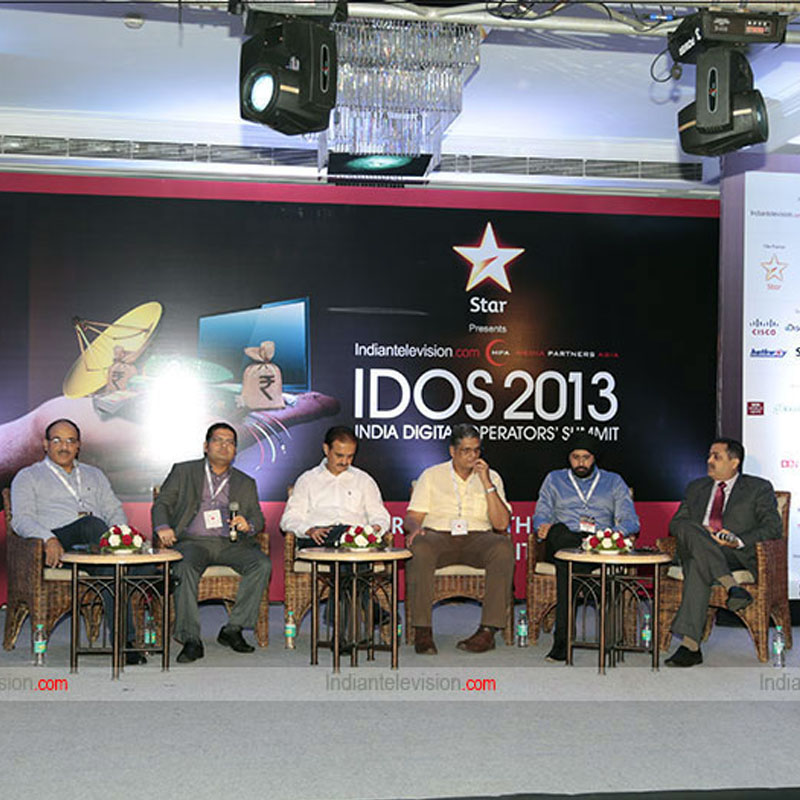
    GOA: With phase I and phase II on the cusp of completion, what are the lessons the digitising cable TV ecosystem has learned from their efforts? And how can this be put to use when industry moves into phase III and phase IV? This was the focus of the last session of the well-attended (it was houseful even on day two) IDOS 2013 in Goa.

    DEN Networks CEO SN Sharma said that his cable TV network was willing to take the punt and had enough investment to push into the territories it was targeting. “It won’t be easy but we are totally committed to doing it. Additionally, a lot of phase II was also done by local MSOs.  We see consolidation. In UK it happened. Five MSOs consolidated and are feeding around 90 per cent of the population there.”

    Hathway president Milind Karnik said that the last mile owner in many parts of phase III and phase IV has already upgraded and has awareness of and has already done some upgradation of infrastructure. “They will form cooperatives and consolidate and do what is needed. We too are going to move ahead forging relationships with local cable operators there, apart from serving some communities with our own headends.”

    Telecom Regulatory Authority of India (TRAI) principal advisor N Parameswaran said: “We expect like the telecom sector there will be some sharing of infrastructure.  We have learnt from phase I and phase II and there are many things we could have done better and will put those learnings in practice. There has to be some hygiene brought in terms of transparency and every other part of the process. Bill has to be generated to the subscriber. Service has to be provided. There will not be any looking back after that.”

    He urged MSOs and other players to understand that the dividends from phase I and phase II will start coming in with the addition of broadband delivery to subscribers. He further said a model has to be worked out between the MSOs and LCOs and TRAI would facilitate that.

    Also, in the wake of the continued depreciation of the Indian rupee against the dollar, the MSOs and LCOs feel that the government should give some subsidy to local manufacturers who are interested in setting up local units in the county to give a fillip to the industry.

    “We have got to come together. It has to be done together to resolve all the issues,” said Indian Broadcasting Foundation secretary general Shailesh Shah.

    Shah further added that the stakeholders would have to think how they can go deeper while addressing infrastructure problems. Carriage issue would also get resolved in a phased manner.

    Magnaquest CMO Ramakrishna Mashetty felt the landscape for the next phase of digitisation is different as compared to phase I and II as the cities are fragmented and low markets are there in the chart. “Most of the LCOs and market are unorganised,” he said.

    Telecom and Media lead analyst Rajiv Sharma said if the digitised headends start delivering incremental revenues in terms of services and ARPUs go up, return on investment (ROI) will improve. “Lot of external foreign investors are watching the space carefully,” he stated, adding that this imperative that some element of broadband be built in to the set top box so that the incremental revenues start accruing very quickly.

    Chrome Data Analytics & Media founder and MD Pankaj Krishna said the campaign in phase III and IV would be different. “The first two phases communicated and played on the principle of fear of blackout for consumers. The communications to the consumer during the third and fourth phase should focus on the benefits that a box can provide to users.”

    Parameswaran also addressed the issue of entertainment tax. “We have been working on understanding taxation levels which are a state subject versus a federal TDS or income tax,” he said. “But we are not averse to once again address this issue.”

    But what added spark to the panel discussion was the disclosure that the ministry of information and broadcasting was working with the department of telecommunications and MSOs to enable them to use already existing government and other infrastructure to help them as things start moving into phase III.

    The other good news is that bills – especially in Delhi – are slated to go out to subscribers in October, and online bills will follow later but interests of the LMO will be kept in mind.

    Parameswaran had the final word. Said he: “Digitisation will go ahead as planned. We are totally committed to it.”

  • DEN lends its ears to LCOs’ apprehensions


    MUMBAI: As India‘s government-mandated cable TV digitisation rolls out, one person who has been feeling threatened is the local cable operator (LCO). To address this concern, DEN Networks, Star India and Dolby in collaboration hosted a road show ‘DAS: Daulat aur Shahrat’. The initiative was an effort to reaffirm the trust and also appreciate the LCOs for their efforts for successful implementation of phase II of digital addressable systems (DAS).


    The first set of the roadshows, attended by 50 LCOs, was conducted in Kanpur on 19 August and in Lucknow on 21 August. Hosted by Star India on behalf of DEN in association with Dolby, the road show educated the LCOs about the opportunities created by digitisation. “This was the first initiative where the broadcaster, MSO and LCO all came together to talk about the latest in digitisation,” says DEN Networks CEO S.N. Sharma.


    The road show was a step towards creating a platform for the various players in the ecosystem. “This was an effort to inform them that digitisation will help them increase proportionate revenue for their services,” he adds.


    The implementation of DAS across India is a massive undertaking which promises a complete transformation of the Indian media landscape. “This initiative was aimed at DEN’s LCOs, who are the face of the MSO for the subscriber and focused at informing and educating them about the tremendous opportunities that digital cable has to offer,” informs Sharma.


    The LCOs were also made aware of the potential revenue streams due to a wider and better service offering bought in by digitisation such as multiple TV connections, HD, value added services and broadband.

    Digitisation brings with it opportunities even for LCOs says S.N. Sharma

    The conference also elaborated on the challenges lying ahead. “Concerted and continuous efforts from stakeholders can make digitisation a grand success in the remaining territories.”


    To ensure that the transition is more seamless for the subscriber and the LCO, DEN also announced a plethora of schemes on educating the consumer regarding channel packages and filling of package authorisation forms (PAF) before the TRAI deadline of 20 September, 2013.


    Speaking on the concerns of the LCOs, Sharma says, “The LCO feels that his livelihood will be affected post implementation of digitisation and channel packaging. We through the road show have informed them of the benefits of digitisation and explained that life will be great post digitisation.”


    DEN last year conducted a training programme before implementing its digitisation rollout. “That was to make them aware and also address their concerns.”


    The current roadshow, which involved the broadcaster and also the technology partner Dolby, was well received. “It has given us the confidence to try and explore more such forums in other cities and states.”


    Though no specific timeline has yet been set, but the MSO is exploring many more such modes of getting the LCOs together and addressing their concerns. “We will spread out across all markets in tier II cities and also those in the phase III of digitisation,” he informs.


    Clearly, the idea is to have a more joyous ride together on the road to digitisation.

  • Kolkata MSOs racing against time to meet DAS deadline

    Kolkata MSOs racing against time to meet DAS deadline

    KOLKATA: Multi System Operators (MSOs) and local cable operators (LCOs) in Kolkata are busy collecting the consumer application forms (CAF) and feeding in details for the complete implementation of the Digital Addressable System (DAS).

    “There’s a huge increase in workload, and everything has to be collected quicker and reported quicker,” says a Kolkata headquartered MSO. While a LOC says: “It’s very tiring to go home and get called back in again, and go home and get called back in again for clarifications and further clarifications.”

    With the Telecom Regulatory Authority of India (TRAI) confirming last week that it will strictly adhere to the 23 August deadline for implementation of subscriber management system (SMS) rollout in Kolkata, the MSOs and cable operators are collecting the know your client (KYC) form details and subscribers’ choice of channels swiftly and are racing against time to feed the data into their systems day and night.

    So far 30-35 per cent of the subscriber management system (SMS) data of cable consumers in Kolkata is completed as per the TRAI data.

    SitiCable which controls a substantial share of cable TV users in Kolkata said the call centers would update the details overnight. “We will work overnight and plan to achieve as much of the work before the deadline,” said SitiCable (Kolkata) director Suresh Sethia.

    SitiCable has set up around 11.5 lakh digital addressable systems (DAS) here.

    While for Manthan Broadband Services there are no holidays and Sundays. “We have 6.5 lakh to seven lakh subscribers. The CAF rate was around 25 per cent for us last week,” said Manthan Broadband Services director Sudip Ghosh.

    “The operators connected with Manthan are working 10 times faster than before,” added Ghosh.
    While Manthan Broadband Services director Gurmeet Singh, said: “With the regulation, we have to collect 100 per cent details. We have no other choice than asking the operators to work and achieve the target.”

    DEN Networks CEO SN Sharma said the CAF collection rate for it’s close to three lakh STBs in Kolkata is nearly 40 per cent-45 per cent.

    “Before the deadline, we aim to achieve 85 per cent -90 per cent work,” said Sharma with assurance.

    “The operators are so lethargic that the customers have not yet got the forms and we are getting calls from frantic TV viewers now,” said a MSO. “We have asked them to download the form from the website and fill it up, scan and mail it to us if possible so that their TV screens do not go blank,” he added.

    With just five days in hand to meet the switch-off date, other MSOs and LCOs said that they have deployed more personnel on shift and temporary basis.

    “Consumer Application Form (CAF) collection rate is expected to be around 70 per cent-75 per cent altogether in Kolkata by 23 August,” assumes Sethia.

    “Achieving 100 per cent target by 23 August is next to impossible. Kolkata will miss the deadline,” said Association of Cable Operators, Cable Operators Digitalisation Committee convener Swapan Chowdhury. “But the cable TV industry people are toiling hard now,” he expounded.

    On the other hand industry sources on the condition of anonymity said it is not possible to give authentic data in just five days. “Filling up more than 18 lakh CAFs is not a matter of joke. The LCO may tick mark the preference of the users themselves,” he said. “For not providing genuine information, the MSOs may face dreadful consequences,” he hinted.

    If around 5,000 local cable operators and 14 MSOs, which provide service in DAS areas do not abide by the deadline of submitting the CAFs, TRAI may file a case against any MSO, concluded a source.

    With the clock ticking and TRAI not willing to give any leeway, the MSOs and LCOs have their work cut out.