Tag: SN Sharma

  • BARC India and DEN Networks join hands for RPD; move to boost TV viewership measurement

    BARC India and DEN Networks join hands for RPD; move to boost TV viewership measurement

    MUMBAl: TV viewership measurement in India is set to get a boost. In a major development, BARC India has partnered with the cable distribution giant DEN Networks for measuring TV viewership using Return Path Data (RPD) via its digital set-top boxes (STBs).

    As part of this partnership, BARC India will fetch data from STBs of DEN Networks. DEN networks, will also use this data for subscriber management, packaging opportunities and to drive advertising revenue on their in-house channels.

    BARC India, will use a portion of DEN Networks subscriber base to augment its TV measurement service. The large pool of panel households will also help address the issue of panel home tampering.  

    BARC India had recently upped its panel home size to 30,000. These RPD partnerships will enable BARC India to capture viewership from an exponentially larger panel.

    “Collecting viewership data using RPD is a global practice. However, for BARC India it will be another global-first as we integrate this as part of the currency. Our partnership with DEN is the first step towards using RPD for TV viewership measurement,” said BARC India CBO Romil Ramgarhia.

    BARC India, which is looking at partnering with more Cable and DTH operators for RPD, believes that this approach will allow expansion of panel households to over 150,000 in the near future.

    “Currently, most cable / DTH operators in India do not have information on how their subscribers consume content. With more interactive services being launched, this will be a very valuable information for the platform owners. This partnership is a win-win for both and will benefit the larger ecosystem,” added Romil.

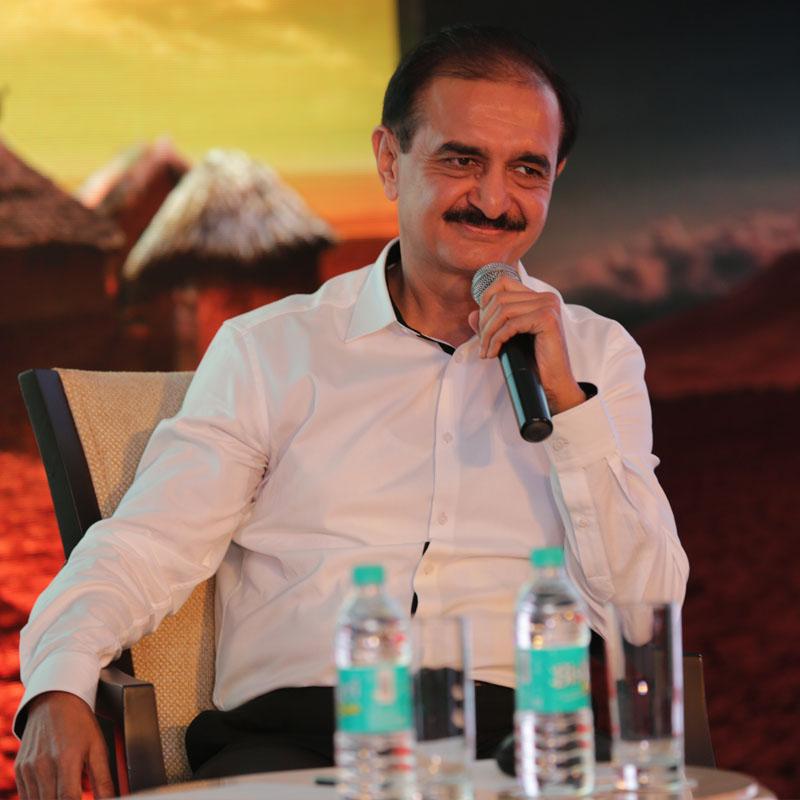
    DEN Networks CEO SN Sharma said, “Data gathering and analytics is becoming increasingly relevant in a vast and heterogeneous society like India.  With this partnership, we have taken the first steps towards world class data analytics of subscriber viewing patterns which will help us to serve our customers in a far more effective way and enabling us to offer personalised services.”

    Also Read:

    BARC India in talks with DTH ops, MSOs for RPD to boost robustness 

    BARC India to TRAI and MIB: Tweak legislation to make data tamper-proof

    BARC India to halt analogue measurement from July, up overall data collection

    Industry needs to understand on-ground changes in distribution, not question flux in data, says Partho Dasgupta

  • IDOS 2017: OTT is here to stay but may not replace pay TV

    IDOS 2017: OTT is here to stay but may not replace pay TV

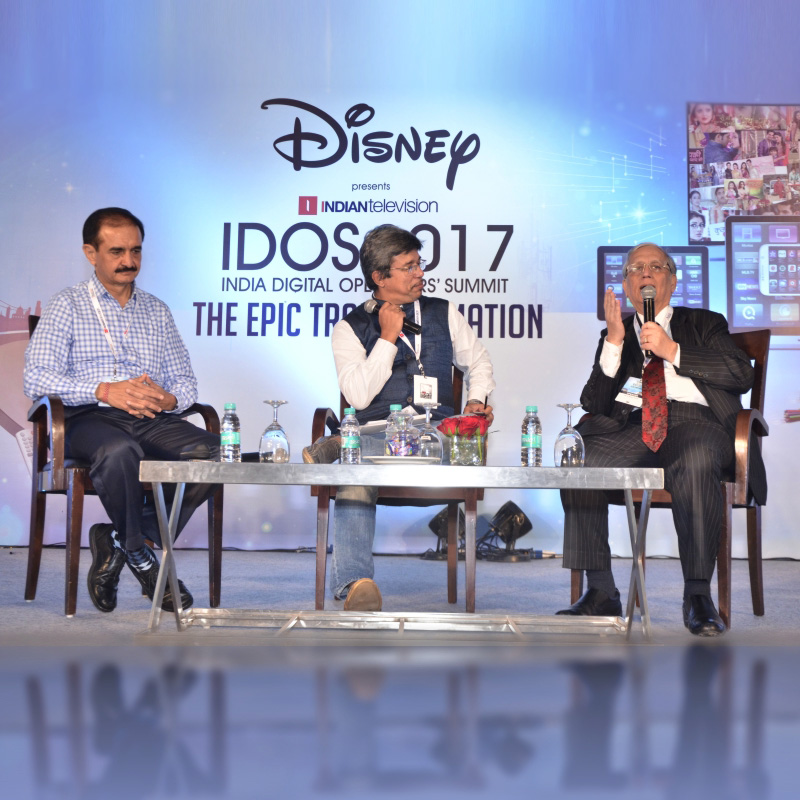
    NEW DELHI: The over-the-top (OTT) medium is here to stay and cannot be put down, but the television medium will continue to survive in the face of this challenge in India.

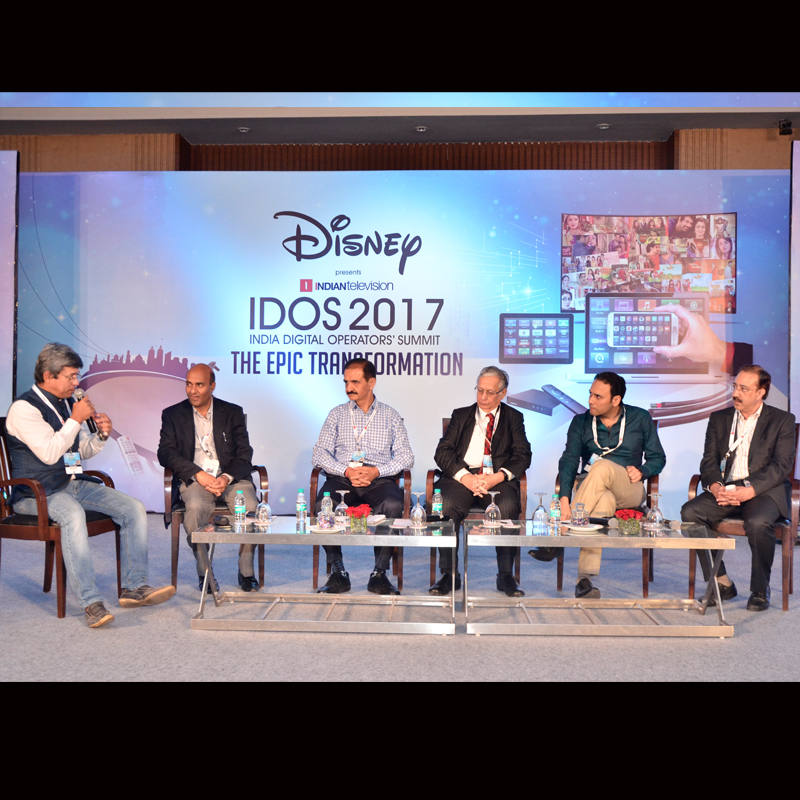
    The stressful life of today and the relationship built by the local cable operator are other reasons for the survival and well-being of the television medium. These were some of the views expressed at a discussion on the OTT Challenge to Pay TV at the Indian Digital Operators Summit organised by indiantelevision.com and moderated by the latter’s founder, CEO and editor-in-chief Anil Wanvari.

    Viacom 18 Digital Ventures’ senior vice-president and head of marketing Akash Banerji said that OTT would fundamentally change the scenario but admitted that “we over-estimate the short term, and under-estimate the long term.” He felt that the impact of OTT on pay TV may begin to show some change by 2020-21, but not immediately.

    Clearly, he said, some disconnect with the cable operators had led to the growth of OTT. Secondly, OTT was providing the content relevant to the individual viewer. Thirdly, he said that Viacom 18 was for the first time indulging in a B2C model where the consumer had the last word. He, however, admitted that the long-term survival of OTT lay in the medium moving to a subscriber-based scenario.

    Shaji Mathews, who has recently joined as the CEO of Kerala Cable Communicators in Kochi, said that OTT was no challenge, and (on the contrary) it would augment TV. He was confident that wired technologies will continue to dominate even as wireless technologies attempt to make inroads.

    He also felt that there was no level playing field for OTT at present, and so growth will take time.

    DEN Networks CEO S N Sharma said that the MSOs had entered the field of OTT in an attempt to provide a platform to various OTT players only to reach the consumer, realising that the consumer habits are changing. DEN had made inroads as far as fee-to-air OTT was concerned, and was only amalgamating the OTT players. The aim was to move with technology.

    Ashok Mansukhani of Hinduja Media Group admitted that OTT was a gigantic disruptor of the entire value chain but felt it would take some years to make inroads.

    Vynsley Fernandes of CastleMedia felt that the growth of OTT would largely depend on who has the TV remote in the home.

    Sisir Pillai of Lukup Media was confident that whatever the medium, it would survive if it had adequate content.

  • IDOS 2017: Cable TV sector needs more collaborative broadcasters, say MSOs

    IDOS 2017: Cable TV sector needs more collaborative broadcasters, say MSOs

    NEW DELHI: Even as the multi-system operators and cable operator are doing their bit to aid digitisation, broadcasters need to participate more in the process which officially has been completed. They need to be more transparent and supportive of the distribution platform operator — in this case the MSO and cable TV operator — and not be like a tax collector always asking for more.

    This was the general view of both, S N Sharma of Den and Ashok Mansukhani of Incable in a discussion in ‘The Indian MSO: Redefining the raison’etre’, who also said it was only now that the MSO was beginning to monetise almost five years after digital addressable system was first launched.

    Furthermore, the broadcasters were still free to fund the business as they wanted, and, as Sharma put it, there are only two laws that control the broadcaster – the Programme and Advertising Codes and the Cable Television Networks (Regulation) Act 1995. Thus, there is virtually no regulation for the broadcaster, Sharma said.

    Both, Sharma and Mansukhani agreed that MSOs and even LCOs had put in a lot of effort to get DAS off the ground — that too in a period of four to five years, which is unprecedented globally.

    “The DAS regulation was brought in for transparency and to allow everyone to have a fair share of the huge subscription revenues that viewers were paying to watch cable TV,” said Sharma. “But, the sad part is that broadcasters are constantly asking for rate increases of 24 per cent or so without even asking if it were possible,” added Mansukhani.

    They said that it would be better if the broadcasters were to communicate rate increases to viewers and invest in promoting that, rather than expecting MSOs who are just about recovering from the hangover of the huge investments they have put into DAS as well as getting robust systems and processes in place. “Also, we are not equipped or have the creative mindset to communicate this effectively for all channels,” agreed both Sharma and Mansukhani.

    Rather than going to courts to stall the TRAI tariff order, they said, broadcasters could collaboratively work with the DPOs to take DAS on to the next level. “Neither the government nor the regulator has been able to do anything,” they said.

    “We have our own troubles, recouping our investments to bring back profitability into the cable TV sector, as well as dealing with piracy and leakages which broadcasters take time to check and stop because they have procedures to follow,” said Sharma.

    Mansukhani disagreed with Indiantelevision.com founder, CEO and editor-in-chief Anil Wanvari that the cable TV sector will not be in a position to manage complicated skinny a la carte bundles for the millions of customers that it serves. “Our backends are ready,” he said. “Our SMS, billing and KYC of the customers is in place,” he said. “We are just waiting for the (court) order to come through.”

    He opined that the industry would ultimately survive the changes, and he was also confident that the cable industry was ready to adapt to any new technology.
    To a question about monetisation, Sharma said the MSOs were not beginning to reap the monetary benefits of Phase I. Even the DTH industry was beginning to break even only now, more than a decade after it was launched.
    Mansukhani said he was happy that the Hinduja’s headend in the sky (HITS) NXTDigital was reaching 1.5 million consumers. But, the need was to break even as early as possible and “giving a dividend to my shareholders.”

    But, he stressed the need to keep the dialogue open with the LCOs who are the ones dealing with the consumer. Consumer connect has to continue. He regretted that the level playing field that he had hoped to get from the government has never came.

    Both Mansukhani and Sharma agreed that, though the government had not made a difference between the urban and rural viewers, this was necessary if there has to be penetration in rural areas. Otherwise, they would go to Doordarshan’s FreeDish.

    Sharma said his company was soon launching a device that would not be internet-based and could be used for all gadgets including mobiles, TV, tabs, and so on.

    Mansukhani said that it was clear that the MSO will have to graduate from being a TV MSO to a multi-screen MSO.

  • Furnish details of cable connections, Delhi Govt asks operators, MSOs wary of cascading effect

    MUMBAI: The Delhi government has ordered cable operators to furnish the number of subscribers, an attempt which seems to be driven by the idea of increasing entertainment tax collection. Cable operators generally pay entertainment tax based on the number of their connections. It is unclear whether the government plans to claim tax from retrospective effect or not, and what is the period it is claiming tax for.

    Speaking to www.indiantelevision.com, the country’s apex body for digital multi-system operators (MSOs) All-India Digital Cable Federation (AIDCF) secretary-general Saharsh Damani agreed that he had come across reports of local cable operators (LCOs) receiving tax notices. If the government were to demand and recover entertainment taxes from LCOs for the last 4-5 years, Damani opined, it would become difficult for the operators to survive commercially. If the LCOs were severely affected, it would obviously have had a cascading severe effect on the MSOs, he added.

    A written communication has reportedly been sent to multi-system operators (MSOs) to submit details of their local cable operators and cable connections at the earliest, according to the entertainment tax department. However, Den Networks CEO SN Sharma, speaking to www.indiantelevision.com, denied receiving any communication so far. Damani also replied in the negative.

    The department has reportedly asked MSOs, around 20 in Delhi, to provide details of their cable connections with each local cable operator (LCO). The department has also sought details of addresses and phone numbers of local cable operators under them, an official said. The decision has been taken to increase tax collection, the official said.

    According to the department, the government had collected Rs 160.72 crore in taxes in the financial year 2014-15, while it increased to Rs 261.94 crore in the fiscal 2015-16.

    The Delhi High Court had recently held that MSOs and LCOs distributing television signals to subscribers directly are liable to collect and pay entertainment to the government. The court’s decision came on pleas filed by four MSOs – Hathway Cable and Datacom Ltd, DEN Networks Ltd, IndusInd Media and Communications and SITI Cable Network Ltd. They had moved the court challenging the levy of entertainment tax and vires of the Delhi Entertainment and BettingTax Rules.

    The four had sought quashing of the Delhi government’s 17 December, 2012, circular and show cause notices issued in January 2014 directing them to deposit tax beginning April 2013. Delhi had threatened to halt cable TV transmission of the MSOs by closing their headends. The government had stated that the assessment of the MSOs bared that they had been indulging in tax fraud in crore since April 2013. 

    A bench of justices Sanjeev Sachdeva and Badar Durrez Ahemed, however, quashed the Delhi government’s December 2012 circular and show-cause notices served by its Department of Entertainment Tax asking the MSOs to to pay entertainment tax or face action.

    Also Read:

    Entertainment tax: MSOs & LCOs must collect & pay, HC halts Delhi ‘action’

    Subhash Chandra hails GST, seeks new tax system & ease of doing biz

  • Don’t compete with Den Enjoy, Delhi HC restrains two MSOs

    NEW DELHI: The Delhi High Court has restrained Omeshwar Singh and UCS Broadband Company from “commencing any business which directly competes with the business” of M/s Den Enjoy Cable Networks Private Limited till the next date of hearing.

    Justice Vibhu Bakhru also ‘directed’ Den Enjoy to “take the necessary steps to invoke the Arbitration Clause.”

    While issuing notice to the respondents and listed the matter for 11 May 2017, the respondents were asked to file their reply within two weeks, and a rejoinder if any could be filed within a week thereafter.

    The Court, in its order of 21 March 2017, also noted that “it appears that Omeshwar Singh is attempting to avoid his contractual obligations by using the corporate façade of UCS Broadband Company for improper purpose.”

    However, the Court also said this was only “prima facie view at an ad interim stage, and would not preclude the respondent from raising all contentions which would be considered at a later stage.”

    (Earlier, on 11 March 2017, the Court had “dismissed as withdrawn” a petition on this issue after Den Enjoy sought liberty to withdraw, and file a fresh petition.)

    Den Enjoy had filed the case against Singh for engaging in competing business in complete disregard of the non-compete terms of the Share Subscription Agreement. It was alleged that Singh, through his company UCS Broadband, not only obtained / applied for Digital Access permission but also approached cable operators of Den Enjoy and broadcasters for content.

    Omeshwar Singh is a founder shareholder, and had been Den’s agent from Lucknow. He presently holds 16.33 per cent shareholding in Den Enjoy.

    Omeshwar Singh’s counsel Vineet Bhagat had made an appearance as a result of a caveat filed by him through his counsel apprehending such a petition. The Court noted his argument that Section 27 of the Contract Act was clear that pre-compete condition was void and against the law. Bhagat said enforcement of any no-competition clause would amount to creation of a monopoly. He also argued that the agreement between Den Enjoy and the respondents was only related to Lucknow.

    Den Enjoy Cable Networks Pvt. Ltd. is a joint venture company (JVC) of Den Networks Ltd. The company is engaged in the business of providing cable television services in Lucknow.

    Den Enjoy, in a press release issued later, also said the order had come after its counsel Arun Kathpalia submitted that Singh is a director and one of the major shareholders of the company, and drew attention of the court to the clause 24 (non-compete) of the Share Subscription Agreement reached between the company and shareholders of the company.

    However, Singh told indiantelevision.com that he had resigned from UCS Broadband Company on 30 July last year and even sold his shareholding in October 2016.

    Singh also claimed that UCS was not using his Lucknow residential premises as its office, though the judge had noted that respondent’s counsel had not disputed this fact in Court. He said that he been living at different premises since April 2012.

    Meanwhile, a UCS Broadband official informed indiantelevision.com that it has already obtained a licence to operate in Tanda in District Ambedkar Nagar (Uttar Pradesh) which falls under DAS Phase IV.

  • DEN is focused on upping subscription revenue & be future-ready: SN Sharma

    In the Indian broadcast and cable industry, SN Sharma is regarded as a sharp planner, quick on the uptake and a `yaron ka yaar’ (a true friend). However, as with any successful corporate exec, Sharma too has had his share of critics throwing allegations; most of them have not stuck, though. Otherwise, DEN Networks Ltd promoter Sameer Manchanda, known for his sharp understanding of human nature and a tough taskmaster, wouldn’t have got Sharma back for a second stint as a CEO to spruce up a company that had been performing below expectations on various counts.

    At the helm at DEN at an exciting phase of evolution of Indian cable sector, Sharma has got his work cut out — reduce the losses, wherever they are, and use his wide influence and network amongst the cable operators to sign up with the MSO. No wonder, his return to DEN from Reliance Jio last year, reportedly, convinced various cable operators to host few parties as they think `acche din’ (good days) are finally here. However, a small slip on Sharma’s part can shatter these high expectations of his employers and cable fraternity.  

    In a conversation with Indiantelevision.com’s Consulting Editor Anjan Mitra, Sharma holds forth on an array of subjects from reasons behind renewed focus on core business of the company, shedding loss-making investments, the way Indian landscape is changing with digitization, company’s insistence on cable subscription collections and getting future-ready. Edited excerpts from the interview.

    How would you view the cable industry at present in India?

    The cable industry in India has evolved over the years, but I would say it took some definite shape 2012 onwards in two ways. Till 2012 it was all analog though there were some attempts to bring about CAS (conditional access system) in the past, which just did not take off. So the analog regime continued till 2012 without any subscription revenue being captured by MSOs before that.  If at all something was being collected, it was in the range of Rs. 5 per subscriber. Various constituents of distribution networks — MSOs, LCOs, broadcasters and subscribers — were playing their own games. MSOs managed to survive those turbulent days because of the carriage fee charged from broadcasters. Part of that carriage money went back to broadcasters as subscription charges of their TV channels and, in the end, a broadcaster kept majority of the subscription revenue collected from subscribers. To add to the industry’s woes, the technology available was basic and there were no ways available, or being deployed, to get a count of the subscriber base or churn.

    Come 2012 and three metros matured quite ably into digital markets. People saw some change happening as the legacy businesses signaled evolution. With the sunset dates being announced by the government and regulator, there was a new hope that change is ultimately here and the industry will have to adapt itself.

    Q: What did this great hope for change bring about and what were the failures?

    Based on the hope that the Indian broadcast and cable industry was finally undergoing a major change towards digital that would bring about transparency in the whole eco-system, investors supported MSOs with their investments. The MSOs, in turn, invested in the digital cable infrastructure, building it up from the scratch literally, along with deployment of digital set-top-boxes. But in their hurry to capture subscribers, which was based on the presumption that subscription revenue will flow in, majority of the boxes were subsidized that ultimately went to add to the losses for MSOs.

    MSOs simply failed to monetize the digital structure despite investing in it, while monetization of the analog areas too dipped. Reason being legacy business models pushed back at changes that were sought to be brought about. Broadcasters, though, were smarter. Sensing that subscription revenues will be upped that can get them a bigger share of the revenue pie, excel sheets were spruced and changed accordingly to hike channel tariffs. However, the change being hoped for was not adequate. It’s difficult to change an existing system, especially so in India. It’s a human tendency. It took even the MSOs and LCOs some time to fully comprehend the new digital structure,including things like SMS, CAS and other technologies employed. Making the LCOs understand that a new structure will benefit them also and they too needed to change was a bigger challenge. Still, things started to look up by early to middle of 2016 when we at DEN took the initiative to start pushing the subscription (collection) process.

    Q: You mean though green shoots of changes were seen since 2012, things on the ground changed faster from last year?

    The period 2013-2016 did see some changes on the ground too and it would be wrong on my part not to admit them. For example, efforts made in Phase I cities yielded dividends. In some parts of these cities, MSOs did manage to get a share of Rs. 100/subscriber/month. However, phase 2 and 3 were struggling and we could only manage Rs. 35 and Rs. 20 per subscriber, per month, respectively.

    What’s the big attitudinal change that DEN undertook when it realized subscription collection could be upped?

    I don’t know whether it’s an attitudinal change or not, but our new resolve made more business sense. We took the initiative of announcing that whosoever wanted to do business with us had to adhere to our applicable subscription charges. When I rejoined DEN mid 2016, mandate given to me was simple: push for hike in subscription revenue collection from the ground. I had open sessions with all our business associates in a transparent manner and conveyed to them clearly where and what we have invested and what were our expectations from associates. We got support from our associates on the concept that we were selling them.

    Apart from the requirements of the organization, there were compelling reasons too for getting in place a structure quickly and focus on subscription revenue. Delivery technologies were changing fast and there were pressures from DTH operators. These platforms were aggressively selling to consumers their services at rates that were very competitive.  Broadcasters, on the other hand, were demanding a bigger share of the revenue pie. Now, all these pressures were not only visible on the ground, but were being felt by LCOs too. All these factors put together, along with support coming in from TRAI that helped with small tweaks in regulations (like swapping of boxes) in 2016, also made the LCOs understand the importance of getting a proper structure in place. When I re-joined, I ensured that all agreements with LCOs and our business associates were put in place in a transparent and orderly manner.

    If you were asked to encapsulate DEN’s message to all business associates, what would that be?

    We gave a message to business associates, distributors, LCOs and JV partners that had four components. First, the need of the hour was to survive and catch up with companies’ bottomlines. Second, there was a present and clear competition from newer technologies. Third,  DTH players were certainly making concerted efforts to snare more subscribers as they had the advantage of starting from a digital base, unlike cable TV that is trying to make the switchover from analog to digital. And last, there was a need to upgrade technology and infrastructure and, for doing that, financial investments were necessary.

    Not that these factors were invisible to our business associates. It’s a basic lethargy to change and lack of proper understanding of the importance of the change needed that kept LCOs from undertaking business restructuring. Unless transparency is brought about in the eco-system, future investments will not be available and unless that happens to grow the business in a modern world, LCOs and MSOs would find it difficult to survive. As an MSO, we have got the boxes seeded and it won’t be out of place to demand a fair share of the revenues collected.

    How successful has been DEN in these new initiatives aimed at business restructuring?

    In a six-month journey, in phase 1 areas where ARPU is Rs 100, DEN is able to capture Rs. 125 per subscriber; phase II ARPU has increased from Rs. 45-65 to between Rs. 90-100; phase 3 subscription has risen from Rs. 30-40 to Rs. 65-75. In phase IV where the digitisation process started this year, we have crossed an ARPU of Rs.35-40 per subscriber per month already. Future path is now chalked out as TRAI and broadcasters too are not distinguishing whether the content is being shown in urban centres or semi-urban areas as far as tariff structures are concerned. LCOs and subscribers in all phases have realised that MSOs cannot keep on subsidising the content for LCOs and consumers.

    Earlier, MSOs was getting close to 10 per cent of subscription revenue collected from the ground. But then TRAI in a fair manner handed out a formula based on which every stakeholder was to get a share from the subscription revenue pie. I believe if you follow regulations, life would be simpler. DEN signs inter-connect agreements with all its partners and if there are defaults, then signals are switched off. The seriousness of our intent is loud and clear — if you sign up, we’d do business; if you don’t sign up with us, we would switch off DEN’s signals. Such a stand has resulted in DEN collecting close to 40-45 per cent of the consumer subscription revenue now.

    If LCOs, associates and consumers understand the gravity of the change taking place, why differences amongst stakeholders persist and there’s a resistance to TRAI’s tariff guidelines?

    The biggest change is the consumer who has realized that if good services are to be had, then there’s a price attached to availing those. Kudos to the regulator too that it has kept modifying its regulations from time to time as per the need of the day. In an analog regime, it set out guidelines suited for that phase. When digitization rollout started happening, TRAI was aware there would be phases of overlap of analog and digital during transition. After completion of three phases of DAS, the regulator came out with a comprehensive tariff and inter-connect structures for a digital era, which was challenged in the court. I would say the regulator has done a great job. Sooner or later stakeholders will adjust to each other’s needs because a clear road map has been etched out by the regulator.

    (This interview was taken before Supreme Court recently allowed TRAI to announce its tariff, interconnect and QoS guidelines, even while a case questioning TRAI’s power to regulate tariff issues relating to copyrights and IPR is pending final disposal at Madras High Court)

    As a big MSOs, what are DEN’s views on TRAI’s suggested regulations on tariff, inter connections and quality of services?

    We are very much excited with this revised proposed tariffs and I would say the guidelines are well drafted.  Some stakeholders may ask for some tweaks, but on a broader perspective the guidelines point to the right directions. For example, for the first time TRAI has not only given importance and value to distribution pipes that MSOs own, but has clearly spelt out what needs to be paid for using these distribution pipes. This is a big transformation as, till now, MSOs were the only ones making investments and attempting to bring about transparency in the eco-system. As increasing value-added services (VAS) are delivered via this pipe, the importance of it would be further highlighted.

    What would be the areas of push for DEN in phase 3 and 4 of digitisation?

    In phase I and II areas, DEN has five million boxes seeded in the market, while our share in phase III areas is another five million boxes. Our total universe is approximately 13 million, including some phase IV areas. But out of that total universe, a portion is still analog, while the total number of digital boxes is a shade over 10 million. So our present focus would be to take care of the analog boxes that are already in our kitty as subscribers, while aggressively adding more in the remaining period of last phase.  

    Apart from the boxes, I reiterate, overall focus of DEN is increasing subscription revenue collection from the ground in a transparent manner, taking the share that’s due to us. This focus has resulted in LCOs too hiking their subscription rates within the regulatory framework. This is also a change as LCOs earlier in a monopolistic regime, never had to market their services, which they are doing now after regulatory pushes and visible changes in consumer consumption pattern. Today’s consumer of video is savvy, both from the point of regulations and technology available to them like mobile devises at affordable prices. Today, a customer even from smaller towns and cities is willing to pay for the experience as he values the experience. If the experience and service is good, a customer doesn’t mind paying. Adoption of new technology of cable TV will be faster if consumers are properly and extensively educated, along with effective marketing of services.

    Would MSOs be able to charge consumers Rs. 500 per month, at par with OTT services, after digitization is complete; at least in phase I and II areas?

    Consumers in phase I and II areas definitely have higher purchasing power than others, but you have to appreciate that the increase in ARPUs in these two phase-areas is also because work has been continuing over several years. Still, to answer your question, I don’t see MSOs charging Rs. 500 per month for their services immediately. However, with HD services, over a period of one year the charges may rise to Rs. 400 per month. But then LCOs too need to bring in more HD boxes.

    Q: Would you agree with visionary Subhash Chandra when he recently told cable ops they were not keeping pace with consumer behavioural changes globally and the boxes presently being deployed were very basic and tech is changing faster than business models are made?

    Of course yes. Subhashji sees the future much before others do and he’s correct in highlighting such global trends. At DEN, we are very conscious of technological changes coming in to our life and are ensuring that we keep pace with the times. Keeping these global trends in mind, we recently announced a new HD service subscription. It is consumer and LCO friendly and in next six months, DEN will push HD boxes extensively. The HD box is feature-rich and would help us in increasing subscription too.

    Our HD box features include HDTV /SDTV MPEG-4 H.264 AVC & MPEG 2 decoding; SD video up scaling to HD resolution via HDMI port, improving picture quality; SPDIF output to connect external HI-FI system or home theater for Dolby pass-through; USB 2.0 for external PVR/recording function by connecting USB pen drive as low as 4GB or USB HDD up to 1 TB and audio, video and photo play back via USB drive. Additional features (Wi-Fi and Bluetooth) related to two- way functionality are under development and would be available in a month’s time. This will help to use mobile handset as STB remote with an application and enabling interactive applications like You Tube, etc.

    Then DEN is also working on a hybrid open STB where the features likely to include STB acting as home gateway for video services in the homes with an Android Open Service Platform (AOSP) and DVB-C support; enhanced 2D & 3D graphics support with latest open GL ES 2.0 / 3.0 to support high quality games; USB 3.0 to connect external HDD to enable high speed data transfer for recording and playback and integrated Bluetooth and Wi-Fi to support two-way communication.

    We aim to seed in the market at least one million HD boxes over the next 12 months. I was surprised to get feedbacks from consumers and partner LCOs after touring small towns. There’s a fairly good demand for HD boxes in such places too. And, sitting in metros, we used to think consumers in small towns of India would not be able to afford HD boxes, which are certainly costlier than the normal boxes given to them earlier.

    Any plans for 4K boxes?

    We do plan to launch 4k boxes over the next six months as per evolving technologies and global trends very much visible in markets like the US and Europe. Such boxes would be rich in features like digital video recorder, in-built apps and go a long way in changing consumer experience. Though, we do foresee inadequate supply of 4K programming, consumer behaviour is changing and, according to our assessment, there would be a sizable number of buyers for high-end boxes, including HD, if properly marketed to consumers.

    DEN launched its broadband services with much fanfare, but losses have increased. Would you continue with it?

    We have already broken even in our broadband business as of Q3 of FY 2017. Our YTD Q3 losses are at Rs. 110 million vs. Rs. 650 million in the previous full year. We have done some experimentation in Delhi and Kanpur and not only do we plan to continue with the service, but expand it too. We plan to launch our broadband services in 15 to 20 new small towns over the next six to nine months as overall capex on rollout and subscribers is dropping. With an ARPU of Rs. 750 per month per subscriber in Delhi, we see that there would be demand for such a quality service. We plan to target smaller towns in phase II and III areas of digitization. The broadband EBITDA broke even for Q3 FY’17 despite the freebie blitz unveiled by some telcos.

    (According to data available, DEN added 20k broadband subscribers in Q3 FY’17 with the total subscriber base being 159,000; the figure for homes-passed standing at 864,000. While the year-on-year growth for broadband business was 82 per cent as on Q3, the total revenue and ARPU for the quarter were Rs 210 million and Rs 752, respectively.)

    Does DEN own OFC or leases it from associates?

    Our ownership of optic fiber is a combination of several methods. DEN itself owns several thousand kms of fiber, while we also lease from others in an attempt to future-ready our delivery pipes. Then we also use telcos’ fiber to deliver our services employing an IP technology. Our and our associates’ fiber pipes are now almost 300 to 500 meters away from each home of our direct and indirect subscriber.  That is how close we are to our consumer and, with time, we’d like to move closer. As technology marches on, a cost-value analysis will permit us to be as near as 200 meters of the last mile, which can be coax cable too. But I must insist that Indian cable distribution after digital rollout started is undergoing a huge transformation and is, exceptions notwithstanding, now ready to adopt all the future technologies, including providing high-speed broadband and other VAS, which are now surfacing globally.

    Another of DEN’s new initiative is to join the already crowding space of OTT services.  What are the reasons for doing so when bigger players are searching for revenue models?

    OTT is an additional service that can be delivered over the delivery pipe that also will supply hi-speed broadband. We are not looking at OTT space from the perspective of additional revenue. This service is to give comprehensive experience to our existing consumers as of now and highlight the fact that DEN is available to them on the go, apart from at home and work place. We currently have almost 130-140 live channels, 10,000 hours of quality video content and approximately 2,000 movie titles. Our overall approach is to be future-ready and establish consumer loyalty for DEN services. The OTT service and the app can be upgraded with new features and TV channels. However, we are not looking at getting into production of original content for the OTT service.

    How is DEN utilizing the funds from investors, both foreign and domestic?

    A major part of the investments have been in the cable business. As monetization of the company’s businesses happen, especially with digital rollout, there has been a reinforcement of confidence of investors. In the last couple of quarters, the increase in subscription revenue has not only made our investors look positive, but we also see movements in investment community that is looking at this sector in a positive way.

    Is DEN looking to raise additional funding to fund growth in areas like media and sports?

    DEN has invested in media and non-media ventures, but we are evaluating some of the investments at this point of time. Let me first clarify, DEN as a corporate entity has not made any investment in (Arnab Goswami’s) Republic TV. We invested in domestic football league and in a JV with Snapdeal for a home shopping channel. However, our experiences now tell us that we should focus on our core business, which is cable TV distribution. We have conveyed to the Board of Directors that we are actively exploring suitable exit modes involving both these investments. As we are left with only 20 per cent stake in the football venture, no cost accrues to us.

    How would you describe DEN’s bottomline?

    It is a healthy and growing bottomline.  Our consolidated 9-month EBITDA for the current financial year stands at Rs 870 million positive vs. the EBITDA loss of Rs. 1070 million during the same period in the previous year. As of now, cable business has grown well and turned around.  Last year, the losses were heavy because of our other loss-making businesses like broadband and investments in ventures like football and TV shopping channel. With football (investments) been dribbled away and broadband segment stabilizing, I would hope to close the FY 2016-17 (ending March 31,2017) on a high, though it may not be big. The journey from here should be smooth — minor negatives because of initial losses earlier, notwithstanding — and our renewed focus on core business of cable TV distribution with an agenda to correcting the subscription revenues should help.

    (According to figures available with investors, DEN’s digital subscribers contributed Rs. 10.2 crore or Rs 102 million in Q3 of FY 2016-17 to the overall quarterly revenue kitty. Cable subscriptions registered a growth of 15 per cent quarter-on-quarter. Not only DAS phase 1 EBITDA stood at 30+ per cent, DAS phase 3’s monetisation was Rs. 65, inclusive of taxes, as on December ’16.)

    Q: What is your medium to long to term vision for DEN?

    I would like to convert 50 per cent of my SD box consumers into HD subs in five years’ time, while I would like to convert at least 10 per cent of the SD boxes into HD over the next 12-15 months. These conversions will also help in upping subscription revenue collections.  In five years’ time, I would also like to have one million 4K boxes seeded in consumer homes and be elated to have a total subscriber base of 20 million.
     

  • DEN Networks launches DEN TV+, OTT services

    MUMBAI: DEN Networks, one of the largest cable MSO in India, has launched its user-friendly online / live streaming platform today- DEN TV+ where users can access / watch the content on the go. Exclusively for DEN Cable & Broadband subscribers, it is available for download on all the devices which are on Android and iOS platforms.

    Commenting on the launch, DEN Networks Pvt. Ltd. CEO SN Sharma said, “We are excited to launch DEN TV+, DEN’s very own mobile TV app, where our viewers can now watch TV on their mobiles & tablets. Being a leading distribution platform, the idea is to complement our CATV offering to consumers and make it available for our customers on the move anytime, anywhere. DEN TV+ provides live streaming of 130 TV channels, 2500+ movies and recorded videos including popular shows/serials, devotional content, lifestyle content and much more. The service is currently free of cost as an initial launch offer. We are always exploring newer ways to provide value for money to our viewers and today’s evolving technology helps us cater to their changing lifestyle needs.”

    On-demand entertainment services led by audio and video content are at the cusp of inflection point in India. In line with global trend, there is a marked shift in consumer preferences towards digital media consumption as compared to traditional forms of media which include TV, print press, and radio. Increasing internet penetration and mobile device proliferation and convenience of consuming the content anytime, anywhere are the key drivers for this trend.

    Key Features

    – Exciting content – 130 Live Channels, 2500 movies and 10,000 Hours of Video on Demand (including Movies, Popular Shows/Serials, Devotional Content, Lifestyle Content and much more) in Hindi, English and many regional languages 

    • Non-Stop News
    • Data Saving Feature
    • Best Video Recommendations
    • Multi-screen Viewing
    • Adaptive Bitrate
    • Easy Controls

    Equipped with data saving feature / mode, Den TV+ allows users to manage their data consumption while getting the best video recommendations for their viewing pleasure.

    Den TV+ is packed with functionalities ranging from multi-screen viewing, adaptive bitrate, easy controls and many more. In addition, users can view the entire TV guide for the upcoming week and set up reminders for their favorite TV shows. Further, users can browse the app without interrupting watching experience by minimizing the new video player. 

    The TV channels available on this mobile TV are across genres including movies, general entertainment, news and music in Hindi, English and many regional languages. Some of the channels on the platform are B4U, 9X Jalwa, India TV, Zoom, Aaj Tak, ABP News, BBC World News, ET Now, Times Now, India Today, News Nation, DD News, B4U Music, Mh1, 9XM Music, Aastha, Disha, Divya, Darshan24, Gurbani TV and Sadhna TV. Besides live TV channels, this mobile TV will offer movies like ‘Singham’, ‘Holiday’, ‘Ragini MMS 2’, ‘Hate Story’, ‘Raaz 3’ and many more. Additionally, it will offer special content like prank videos, Comedy TV, Kids TV, Prankbaaz, Yoga TV, original mobile series with Priyanka Chopra, and mobile talent discovery platform by Imtiaz Ali. 

    Den TV+ is the only mobile TV video app from India to offer instant access to Non-Stop News. It intends to add more movies, more music, recipes, jokes, games, fitness videos, DIY Videos, comedy shows, karaoke music, educational videos, sports videos / talk shows, plays, horoscopes, Bollywood news and vine in the coming months.

    To access the platform, DEN subscribers will need to enter just the VC card number of the Set Top Box (STB). Users will be able to access up to two devices under one unique VC number.

    Also Read :

    DEN to launch 4k, ‘open’ STBs, give a leg-up to HD, b’band service

  • DEN to launch 4k, ‘open’ STBs, give a leg-up to HD, b’band services

    NEW DELHI: The Sameer Manchanda-promoted DEN Networks Ltd is planning to launch feature-rich 4k and `open’ set-top-boxes in the near future, apart from continuing to push its HD STBs. The reason: enrich consumer experience and keep pace with evolving global trends, which have started reflecting in a price-sensitive Indian market too.

    As digitisation of Indian cable TV services rolls on with the final analog sunset date of 31 March 2017 not far off, DEN is also aiming to push its broadband service in approximately 20 more towns and cities over an year.

    Speaking to Indiantelevision.com, DEN CEO SN Sharma said, “We do plan to launch 4k boxes over the next six months and are also working on an ‘open’ box to keep pace with evolving technologies and global trends very much visible in markets like the US and Europe. Such boxes would be rich in features like digital video recorder, in-built apps and go a long way in changing consumer experience.”

    Would the strategy to launch 4k and feature-rich boxes work in a price sensitive market like India? While admitting limitations to such boxes in terms of gaining mass popularity, especially as supply of 4K programming is still scarce, Sharma added, “As consumer behaviour has changed and is still changing, we feel there would be a sizable number of buyers for high-end boxes, including HD, if properly marketed to consumers.”

    Further explaining the reason behind this renewed push for HD and other consumer-enriching boxes, though comparatively costlier than the present ones, he said DEN is attempting to “keep pace” with DTH services, which had an advantage of starting off as a digital service unlike analog cable trying to convert to digital and other technologies like OTT.

    “We aim to seed in the market at least one million HD boxes over the next 12 months,” Sharma elaborated, adding, “I was surprised to get feedbacks from consumers and partner LCOs after touring small towns. There’s a fairly good demand for HD boxes in such places too. And, sitting in metros, we used to think consumers in small places of India would not be able to afford HD boxes, which are certainly costlier than the normal boxes given to them earlier. Our HD initiative has started.”

    According to figures available with the government and some investors, DEN has deployed 200,000 boxes in digitisation’s phase 3 and 4 with digital subscribers of the company contributing Rs. 10.2 crore or Rs 102 million in Q3 of FY 2016-17 to the overall quarterly revenue kitty. Overall subscriber base is 10+ million.

    The vigour with which cable services, especially digital, are being pushed is not without reason too. Apart from evolving with times, financial results too have shown concentration on the company’s core business (cable TV services) yields dividends. For example, amongst the few other highlights of FY17Q3, cable subscriptions registered a strong growth of 15 per cent quarter-on-quarter. Not only digital addressable system (DAS) phase 1 EBITDA stood at 30+ per cent, DAS phase 3’s monetisation was Rs. 65 (inclusive of taxes) as on December ’16.
    Expanding cable business also throws up other options at revenue generation. Sharma’s remit from the company board and investors is also to focus on increasing the broadband business of DEN bringing hi-speed broadband network to consumers’ homes, which is perfectly in line with PM Modi’s vision of `Digital India’.

    DEN plans to launch its broadband services in 15 to 20 new towns over the next six to nine months. And the confidence to give this segment of the business a leg up has come from the fact that broadband EBITDA got even for Q3 FY’17 despite the freebie blitz unveiled by Reliance Jio and other telcos during that time.

    According to data available, DEN added 20k broadband subscribers in Q3 FY’17 with the total subscriber base being 159,000; the figure for homes-passed standing at 864,000. While the year-on-year growth for broadband business was 82 per cent as on Q3, the total revenue and ARPU for the quarter were Rs 210 million and Rs 752, respectively.

    Keep tuned in for Sharma’s full-length interview coming soon on Indiantelevision.com where he speaks on an array of subjects from reasons behind renewed focus on core business of the company, shedding loss-making investments, the way Indian landscape has changed with digitisation, DEN’s insistence on cable subscription collections, getting future-ready to whether M&A is an option to fuel company’s growth.

  • DEN divests further 25 per cent from Delhi Dynamos

    DEN divests further 25 per cent from Delhi Dynamos

    MUMBAI: Indian cable TV major DEN Networks is increasingly getting itself out of the sports den it had gotten itself into earlier. Today, the Sameer Manchanda-promoted SN Sharma-run Goldman Sachs-backed multisystem operator (MSO) informed the BSE that it had divested another 25 per cent equity from its sports initiative DEN Sports in favour of Wall Street Investments.

    The latter represents the business interests of the UAE-based entrepreneur Dr Anil Sharma-run GMS group. GMS is a world major buyer of ships for recycling.

    The price at which the equity stake has been transferred was not disclosed to the stock exchange, but Wall Street Investments holding in DEN Sports has gone up to 80 per cent equity while DEN Network’s has fallen to 20 per cent. DEN Sports controls 100 per cent of DEN Soccer which manages the Indian Soccer League Delhi-franchise owning Delhi Dynamos F.C.

    Wall Street Investments, on its part, has received Registrar of Companies permission to change the name of the two firms to Delhi Sports and Delhi Soccer. And DEN Networks also gave the name change the go-ahead following a board meeting.

    Earlier this year, DEN Networks had lopped off 55 per cent of its stake in DEN Sports to Wall Street Investments at a price of Rs 43.32 crore.

    The cable TV firm has been under pressure from its investors to get back to business basics and monetise better the cable TV digitisation process that India has been going through over the past three years. It rehired co-founder SN Sharma from Reliance Jio as the CEO to get its house in order.

  • DEN divests further 25 per cent from Delhi Dynamos

    DEN divests further 25 per cent from Delhi Dynamos

    MUMBAI: Indian cable TV major DEN Networks is increasingly getting itself out of the sports den it had gotten itself into earlier. Today, the Sameer Manchanda-promoted SN Sharma-run Goldman Sachs-backed multisystem operator (MSO) informed the BSE that it had divested another 25 per cent equity from its sports initiative DEN Sports in favour of Wall Street Investments.

    The latter represents the business interests of the UAE-based entrepreneur Dr Anil Sharma-run GMS group. GMS is a world major buyer of ships for recycling.

    The price at which the equity stake has been transferred was not disclosed to the stock exchange, but Wall Street Investments holding in DEN Sports has gone up to 80 per cent equity while DEN Network’s has fallen to 20 per cent. DEN Sports controls 100 per cent of DEN Soccer which manages the Indian Soccer League Delhi-franchise owning Delhi Dynamos F.C.

    Wall Street Investments, on its part, has received Registrar of Companies permission to change the name of the two firms to Delhi Sports and Delhi Soccer. And DEN Networks also gave the name change the go-ahead following a board meeting.

    Earlier this year, DEN Networks had lopped off 55 per cent of its stake in DEN Sports to Wall Street Investments at a price of Rs 43.32 crore.

    The cable TV firm has been under pressure from its investors to get back to business basics and monetise better the cable TV digitisation process that India has been going through over the past three years. It rehired co-founder SN Sharma from Reliance Jio as the CEO to get its house in order.