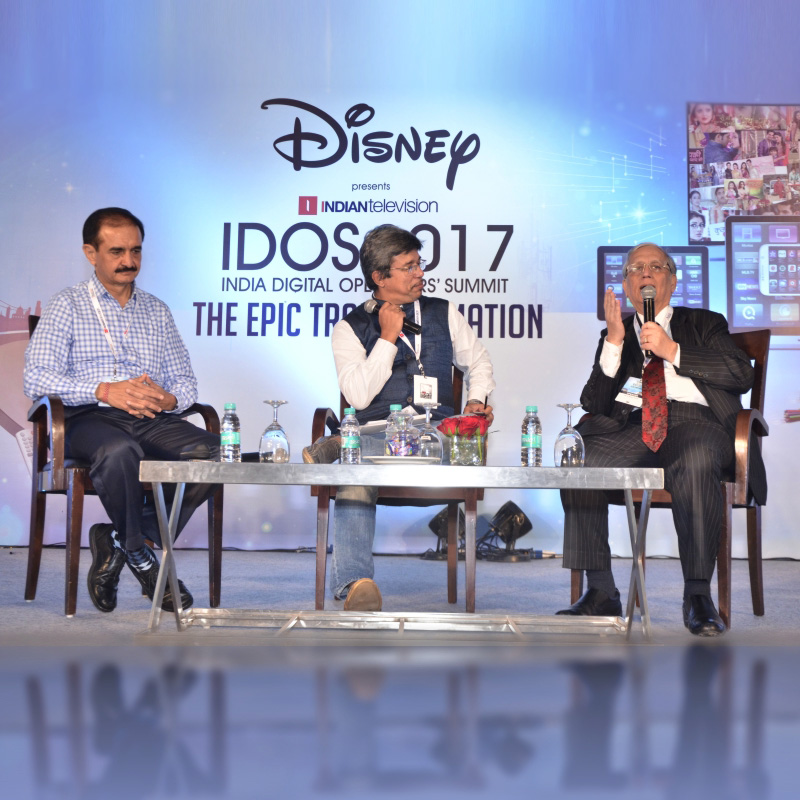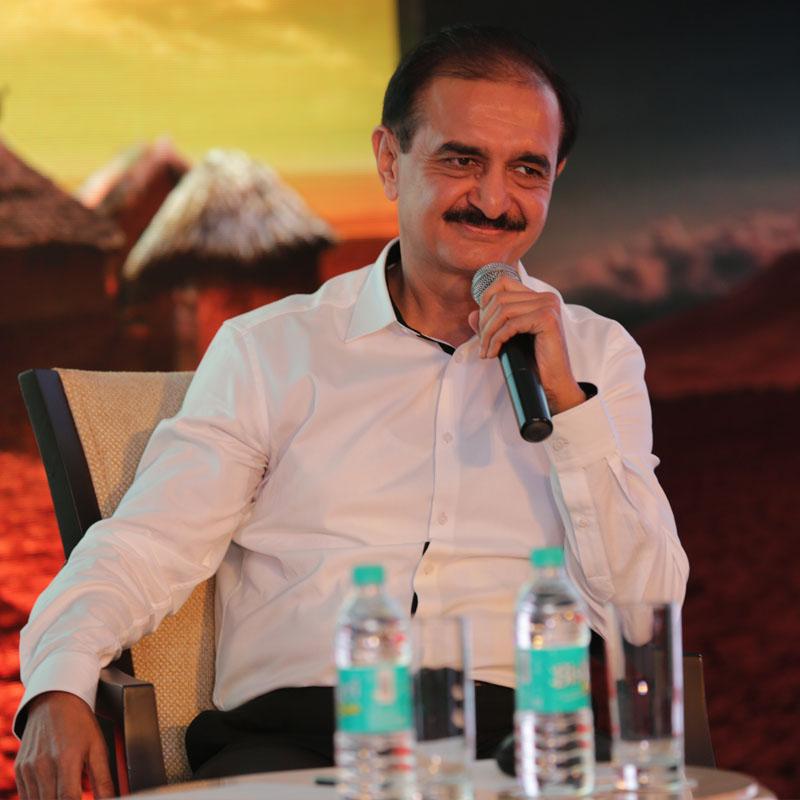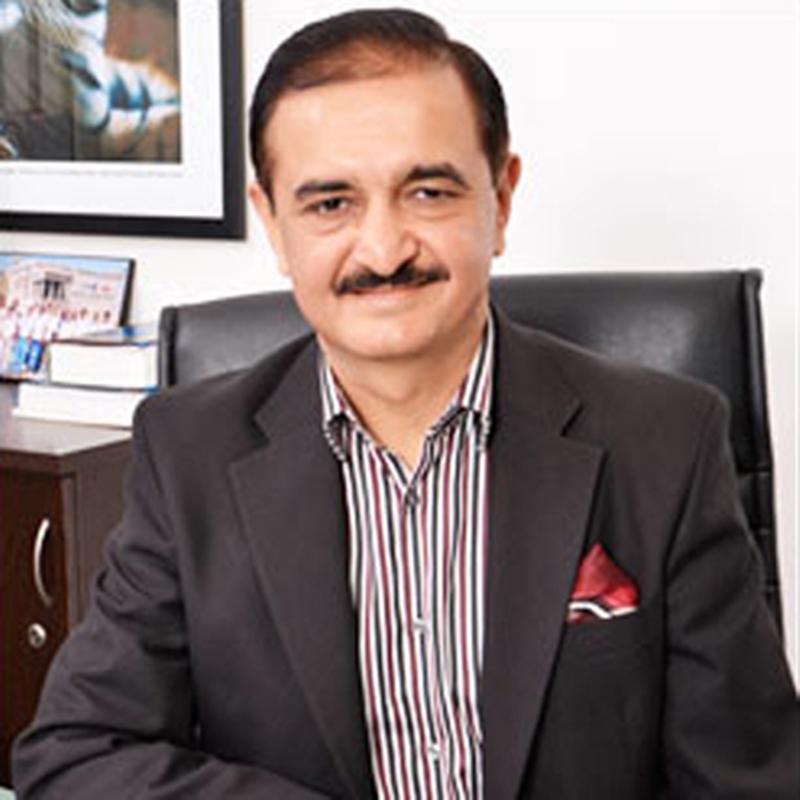
Tag: SN Sharma

  • SN Sharma gets AIDCF responsibilities once again

    SN Sharma gets AIDCF responsibilities once again

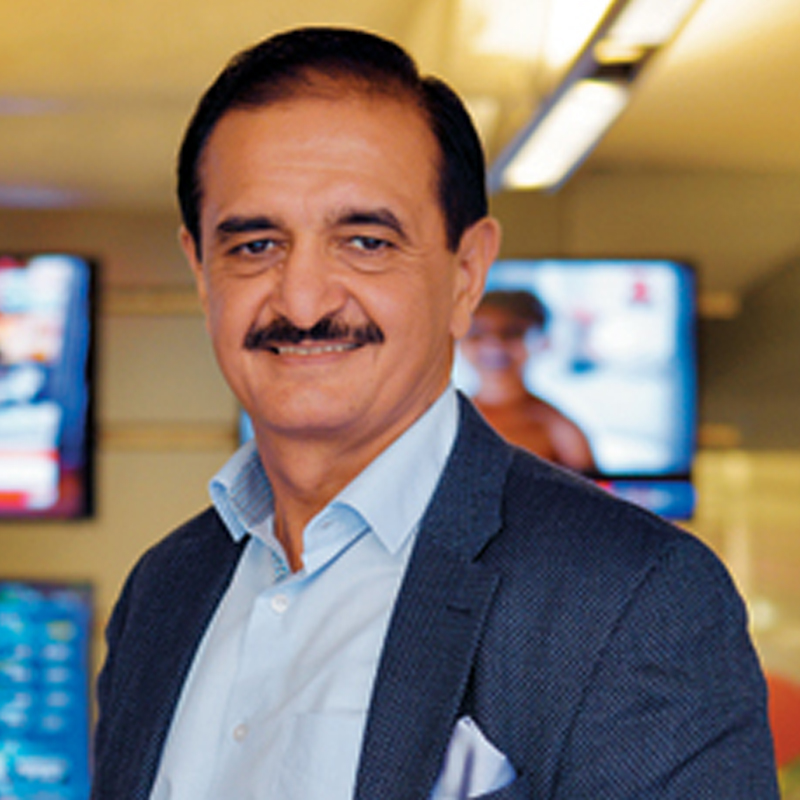
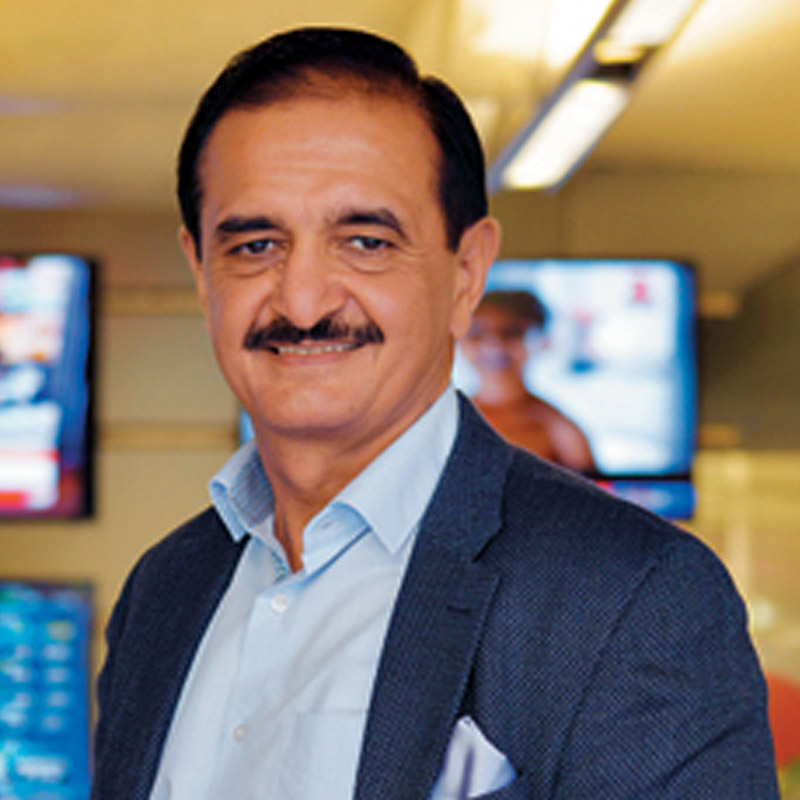
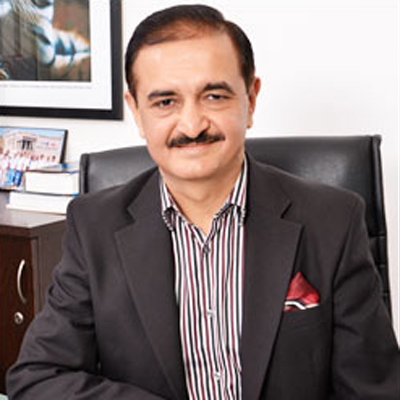
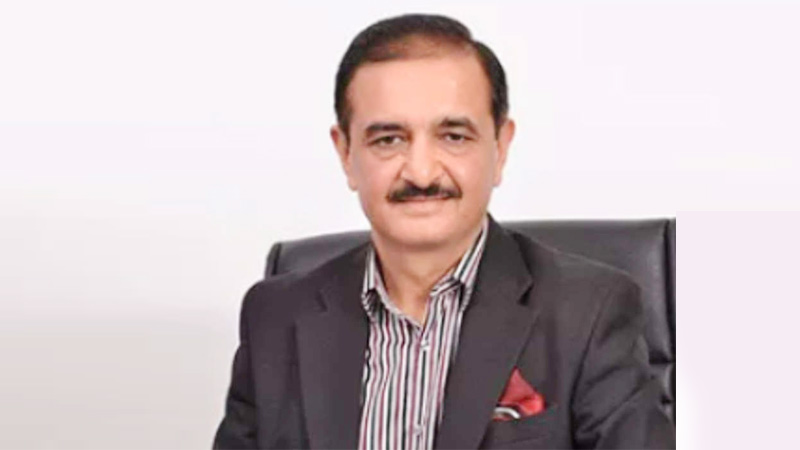
    MUMBAI: It’s back to being president of the All India Digital Cable Federation (AIDCF). DEN Networks CEO S.N. Sharma who led the AIDCF from April 2019 to March 2021 as its president has once again been appointed to that post. His term will continue till March 2025 when a new head will hopefully be selected. 

    The AIDCF was set up in 2014 with VD Wadhwa, the then CEO of Siti Networks as its head.

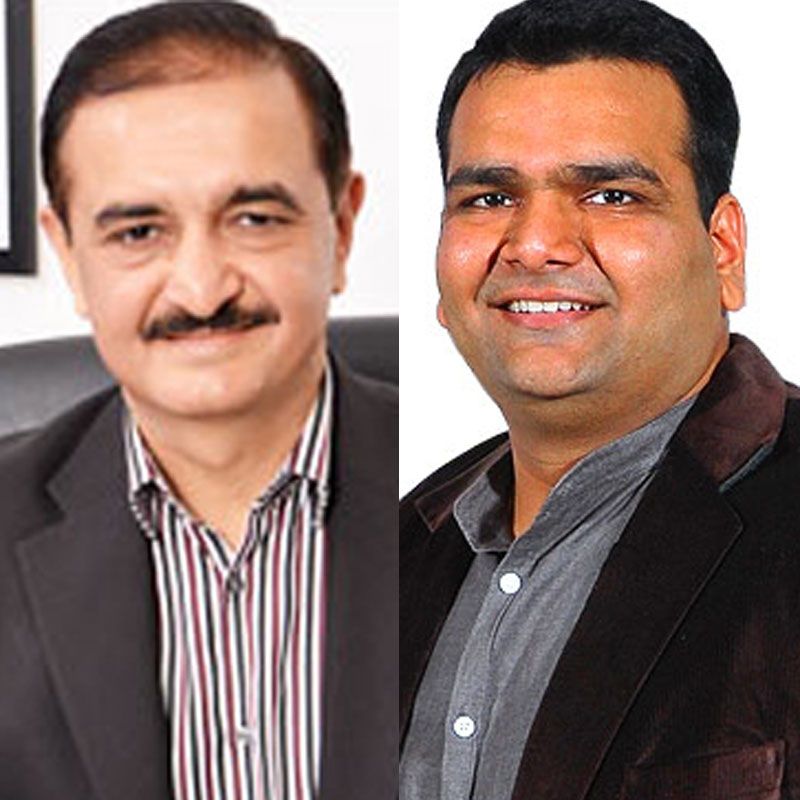
    Sharma, a veteran and popular figure in the cable TV industry, succeeds Fastway CEO Peeush Mahajan, who stepped down from the position in May 2024 due to personal reasons (apparently, he’s migrated to Canada and won’t be coming back). Peeush took over as president in April 2023 and his term was supposed to end in March 2025.

    Sharma had been acting president of the association since then. 

  • VBS 2022: Over-regulation could impede pay-TV industry’s growth in near-term

    VBS 2022: Over-regulation could impede pay-TV industry’s growth in near-term

    Mumbai: Over-regulation could impede the pay-TV industry’s growth in the near term, especially amid rising competition from the OTT platforms, and DD Free Dish’s expanding territories, highlighted industry stakeholders at the Video and Broadband Summit (VBS) 2022 on Wednesday.

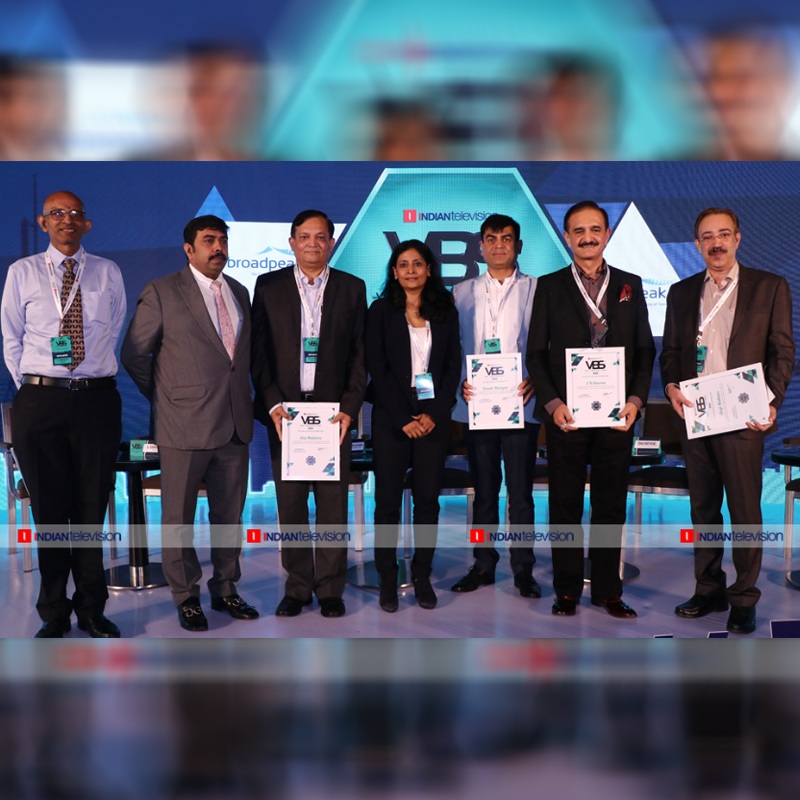
    The day-long virtual event organised by Indiantelevision.com and co-powered by broadpeak concluded its 18th edition. Disney Star came on board as the presenting partner, while NxtDigital was the summit partner.

    The event witnessed an engaging panel discussion among experts from the broadcast and DTH industry as well as other stakeholders as they examined the challenges faced by the pay-TV industry and deliberated on the opportunities that lay ahead. The session was moderated by Indiantelevision.com founder CEO and editor-in-chief Anil Wanvari.

    Overview of pay-TV industry

    TV penetration in India is currently estimated at 60 per cent which means that a third of the households are yet to own a TV set. There are around 210 million TV households, growing at seven per cent year-on-year and adding six-to-seven million new homes. The data also suggests that about 12-14 million TV sets are sold every year.

    While markets like Tamil Nadu and Kerala have a strong TV presence with 98 per cent and 92 per cent penetration, respectively, other markets like Bihar, Jharkhand, Orissa have a huge headroom for growth. In some markets such as Uttar Pradesh, Uttarakhand, Madhya Pradesh, and Chhattisgarh TV penetration is as low as ~40 per cent.

    The Telecom Regulatory Authority of India (Trai) and Federation of Indian Chambers of Commerce and Industry (FICCI) estimated that there are 130 million pay-TV homes in the country. Linear pay-TV business average revenue per user is ~Rs 240 which is less than $3.5.

    “The data shows that there are 300 million homes with 4.5 people on average. While the population may remain the same going forward, the number of households will increase owing to nuclearisation of families,” observed Tata Sky chief financial officer Sambasivan G highlighting the headroom for growth in the coming years. “More households will mean more opportunity for pay-TV to grow.”

    Migration to DD Free Dish

    According to the panellists, free DTH platforms like DD Free Dish are also invading the pay-TV territories and expanding their share. According to the latest data, DD Free Dish run by public broadcaster Prasar Bharati has doubled its base from 20 million to 40 million in the last five years.

    “In the last two years, we have seen the migration to Free Dish gaining momentum,” said Star and Disney India head – distribution and international (India) Gurjeev Singh Kapoor. Drawing attention to the impact of the pandemic, Kapoor said, pay-TV homes had tumbled down by two to three million as consumers moved to free TV because they did not have disposable incomes.

    Ernst and Young media and entertainment advisory services partner Ashish Pherwani noted that the upcoming FICCI report in March will show a further decline of six million households in the pay-TV universe. The report will also indicate a big growth in the number of connected TV (CTV) households. “If you look at pay-TV plus CTV then there’s a growth that will continue in the future,” he said.

    Den Networks CEO SN Sharma maintained that while Free Dish was a noble service that provided entertainment to lakhs of viewers, the challenge emerged when broadcasters charged distributed platform operators (DPOs) money for offering pay channels but gave it free of cost on Free Dish. “There must be a level playing field in terms of regulation,” he said.

    Serving the FTA audience

    Broadcasters and distributors agreed that the TV consumer in India exists on a spectrum where at the top of the pyramid there’s a customer who watches linear TV, broadband video, and OTT whereas at the bottom of the pyramid there’s a customer who prefers to watch only free TV. “For any product and not just TV, you’ll have a market where there will be a free, a pay, and a premium offering,” said Pherwani.  

    “Free TV exists even in mature markets such as the US, Europe, Australia, and the Indian consumer always wants more for less,” commented Indiacast president- affiliate sales- India, South Asia, and APAC Amit Arora. “The bulk of DAS 3 and DAS 4 markets are going to remain connected to the TV, however, growth remains a bigger challenge.”

    According to the panellists, broadcasters have discovered that being available on Free Dish and serving the FTA audience makes more business sense than moving away from the platform. “Somewhere in 2019, when broadcasters went off Free Dish it was estimated to have a base of 30 million. That audience segment remained there,” observed Amit Arora. “We should look at a different solution and attack the market where free TV is present, rather than wishing this problem will go away if we knock off our channels from Free Dish.”

    Star and Disney India’s Gurjeev Singh Kapoor also agreed. “When we vacated that platform (Free Dish) we saw other channels emerging as number one, therefore not being present on Free Dish is not a sensible proposition. You need to have content to entertain people who have less disposable income,” he contended.

    According to Nxtdigital CEO Vynsley Fernandes, free TV audiences can be wooed back to pay-TV by offering them a better product. “A Free Dish customer watches 100 channels for free by paying a one-time nominal fee for the set-top-box (STB),” he said. “We created a lifetime-free product that bundled 300 free channels where the customer had to pay a one-time fee for a digital STB. This allowed them to watch any free channel and upgrade their service to access pay channels if they wanted.”

    He added, “broadcasters and DPOs need to work together to develop products that cater to different socio-economic classes. Today, we’re struggling to figure out what those step-up products can be because you can’t create a thousand different products.”

    NTO 2.0 regulation

    After the first tariff order was implemented in February 2019, it took six months for TV viewership to stabilise and consumers to successfully migrate to the new tariff regime. Pay-TV subscribers declined by 12-15 million according to industry estimates which were compounded by the pandemic which struck in March 2020. Experts on the panel believe that the implementation of the new tariff order (NTO) 2.0 during this period of economic recovery would only disturb the whole ecosystem.

    “This black swan event has changed the consumption patterns on TV, meanwhile, 20-30 million subscribers have dropped from linear TV due to transitioning from one tariff regime to another,” said Amit Arora. “A lot of economies have shown that restrictive policies do not lead to fundamental growth of the sector. What we need right now is a broad paradigm and notover-regulation”

    Highlighting that India has immense competition in the broadcasting sector with 900+ channels and pressure from OTT and Free Dish platforms as well, Gurjeev Singh Kapoor said, in such a market, “the regulator should treat broadcasters with forbearance and let market forces prevail.”

    Adding further, he said, “The average ARPUs for satellite and cable TV and DTH providers is Rs 240. But if you look at what broadcasters walk away with, it is not even one dollar. Is that kind of business model sustainable? We have to look at what the consumer can pay best.”

    Tata Sky chief financial officer Sambasivan G said, said, there was no to flinch from any price increase as a result of NTO 2.0. “We are charging the customer 50 per cent of what we were charging them 20 years ago for double the content. That means the customer is getting four times the value. Even with a price increase we will still be the cheapest pay TV market in the world,” he asserted.

    “The status quo should be maintained for some time,” believed SN Sharma. “Broadcasters have hiked their channel prices by as much as 80 per cent but DPOs are not in a position to handle these kind of price hikes. This kind of disruption will disturb the whole pay TV ecosystem.”

    Parity in regulation of OTT and pay TV platforms

    SN Sharma observed that all major broadcasters are operating their own OTT platforms and offering their pay channels for relatively low cost compared to pay TV. “There must be parity in pricing on cable TV and on OTT,” he stated.

    Commenting on the issue, Gurjeev Singh Kapoor said, “OTT in India is still a second screen phenomenon where a large portion of OTT content is consumed on mobile. It is still not a living room experience. So, I don’t think it is fair to compare linear TV and OTT pricing.”

    He added, “In a market like India with 300 million homes, there are 10 million homes that watch TV content on OTT which is not a big number. So, we’re missing the forest for the trees.”

    “All our linear TV channels are behind the paywall on OTT and not on AVOD. I believe we should be talking about deregulation of linear TV rather than regulating OTT,” remarked Amit Arora.

  • MSOs on distribution challenges post NTO

    MSOs on distribution challenges post NTO

    MUMBAI: The internet has given choice to consumers to select packages and watch content of their choice. A rapid increase in the viewership on mobile and OTT platforms on a daily basis has become a threat to the DTH and cable distribution ecosystem. Apart from the internet, competing with broadband services and OTT is another challenge post NTO. The experts from the broadband and cable industry gathered at Video and Broadband Summit (VBS) 2019 in December, organised by Indiantelevision.com to discuss innovative measures taken by companies to stay ahead of the curve. 

    The Remediation Company founder & partner Shyamala Venkatachalam, moderated the panel discussion on 'The Distribution Challenge' at VBS 2019. The panelists Den Networks Ltd CEO SN Sharma, Kerala Communicators Cable Ltd. (KCCL) ex-CEO and SCTE India GC member Shaji Mathews, Metro Cast Network India Pvt Ltd promoter Nagesh Narayandas Chhabria, Tata Sky Ltd chief financial officer G Sambasivan, SITI Networks Ltd chief executive officer Anil Malhotra and Fastway Transmissions Pvt Ltd consultant (strategic planning) Peeush Mahajan shared their views on how distribution companies are innovating to stay ahead of the curve. They also briefed the audiences on the measures adopted to counter relentless disruption.  

    "Technology is unstoppable and customer is the king. As lot of innovations keep on happening, the business has to adapt the changes and has to focus on two things – customer viewing experience and customer service. For making viewing experience the best, we are investing very heavily on our backend and the distribution pipeline and will be increasing the bandwidth capacity manifold,” said Sharma.

    He further continued, “In India, after a lot of HD channels were launched, still only 20 per cent of subscribers are using the HD platform. As we have taken a conscious decision to only deal with HD boxes from the new year, we will ensure that HD content will be available for every subscriber. Even if consumers are not willing to subscribe for HD channels because of the higher subscription amount, we will ensure that the consumer gets the SD service which will be as good as HD experience.”

    "The movement from SD to HD has been much below the consumer’s expectations. The movement to OTT and hybrid boxes has happened over a period of time. As today the content is produced in HD or even higher than that in 4K, lot of MSOs are setting up HEVC transmission and they will also be introducing boxes with capacity of higher than higher definition. The process has to be gradual, which also depends on the willingness of the players to invest in the business," said Mathews. 

    On the issue of interoperability of STB, he said that the concept of comparing the STP with a mobile phone is not right, as the STB is a sim card and not the mobile phone. So, the whole concept needs to be overlooked.

    The challenge for MSOs is that it is not viable for them to go to village areas and give connections to around 200 – 300 houses. “The main concern now is that 15 – 20 per cent of our existing customers are not coming back to us post NTO. This is because of the communication gap between the LCO and the customers. To bridge this gap we have to educate the LCO by training them. Also communicating through social media, direct marketing or door to door marketing is an option to convince customers,"  said Chhabria.

    He also said, “MSOs should get their existing customer base back, which is around 15 – 20 per cent. The NTO model has been stabilised and people can now invest. Two years ago it was a non-viable business, but now we can show the investors that it is a viable business and ask them to invest as there is an opportunity to earn money.”

    Sambasivan shared his view on distribution challenges. He said that as per the India projection report, OTT is growing very fast and the number of hours of video consumption is going up. DTH and cable industry need to be worried as 90 per cent consumption is on mobile. But OTT is not an immediate threat to the DTH and the cable industry because along with OTT, consumers are also watching television. The viewership on television in the last five years has not decreased. OTT may be a threat after around ten years.

    Throwing some light on the post NTO challenges faced by the industry, Malhotra said that we are facing two challenges, first is two competitions. The first competition we are facing from broadband services, which is a linear way of giving signals compared to STBs. To provide SD, HD or 4K content we need to provide STBs which will decode the signal and provide content in the respective definitions. The second competition from OTT is device agnostic because in the broadband, whether it’s 4K, HD or SD, all signals are distributed similarly. The quality bandwidth decides what kind of viewership experience a customer has.

    “The second challenge is that suddenly there are internet users in the country. As per TRAI’s published data, 64 crore is half of the population of India. This population buys smartphones and we do not know how much of this population has moved away from linear TV to internet. From a content perspective, the kind of content which is popular is the adult site and is popular on OTT platform and not allowed to be beamed on the linear TV. The unfair competition will be that if the customer demands a personalised content, which is viewable on the OTT platform, but not viewable on the linear video platform despite having user enabled features on the device. Also the password sharing piracy is a challenge as more than one person can view the same content on different devices. So, overall technological aspects have to be considered,” he said.

    Sharma added that the message for MIB is that piracy is one of the issues which need to be addressed as lot of investments have been done at the state level for implementing NTO. DOT, few years back had addressed the issue by appointing state level cells. The other issue is the linkage of a la carte price with the bouquet price.

    Mahajan thanked TRAI for implementing a la carte and said that TRAI has given a choice to the customers. In 2018, 98-99 per cent of the customers were on suggestive bouquets offered MSOs and DPOs. In last 8-9 months, a big migration has happened from 2-22 per cent from bouquet to a la carte and it keeps on happening on a daily basis. We have to put in more efforts to educate the subscribers and train the LCOs, as LCOs are the key people who can generate a need for a la carte. DPOs have put in a lot of effort and will continue in future also. By the end of 2020, 35-40 per cent consumers should move on a la carte.

    Malhotra said that as per the regulations, TRAI has done a perfect thing by giving a choice to the customers. Unfortunately, the customer needs a la carte along with a package of their suitability. It is very difficult for a customer to choose between 800 channels and make a package of its own. But packaging is important and there are three ways of doing it. Packaging happens at a broadcaster level and if the customer wants the broadcaster package, then the distributor cannot dismantle the package.

  • DEN Networks aims for 70,000 broadband subscribers by Q1 2020

    DEN Networks aims for 70,000 broadband subscribers by Q1 2020

    MUMBAI: Way before Jio’s announcement of its broadband GigaFiber venture, MSO DEN Networks revealed its plan to explore the opportunities in the market. Following the rollout of broadband service in 28 cities by end of Q1 of this fiscal year as a part of its 100 cities plan, it has also signed up the agreement with 48 more cities. In terms of rolling out the service, the company is adding 20 more cities in Q2.

    Talking to investors in an analyst call, DEN Networks CEO SN Sharma informed that cable partners are investing equally well with the same kind of enthusiasm. After the launch of Jio GigaFiber, the company mentioned it would be working with LCOs. Sharma was asked about the impact of this on the partners on ground to which he debunked the possibility of ant negative impact on LCOs. “The announcement of the telco has further brought in standards you see that has helped us in regularising this tenders and qualities to be followed by the gentlemen, i.e., our cable partners and that is helping the entire business environment,” he said. In addition to that, he also mentioned that hardly 6.7 per cent of the penetration level has been achieved in the market as of now.

    Emphasising on the enthusiasm in the industry, he also said, “I am also surprised with the kind of enthusiasm that I am coming across and very soon we will be signing up with another 40-50 odd partners and then followed by LCOs and in Q2 we are supposed to deliver another 20 cities and I am quite confident that my team will give and overdo whatsoever assigned to them but that will be it is better that we talk at the end of Q2.”

    As DEN Networks has recently rolled out its service, it will still now take time to pick up due to the lengthy process. Going through LCOs to approach subscribers and then the subscriber coming back for the wired service takes a long time. In that context, rather than giving a high prediction, Sharma said the company hopes to deliver close to 40,000 to 50,000 subscribers by March 2019 and by the end of Q1 of next year to touch close to 70,000 subscribers. He predicts a ramped growth in FY 2020 as then penetration level will reach to 10 per cent. MSOs enable the homes where cable fibre already exists.

    “In the 28 new cities we have actually enabled one million home passes which are already there with us on the cable front so we are already reaching there but how many of those would actually get converted would depend on the interest levels. The moment the interest level comes in we obviously hook them up. We have already hooked up 8500 customers till now so we should be able to ramp it up,” DEN Networks CFO Himanshu Jindal said. For the 100 cities under the plan, 5 million set top box installations will be done.

    DEN’s 100 cities model is based on Rs 500-550 ARPU while in the existing 28 cities, it is capturing an ARPU of Rs 562. Sharma denied commenting on the upcoming tariff war as the pricing model from telcos is still not revealed. But indicating the price could go down, he mentioned that DEN can easily sustain till Rs 500 ARPU. It is only in metropolitan cities like Mumbai and Delhi that consumers are already experiencing 100 MB data speed. There are cities where the speed being demanded is 5MB, 20MB, 50MB. So there’s a large chunk of broadband-deprived internet users across the country.

    “So in any case the ARPU of Rs 500 where you are delivering 50MB speed and unlimited data is not a very conservative figure, I would say it is a very aggressive ARPU that we have put across and we should be able to justify it as things unfold and as times will come, we will handle the situation. In any case, the LCO partner is quite confident and they are coming forward and investing so that also adds the positivity with us,” Sharma’s tone reflected the preparedness for upcoming battle.

    However, the company has claimed to undertake a very low capex based plan. In the current year, the company will not spend more than Rs 30 crore unless it experiences more than the expected rush of this subscriber base which could mean some minor changes in the network.

  • DEN Network fixed-line b’band biz plan hinges on partnerships & leveraging present infra

    DEN Network fixed-line b’band biz plan hinges on partnerships & leveraging present infra

    MUMBAI: With telcos handing out data at cheap rates in various package sizes under innovative schemes, mobile data consumption has increased rapidly in India in the last few years, while the growth of fixed-line broadband (FLBB) users has been tepid, if not completely static. MSO DEN Networks now wants to tap the hitherto unexplored opportunities of FLBB as a business proposition. So, what’s the plan?

    Not only DEN wants to use its own and partners’ customer bases in 100 small cities of India, but is also, probably, eyeing the huge FLBB market that will open up as the Indian government ramps up its BharatNet project to provide Internet and broadband services to approximately 250,000 gram panchayats or local village administrations through state-run telcos and third-party service providers, including cable operators. 

    The reason for hi-speed broadband in 100 cities in 10 Indian states is to try overcome the low returns in big cities and metros. “We have also seen a lot of stress in the fixed line broadband ARPUs of all the major metros, be it Mumbai, Delhi, Bangalore [and] Kolkata,” DEN Networks CEO SN Sharma said during a recent analyst call, going onto add that the ARPUS were low in the “top 10 towns of the country”.

    public://graph_1.jpg

    In April, DEN Broadband Pvt. Ltd, a subsidiary of DEN Networks, had announced expansion of its hi-speed internet services to 100 cities across India.  After completion, DEN Broadband aims to enable 1.1 crore (11 million) Indian households with high-speed broadband services by 2020 with 20 MB speeds on an average under different sets of packaging and schemes — in contrast to average lower offerings from various telcos.

    And, to back its claims, DEN Networks quotes data from international and domestic sources. In a presentation made to investors, the Sameer Manchanda-founded company justified its focus on FLBB by saying that if regulator TRAI’s December 2017 data was to be believed, there were 425 million wireless Internet subscribers, while there were only 18 million FLBB subs. Over the years, Indian FLBB growth has remained static compared to its APAC peers like Australia, China, Vietnam and Thailand.

    So, how is DEN going to go about its FLBB plans in 100 cities? The company plans to leverage its existing cable universe and tie-ups with last mile operators by going the franchisee model, leveraging present infrastructure (80 per cent already fibre-enabled), and lower capex and operational costs. Affordable technology like Metro Ethernet and GPON, coupled with standardized technical solutions, customer support from DEN and a pre-paid collect model on B2C basis, according to the company, would make good business sense.

    “We have a plan to enable 15 towns in the first quarter. Overall, 100 towns have to be enabled, and you will be surprised that LCOs themselves are approaching us,” Sharma informed an analyst, adding that it was not just a one-way traffic as company execs too were tapping LCOs informing them of the benefits as the infrastructure is already in place and the project could have additional revenue spin-offs for the LCOs. DEN has earmarked Rs. 100 crore (Rs.1 billion) as capex for the FLBB project over the three-year period.

    What is fueling DEN’s aspirations? Quoting Singapore-based Media Partners Asia figures, the company presentation told investors that there had been 

    15X rise year-on-year in Internet data traffic in 2017 with video content contributing 65 per cent of total mobile data traffic apart from the fact that India’s FLBB penetration was expected to increase to 10.3 per cent from the present single digit share by year 2022. Moreover, as content and applications keep getting heavier and denser in size, FLBB high speed broadband solutions could be ideal for offices and homes.

    “Our fiber is just 100 meters away from each of the subscriber that is being served by us,” Sharma explained to analysts, adding with broadband ARPUs low in metros and bigger cities it was decided to target the rest of the country that is not only a “virgin area” but has “equally good” demand.

    Asked about Reliance Jio’s ambitious plans to rollout broadband services in the country, which can disrupt this segment too, Sharma refused to comment, saying, “I am nobody to comment on others business.” 

    Also Read :

    DEN expands broadband services; plans Rs 100 cr capex

    Aim to take phase 3 ARPU to phase 1 value: Den Networks’ SN Sharma

    DEN readies Android-based STB for Feb launch

    TDSAT rules in favor of DEN Networks, directs ZEE entertainment to provide channels on RIO basis

  • DEN aims to convert 10% of SD subscribers to HD in a year

    DEN aims to convert 10% of SD subscribers to HD in a year

    MUMBAI: DEN Networks CEO SN Sharma has set a target of converting 10 per cent of its standard definition (SD) subscribers to high definition (HD) within a year.

    Sharma, speaking on an analysts call, said that DEN currently has 7.4 million paid digital subscribers, but only about 100,000 of those view HD transmissions.

    He further noted that the price of HD set top boxes (STBs) has seen a decline from Rs 4,000-5,000 to Rs 1,500-1,600 and that should help in increasing the HD penetration.

    Reports said that DEN has locked in content deals with most broadcasters with the increase being less than 15 per cent. The MSO’s content deals are valid till April 2019 barring that of Star which will come up for renewal in nine months by January. DEN has also resolved its dispute with ZEEL. 

    “All these deals have been signed up and are firmly in the place. The content cost increase is in the range of less than 15 per cent,” Sharma said.

    He also said that all the deals will come up for renewal next year as agreements with Sony and IndiaCast will expire in March 2019. Star and Zee are now signing only one-year deals. 

    “So as of now our content deals are all frozen till March and April next year. By then all of them become due for renewal,” he noted.

    The deals with broadcasters are consolidated and include both standard definition (SD) and HD channels.

    Currently, the DEN strategy is to replace older STBs as they run out of warranty, as well as to use new HD STBs as the cable network expands into new areas.

    Also Read:

    Den Networks appoints Himanshu Jindal as CFO

    DEN expands broadband services; plans Rs 100 cr capex

  • Aim to take phase 3 ARPU to phase 1 value: Den Networks’ SN Sharma

    Aim to take phase 3 ARPU to phase 1 value: Den Networks’ SN Sharma

    MUMBAI: Den Networks has an ambitious plan charted out for its cable and broadband business for the coming two to three years. In an interview to Bloomberg Quint, Den Networks CEO SN Sharma highlighted the company’s plan to increase revenue and subscription.

    For the multi-system operator (MSO), digitisation of phase III in India was almost over 10 months ago and certain parts of phase IV were left by all operators. Sharma said that it may take six to eight months to wind this up. “In the last 12 months, we seeded close to five million set-top boxes (STBs) in phase III. Today, we have a tall figure of 11.5 million digital homes out of which 8.5 million are paying,” he said.

    The average revenue per user (ARPU) for Den has gone up substantially over the last two years. Even tier I and II towns had low ARPU of Rs 120 and Rs 80-90 a year ago. Two years ago, the ARPU for tier I and II towns was Rs 60-70 and Rs 50-60, respectively. Today, the ARPU is at Rs 144 for phase I and Rs 112 for phase II. Sharma also said that the company was able to make up 50 per cent of the subscription revenue from the cable operators from phase I while this was 40-45 per cent in phase II markets.

    Phase III ARPUs are still low at Rs 76 out of the ground rate of Rs 150-175. “As we move forward, cable operators know they have to catch up with phase I ARPUs and will gradually increase it with subscription and, accordingly, the same will be shared with us,” he added.

    The aim is to take the current ARPU of phase III up to Rs 144 in two years’ time. “The phase I journey has been successful and a confident path has been set. There is no reason this Rs 76 doesn’t move to Rs 140 level in 2-2.5 years’ time,” he said adding that 50 per cent of the digital universe was phase III and IV. Phase IV ARPU stands at Rs 66.

    Den is talking to broadcasters and peers to increase subscription levels in phase I areas and Sharma said that discussions were actively progressing. “There is headroom to increase this [subscription]. You will see changes in bouquets and packages offered so overall revenue can be taken up,” he shared.

    One of the ways to do this will be by focussing on HD STBs now. The target for the next 12 months is to convert 10 per cent of its SD base into HD, which will allow the MSO to add another Rs 60-70 per box. Another way is by gradually increasing the number of boxes seeded in phase IV that is currently at the rate of 40,000-50,000 a month.

    The company has a system to ensure that all reported boxes are activated. When a box doesn’t yield payment for more than three months, it is removed out of the declaration and considered a dead box. Here, Sharma lauds the system for being as efficient as telecom operators that withdraw service  if a subscriber doesn’t pay.

    The entrance of players like Jio, Airtel and Vodafone has definitely changed the broadband game for the company and Sharma admits this. Den’s broadband ARPU is currently Rs 550 with a speed of 50 mbps and unlimited data. He compared it to telcos who offer just 1 gb data a day with best case speed of 9 mbps.

    Over the years, data consumption on its platform has increased from 20 gb two years ago to 60 gb last year and is hovering at 80 gb today. “There is a data explosion courtesy Jio, Airtel and Vodafone. We are consciously aware of it and so we talk of unlimited data in high speed,” he said.

    Much of its broadband business is concentrated in Delhi with 2 lakh subscribers. However, the tariff war pulled down its ARPU to Rs 600. But the same in Kanpur is Rs 800. The plan is to increase subscribers by 6 lakh in three years taking the total to about 8 lakh.

    Sharma is confident that the entire business needs external funding since it is witnessing healthy growth in subscription and ARPU and no subsidy is being offered on HD boxes. Even the broadband business has been fibre infrastructure. About Rs 100-120 crore will be required for the coming three years, which will be managed through internal accruals.

    Also Read :

    Subscription revenue drives up Den’s PAT

    Den Networks appoints Himanshu Jindal as CFO

    TDSAT rules in favor of DEN Networks, directs ZEE entertainment to provide channels on RIO basis


  • DEN expands broadband services; plans Rs 100 cr capex

    DEN expands broadband services; plans Rs 100 cr capex

    MUMBAI: DEN Broadband Pvt Ltd (DEN) has expanded its hi-speed internet services to 100 cities across India. After an encouraging response to the pilot project in five cities, DEN has already started its first phase of expansion in 15 cities.

    DEN’s expansion plan is in sync with the massive growth in the internet consumption in the country. Data usage in India has already jumped by 144 per cent (y-o-y) with average consumption per user in 4G broadband reaching 11 GB per month. The rise in data consumption has not been matched by a corresponding increase in the speed of connection. While India globally ranks 67 in fixed broadband speeds with an average download speed of 20.72 Mbps, mobile broadband speeds still lags at 109th rank with an average download speed of 9.01 Mbps, as per Ookla’s speedtest Global Index, February 2018 report.

    DEN Networks CEO SN Sharma said: “This is a game changing moment not just for DEN but also for the Internet users in the country. Our hard work and investment in transforming our Co-ax cable trunk routes into fiber optics will now yield tangible results. For DEN it will mean a minimum investment whereas for our users it will mean best in class Internet speed.”

    The company intends to tap this high-potential market by capitalising on its existing cable TV infrastructure and providing hi-speed fixed broadband internet. With speeds upto 1Gbps at affordable prices, DEN Broadband will cater to the future needs of Internet while penetrating further into the untapped markets.

    DEN’s fibre cable infrastructure is already present across 13 states. The company plans to roll out through a franchisee model, which will leverage its strength as a leading national MSO with an established on-ground Cable LMO network to usher in a broadband revolution in the entire country. Its 14,000 plus LMO network would use its technology while adhering to the operational standards set by DEN. Being the franchisor, DEN will bill the subscribers directly and collect tariffs from them directly. The franchisee would get paid based on their agreement and size of their investment.

    The MSO’s fixed broadband infrastructure is being built using a mix of GPON/FTTX and metro ethernet technologies enabling download speeds from 20 Mbps till 1 Gbps. It estimates a capital expenditure of Rs 100 crore over the next three years. This expansion plan is targeted towards 100 cities across states where DEN has a strong foothold such as UP, Karnataka, Jharkhand and Uttarakhand.

  • DEN readies Android-based STB for Feb launch

    DEN readies Android-based STB for Feb launch

    MUMBAI: Multi-system operator (MSO) DEN is all set to revamp its old hybrid set top box (STB) into a smart STB. The new STB will support 4k HD as well as internet access. 

    A trial for the same is already in process is what DEN Networks CEO SN Sharma informed analysts. He added that the revamped STBs have been planted across the country and the response so far from the subscribers has been good. The trial will go on till February and the prices will be announced during the middle of the month itself. 

    The MSO is also in talks with two Indian broadcasting giants, Star and Zee. It also renewed deals with Sony and IndiaCast in 2017 for a span of two years.

    DEN, which has 13 million cable audience and 8.4 million active subscribers, is also planning to grow its broadband business. The company will be sharing its plan by the end of financial year 2017-18. DEN currently has a net subscriber base of 2.15 lakh with 60 per cent active subscribers. 

    Currently in only 10 select cities across 4 states of the country, MSO has plans to stretch in more 10 cities. 

    DEN Networks CFO Rajesh Kaushal predicted that the future expenditure will be more in broadband and less in cable, as most of the boxes are already lifted and the subsidy is very less on it. 

    DEN previously spent Rs.11 crore for seeding in the existing 10 cities and for expanding to more 10 cities the cost will be around Rs.10 crores.

  • Subscription revenue drives up Den’s PAT

    Subscription revenue drives up Den’s PAT

    MUMBAI: Multi-system operator (MSO) Den Networks’ financial results for Q3 2018 show consolidated revenue of Rs 330 crore as against Rs 293 crores in the corresponding quarter a year ago, up by 12 per cent. In Q2 2018, consolidated revenue stood at Rs 328 crore.

    Consolidated Q3 EBITDA (earnings before interests, taxes, depreciation and amortisation) stood at Rs 81 crore, 54 per cent higher than the Rs 53 crore reported a year ago but lower than the Rs 82 crore reported in the previous quarter. This EBITDA does not include the Rs 14 crore pertaining to entities that are not getting consolidated as per INDAS or else the overall consolidated EBITDA is Rs 95 crore.

    The MSO has been able to get higher subscriptions from phase III and IV markets with revenue growth from cable subscription 21 per cent higher than Q3 2017 and 6 per cent higher than Q2 2018. This was aided by 10 per cent higher average revenue per user (ARPU) collection from phase III areas on a quarter-on-quarter basis.

    Cable revenue stood at Rs 312 crore versus Rs 272 crore in the year ago quarter, up by 15 per cent. Cable EBITDA was Rs 82 crore, up from Rs 53 crore from Q3 2017, led by subscription growth and rationalisation of costs.

    Subscription revenue drove up consolidated PAT to Rs 2 crore from negative Rs 37 crore in Q3 FY2017 and Rs 1 crore in Q2 2018.

    The company stated that its broadband business was on track and that it managed to add 10,000 new subscribers during the quarter. Wired internet services will be rolled out to 10 new towns as part of its expansion. Cost optimisation initiatives have helped the broadband segment to break even which was negative Rs 1 crore in the previous quarter.

    Den Networks CEO SN Sharma said, “Den has been able to improve operational performance consistently every quarter with constant focus on increasing the subscription collections on the ground with a much controlled cost base. It is a time of pride and joy as we announce that as per the Trust Research Advisory research, Den has outshone all its competing brands and has emerged as the ‘Most attractive brand of 2017’ in the cable TV segment.”

    Also Read:

    Higher subscription & activation lead Den’s turnaround in Q2  

    DEN Networks tops as most attractive Cable TV brand: TRA Research

    Den Networks buys 51% in VBS Digital