Tag: SMS

  • Aircel unveils new ad campaign ‘Joy of Little Extra’

    MUMBAI: Aircel has launched its new brand campaign titled ‘Joy of Little Extra‘ which captures a slice from daily life pertaining to the joy experienced when one unexpectedly gets a little extra.

    Under the new ad campaign, Aircel will launch products and services which will offer that “little extra” in value for its subscribers through all its products, be it Extra SMS‘, Extra Talk time or Extra Data.

    Aircel‘s new campaign is a series of commercials, on the plank of always bringing to its subscribers that joy of a little extra. The campaign is conceived by McCann Worldgroup India.

    Aircel chief marketing officer Anupam Vasudev said, “With the launch of our new ‘Joy of Little Extra‘ campaign, we hope to bring more joy to the lives of our customers by giving them opportunities to feel that unexpected ‘Extra‘ happiness through the use of our products and services. By means of this, we also wish to get closer to the hearts of our customers and continue to build on our commitment to them. The new campaign series will see three products launches shortly.”

    The ‘Joy of Little Extra‘ is based on customer insights highlighting that joy is not always derived by big things in life, such as an increment at work or additional funding for business but the same happiness could also be felt through little things like getting an extra run in a friendly neighbourhood match or getting a few extra minutes to complete an examination paper.

    The new campaign highlights the power of ‘Extra‘ as delivered by Aircel‘s voice and data products as a simple way of bringing big happiness.

  • Aaj Tak launches initiative against terrorism

    Aaj Tak launches initiative against terrorism

    MUMBAI: Aaj Tak has launched a special initiative against terrorism called Pucha Hai Aaj Tak, Aakhir Kab Tak. The four-part series will explore the possible solutions of terrorism by looking at the issue through a 360-degree perspective.

    The series will incorporate few short duration news reports, supported by fact sheets, information on past blasts and the respective action taken reports.

    The show will be interactive and viewers can participate by sharing their views through ballot papers, SMS and live call-ins. The show will also be talking to prominent people from various walks of life who will discuss ways in which the country can tackle the menace.

    TV Today Network CEO and executive director G Krishnan said, “Terrorism is emerging as a major threat and we are looking at a 360-degree communication in terms of programming and promotion to involve our viewers and provide them with a credible platform to raise pertinent issues.”

  • CNN-IBN to launch The Weekend Edition with Rajdeep Sardesai

    CNN-IBN to launch The Weekend Edition with Rajdeep Sardesai

    MUMBAI: CNN-IBN is launching a weekend show ‘The Weekend Edition with Rajdeep Sardesai”. Starting on 12 July, the one-hour show will focus on the topics that matter to the citizens.

    Hosted by Sardesai, the show will showcase the biggest stories of the week. It will be divided into five segments, starting with a discussion on the big story of the week.

    This will be followed by feedback on the issue reflected through blogs ‘Blogger Talk’ and also via SMS from viewers in the section ‘Have Your Say’. The show will also profile the newsmaker of the week and will conclude with an editorial called ‘Our Take’ and image of the week in ‘Parting Shot’.

    “This show will give the viewers an opportunity to voice their opinions, ask questions and participate in the discussion by emailing the anchor directly,” CNN-IBN said in a release.

  • ‘Consumer annoyance with intrusion in their space will take a new turn’

    If there’s anything more challenging than predicting the media scene in India, it’s reviewing them a year later. It does feel good though if you are more right than wrong on your own predictions. Here’s how the reality played out in 2006 and some more predictions for 2007.

    Technology and its impact

    As predicted, the impact of technology on communication in 2006 was rather limited. Consumer pull rather than organizational push continues to determine the rate of acceptance and dissemination of technology. 2007 will see the adoption of newer technology but again, this is likely to be at the very top of pyramid. CAS may be pushed through by legislation but 3G, TiVo and wi-fi zones still appear to be a while away. Value-added SMS services though are likely to thrive.

    Consumers’ annoyance with intrusion in their space will take a new turn. We don’t think consumers are convinced that a “Do Not Disturb” option keeps pesky telemarketers at bay. In 2007, consumers will hit back. Beware all marketers who think they can intrude on consumers’ privacy and get away with it!

    The television medium
    Last year we had predicted that the television media owners would look at sampling the product and then worry about revenue. The resultant of this would be longer gestation periods and fewer media players who will want to enter the space on a whim. True enough, 2006 has seen no significant launches as far as television is concerned.

    To a great extent, this is also impacted by the lack of differentiation in product offerings. We had thought Times Now had the potential to make a dent in the English news segment but it doesn’t seem to have done as well as its competitors. Sticking to the basics though has meant that a NDTV 24×7 continues to hold its own and a CNN-IBN has created a
    niche for itself.

    We had also mentioned that those who do come in will be serious players with deep pockets. Our prediction that Disney’s entry would make players like Hungama feel the heat couldn’t have been truer. Disney went on to acquire Hungama!

  • Zee Kannada supports Men in Blue through signature campaign

    Zee Kannada supports Men in Blue through signature campaign

    Bangalore: Team India will appreciate all the support it can get. If the initiative is as novel as Zee Kannada’s signature campaign it will also bring in more cheer.

    The channel is launching a unique handkerchief signature campaign to support Indian players in the forthcoming Cricket World Cup.

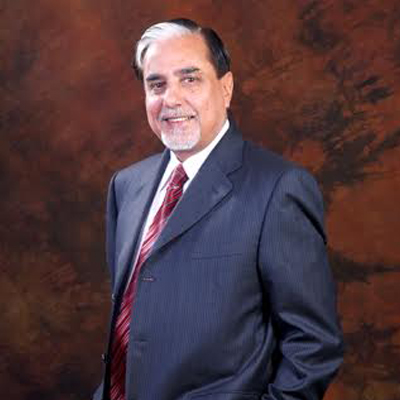
    The campaign will be launched on Thursday 22 February with the first handkerchief being signed by Essel Group Chairman Subhash Chandra.

    The Zee Kannada team will travel across the state and put up collection boxes at select locations like schools, colleges, orphanages and institutes for the disabled, malls and coffee shops. People have to sign wishes on their hankies and drop it off in the collection boxes.

    Fans can also SMS or email their messages to the channel.

    All the handkerchiefs received will be tied together to form the biggest ever chain of signed handkerchiefs which will be handed over to the Indian Cricket team before the start of the tournament.

  • Samsung launches mobile tracker phones in India

    Samsung launches mobile tracker phones in India

    MUMBAI: Samsung Telecommunications India Ltd. announced the launch of its range of secured phones SGH-C140, SGH-X520 and SGH-E250 in India. The technology boasts revolutionary security features like mobile tracker, emergency SMS and privacy lock in slider, clamshell and bar form factors, these phones transcends the current market offering by empowering consumer’s security during mobility.

    Mobile Tracker helps consumers to track their lost phone. Emergency SMS acts as personal bodyguard and alerts close relatives or friends about his distress or emergency situations. Privacy lock protects the data, photos, voice memo, multimedia messages, images and sound stored in the phone from intrusion.

    Speaking on this occasion Samsung Telecommunications India managing director Ryu Hyun Chul said, “Close to 50 million worth of mobile phones are lost or stolen annually. Our personal experience shows that when we lose our phone we just buy the new one. We don’t know how to track our lost phone. We are also not aware what will happen, if these lost or stolen phones fall into wrong hands.”

    Elaborating on the security features of the phone Chul added, “Samsung understands Indian consumer needs and through our secured phones, we have tried to address three of the larger issues of mobile security that is securing your mobile phones and preventing any untoward usage or incident through Mobile Tracker, securing the safety of near and dear ones through emergency SMS and securing the confidential data’s that are stored in that phone. We will keep launching global phones with localized features.”

  • Valentine’s Day hampers on Radio City Bid2Win

    Valentine’s Day hampers on Radio City Bid2Win

    MUMBAI: Radio City and Cellcast Interactive announce a special Valentine’s Day Surprise Hamper that listeners can win by bidding for it. ‘Radio City Bid2Win’ will be part of the Valentine’s day programme line up in Mumbai, Delhi , Jaipur, Lucknow, Bangalore, Chennai, and Hyderabad.

    The surprise hampers comprise of premium, lifestyle products varying from exotic cruise-liner packages to a bouquet of luxury fashion accessories valued up to Rs.1.5 million.

    Listeners can win these hampers for a nominal amount by submitting the lowest unique bid via SMS to CITY BID (amount) to 6644. Based on the ‘lowest’ and most ‘unique’ bid, the winners for the hampers would be declared on-air on 13 February at 10.30 am.

    Bidding for these hampers begins from 8 February 8 and closes on 12 February.

    Speaking on the development Radio City vice president and head – strategic planning and alternate revenue Hemant Jain says “Reiterating our commitment to consistently provide innovative and exciting initiatives to enhance listener delight, we launched Radio City Bid2Win early last month across all our stations after the initial success in Mumbai. The Valentine’s Day Special Hamper, exclusive to our listeners brings them the perfect and most simple gifting opportunity to win a specially selected bouquet of luxury and lifestyle brands and celebrate the season of love with Radio City. Hence by using technology to create interactive radio programming formats we have provided opportunities for Radio City listeners to benefit in multiple ways”.

    According to Radio City executive vice president and head – corporate sales Ashit Kukain “Radio City Bid2Win will provide an opportunity for an array of lifestyle brands to showcase their products to a huge audience and will also help them widen consumer base through experiential marketing. Most certainly, Radio City listeners are in for an amazing treat with the high value products on offer through a unique interactive experience.”

    ‘Radio City Bid2Win’ is a unique reverse auction bidding platform developed by Cellcast Interactive India as the ‘backchannel’ that enables listeners to take an active role in a real-time auction using their mobile phone. Radio City has used this innovation in its prime time show Kase Kai Mumbai in November 2006. The popularity of the format was later replicated across Delhi, Jaipur, Lucknow, Bangalore, Chennai, and Hyderabad from 9 January.

  • Ericsson, Turner to develop international mobile services

    Ericsson, Turner to develop international mobile services

    MUMBAI: Ericsson and Turner Broadcasting System International have formed a collaboration under which the users of mobile services and mobile operators will benefit from the companies’ leading positions in mobility and global multimedia content.

    The two parties are collaborating to develop Turner’s internet, broadcast news and entertainment content – including CNN International, Cartoon Network and Adult Swim material – for mobile multimedia environments. The offering combines the delivery of Turner news and entertainment content with hosting and content management technology, developed by Ericsson.

    The first of these jointly developed services will launch in Europe on 12 February 2007 at the 3GSM World Congress trade fair in Barcelona, bringing a new CNN Mobile service to the users initially in Europe, the Middle East and Africa.

    The initial product launch – CNN Mobile – and subsequent launches in this collaboration will make technologically advanced multimedia content available to users in two ways. Firstly, mobile operators will be able to deliver simple access to Turner content through their own branded portals; additionally, end users will have access to content such as the CNN Mobile site directly on their mobile devices.

    Turner Broadcasting senior VP, digital media Casey Harwood says, “With this deal, we will have for the first time a full portfolio of solutions – from SMS through to mobile television – that will scale and easily move across the world. This partnership is a logical fit where the customer and mobile operators benefit through Turner focussing on providing innovative news and entertainment content to its global audience and Ericsson providing the technology behind it.”

    Ericsson senior VP, head of multimedia Jan Wäreby says, “Our service-provider customers throughout the world will greatly benefit from our partnership with Turner Broadcasting, as they will be able to provide popular mobile multimedia content from Turner’s vast catalogue and greatly enhance the multimedia experience for the consumer.

    The CNN Mobile product will be the first example of a true ’off-deck’ portal for mobile users, providing a state-of-the-art news service. A searchable archive of 14 days and over 2000 stories will sit with breaking news alerts and video news updates through the hourly updated ’World News Now’. Available to CNN users in EMEA and Latin America subscription free, the service will be accessible through CNNmobile.com in all mobile browsers or through operator portals where deals are in place.

    The mobile services being developed include intelligent software that enables devices to show only the actual content that is appropriate to the particular handset, resulting in a richer user experience. The services will be rolled out to further territories and both Turner and Ericsson have committed to further product launches throughout 2007.

    The partnership also extends beyond content development, and will have on screen elements on CNN International in a campaign that positions Ericsson as the global leading communications technology company.

  • PayMate partners OnMobile to allow consumers to pay bills via mobile phones

    PayMate partners OnMobile to allow consumers to pay bills via mobile phones

    MUMBAI: In the era of digital services the mobile phone can well be referred as man’s best friend for the umpteen tasks it performs. Extending the benefits of this little gadget, mobile commerce solutions company PayMate has recently partnered with OnMobile, a value added services provider, to allow consumers to pay bills via mobile for services available on OnMobile powered voice portals and WAP sites such as Hutch, Airtel, Idea, Reliance, Tata, Fame Cinemas, Adlabs Multiplexes and the 505 platform.

    Paymate customers will be able to pay via mobile while shopping, gifting, movie ticketing, airline ticketing and making bill payments on OnMobile powered WAP sites or voice portals. A user selects a product and proceeds to the payment menu wherein PayMate is offered as a mode of payment. The user then has to enter his PayMate PIN and complete the payment process. The user receives an SMS confirming the successful purchase of the product, states an official release.

    “PayMate is extremely convenient, easy to use and compatible across all mobile handsets and operators. Most merchants have difficulty in accepting remote payments since customers are apprehensive about sharing credit/ debit card details online or over the phone. This makes PayMate an ideal solution for accepting payments online, over the phone or even at a counter since customers do not have to divulge any credit or debit card details at any time.” says PayMate founder & MD Ajay Adiseshann.

    “OnMobile has enabled Paymate to offer its innovative and secure payment service via OnMobile IVR and WAP products to more than 100 million telecom subscribers in India. We will continue to offer more payment options for telecom subscribers” says OnMobile head-mobile commerce Balachandran Unni.

    The company is also in the process of tying up with several offline merchants such as telco’s, utilities, insurance companies, cable and broadband services, tele-shopping etc and will be announcing its tie-ups in a phased manner, adds the release.

    PayMate is currently being offered to Citibank bank credit card and banking customers and will roll out services with other banks shortly. To use PayMate, Citibank customers need to sign up for this service free with the bank by simply sending “PayMate” as an SMS to 2484. The customer will then be called and registered for the service following which they can pay at any of PayMate’s accredited merchants via a single SMS.

    On receiving this SMS, the bank will verify the user’s mobile number with the account and on confirmation will debit the account accordingly. The merchant and the customer will receive a confirmation message from the bank approving the transaction. The entire transaction takes place at the cost of a single premium SMS.

    The company ensures a secure payment solution as no credit/debit card information is ever disclosed during the transaction process. The trust model is based on the recommendations by Ernst & Young; which provides the security measures for both the bank as well as the customer.

    PayMate is accepted at over 2500 online portals including travel, astrology, electronics, education, jobs, NGOs, apparels, matrimony, entertainment and healthcare etc. PayMate has also announced its tie-ups with Tele-brands, Big Tree (cinema ticketing), Mumbai Gold Cabs, Planet M, CRS Health, Seijo and the Soul Dish, VSNL, Future Bazaar among others.


  • ‘User generated content is popular in news, music and sports genres’ : Pankaj Thakar – Cellcast Interactive India CEO

    ‘User generated content is popular in news, music and sports genres’ : Pankaj Thakar – Cellcast Interactive India CEO

    With user generated content (UGC) on the rise globally,UK-based Cellcast is betting that its Sumo.TV platform for broadcasters would catch on in India and other parts of the world. People can send in video content and if it is fit for television viewing, it will be put up.


    Cellcast is also looking to launch shows on different TV channels for which it buys airtime. Indiantelevision.com’s Ashwin Pinto caught up with Cellcast Interactive India CEO Pankaj Thakar for a low-down on the company’s plans in India.


    Excerpts:

    Could you give me an overview of Cellcast and the services it provides?

    We work in the area of developing participative content. People watch television and consume it either by mobile or IVR or the internet. Cellcast is a technology and a format company mixed into one. We have integrated technology that is inexpensive to use. Both small and big broadcasters depending on what they want can use our formats.

    What are your different revenue sources?

    Our main revenue source is through mobile, IVR and internet. People pay for premium services like SMS, MMS, Wap, GPRS. We have a show called Bid2win which be participated through SMS or IVR or you can go to the net and log on to the website. We buy airtime on channels and showcase our content.

    In India you worked with Star on their reverse auction format and with Zee on their PlayTV channel. How was that experience in terms of viewer uptake and channel response?

    We did some projects with them. The results were positive with both and the projects were big. We got PlayTV off the ground pretty fast. However we feel that we have to be in control of our own destiny. We are out of PlayTV. We have bought airtime on Sony, Zee, Sahara, Zoom. That is why we could not continue with PlayTV.


    For PlayTV, we did a Housie format. We used formats that work in a diptest environment so you know whether or not the audience is ready to respond. We are now looking to increase the number of formats on air on different channels. By March we hope to have six formats on air.

    Could you talk more on this?

    We currently have bid2win and Bollywood Dhamaal. The latter was launched on Max on 7 January. In the first episode alone we got 100,000 responses. It is a game show where two anchors talk to the audience.


    There are some puzzles shown on TV. Some people get to call live and if they solve the puzzle they win prizes. At the end there is a jackpot round for Rs 100,000.

    What are the other formats being looked at?

    We have a sports format called Beat them All. We have been talking to Max about this. We are talking to Max to use this as the World Cup is coming up. It is a virtual cricket set up that you play along with. If you beat six top players you win Rs 10 million. We did an offline test with a mobile operator and we got 100,000 responses for an India versus South Africa match. This works via SMS and IVR. We are looking at an interactive astrology show, a social networking show, a music show and a matrimony show.


    By social networking, I mean making friends through television. Already it is happening on the net through sites like MySpace. For astrology a viewer can send in an SMS and the astrologer will answer the query. The matrimony show will involve helping the person make the initiative to find a partner. TV is a powerful social medium and can attract people from all parts of life if it is put in a social environment. I am not sure if girls would want to do this but a guy can put his picture and say that he is looking for a bride and this is his background.

    How cost effective is it to acquire airtime?

    It is cost effective in a sense. If the response rates are good, you will be fine. The rationale behind buying airtime is to show people that our formats work. 250 episodes of bid2win got 20 million responses. It has generated $1.4 million in revenue. It is a clear-cut winner. A broadcaster otherwise has to produce his own content, find advertising money. Here we give them free content and pay for the slots. So it is a win-win situation for everybody.

    Could you talk about your channel business in the UK?

    We run six channels on the Sky platform. We also have airtime on Freeview. We have been operating them since 2002. Since we run our own channels, we can experiment with different types of content, technology. This is then exported. Our channels include a psychic astrology channel. We started with one hour and the channel has grown. We have a network of psychics who take calls. We have a dating channel and so people can call up and find people and do matchmaking. We have a shopping and auctions channel.


    Apart from this we operate a channel in China in Shenzhen called Mymobile TV. We operate quite differently outside the UK. We form partnerships with broadcasters to provide programming or buy airtime.


    We would like to eventually start a channel in India on a DTH platform. Our goal is to set up channels on satellite in different countries. We have experience in running small, vertical channels in a multi-platform environment. Our speciality besides providing content lies in running channels in different genres. Our dream would be to run an auction channel and a game show channel in India for sure down the line. However we have not set a timeframe.

    What have the key learnings been from running your own channels?

    I think that it is in terms of the nature of your whole business model. To bring in a niche audience you have to really know how to engage that audience and look for alternative sources of revenue. There is no advertising and subscription income. While profits have taken a hit our revenues in the UK are strong.


    Our channels in the UK are freely available for those who have Sky. You have to provide an engaging experience that people are willing to pay for. Our motto is pay and play. Our experience has been that people will pay for services like an auction.

    Won’t it be difficult to launch a channel in India as DTH has a transponder space problem?

    We face universal constraints. Measat 2 has launched for South Asia. Suddenly space for 400 channels is available.

    bid2win got 20 million responses and generated $1.4 million in revenue. We will increase airtime buying on channels

    How did the concept of Sumo.TV come about and what were the technical challenges initially faced?

    It came out of the participative content that we do. In the UK when we did MMS participation, people sent pictures, lots of videos. We realised that since there is a huge market out there we can actually encourage people to create their own content and send it to us. The challenge was to build a content management system. The other challenge is how do people who participate be a part of the value chain. With mobile technology that allows you to download services we have solved that puzzle also.


    Sumo.TV basically invites individuals to share their personal or creative videos that can be featured on primetime television. Sumo.TV has already launched in China and in the UK. In fact in the UK we have started a 24-hour channel where content is distributed solely by the viewers. This exceeds what youtube and MySpace can do. All content can be shared through the site, www.sumo.in, where viewers can through the net or mobile post their content, which can then be viewed and shared.

    How does the monestisation process work?

    It is very simple. If you download content through mobile or net we charge for it. The content creator gets a percentage of the revenue accrued. There is a pre-agreed revenue sharing arrangement for all the partners in the value chain. Every time content is downloaded by another user or shown on television or streamed on the mobile the creator gets a percentage of revenues. Effectively Sumo.TV users are being invited to set up their own mini-channels. In the UK everyday the site gets 80,000 unique visitors. Of course there is a filtering process and so all submissions are not accepted. This is how we are different from youtube. Whatever is accepted must be fit for television viewing.

    What about India?

    We are talking with Indian broadcasters regarding airing user generated content on their channel.

    Have any special services been introduced in India?

    Cellcast India has introduced three services in India. One is Sumo Ki Pehchaan. This is where you submit a clip and the best one wins Rs 100,000. Then there is Sumo Ki Sangeet. Here you can submit a video of you singing or playing a band. While Indian idol gives an opportunity to talent, Sumo.TV will open avenues to talent that had been previously hesitated to come forward. Then there is the Super Sumo challenge. Here one can submit a short socially relevant film. We will look to help broadcasters build on content.


    A UGC platform like Sumo.TV allows for expansion of content and the most important part is that it connects viewers to viewers. Right now 100 TV programmers decide what a billion people should watch.

    But while India is a huge mobile market the concept of user generated videos is new. Mobile participation is as of now mostly limited to SMS, chat. How long do you feel it will be before UGC takes off in India?

    Well 30 per cent of mobile phones in India in 2009 will have a camera. This means 60 million camera phones or one camera for every 20 Indians. The question will be whether any event can remain in the private domain.


    An event which can’t be published in a newspaper or be seen on television can be put on Sumo.TV by someone who feels that the event is important. More video content will be consumed. This will however not replace traditional television. The fact that Apple has come out with the iPhone, which has video ipod, web, camera, shows convergence. Right now there are nine million phones that are GPRS enabled. This itself is a big number.


    The UGC process can be described as aim, shoot, compose, post and share. Our strategy with broadcasters will be with licensing and revenue sharing. The first step will be to help them aggregate content. Once that is done there will be licensing fee and a revenue share with downloads if for instance Sony asks viewers to send in content.

    What genres are popular with UGC? How do you authenticate content?

    In the short-term shock therapy works. So news, music videos and sports are the three main genres. For authentication we are developing tools. Doctored video we have figured out. But as far as the authenticity of the actual event is concerned, it is for the broadcaster to figure out.

    What are the advantages for advertisers in a participation environment?

    You can tag the product lines, do product placement along with return messages. Participation means a two way communication process. There is a chance for the advertiser to put in a tagline. At first advertisers did not understand the power of UGC. They were also worried about issues of IPR. Once those get sorted out, they will be more than happy to come on board.

    Could you talk about how Cellcast is taking advantage of the synergy between mobile and the internet?

    Going forward, five years from now net will be as present on the mobile as it is on the PC. I do not see a reason to treat them as two separate mediums. Once bandwith prices get rationalised, people will use the mobile to access the net.

    How important do you feel India will be for Cellcast five years down the line in terms of business being generated?

    India is a key market along with UK, China and Brazil. That is where the mobile uptake has been at its most healthy. It has been a long, hard road to get to where we are in India but now we are stable. We have a team that is expanding. From two people, we are now 30 people. We get creative work outsourced from India as the talent here is fantastic.