Tag: Smriti Irani

  • No proposal to ban junk food ads on TV: Smriti Irani

    No proposal to ban junk food ads on TV: Smriti Irani

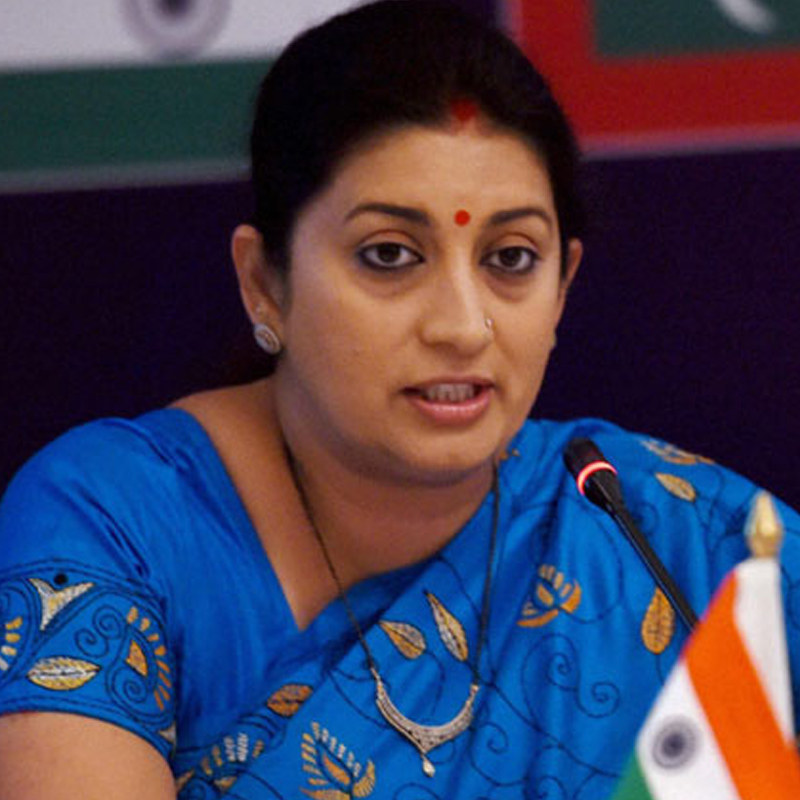
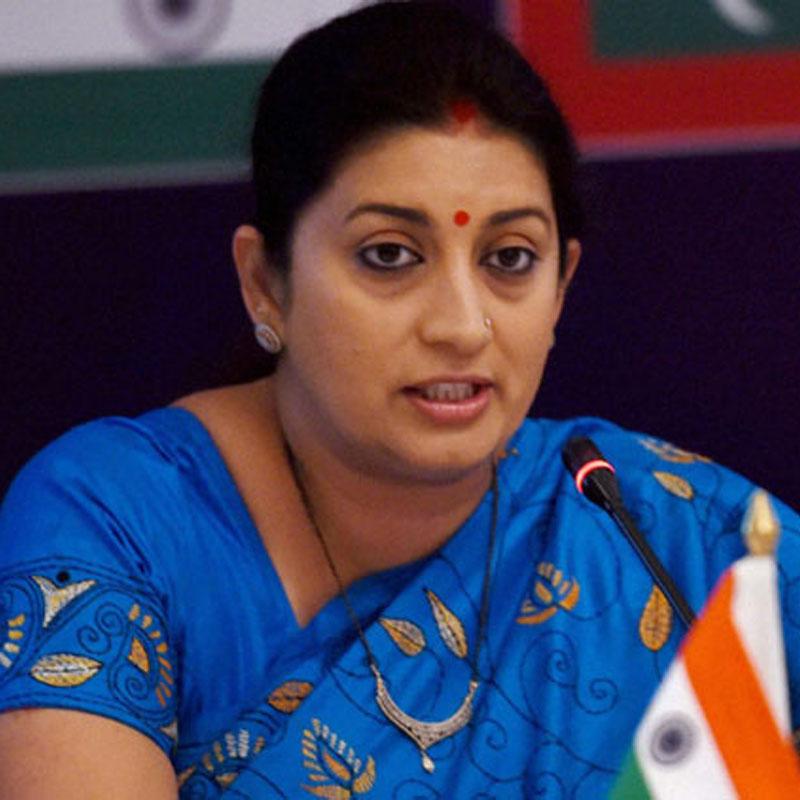
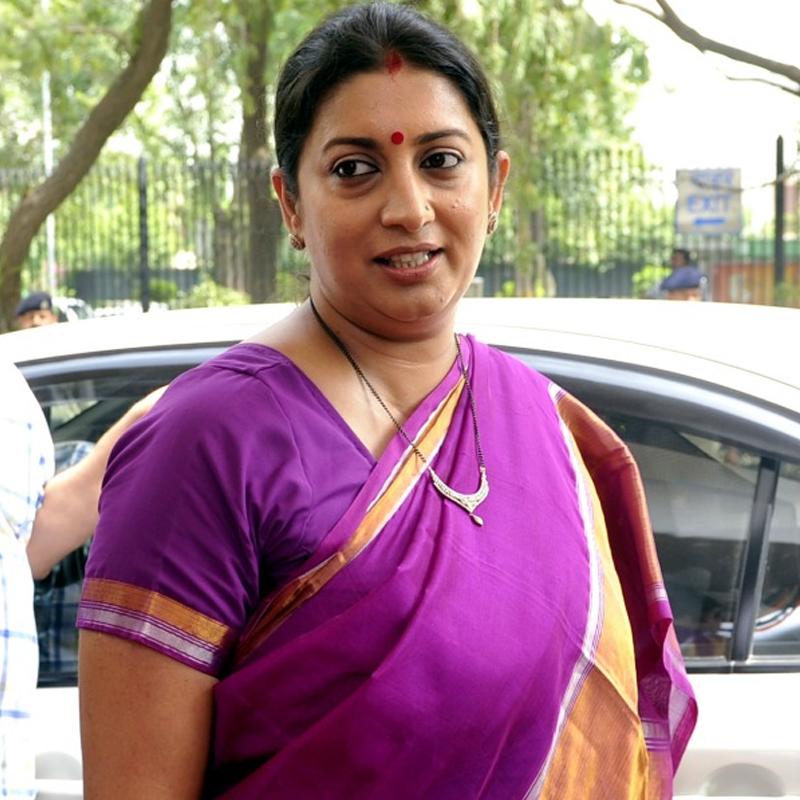
    MUMBAI: Childhood obesity is a rising problem in India. The issue was addressed in today’s Lok Sabha session when a reply was sought from the Minister of Information and Broadcasting Smriti Irani on whether the government is aware of the study that correlates watching ads on TV with increasing habit of eating junk and if there is a proposal to impose a ban on telecast of junk food and cold/soft drinks advertisements on television.

    In a written reply, Irani said that presently there is no such proposal to bank such ads on TV. Admitting that obesity in children was a concern, she mentioned that the Ministry of Health and Family Welfare has informed that the Food Safety and Standards Authority of India (FSSAI) has constituted an expert group to address the issue of High Fat, Sugar and Salt foods (HFSS).

    The expert group in its report made a recommendation regarding ban on foods with HFSS advertising on children’s channels or during children shows. 

    On this recommendation, the remarks of the FSSAI was that the food businesses could be asked to voluntarily desist from advertising HFSS foods on kids’ channels. Bodies like Food and Beverage Alliance of India have already decided to voluntarily restrict food and beverage advertisements concerning children. 

    Nine major food business operators have already joined this campaign and have decided not to advertise products with HFSS on kids’ channels.

    Although the move of banning will promote healthy eating habit among children, it will hamper revenues of major advertisers on channels such as Pogo, Nickelodeon, Disney and others. 

    In December 2017, the Ministry had asked TV channels not to air advertisements selling and promoting condoms calling them indecent, especially for children. The government further reasoned that such ads can create unhealthy practices among them. Following this, there was a complete ban on condom ads on television between 6 am to 10 pm.

    Also Read:

    ‘Sanskari’ India wants condom ads off primetime

    MIB recants, says only explicit condom ads banned during the day

    MIB mulls broadcast of DD News to 100 countries

    Cross-media holding: Indian policymakers push for regulations

  • 2017’s Top India TV industry leaders – Part I

    2017’s Top India TV industry leaders – Part I

    MUMBAI: The year 2017 threw up myriad conundrums and dilemmas for the men and women who are the showrunners of India’s media and entertainment (M&E) sector, which is expected to grow at a compound annual growth rate (CAGR) of 13.9 per cent, to reach USD 37.55 billion by 2021 from USD 19.59 billion in 2016, outshining the global average of 4.2 per cent.

    It was a rocky year, one during which everyone’s mettle was tested. First, there were the aftereffects of demonetisation. If that wasn’t enough, the Goods and Services Tax was unleashed in the second half of 2017. This sent everyone into a tizzy. Business targets went awry as executives grappled with the changes they had to deal with. Net results: industry growth numbers dipped. Despite this, the resilience of the industry and media leaders was never in question.

    Like in the past, we decided to list down—not in any particular order—the top 20 senior leaders from the television industry who, we believe, made noteworthy moves in 2017.  Of course almost every professional in the business deserves to be lauded in these rapidly mind-numbing-confusing-as-hell changing times—for even just hanging in there.  Forget about doing well. However, a list has to be selective and we took upon ourselves to do so. We hope you will appreciate our initiative. Read on for the first installment in our year-ender series featuring six of India’s top TV industry leaders and their achievements in 2017.

    public://Mukesh-Ambani1.jpg

    Mukesh D Ambani

    Disruption. That’s what the D in his full name stands for, apart from his entrepreneurial father’s name Dhirubhai. And clearly that’s what the chairman of Reliance Industries did in 2017. He shook old established players in the telecom sector by giving away wireless data access for free through Reliance Jio–a process he started just as 2016 was ending–quickly adding more than 100 million subscribers.

    The old guard yelped, blocked calls to their networks, but he plodded on through the year, fought them out in courts, and had his way. In the process, he forced them to rework their business plans and models.

    The entry of Jio has forever changed the way the telecom industry prices services for customers. The cheap data has also changed the way Indian viewers are consuming their video content.  Probably, forever.

    Since the launch of Jio more than 200 crore hours of video and around 10 GB data per capita per user per month are being consumed every month by just Jio subscribers. The number for the 375 odd million internet users will be much higher than that. Apart from wireless delivery of video, Ambani also has plans for distribution by fibre to the home (FTTH). If leaked pricing plans are to be believed, he is likely to totally upset the economics of the cable TV ecosystem, too.

     Jio has also invested in content companies such as Alt Balaji, partnered with Hotstar, and appointed Siddharth Roy Kapur Films to curate content for its VOD services. And Ambani already owns close to 38 TV channels under the Network18 group, and has a joint venture with Viacom that gives it a clutch of channels amongst which figures the leading Hindi GEC Colors and other entertainment channels in many languages. Ambani has more disruption plans up his sleeves. At the Viacom18 tenth anniversary celebrations in Mumbai he said he has not paid attention to the video content business under that group company. But he added that the teams there were going to see a greater involvement from his side. That should give a lot many in the TV business sleepless nights.

    public://Uday_Shankar.jpg

    Uday Shankar

    This journo turned media CEO clearly stands head and shoulders above almost every TV and media industry executive in the country. Over the years, his bold, brazen and, at times, out of the box moves have seen what was once a smallish TV network expand into the leader in the media and entertainment landscape—of course, the foundation had been laid some his predecessors and the promoters, the Murdoch family, gave ample support to this ‘jewel’ in the crown of the parent company that’s now known as 21st Century Fox and is seeking regulatory approvals in the US to merge with Disney. 2017 was no different for Uday.

    The year saw Uday getting appointed as the Asia head of Fox – of which Star India is an offshoot. But before that he betted big by coughing up USD 2.55 billion on sewing up the all-media rights for the world’s top cricket property – the Indian Premier League. Many have scoffed at the audacious price he has been willing to pay for that property; something which they did when Paul Aileo and Peter Chernin picked him to run Star India around a decade ago after Peter Mukerjea’s departure.

    But Uday proved the nay-sayers wrong in every way.  He is likely to do it again. And again. Under Uday’s leadership, the India business has firmly established itself as a world-class asset with durable businesses across entertainment, sports, satellite distribution and OTT. Now he has set his eyes to do the same with Fox Asia.

    public://Jawahar_Goel.jpg

     Jawahar Goel

    The third of the four Goel brothers who nourished Essel Group (Zee and Dish TV’s parent), along with the eldest sibling Subhash Chandra, Jawahar Goel, or JG as he’s popularly known as in the industry, has always been a street fighter—and a smart one at that. Historic boardroom battles in New Delhi’s Lawrence Road-based Essel House in the 1990s, notwithstanding (Zee had three JVs with Rupert Murdoch’s Star TV then), JG is regarded as a go-to-man in the industry by most people because of his understanding of the complexities and nuances of the various segments of the media industry. A tech-savvy person, his tablet is the holder of many secrets and strategies.

    2017 saw him getting into the limelight if, for a bit, in stops and starts. In late 2016, he announced what seemed like a mother of a merger with rival Videocon d2h–the process of regulatory clearances for the same took up most of 2017. Everyone expected the going to be smooth and the final clearance came from the ministry of information and broadcasting at close to the end of the year. And then came the announcement in the last week of December 2017 that the merger was being delayed because of technical glitches. And those glitches became clear in early 2018: JG had instructed his investment bankers and lawyers to relook the deal in the light of the fact that the Videocon group was defaulting on loans and whether any action by the government or financial institutions would have an impact on the valuation of Videocon d2h. The market has interpreted this to mean that JG is back at his best: he is striking a further hard bargain or that he has decided to not do it all.

    JG also set the cat among the pigeons in the year by alleging in letters to the TRAI, IBF and the MIB that if the rights of the IPL were awarded to Star India by the BCCI it would tantamount to a monopoly. Nobody heeded him and the rights still went to Star India. That still did not stop JG: he then appealed to the courts that Star’s pay TV service Life OK should not be allowed to go FTA as Star Bharat. Once again, the courts did not agree with him.

    2018 will be an interesting period for him. He will have to come clean on whether Dish TV is going ahead with its merger with Videocon d2h or not.  And if not then what is the course, he and his CEO—a top notch professional who ran Hero Honda—Anil Dua are going to do with the firm going forward. It’s over to the man.

    public://Arnab-goswami2.jpg

    Arnab Goswami

    You can hate him, you can love him, but you just can’t ignore him—no matter how one tries doing the last. Republic TV—Arnab’s new baby—before its debut whipped up a political storm with BJP politician Subramaniam Swamy questioning use of the word `republic’ for a commercial venture and his former employers Times TV Network dragging him to court over who owned the copyright over the phrase ‘the nation wants to know.’

    But Arnab loves a slugfest; he got into a public brawl with Times TV on ratings, distribution practices with the latter taking him to court. For a moment it looked like the News Broadcasters Association and even the ratings body had got polarized with those for and against Republic or those for Times TV. So much so that Arnab called it names. But finally sense prevailed as the dust settled and Republic took up membership of the association.

    Republic TV continued to be a hot topic of discussion throughout 2017 with its line of editorial stand and shows, which some critics dubbed as absolutely partisan and non-journalistic. However, despite widespread criticisms Republic TV not only managed to lead the ratings game amongst the TV news channels, but also succeeded in dividing the news fraternity at one time over audience measurement numbers.

    That it continues to lead a life on the edge of ethics and non-ethics — and thrive — speaks volume of the Arnab charm and his brand of opinionated journalism. With Republic TV expanding into VR programming and also spreading wings outside Indian shores ( it debuted in the Middle East last year), 2018 would be an interesting period of evolution of this news venture backed by some of the staunchest supporters of  PM Modi and his government.

    public://Smriti_Irani.jpg

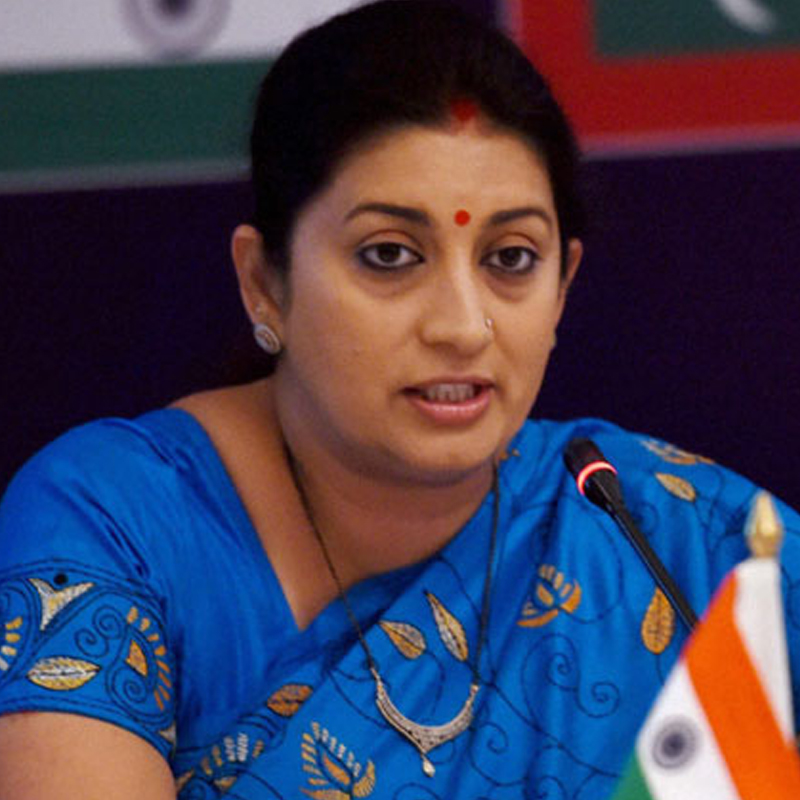
    Smriti Irani

    For many years, Smriti Irani along with Ekta Kapoor and Star India contributed to the rise and rise of Indian television thanks to the hugely popular Kyuunki Saas Ki Kabhi Bahu Thi, a series in which Smriti played the role of a dutiful Indian daughter in law, who had sanskaar yet was willing to stand up for herself when she was wronged. 

    Now, 17 years later, Smriti sits over the entire broadcast sector as India’s TV content regulator as  the minister of information and broadcasting, a position none of the executives or professionals in Indian television even envisaged she would one day hold.

    Smriti acted quickly following her appointment: she put a halt to the process of e-auctions of DD’s free-to-air direct-to-home platform DD FreeDish.  She even stopped the privatisation of time slots on national broadcaster DD National and even said not yet to two productions (one by Gajendra Singh and the other by Balaji Telefilms), which had got the go ahead. That did not augur well for at least Singh as it allegedly caused him grievous losses.

    Then, under her watch, her ministry has been demanding that the world’s most valued cricket league the IPL is of national import and that Star India needs to share its feed with pubcaster DD, something which the Fox group company sees as not fair. Additionally, the ministry has also raised the fees for live uplinking—a move which many see as targeted at making things dearer for Star India as it cover test cricket in six languages in 2018.

    Smriti also left her stamp on this year’s IFFI, which was probably the most glamorous in its history with A-list Bollywood stars winging it to Goa. Her ministry lifted the bar for the festival in terms of scale and quality.

    She also clamped down on steamy condom commercials, which were flooding channels on TV channels during the day. Broadcasters were ordered to telecast such ads only between 10 pm and 6 am.

    public://Shashi Shekhar Vempati.jpg

    Shashi Shekhar Vempati

    Shashi Shekhar Vempati has quite a few creds to his name. One of them being that he is youngest executive to be the CEO of pubcaster Prasar Bharati and the other being that he is the first private sector manager called on to run the behemoth. And 2017 put all his managerial skill sets to the test.

    When he joined, there were plans already in place to grow DD Free Dish, to study if there was opportunity in the kids’ space for it and check out if a gasping DD National could be given fresh oxygen and survive the hectic competition in general entertainment television.

    Shashi slammed the brakes on all growth plans, heeding to the orders of the powers that be (read his new I&B boss Smriti Irani). Under his watch, the e-auctions of DD Free Dish, the selling of slots to private producers were called off. He also told DD director general Supriya Sahu to dive deeper into DD Kids and not rush into it. And he spent a large part of the year studying what DD was all about and what he could do and not do at the organisation. 

    This apart, Shashi has been focusing his energy on two fronts: one on sports and the second on DD’s News outreach and ensuring that the pubcaster relays the right messaging of a nation, which is being watched by the world.  India is predicted to become a global power— one of the most important consuming countries globally in the not, too, distant future.

    Most people saw the Supreme Court’s endorsement of the Delhi High Court verdict, which disallowed Doordarshan or DD from sharing the live feed of cricket matches of ESPN and Star India with cable operators as a setback. But not the new kid on the block; Shashi saw it as an opportunity.

    During an interview with www.indiantelevision.com, Vempati said that the decision forced away complacency at the pubcaster where earlier many changes and additions were either being implemented either too slowly or not at all. Prasar Bharati now had a reason to make DD Sports a go to destination for viewers and would help in promoting DD Free Dish and DD terrestrial to larger audiences across many more cities than the 19 in which DD’s terrestrial signals are available, and to switch DD Free Dish to MPEG-4.

    Shashi said that the verdict has created an avenue for making DD Sports the place for cricket. Earlier, cricket and other sports were being aired on DD National. Now they would be aired on DD Sports. The court’s verdicts’ would prevent cable operators from pushing their own ads while blanking out DD National signals during matches. In future, through DD Sports, there would be a separate feed for cricket and there would be no need to blank out an important channel like DD National.

     Shashi will be watched through the year in 2018. He has plans to harness new technologies such as in-built digital tuners in some television models, DVB through dongles and mobiles and plugging into hotspots that are DVB ready. He feels that DTT is a new viewership base and is a new way for advertisers to connect with viewers.

  • TDSAT interim order ensures continuity for private channels on FreeDish

    TDSAT interim order ensures continuity for private channels on FreeDish

    NEW DELHI: Private TV channels on Doordarshan’s FreeDish with expired licences have been informed by the Telecom Disputes Settlement and Arbitration Tribunal (TDSAT) that they can continue airing until further orders. This applies to even those whose licences are soon to expire.

    Channels can continue on a pro rata basis taking the bid with which they had won the slots or the reserve price, whichever is higher, as benchmark. This can continue till the government formulates a new policy within two months.

    TDSAT chairman justice Shiva Keerti Singh, and members B B Srivasatava and A K Bhargava gave three days to any other channels similarly affected to take advantage of this interim order by informing the tribunal.

    While admitting all the petitions before it, the tribunal asked the government to file its reply within four weeks.

    Earlier in the morning, the government through counsel Rajeev Sharma presented a letter sent to Cinema 24×7 which laid down a new formula aiming at bringing the pricing at par with the system followed for FM channel auctions which also provides for revenue sharing.

    Sharma said that Prasar Bharati was in the process of reorienting its content to live up to its credo of public service broadcasting and had therefore sought a time of two months. However, channels whose licences will expire this month or in February next year can continue by paying the highest bid amount and by sharing its revenue with the pubcaster. However, counsel for the private channels rejected this as discriminatory.

    Counsel Aman Lekhi who represented Cinema 24×7 said the government could not bring an interim policy which was not relatable to something that law recognises. He said this would also amount to creating two classes of TV channels: those who were on a pro rata basis and those who were being forced to pay an amount that was higher than the amount for which they had successful bid for the channels. There was no guarantee that the government will not revert to the existing prices after the two-month exercise was over.

    He added that the ad hoc exercise was even unnecessary since the government is in contemplation. Such a measure doesn’t give certainty or continuity and alterations have to be by ‘sound consideration’. In fact, he stated that even Prasar Bharati was unaware why the auction was called off by the Minister of Information and Broadcasting Smriti Irani.

    Senior advocate Ramji Srinivasan added that it was clear that DD was eager to continue with the auctions but the ministry had arbitrarily stopped them. He also said that ‘continuity’ implied continuing with the existing policy and not imposing something completely new.

    He said equating general entertainment channels with news channels was sheer arbitrariness. This may result in closing the channels and shutting doors to people.

    Assistant solicitor general Tushar Mehta added that the aim of the government had been to balance equations on both sides. He said that in the FM auctions, the channels shared revenue of fifty per cent apart from the bid amount in the e-auctions and so the same policy was sought to be extended to the TV channels on FreeDish.

    Apart from Cinema 24×7 which runs Wow Cinema and News Nation, others who joined the fray today included Enterr 10 TV Pvt Ltd., B4U Broadband India Pvt Ltd, and Independent News Service Pvt Ltd.

    The letter sent by a senior executive of Doordarshan said that Doordarshan “can as an interim measure follow a model on the pattern of FM auction policy of the government for two months or till the centralgovernment policy is made, whichever is earlier for the channels which are going to be off the air on completion of their contract period” and they may “be offered continuity of operation at the highest bid amount for any of the channels auctioned in the past, together with revenue sharing at the rate of 50 per cent of the gross profit or 4 per cent of the gross revenue  or  2.5 per cent of upfront highest bid amount whichever is higher. This system, as an interim arrangement should be operated on first come first served basis if the terms and conditions of the short duration extension are acceptable to the existing  contract holder.”

    The letter noted that FreeDish has witnessed a significant growth spurt in free to air (FTA) channels in  2015-2016 and the popular FTA channels spanning general entertainment, movies and music have targeted core TV audiences and according to estimates reported in the media to have earned Rs 5 to 7 billion. Keeping so many vacant slots will not only affect revenue from one of Doordarshan’s largest sources but will also force people to shift to other expensive options.

    Soon after Smriti Irani became the Minister of Information and Broadcasting (MIB) few months back, the decision of halting the bids for FreeDish slot was announced. This came at a time when FreeDish was testing its MPEG4 technology in an attempt to encrypt the platform and also expand the number of TV channels that could be carried. At present 80 channels are carried on the FTA DTH platform. 

    Also Read:

    WOW Cinema petitions TDSAT on delayed auctions for DD FreeDish slots

    10 FreeDish slots may fall vacant by Oct-end as renewals hang fire

    TDSAT gives Prasar Bharati 2 days to respond to FreeDish auction suspension

    Dish TV moves TDSAT against Star Life OK name change & turning FTA

  • Smriti Irani: Need to reduce gap between regional & national news & democratize viewership

    Smriti Irani: Need to reduce gap between regional & national news & democratize viewership

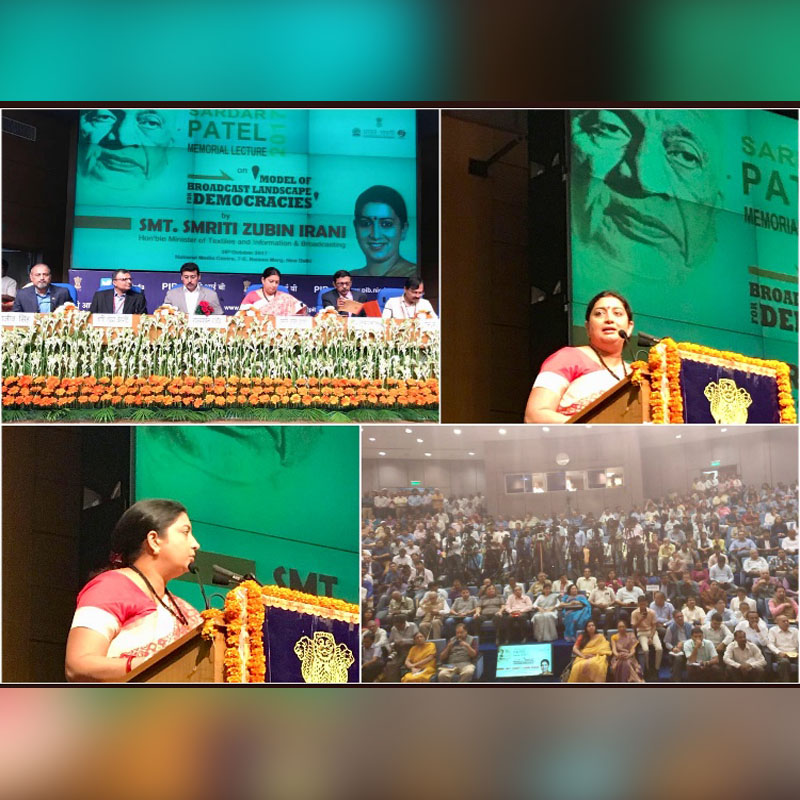
    NEW DELHI: Stressing on the need for a model structure of broadcasting, which can strengthen the Indian democracy, Minister for Information and Broadcasting Smriti Irani yesterday exhorted the media to reduce the gap between regional and national news, thus democratizing viewership, and the need for meeting objectives of public good and entertainment.

    “If we want the broadcasting landscape to be strong, the first and the foremost requirement is to give as much importance to the regional content as the national content…(and) reduce the gap between the regional news and  national content,” Irani said yesterday while delivering the Sardar Patel Memorial Lecture 2017 themed ‘Model of Broadcast: Landscape for Democracies’.
     
    Describing the broadcast news landscape as a “spectator sport”, the minister said the rush for audience ratings has reduced everything to “headlines competing with hashtags” in the wake of social media explosion taking place in the country that has provided a new pathway for information dissemination.

    Coming down heavily on a certain section of the media for being driven by TRPs, forsaking codes, ethics and conduct rules, unlike another section, Irani said, ”There is a need to democratize the (audience) measurement system in the country.”

    According to the feisty minister, who also holds the portfolio for Textiles Ministry, a model structure of broadcasting should focus on “democratized viewership” based on an accurate measurement system that reflects the strength of regional languages, varied tastes of viewers/consumers and bridges the divide on issues related to agenda setting, creative content and revenue between the mainstream and regional platforms.

    Stressing the importance of the sector keeping abreast with trends in the social media, which she described as a “disruptive” force, Irani said though the broadcasting sector is based on business propositions and technological upgradation, the ‘Mann ki Baat’ programme of Prime Minister Narendra Modi aired on AIR was an ideal example of how a technology platform blended his message with citizen understanding and awareness of the issues highlighted in each episode.

    Highlighting the difference in the way pubcasters — Doordarshan and All India Radio — functioned vis-a-vis a large section of the private sector media, Irani added: ”If you look at the broadcasting sector, the overriding focus of the public broadcaster has been on serving the public good. In today’s times, however, when news has become a spectator sport, there is a need to bridge the gap between serving the public good and providing entertainment.”

    The annual lecture held at the National Media Centre in the Capital, started by All India Radio way back in the 1950s, was attended by Minister of State for MIB Rajyavardhan Rathore, pubcaster Prasar Bharati chairman A. Surya Prakash and Prasar Bharati CEO Shashi S. Vempati, apart from other senior government officials.

    Even as Irani lauded the public broadcaster’s endeavour to focus on public good, she said it was the “duty of the public broadcaster to speak fairly and freely, as it is doing now”. She also called upon the pubcaster to weave stories on the lives of ordinary people, which could have an impact both within India and abroad.

    The minister said it would be the endeavour of MIB to promote the concept of “design thinkers” for content generation in the digital space in the light of growing use of technology by the young generation in areas of internet, mobile content and animation & gaming. This would also incorporate the elements of the New India vision envisaged by the Prime Minister by 2022.

    Highlighting the fulcrum strength of her ministry, Irani said that the Information Service officers’ profile would be strengthened in the future by giving them skill sets along with an integrated administrative exposure so as to enable them to serve policy and programmes of the people through the medium of information. This would be along the lines of Sardar Patel’s vision of creating a steel frame to serve the people through the channel of information dissemination, she added.

    The first Patel memorial lecture was delivered by C. Rajagopalachari, while the other distinguished speakers in the series have included stalwarts like Dr. Zakir Hussain, Dr. A.P.J. Abdul Kalam and Morarji Desai.

    Also Read: Smriti Irani tweets industry body advisory urging restraint by TV news channels

    MIB minister Smriti Irani orders review of DD prime time auction process

    Smriti Irani gets additional charge as MIB minister

    BARC India to TRAI and MIB: Tweak legislation to make data tamper-proof

  • TDSAT gives Prasar Bharati 2 days to respond to FreeDish auction suspension

    TDSAT gives Prasar Bharati 2 days to respond to FreeDish auction suspension

    NEW DELHI: Prasar Bharati has two days more to come out with the real reason for suspending the auctions on its DTH service FreeDish in August this year. From 27 October 2017 the telecoms and broadcast disputes tribunal TDSAT will hear two petitions challenging the decision of public broadcaster.

    In the last hearing, the tribunal had told petitioners Cinema 24×7, (distributors of WOW Cinema),  News Nation Network and others to file applications with Prasar Bharati. It had said it would hear the matter if not resolved by the pubcaster.

    When the matter came up yesterday, only Cinema 24×7 (WOW Cinema) was represented by its counsels. Prasar Bharati, represented by Assistant Solicitor General Tushar Mehta, sought two more days to finalise the government and Prasar Bharati’s stand on the issue.

    Soon after Smriti Irani became the Minister of Information and Broadcasting (MIB) few months back, the decision of halting the bids for FreeDish slot was announced. This came at a time when FreeDish was testing its MPEG4 technology in an attempt to encrypt the platform and also expand the number of TV channels that could be carried. At present 80 channels are carried on the FTA DTH platform.  

    ALSO READ:

    WOW Cinema petitions TDSAT on delayed auctions for DD FreeDish slots

    10 FreeDish slots may fall vacant by Oct-end as renewals hang fire

  • Govt to help revitalise DD under ‘autonomous Prasar’, dubs censors as ‘facilitators’ within law

    Govt to help revitalise DD under ‘autonomous Prasar’, dubs censors as ‘facilitators’ within law

    MUMBAI: Union information and broadcasting minister Smriti Irani on Friday said the government saw agencies including the Censor Board “as facilitators” within the ambit of the law. Irani was speaking at a World Economic Forum-India Economic Summit session moderated by film maker Karan Johar in New Dlhi.

    She added that the government would consider a suggestion to help bring out a television series on freedom fighters to be telecast on the pubcaster Doordarshan.

    Defending the central government on demonetisation and the way Good and Services Tax (GST) regime was implemented, she said that the NDA was voted to power to change the status quo by taking difficult decisions. She said that those decisions were taken with a view to simplify the tax regime, increasing tax compliance, widening the tax base and increasing productivity.

    Revitalising Doordarshan: At an earlier event — CyFy 2017, by Observer Research Foundation, Irani had said that the government was planning to revitalise Doordarshan. She spoke of the government’s problems in improving the functioning of the Doordarshan as it was under the jurisdiction of an autonomous body — the c
    However, Irani made it clear that she would also like the Doordarshan to be a world-class channel which Indians and the diaspora would be proud of.

    The government, the minister said, was also planning to promote positive storytelling, and added that it would promote the film “Lunchbox” at the upcoming Goa International Film Festival. India, she said, had several good writers, actors, and other creative artistes capable of making world-class films, but the problem arose when the producer looked at the balance sheet.

    The minister opined that the social media by and large had brought balance with the main media, since it could criticise biased articles and commentaries in newspapers which was not possible a few years ago. She agreed with the Swedish prime minister Carl Bildt who had said: “The norms and values of the internet should be the values and the norms of society.”

  • Smriti Irani favours facilitating constructive communication in digital world

    Smriti Irani favours facilitating constructive communication in digital world

    MUMBAI: Union information and broadcasting minister Smriti Irani has said that the role of the central government was to facilitate constructive communication in the digital world. She was speaking at an interactive session organised by the Observer Research Foundation in New Delhi.

    “I think the biggest challenge and opportunities in managing (digital content) is (to know and understand) the intent behind that creativity,” she said when asked how she managed, as a minister, the artificial distinction in content or creativity in a digital world where jurisdiction and borders had no place, PTI reported. If the intent of creativity or communication was to “create disharmony,” she said then there would be concerns regarding it.

    If the intent was to empower, she said, then it was not the job of the government to intervene.

    About a low budget films performing well, she said that a creative person would “never pursue a balance sheet which says only profit” but would pursue telling a great story. She also said that the best way to discourage bad content was to avoid watching such things. In a creative democracy, in a country like India, we could not ask people to stop making a certain type of content.

  • MIB minister Smriti Irani orders review of DD prime time auction process

    MIB minister Smriti Irani orders review of DD prime time auction process

    NEW DELHI: Doordarshan has put on hold the prime time slots auctioned to Ektaa Kapoor-managed Balaji Telefilms and Saaibaba Telefilms following instructions from the ministry of information and broadcasting (MIB).

    Doordarshan sources told Indiantelevision.com that the action was taken after a directive from the office of the MIB secretary in mid-August, just before two of the slotted programmes were slated to go on air on DD National.

    The sources, who did not want to be identified, said the new MIB minister Smriti Irani had decided to review the whole process and take a fresh look at the concept of auctioning slots for prime time in Doordarshan.

    Prime time auctions were held as part of the pubcaster’s efforts to infuse some breath of fresh air in the programming lineup of its main channel and also earn additional revenue in the process.

    Balaji Telefilms bagged four slots and Saaibaba Telefilms pocketed two slots as a result of Doordarshan’s prime time slot auction, although financial details are not known.

    Bag Films and Media of Delhi, which had also been shortlisted, had failed to bag any slot as its bids were lower than those by the other two bidders.

    ALSO READ:

    Doordarshan slots Rafi, Kishore & Lata tribute show from Sat

    DD relaxes norms for prime time slot bidders as incentive

    Suresh Panda may be Prasar Bharati interim CEO; liberal DD auction criteria recommended

  • Smriti Irani & Rathore retain two portfolios each, latter elevated

    Smriti Irani & Rathore retain two portfolios each, latter elevated

    NEW DELHI: Textile minister Smriti Zubin Irani has also been made the union minister for information and broadcasting (MIB) in the allocation of portfolios after reshuffle and expansion of the Union Cabinet.

    Irani was earlier given the additional charge of the ministry of information and broadcasting after M Venkaiah Naidu resigned following his nomination as the vice-president. It was feared that she would be divested of one of her two portfolios after the reshuffle, but she will continue to hold both.

    Meanwhile, Col. (Retd.) Rajyavardhan Singh Rathore has been elevated as the minister of state (independent charge) of youth affairs and sports, even as he will continue to hold the post of minister of state for information and broadcasting.

    Irani comes from a media and entertainment background having been a television actress. Rathore is a professional shooter who won a silver in the Olympics and multiple medals at the Commonwealth and Asian Games and is the recipient of both, a Padma Shri for sports and an Ati Vishisht Seva Medal for the Army.

    ALSO READ :

    Smriti Irani gets additional charge as MIB minister

    Smriti Irani tweets industry body advisory urging restraint by TV news channels

    NFDC to manage International Film Festival of India now

    Govt wants all ministry ads in Hindi too

  • Smriti Irani tweets industry body advisory urging restraint by TV news channels

    Smriti Irani tweets industry body advisory urging restraint by TV news channels

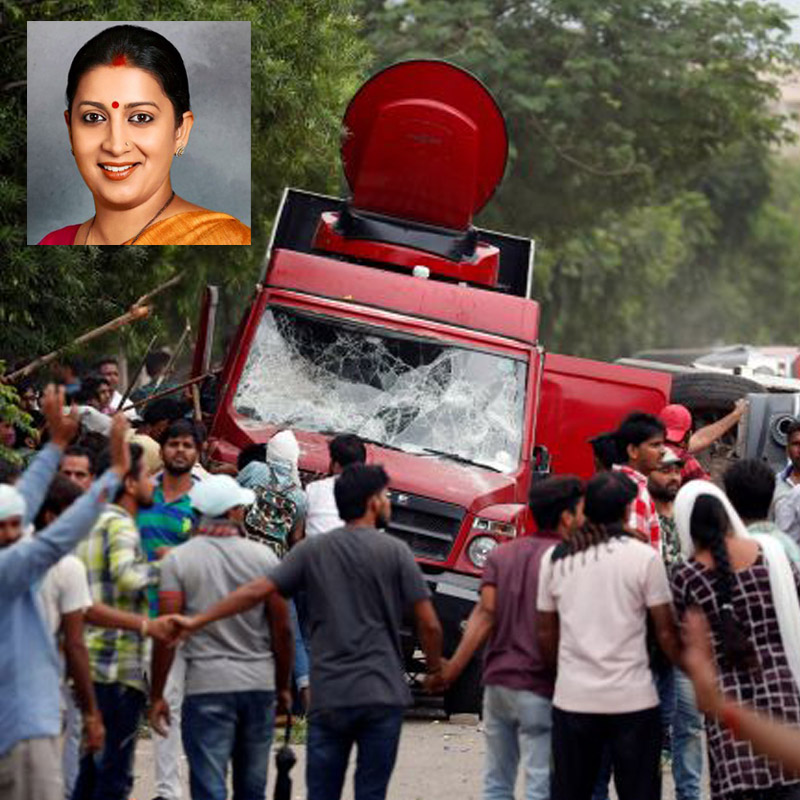
    NEW DELHI: Minister for Information and Broadcasting Smriti Irani yesterday in tweets amplified advisories issued by news industry associations, which had cautioned TV news channels to exercise restraint while reporting on the violence unleashed in the states of Haryana, Punjab, parts of Uttar Pradesh and Delhi in the aftermath of self-styled godman Ram Rahim being convicted of rape charges by a local court on Friday.

    At around 20.59 Irani tweeted: “Drawing attention of news channels to Clause B of Fundamental Std. of NBSA refraining channels from causing panic, distress &undue fear.”

    As social media exploded questioning the minister’s tweet and intentions — some even supported her assertions, though, saying the media was reporting falsely on incidents of mob violence — she followed up her first tweet with another one stating: “Kindly note this advisory has been given by the offices of the National Broadcasters Association.” In another message she also condemned the attack on media and damage to property.

    News Broadcasters Association (NBA)’s self-regulatory body News Broadcasting Standards Authority or NBSA had actually re-circulated among member-news channels the organisation’s ethics and codes that overall harp about restraint.

    On reporting news involving armed conflicts, communal violence, public disorder and internal disturbances, the NBSA guidelines urge TV news channels that telecast of such incidents should be tested on the “touchstone of public interest”.

    Broadcast Editors Association (BEA), an apex body of editors of national and regional television news channels in India, too issued an advisory on Friday cautioning TV news channels to “keep a careful eye on the content and views that can inflame people.”

    “All editors should take utmost care while playing violence visuals of the coverage of Baba Ram Rahim case. Please verify the facts before putting them on air because lots of rumours are floating around,” the BEA statement said.

    While NBA did issue a statement condemning the violence and attacks on the media (OB vans were damaged and some media people were assaulted), it urged “the chief ministers of Haryana and Punjab to take action urgently to bring the situation under control in order that the media/press are able to perform their duties without fear.”

    For the records, NBSA does have extensive code of ethics and broadcasting standards. In the section Principles of Self-regulation, the code states: “Television news has greater reach, and more immediate impact than other forms of media, and this makes it all the more necessary that channels exercise restraint to ensure that any report or visuals broadcast do not induce, glorify, incite, or positively depict violence and its perpetrators, regardless of ideology or context. Specific care must be taken not to broadcast visuals that can be prejudicial or inflammatory…”.

    Meanwhile, a Punjabi language news channel reporter received injuries in attacks allegedly by followers of the Dera Sacha Sauda chief Ram Rahim in Haryana while the video journalist accompanying him has gone missing after the assault. 

    Rakesh Kumar, a reporter with PTC News, said he and his video journalist Shipendar Happy were attacked near the Dera headquarters when they went there to report after Dera head Gurmeet Ram Rahim’s conviction in a rape case. “They thrashed us brutally leaving me with a fracture in my right hand. My cameraman Happy is still missing. They also torched our vehicle and equipment,” Rakesh told news agency PTI.

    ALSO READ:

    NBSA hauls up news channels; fines them, demands apology

    BCCC gets more complaints on harm than sex, obscenity & nudity on TV