Tag: Smriti Irani

  • Comment: Is there light at the end of the tunnel for broadcasters?

    Comment: Is there light at the end of the tunnel for broadcasters?

    The period between August 2017 and September 2018 will be remembered by the Indian broadcasting sector for more reasons than one. Interestingly, the main protagonists seem to be common – Star India and the Supreme Court of India – and this combination has worked well to lay down a roadmap for the sector. Only time will tell whether it is for the good or bad!

    Before we go further, let’s fact check the status of the Indian broadcasting sector.  According to Ministry of Information & Broadcasting that as on 31 October 2018 there are 866 permitted TV channels in India.

    As per FICCI-EY Report, “Re-Imagining India’s M&E Sector” the broadcasting industry “grew from Rs 594 billion to Rs 660 billion in 2017, a growth of 11.2 per cent”. This includes the advertising revenue of Rs 267 billion comprising 40 per cent of revenues and the distribution revenue of Rs 393 billion comprising 60 per cent of total revenues. The broadcasting sector generates millions of jobs directly and indirectly, contributes to economic growth with a rate almost twice the GDP and provides an immeasurable ancillary contribution by serving a platform for the growth of several other industries.

    This proves that television in India – even in the age of digital media explosion – remains a mass medium and plethora of stakeholders from content creators, broadcasters, teleport operators, satellite operators, advertisers, distributors and a larger television audience viewing audience are involved in one way or other.

    Is it time to nationalise sports?

    Let’s now examine some of the stunning reverses suffered by the broadcasters before the judiciary in this period.

    First amongst them is the judgement delivered by the Supreme Court in 2017 in the Sports Broadcasting Signals (Mandatory Sharing with Prasar Bharati) Act, 2007 which involved Star India and Prasar Bharati.

    In a long-drawn battle of more than ten years, the Supreme Court finally confirmed the Delhi High Court’s finding when it adjudicated that the original intent of the act was to achieve twin purposes of making available a live feed of a sporting event of national importance to economically weaker section of the society and consequently, the same should be made available on a free or no cost basis. 

    The Supreme Court whilst allowing the sporting events of national events to be shared mandatorily with Prasar Bharati ruled that the public broadcaster cannot utilise it on a notified channel which has to be compulsorily carried by private distribution platforms. Although the ruling of the Supreme Court was not followed by letter and spirit by Prasar Bharati, it put the onus on sports broadcasters to take legal action against erring private commercial platforms carried “live” sports feeds. Rather than encrypt Doordarshan’s feed, the Ministry ordered the distribution platform operators to run a ticker stating that “the match/game can be viewed in free-to-air mode on DD Sports Channel, on DD Free Dish and DD’s terrestrial network”. 

    Whilst the Supreme Court put away any confusion on the Sports Act and a private commercial sporting event like IPL anyway ought not to be considered as sporting events of national importance, Smriti Irani who was piloting the I&B Ministry in April 2018 had other ideas.

    During her time in Shastri Bhawan it seemed Star India was wrong when it fiercely bid to acquire long-term exclusive media rights for the Indian Premier League along with BCCI international and domestic matches for an approximate value of Rs 16,350 crore and Rs 6,150 crore respectively.

    2017 was the first year for Star India after it acquired rights for the IPL and the Ministry inexplicably made them sweat out before granting temporary live uplinking permission for live broadcast of the IPL matches on their channels till the very last moment. This was nothing else but to arm-twist Star India to share all the live matches of Indian Premier League with Doordarshan for free, even though IPL, which is a privately-owned club cricket league and can no way be considered as a sporting event of national importance.  In the end, Star India had no other option but to give something to the power that be and they gave in to share with Prasar Bharati the inaugural, the playoffs held on weekends and the last four matches of IPL, with a deferred live feed of at least 60 minutes. No surprise, Smriti Irani claimed victory for bringing IPL for the first time ever on Doordarshan.

    Not getting the “live” feed of IPL matches and unable to make legislative moves to amend the judgement of the Supreme Court as she did not find support amongst her ministerial colleagues the Irani-led Ministry issued a notice mandating all sports channels broadcasting live sports of “national importance” to display a ticker stating the same match was also available on DD’s free-to-air platform squirming sports broadcasters. Not only are the rights holders required to give live sports content free to DD as per the Sports Act, but they are also required to run a marketing campaign for Doordarshan to drive audiences away from themselves to go somewhere else to watch it!

    Now, if the broadcasters believed that the Supreme Court’s decision on the Sports Act in August 2017 had finally settled the issue, unfortunately, it was not to be. On 24 October the Ministry released a notice seeking feedback/comments on draft Sports Broadcasting Signals (Mandatory) sharing with Prasar Bharati (Amendment) Bill, 2018.  The ministry wants to amend Section 3(1) of the Sports Act to ensure mandatory sharing of the signals of such sporting events with “other networks, where it is mandatory to show the Doordarshan channels as per the Cable Television Networks (Regulation) Act, 1995”. 

    Here's a suggestion : rather than doing it in a piecemeal manner in forcing sports broadcasters to share more sporting events why doesn’t the government nationalise at one go so there is clarity on sports broadcasting?  This will also make Doordarshan the only sports broadcaster in the country and thus can ring-fence them from competition from private sports broadcasters!

    Changing landscape?

    However, the biggest one of all is the Supreme Court judgement on 30 October dismissing the plea of Star India challenging the jurisdiction of TRAI in regulating the broadcasting sector through Tariff Orders.

    The Supreme Court judgement has far-reaching consequences for the broadcast industry since it settled the long pending debate of who is the regulator of the Indian broadcasting sector.  Star India had challenged TRAI’s jurisdiction to frame the tariff order arguing that the exploitation of intellectual property (IP) rights are covered under Copyright Act.  The Supreme Court whilst refusing to entertain Star India’s challenge by 2:1 majority held that (1) the Copyright Act had nothing to do with the inter se relationship between the broadcaster and the distributor in the activity of broadcast and (2) it also does not deal with the price of a channel that an end consumer pays to the broadcaster.

    Whilst the Supreme Court empowered the end-consumer through its order but the implementation is not going to be smooth.  Although TRAI proposed to bring DTH, cable TV, HITS, IPTV operators under unified quality of service framework way back in 2015, poor implementation at the ground level means, the cable operators have still not put in place any consumer redressal mechanisms nor will they issue any bill or invoice.  Worse still, many distribution platform operators (DPOs) have not even fulfilled technical requirements under the DAS mandate or installed subscriber management systems to inform the authorities how many subscribers they service in their areas of operation even though the new tariff order is going to become effective from 1 January 2019.

    According to industry experts, although the new Tariff Order is expected to benefit the consumer as he can now pick and choose his channels rather than being saddled with hundreds of them but the cost of monthly cable bill may go up.  In other words, a new concept of ‘pay less for less, pay more for more’ is going to be a reality for Indian broadcast consumers.

    The moot question is after the Supreme Court empowering the consumer vis-à-vis broadcasters, has TRAI empowered the consumer vis-à-vis DPOs?  The quality of service (QoS) by the DPOs has always been a bone of contention because of its implementation on the ground by the licensor, MIB or its authorised officers at the district level or by the regulator, TRAI.

    Even after the implementation of the Digital Addressable System (DAS), the analogue transmission is still transmitted in many parts of the country and the cable operators have not yet fulfilled the technical requirements to meet the DAS mandates.  Even today in many parts of the country kutcha bill is the norm and no sign of any kind of customer care.  When it is brought to the notice of the policymakers they don’t want to see the reality.

    Although TRAI notified the Telecommunication (Broadcasting and Cable) Services Standards of Quality of Service and Consumer Protection (Addressable Systems) Regulations, 2017 the experience so far shows it will be a tall order to implement on the ground on issues such as establishment of customer care centre, website, consumer care channel and publication of manual of practice, etc.

    As a result, there will never be an end to the disputes amongst stakeholders which is the bane of the Indian broadcasting sector and where is the possibility of changing landscape?
  • Online media regulations: action shifts to IT Ministry from MIB

    Online media regulations: action shifts to IT Ministry from MIB

    MUMBAI: If online media is readying the champagne to pop, then hold on to your exuberance. The government hasn’t given up its resolve to explore regulations for online media and content. It is only attempting to be on the right side of laid down rules and cut down on duplication of work.

    In short, the main action will be shifting from the Ministry of Information and Broadcasting (MIB) to the Ministry of Electronics and Information and Technology (Meity), while other things remain constant, which means the mandate will continue to be the same.

    A government official admitted, without saying so in so many words, that as a Meity committee, set up earlier, has the mandate to explore regulations for online media to facilitate its expansion, MIB will work along with its counterparts bringing in more synergy.

    The official insisted that the MIB committee, set up to explore regulations for online media in April 2018, is officially not being dissolved, but will work along with the Meity panel that comprises similar members.

    The 10-member panel, constituted by the MIB headed by Smriti Irani, was criticized by experts on the ground that it was outside the jurisdiction of MIB to explore regulations for online media, including OTT services, as the matter fell within the ambit of Meity — something that MIB Minister Rajyavardhan Rathore had reiterated in Parliament too. A big criticism was that a panel formed to look into matters relating to online media didn’t have a single online player as a member.

    When the MIB panel was announced it had as its members the following: MIB Secretary– Convener; Secretary, MeitY; Secretary, Ministry of Home Affairs; Secretary, Department of Legal Affairs; Secretary, DIPP; CEO of MyGov and representatives of Press Council of India, News Broadcasters Association, Indian Broadcasting Foundation, apart from representation from any other government organization or industry body deemed fit by the convener.

    The terms of reference of the committee were:

    i. To delineate the sphere of online information dissemination which needs to be brought under regulation, on the lines applicable to print and electronic media.

    ii. To recommend appropriate policy formulation for online media / news portals and online content platforms including digital broadcasting which encompasses entertainment / infotainment and news/media aggregators keeping in mind the extant FDI norms, Programme & Advertising Code for TV Channels, norms circulated by PCI, code of ethics framed by NBA and norms prescribed by IBF, and

    iii. To analyze the international scenario on such existing regulatory mechanisms with a view to incorporate the best practices.

    As criticisms mounted, the government has done what it is best at doing — located another government panel with similar or near-similar mandate in the relevant Ministry (Meity) and shifted the onus of exploration of regulations for online media to the rightful department, thereby blunting critics.

    Indiantelevision.com has always been of the opinion that rolling back of orders relating to fake news even if the Prime Minister’s Office intervened, and other such backtracking was akin to testing the waters for a bigger move to have norms for online media where content is continuously getting more edgy and experimental.

    Meity Minister Ravi Shankar Prasad, who also happens to be the Law Minister, yesterday said that it was time to talk to online stakeholders to explore formulation of policies that would govern the online media, especially social media and free messaging platforms like WhatsApp that are being blamed for incidents of lynching in the country.

  • Comment: Why it’s important for Rathore at MIB to walk the (sports) talk

    Comment: Why it’s important for Rathore at MIB to walk the (sports) talk

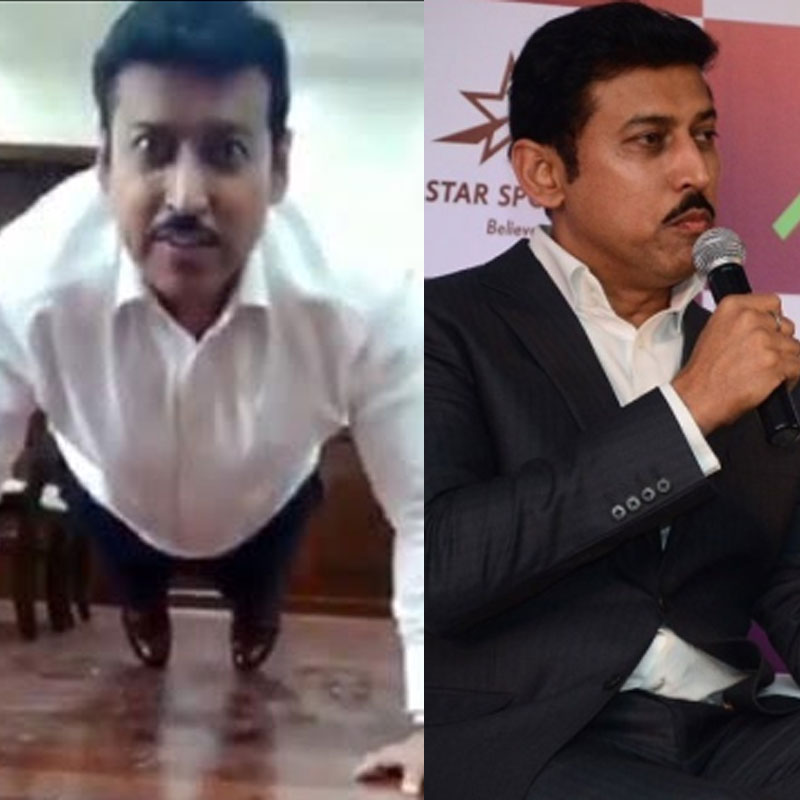
    He may have started the #HumFitToh IndiaFit campaign that went viral on social media last month and had celebs and plebs posting images of their health routine. He may also be a comparatively low-profile minister in the PM Modi cabinet who has delivered on various fronts, including being proactive on issues relating to sports. But Minister of Information & Broadcasting and Youth Affairs & Sports Rajyavardhan Rathore now needs to bring his Olympian attitude-to-succeed and political astuteness to marry the various causes his two ministries espouse.

    Though he has been around at MIB for some years now, acting as a junior to more high-profile ministers like Arun Jaitley and Smriti Irani, Rathore’s rise at MIB has lot to do with his success as minister of Youth Affairs and Sports. And, India’s broadcast and entertainment industry, still reeling under the after-effects of a slow economy and some economic policy decisions taken by the federal government, believed they may have found a messiah in Rathore when he was given independent charge of MIB a couple of months back. The arrival in the ministry of a new Secretary (Amit Khare) raised hopes further of removal of many artificial roadblocks created by the previous regime.

    Many of the earlier and controversial moves by the Ministry, headed by former TV actress-turned-politician Smriti Irani had the broadcast industry, especially, in a bind and hindered unencumbered growth and expansion. Policy decisions like introduction of hiked processing fees, new classification of `regional’ channels, unofficially nudging TV channels and teleport operators to move operations from foreign to Indian satellites, centralization of regular approval processes, etc. sent the industry into a tailspin.

    What was intriguing that though justified by the former minister and some bureaucrats, such moves in the MIB flew in the face of the present BJP-led government and PM Modi’s repeated assertions that India was taking policy steps to improve the country’s global ranking in the `Ease of Doing Business’ index. So much so that the Prime Minister’s Office  had to intervene and order a rollback of a MIB decision under Irani on online content and fake news.

    Col. (retd.) Rathore as both the Sports and MIB Minister has all the powers at his command to take right steps for the development of sports culture in the country that has produced only a handful of Olympian medalists in individual sports — he himself shot at a silver medal successfully. He has proved his determination in revamping school games with the successful conduct of `Khelo India’ (Play India), which is a holistic approach to prepare athletes from schools to Olympics.  It is aimed at achieving the twin objectives of mass participation and promotion of excellence in sports through competition on ground and slick packaging through TV sports channels to give the much needed exposure to emerging Indian talents in the sporting arena.

    However, some critics have questioned his commitment to promote sports through media as despite being the Sports Minister, he didn’t protest when his senior at MIB  introduced in December 2017 a whopping Rs.100,000 as processing fee for channels telecasting live sporting events.

    Given the fact that for the first time he has freedom and a free run to integrate promotion of sports with industry-friendly media policies, it is hoped that he uses the time wisely and work to fulfil the Prime Minister’s ambitious goal of making India both a global media and entertainment hub, and a sporting power.

    The lifeline of a sports channel is to have at least three or four live sports properties in a day and channels like Star Sports and Sony-ESPN excel in such a lineup. But a high processing fee per channel per day for live telecasting sporting events could soon make such business decisions unviable for sports channels; especially when they not only invest in telecast rights, but also building up properties from the scratch — Pro Kabaddi League, Pro Wrestling League and Ultimate Table Tennis are prime examples of this model. High fees, which also include temporary uplinking costs incurred on government permissions and technologies, not only put heavy burden on sports channels but also act as a dis-incentive to invest in other non-cricket and emerging sports like badminton, table tennis, weightlifting, boxing, basketball, gymnastics, football and athletics.

    Unlike in developed countries, the governing bodies in India that are running these non-cricket sports mostly survive on government grants and fail to attract major sponsors or TV channels as partners for promotional activities. Some of the recent policy decisions of MIB (in the form of high processing fee and creation of artificial barriers) have further disincentivized TV sports channels in joining hands with sports federations to showcase sporting competitions with a view to give a platform to emerging talents and bring more audience to the television screens and also on the ground.  

    If the government — and the MIB —believes that those managing and telecasting games like cricket can afford to pay the high processing fees and, thus, should be taxed is an argument that’s flawed. It is like in aiming to punish a high performer — also admittedly a bit controversial —for its success, the government has, in reality, managed to end up pushing those low-profile but potential target-sports further down. Controversies and opaqueness notwithstanding, it cannot be wished away that India’s cricket administrative body BCCI has successfully managed to promote the game in India and abroad with resounding success — and in turn making the country a global force to reckon with.

    Even the sector regulator, TRAI, had opposed formally introduction by MIB of processing fee for live telecast by non-news and current affairs TV channels and questioned the government as why such a step was taken without due consultation process. Now that the regulator has come out with some progressive recommendations relating to Ease of Doing Business in the Broadcast sector and issues relating to uplink and downlink of TV channels, instead of acting on those suggestions, another move has upset the industry — a recent MIB reference to the regulator to study the matter of temporary uplinking has not gone down too well with the industry that was hoping some respite under Rathore at MIB.

    The Sports Minister, who is also the MIB Minister, has a rare opportunity to showcase his talent — to promote sports in India through mass media by easing regulations and lessening the burden on the broadcast sector through administrative reforms, which will very well be in line with PM Modi’s vision. Khelega nahin India, toh champion kaise banega India (If India doesn’t play and gets a chance to showcase talent, how would champs be created)?

  • MIB & Prasar Bharati make up, sign agreement on funds’ release

    MIB & Prasar Bharati make up, sign agreement on funds’ release

    NEW DELHI: After lot of heartburning and media statements, the Ministry of Information and Broadcasting Ministry and Prasar Bharati, which runs Doordarshan and All India Radio (AIR), have inked an agreement that was required for the release of financial allocation to the pubcaster, PTI reported today quoting an unnamed source.

    The agreement or the memorandum of understanding (MoU) was signed between the broadcaster and the ministry in the last week of May, the source added.

    Autonomous bodies getting grants-in-aid from the government are required to sign a memorandum of understanding (MoU) with the ministry concerned for the release of the financial allocations made in the Union Budget by the federal government.

    Besides Prasar Bharati, MIB has also signed MoUs with the Indian Institute of Mass Communication (IIMC), Film and Television Institute of India (FTII) and Satyajit Ray Film and Television Institute in the last week of May, the source added.

    In April, the ministry released Rs 365 crore (Rs. 3,650 million) to Prasar Bharati after it signed the MoU following months of standoff between the two sides on various contentious issues during the time when Smriti Irani was the senior minister. Subsequently she was shifted out of the ministry.

    The ministry releases an amount of around Rs 200 crore (Rs. 2 billion) to Prasar Bharati every month and a major share of it goes to payment of salaries.

    The MIB had earlier released Rs 1,989 crore (Rs. 19.89 billion) to Prasar Bharati as grants-in-aid for payment of salaries to its employees.

    In early March, Prasar Bharati CEO S S Vempati, in response to media reports, had said that Rs 208 crore released by the public broadcaster towards payment of salaries to its staff on 28 February 2018 were from its own reserves.

    Reacting to the news report, the ministry had issued a statement saying that the Prasar Bharati had not signed an MoU as required by autonomous bodies for getting grants-in-aid.

    Also Read:

    MIB calls for ‘fiscal prudence’ in Prasar Bharati

    Prasar Bharati’s policy on DD Free Dish to be out soon

    Prasar Bharati’s main role is of pubcaster, not revenue generator, says Rathore

  • MIB’s new secy Amit Khare joins office

    MIB’s new secy Amit Khare joins office

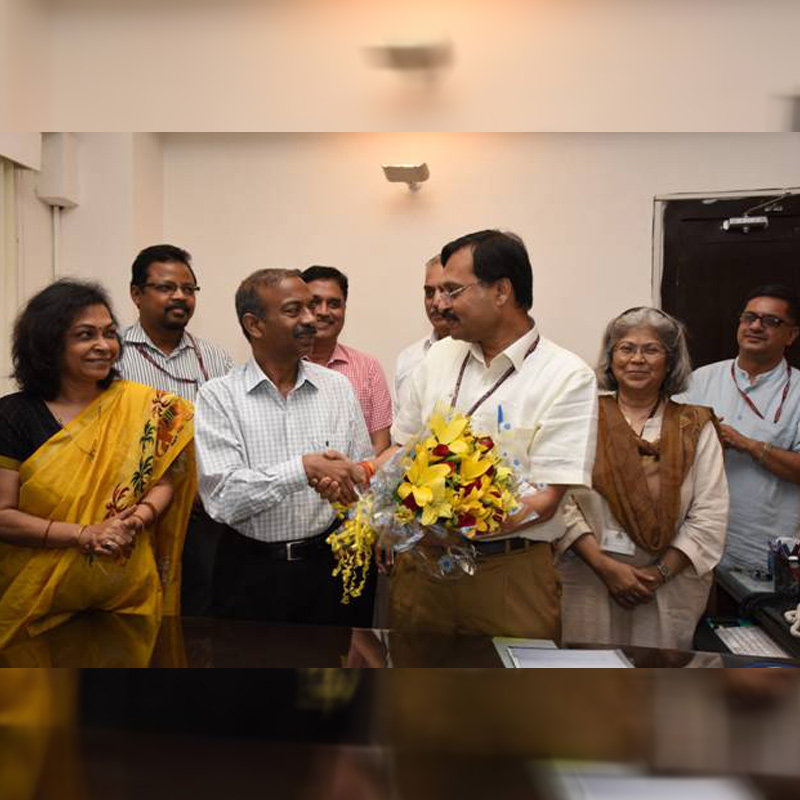
    NEW DELHI: In what could be termed as challenging times, Amit Khare (third from left in the pix) yesterday assumed charge as secretary in the Ministry of Information & Broadcasting on superannuation of Narendra Kumar Sinha.

    Khare is a 1985 batch Indian Administrative Service officer and was posted at a senior level in the state of Jharkhand before he was nominated to take over from Sinha at MIB. Considered an upright civil servant, he is credited for unearthing the multi-million-dollar fodder scam two decades ago in Bihar for which some powerful politicians, including former Bihar chief minister Lallu Yadav, and senior officials have been handed jail sentences of varied time period.

    Some of the issues that would need Khare’s immediate attention, as also his boss MIB minister Rajyavardhan Rathore, include putting in motion the process of quick decision-making at this important ministry, which is responsible for policy-making and their implementation for multi-billion dollar sectors of television, radio, films and advertising.

    With the media and entertainment industry undergoing changes with the arrival of newer technologies, like online distribution of content of all types, MIB needs to keep pace without upsetting the ecosystem that has been reeling under the impact of a sluggish economy and after effects of several other financial policies taken over the last 24 months by the government.

    To give some momentum, Khare would need to hit the road running working along with sector regulator TRAI that has made several recommendations relating to policies, which are yet to be acted upon by MIB, apart from working with the regulator on guidelines that could be in the offing, including uplink and downlink guidelines, DTH licencing norms, online content regulation, removal of bottlenecks in the film sector on opening up more screens and cajoling sister government organisations like Department of Space to have a more liberal approach. Not to mention soothe ruffled feathers at pubcaster Prasar Bharati.

    Media reports have indicated that in the last nine months, inaction had come to such a head at MIB that inter-departmental power games stalled a decision on over 100 applications for new TV channels. It was only about 10 days back that some channel permissions were processed and conveyed to stakeholders.

    During a career span of more than 33 years, Khare has held various field postings and worked at both the state and federal levels.

  • Amit Khare appointed as new MIB secretary

    Amit Khare appointed as new MIB secretary

    MUMBAI: Jharkhand state development commissioner and a whistle-blower civil servant Amit Khare has been named as the new secretary of the Ministry of Information and Broadcasting (MIB). He will take over from NK Sinha who is due to superannuate on 31 May 2018 after a comparatively quiet stint of approximately nine months at a high profile ministry that has constantly remained in the news after finance minister Arun Jaitley gave up the MIB portfolio in 2016 to concentrate on India’s economy.

    The announcement regarding MIB and Khare came on Friday as part of a big bureaucratic reshuffle initiated by the government that is now gearing up for general elections either late this year or first half next year as its five-year term in New Delhi officially comes to an end in May 2019.

    Khare is a 1985 batch Indian Administrative Service officer and is presently serving in Jharkhand. Considered an upright civil servant, he is credited for unearthing the multi-million dollar fodder scam two decades ago in Bihar for which some powerful politicians, including former Bihar chief minister Lalu Yadav, and senior officials have been handed jail sentences of varied time periods.

    Meanwhile, media industry observers hoped that with Khare’s arrival next month and junior minister Rajyavardhan Rathore entrusted with independent charge of MIB last week, some freshness and action would also arrive at the ministry, which has been under fire in recent months for not only taking controversial policy decisions (one of them relating to regulation of fake news being rolled back after PM’s Office intervened), but also angering its own foot soldiers or the Indian Information Service officials by arbitrary transfer postings and allegedly bungling on a film award event where the president of the country was to be present.

    A senior TV executive on condition of anonymity said both Rathore and Khare would hopefully end power games within MIB and actually work to live up to PM Modi’s claims of easing norms for doing business in India; especially as the media industry has been straining to get some helping hand from the government in difficult economic times when the sector is still in the process of recovering from after-effects of demonetisation of high value currency notes in 2016 and a new tax regime of goods and services tax of 2017.   

    Rathore’s senior Smriti Irani, a former TV actress who was handed the dual charge of MIB along with textiles ministry almost a year back, has somehow been in the news for wrong reasons and was divested of the portfolio last week when the Prime Minister initiated a reshuffle of his cabinet colleagues.

    Broadcast industry has been complaining of arbitrary policy decisions being taken by MIB under Irani, including attempts at creating artificial entry-level barriers by insisting on TV channels shift to Indian satellites from foreign ones and hiking administrative processing fees many folds. Industry organisation Indian Broadcasting Foundation recently petitioned the PM’s Office drawing attention to the likely ill-effects on the industry if certain norms regarding uplinking and downlinking, being debated at MIB and regulatory body TRAI, came into force.

    Media reports have also indicated that in the last nine months inaction had come to such a head at MIB that inter-departmental power games had stalled a decision on over 100 applications for new TV channels, apart from other sundry issues. So, media industry stakeholders expect a breath of fresh air to blow in the corridors of New Delhi’s Shastri Bhawan, which houses the MIB along with some other ministries, with Rathore-Khare duo taking charge.

    Earlier this week, Vikram Sahay was appointed as a joint secretary in the MIB.

    ALSO READ:

    Smriti Irani moved out of MIB as Rajyavardhan Singh Rathore gets independent charge

    MIB moves to regulate online media: various organisations join issue   

    PMO directs MIB to withdraw guidelines on fake news

    Time to have rules ensuring no one player dominates media: Smriti Irani

    Smriti Irani exhorts DD to leverage reach better

  • MIB’s Rathore signals liberalised regime for online media

    MIB’s Rathore signals liberalised regime for online media

    MUMBAI: Hardly 24 hours into his job and minister of state (independent charge) in the Information and Broadcasting ministry (MIB) Rajyavardhan Singh Rathore is saying things that could make him the industry’s and more specifically the independent media crowd’s darling.

    Speaking to reporters in New Delhi, Rathore emphasised that media has to opt for self-regulation and the government has no plans to regulate news portals and media websites.

    He said most publications and TV channels are already self-regulating at various levels, first at the reporting journalist’s level and then at the editor’s desk. He added that this was a model that the government was more than happy to continue with and support wholeheartedly.

    He clarified that media had misunderstood reports that it was setting up a committee to frame rules to regulate news portals and media news websites.

    The prime minister is very clear that the media in our country is one of the very important pillars of democracy and they have to self-regulate, Rathore highlighted.

    He said Prasar Bharati will be strengthened and high priority would be given to better and informative programmes.

    He also pointed that “it is about a collective responsibility that media becomes the voice of the people, whether it is Prasar Bharati or private network or channel. We will work in this direction.”

    Just yesterday, the baton was handed over from senior minister Smriti Irani to junior Rathore. He now has independent charge while she heads over to textiles. He has been in the ministry for the last four years as state minister and has finally got full command.

    Also Read :

    Smriti Irani moved out of MIB as Rajyavardhan Singh Rathore gets independent charge

    MIB moves to regulate online media: various organisations join issue

    Online media professionals write to Smriti Irani expressing regulation concerns

  • Smriti Irani moved out of MIB as Rajyavardhan Singh Rathore gets independent charge

    Smriti Irani moved out of MIB as Rajyavardhan Singh Rathore gets independent charge

    MUMBAI: There’s change at the top at the ministry of information and broadcasting (MIB).  Smriti Irani has been moved out of her post as mininster and kept solely in charge of the textiles ministry. Replacing her is Rajyavardhan Singh Rathore – her minister of state – who has now been given independent charge of the MIB.

    That things were afoot in the ministry was sounded out earlier this week.  Irani cancelled her trip to Cannes where a strong Indian delegation is attending the film festival. Earlier it was announced that she would be leading an eight member panel to the famed French Riviera cinema confab.

    Rathore – a former sportsman and army man – has been a permanent fixture in the ministry for the past four years as a state minister. He has patiently waited on the sidelines over that period and has finally earned his stripes getting independent charge of the MIB as the government gears up for the coming national elections in 2019.

    Irani had, a couple of days ago, delivered the Sardar Patel Memorial Lecture 2017 themed ‘Model of Broadcast: Landscape for Democracies’ during the course of which she had called the broadcast news landscape as a “spectator sport” in which the rush for audience ratings has reduced everything to “headlines competing with hashtags” in the wake of social media explosion taking place in the country that has provided a new pathway for information dissemination.

    The media has been speculating about the reasons for her departure. Among them: the recent National Film Awards run in with president’s office about his presenting the citations to winners; and her views on fake news and journalists, and wanting to bring in curbs on online media. Sources close to the government rubbish these allegations as canards, stating that Irani has been a loyal party person and she steps into – and out of any – role that the high command asks her get into.

    The Narendra Modi led government also announced other changes last evening. Finance minister Arun Jaitley- who has been ailing and was successfully operated for his kidney ailment on Monday – has been replaced by railway minister Piyush Goyal, who has been given its additional charge. That is until Jaitley gets back into action.


    Also read:

    Smriti Irani gets additional charge as MIB minister

    MIB minister Smriti Irani orders review of DD prime time auction process

    MIB moves to regulate online media: various organisations join issue   

    Online media professionals write to Smriti Irani expressing regulation concerns


  • Online media professionals write to Smriti Irani expressing regulation concerns

    Online media professionals write to Smriti Irani expressing regulation concerns

    MUMBAI: A group of more than 100 journalists and other professionals related to online media have written to the information and broadcasting minister Smriti Irani to express their concerns over the ministry’s proposal to extend traditional broadcasting rules and restrictions to the internet. The journalists include veterans of the industry such as Raghav Bahl, MK Venu, Madhu Trehan, Nalini Singh, Paranjoy Guha Thakurta, Shivam Vij, Sanjay Pugalia, Aniruddha Bahal and Raman Kirpal, as well as younger generation media entrepreneurs like Dhanya Rajendran (The News Minute), Seema Mustafa (The Citizen), Ritu Kapur (The Quint), Tanmay Bhat (All India Bakchod) and Bharat Nayak (The Logical Indian).

    In their letter, the journalists and media professionals expressed concerns that bringing legacy media structures—such as licensing and content regulation—could have a drastic impact on a medium that is widely credited with making the media and information landscape more open and democratic across the world. “Internet-based media, by its very nature, promotes broader democratic values globally and cannot be dealt with in the way national governments try to regulate or control traditional media,” said MK Venu, founding editor at The Wire, a new-generation, online-only publication. “Internet-based media and global media aggregators like Facebook, Google have changed the content and distribution landscape in ways that national governments cannot easily control. Nor should they try to. It is a free democratic space and must remain as such,” he added.

    Geeta Seshu, a journalist and a media analyst with a keen interest in freedom of expression issues, too called on the government to embrace the change the spirit of freedom brought about by the internet in media and communication sectors. “Today, digital media in India is evolving into a space, which allows for access to information, untrammelled by traditional gate-keeping structures and despite infrastructural limitations such as low broadband speeds or poor internet penetration,” she said. She expressed disappointment at the government’s attempt to ‘regulate’ online media by setting up a committee comprising mostly of government officials. “This committee hardly reflects the complexities of online media, much less represent all its practitioners,” she said. “Its mandate to regulate the dissemination of information smacks of the most alarming attempts to censor a burgeoning medium. It is ironic that one of the terms of this committee is to examine international standards when India is hailed for taking a strong and unequivocal stand on net neutrality,” she added.

    Raghav Bahl, founder of Network18 and Quintillion Media, urged the government to look at the approach taken by other democracies in dealing with issues of online content. “Any hasty action by the government will likely result in overreach,” he said. “Therefore, we believe that the starting point for the government should be to study the global best practices for online content regulation. Many advanced democracies have already debated this and come up with good frameworks that ensure free speech and transparent regulation. No need to reinvent the wheel,” he added. 

    Journalist Madhu Trehan, the co-founder of NewsLaundry, one of the earliest digital news ventures, warned about the far-reaching impact that interfering with the citizens’ freedom of expression, online or offline, can have. “Regulating the internet is a tricky thing. Its impact is enormous and far reaching,” said Trehan. “The proposal to regulate (and its need at all) must be a consultative process in the most open and transparent way.” Seema Mustafa, founder editor of The Citizen, a news and current affairs website, warned that chances of ‘online content regulation’ being used for suppression of opinions critical of the government remain very high.
    The journalists organised themselves using social media, particularly WhatsApp, spontaneously after news broke that the government had set up a committee to come up with a regulatory structure for online media “on the lines applicable to print and electronic media”. Over 100 journalists and professionals, including those from dozens of online organisations, signed the petition. A website, https://onlinefreedomfoundation.org, has also been set up to allow ordinary citizens to oppose the move to regulate online content.
     

  • Comment: MIB’s botched whip on fake news akin to testing waters

    Comment: MIB’s botched whip on fake news akin to testing waters

    With the scourge of fake news rampant globally, any attempt to counter it is always a welcome move. And just for that India’s Minister of Information and Broadcasting Smriti Irani cannot be faulted even if such a view is radical and would be open to severe criticism-as it was in India over the last few days with a large section of civil society coming down like a ton of bricks on the minister’s assertions on guidelines for TV and print media journalists that proposed punitive penalties for breaching some undefined norms.

    However, the wording of the press statement put out by the government’s PR arm, Press Information Bureau, on behalf of MIB is what raises questions.

    First, the government statements were aimed at “regulating” fake news and not look at avenues to arrest their spread or, as the homoeopathy strand of medicine would do, go to the root cause of the ailment. The intent becomes clear: the aim was not really to find a solution to fake news in the true sense.

    Second, the timing of the guidelines, which were aimed at handing out harsh penalties to government accredited journalists from the print and electronic media, rings some more alarm bells. Though the present BJP-led government’s official five-year tenure ends mid-2019, it is widely expected that the general elections would be held before the tenure comes to an end officially—as is mostly done, but then this government has been known to break many times tested norms-if not as early as late 2018.

    On both these counts, the honourable MIB minister was found wanting and her move was widely dubbed as nothing but an initiative to gag the news media critical of the present government. That the prime minister himself had to step in to order a rollback of the MIB diktat a day later, as officially being stated, is a story in itself.

    Let’s forget for once what some of the journalistic organisations had to say in criticism of the MIB move to cancel accreditation of journalists found peddling fake news, though the definition of fake news was not elaborated, nor was the fact as to why just on a complaint from practically anybody a journalist, whose antecedents are verified by the government annually for security reasons, will be put in the hall of shame even if it’s for varied period of time.

    Two organisations, the Press Council of India (PCI) and the News Broadcasters Association of India (NBA), made responsible to decide whether the complaint on fake news was genuine or not (according to the government statement) have not much legal standing or bandwidth to do so. While the PCI is a (toothless) watchdog for the print medium, the NBA’s self-regulatory mechanism for member-TV news channels hasn’t always worked.

    Now let’s try analysing what could have prompted such a move by MIB-a move that was unveiled seemingly without taking into confidence the PM and his office.

    It’s a known fact in India, in sharp contrast to other global markets, that a TV news channel here is started, more often than not, to flaunt one’s status symbol and increase the owner’s powers (both politically and financially) rather than being a pure journalistic means. That is not saying there are no exceptions to the rule and India has some very fine and professional news channels, which daily go through the grind of living up to the high standards of journalism. But, what explains the fact that 25-30 per cent of the total 900-odd permitted TV channels in India would fall in the news and current affairs genre? And they come in all shapes, sizes and languages. If the big guns of the news and current affairs genre mostly have scarlet bottom lines, it goes without saying that the smaller news channels are barely churning out revenue. No other country in the world has so many TV news channels.

    In a year that will lead to general elections-a period after the elections are announced is when cacophony on TV news channels start peaking-clamping down on news outlets cannot be considered a bad strategy; especially when one is not used to hear criticism. Artificial barriers become natural armours. Putting on hold future permission to TV channels by the MIB till a new policy on uplink/downlink is put in place after regulator TRAI’s recommendations is one such clampdown. But then trying to gag the news media as a whole need to be thought out and well orchestrated instead of merely announcing one evening some guidelines under the garb of attempting to regulate fake news.

    And why regulate fake news? Does that mean some fake news could have been allowed, while filtering out the more damaging ones? More importantly, why target those journalists for fake news who are accredited by the government? Did that mean that non-accredited journalists, which are in huge numbers, would have been allowed to dabble in fake news? Considering most news websites and many online ventures that pretend to deal in news but hand out mostly tainted views are not accredited with the government, either at the federal or State level, the question arises whether they would have been allowed to peddle fake news? In India, fake news is more rampant on social media platforms and little known online ventures than in mainstream media.

    But Ms. Irani and her set of advisors again cannot be faulted to try regulating the news media. From the days of the infamous Emergency unleashed by then Prime Minister Indira Gandhi in the mid-70s to her son Rajiv Gandhi in the late 1980s and few other successive governments of post-independent, India has tried to muzzle at some time or other the not-so-perfect-yet-a-vibrant media of the country. Not only such moves have backfired, including the dark days of the Emergency, but in many cases the then governments had to beat a retreat in the face of stiff opposition to any such move. So much so, folklore in the complex realm of Indian politics says that all governments that tried to regulate media in any form bit the dust and were booted out of power.

    In the mid to late 1990s, just before the first NDA government came to power under Prime Minister A B Vajpayee, the then government had tried to bring in Parliament a Broadcasting Bill, envisaging wide-ranging limits to media businesses, including cross-media restrictions of ownerships. That government didn’t remain in power to see through the proposed legislation. However, that didn’t stop other governments, including the Congress-led coalitions that ruled for 10 years after 2004, to attempt limiting media independence. Manish Tiwari, a former MIB minister in 2013, had famously proposed a common examination for journalists as the minister thought media personnel were not qualified enough.

    Cut to 2018. The storm may have blown over for the time being, but for the media to sit back and relax could be dangerous. Simply because the present government is unlike any those in the past. To take satisfaction from an explanation that the PM was totally unaware of one of his minister’s moves to gag the media could be a bad strategy for the media industry. The government was just testing the waters.

    Also Read :

    PMO directs MIB to withdraw guidelines on fake news

    MIB nod to TV channels on hold till TRAI uplink, downlink suggestions

    Smriti Irani tweets industry body advisory urging restraint by TV news channels