Tag: SMPTE

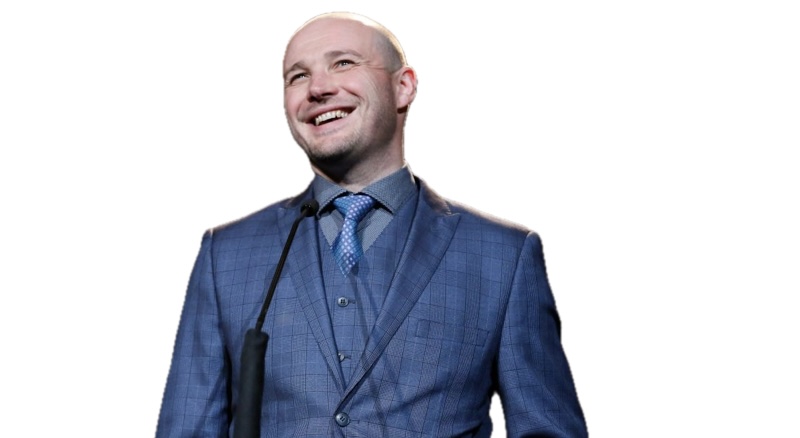
  • Raymond Yeung appointed as   SMPTE standards vice president

    Raymond Yeung appointed as SMPTE standards vice president

    MUMBAI: The Society of Motion Picture & Television Engineers (SMPTE) has appointed Raymond Yeung as its new vice-president of standards, effective 1 January 2025.

    Yeung, head of content standards at Amazon MGM Studios Technology, brings extensive expertise in digital visual effects, film mastering, and media supply chain advancements. Previously involved in HDR imaging development at Dolby Laboratories, he is a SMPTE life fellow and a member of the Academy of Motion Picture Arts and Sciences.

    “I am honoured to take on this role,” said Yeung. “Leading SMPTE’s renowned standards development efforts is a responsibility I approach with great dedication. I aim to foster continued innovation within the standards community.”

    SMPTE president Richard Welsh welcomed the appointment, noting, “Raymond’s extensive experience and respected reputation within the industry make him an invaluable asset. I look forward to working together to advance SMPTE’s leadership in media technology standards.”

  • Richard Welsh Elected President of SMPTE

    Richard Welsh Elected President of SMPTE

    MUMBAI: The Society of Motion Picture & Television Engineers (SMPTE) earlier this week  announced the election of Richard Welsh as its new president, taking office on 1 January 2025. Welsh, who previously served as SMPTE’s executive vice president, will lead the organisation for a two-year term, concluding on 31 December  2026.

    “I am honored to have been elected SMPTE president and look forward to collaborating with the SMPTE community globally to advance our industry,” Welsh stated. He highlighted  that for over a century, SMPTE’s mission has been to bring moving images to audiences worldwide. Given the proliferation of video devices and on-demand content, Welsh believes the Society’s commitment to ensuring high-quality media experiences is more crucial than ever.

    As the current senior vice president of innovation at Deluxe, Welsh brings over a decade of experience on the SMPTE board, including roles as vice president of education and governor for EMEA and central/south America. He is also a board member of IBC and co-founder of Volustor, a volumetric asset management company.

    Welsh began his illustrious career at Dolby Laboratories, ultimately rising to director of digital cinema services. He also led operations for Technicolor’s digital cinema and localisation services and currently serves as an associate lecturer at Southampton Solent University while co-founding Sundog Media Toolkit

    SMPTE executive director Sally-Ann D’Amato praised Welsh as an “innovative thinker with bold plans for the future.” 

    She highlighted his commitment to expanding the organisation’s reach to diverse audiences and fostering early-career professionals, expressing eagerness to collaborate on turning his vision into reality.

  • SMPTE names Sally-Ann D’Amato as executive director

    SMPTE names Sally-Ann D’Amato as executive director

    MUMBAI: The Society of Motion Picture & Television Engineers (SMPTE), the home of media professionals, technologists, and engineers, today announced that Sally-Ann D’Amato has been named executive director by the SMPTE board of governors. D’Amato formally began this new role on 18 December 2024, after acting as interim executive director since October. 

    “I’m honoured to accept the role of executive director,” says D’Amato. “After more than two decades with the society, I’m humbled to be chosen as its leader. I will continue to work toward a society that is efficient, innovative, and united. My goal as executive director is to encourage more collaboration across sections to create more opportunities for members, strengthen the standards community, and reinforce the organization’s infrastructure. This will be enacted through a mission we’re calling ‘We Are All One SMPTE.’” 

    D’Amato joined the SMPTE family in 2001, working as an administrative assistant. She was promoted to executive assistant in 2003, and again promoted to director of operations in 2005. In 2016, she became director of events and governance liaison. In this role, she was responsible for planning and executing events and was also responsible for working with the board on issues of society governance and board activities. In October 2024, she became the interim executive director. 

    During her time at SMPTE, D’Amato helped enact the current bylaws and operations manuals. She also has been responsible for producing the media technology summit since 2005, and even produced a virtual version of the event during the Covid-19 pandemic. She also produced the SMPTE centennial celebration in 2016 and incorporates her creativity by writing songs for and performing in many of the events she works on.
     
    “Sally-Ann has been a tremendous asset to SMPTE, and will continue to be in this new role,” says SMPTE president Renard T. Jenkins. “She has proven her commitment, qualifications, and talent time and time again, and when asked to lead the society, she didn’t hesitate to step up. Her performance in the role of interim executive director has already had a positive impact on the society. I believe she will lead SMPTE to a brighter future, and I look forward to helping her do just that.”

  • Why Indian broadcast and OTT needs to adopt the ST 2110 standard in 2025

    Why Indian broadcast and OTT needs to adopt the ST 2110 standard in 2025

    MUMBAI: The media and entertainment industry is in the midst of rapid transformation, driven by evolving technologies and shifting workflows. As broadcasters and media companies adapt to meet new challenges, trends like artificial intelligence (AI), cloud-based production, IP infrastructure, and the rise of OTT platforms are reshaping how content is created, managed, and delivered.

    Among these innovations, the Society of Motion Picture and Television Engineers (SMPTE) ST 2110 standard continues to play a pivotal role, offering a scalable and flexible foundation for the industry’s evolving needs. This article explores the key trends redefining media workflows, including the significant growth of OTT services, particularly in high-demand regions like India, and highlights why  SMPTE ST 2110 remains essential in this changing landscape.

    (For those not in the know: ST 2110 is a suite of standards from the that describes how to send digital media over an IP network. It is intended to be used within broadcast production and distribution facilities where quality and flexibility are more important than bandwidth efficiency)

    Key Trends in 2024: AI, Cloud, and IP Integration

    Three trends have stood out prominently in 2024: artificial intelligence (AI) and cloud platforms for live production. While AI has generated buzz for its potential efficiencies and cost savings, it has also raised challenges around legitimacy, trust, and synthetic content. Still, AI continues to drive backend efficiencies, particularly in media asset management and post-production workflows.

    The OTT boom in India is primarily driven by affordable data plans and smartphone penetration, with platforms like Netflix and Amazon Prime competing against domestic players such as Zee5 and ALTBalaji. This growth highlights the need for robust, scalable infrastructure to manage diverse, multilingual content streams and deliver low-latency viewing experiences to millions of users daily.

    Cloud platforms have equally made waves, enabling virtualized software stacks for live production, post-production, and content delivery. Yet challenges like latency, bandwidth, and the capex vs. opex debate have slowed widespread adoption. This is especially true in regions experiencing a rapid rise in OTT consumption, like India, where cloud-based production is critical for supporting the massive demand for mobile-first content delivery and regional programming.
     

    ST 2110 as a Backbone for Integration

    As cloud and OTT workflows rise, ST 2110 remains central to modernising media production. Initially developed to replace SDI limitations, ST 2110 has become the standard for scalable, low-latency, uncompressed IP workflows. By enabling unified transport for video, audio, and metadata on a single fabric, ST 2110 simplifies operations and reduces hardware dependencies—key for supporting the complex workflows of OTT platforms producing original content and live events.

    For regions like India, where demand for OTT-driven production is surging, ST 2110 offers the flexibility to manage traditional broadcast workflows and the rapid scaling required to meet OTT platform expectations. The ability to integrate on-premise systems with cloud-based workflows positions ST 2110 as a critical enabler for companies delivering content across traditional broadcast and streaming platforms.

    However, adoption isn’t without challenges. The high cost of entry limits ST 2110 to more prominent broadcasters and media companies, where SDI inefficiencies justify the transition. Smaller players—many of whom power regional OTT content in India—will continue leveraging SDI workflows until more cost-effective solutions emerge.

    Trends Impacting ST 2110 Adoption

    In 2024, hybrid models integrating cloud-based and on-premise workflows gained momentum. While cloud platforms offer elasticity and scalability, concerns around latency and bandwidth persist. Many broadcasters and OTT platforms are experimenting with cloud tools to scale content delivery quickly, particularly for live OTT events and regional programming that demand agility.

    The slow adoption of cloud tools also reflects economic realities—especially for OTT platforms in price-sensitive markets like India, where flexible pricing and ad-supported models remain key. This makes hybrid workflows an attractive solution, offering the best of cloud-based scalability and on-premise reliability.

    ST 2110 complements this shift by providing a scalable foundation that allows broadcasters and OTT platforms to connect on-premise production with cloud tools. As platforms in India and beyond experiment with live streaming, disaster recovery, and temporary event production, ST 2110 enables seamless transitions between local and cloud-based environments.

    Looking Ahead: What’s Next in 2025?

    Looking ahead, the growth of OTT platforms will continue to reshape content delivery and production workflows. In markets like India, OTT adoption will drive demand for scalable, flexible production infrastructure capable of supporting diverse content types—from original digital series to live events. Hybrid monetisation models, heavy investment in regional content, and the rise of AI-driven personalisation will define the next phase of competition.

    Meanwhile, IP-based infrastructure will extend into post-production workflows and content delivery, supporting the needs of OTT platforms and broadcasters alike. Standards like ST 2110 and emerging technologies like Internet protocol media experience (IPMX)  will enable flexible, cost-effective experimentation and delivery of both live and on-demand content.

    Cybersecurity will also take center stage. As media companies, broadcasters, and OTT platforms increasingly rely on cloud and IP workflows, secure-by-design solutions will be critical for safeguarding content pipelines and protecting against piracy—one of the key challenges for OTT platforms in markets like India.

    2025 and the years beyond will be exciting and challenging for broadcasters of all kinds. Trends like AI, cloud workflows, and the rise of OTT platforms—especially in high-growth regions like India—are shaping a new future for content creation and delivery. 


    (Travis Wrigley is senior director of sales – APAC at Ross Video. The views expressed in this article are his own and Indiantelevision.com need not subscribe to them)

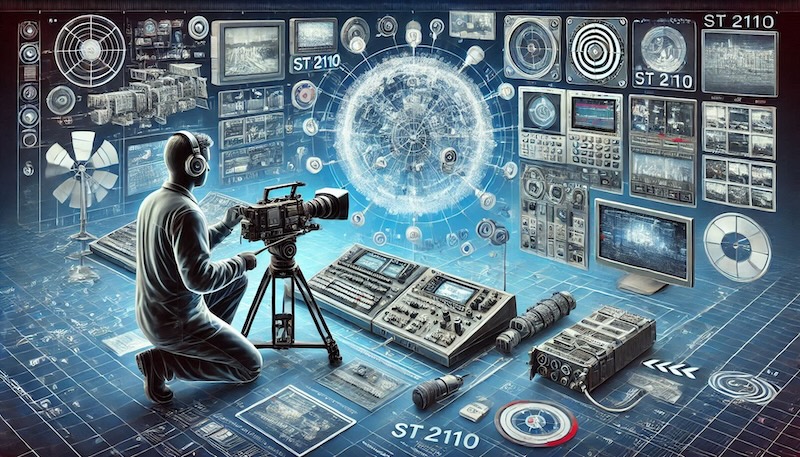
    Main picture generated to Microsoft as a visual depiction of the theme of the article. No copyright infringement is  intended)

  • Bittree’s redesigned website has real-time price quoting tool

    Bittree’s redesigned website has real-time price quoting tool

    MUMBAI: Bittree, a leading manufacturer of high-quality audio and video patchbays and patching systems, has announced launching of a redesigned website. The new web portal, Bittree.com, improves upon their already responsive and user-friendly experience with enhanced technical data on all their products and real-time price quoting. Customers can now visit the web site to view the large number of available products ready for immediate shipping.

    “The primary goal of our new website is to replicate the outstanding customer service experience our partners receive when communicating one-on-one with our sales representatives,” says Bittree general manager Ari Baron. “We also wanted to create a unified multi-channel user interface that could benefit our growing international presence as well as serve as a one-stop-shop for any technical data our integrators and installers might need.”

    Established in 1978, Bittree is dedicated to offering state-of-the-art patching systems that streamline signal routing and troubleshooting in media and entertainment operations of all sizes. The company offers an innovative line of audio, video, and data patchbays for use in broadcasting, postproduction, and pro A/V operations.

    New benefits of the updated website include a real-time price quoting tool that provides international partners with precise and up-to-the-minute shipping quotes, a dynamic interface that changes to reflect user input, and a simplified ordering process. These features allow international purchasers in different time zones to bid more accurately without having to speak directly with a customer service representative.

    Bittree.com also features enhanced search and download functions for obtaining technical product documentation like DWG’s, designation strip templates, circuit schematics, programming and cleaning instructions, technical and pinout drawings, and warranty information.

    Additionally, custom orders can be initiated directly through the website, and legacy products are still supported. Bittree’s international programs are designed to give their global partners the tools, support, and incentives to grow their businesses and become more profitable through the sale and service of Bittree High-Performance Patching Systems.

    Tailored for use in the post-production, pro A/V, systems integration, and radio and television broadcasting fields, Bittree’s patching solutions are rigorously tested to ensure long-term functionality and dependability, especially for mission-critical operations and live events.

    To ensure consistency, performance, and adherence to rigid quality standards, all of the company’s patching products are designed, assembled, and tested in its state-of-the-art facility in Glendale, California. Bittree is an active member of industry trade organizations NAB (National Association of Broadcasters), NAMM (National Association of Music Merchants), and SMPTE (Society of Motion Picture & Television Engineers).

  • Bittree’s redesigned website has real-time price quoting tool

    Bittree’s redesigned website has real-time price quoting tool

    MUMBAI: Bittree, a leading manufacturer of high-quality audio and video patchbays and patching systems, has announced launching of a redesigned website. The new web portal, Bittree.com, improves upon their already responsive and user-friendly experience with enhanced technical data on all their products and real-time price quoting. Customers can now visit the web site to view the large number of available products ready for immediate shipping.

    “The primary goal of our new website is to replicate the outstanding customer service experience our partners receive when communicating one-on-one with our sales representatives,” says Bittree general manager Ari Baron. “We also wanted to create a unified multi-channel user interface that could benefit our growing international presence as well as serve as a one-stop-shop for any technical data our integrators and installers might need.”

    Established in 1978, Bittree is dedicated to offering state-of-the-art patching systems that streamline signal routing and troubleshooting in media and entertainment operations of all sizes. The company offers an innovative line of audio, video, and data patchbays for use in broadcasting, postproduction, and pro A/V operations.

    New benefits of the updated website include a real-time price quoting tool that provides international partners with precise and up-to-the-minute shipping quotes, a dynamic interface that changes to reflect user input, and a simplified ordering process. These features allow international purchasers in different time zones to bid more accurately without having to speak directly with a customer service representative.

    Bittree.com also features enhanced search and download functions for obtaining technical product documentation like DWG’s, designation strip templates, circuit schematics, programming and cleaning instructions, technical and pinout drawings, and warranty information.

    Additionally, custom orders can be initiated directly through the website, and legacy products are still supported. Bittree’s international programs are designed to give their global partners the tools, support, and incentives to grow their businesses and become more profitable through the sale and service of Bittree High-Performance Patching Systems.

    Tailored for use in the post-production, pro A/V, systems integration, and radio and television broadcasting fields, Bittree’s patching solutions are rigorously tested to ensure long-term functionality and dependability, especially for mission-critical operations and live events.

    To ensure consistency, performance, and adherence to rigid quality standards, all of the company’s patching products are designed, assembled, and tested in its state-of-the-art facility in Glendale, California. Bittree is an active member of industry trade organizations NAB (National Association of Broadcasters), NAMM (National Association of Music Merchants), and SMPTE (Society of Motion Picture & Television Engineers).

  • IBC 2016 scores another triumph

    IBC 2016 scores another triumph

    The 49 th edition of IBC 2016 held at Amsterdam’s RAI convention centre between 8-13 September 2016 resulted in streets, hotel lobbies, trams, restaurants, bars, cafes, and even the infamous red light district brimming over with techies and business executives.

    Statistics released by the IBC office reveal that 55,796 professionals attended the six-day exhibition-cum-conference, coming from 160 countries. 668 more attended this year compared to 2015. 435 speakers took part in more than 100 sessions including keynotes and panel discussions during the IBC conferences.

    On the exhibition side, 1,800 exhibitors set up tent in the RAI with stands. 249 of them were newbies to the trade show.

    One important addition to the feature areas in the exhibition was the IBC IP Interoperability Zone, an initiative to push forward open standards in new connectivity. Supported by AIMS and the IABM and working with AES,AMWA, the EBU, SMPTE and VSF, IBC created a dedicated exhibit which demonstrated verified technical progress in IP interoperability and featured the award-winning VRT-EBU LiveIP studio which was used for IBCTV’s production at this year’s show.

    IBC chief executive Michael Crimp was thrilled to bits. Said he: “IBC really is the only forum that attracts a global audience, the most comprehensive exhibition, and the best thought-leaders to spark the debate. Above all else, it is about bringing people together to share knowledge and to do business. It is clear, from the buzz around the whole show, that this has been a great year.”

    It probably had a record participation this year from India too. Specific numbers were not available but they definitely were in excess of 300. CTOs of broadcast majors, cable ops roamed the aisles trying to get to grips the technological upheaval the world of television. OTT, cable TV is going through. Dish TV’s Jawahar Goel, Tata Sky’s Harit Nagpal, Videocon d2h Himanshu Patil were spotted meeting their tech suppliers. GTPL’s Anirudh Singh Jadeja was checking out the latest in STBs and billing solutions.

    Among the major Indian exhibitors figured: Media Guru, Amagi, Wasp3D, Canara Lighting, Tata Elxsi, and Prime Focus Technologies.

    Media Guru’s Sanjay Salil said he had back to back meetings with clients which kept him on his toes throughout the six days.

    According to Goel, the transformation of the industries towards the cloud,IP and streaming services is going to change the way everyone in traditional television delivers and creates content. In the process, this is going to put pressure on vendor pricing – especially those who are continuing to work in the old linear television broadcast ways.

    Amongst the key trends noticed were the increasing shift towards augmented reality, virtual reality filming equipment, processing and VR and AR video delivery. Ultra HD, HDR, OTT platforms and app development and deployment were some of the major key words heard during the six days.

  • IBC 2016 scores another triumph

    IBC 2016 scores another triumph

    The 49 th edition of IBC 2016 held at Amsterdam’s RAI convention centre between 8-13 September 2016 resulted in streets, hotel lobbies, trams, restaurants, bars, cafes, and even the infamous red light district brimming over with techies and business executives.

    Statistics released by the IBC office reveal that 55,796 professionals attended the six-day exhibition-cum-conference, coming from 160 countries. 668 more attended this year compared to 2015. 435 speakers took part in more than 100 sessions including keynotes and panel discussions during the IBC conferences.

    On the exhibition side, 1,800 exhibitors set up tent in the RAI with stands. 249 of them were newbies to the trade show.

    One important addition to the feature areas in the exhibition was the IBC IP Interoperability Zone, an initiative to push forward open standards in new connectivity. Supported by AIMS and the IABM and working with AES,AMWA, the EBU, SMPTE and VSF, IBC created a dedicated exhibit which demonstrated verified technical progress in IP interoperability and featured the award-winning VRT-EBU LiveIP studio which was used for IBCTV’s production at this year’s show.

    IBC chief executive Michael Crimp was thrilled to bits. Said he: “IBC really is the only forum that attracts a global audience, the most comprehensive exhibition, and the best thought-leaders to spark the debate. Above all else, it is about bringing people together to share knowledge and to do business. It is clear, from the buzz around the whole show, that this has been a great year.”

    It probably had a record participation this year from India too. Specific numbers were not available but they definitely were in excess of 300. CTOs of broadcast majors, cable ops roamed the aisles trying to get to grips the technological upheaval the world of television. OTT, cable TV is going through. Dish TV’s Jawahar Goel, Tata Sky’s Harit Nagpal, Videocon d2h Himanshu Patil were spotted meeting their tech suppliers. GTPL’s Anirudh Singh Jadeja was checking out the latest in STBs and billing solutions.

    Among the major Indian exhibitors figured: Media Guru, Amagi, Wasp3D, Canara Lighting, Tata Elxsi, and Prime Focus Technologies.

    Media Guru’s Sanjay Salil said he had back to back meetings with clients which kept him on his toes throughout the six days.

    According to Goel, the transformation of the industries towards the cloud,IP and streaming services is going to change the way everyone in traditional television delivers and creates content. In the process, this is going to put pressure on vendor pricing – especially those who are continuing to work in the old linear television broadcast ways.

    Amongst the key trends noticed were the increasing shift towards augmented reality, virtual reality filming equipment, processing and VR and AR video delivery. Ultra HD, HDR, OTT platforms and app development and deployment were some of the major key words heard during the six days.