Tag: Smita Patil

  • Sony Max 2 to telecast story of woman’s search for her identity – ‘Arth’

    Sony Max 2 to telecast story of woman’s search for her identity – ‘Arth’

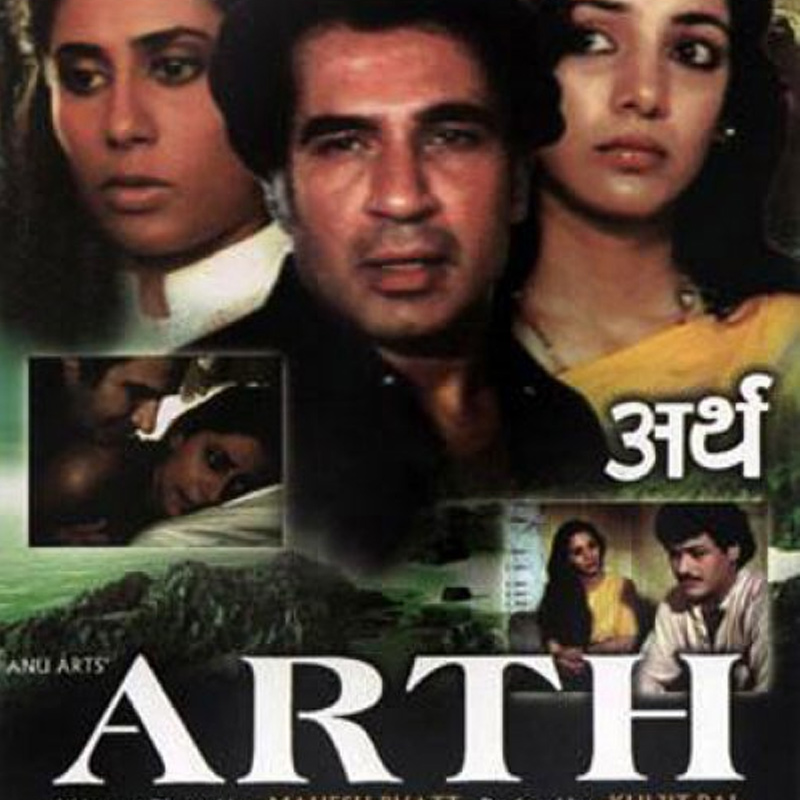
    MUMBAI: It seemed to be a reflection of the times to come. Sony Max 2 is set to telecast Arth. The movie, which familiarised the nation with the free-spirited and independent woman of Indian cinema, will be broadcast on 19 November at 7pm.

    Directed by Mahesh Bhatt, the movie was made and released way ahead of its time and garnered appreciation for the director’s out-of-the-box thinking, which revolves around the life of a married man involved in extramarital affairs and its related complexities.

    The movie stars Shabana Azmi, the late Smita Patil and Kulbhushan Kharbanda in pivotal roles. It revolves around Pooja played by Azmi, who is financially and emotionally dependent on her husband, Inder Malhotra enacted by Kharbanda. Inder has an affair with a successful actress Kavita Sanyal played by Patil.

    The movie is a complex characterisation of these three principal characters. Besides the modern storyline, the movie boasts of beautiful ballads like “Tum itna jo muskura rahe ho” and “Jhuki jhuki si nazar” sung by Jagjit Singh.

  • Sony Max 2 to telecast story of woman’s search for her identity – ‘Arth’

    Sony Max 2 to telecast story of woman’s search for her identity – ‘Arth’

    MUMBAI: It seemed to be a reflection of the times to come. Sony Max 2 is set to telecast Arth. The movie, which familiarised the nation with the free-spirited and independent woman of Indian cinema, will be broadcast on 19 November at 7pm.

    Directed by Mahesh Bhatt, the movie was made and released way ahead of its time and garnered appreciation for the director’s out-of-the-box thinking, which revolves around the life of a married man involved in extramarital affairs and its related complexities.

    The movie stars Shabana Azmi, the late Smita Patil and Kulbhushan Kharbanda in pivotal roles. It revolves around Pooja played by Azmi, who is financially and emotionally dependent on her husband, Inder Malhotra enacted by Kharbanda. Inder has an affair with a successful actress Kavita Sanyal played by Patil.

    The movie is a complex characterisation of these three principal characters. Besides the modern storyline, the movie boasts of beautiful ballads like “Tum itna jo muskura rahe ho” and “Jhuki jhuki si nazar” sung by Jagjit Singh.

  • National Film Archive of India to pay homage to Smita Patil

    National Film Archive of India to pay homage to Smita Patil

    NEW DELHI: A two-day film festival to remember versatile actress Smita Patil on her sixtieth birth anniversary is being held by the National Film Archive of India (NFAI) in Pune.

    ‘Remembering Smita’ on 17 and 18 October will also showcase a rare poster and photo exhibition on her from the NFAI collection.

    The festival will showcase eight films including her debut short film Teevra Madhyam. Other films includeBhavni Bahvai, Akaler Sandhaney, Jait Re Jait, Bazaar, Debshishu, Tarang, and Chidambaram. Out of these films, three films – Akaler Sandhaney, Jait Re Jait and Chidambaram have been restored by NFAI.

    The Festival is a tribute to the multi-talented actress who died on 13 December, 1986 at the age of 31 due to childbirth complications.

    The festival would be inaugurated on 17 October at 11 am by actor Amol Palekar.

    A panel discussion on Patil will be held at 6 pm on 18 October with Dr Jabbar Patel, Dr Mohan Agashe and Lalita Tamhane as participants. The discussion would deliberate upon her unique style, her acting career and contribution to the film industry.

    The venue for the festival is NFAI campus, Law College road, Pune.

    A film, television and theatre personality regarded as one of the finest actresses of all time, Patil worked in around 80 Hindi, Marathi, Malayalam and Bengali films. She left her mark with two National film awards for best actress and Padma Shri in 1985.

    Born on 17 October, 1955, Patil graduated from the Film and Television Institute of India (FTII) in Puneand made her film debut with Shyam Benegal’s Charandas Chor (1975). Some of the other films that sheappeared in include Manthan (1977), Bhumika (1977), Aakrosh (1980), Chakra (1981), Chidambaram (1985), Mirch Masala (1985) and Namak Halaal amongst others.

    The schedule of the festival is as below,

    Inauguration: 17 October, 2015 at 11 am

  • “Cinema has evolved with technology as a more democratic medium”: Govind Nihalani

    “Cinema has evolved with technology as a more democratic medium”: Govind Nihalani

    KOLKATA: Indian film director, cinematographer, screenwriter and producer Govind Nihalani, who has proved the power of his cinema through his television series ‘Tamas’, vehemently believes that cinema has evolved with technology as a more democratic medium.


    “Cinema is a very powerful medium. It acts as a dialogue between the filmmaker and his viewers. It can convince you to pick up a gun and kill someone,” Nihalani said, on the sidelines of the ongoing 20th Kolkata International Film Festival.


    ‘Tamas’ is not a daily soap. It deals with the issue of national importance. The emphasis is on the characters and evoking of the period when the partition took place, makes it different from other soaps. “I think it will have a small relevance even today. These programmes are not even being made today,” he said.


    “In these times of hope and convictions, cinema will never die because it has tremendous possibility of creating magic, poetry and change,” he further added.


    On the context of shifting from his usual “serious” content to an animated movie, he mentioned that one should always keep expanding one’s horizon. With reference to digital technology taking over celluloid and the advantages it provides he said, “Technology is all that you want and it will get better with time.” He appreciated Japanese animation as an ingenious art form, but added that it will be sometime before India embraces such content in animation.


    Nihalani has been the recipient of six national film awards (India). His first directorial venture was Aakrosh starring Om Puri, Naseeruddin Shah, the late Smita Patil and the late Amrish Puri. The film is scripted by Marathi playwright Vijay Tendulkar. The film shared the Golden Peacock for best film at the International Film Festival of India held in New Delhi in 1981. He then directed Ardh Satya, based on a story by S. D. Panwalkar. The film has received critical reception for depicting the police-politician-criminal nexus. In 1997, he adapted Bengali novelist, Mahasweta Devi’s acclaimed novel by the same name to Hazaar Chaurasi Ki Maa.


    While interacting with movie lovers, Nihalani flashed upon his memories of a chat session with Sandeeep Ray (son of famous film-maker Satyajit Ray) on Mahasweta Devi’s novel.


    “On a moment like this, I delve into my past when I first met Mr. Ray, two decades later I dared to call him Manik da,” he said.


    Nihalani put forth his initial days with the master and expressed his gratitude when Ray narrated Pikoo’s Diary to him from the very first shot to the last. “It’s very important for a filmmaker to remain relevant to his times and be connected to his reality, his harsh reality,” he concluded by echoing Ray’s words.

  • Festivals give independent filmmakers an opportunity to showcase talent: Nandita

    Festivals give independent filmmakers an opportunity to showcase talent: Nandita

    The lady has always been admired for her skills in front of the camera but very few know that she received enough critical acclaim even for her directorial debut Firaaq. Yes, we are talking about actor Nandita Das.

    She is often compared to the yesteryear actor Smita Patil for her looks and complexion, besides the kind of roles she has portrayed on the silver screen. Das will soon be seen with husband Subodh Maskara in upcoming Spanish film, Traces of Sandalwood that will go on floors in a month’s time. The film will be shot in Mumbai and Barcelona.

    “I will be in Barcelona at the end of the month. The last time I was there I happened to have the best meal of my life at the Roca brothers’ El Somni,” said Das at the inauguration of the Mumbai Film Mart on 18 October.

    Das added, “The most interesting part of the movie is that it has an all-woman crew, not just in front of the camera but also behind it. It’s so wonderful to see a woman cinematographer and a woman art director.”

    Das finds it really encouraging to see this kind of a platform being provided to young talented filmmakers these days. “Having done close to 30 movies – of which the majority have been in the independent space – I don’t even have the DVDs for most of the films because of various issues around their release,” remarked Das.

    I always try and champion independent films and try and create more space for them says Nandita Das

    The independent filmmakers suffer the most because of either not having the skills; or because of being unaware of the know-hows; or lack of space or platform to release or showcase their films. “Even without having much knowledge of the market space, I directed Firaaq and faced a lot of hurdles. But having said that, I always try and champion independent films and try and create more space for them,” said Das. According to her, all these various festivals that are now becoming a common phenomenon in various parts of the country is a very good sign for upcoming filmmakers.

    “We need to learn more about world cinema and get out of our little well. We do make nearly 1,000 films a year, but are we really proud of all of them?” she remarked and went on to state: “Just like how we learn about new places by travelling, films are a great way to open up the mind and be less prejudiced and get into people’s heads and hearts.”

    “A festival is a great platform for independent filmmakers like us to meet people and understand how to go about taking our film to different parts of the world,” she added. Das went on to explain that there exists a mindset where only a few film festivals are considered prestigious and if the film makes it to that fest then it’s good, else it is not. “Well, that should not be the case, as any festival is a great place to showcase your creativity that you thought of and then translated it onto the screen,” she said.

    Nandita says that she has been fortunate to travel with her films to various parts of the globe. “I don’t get to shoot in these beautiful locals but thankfully I do get to travel to numerous festivals be it big or small. And the one thing you learn is that human emotions and stories are universal,” Das remarked.

  • Manthan- A trip down memory lane

    Manthan- A trip down memory lane

    MUMBAI: The story of women farmers which started with the Gujarat Co-operative Milk Marketing Federation‘s (GCMMF) ‘Manthan‘ ad in 1996 has now been re-created in the new Amul TVC. The ad is an extension from the previous campaign, where women are shown to be multitasking and handling more than just routine domestic work.

    The ad shows the progressive journey of women – from looking after cattle to studying and teaching in management colleges to even financing their children‘s education abroad.

    The earlier campaign was based on the 1976 National Award winning movie ‘Manthan‘ directed by Shyam Benegal which was sponsored by 500,000 farmers of Gujarat, constituents of the GCMMF. And to revive this great story of success, GCMMF created a TVC titled Manthan in 1996 (http://www.youtube.com/watch?v=RW9DSUbZX34) with the song – ‘Mero gaam kathaparey‘.

    The ad was a specially created film which incorporated clips from the movie – Manthan, featuring actor, Late Smita Patil. The commercial celebrated the economic independence of women farmers, thanking the co-operative movement by Amul India.

    In 2011, GCMMF produced another version of the commercial called Manthan (http://www.youtube.com/watch?v=Bma1OE4sMVc) which was conceptualised and executed by Draftfcb Ulka.

    The earlier TVC showcased how women in rural villages have become entrepreneurs by supplying milk to millions in India with the help of Amul India. The advertisement was unique as it drew a parallel between the rural and urban lifestyle.

    The new campaign (http://www.youtube.com/watch?v=Hv0hzVTfHkY) for Amul India shows the appropriate model for rural development and especially the advancement of women farmers.

    Draftfcb Ulka chief operating officer Nitin Karkare said, “The new TVC is an extension of the earlier versions. While, the earlier ones were about the whole journey, right from the milk collection, processing to delivery to the urban homes, the latest TVC celebrates women empowerment. The idea is to showcase men acknowledging women as financially independent and celebrating their role as the Shethani.”

    “The core objective was to communicate – ‘AMUL – A co-operative movement that empowered 35 lakh women farmers.’ And thus bring alive the societal impact of the cooperative movement. Our primary targets are opinion makers and housewives.”

    When asked if the account was on pitch basis, Karkare added, “No campaign for Amul is a pitch. The brands are clearly aligned between the two agencies which build a strong sense of ownership and accountability with the agencies. We are promoting this commercial mainly via television supported by Digital.”

    The latest TVC, directed by Subodh Poddar, has composite lyrics – ‘Mari Bairi Bani Sheethani‘(My wife is the head of the family and business) and ‘Mare ghar jhanjar laxmi ke baje‘ (in my house, the bells of wealth ring) which symbolises success. The foot tapping music has been composed by Umesh.

    The TVC merges the commercials from 1966 to 2011 and showcases the gradual progress of women from homemakers to entrepreneurs.

    GCMMF managing director R S Sodhi said, “We are extremely proud of the Amul journey so far and the role played by women in managing the dairy cooperatives. This film is an attempt to celebrate their contribution and demonstrate their capabilities to the urban world.”

  • Smita Patil retrospective at IFF Tofifest from 22 October

    Smita Patil retrospective at IFF Tofifest from 22 October

    MUMBAI: The first ever Smita Patil film retrospective will be presented at the 10th Edition of the IFF Tofifest.

    The official opening of the retrospective will begin on 22 October at the Tofifest Festival Centre in Baj Pomorski Theatre, at ul Piernikarska 3, in Toru?, one of the oldest cities in Poland. Her sister, Manya Patil, will be a special guest of the festival.

    Patil was an icon of the ambitious Indian cinema and a true star of the ‘Indian New Wave Cinema‘. Together with Shabana Azmi, Naseeruddin Shah and Om Puri, she was part of the most influential cinema quartet of the New Wave, the period in which Indian cinematography was developing artistically.

    The films she starred in were all focused on problems of women. She was also awarded the Padma Shri award by the government of India. In 2011, she was described as the second-most renowned Indian actress of all time in one of Indian websites.

    Indian traditionalists responded very negatively to her film characters, as they were unable to recognise any emancipation of women. In the famous Marathi film Umbartha by Jabbar Patel, she portrayed a guardian in a women‘s prison, who found the courage to abandon an unfaithful husband, who indulged himself with prostitutes.

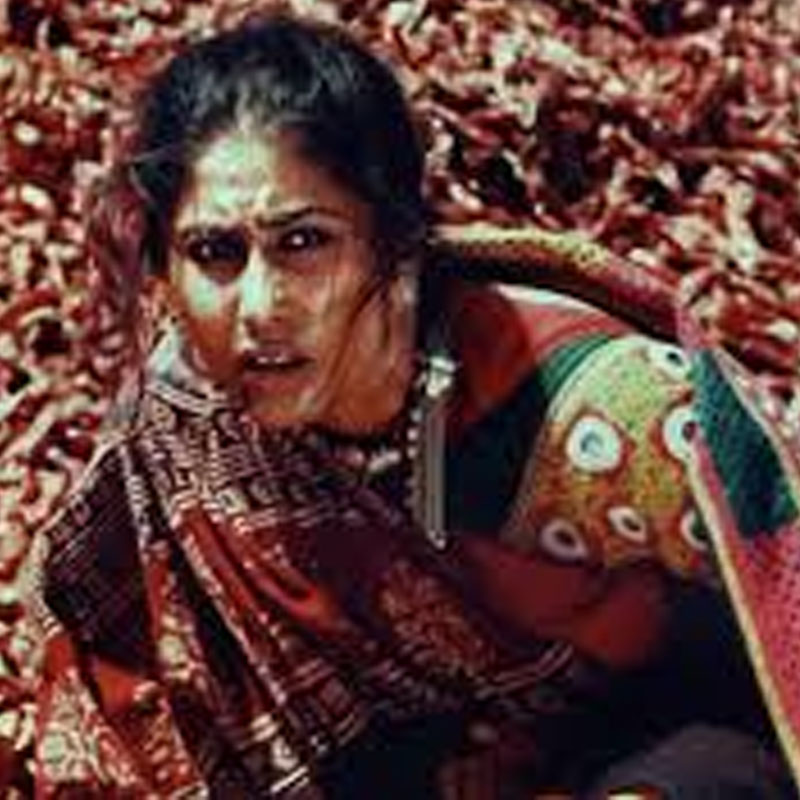
    Her performance in Mirch Masala by Ketan Mehta was one of the most memorable feminist characters – she played a woman living in a very small village, who was harassed by aggressive soldiers and had to fight for her dignity.