Tag: SMEs

  • Affle launches AI-driven ad tech solutions for SMEs, targeting connected TV growth

    Affle launches AI-driven ad tech solutions for SMEs, targeting connected TV growth

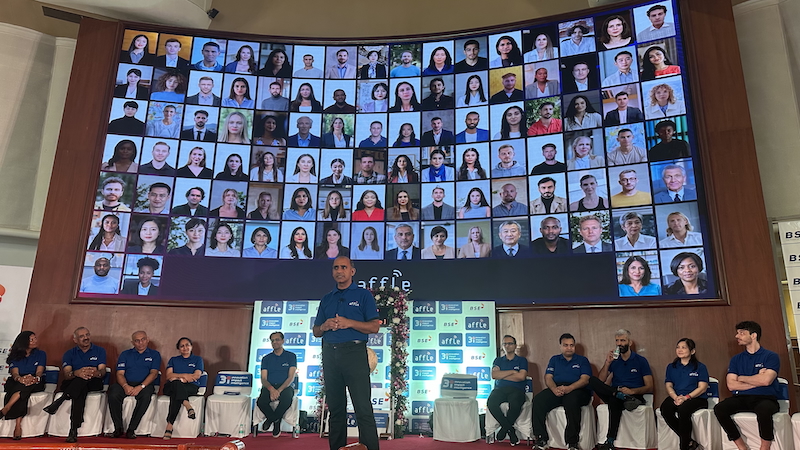
    MUMBAI: Affle India, celebrating its 20th anniversary at the Bombay Stock Exchange, has announced the launch of new AI-powered advertising technology solutions aimed at small and medium-sized enterprises (SMEs). Founders Anuj Khanna Sohum and Anuj Kumar presented the company’s long-term strategy, focusing on innovation, impact, and intelligence, during the event.

    Key platforms introduced include OpticksAI for hyper-local creative generation and CTV AI, designed to facilitate ad campaigns for SMEs on connected television (CTV). The company also showcased 100 AI agents developed to enhance team productivity.

    “We are targeting a tenfold growth over the next decade, with a planned increase in manpower from 600 to 1,000,” stated Sohum.

    The CTV AI platform aims to provide SMEs with affordable access to television advertising within geographically defined areas. 

    “Shopkeepers and SME business owners can utilise these platforms to advertise on connected TVs,” explained Kumar. “Both platforms feature user-friendly interfaces.”

    Sohum elaborated, “Many small business owners desire television advertising at an accessible cost. Our CTV AI service enables them to achieve this at a significantly lower expense compared to traditional satellite and national television in a performance advertising format for bite sized ad campaigns.”

    Kumar highlighted the potential market growth, noting, “Currently, there are approximately 12,000 television advertisers out of a total of 250,000 advertisers across various mediums, indicating substantial growth potential.”

    Affle intends to deliver approximately a billion hyper local and hyper contextual  creatives annually through OpticksAI and onboard one million SMEs globally. “We are focusing on the vernacular vertical, addressing language and localisation needs for ad creation and delivery,” emphasised Sohum.

    The company is exploring various strategies to reach and onboard smaller advertisers, including the potential use of agents spread all over the country.

  • GroupM India’s 2024 TYNY Report unveils surprising trends and insights

    GroupM India’s 2024 TYNY Report unveils surprising trends and insights

    Mumbai: GroupM India has released its annual This Year Next Year (TYNY) report on 13 February 2024. The overall ad revenue is expected to reach Rs 1,55,386 crore in 2024, with an incremental Rs 14,423 crores compared to 2023.

    GroupM South Asia CEO Prasanth Kumar said, “Despite facing macroeconomic challenges, we remain optimistic about the industry. At 10.2% India will be the fastest growing top market. 2024 will also see an upside from the spends leading to the General Elections. Digital particularly retail media and digital extensions of TV are expected to drive the growth. SME continues to fuel the growth. Linear TV is at a point of inflection and needs to be enabled with rapid deployment of technology to stay relevant.”

    GroupM – India president – Investments, Trading, and Partnerships Ashwin Padmanabhan said, “The advertising landscape is evolving with the fragmentation of search, rapid rise of influencer marketing and retail media. Reflecting this, at INR 88,502 crores of the overall INR 1,55,386 crore, digital will contribute to 57% of all ad revenue. Within digital ad revenue, search contributes 22%, retail media 18% and the rest 60%. Sectors like Auto, Realty and Offline Retail are expected to power the overall advertising growth.”

    GroupM India business Intelligence head Parveen Sheik said, “Global advertising presents a steady picture: a projected 5.3% global growth in ad revenue for 2024, reaching $936 billion, with digital leading the charge at a commanding 79% share of all ad revenue. India continues to be ranked 8th globally and its ad revenue growth among its peers is a testament to its potential and resilience. Adaptability is key to navigating an evolving advertising landscape amidst inflation and geopolitical tensions.”

    The GroupM TYNY report also unveiled several evolving trends for 2024.

    Key trends include:

    1   Increasing influence of gen-alpha will drive distinctive marketing strategies

    2   Attention Planning – customising insights for actionability

    3   21% of television homes to be addressable in 2024

    4   Sports to focus on immersive experience journeys

    5   Brand marketing becomes more accountable on performance, breaking silos

    6   Step-up on search

    7   Ecommerce drives deeper into organisations

    8   India’s general & modern trade getting digitized leading to rise of omni channel commerce

    9   Rapid developments in AI will transform media, messaging, and measurement

    10   AI & technology dominate the content landscape & creator economy

    11   Importance of niche consumer segments will power the growth of micromarketing

    12   With consent becoming critical, zero party data will empower various areas of marketing

    https://indgrm.com/TYNY/

  • Snapdeal’s Brand Registry helps sellers protect their registered brands

    Snapdeal’s Brand Registry helps sellers protect their registered brands

    MUMBAI: Snapdeal, India’s largest value-focused online marketplace, is scaling up its brand registry program, which helps protect sellers having their own registered brands from brand infringements on its marketplace.

    Snapdeal has more than 500,000 registered sellers, who together have more than 200 million listings on the platform. Snapdeal is a pure marketplace and all products are listed and sold by third party, independent sellers.

    According to a Snapdeal spokesperson, “Many of the sellers have successfully developed their own brands for online sales. The success of these brands leaves them open to the threat of their brand name being misused by those looking to sell lookalike products under the same name.”

    To assist such brands, Snapdeal runs a program whereby sellers on Snapdeal having their own registered brand name, trademarks etc. get exclusive rights to sell their product in the relevant categories on the Snapdeal marketplace. 

    More than 1000 brands are now part of the registry. These include brands like Wolphy (Fitness Equipment), Tanishka Fabs (Bed Linen), Voylla (fashion jewelry), Bentag (Electronics) – all of whom have a strong online presence in their respective categories.

    Many of these brands have been bestsellers in Snapdeal’s recent Diwali Sale, which saw business volumes double in 120 cities across India, with 90% of the sales coming from non-metro cities.

    Snapdeal’s focus is on the value-conscious segment, which comprises emerging brands and the unbranded segment. The unbranded market in India is worth ~ USD 160 Billion and is now starting to come online in a big way to meet the demand of buyers from non-metro cities.

    The emerging brands focus on serving the unmet needs of buyers by focusing primarily on the functional attributes and with a pricing strategy that doesn’t include large brand premiums. 

    The online markets present an opportunity to create brands in an efficient way without the need to invest in mega advertising campaigns or a network of physical stores. In fact, India is now witnessing the emergence of many online-only brands, mirroring the trend in China, where many brands have chosen not to explore the physical markets while establishing new lines of products, especially in personal care, food and home products.

    According to a Snapdeal Spokesperson, “The program is aimed at helping SMEs create and grow their own brands. This initiative strongly supports, domestic “Made-in-India” brands in their online growth. We are happy to be able to support these brands right from the initial stages of their journey.”

    Snapdeal’s Brand Registry is expected to scale up to include more than 5000 emerging brands by March 2020.

    Snapdeal also operates “Brand Shield”, which offers a single point of contact for brands to report suspected counterfeit products being sold on the Snapdeal platform. Brand Shield offers a fast-track one-day delisting process for verified complaints. The program has significantly boosted collaboration between brands and the marketplace in on-going and successful efforts to weed out sellers who peddle counterfeits on online platforms.

  • Shopmatic disrupts India’s ecommerce space; makes its platform available for SMEs and aspiring entrepreneurs at an annual cost of Rs 50 only

    Shopmatic disrupts India’s ecommerce space; makes its platform available for SMEs and aspiring entrepreneurs at an annual cost of Rs 50 only

    MUMBAI: In a move that will transform the e-commerce landscape in India, international e-commerce company Shopmatic is making its platform available for SMEs and aspiring entrepreneurs at the cost of only Rs 50 for 1 year. Customers can unlock the power-packed features of the Shopmatic platform to set up and manage their online store and only pay 3% when they make a successful sale. Shopmatic recognises that to leverage the opportunities from ecommerce, SMEs and aspiring entrepreneurs should have the freedom to make use of a comprehensive platform without the burden of an upfront investment or committed fees, and has launched this disruptive offering. 

    Despite e-commerce being the sunrise sector in India, not all SMBs, hobbyists, craftspersons, artisans and businesses have embraced the e-commerce route because of the upfront investment required and the perception that setting up an ecommerce business is difficult. Moreover, businesses are unsure if they would even be successful, after paying significant fees to website developers or ecommerce platform providers.

    Shopmatic addresses these pain points with this launch; going online is no longer difficult with Shopmatic as businesses can download the Shopmatic App or sign up for a Shopmatic account via a computer, tablet or any device they are comfortable with,  and create an ecommerce store in a matter of minutes. Moreover,Shopmatic’s pricing plans are now, aligned to the customers’ success: merchants pay only 3%  as transaction fee when they make a successful sale and just Rs. 50 as hosting fees, at the end of 12 months. 

    Commenting on the latest disruption, Anurag Avula, Co-Founder & CEO, Shopmatic, said “Shopmatic has always been focussed on enabling a successful ecommerce business for its customers. This launch further reaffirms Shopmatic’s commitment towards its customers. We will continue to invest in new capabilities and support our customers in their ecommerce journey. We have eliminated the barriers for anyone wanting to sell online thus by taking away the hurdles of price and device accessibility. By leveraging the smartphone penetration in the country and coupling that with our pricing flexibility, we intend to bring 500,000 customers into the ecommerce ecosystem in the next 12 months. “

    Shopmatic has helped over 50,000 sellers establish a thriving online business by offering easy-to-use, power-packed tools and functionality. With this latest game-changing initiative, Shopmatic aims to enable every Indian business to unlock its e-commerce potential. With the annual hosting fee of only Rs 50 and 3% transactional charge on every successful transaction, aspiring online entrepreneurs will have at their disposal the entire ecosystem to sell online: a powerfully customizable store builder, payment gateway  &  shipping integration, social media channel listing, listing on Shopmatic World,  chat enablement on store, data insights, and several promotional tools.

  • GoDaddy targets SMEs in latest campaign

    GoDaddy targets SMEs in latest campaign

    MUMBAI: GoDaddy, the world’s largest technology provider dedicated to small, independent ventures, has launched a new national campaign that raises awareness on the benefits for small and medium enterprises (SMEs) to work together with web professionals and resellers to build a powerful online presence.

    The new campaign focuses on accelerating the usage and adoption of GoDaddy’s fast and reliable website hosting solutions and creating awareness on how the right hosting solution can positively impact an online presence. As a part of the campaign, GoDaddy is offering a special promotional pricing on its hosting products for a limited time.

    The campaign includes a new quirky and humorous television commercial that reiterates the key digital needs of SMBs – namely that of putting their business on the internet with reliable hosting and trusted security protection. Using an engaging narrative, it illustrates how ‘GoDaddy web pros’ help SMBs get an effective online presence without any hiccups.

    Commenting on the new initiatives, GoDaddy India vice president and managing director Nikhil Arora says, “Our technology and partner ecosystem can help to enhance SMEs growth and we are committed to working with them to help eliminate barriers that prevent them from getting online. Bringing customers together with our network of GoDaddy web professionals and resellers can help accelerate their digital adoption.”

    GoDaddy’s ecosystem includes India’s best web professionals and resellers who are experts at creating an optimum online presence for SMBs, using the latest GoDaddy products and services. GoDaddy recognises that India is a do-it-for-me market, with small business owners often looking to professionals to help build and manage their websites.

    As a part of this initiative, GoDaddy will conduct a series of offline training and skill building seminars for small businesses that will include web professionals and resellers. The first of these seminars was held at the recent BlogX Event in New Delhi.

  • Amagi Mix to cost-effectively manage media for SMEs

    Amagi Mix to cost-effectively manage media for SMEs

    MUMBAI: Revolutionising the media planning and buying business in India, Cloud broadcast and targeted advertising platform provider Amagi has launched an online media planning and buying commerce platform – Amagi Mix. It is targeted at the Small and Medium Enterprises (SMEs). With this, the SMEs are a step closer to tackle the advertising heavy weights and plan to launch television campaigns at an affordable cost.

    The plat offers over 50 channels to advertisers to pick from, including regional and national channels to target a specific region. The inbuilt algorithm further strategizes media plans based on the target group, priority markets and the budget. SMEs can also choose to take Amagi’s in-house creative services are further available to SMEs to create spots. The online consultancy is also supported by an offline customer service call centre.

    Amagi cofounder Baskar Subramanian said, “We are entering a new market segment that has a great potential. With competition getting local, no brands are national today. The heterogeneity of brands is basically because of the growing demand and constant change in consumer consumption patterns. The need of geo-targeting will increase for brands even while advertising on television.”

    By next three years, Subramanian is expecting 20 per cent of advertising by SMEs to happen via Amagi Mix. The network is also launching a television and digital campaign for a month to promote the service.

  • Amagi Mix to cost-effectively manage media for SMEs

    Amagi Mix to cost-effectively manage media for SMEs

    MUMBAI: Revolutionising the media planning and buying business in India, Cloud broadcast and targeted advertising platform provider Amagi has launched an online media planning and buying commerce platform – Amagi Mix. It is targeted at the Small and Medium Enterprises (SMEs). With this, the SMEs are a step closer to tackle the advertising heavy weights and plan to launch television campaigns at an affordable cost.

    The plat offers over 50 channels to advertisers to pick from, including regional and national channels to target a specific region. The inbuilt algorithm further strategizes media plans based on the target group, priority markets and the budget. SMEs can also choose to take Amagi’s in-house creative services are further available to SMEs to create spots. The online consultancy is also supported by an offline customer service call centre.

    Amagi cofounder Baskar Subramanian said, “We are entering a new market segment that has a great potential. With competition getting local, no brands are national today. The heterogeneity of brands is basically because of the growing demand and constant change in consumer consumption patterns. The need of geo-targeting will increase for brands even while advertising on television.”

    By next three years, Subramanian is expecting 20 per cent of advertising by SMEs to happen via Amagi Mix. The network is also launching a television and digital campaign for a month to promote the service.

  • ‘India doesn’t have enough developers to meet industry’s demand’: Instappy founder Ambika Sharma

    ‘India doesn’t have enough developers to meet industry’s demand’: Instappy founder Ambika Sharma

    MUMBAI: The explosion of smart mobile phones in India and the penetration of internet has led to a boom in several innovative business proposals that explore the digital platform. With India leading the startup scene, everyday new ideas are turning from just business plans in a ppt file to an actual revenue generating business, backed by an aggressive venture capitalists.

    At the same time, it has pushed several small and medium enterprises to go online, as their customers have already made the shift. It not only means a booming in the digital market, it also means more demand for technology to sustain its rapid growth — right from hardware to software. The Mobile App industry is estimated at $ 143 billion and counting.  As more businesses start thinking mobile in their digital marketing initiatives, traditional agencies too are realising the need to include application development skilsl in their portfolio to sustain clients.

    As per Gartner’s  IT Spending Forecast, by 2017 the demand for enterprise mobile apps will exceed the supply available, especially in India — which comes as an opportunity for cloud-based Mobile app creation platform Instappy.

    “Though India is one of the largest base for developers, globally the number of developers required and the apps in which are in demand has a gap of 1:5 and by 2017 this gap is only going to  grow. A good application requires at least five developers working on it and needs a time period of at least  45 to 60 days  on a an average. Whereas the number of enterprises and small businesses who want an application is far more than that. Had the pool of developers grown at the same rate that the SMEs are shifting to digital, this gap would have been avoided, but the mobile industry has seen a rapid boom and the developers aren’t keeping up,” explained  Instappy, founder and MD Ambika Sharma

    Instappy’s business model is based on this simple ratio, as well as the fact that SMEs prefer a platform that helps them get an app without going through complicated technical discussions with developers.

    Observing the current trend in the market, Sharma shared that the small and medium enterprises jumping the digital bandwagon understand the importance of mobile and how it is going to build on their revenue in the long run.

    While Instappy does get an occasional request of ‘an ola app’, or a ‘zomato app’, for the most part users are fairly well aware of keeping their app identity unique, though certain features may be replicated as reference.

    “The only area that SMEs need to be educated about is building an application is not the end of it, it needs constant maintenance, software updates and improvements. Technology is changing fast and the business owners need to be updated for the most part as well,” she added.

    Non technology savvy business owners and marketers often shy away from getting themselves an application to avoid dealing with the technical specifications because they are overwhelmed by the complexity. Therefore the cloud based platform thrives amongst  Small and Medium Sized enterprises, making it a more democratised playing field for all businesses.

    On an average the platform sees anything between 35 to 40 users building apps every week. Barring the first free trial month, the subscribers start off at Rs 30,000 to be on the platform, and the rates go higher depending on the services a user claims. Apart from this Instappy also entertains clients who ask for a more  customized application for their businesses,  which commands premium rates.  But that is nothing compared to the ongoing rates if a professional team of developers are hired for the job.

    For a basic application that serves a simple purpose, a business enterprise will have to pay a small group of developers anything between Rs 15 to Rs 20 lacs and the price can go up to crores if well known developers are hired and difficult coding is required.

    “We are currently getting requests from across industry, but the ones that stand out are travel, learning and education,  retail and stationery and beauty services business. Interestingly mass manufacturing industry, which is very traditional in its nature has also come on board with us to get an application out,” she shared.

    The sudden rush to get an application has also brought in its own set of challenges for the development market. While most businesses want to go digital to expand their market online and open new ways to interact with the consumer, there are also some who want an app just for the sake of it. Sharma stayed  clear of them.

    “No smart business will create a app just for the sake of it or due to herd mentality. While it’s a trend, the applications have to serve a business purpose for them. It is very difficult to develop an app that covers all the needs of a business, while keeping the functionality in mind, and without going overboard with features. It takes almost 30 days to even figure out what all they want  in it, and most of the time a specialised team has to step in to keep the businesses updated about the latest features they can avail or offer their customers through the app. Half the time businesses lack clarity on exactly what they want from an app.That is where the support team comes in and guides them based on their requirement,” Sharma pointed out, adding that Instappy mostly works with businesses who have their content ready.

    To reach out to fresh new users, Instappy has a very active digital marketing strategy that banks on content marketing as well. “As a B2B portal that targets businesses online, without platform being on digital, our marketing spends are also largely inclined on digital campaigns with an occasional print advertisement,” Sharma said.

    Launched in December 2015 in India, and in the European market in March 2016, the platform is already seeing positive acceptance from both the markets.

    When asked about its yearly targets, Sharma said, “At this point we want to have at least  500 applications pushed out in the next 18 months time. Any business takes time when marketing dynamics are changing. We already making money with a revenue increase on a week – on week basis. Keeping in mind that we constantly  want to invest in the platform from the technology standpoint to ready on demand features for customers, we cant put a date on when we will break even, but it shouldn’t take longer than two years for sure.

  • ‘India doesn’t have enough developers to meet industry’s demand’: Instappy founder Ambika Sharma

    ‘India doesn’t have enough developers to meet industry’s demand’: Instappy founder Ambika Sharma

    MUMBAI: The explosion of smart mobile phones in India and the penetration of internet has led to a boom in several innovative business proposals that explore the digital platform. With India leading the startup scene, everyday new ideas are turning from just business plans in a ppt file to an actual revenue generating business, backed by an aggressive venture capitalists.

    At the same time, it has pushed several small and medium enterprises to go online, as their customers have already made the shift. It not only means a booming in the digital market, it also means more demand for technology to sustain its rapid growth — right from hardware to software. The Mobile App industry is estimated at $ 143 billion and counting.  As more businesses start thinking mobile in their digital marketing initiatives, traditional agencies too are realising the need to include application development skilsl in their portfolio to sustain clients.

    As per Gartner’s  IT Spending Forecast, by 2017 the demand for enterprise mobile apps will exceed the supply available, especially in India — which comes as an opportunity for cloud-based Mobile app creation platform Instappy.

    “Though India is one of the largest base for developers, globally the number of developers required and the apps in which are in demand has a gap of 1:5 and by 2017 this gap is only going to  grow. A good application requires at least five developers working on it and needs a time period of at least  45 to 60 days  on a an average. Whereas the number of enterprises and small businesses who want an application is far more than that. Had the pool of developers grown at the same rate that the SMEs are shifting to digital, this gap would have been avoided, but the mobile industry has seen a rapid boom and the developers aren’t keeping up,” explained  Instappy, founder and MD Ambika Sharma

    Instappy’s business model is based on this simple ratio, as well as the fact that SMEs prefer a platform that helps them get an app without going through complicated technical discussions with developers.

    Observing the current trend in the market, Sharma shared that the small and medium enterprises jumping the digital bandwagon understand the importance of mobile and how it is going to build on their revenue in the long run.

    While Instappy does get an occasional request of ‘an ola app’, or a ‘zomato app’, for the most part users are fairly well aware of keeping their app identity unique, though certain features may be replicated as reference.

    “The only area that SMEs need to be educated about is building an application is not the end of it, it needs constant maintenance, software updates and improvements. Technology is changing fast and the business owners need to be updated for the most part as well,” she added.

    Non technology savvy business owners and marketers often shy away from getting themselves an application to avoid dealing with the technical specifications because they are overwhelmed by the complexity. Therefore the cloud based platform thrives amongst  Small and Medium Sized enterprises, making it a more democratised playing field for all businesses.

    On an average the platform sees anything between 35 to 40 users building apps every week. Barring the first free trial month, the subscribers start off at Rs 30,000 to be on the platform, and the rates go higher depending on the services a user claims. Apart from this Instappy also entertains clients who ask for a more  customized application for their businesses,  which commands premium rates.  But that is nothing compared to the ongoing rates if a professional team of developers are hired for the job.

    For a basic application that serves a simple purpose, a business enterprise will have to pay a small group of developers anything between Rs 15 to Rs 20 lacs and the price can go up to crores if well known developers are hired and difficult coding is required.

    “We are currently getting requests from across industry, but the ones that stand out are travel, learning and education,  retail and stationery and beauty services business. Interestingly mass manufacturing industry, which is very traditional in its nature has also come on board with us to get an application out,” she shared.

    The sudden rush to get an application has also brought in its own set of challenges for the development market. While most businesses want to go digital to expand their market online and open new ways to interact with the consumer, there are also some who want an app just for the sake of it. Sharma stayed  clear of them.

    “No smart business will create a app just for the sake of it or due to herd mentality. While it’s a trend, the applications have to serve a business purpose for them. It is very difficult to develop an app that covers all the needs of a business, while keeping the functionality in mind, and without going overboard with features. It takes almost 30 days to even figure out what all they want  in it, and most of the time a specialised team has to step in to keep the businesses updated about the latest features they can avail or offer their customers through the app. Half the time businesses lack clarity on exactly what they want from an app.That is where the support team comes in and guides them based on their requirement,” Sharma pointed out, adding that Instappy mostly works with businesses who have their content ready.

    To reach out to fresh new users, Instappy has a very active digital marketing strategy that banks on content marketing as well. “As a B2B portal that targets businesses online, without platform being on digital, our marketing spends are also largely inclined on digital campaigns with an occasional print advertisement,” Sharma said.

    Launched in December 2015 in India, and in the European market in March 2016, the platform is already seeing positive acceptance from both the markets.

    When asked about its yearly targets, Sharma said, “At this point we want to have at least  500 applications pushed out in the next 18 months time. Any business takes time when marketing dynamics are changing. We already making money with a revenue increase on a week – on week basis. Keeping in mind that we constantly  want to invest in the platform from the technology standpoint to ready on demand features for customers, we cant put a date on when we will break even, but it shouldn’t take longer than two years for sure.

  • PayUMoney facilitated 1 Billion Transactions and 1.3 Lakhs Sign Ups for Indian SMEs in the online marketplace!

    PayUMoney facilitated 1 Billion Transactions and 1.3 Lakhs Sign Ups for Indian SMEs in the online marketplace!

    MUMBAI: Since its inception in April 2013, PayUMoney has carved out a new market for Indian SMEs – with easy payment collection solutions and hassle-free integration, more than 1.3 lakhs SMEs have signed up with PayUMoney while 30,000 live merchants have already processed transactions worth 1 billion rupees!

    Achieving this feat in such a short span is nothing short of a revolution. How did PayUMoney pull off this task? By simply following the mantra – Whatever the payment collection need, PayUMoney has the payment solution to match!

    PayUMoney stepped in to erase the basic issues faced by Indian SMEs. Typically, a small business owner would first put in: Monies + Time + Energy + Build Website + Maintenance = End Product, i.e. an ecommerce website. This is a long and tiring process. But PayUMoney takes away all these steps and provides Indian sellers specific solutions for specific categories of business.

    Scaling up operation was the first step to success for PayUMoney!

    PayUMoney’s payment solution features are designed in a way such as to enable an average Indian seller to focus solely on his business as PayUMoney takes care of the payment requirements in a hassle-free manner!

    To achieve this seamless work-relationship, PayUMoney invested in a strong technology product with a solid scalable process to help lakhs of Indian sellers who were looking to increase their sales through online channel. This investment helped merchant acquisition and customer service teams to operate efficiently, enabling Indian sellers to adopt the online channel easily. But what makes PayUMoney different amongst the many ecommerce players who offer payment collection solutions to their SME partners?

    The below table showcases the average monthly transactions processed by live merchants on PayUMoney versus the average monthly transaction processed by traditional ecommerce players.

    This clearly indicates that using the PayUMoney has been more effective for SMEs to sell their big ticket products online when compared to ecommerce players as traditionally, ecommerce players act as aggregators, displaying products by other vendors as well. Using PayUMoney enables SMEs to not only market their products online directly but also collect payments for them.

    Because of the ease of use and quick integration, there has been Quarter by Quarter growth in merchant acquisition for PayUMoney since April, 2013:

    The above graph depicts the quarter on quarter growth for seller acquisition. In the 2nd quarter itself, merchants acquisition grew six times over, and the third, fourth and fifth quarter have seen acquisition double over each time, respectively.

    Click here to read full report…