Tag: smartphones

  • Subtle yet creative, Google unveils new logo

    Subtle yet creative, Google unveils new logo

    MUMBAI: The times they are a-changin’! Google acknowledges these evergreen lines from Bob Dylan’s song as it changes its logo and branding yet again. The last change had come about in September 2013.

    As the world bid adieu to the good old days when Google was only accessed from desktops, the company is re-inventing itself yet again. Since Google’s launch 17 years back, a lot has changed. Thanks to the aggressive penetrations of internet and smartphones, Google now is as mobile as human beings are. On 1 September 2015, the world’s largest used search engine changed its logo and identity once again, which reflects this reality and shows people when the Google magic is working for them, even on the tiniest screens.

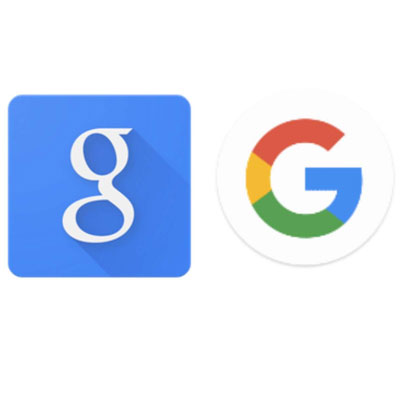
    Google has said goodbye to the small blue ‘g’ and replaced it with a capital ‘G,’ which has all four colors – blue, red, green and yellow – in it.

    So why did they do so? In an announcement, the company said, “As you’ll see, we’ve taken the Google logo and branding, which were originally built for a single desktop browser page, and updated them for a world of seamless computing across an endless number of devices and different kinds of inputs (such as tap, type and talk).”

    Google is known for its subtle changes and the voyage started from 1998 when Larry Page and Sergy Brin used the logo for their Stanford University graduate project.

    August 1998: The team heads to Burning Man and creates the first Doodle as an out of office message.

    September 1998: Google moves to Google.com and shares its beta release with the world.

    May 1999: Still playful, the logo gets a more sophisticated look based on the Catull typeface.

    May 2010: The logo brightens up and sports a reduced drop shadow.

    September 2013: The logo goes flat with some typographical tweaks.

    September 2015: The logo becomes part of a new family that includes the Google dots and ‘G’ icon.

    The new logo doesn’t simply tell consumers that they’re using Google, but also shows them how Google is working for them. For example, new elements like a colourful Google mic helps identify and interact with Google whether a person is talking, tapping or typing.

    Complimenting the subtle yet creative development, RK Swamy Hansa Group chairman S K Swamy said, “Google has been refreshing its logo quite often but the current change is a larger and continuing step. I quite like the modern looking upper case – lower case version.”

    “Google has succeeded in striking a fine balance of form with function in its new logo. It’s a homegrown typerface and vector based, which makes it scalable across devices in so far as legibility is concerned and sports a contemporary look at the same time. Although it will take some time to get used to the new look, it’s nice that Google has retained slight tilt of ‘e’, ” said Leo Burnett’s digital creative agency’s Indigo Consulting national creative director Navin Kansal.

  • Effect of 4G rollout on the e-commerce industry

    Effect of 4G rollout on the e-commerce industry

    4G i.e. fourth generation is an advanced version of 3G that facilitates its users with mobile broadband internet access. The technology provides wide area coverage and high speed to mobile as well as laptop users. Offering peak upload rate of 500 mbps and peak download rate of 1gbps; 4G supports HD streaming. 4G network can ensure optimal use of HD phones. With its WiMAX LTE technology, 4G provides path-breaking speed and impeccable connectivity to its users. A game-changing internet technology, 4G network is slowly becoming the ‘Next Big Thing’ that provides immediate access to everything from around the world at your fingertips. 


    With 4G taking the Indian market by storm, the demand for smartphones is taking an upward swing. The 4G rollout is further influencing the sphere of e-commerce immensely. Online retail firms have to confront logistics as well as connectivity hindrances in order to serve their patrons efficiently. These issues can be solved with 4G internet services. By providing cutting-edge speed and connectivity, 4G is helping online firms to tackle their problems easily. 


    Escalated speed and enhanced connectivity provides users with a compelling and satisfactory browsing and shopping experience. Usually it is seen that potential buyers leave a particular site when they are just going to finalise their purchase. The reason being – connectivity problem or slow internet. With 4G, customers can quickly make purchases without having to face any such hassles. This is thus, indirectly boosting the sales of e-commerce companies. 


    With 4G for mobiles as well as laptops, e-commerce companies can be unperturbed about the size of images or videos. Even on smartphones, users can enjoy the same experience as on a laptop or PC, due to higher connectivity and speed offered by 4G. Another situation will justify the sturdy role that 4G is playing in the realm of e-commerce. Many a times, it happens that online shopping websites hang or the speed of internet dips while making payments or while checking out. This leads to reduction in the confidence level of customers, leaving them in a dilemma of whether to purchase online or not to take the chance. This can result in dwindling sales for e-commerce companies. With 4G at hand, buyers are able to make instant purchase decisions and check-out in a hassle-free way. 


    In order to gain maximum advantage of the fourth generation internet technology, the market is witnessing various e-commerce firms going the mobile-way. In short, for better results, e-commerce firms are turning to m-commerce. With 4G on mobile, people are preferring to use their handheld devices to fulfill their day to day needs. Hence, e-commerce firms are coming up with ground-breaking designs and models to utilise the lucrative mobile space efficiently, making scores of firms turn to the m-commerce platform. 


    4G, the improved and enhanced version of 3G, is metamorphosing the entire domain of e-commerce, making transactions instant, thus delivering reliable and constraint-free experiences.


    (These are purely personal views of iSpyPrice.com founder and director Suresh Sharma and Indiantelevision.com does not necessarily subscribe to these views.)

  • Indian mobile shopping purchases on the rise: MasterCard survey

    Indian mobile shopping purchases on the rise: MasterCard survey

    MUMBAI: Purchasing patterns in the country are seeing a change. While visits to the kirana store continue, online purchases made through mobile phones in India have grown by more than 100 per cent over the past two years. This indicates a steep upward trend in e-commerce propelled by expediency, reveals the MasterCard Online Shopping Survey 2014, which covered 14 countries across Asia Pacific.


    China continues to lead the chart among mobile shoppers with 70.1 per cent of the respondents polled having used the device to make online purchases. India (62.9 per cent) and Taiwan (62.6 per cent) follow next with Thailand (58.8 per cent) and Indonesia (54.9 per cent) rounding off the top five.


    Some of the key takeaways of the report:

    -India ranks second with 81.2 per cent of respondents accessing the internet for online shopping while China leads with 86.6 per cent.


    -95 per cent of Indian respondents with a mobile phone have access to the internet through it (up by 20.2 points since 2012)


    -The number of Indian respondents, who have made at least one purchase in the last three months, has increased from 70.9 per cent in 2012 to 94 per cent in 2014.


    -The major factors impacting online purchases include the security of payment facility (86.8 per cent) followed by the price or monetary value of items (86.6 per cent) and convenient payment methods (86.2 per cent)


    MasterCard South Asia area head Vikas Varma said, “Digital payment solutions like mobile banking apps and digital wallets will go a long way to further enrich the purchasing experience for the evolving consumer. The survey shows that there is a strong need to provide not only secure, but also convenient payments solutions as consumers move to a more digital and sophisticated lifestyle.”


    Furthermore, in India the top three reasons for driving smart phone shopping were the ability to shop on the go (47.7 per cent), the growing availability of apps that makes it easier to shop (45.3 per cent) and convenience (38.1 per cent). Mobile phones/mobile gadget apps topped the list of items purchased through smartphones (28.8 per cent), followed by tickets for cinema and movie theatres (26.7 per cent) and clothing/fashion accessories (24 per cent).


    For online transactions, the most common payment methods used are debit cards and cash. New mobile technologies are also gaining traction among consumers in the region, with mobile banking apps having the highest awareness-familiarity levels (38.3 per cent) followed by in-app shopping (28.7 per cent) and digital wallets (24.4 per cent).

  • Predictions: 2015 will see a spurt in the usage of digital media solutions

    Predictions: 2015 will see a spurt in the usage of digital media solutions

    Digital media has metamorphosed the whole advertisement industry, creating constant ripples in the market. Advertisers have started employing digital media to fulfill all their advertising needs as this has emerged as the best way to reach their target audience. Smart phone usage has increased manifold and hence, it has become the ideal option for advertisers to use them as a source to promote the products and services of companies.   With consumers becoming more app-driven and gadget-savvy, brands have begun to advertise themselves on the mobile platform for the ease and convenience of their patrons. The year 2014 witnessed phenomenal growth in the digital media segment and 2015 will also observe the same trend owing to the escalating use of digital media platforms like smartphones and related applications by consumers.


    As far as 2014 goes, the usage of mobile applications has increased tremendously hence companies invested hugely in developing innovative and user-friendly apps. Usage and sharing of digital content inflated substantially, leading to the development of an industry that specifically focuses on production and distribution of such content.   With digital advertising videos gaining popularity, companies started allocating a considerable budget for the same but limited it to a single player.  On the other hand, the conventional digital display media like banners saw a decline in interest and video, native (performance) and content platforms witnessed considerable growth, influencing a major chunk of the market.


    The year 2015 is sure to observe programmatic buying that people have been talking about. This will take over most of the display spends. Therefore, technology driven agency trading desks and consolidated programmatic buying by clients will experience an upsurge. In the digital ecosystem, programmatic buying simply refers to a broad spectrum of technologies that assist the buying, placement and optimisation of advertising. People usually get confused with this technical jargon. In layman’s terms, it means buying of any advertisement that gets processed through machines.


    Besides programmatic buying, 2015 will see a spurt in the usage of digital media solutions by companies. Mobile advertising will achieve a significant breakthrough, influencing and transforming the sphere of advertising to an extent where advertisements on smart phones will surpass any other kind of promotion on digital media. The umpteen advantages offered by mobile advertising like increased consumer engagement with the company, increasing traffic to web pages and reaching customers on the go make it a lucrative mode of advertising for marketers.


    Digital media advertising is here to stay as it helps advertisers attract the right audience. From elevating brand visibility to delivering the digital ads to the target audience, digital media embodies various online advertisements that are devised in conjunction with the needs and demands of the market. 


    The emergence of digital media has brought waves in the advertising sphere, resulting in companies embracing online and digital media solutions for all their marketing needs. In accordance with an observation made recently, the Indian telecom network is growing marvelously due to its high population and development potential. This proves that mobile advertising which is a form of digital advertising has a bright future in the country. 


    (These are purely personal views of SVG Media co-founder and CEO Manish Vij and indiantelevision.com does not necessarily subscribe to these views.)

  • Google taking steps to boost advertisement revenue from mobile phones

    Google taking steps to boost advertisement revenue from mobile phones

    NEW DELHI: In an attempt to boost its online advertisement revenue, Google will enable faster online search capability for mobile phones with slower network connections in India.


    Indians, according to a Google blog post, are accessing the Internet through mobile devices such as their smartphones. However, not all of these devices come with fast, cheap Internet connections.


    Google said this is just another step the online search engine is taking to organise the world’s information and make it accessible to everyone, including those who do not have fast mobile connections.


    Google second quarter revenue increased 22 per cent to $15.96 billion.


    The average cost-per-click, which includes clicks related to ads served on Google sites and the sites of network members, decreased 6 per cent. Cost-per-click for Google sites decreased 7 per cent. Network cost-per-click decreased 13 per cent.


    However, sites revenues rose 23 per cent to $10.94 billion, while network revenues increased 7 per cent. Aggregate paid clicks increased approximately 25 per cent.


    ITU in a report released in September has ranked India at 125 for fixed broadband, 113 for mobile Internet, 75 for household Internet penetration and 142 for Internet user penetration in 2013.


    Google, which recently launched Android One operating system for emerging telecom markets, said it is adding a new streamlined version of search results page in India.


    Google will automatically check to see if a user has a slow wireless connection and deliver a fast loading version of search.


    Bharat Mediratta, software engineer of Google, in a blog post on 3 October, said: “The Internet is a global gathering space of infinite opportunity, where people from around the world can exchange ideas and access humanity’s knowledge. Everyone should have equal access to the Internet’s information to improve their everyday lives, regardless of who they are or where they live.”


    “Fewer bytes means you get your answer faster and cheaper. Google’s results will remain the same, but elements such as images and maps will only show up when they are an essential part of the result,” Mediratta added.


    ITU says mobile broadband subscriptions will reach 2.3 billion globally in 2014 with 55 per cent in developing world.


    Global mobile broadband penetration will reach 32 per cent in 2014 with 84 per cent penetration in developed countries and 21 per cent in developing countries.


    ITU says 44 per cent of the world’s households will have Internet access by end 2014. 31 per cent households in developing countries will be connected to the Internet against 78 per cent in developed countries. ITU does not share India specific Internet access details.

  • GroupM launches India Digital Playbook 2014-15

    GroupM launches India Digital Playbook 2014-15

    MUMBAI: “We recall that, at WPP Stream India in February 2014, the renowned filmmaker Shekhar Kapur metaphorically referred to digital marketing as Shiv Tandava. We whole-heartedly agree with Kapur’s viewpoint,” is how the GroupM opened and launched its India Digital Playbook.


    The Playbook seeks to guide brand advertisers on the fast evolving digital media space in India.


    With India now standing at third position globally in internet users after China and US, the user growth is brisk- India today has 2.3 times the users that it had three years back. As of June 2014 India has 243 million internet users. For marketers, this comes as a significant challenge as well as opportunity to re-look media priorities and mix to take advantage of this shift.


    The always moving, always new, always-on digital and mobile screen experiences that are prevalent today constitute a new media phenomenon. This brings immense opportunities as well as new challenges on how brands now need to converse with their customers. Successful brands will be those that can adapt to the unrelenting pace of digital innovation.


    To help brands in this endeavour, GroupM has got some of the best digital minds in the country to come up with seven actionable opportunities in the coming year – like mobility, real time content and media, digital and experiential platforms.


    The playbook further details several milestones – including creating a matrix of outcomes and drafting a mobile first view- that brands should aspire to achieve this year to capitalise on these opportunities. The playbook recommends that brand advertisers adopt holistic insights and data driven approach with integrated marketing technology framework as the key enabler.


    GroupM Interaction managing partner Tushar Vyas said, “The digital revolution has now become an avalanche. This in turn opens greater avenues for brands to reach out and communicate effectively with their target audience. The Group M India Digital Playbook aims at providing a blueprint to help guide marketers through the twists and turns that await us.”


    The report goes on to say that currently the marketplace is very cluttered and fragmented in India and Programmatic Advertising has become a “catchall” term that the industry is using for behavioural targeting, real time bidding, exchange buying and all sort of things. Through the Playbook, the media agency wants to help marketers traverse this maze where it has outlined a few key recommendations on the Programmatic Advertising Strategy.


    Click here to read the Playbook

  • FIFA to be watched on around 6 billion screens worldwide, with TV accounting for less than half

    FIFA to be watched on around 6 billion screens worldwide, with TV accounting for less than half

    NEW DELHI: Smartphones, tablets or PCs account for more than half (57 per cent) of the viewing platforms as opposed to conventional TV screens for ardent fans of FIFA World Cup 2014.


    The new trend of watching the favourite sports on personal devices, though, does not undermine the importance of traditional broadcasting methods. Connected devices are playing a crucial role in evolving viewing habits for big-events, according to a report published on the official website of research firm Ovum.


    The World Cup is expected to have a combined reach of broadcast TV and streaming options available on up to 5.9 billion screens worldwide, estimates research firm Ovum.


    “Devices capable of streaming live and on-demand video – of which there are now 4.7 billion – are providing additional viewing opportunities outside the appointment viewing taking place in people’s living rooms,” said Ovum senior analyst Ted Hall in a statement. “With the likes of tablets providing the convenience and flexibility to consume content whenever and wherever, fans are able to watch more of the tournament than ever before.”


    Among recent results in the United States, ESPN’s broadcast of the Group G opener between the U.S. and Ghana on 16 June averaged a 6.3 rating and nearly 11.1 million viewers, making it the network’s most-watched men’s football game so far. The match also helped to establish a new record for the WatchESPN app, which was host to 1.4 million viewers and 62.4 million minutes viewed for the contest.


    If there’s anything lacking, innovation-wise, for the 2014 iteration of the tournament, it’s the limited access to games in the 4K/Ultra HD format, Ovum noted. FIFA and Sony will produce three matches in the format, though most access will be limited to small screenings, and, as of this writing, none of those games will be offered live via 4K in the U.S.


    “4K technology is far from ready for home viewing, with holes in the transmission part of the ecosystem meaning that it will be some time before audiences of any significant scale will be watching UHDTV content in their living rooms,” Hall said.


    But the 4K ecosystem is expected to be much more evolved by the 2018 World Cup. On the display side, more than 20 per cent of connected flat panel TVs will be 4K-capable, Cisco Systems predicted in its latest Visual Networking Index Global IP Traffic Forecast. 

  • Lenovo signs on Ranbir Kapoor as Brand Ambassador for Smartphones in India

    Lenovo signs on Ranbir Kapoor as Brand Ambassador for Smartphones in India

    MUMBAI: Lenovo today announced its association with top Bollywood actor Ranbir Kapoor as the brand ambassador for smartphones in India. As part of this association, Ranbir will endorse Lenovo’s range of smartphones and will feature in various television and online commercials for the brand in India. In Lenovo’s earlier association with Ranbir, he was endorsing both PCs and Tablets and will continue endorsing Tablets in this partnership too.

    Speaking on the occasion, Mr. Sudhin Mathur, Director-Smartphones, Lenovo India said, “Ranbir Kapoor is a multi-talented and popular actor, who is admired across the nation. We are delighted to be associated with him, as he is an extremely versatile, endearing and stylish performer just like our range of Lenovo smartphones. We believe that this partnership will expand our reach into the consumer space and enhance the preference for Lenovo smartphones in India.”

    The stylish range of smartphones comprise, industry-leading devices suiting every need of the user right from the best camera experience to extra long battery life. Bundled with powerful multi-core processors, access to the latest apps through Android, and peerless display technology, Lenovo smartphones are poised to enhance a user’s experience.      

                                                   
    “The cutting edge technology and product design that goes into Lenovo products differentiates it from the rest. Today, Lenovo has grown into a brand synonymous with youth, style and innovation,” said Ranbir Kapoor expressing his excitement on this association. “I have been using Lenovo products for some time now and I think they are must-have possessions for people looking for technology products that fit their personality and lifestyle.”

    Lenovo will soon launch a series of TV and online commercials featuring Ranbir Kapoor.

  • On road to the Cartoon ‘Always On’ Network

    On road to the Cartoon ‘Always On’ Network

    MUMBAI: Cartoon Network is taking its promise to reach children whenever they want and wherever they want rather seriously.

    The network has grandiose plans to be ‘Always On’ with customised new original and/or acquired programming for a range of platforms accessed by kids nowadays, including television, smart phones, computers, tablets, gaming devices and what have you.

    Turner International Asia Pacific chief content officer, Mark Eyers rightly puts it as, “To Cartoon Network, ‘Network’ means a portfolio of different experiences across a network of devices for a network of fans.”

    New programming

    As part of its strategy, Turner Broadcasting announced in February that Cartoon Network would air between 6.00 am and 8.00 pm, starting 31 March. Complementing the change in timing is a slew of new shows, both original and acquired. Here’s looking at them:

    Over The Garden Wall: Cartoon Network’s first animated mini-series, Over the Garden Wall is headlined by an all-star voice-cast including Elijah Wood (Lord of the Rings Trilogy), Collin Dean (The War at Home) and Melanie Lynskey (Two and a Half Men).

    The ten-part fantasy about two brothers, Wirt and Greg, who find themselves trapped in a mysterious world, sees the duo travel through the strange land till they find their way home. Help comes from a wise old woodsman who provides directions and a bluebird named Beatrice. The series has a soundtrack full of Americana-influenced original songs. It is created by Pat McHale and produced by Cartoon Network Studios.

    Clarence: Created by Skyler Page, this new, original animated series about an optimistic boy who wants to do everything premieres Monday, 14 April at 7:00 pm. Clarence was conceived as part of the prolific shorts development programme at Cartoon Network Studios, which resulted in six original series: Regular Show, Uncle Grandpa, Steven Universe, Clarence, Over the Garden Wall and We Bare Bears.

    We Bare Bears: A comedy about three bear siblings, Grizzly, Panda and Ice Bear, each episode of We Bare Bears follows their awkward attempts at assimilating into human society. Whether they’re looking for food, trying to make human friends or scheming to become internet famous, it’s clear that it’s tough being a bear in a civilized world. Created by Annie Award-winner Daniel Chong (Toy Story of Terror!), the series is produced by Cartoon Network Studios.

    The Tom and Jerry Show: The iconic cat and mouse are back in The Tom and Jerry Show, a fresh take on the ageless classic. While preserving the look, characters and sensibility of the original, the new series offers a fresh perspective on the madcap, slapstick and never-ending battle between two of the most beloved characters of all time. The Tom and Jerry Show is produced by Warner Bros. Animation and will premiere Wednesday, 9 April at 5.30 pm.

    Be Cool Scooby-Doo!: Scooby and company are back but with a modern twist in this 22-minute animated comedy series from Warner Bros. Animation. With high school over and one last summer to live it up, the gang hits the road in the Mystery Machine, chasing fun and adventure. But monsters and mayhem keep getting in the way.

    (Disclaimer: Some of the shows mentioned may be available only in the US and not in the APAC region)

    Wabbit – A Looney Tunes Production: The hilarious, heroic and mischievous Bugs Bunny is back in this all-new series from Warner Bros. Animation. Comic shorts find the carrot-loving rabbit matching wits with (and getting the best of) classic characters like Yosemite Sam and Wile E. Coyote. There are brand new foes too… but Bugs gets a helping hand from new friends like Bigfoot and Squeaks the squirrel.

    Lego Ninjago – Masters of Spinjitzu: Continuing its robust partnership with The Lego Group, Cartoon Network will re-introduce viewers to the world of Ninjago – Masters of Spinjitzu with six new half-an-hour animated specials this year, followed by all-new episodes of the highly popular series in 2015.

    Sonic Boom: For over two decades, Sonic the Hedgehog has held his own as one of the world’s biggest gaming icons. This year, a new branch of the Sonic universe debuts titled Sonic Boom. With a new look for Sonic and friends, the franchise’s first-ever CG-animated television series will premiere on Cartoon Network, along with an extensive video game release of the same name. The Sonic Boom television series, co-produced by Sega and OuiDO! Productions, will debut on Cartoon Network in the 2014-15 season.

    Total Drama – Pahkitew Island: New island, new cast, but the same old disregard for human safety! The Total Drama series returns as Chris and Chef put the newest generation of contestants through the craziest challenges yet – all for a chance to win one million dollars! Total Drama Island is produced by Fresh TV.

    Numb Chucks: Woodchuck brothers Dilweed and Fungus didn’t always see themselves as mystical Kung Fu saviours till they stumbled upon an infomercial featuring the legend Woodchuck Morris’ mullet-fuelled motivational kung-fu video, The Way of the Chuck! With an endless supply of confidence but a limited supply of grey cells, and countless hours of watching the video, this dim-witted duo morph into The Numb Chucks!

    Beyraiderz: Sho, Jin and Leon find themselves trapped in a strange world that was once defended by the six mythic beasts that have now all but disappeared, leaving the world in ruins. It’s now up to the trio to uncover the hidden BeyRaiderz stadiums, fight the tourneys and bring the beasts back…

    According to Eyers, “The transformation is like with any other business model that works on a long-term perspective. All businesses must look at themselves every couple of years with respect to the current market environment.”

    OTT content

    Cartoon Network has always had unique content for the digital platform which compliments television content, be it shorts or games or extensions of the storytelling from the primary channel. “The viewer needs to have a compelling experience in the digital space that should leave him/her wanting to come back for more,” says Eyers.

    Here’s looking at the new originals that the OTT service of Cartoon Network will be showcasing:

    Angelo Rules (Season 2): For kids, life can be a daily battle, what with adults, siblings, teachers and rivals telling them what to do and what not to do et al. Well, it’s time for kids to take control and Angelo’s here to show the way! He observes and then comes up with elaborate strategies to wheedle, sweet-talk, con, and work around any adversary. Season two of this new series comes from TeamTo and Cake Entertainment.

    Detentionaire: Framed for a prank he did not play and punished with a full year of detention, high schooler Lee Ping sneaks out of detention to try and expose who was really behind the prank while avoiding being caught by the principal Barrage. After clearing his name, Lee again attempts to sneak out of Barrage’s upgraded detention room, discovering that a strange pyramid under the school has something to do with Lee’s key, the parents’ council and the blue tazwurms. There is more to the school than meets the eye! Created by animators Daniel Bryan Franklin and Charles Johnston, Detentionaire is distributed by Nelvana.

    Rocket Jo: Rocket Jo is an inventor-adventurer with the unique goal to get his jet-pack to send him flying in the air for good… without effect. But his valiant attempts are always a false dawn to the viewers’ great delight, as there are always failures, gags, explosions, falls, etc. Produced by Millimages and 2D3D, Rocket Jo works hard, drawing upon all his imagination, to make viewers, both children and parents, laugh.

    These apart, there will be other returning series on the network including Adventure Time, The Amazing World of Gumball, Ben 10 Omniverse, Grojband, Johnny Test, Legends of Chima, Mixels, Pokémon the Series: XY, Regular Show, Steven Universe, Teen Titans GO!, Tenkai Knights and Uncle Grandpa.

    The Future

    Later this year, Cartoon Network will introduce a unique user experience to the mobile marketplace when it launches a new digital initiative called ‘Cartoon Network Anything’. A fast-paced micro-network, Cartoon Network Anything will serve as an ever-growing stream of fun and funny content for mobile phones and other small-screen mobile devices. Users will be able to enjoy games, activities, trivia and clips, each lasting an average of 10 to 15 seconds. These diverse pieces of content will be randomised, and fans will be able to move to the next piece by simply swiping their screens, resulting in entertainment that feels both immediate and infinite.

    In addition to bringing a first-of-its-kind mobile offering to fans, Cartoon Network Anything will also provide unique sponsorship opportunities for Cartoon Network’s business partners. A perfect platform for native advertising, the platform will invite innovative advertising and sponsored content that suits the medium and feel organic to the overall micro-network.

    “In today’s time and age, people will pay for the experience. One of the most powerful experiences that anyone could have is the gift of laughter or humour. And so for us, it’s more about being true to comedy and bring in that surprise that will continue to remain our secret and doubling up on unique, character-driven comedy on whichever platform we are,” ends Eyers.
  • BBC World News survey reveals impact of mobile advertising on affluent consumers

    BBC World News survey reveals impact of mobile advertising on affluent consumers

    MUMBAI: BBC World News and BBC.com/news have today released the results of a global study – the first of its kind – examining the usage of mobile devices by consumers around the world.

    The study surveyed 6,000 smartphone owners in Australia, Germany, Sweden, India, Hong Kong and the US. It compared the habits of affluent consumers – the highest 20% income earners in each country – to those of the general population.

    The results reveal the increasing importance of smartphones to affluent consumers and demonstrate the extent to which mobile devices are integrated into their personal and, crucially, their business lives, as improved technology enables greater engagement with content. The study also provides clear evidence that affluent consumers, who make up a large proportion of the BBC World News and BBC.com/newsaudience, are significantly more receptive to mobile advertising than the general population.  


    Key findings include:

    •51% of affluent consumers use their mobile phone for business, compared to 40% of the general population

    •39% of affluent consumers access the internet via their mobile devices at least once an hour, which is 18% higher than the general population

    •Affluent consumers are 18% more likely to share their location to get relevant services than the general population

    •Affluent consumers are more likely to prefer mobile devices to desktop for news-related content than the general population.  The contrast is particularly notable for current affairs or breaking news, where the figure is15% higher for affluent consumers than the general population, and business/finance news, where it is28% higher

    •News apps are the most commonly used mobile phone apps for affluent consumers, whilst social network apps are favoured by the general population

    •A third of affluent consumers agree that, if a brand wants to be modern and dynamic, it needs to be on mobile – 15% higher than the general population

    •Mobile advertising is twice as effective as the already proven advertising medium desktop in driving key brand metrics such as awareness, favourability and purchase intent amongst the total population. This figure rises to four times as effective for affluent consumers

    •High income earners are as positive towards advertising on mobile (19%) as desktop (18%). The percentage who are happy to see ads on mobile websites rises to 41% for sites where the content is free.


    India

    •55% of affluent Indian consumers access the internet hourly in India on mobile devices vs. 39% of total affluent consumers

    •Affluent Indian consumers are far more likely to use their phone for business (79%) vs. 51% for total affluent consumers

    •Over half of affluent consumers in India agree that their smartphone is the primary tool for organising their personal life

    •58% of affluent consumers in India agree that an increasing amount of their work is being accomplished on their mobile device (compared to 35% all affluent consumers)

    •56% of affluent consumers in India prefer to use their mobile device to access news, rather than using a desktop (30% for all affluent consumers)

    •52% of affluent consumers in India are more likely to share stories on mobile rather than desktop (compared 31% for all affluent consumers).

    •56% of affluent Indian consumers agreed that to be seen as modern and dynamic a brand needs to be on mobile (compared to 30% all affluent consumers).

    The survey emphasises the growing trend for news consumption on mobile platforms and reflects the results of the BBC’s 2012 study of news consumption -http://www.bbc.co.uk/mediacentre/worldnews/news-consumption.html- in which 59% of affluent consumers expected to consume more news on their phones over the next five years.
     

    When asked which single device they prefer to use for news, the number of affluent consumers who name the mobile phone has risen by 15% since 2012 and tablet is up by 9%.In contrast, the amount of people who say they prefer desktop has decreased by 17%.

    Additionally, 2012’s survey found that news consumption on mobiles was mainly restricted to scanning news headlines. In comparison, 34% of new handset users* surveyed in the new study say they now dive deeper when consuming news and are likely to read additional articles connected the original piece. This is 42% higher than for those using older handsets. Owners of the latest handsets are also 10% more likely than the general population to watch news video or stream content on their mobile phones.

    Jim Egan, CEO of BBC Global News Ltd said: “The rapidly growing importance of mobile to our global audiences is one of the big themes for our industry and we are constantly working to create the best mobile browsing experience, be that with the introduction of our international BBC News and Sports apps, or on-going responsive design innovations. This new research reveals significant change in mobile consumption – people are delving deeper into stories on their mobiles, consuming more video and, significantly, growing accustomed to advertising on their mobiles. This large study provides compelling evidence that mobile advertising works with affluent mobile consumers in particular and that has big implications for publishers and advertisers alike.”

    Notes to editors

    *New/latest handsets defined as those released since September 2012. The study was conducted by Millward Brown. BBC World News and bbc.com/news are owned and operated by BBC Global News Ltd, a member of the BBC’s commercial group of companies.

    BBC World News is available in more than 200 countries and territories worldwide, and over 360 million households and 1.8 million hotel rooms. The channel’s content is also available on 175 cruise ships, 53 airlines and 22 mobile phone networks. For further information on how to receive BBC World News, download schedules or find out more about the channel, visit bbc.com/tvschedule, bbc.com is one of the most respected brands on the internet and complements BBC World News in its offering of high quality, up-to-the minute international news, business, sports, weather, lifestyle, technology content and in-depth analysis. Launched in November 2007, the site attracts 58 million unique visitors each month.

    BBC Advertising sells advertising and sponsorship solutions on behalf of BBC World News and bbc.com. For more information on BBC Advertising see http://advertising.bbcworldwide.com.


    Click here for the full release