Tag: smartphones

  • Eros Now and Micromax form strategic partnership

    Eros Now and Micromax form strategic partnership

    MUMBAI: Eros International has announced a strategic partnership between its cutting edge OTT digital platform, Eros Now and Micromax Informatics Limited to bring endless entertainment to Micromax consumers.

    The growth of fast and reliable internet, and access to affordable big screen smartphones and handheld devices, has led India to the cusp of a digital revolution.

    Micromax says that it has been working towards building its services portfolio to offer convenience and exceptional digital experience to its consumers. With this partnership, the Eros Now app will be preinstalled into Micromax’s latest smartphones showcasing Eros Now’s extensive repository of Bollywood films, music, originals and regional content. Eros Now will leverage Micromax’s presence of over 150,000 retail outlets to distribute its content. For millions of Micromax users who look for great Bollywood and regional language content, this partnership simplifies the task of discovering great content anytime, anyplace, on a device of their choice.

    Commenting on the association, Eros Digital CEO Rishika Lulla Singh said, “We are extremely pleased to partner with Micromax to offer our collection of movies, music and more. With this partnership we will be expanding our ability to provide entertainment on-the-go, anywhere and anytime to Micromax’s new acquisition of 3.5 million users every month and also their existing base of more than 30 million connected users. Joining forces with one of the world’s leading smartphone manufacturers provide us with another opportunity for exponential growth and customer reach.”

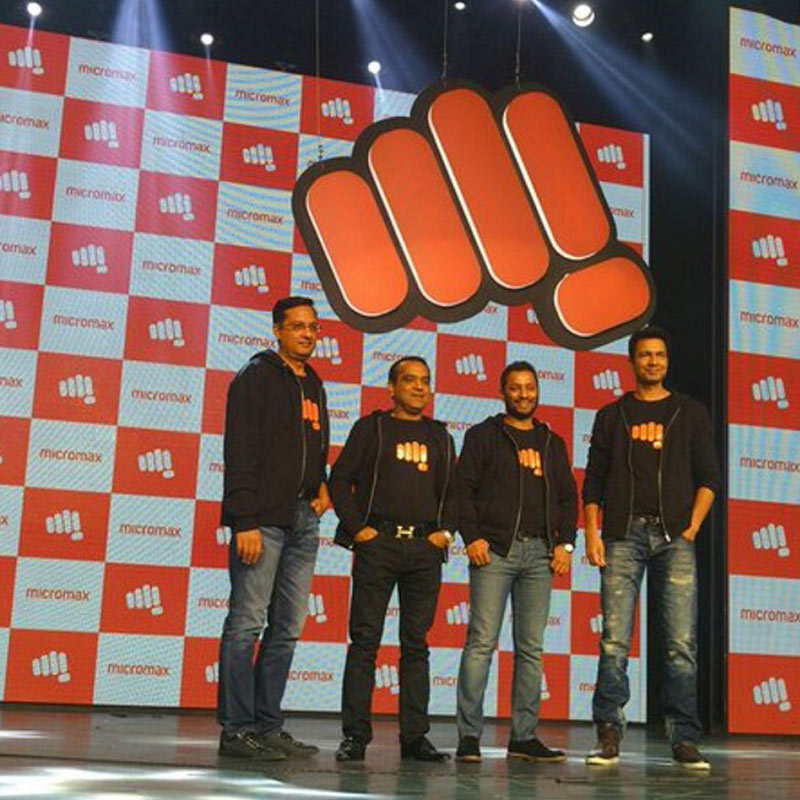
    Micromax Informatics Limited co-founder Vikas Jain said, “We are extremely excited about this partnership, as it promises to make the digital content from cinema, movies and videos available to our urban and rural customers. Beyond urban cities in India, Micromax has found mobile internet to be one of the most favored connectivity options in rural cities. This tie up helps us to enhance the experience for our customers beyond hardware specifications. The rich content library of Eros Now promises to become a part of the daily digital consumption of our customers.”

    Micromax smartphone users can choose their subscription package for a duration of their choice ranging from one month to a year. Users will have access to unique content on Eros Now, with subscriptions offering a range of exciting features, such as viewing content offline, full-length movies, thematic curated playlists, watch-lists, regional language filters, video progression and subtitles to offer the best video viewing experience to users. Music-lovers can also enjoy individual music tracks and music video playlists using the app.

  • KFC’s new Meal Box can now charge smartphones

    KFC’s new Meal Box can now charge smartphones

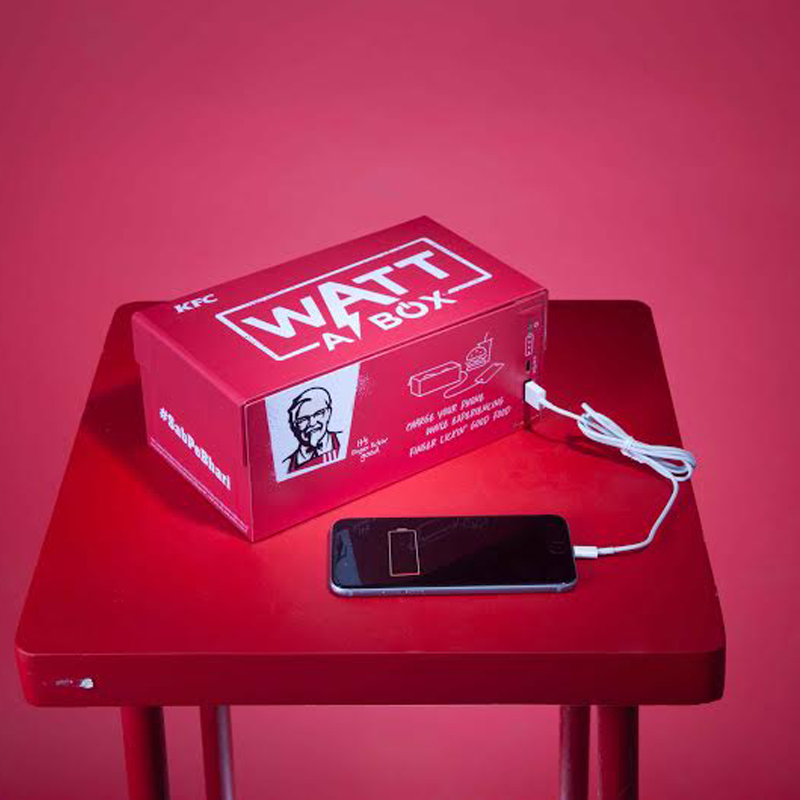
    MUMBAI: This monsoon, KFC in association with Blink Digital turns the act of charging one’s phone into a service by launching ‘Watt A Box’ – first ever Meal Box which comes with a built-in power bank.

    Driven by consumer insights and demand to access mobile chargers, KFC has created this innovative solution as part of its marketing campaign to engage with consumers. Lucky customers at select KFC stores in Mumbai and Delhi will get a chance to have their 5-in-1 Meal served in ‘Watt A Box’ and what’s more take it home too! Users can also participate in an online contest on the KFC India Facebook page to win these limited edition boxes.

    Blink Digital has created the digital video: http://bit.ly/28JUWIv for the limited edition 5-in-1 meal box which has gone live today.

    “We launched the 5-in- 1 Meal Box in March this year with the objective of providing an abundant complete meal and at an affordable price for our customers. With the launch of Watt a Box, we have gone a step ahead and also introduced an element of utility into the box. Each one of us spends a considerable time on our smartphones daily and the phone battery going dead is almost like a nightmare! No longer so with Watt a Box around,” said KFC India CMO, Lluis Ruiz Ribot.

    “In today’s day and age, smartphones have become as indispensable as food. Finding a charger when your smartphone battery is low can be stressful – whether in the middle of a meeting or in the middle of a meal. With the limited edition KFC Watt A Box, we wanted to offer a smarter and easy cool way for our consumers to recharge their smartphones while they have a ‘finger licking experience!”, said Blink Digital Co-founder and Chief Creative Officer Dooj Ramchandani.

    The quick service restaurant market is a competitive one with restaurants battling it out to convert hungry and time sensitive customers and a meal box with built-in power bank holds the power to deliver more personalised customer experiences.

  • KFC’s new Meal Box can now charge smartphones

    KFC’s new Meal Box can now charge smartphones

    MUMBAI: This monsoon, KFC in association with Blink Digital turns the act of charging one’s phone into a service by launching ‘Watt A Box’ – first ever Meal Box which comes with a built-in power bank.

    Driven by consumer insights and demand to access mobile chargers, KFC has created this innovative solution as part of its marketing campaign to engage with consumers. Lucky customers at select KFC stores in Mumbai and Delhi will get a chance to have their 5-in-1 Meal served in ‘Watt A Box’ and what’s more take it home too! Users can also participate in an online contest on the KFC India Facebook page to win these limited edition boxes.

    Blink Digital has created the digital video: http://bit.ly/28JUWIv for the limited edition 5-in-1 meal box which has gone live today.

    “We launched the 5-in- 1 Meal Box in March this year with the objective of providing an abundant complete meal and at an affordable price for our customers. With the launch of Watt a Box, we have gone a step ahead and also introduced an element of utility into the box. Each one of us spends a considerable time on our smartphones daily and the phone battery going dead is almost like a nightmare! No longer so with Watt a Box around,” said KFC India CMO, Lluis Ruiz Ribot.

    “In today’s day and age, smartphones have become as indispensable as food. Finding a charger when your smartphone battery is low can be stressful – whether in the middle of a meeting or in the middle of a meal. With the limited edition KFC Watt A Box, we wanted to offer a smarter and easy cool way for our consumers to recharge their smartphones while they have a ‘finger licking experience!”, said Blink Digital Co-founder and Chief Creative Officer Dooj Ramchandani.

    The quick service restaurant market is a competitive one with restaurants battling it out to convert hungry and time sensitive customers and a meal box with built-in power bank holds the power to deliver more personalised customer experiences.

  • Vivo spends 50 percent of annual budget on IPL campaign

    Vivo spends 50 percent of annual budget on IPL campaign

    Mumbai: After the successful launch of its latest smartphones V3 and V3Max in Mumbai, IPL’s title sponsor Vivo has launched a 360 degree marketing campaign to promote the brand amongst the consumers. With an aggressive marketing plan chalked out, Vivo India is geared up to capture the hearts of millions of customers across India.

    Riding on the IPL bandwagon, Vivo started with the first ever VivoIPL trophy tour to six cities in India, where thousands of fans got the first-hand experience of VivoIPL trophy. With the new brand ambassador Ranveer Singh, Vivo has recently launched its first ever TVC that has been shot by renowned Bollywood director and filmmaker Dibakar Banerjee. The TVC has been launched during VivoIPL for its latest devices V3 and V3Max.

    Sharing his excitement on launch of various marketing initiatives, Vivo India DGM Jerome Chen said, “We are a young brand in India and our association with IPL as title sponsor, brings us to the forefront of our consumers. We have spent close to 50 per cent from our year’s budget on our ATL and BTL marketing campaigns this VivoIPL season. Vivo signifies youth and enthusiasm therefore we signed Ranveer Singh as our brand ambassador. Our new TVC with Ranveer, showcased during the V3 & V3Max launch, will be on air across channels.

    In a unique initiative, cricket lovers and VivoIPL fans can also watch matches from the Vivo Hi-Fi box in each stadium during the season. This time in VivoIPL, fans who don’t visit the stadium can experience the stadium-like environment at VivoIPL fan parks in 34 cities across India as compared to 16 fan parks last year.


  • Vivo spends 50 percent of annual budget on IPL campaign

    Vivo spends 50 percent of annual budget on IPL campaign

    Mumbai: After the successful launch of its latest smartphones V3 and V3Max in Mumbai, IPL’s title sponsor Vivo has launched a 360 degree marketing campaign to promote the brand amongst the consumers. With an aggressive marketing plan chalked out, Vivo India is geared up to capture the hearts of millions of customers across India.

    Riding on the IPL bandwagon, Vivo started with the first ever VivoIPL trophy tour to six cities in India, where thousands of fans got the first-hand experience of VivoIPL trophy. With the new brand ambassador Ranveer Singh, Vivo has recently launched its first ever TVC that has been shot by renowned Bollywood director and filmmaker Dibakar Banerjee. The TVC has been launched during VivoIPL for its latest devices V3 and V3Max.

    Sharing his excitement on launch of various marketing initiatives, Vivo India DGM Jerome Chen said, “We are a young brand in India and our association with IPL as title sponsor, brings us to the forefront of our consumers. We have spent close to 50 per cent from our year’s budget on our ATL and BTL marketing campaigns this VivoIPL season. Vivo signifies youth and enthusiasm therefore we signed Ranveer Singh as our brand ambassador. Our new TVC with Ranveer, showcased during the V3 & V3Max launch, will be on air across channels.

    In a unique initiative, cricket lovers and VivoIPL fans can also watch matches from the Vivo Hi-Fi box in each stadium during the season. This time in VivoIPL, fans who don’t visit the stadium can experience the stadium-like environment at VivoIPL fan parks in 34 cities across India as compared to 16 fan parks last year.


  • Virtual Reality: What’s in it for marketers?

    Virtual Reality: What’s in it for marketers?

    MUMBAI: In the marketing industry, digital era is not something being anticipated but a reality that has arrived and the way one interact with digital content is also changing rapidly especially through the advent of virtual reality (VR) and augmented reality(AR). 

    The terms are often thrown in the air by marketers when citing examples of latest technology in marketing, but what few realize the ground zero report on the actual work and its effectiveness done using VR and Augmented reality as a marketing tool.

    And who better to vouch for it than Ashish Limaye the chief operating officer of Happy Finish, a creative post production studio media agency that dabbles heavily in VR, CG and AR.

    With a global presence of over 12 years, Happy Finish headquartered in the United Kingdom has managed to bag substantially big name clients since it entered the Indian market five years ago. The studio works closely with other creative agencies and caters to specific skillsets that a campaign requires while also having several clients of their own to boot.

    “We work with almost all the leading brands including brands like Unilever, Nestle and Marico to Coke and Pepsi in the beverage section,” points out Limaye, adding, “In the automobile section we work with Maruti Suzuki, Tata Motors, Toyota, and Renault.”

    Adapt or perish

    The single largest shift in the paradigm that Limaye has noticed in the last one year is the completely insulated channels that brands have established with consumers irrespective of any external stakeholders. “When I say stakeholders, I mean magazine, television, billboards etc. And this insulated channel is possible through smartphones that have penetrated the Indian market,” points out Limaye. “The shift which is happening is from all the above-the-line conventional paid media to a ‘owned by the brand’ media, which also generates organic reach through social media without spending a penny.” Coupled with the data points that smartphones facilitate, brands can now directly target their consumers and know them like never before -.not as part of some mass, but by name age and behaviour and preference. As smartphones and other smart devices can easily be used to access VR environment, its use in marketing will grow manifold in the coming years.

    Scope for VR in marketing

    When asked about the scope for VR and augmented reality he sees in marketing in India, Limaye points out the major challenges that today’s marketers are facing with conventional mediums of communication.  “There are two constants in this day and age: one if that media is getting fragmented, and second, consumer attention is getting more fragmented. Today, the consumer is bombarded with so many different media and it has become extremely tough establishing a dialogue with them. And that is where VR becomes extremely advantageous to marketers as it allows you to engage the consumer on a one-on-one basis.”

    To sum it up he adds, “Firstly, VR helps brands with a significant amount of credibility through immersive experience, which otherwise is not possible as effectively. Secondly it also allows to communicate the entire value chain with the customer, through multiple channels — be it retail, or post sale etc; from the factory to the showroom and then road.”

    Limaye explains with an example. “Suppose a telecom is launching their 4G services. With the past record of 3G services not being so favourable with people complaining of call drop, there is a lot of doubt in the market on how well the 4G will do. To counter that a marketer can create an immersive experience of a user in the 4G service and share it with prospective consumers to add credibility to 4G services.”

    VR Vs AR: 

    While VR has been cited several times for its use in experiential marketing, it is easy to confuse it with augmented reality. Limaye defines the two in a simple sentence: “Augmented reality is when I import an external element into my world, while virtual reality allows me to travel to that world.” 

    The biggest differentiating factor is that augmented reality can be consumed by more than one person at a time. “You can project a car on a table while sitting in coffee shop and show to a client or a buyer the inside of the car, its interiors, how it functions and drives. That’s augmented reality.”

    Another good example of clever use of augmented reality in a marketing campaign is what can be done for the online furniture brands like Pepperfry. “It allowed consumers to scan their living room and feed the information to their app, and then place furniture items wherever you like with the use of augmented reality to see what looks like where.”

    Adoption amongst brands:

    In India, the adoption of the technology is picking up fast. Limaye says he gets at least two to three requests daily from several big and small brands when it comes to VR, although he does acknowledge the presence of a learning curve that the industry is going through for this fairly new technology. “While there are brands interested in trying these out, when you ask them what exactly they want to do with it. They have no answer.”

    The area in which the marketers are falling behind is the lack of creative approach when working with VR and augmented reality. “You can’t be using VR for the sake of it just to sound cool or be counted amongst those who are progressive in the industry. There has to a communicative objective that the use of VR must fulfill,” Limaye said.

    The brands which have come forward in using VR and AR come from FMCG sector, beverages like Pepsi and Coke, tourism and travel, and of course automobiles. Currently 30 per cent of Happy Finish’s client base for VR is from the automobile sector.

    Accessibility and cost:

    While VR and AR paves way for endless possibility in use of the technology for marketing purpose, one can’t help but question if India is ready for it in terms of the accessibility of the experience. Can brands only target niche consumers or go brand to brand with it?  

    Knowing that similar questions have been bothering the industry for quite sometime, Limaye says: “It is a myth that you need a high-end headgear to access Virtual reality. You can access it in many ways. Firstly you have Google Cardboard, which is priced as low as Rs 100. Secondly you can access it using YouTube and Facebook that have started their 360 degree videos. Your mobile or your smart device – be it laptop or iPad – then becomes your window to the virtual reality. All one needs to do is shoot 360 media and put it up. Thirdly, if one has a budget to spare, one can go for head gears for a more complete experience. I can see big spending brands keep a gear at their showroom for showcases etc, or for B2B communication. So the distribution challenge is being dealt with in every level.”

    The ROI Factor: 

    So how much should a marketer going for VR budget for their new campaign? Typically, the feeling is that use of a new technology is more expensive as one has to set in place the infrastructure for it. But Limaye disagrees.

    Though the average budget is subjective to the brands need but for a decent campaign which includes an app development and a live action shoot, a budget of Rs 1 to s 1.5 crore is good enough for a good immersive experience using VR. That also reflects in the ROI.

    “I have metrics in place for how many people have downloaded an app, what feature they are interested in and I can even have a call to action post their immersive experience and directly lead the campaign to sales. The call to action is also well monitored and measure. When it comes to ROI, the investment too is very less when you compare it to mediums like television. To reach the Hindi Speaking Market with TVC, a marketer needs to have at least Rs 2 to 3 crore budget to reach a decent TRP number. But this is not needed when I am talking about a VR campaign while still reaching out to the relevant audience.” 

    “The quality of engagement is much higher as compared to other mediums, and the cost of acquisition of the customer’s attention is much lower, and the absolute spend is also lower. In all these metrics, the ROI is much higher,” Limaye adds in parting.
  • Virtual Reality: What’s in it for marketers?

    Virtual Reality: What’s in it for marketers?

    MUMBAI: In the marketing industry, digital era is not something being anticipated but a reality that has arrived and the way one interact with digital content is also changing rapidly especially through the advent of virtual reality (VR) and augmented reality(AR). 

    The terms are often thrown in the air by marketers when citing examples of latest technology in marketing, but what few realize the ground zero report on the actual work and its effectiveness done using VR and Augmented reality as a marketing tool.

    And who better to vouch for it than Ashish Limaye the chief operating officer of Happy Finish, a creative post production studio media agency that dabbles heavily in VR, CG and AR.

    With a global presence of over 12 years, Happy Finish headquartered in the United Kingdom has managed to bag substantially big name clients since it entered the Indian market five years ago. The studio works closely with other creative agencies and caters to specific skillsets that a campaign requires while also having several clients of their own to boot.

    “We work with almost all the leading brands including brands like Unilever, Nestle and Marico to Coke and Pepsi in the beverage section,” points out Limaye, adding, “In the automobile section we work with Maruti Suzuki, Tata Motors, Toyota, and Renault.”

    Adapt or perish

    The single largest shift in the paradigm that Limaye has noticed in the last one year is the completely insulated channels that brands have established with consumers irrespective of any external stakeholders. “When I say stakeholders, I mean magazine, television, billboards etc. And this insulated channel is possible through smartphones that have penetrated the Indian market,” points out Limaye. “The shift which is happening is from all the above-the-line conventional paid media to a ‘owned by the brand’ media, which also generates organic reach through social media without spending a penny.” Coupled with the data points that smartphones facilitate, brands can now directly target their consumers and know them like never before -.not as part of some mass, but by name age and behaviour and preference. As smartphones and other smart devices can easily be used to access VR environment, its use in marketing will grow manifold in the coming years.

    Scope for VR in marketing

    When asked about the scope for VR and augmented reality he sees in marketing in India, Limaye points out the major challenges that today’s marketers are facing with conventional mediums of communication.  “There are two constants in this day and age: one if that media is getting fragmented, and second, consumer attention is getting more fragmented. Today, the consumer is bombarded with so many different media and it has become extremely tough establishing a dialogue with them. And that is where VR becomes extremely advantageous to marketers as it allows you to engage the consumer on a one-on-one basis.”

    To sum it up he adds, “Firstly, VR helps brands with a significant amount of credibility through immersive experience, which otherwise is not possible as effectively. Secondly it also allows to communicate the entire value chain with the customer, through multiple channels — be it retail, or post sale etc; from the factory to the showroom and then road.”

    Limaye explains with an example. “Suppose a telecom is launching their 4G services. With the past record of 3G services not being so favourable with people complaining of call drop, there is a lot of doubt in the market on how well the 4G will do. To counter that a marketer can create an immersive experience of a user in the 4G service and share it with prospective consumers to add credibility to 4G services.”

    VR Vs AR: 

    While VR has been cited several times for its use in experiential marketing, it is easy to confuse it with augmented reality. Limaye defines the two in a simple sentence: “Augmented reality is when I import an external element into my world, while virtual reality allows me to travel to that world.” 

    The biggest differentiating factor is that augmented reality can be consumed by more than one person at a time. “You can project a car on a table while sitting in coffee shop and show to a client or a buyer the inside of the car, its interiors, how it functions and drives. That’s augmented reality.”

    Another good example of clever use of augmented reality in a marketing campaign is what can be done for the online furniture brands like Pepperfry. “It allowed consumers to scan their living room and feed the information to their app, and then place furniture items wherever you like with the use of augmented reality to see what looks like where.”

    Adoption amongst brands:

    In India, the adoption of the technology is picking up fast. Limaye says he gets at least two to three requests daily from several big and small brands when it comes to VR, although he does acknowledge the presence of a learning curve that the industry is going through for this fairly new technology. “While there are brands interested in trying these out, when you ask them what exactly they want to do with it. They have no answer.”

    The area in which the marketers are falling behind is the lack of creative approach when working with VR and augmented reality. “You can’t be using VR for the sake of it just to sound cool or be counted amongst those who are progressive in the industry. There has to a communicative objective that the use of VR must fulfill,” Limaye said.

    The brands which have come forward in using VR and AR come from FMCG sector, beverages like Pepsi and Coke, tourism and travel, and of course automobiles. Currently 30 per cent of Happy Finish’s client base for VR is from the automobile sector.

    Accessibility and cost:

    While VR and AR paves way for endless possibility in use of the technology for marketing purpose, one can’t help but question if India is ready for it in terms of the accessibility of the experience. Can brands only target niche consumers or go brand to brand with it?  

    Knowing that similar questions have been bothering the industry for quite sometime, Limaye says: “It is a myth that you need a high-end headgear to access Virtual reality. You can access it in many ways. Firstly you have Google Cardboard, which is priced as low as Rs 100. Secondly you can access it using YouTube and Facebook that have started their 360 degree videos. Your mobile or your smart device – be it laptop or iPad – then becomes your window to the virtual reality. All one needs to do is shoot 360 media and put it up. Thirdly, if one has a budget to spare, one can go for head gears for a more complete experience. I can see big spending brands keep a gear at their showroom for showcases etc, or for B2B communication. So the distribution challenge is being dealt with in every level.”

    The ROI Factor: 

    So how much should a marketer going for VR budget for their new campaign? Typically, the feeling is that use of a new technology is more expensive as one has to set in place the infrastructure for it. But Limaye disagrees.

    Though the average budget is subjective to the brands need but for a decent campaign which includes an app development and a live action shoot, a budget of Rs 1 to s 1.5 crore is good enough for a good immersive experience using VR. That also reflects in the ROI.

    “I have metrics in place for how many people have downloaded an app, what feature they are interested in and I can even have a call to action post their immersive experience and directly lead the campaign to sales. The call to action is also well monitored and measure. When it comes to ROI, the investment too is very less when you compare it to mediums like television. To reach the Hindi Speaking Market with TVC, a marketer needs to have at least Rs 2 to 3 crore budget to reach a decent TRP number. But this is not needed when I am talking about a VR campaign while still reaching out to the relevant audience.” 

    “The quality of engagement is much higher as compared to other mediums, and the cost of acquisition of the customer’s attention is much lower, and the absolute spend is also lower. In all these metrics, the ROI is much higher,” Limaye adds in parting.
  • Ortel offers special value added Wi-Fi public hotspot service

    Ortel offers special value added Wi-Fi public hotspot service

    MUMBAI: Ortel Communications has introduced Wi-Fi public hotspot services for its broadband subscribers as a special value added service. The service is being offered in the busiest locations of the state of Bhubaneswar.


    Customers can access the Hot Spot services by using their existing internet account. They can use the broadband services in the public Hot Spot Wi-Fi location and can also access the primary wired broadband connection at home.


    Without the requirement of any other additional hardware like modem or a dongle neither a software installation, the subscribers can use the service through their smartphones, tablet PCs and laptops.


    Ortel is the first MSO and ISP to offer an additional wireless broadband service at public places in Bhubaneswar for its wired broadband subscribers without any additional charges. These services will be extended to other markets very soon.


    Ortel Communications president and CEO Bibhu Prasad Rath said, “We are happy to launch wireless broadband access at public areas through Wi-Fi Hotspots for our existing and new broadband subscribers. This will allow our wired broadband subscribers to access internet using their existing Ortel Broadband connection outside their homes at places where most of them visit very frequently. Ortel has been one of the pioneers in the Cable TV and Broadband industry and it is our constant endeavour to provide unique and path-breaking services to our subscribers. The Wi-Fi Hot Spot is yet another value-added service which will enable our broadband subscriber’s to access internet on-the go through their internet-enabled devices.”


    Ortel is also focused in the states of Odisha, Chhattisgarh, Madhya Pradesh, Andhra Pradesh, Telengana and West Bengal.

  • Top 10 trends that will rule sport-ainment in 2016

    Top 10 trends that will rule sport-ainment in 2016

    MUMBAI: Sports in India has received a shot in the arm recently with the growing number of leagues spanning games like badminton, football, kabaddi, wrestling et al. Predicting the Top 10 trends that will rule ‘sport-ainment’ in 2016, GroupM’s specialist business unit ESP Properties (Entertainment & Sports Partnerships) in its report said that elongated presence of emerging sports will be one of the top trends.


    ESP Properties business head Vinit Karnik said, “The Indian sports and entertainment industry is going through exciting times. From gaming to short format videos, 2016 will unapologetically be all about changing the existing norms. With the rise of leagues across various sporting formats and with the increase in co-branded promotions, the opportunities for brands to associate with movies and sports are also increasing. We perhaps could even look at having bi-annual or longer seasons for emerging sports! We have come a long way in how leagues address sponsorship deals, ticketing, fan engagement etc. Gone are the days when brands associated with films for vanilla in-film placements. It is touted to be deeper, richer and more brand-centric than before! On that note, let 2016 be a year of many firsts and innovations!”


    The Top 10 trends in sport-ainmnet in 2016, according to ESP are as follows: 


    1) Emerging sports to have elongated presence: Emerging sporting leagues will offer bi-annual schedules or longer seasons to attract and retain audiences and advertisers.


    2) Rise of music festivals: Music festivals will continue to create sharp differentiation by focusing on specific genres. They will also create successful IPs independent of established and celebrated artistes and offer brands a round-the-year calendar to engage with audiences.


    3) Owned media to compliment paid media: Brands and studios chasing common target consumers will enter into non-cash exchanges where brands will offer content creators their platforms and owned media to extend and expand their reach in exchange for the license to co-promote the film(s).


    4) Shortened, targeted and summarised: Digital will emerge as a powerful dissemination medium for audiences unable to follow live sports or event telecasts. Video clips and short format videos capturing highlights or key moments will emerge as a new avenue to reach audiences who are pressed for time.


    5) Happy sporting; yours digitally: We will see an increase in the number of online e-sports tournaments being hosted in India. And so will the number of youngsters who actively pursue a career as an e-athlete with an ambition of representing India at various e-sports tournaments on a global platform.


    6) Underdogs will come out of the closet: Non-cricketing sports will increase bundle on-air inventory with on-ground entitlements and create a better value for both rights owners and advertisers. Non-cricketing sports are inherently not advertiser friendly when it comes to availability of on-air inventory. Central sponsorship thus acquires critical importance for brands and advertisers and will make a bee line for central sponsorships of leagues.


    7) Brand and film engagements to have a longer courtship: Brands partnering with films will seek longer windows of co-branded association to derive optimal benefits and leverage the multiple opportunities that are offered during the various stages of the script to the screening process of the production of the film.


    8) Influencer marketing – the new buzzword: Brands will seek more credible consumer Influencers and leverage them in the social media space instead of creating high profile TV campaigns using celebrity brand ambassadors.


    9) Broadening the base: Broadcast of non-cricketing sports on high reach national and regional channels will successfully expand the audience base, which in turn will attract more advertisers.


    10) Subtlety is key: Product placement in films will see more thematic and contextual yet subtler integrations replacing passive and overt brand placements. Brands will seek active consumer engagement and not just saliency.


    Karnik added, “The modern sports experience isn’t confined to the stadium. Nearly half of all sports fans prefer to follow their teams digitally and frequently use their laptops or smartphones to look up sports-related content during a game. In this digital sports sphere, marketers are developing clever ways to engage with modern fans. Social media has given athletes a very public and direct line of communication with their fans and brands will be tapping this potential more fervently than before.”

  • Smartphones & pay TV growth in China & India to spur A-Pac VOD demand: FMI report

    Smartphones & pay TV growth in China & India to spur A-Pac VOD demand: FMI report

    MUMBAI:  A-Pac rules and how. The Asia Pacific region is slated to overtake Western Europe as the second largest market for video on demand (VOD) services by 2020. And the growth in the region is going to be driven by the insatiable demand for smart phones in the fast growing economies of China and India.  The Asia Pacific VOD market is expected to touch revenues of $80.5 billion, fuelled additionally by the consumer hunger for pay TV services too in the region. From 13 per cent share of the global VOD sales in 2014, it is expected to rise to 22 per cent in the next five years. These are the findings of a US-based Future Market Insights (FMI) report released recently.


    Titled Video on Demand (VoD) Market: Global Industry Analysis and Opportunity Assessment 2014-2020 the FMI report  states that the demand for pay-TV services will continue to remain strong during the forecast period 2014 to 2020. The study has stated on a global scale the VOD market will scale $263 billion by next year.


    Popularity of Pay TV services, especially digital cable services, is increasing on account of deployment of 4K Ultra HD technology. Pay TV service providers are focusing on clubbing several advanced technologies, such as ITV and DVBS-2 based MPEG-4 video format with HD DTH. Integration of these technologies has given consumers a broad array of options to choose from, increasing the Pay TV subscriber base.


    The report sub-segments the global VOD market into seven major regions in which North America and Western Europe are the two largest markets globally currently.


    The North America VOD market is expected to surpass US$ 100 billion mark by the end of this year.  Proliferation of connected devices and increased spending on video services is expected to fuel the market in North America in the near future.


    As is the global trend, pay TV services account for the bulk of the revenues in North America as well. Valued at US$ 91.6 billion in 2014, the Pay TV services market in North America is expected to reach US$ 103 billion by the end of 2016.


    Cisco, SeaChange, Massive, and Pace are among the leading software players in the global VOD market whereas the leading service providers include Netflix, Amazon, iTunes, and Hulu.


    The Western Europe VOD market is expected to reach a valuation of US$ 55.6 billion by the end of 2015. Demand for VOD services in Western Europe is growing at an annual rate of over 4%. The key players in the Western Europe VOD market include Agama Technologies, Exterity, Youview, BBC, and Orange.