Tag: smartphones

  • Honor taps Zivpreet Kaur to lead India marketing

    Honor taps Zivpreet Kaur to lead India marketing

    MUMBAI: Smartphone maker Honor has appointed Zivpreet Kaur as its marketing director for India from late 2024. Zivpreet brings substantial experience from her previous role as regional media, advertising & communications lead for the Middle East and Africa region, where she managed media strategy across multiple territories.

    The appointment comes at a crucial juncture for Honor, which has been working to strengthen its position in India’s fiercely competitive smartphone market. Zivpreet’s  expertise spans digital transformation, e-commerce, and cross-functional team leadership—skills that align with Honor’s  ambitions in the Indian market.

    Prior Honor, where she is celebrating her sixth year, Zivpreet held senior positions at Huawei consumer business group and Dentsu Aegis Network, where she managed global accounts including General Motors, MasterCard, and Philips. Her track record includes developing integrated marketing campaigns and optimising media investments across traditional and digital channels.

    The move signals Honor’s  commitment to bolstering its marketing operations in India, where the brand faces stiff competition from established players. Zivpreet has been tasked with shaping consumer engagement models and reinforcing brand recognition in what remains one of the world’s fastest-growing smartphone markets.

  • Zepto rings in fast phone delivery with exclusive Vivo deals

    Zepto rings in fast phone delivery with exclusive Vivo deals

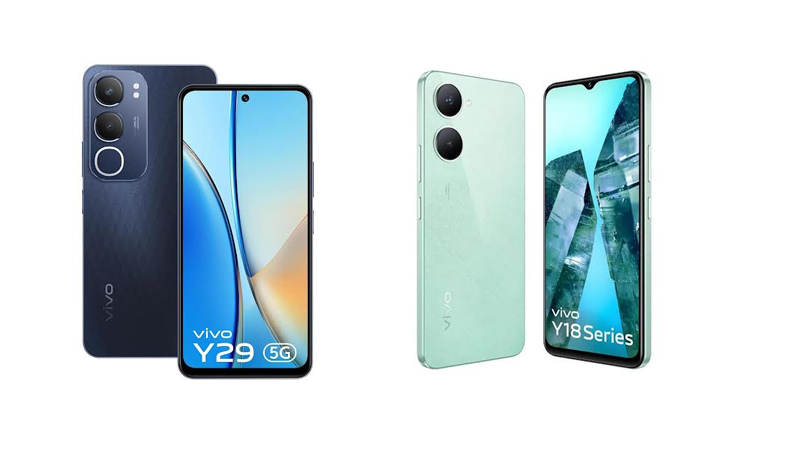
    MUMBAI: Zepto is calling the shots in the quick commerce game—literally! The fastest-growing delivery platform in India is now bringing smartphones straight to users’ doorsteps, expanding its electronics category with a selection of mobile phones starting 25 January 2025. As part of this launch, Zepto will feature the latest models from Vivo India, ensuring customers can get their hands on cutting-edge smartphones faster than ever.

    “At Zepto, our sellers are committed to offering quick, reliable, and affordable solutions for everyday needs. With this expansion, we are excited to collaborate with Vivo India and our Sellers to make mobile technology more accessible in a fast, seamless way,” said Zepto, business head for electronics, Abhimanyu Singh.

    Echoing the sentiment, Vivo India, head of online business, Pankaj Gandhi, said, “This partnership reflects our shared vision of making the latest mobile technology easily accessible to users across India through Zepto’s efficient platform.”

    Zepto will feature smartphones starting at just Rs 5,999 (inclusive of taxes). To sweeten the deal, an exclusive Icici Bank offer provides a flat five per cent discount (up to Rs5,000) on mobile purchases over Rs 5,000 valid until 31 January 2025.

  • Top 2024 Dhanteras Deals: Amazing Discounts on Smartphones, Laptops, and More!

    Top 2024 Dhanteras Deals: Amazing Discounts on Smartphones, Laptops, and More!

    The auspicious occasion of Dhanteras marks the beginning of Diwali. With the festive cheer right around the corner, this is the perfect time to upgrade to a new smartphone or purchase one for your loved ones. Dhanteras offers from Bajaj Finserv bring you unbeatable savings on a wide range of top-of-the-line products like smartphones, laptops, and more. With amazing discounts on personal gadgets and essential home appliances, you can celebrate the auspicious occasion of Dhanteras with affordably-priced, high-quality products. To make your purchase affordable, shop on Easy EMIs on the Bajaj Finserv EMI Network.

    This Dhanteras, you can enjoy exclusive offers and discounts on best-selling smartphones . You can enjoy discounts of up to 20% on the latest smartphones by shopping on the Bajaj Finserv EMI Network. Whether you’re looking to purchase a budget handset or a premium one, you can make the purchase feel ultra-light on your pockets with Easy EMIs starting from just Rs. 833! Moreover, you can enjoy massive savings on devices from top brands, including Samsung, OnePlus, vivo, OPPO, Xiaomi, and Apple. If you prefer Android models, you can choose from best-selling options like the Samsung Galaxy Z Fold 3 and Samsung Galaxy S21 FE. Alternatively, if you plan on purchasing an Apple smartphone, you can choose from options like iPhone 13 and iPhone SE.

    Enticing festive deals also extend to the latest laptops. You can score discounts of up to 60% on best-selling laptops as a part of the ongoing Dhanteras offers. The roster of models on discount is extensive, covering all top-selling brands like Lenovo, Dell, and HP. From budget-friendly Intel i3 student laptops to high-performing AMD Ryzen 5 gaming models, you can choose the ideal match from an extensive array of options with Easy EMIs starting from Rs. 2,321. So, if you’re due for an upgrade, you should seize these festive sale offers to upgrade to a new laptop without breaking the bank.

    The festive discounts do not end there. You can tap into amazing discounts and Easy EMI perks on a range of electronics, including air conditioners, refrigerators, air coolers, and washing machines. The Dhanteras Sale is live throughout October, allowing you to conveniently spread the cost of your big-ticket purchase into bite-sized EMIs across a flexible duration. Apart from hefty festive discounts, Bajaj Finserv EMI Network makes your purchase even more affordable with zero down payment benefits, cashback offers, and free home delivery perks on select models.

    Benefits of shopping with Bajaj Finserv

    1. Competitive prices: Enjoy great value for money with competitively priced products at any of the Bajaj Finserv’s partner stores.

    2.  Easy EMIs: Purchasing your desired product is simple with Easy EMI options, allowing you to choose a repayment tenure that suits your budget.

    3.  Zero down payment: For select products, benefit from zero down payment option, eliminating the need for upfront payment at purchase.

    4.  Options and accessibility: Choose from a wide variety of products available at Bajaj Finserv partner stores across multiple cities, offering unmatched convenience.

    You can opt for Bajaj Finserv’s financing options including Easy EMI and zero down payment schemes for financial ease and convenience. Break the cost into Easy EMI to enjoy a hassle-free shopping experience.

    *Terms and Conditions Apply

    Bajaj Finance Ltd. (‘BFL’, ‘Bajaj Finance’, or ‘the Company’), a subsidiary of Bajaj Finserv Ltd., is a deposit taking Non-Banking Financial Company (NBFC-D) registered with the Reserve Bank of India (RBI) and is classified as an NBFC-Investment and Credit Company (NBFC-ICC). BFL is engaged in the business of lending and acceptance of deposits. It has a diversified lending portfolio across retail, SMEs, and commercial customers with significant presence in both urban and rural India. It accepts public and corporate deposits and offers a variety of financial services products to its customers. BFL, a thirty-five-year-old enterprise, has now become a leading player in the NBFC sector in India and on a consolidated basis, it has a franchise of 69.14 million customers. BFL has the highest domestic credit rating of AAA/Stable for long-term borrowing, A1+ for short-term borrowing, and CRISIL AAA/Stable & [ICRA]AAA(Stable) for its FD program. It has a long-term issuer credit rating of BB+/Positive and a short-term rating of B by S&P Global ratings.

    To know more, visit http://www.bajajfinserv.in   
     

  • realme is all set to ‘Make it real’ with its revamped strategy

    realme is all set to ‘Make it real’ with its revamped strategy

    Mumbai: realme smartphone service provider announced their new slogan ‘Make it real’ in an open letter, Sky Li, Founder and CEO of realme, emphasised that this year will redefine realme’s brand standards. The letter highlights realme’s new mission, brand positioning, and spirit. Transitioning from an “opportunity-oriented” to a “brand-oriented” approach, realme is shifting its focus towards becoming a tech brand that resonates with young users.

    A tech brand that better understands young users

    Since its inception, realme has established its position with development strategy: to bring technologies and designs to young users worldwide. The brand aims to connect with more young users across various markets, leveraging its recognition among this demographic to elevate its standards even higher.

    Building on five years of success, realme is broadening its scope rather than changing direction. Leveraging its deep understanding of young users and steering the company’s development, realme is transitioning its strategy from trendy-based to a more inclusive and expansive one. This will steer its long-term investment and growth, enabling the brand to enhance its connection with a larger number of young users across various markets and global regions.

    As such, realme’s mission is to more concisely capture its future development aspirations: “To let young users around the world enjoy tech experiences that exceed expectations.” With increased focus and ambition, realme is poised to explore new possibilities and make breakthroughs.

    From “opportunity-oriented” to “brand-oriented”

    realme places the youth at its core and adheres to a user-centric approach, driving its competitiveness in three areas: product, technology, and brand strengths. This ideology will guide realme towards achieving long-term, high-quality growth.

    By planning to partner with over 30 leading tech companies and investing heavily in R&D in 2024, realme aims to bring the latest technology to its users. The brand aims to refine its customer insight process for a more dynamic experience. Focusing on the younger generation, realme will integrate user insights into ongoing brand and product development, creating a fluid and multi-dimensional brand experience.

    realme’s focus on product, technology, and brand strengths allows the brand to bring the latest technological advances directly to young users. This approach transforms its positioning as a tech brand that better understands young users from an idea into reality.

    Moreover, realme has also introduced a new slogan: “Make it real” that retains the spirit of “Dare to Leap” while placing greater emphasis on young users, aiming to bring real, clear, and tangible benefits to their lives.  

    As it moves into the next five years, realme pledges to stay true to its original intentions and grow alongside young people, aiming to be a tech brand that better understands their needs and aspirations to make it real

    For more information, please visit www.realme.com/in/  

  • Reliance Jio to roll out 5G services in major cities by Diwali

    Reliance Jio to roll out 5G services in major cities by Diwali

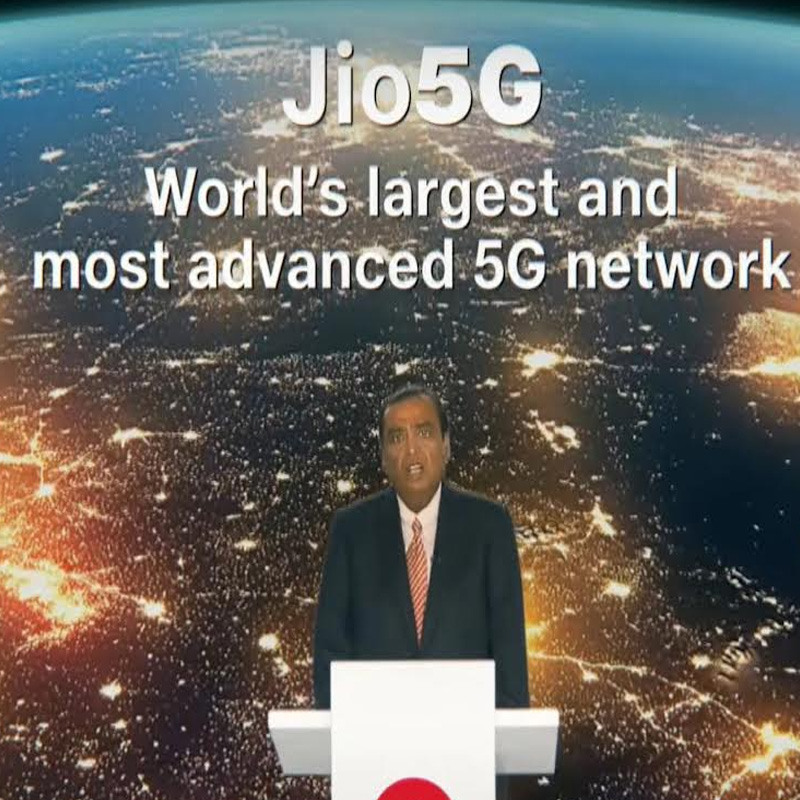
    Mumbai: On Monday, at the 45th annual general meeting, Reliance Industries announced that Jio has prepared an ambitious 5G roll-out plan, which is claimed to be the fastest in the world.

    Using immersive and interactive metaverse technology, Reliance chairman Mukesh Ambani addressed the shareholders at the AGM and made the announcement.
    The chairman’s statement also said that they have made a total investment of two 2 lakh crore rupees.

    He said, “Within the next two months, by Diwali, we will launch Jio 5G across multiple key cities, including the metropolises of Delhi, Mumbai, Kolkata, and Chennai. Subsequently, we plan to increase the Jio 5G footprint month after month.”

    “By December 2023, which is less than 18 months from today, we will deliver Jio 5G to every town, every taluka, and every tehsil of our country,” he added.

    The company unveiled the AirFiber, a wireless plug-and-play 5G hotspot that does not require fibre cables and provides a personal Wi-Fi hotspot at home or in the office.

    Reliance Jio chairman Akash Ambani said, “Jio 5G is an ultra-high-speed fixed-broadband. Since you get ber-like speeds over the air without any wires, we are calling it JioAirFiber. With JioAirFiber, it will be really easy to quickly connect your home or office to Gigabit-speed Internet. We have developed a JioAirFiber Home Gateway, which is a wireless, simple, single-device solution.”

    Mukesh Ambani further added, “Digital Freedom is the birthright of every Indian. Therefore, 5G cannot remain an exclusive service, available only to the privileged few or only to those in our largest cities. To build our pan-India true 5G network, we have committed.”

    “We are working with Google to develop ultra-affordable 5G smartphones for India. We will also leverage the advanced capabilities of Google Cloud to offer Jio’s private 5G stack and other 5G-enabled solutions to both domestic and global users at scale,” said Akash Ambani.

    Jio has 421 million mobile broadband subscribers on their 4G network, and according to the company, they consume, on average, nearly 20 GB of broadband data every month, nearly doubling their consumption from the year before.

    Jio’s pan-India fibre-optic network is more than 11 lakh kilometres in length.

    “We will use our combined wireless and wireline assets to cover 3.3 million square kilometres, India’s total land mass, with fibre-quality broadband, connecting even those parts of the country where satellite technology was the only option,” said Mukesh Ambani.

    The company has deployed the Made-In-India 5G stack in their network, with sufficient capacity to serve hundreds of millions of users right from day one.

    “Using 5G technology, we can dramatically reduce latency or lag, and deliver breakthrough increases in broadband speed, network capacity, and the number of connected users,”  said Mukesh Ambani.

    According to Reliance Jio, the main objective is to roll out top-quality, highly affordable fixed broadband services to hundreds of millions of locations in a very short period of time.

    Jio believes it could expand broadband availability to further stimulate the adoption of connected intelligent solutions across all walks of life.

    Mukesh Ambani said, “We will connect over 100 million homes with unparalleled digital experiences and smart home solutions. We will catapult tens of millions of small merchants and small businesses to great heights, empowering them with cutting-edge, plug-and-play solutions delivered from the cloud. We will provide millions of medium-sized businesses with the same digital capabilities that were earlier available only to larger companies.”

    “We will accelerate the digital transformation of tens of thousands of our large enterprises and make them globally competitive. And we will launch billions of smart sensors with connected intelligence that will trigger the internet of things and fuel the fourth industrial revolution,” he concluded.

    In FY22. Reliance Industries has continued to make all-around progress across its businesses. The company became India’s first corporate to cross $100 billion in annual revenues. Reliance’s consolidated revenues grew 47 per cent to Rs 7.93 lakh crore. Reliance’s annual consolidated Ebitda crossed a crucial milestone of Rs 1.25 lakh crore.

  • Short-form video app, Tiki will grow its users to 60 mn in 2022, says CEO Ian Goh

    Short-form video app, Tiki will grow its users to 60 mn in 2022, says CEO Ian Goh

    Mumbai: The growing insatiable hunger for online videos will augment the long-term growth of short-form video market and likely increase the monetization opportunity for the industry to worth $19 billion by 2030, according to a recent report by global consulting firm Bain & Company.

    Similarly, Resheer, the management consulting firm’s report highlighted that India has approximately 640 million internet users and 550 million smartphone users spending nearly 1.3 trillion hours online. Smartphone users also spend about 4.8 hours per day on their devices, with an hour spent watching videos on average. This is second to China, which also has a huge consumer-base for smartphones and internet users. The report added that India is currently witnessing 300 million users of short video apps; it could rise to 600 million by 2025.

    While discussing the short-form video app Tiki’s CEO Ian Goh about the market opportunities of short-form video, he believes that visibility and recognition are the biggest challenges that creators are facing currently. He adds, “To grow the community, they need to support one another.”

    After the government’s imposition of a ban on the Chinese app TikTok, it has been observed that other Indian short-video apps have grabbed almost 97 percent of the former’s user base and considerably expanded the addressable market for short video apps, thanks to aggressive marketing strategies & user acquisition. 

    The Redseer also shared that the Indian apps have successfully retained 67 per cent of the TikTok subscribers by acquiring influencers and have added another 30-35 per cent of new users in the past year.

    Singapore-based DOL Technology’s Tiki, which was launched in 2021, is a “glocalised” platform that aims to redefine the standard for short video creation & sharing. It has millions of monthly active users in India. Since the last few months of operations, Tiki has become a platform where people come for the content but stay for the community. Tiki aims to cultivate an environment of “authentic entertainment, peer-to-peer support, and community.” 

    The platform’s vision is to help India’s talented content creators make a living doing what they love. Until today, Tiki has successfully on-boarded thousands of verified creators who produce great content for Indian users. Tiki also allows users to become verified Tiki creators through an easy-in-app application verification process. 

    In its quest to become the most preferred short-video app in the country, Tiki is developing two competitive mega-genres: Show-Yourself and Short Series, and sub-genres under them. The Show-Yourself genre includes lip syncing, dancing, music, dubbing, dress-up, etc., while short series feature melodrama (romance, friendship, family, patriotism, mystery, horror, action, etc.) and comedy (sketch comedy, spoofs, parodies, pranks, standup, epic fails, etc.).

    Tiki operates on three broad models:

    1. Content First Platform—Aids in the journey of true content creators.

    2. Real Original Content: Supports locally made, original, high-quality content that honours Indian values and cultures and that is also entertaining, inspiring, and educational.

    3. Community: Tiki’s platform for fostering relationships between creators and fans.

    The short-video app is focusing on the right kinds of tools, effects, filters, and video-editing capabilities to help create better content and retain top creators on the platform. In addition to that, the app is also trying to build stronger communities to promote Indian artists and creators.

    Indiantelevision.com caught up with Tiki’s CEO Ian Goh to find out more. He is an entrepreneur with a passion for building and launching tech ventures across Asia.

    He previously launched OYO’s business in Malaysia both on the demand (revenue/sales) as well as supply-side and extended it to other Southeast Asia (SEA) markets. He was also a pioneer in oBike-a Global Dock-less Bicycle Sharing startup for the Asia Pacific Region & Rush-a Scooter and Powerbank sharing startup.

    Goh grew up in a city in Borneo, Malaysia and pursued his education in Singapore and pursued his business degree at the University of Melbourne. He currently resides in Singapore.

    Edited Excerpts:

    On the trends being seen in the content creator economy in the country

    Ian: According to a recent report by RedSeer, short-video apps are expected to double their monthly active user base to 600 million by 2025 and to 850-900 million users by 2030. Today, everybody is a content creator, and people from tier two and three cities are also joining the league, aspiring to become professional creators.

    With a plethora of creators, the originality of content is lost under the pile of crawler content. Visibility and recognition are the biggest challenges for creators. Therefore, if they need their communities to grow, they need to support one another. They form their own communities, doing social good and trying to get recognised by a larger audience.

    On the idea of Tiki

    Ian: I have always been passionate about short videos. While there are other short video apps in India, we wanted to bring something that could help the creator economy and build a community of true talent. We found a gap in India in terms of the short-video creator economy. There are creators in every corner of the country, and many times, creators are left without a platform that appreciates them.

    Local creators also deserve a better platform for exposure. Therefore, we created an app that is “Made in India” for the real Indian content creators. We are the pioneers of promoting original content creators, which makes us stand out in the cluttered zone.

    On the Tiktok ban benefited Indian short video apps

    Ian: The sudden ban on TikTok created a void for Indian creators. It was a golden opportunity for many platforms to venture into the Indian market, but the creators were not well served. So, while the ban may have benefited Indian short video apps, it is difficult to say that it benefited Indian creators. Creators are still facing many obstacles: the growth of talented creators; plagiarised content; and no creator community.

    On Tiki’s USP vis-a-vis competition

    Ian: Today, online creators have the advantage of pursuing what they love and monetizing through their talents. But they desire more than easy money. They want their originality to be honoured and to earn their own fame with their talents. Tiki is a platform that fulfils the creators’ demands. We are the creators’ first platform.

    We prioritise 100 per cent original content. Every piece of content that goes on Tiki cannot be copied from anywhere else. No one can copy others’ content and put it on Tiki. We also focus on the power of community and have created a community of real talent who meet up with each other and support one another to become a star. Our monetisation model is fair and open. We bank on a fan economy, where a user can give stars to the creator.

    On Tiki’s 3-pillars that aim to empower the content creator community
    Ian: Tiki empowers its creators based on three broad pillars: Fame as a Service, Star Monetisation, and Creator-oriented Community.
    Fame as a Service: Based on Maslow’s Hierarchy of Needs, self-actualisation and esteem are at the top. Tiki translates that as fame for creators on the platform and even outside. Humans are always seeking to accumulate social capital. Tiki has designed a creator ecosystem in which everyone can be verified to join. Anyone can rise through the ranks to become a White V creator, then a Gray V, and finally a Blue V top influencer on Tiki.
    Tiki innovated and continues to manage the ecosystem so that the truly talented can break through. Tiki helps its verified creators along their hero journey by providing 100 percent of its traffic, constantly updating functions and stickers, and helpful managers, all in order for creators to fully express their creativity, be famous, and popular. Tiki calls it Fame as a Service (FaaS).

    Star Monetisation: Instead of the traditional black box model of paying creators, Tiki innovated a performance-based mechanism that is transparent and fair to the talented ones.

    Creator-oriented Community – It’s never only about getting famous and making money. Creators are also here to make friends and socialise with others. Now they’ve formed over 500 family guilds on Tiki. Some are holding panels to share video shooting skills, others are organising offline meetups for a shared interest or a charitable event. Every month, the Tiki community organises over 1000 offline meetups and 20,000 online meetups.

    For instance, three family guilds had offline cleanups and tree planting on Earth Day. Tiki sponsors verified meetups for creators to entertain and learn within the community. Tiki provides creators with a safe and family-like community to explore more opportunities and benefits with their peers.

    On Tiki’s monetisation model
    Ian: At Tiki, we don’t follow the traditional black box model of paying creators; we’ve innovated a performance-based mechanism that is transparent and fair to the talented ones. The money they earn is only defined by the stars they gain from users. Star is a feature Tiki designed for users to send to their favourite creators or content.
    Different from the “like” culture, which has been inflated and even abused on many other platforms, Star on Tiki can be viewed as a thoughtful and sincere vote from a user to a creator. Star can be earned via short videos, profile pages, and live broadcasting. Further, we would like to explore the fan economy, social commerce, and brand collaboration as monetisation models for our creators.

    On efforts to create an environment of authentic entertainment, peer-to-peer support, and community

    Ian: We are a “Make in India for India” platform that focuses on improving the Indian creator economy. We aim to create a platform where local talents are appreciated for their originality. For this, we have generated software that can detect the copied content. We have an experienced local team headed by Abhishek Dutta to do creator verification to make sure all verified creators are real and upload original content.

    On Tiki’s plan to reach 60 million users by the end of the year

    Ian: Tiki started with only 120 content creators in the beginning but now boasts of having over four lakh content creators on board in a matter of 1.5 years in India. Our aim is not to scale up to 120 million users overnight. We focus a lot on time spent on the app and the retention rate of users.

    The industry average for time spent on short-form video apps is 20 minutes. People spend close to 22 minutes on Tiki every day. Therefore, by the end of 2022, we intend to reach 60 million users. We will continue to empower local creators and bridge the online and offline gap via community meetups.

    On the strategy that ensures that only original content is on Tiki

    Ian: Short video platforms are in abundance in India, and many of them do not emphasise the originality of the content. Different from the flood of crawler content on other platforms, Tiki stands strong for locally made, original, high-quality content that honours Indian values and cultures and is also entertaining, inspiring, and educational. Tiki manages to do it with its in-house developed creator verification system and strict content moderation standards.

    On the content that works on Tiki

    Ian: Our insight tells us that crawler content, vulgar content, non-original content, and even indecent content are prevailing on many other platforms. That’s where we want to position Tiki differently.

    Tiki discovered and developed two competitive mega-categories: ‘Show-Yourself’, and ‘Short Series.’ The ‘Show-Yourself’ genre is all about showcasing one’s talent. It includes lip syncing, dancing, music, dubbing, fashion, etc. While the ‘ShortWhile Short Series’ category features bite-sized video stories, sub-genres include: melodrama (romantics, friendship, family, patriotism, mystery, horror, action, etc.) and comedy (sketch comedy, spoofs, parodies, pranks, standup, epic fails, etc.). All the content on Tiki is original and created by real local creators in India.

    On the whitespace of tier two, and three cities

    Ian: India is on the cusp of the golden age of short-form video platforms. The size of the short video market is expected to grow from 240 million to 650 million in 2025 as many tier two and three cities’ users are embarking on the journey of content creation. Instagram has become too saturated to grow an easy follower base. Many short video creators can amass five million Tiki followers but only 20,000 on Instagram. With our real creator ecosystem, we believe many new talents will be discovered through Tiki.

    On whether a shakeout is imminent given the competition

    Ian: There is healthy competition in the creator space, and we have to stick to our USPs to support the creators. The shakeout would happen to those that do not add value to the stakeholders.

    On the potential Tiki sees in social commerce and branded content

    Ian: According to EY India, social commerce currently accounts for one per cent to 1.5 per cent of overall e-commerce. The share of social commerce is expected to go up to six per cent by 2025. Social commerce is not a competitor to e-commerce but an important extension of it. Tiki sees potential in social commerce in the near future, but first it’s about building a healthy creator-user ecosystem.

    On fundraising plans

    Ian: Yes, we are open to funding and looking for investors who share the same vision and cherish the same values as us—creators deserve a better platform to thrive through their talents. Investing in Tiki is investing in the creator economy.

    On the challenge of scaling up rapidly

    Ian: There are many short video apps in India claiming to be number one in the market. However, we believe that the challenge is not about its speed or scale but whether it’s sustainable or not. We want our creator and content ecosystem to grow consistently, benefiting our creators. We want to be a powerhouse for the Indian creator economy.

    Therefore, our challenge is to scale up while remaining sustainable. We will stick to our creator first principle, providing our creators with monetisation channels and helping them grow and thrive.

  • XtraCover announces appointment of Anirudh Singhania as its new chief technology officer

    XtraCover announces appointment of Anirudh Singhania as its new chief technology officer

    Mumbai: XtraCover, a new-age e-commerce platform catering to the lifecycle management services of smartphones and other electronic devices, has announced the appointment of Anirudh Singhania as its new chief technology officer (CTO) to strengthen the company’s technological prowess.

    Singhania has more than 25 years of experience in creating technology solutions, hatching growth strategies and leading high-performing software engineering teams. Prior to joining XtraCover, Anirudh was part of the founding team of Lulu and Sky Private Limited as the Chief Technology Officer. He also built dharma.h Software Technologies. Furthermore, he has worked with multiple tech startups from the stage of ideation to exit.

    Also read: Geo-targeted campaigns ramp up as brands go hyperlocal

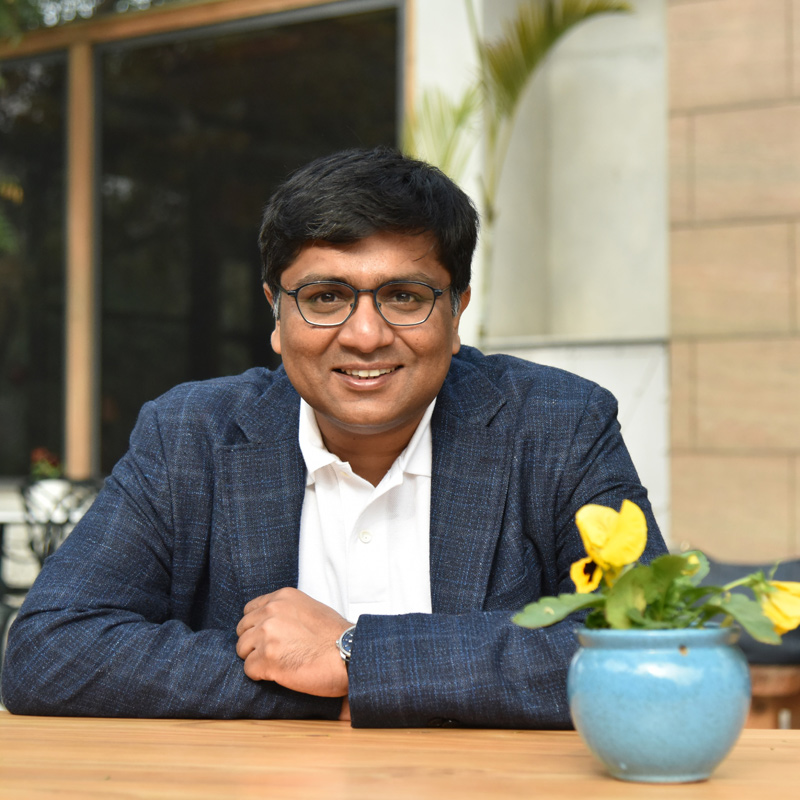
    On the appointment XtraCover CEO & founder Soumitra Gupta commented, “As we prepare for our next stage of growth at XtraCover, we are thrilled to welcome Anirudh to our executive team. Anirudh’s extensive experience developing technology solutions and leading engineering teams in the IT and e-commerce space make him ideally suited to strengthen the company and drive growth to the XtraCover business.”

    In the new CTO role, Singhania will be responsible for integrating and advancing XtraCover’s technology platform. He will drive forward the technical vision for the business in delivering a range of after-sales services to buyers of refurbished electronic gadgets. His expertise in application development, artificial intelligence, machine learning, and digital marketing and strategy will help XtraCover accelerate technological and business growth.

    Commenting on his new role at XtraCover, Anirudh Singhania said, “I am extremely excited to contribute to the vision and opportunity to scale at XtraCover. XtraCover has a great culture and I am looking forward to leading and mentoring this team of talented people. My deep technical and leadership experience will enable me to build and execute strategies that propel the business and exceed the needs of our customers.”

    Launched in 2019, XtraCover is an e-commerce platform that caters to the lifecycle management services of smartphones and other electronic devices. Operating in the B2C and B2B2C segments, the company offers services such as price discovery and comparison for new appliances, warranty support, refurbished device warranty, accidental damage and protection and repair and refurbishment services, among others. The e-commerce platform aims to create awareness in the Indian ecosystem to make refurbished devices a valued choice, if not the first choice.

    Witnessing a paradigm shift in the market growth of refurbished products since the global pandemic, XtraCover has clocked a revenue of over Rs 100 crore in FY 2022. With an aim to continue this growth trajectory, the company intends to surpass the Rs 275 crore target revenue in FY 2023. Additionally, the e-commerce platform plans on increasing its global outreach through export-oriented units (EOU) in India.

  • The global online video streaming industry is expected to reach $1.6 bn by 2027: Study

    The global online video streaming industry is expected to reach $1.6 bn by 2027: Study

    Mumbai:  A new study has been added to ResearchAndMarkets.com’s collection titled “Online Video Platform Market: Global Industry Trends, Share, Size, Growth, Opportunity and Forecast 2022-2027.” In 2021, the market for online video platforms reached a size of $792 million. Looking ahead, ResearchAndMarkets.com projects that the market will grow at a CAGR of 12.59 per cent from 2021 to 2027, reaching $1.6 billion. 

    The company stated that it is continuously tracking and evaluating the direct as well as indirect influence of the pandemic on various end use industries while keeping in mind the uncertainties of Covid-19. These observations are cited in the study as a significant market contributor.

    An online video platform (OVP) enables a user to stream video content and upload self-produced material over the cloud or the internet. It is primarily used to achieve and manage the uninterrupted delivery of content to an audience around the world.

    At present, a significant amount of OVP viewership is generated through devices such as smartphones and tablets that use a dynamic HTML player, allowing the viewers to access live or pre-uploaded material at any point of time. OVPs are also extensively being used by brands to create a market presence worldwide and provide information to their customers in an interactive manner.

    The increase in internet penetration rate as well as the usage of smartphones, smart televisions (TVs), tablets and personal computers (PCs), along with the rising expenditure on online advertisements, are the key factors driving the market’s growth.

    Furthermore, the inclination of the market leaders to utilise online videos as a medium for content marketing and stakeholder communication is also driving the demand for OVPs. The shift of consumer viewership from conventional video platforms such as cable television (TV) to OVPs has positively influenced the market growth.

    Additionally, the ever-growing popularity and continuously increasing global viewership of market players such as YouTube, Dalet Digital Media Systems USA Inc, MediaMelon, and Limelight Networks are also contributing to the market’s growth.

  • Content consumption on OTT apps increases the growth of smartphone users, finds ZEE5 Intelligence Monitor research

    Content consumption on OTT apps increases the growth of smartphone users, finds ZEE5 Intelligence Monitor research

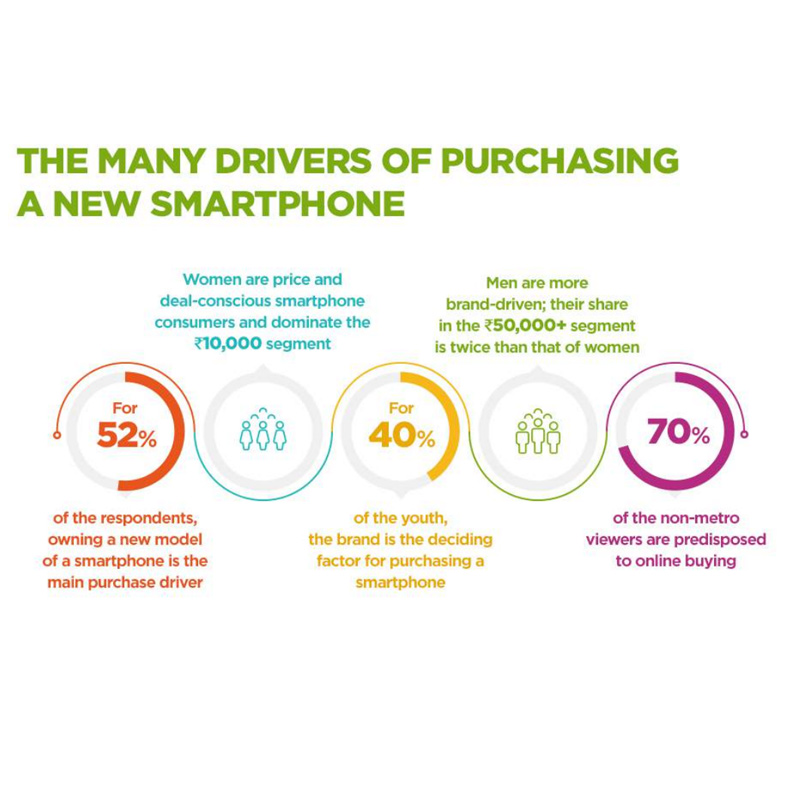
    Mumbai: Over 50 percent of smartphone users in the metros are planning to replace their gadgets within the next six months, according to a research conducted by the OTT platform ZEE5.

    In its fourth edition knowledge series ‘ZEE5 Intelligence Monitor’ report, the video streaming platform highlighted the latest trends prevailing in the Indian smartphone industry.

    The ZEE5 research discovered the consumption of an exciting and wide variety of content on OTT apps is another new driver for this upward movement. The post-covid trend is to grab the latest model; with latest features’ scoring well above price as the key motivator.

    The research also found that brand reputation, features and technology are the leading factors that determine consumers’ preferences. Moreover, two out of five viewers intend to purchase a phone which costs Rs 30,000 or above; with a higher tendency among the 35-44 age group. Besides uncovering the fascinating new consumer behaviour and the contrasting preferences between metro and non-metro consumers in their smartphones’ purchase and usage, the ‘ZEE5 Intelligence Monitor – Smartphones Consumer Insights and Trends Report’ also highlighted the symbiotic relationship between smartphones and OTT platforms.

    Launching the report, ZEE Entertainment Enterprises chief operations officer – revenue Rajiv Bakshi said, “By deep diving into the smartphones segment, we have unearthed amazing new insights on user behaviour which can lead the brand marketers to attract millions of customers eager to upgrade and replace their smartphones. We hope this report will act as a guidebook for marketeers and smartphone brands and serve to be distinctive for the industry at large. Marketers and business leaders can use these findings to make smarter business decisions and hyper-target campaigns utilising the ZEE5 platform to connect with audiences in 12 languages.”

    The report also said that 70 per cent of the non-metro respondents are inclined to buy their next smartphone online. The research revealed that men are more brand conscious and have twice the share of women consumers in the Rs 50,000+ segment. Women appear price and deal-conscious & dominate the Rs 10,000 segment.  

    ZEE5 Intelligence Monitor report also uncovered transformative consumer behaviour, attitudes, and aspirations across multiple industries ranging from e-commerce, EdTech, and online gaming to smartphones, presenting an unmatched opportunity to advertisers to access a hyper-enriched predisposed audience cohort across multiple demographics and geographies.

  • Google to invest $1 billion in Airtel

    Google to invest $1 billion in Airtel

    Mumbai: Bharti Airtel and Google on Friday announced that the latter intends to invest $ one billion in the telecom major as part of its Google for India Digitisation Fund which includes equity investment as well as a corpus.

    The investment will be for potential commercial agreements to be identified and agreed on mutually agreeable terms over the next five years. This will comprise a $700 million investment in Bharti Airtel at a price per share of Rs 734. Up to $300 million of that will go towards implementing commercial agreements which will include scaling Airtel’s offerings. Google will acquire a 1.2 per cent shareholding of Bharti Airtel including partly paid shares.

    The deal will be subject to regulatory approvals.

    “Airtel and Google share the vision to grow India’s digital dividend through innovative products,” said Bharti Airtel chairman Sunil Bharti Mittal. “With our future-ready network, digital platforms, last-mile distribution and payments ecosystem, we look forward to working closely with Google to increase the depth and breadth of India’s digital ecosystem.”

    Airtel and Google will work together to explore opportunities to bring down barriers of owning a smartphone in partnership with various device manufacturers, potentially co-create India-specific network domain use cases for 5G and other standards and focus on growing and shaping the cloud ecosystem in India.

    “Airtel is a leading pioneer shaping India’s digital future, and we are proud to partner on a shared vision for expanding connectivity and ensuring equitable access to the Internet for more Indians,” said Alphabet and Google CEO Sundar Pichai. “Our commercial and equity investment in Airtel is a continuation of our Google for India Digitization Fund’s efforts to increase access to smartphones, enhance connectivity to support new business models, and help companies on their digital transformation journey.”