Tag: Smartphone

  • ‘RentoMojo Upgrade’ is the Best Possible Way to Own a Smartphone

    ‘RentoMojo Upgrade’ is the Best Possible Way to Own a Smartphone

    MUMBAI: RentoMojo, a pioneer in lifestyle subscription and consumer leasing business, introduces an industry-first mobile upgrade feature, enabling users to change their smartphones every 12 months, at 60% of market value. The cost associated with purchasing a branded phone largely impedes people from trying new models before 18 or 24 months of use, making RentoMojo’s upgrade feature, the best possible way to own a smartphone in India today.  

    Customers can select the latest smartphones from Apple, Samsung, OnePlus, Google, Redmi, Vivo, Oppo, Nokia and Honor, from RentoMojo’s catalogue and acquire it on lease for 12 or 18 months, by paying their rental monthly instalments (RMI). The total RMI paid for 12 months, equals about 60% of the price of the phone, post which the user has the option of returning the device to obtain the latest one in the market. Through this facility, users spend significantly less than an outright purchase, or through EMI’s, with additional benefits such as 100% data security and maintenance, among others. It also enables users to be up-to-date with devices and technology, and clearly demonstrates the advantages of subscription, over purchase.

    Speaking on the occasion, Geetansh Bamania, Founder & CEO, RentoMojo, said, “The sales of smartphones will continue to rise as it is no longer a lifestyle choice, but an essential, integrating a number of vital facilities, including banking, shopping, payments, booking, among others. People are hence unwilling to compromise on devices and latest technology, to ensure safety and hassle-free user experience. RentoMojo’s mobile upgrade proposition, makes this possible at about half the cost of traditional buying.”  

    “We have seen the sales of premium smartphones booming over the last three years and this year, a lot of people will be looking at changing their phones, making this the best time to launch RentoMojo’s upgrade feature” – he added.

    According to the recent reports, the growth in sales of smartphones is expected to continue, despite the current economic stress, with the cumulative industry growth expected to reach double digits. The number of smartphone users in India is expected to reach 859 million by 2022, registering 84%. The average price of a premium smartphone in India is Rupees 35,000 and 40% of the users want to change their phones within 12 months of purchase.

    Apart from mobiles, RentoMojo also offers household appliances, furniture, and electronic devices on lease for flexible tenures, beginning from 6 months onwards. The RMI payable on these products factor in the tenure, with lesser monthly pay-outs on longer tenures and vice versa. By creating an innovative financial option in the form of RMI, RentoMojo has made a mark for itself in the fintech lending space. It has also implemented advanced algorithms using Machine Learning, for risk assessment and optimum stock utilization.  

  • Smartphone brands to spend Rs 330 crore on digital marketing in 2019

    Smartphone brands to spend Rs 330 crore on digital marketing in 2019

    MUMBAI: 34 per cent of the digital marketing spend by smartphones in 2019 will be done to improve search results including keyword bidding and SEO. This is according to the findings of TechARC's first edition of ‘Smartphone Digital Marketing in India’ that gave an overview of how the smartphone brands are spending over various platforms.

    Social media marketing would consume 26 per cent of the digital marketing budgets for smartphones in 2019. Similarly, 24 per cent, 10 per cent and 6 per cent would be spent on performance marketing, programmatic marketing and influencer marketing respectively during the period.

    Smartphone brands will cumulatively spend over Rs 330 crore on digital marketing in India. 72 per cent of this spending will be consumed by digital marketing over mobile platforms with the remaining being spent on web platform marketing.

    TechARC founder and chief analyst Faisal Kawoosa said, “Digital is increasingly becoming the preferred mode in marketing of smartphones as it helps brands to establish an engaging connect with the millennials, who are either the buyers or influencers for smartphones.”

    The report enumerates the advantages as well as challenges of digital marketing for smartphones. Among the key advantages digital marketing offers include call-to-action and rich media messaging to compliment a product like smartphone, where a brand wants to communicate a lot many details.  At the same time, the main challenges remain of creativity and innovation besides ad-fraud which results in the inefficiencies of digital marketing, reducing the RoI as well as hurting the brand image.

  • Vivo launches V9 with Aamir Khan

    Vivo launches V9 with Aamir Khan

    MUMBAI: Handset maker Vivo, has launched Vivo V9, its first flagship smartphone in India with the brand’s new India ambassador Aamir Khan. The phone is designed for the millennials who seek the best smartphone experience.

    Priced in the mid-level segment of Rs 22,990, the smartphone will be available across all offline stores from 2nd April, 2018and can be pre-booked in all retail stores, on Vivo E-store, Flipkart, Amazon and Paytm Mall.

    The company has launched 3 campaigns to promote the product with Aamir Khan. Conceptualised by media agency Ogilvy, the tv campaigns will air across all leading channels. The company will also roll out bumper ads on digital about the product. V9 will be promoted through an extensive 360-degree marketing campaign which will include television, digital, OOH and on-ground activations.

    The device will be available for pre-booking from 23rd March with attractive offers across all offline stores in India and e-commerce platforms such as Amazon, Flipkart, Paytm Mall and Vivo’s official e-store (http://shop.vivo.com/in/).

    Customers who book the phone online through Amazon, Flipkart, Paytm Mall and Vivo’s official E-store from 23rd  March to 2nd April 2018are eligible for one-time screen replacement for V9, in case of any accidental damage to the display. Additionally, consumers can avail a discount of Rs 2000 if the smartphone is bought under an exchange policy. For customers buying the phone on EMI, the partner e-commerce platform will offer no-cost EMI for up to 12 months.

    The smartphone sports dual rear camera of 16MP + 5MP, features such as 19:9 FullView display 2.0 and the industry’s highest screen-to-body ratio of 90 per cent, beating iPhone X which has a screen-to-body ratio of 81.49 per cent.

    public://180314-vivo-v9-notch-smartphone-01.jpg

    Vivo India CEO Kent Cheng says, “With the class-leading design and camera capabilities of Vivo V9, we have once again delivered a product that is high on innovation and quality. We are confident that our latest flagship will set new benchmarks in the smartphone industry and further solidify our leadership position in the market.”

    Chinese mobile brand Vivo entered India in late 2014. With a strong focus on camera and music, Vivo has established itself as one of the top smartphone brands in India.

    With a manufacturing unit in Greater Noida, the company has a robust distribution network across the country both online and offline, catering to over 400 cities, in 22 states backed by 400 service centres in India.

    A youth brand, Vivo became the title sponsor of the Indian Premier League for 2016 and 2017 and recently bagged the title sponsorship for the next five years. It is also the title sponsor of Pro Kabaddi for five years since 2017 and is the official sponsor of 2018 and 2022 FIFA World Cups.

  • The year the telecom sector quaked

    The year the telecom sector quaked

    An interplay of myriad factors contributed to India’s telecom industry witnessing both turmoil and revolution in 2017. Consolidation was the buzzword as some of the largest telecom operators merged even as Reliance Jio Infocomm Ltd (RJio) emerged as a frontrunner for Reliance Communications’ (RCom) assets according to reports. RJio can also take credit for ushering in a data revolution in the country.

    Moreover, smartphone penetration during the year increased three-fold with the aggregate number of users at more than 300 million. With smartphones still accounting for less than 50 per cent of handset users (650 million) in the country, another surge in data consumption is on the anvil.

    The price war

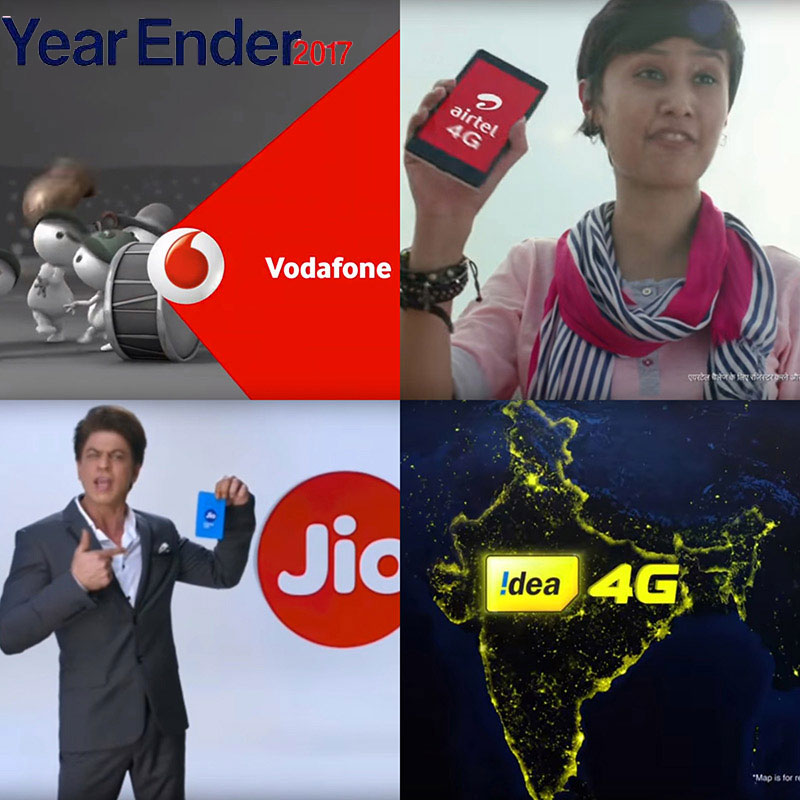
    Indian tycoon Mukesh Ambani sparked a price war in 2016 with the launch of Reliance Jio. As a consequence, the country’s large telcos have been burning through cash this year to hold on to their market share. Vodafone and Airtel tried luring customers through cheap data and unlimited calling offers. Reliance Jio, however, clearly won that battle. Within the first month of commercial operations, Jio announced that it had acquired 16 million subscribers. This was the fastest scaling up by any mobile network operator anywhere in the world. The operator crossed the 50 million subscriber mark 83 days from its launch, crossing 100 million subscribers on 22 February 2017. By October 2017, it had around 130 million subscribers. 

    With telcos looking to push for higher data pack purchases, 4G became cheaper than 3G. Today, 4G data costs are as low as 1 paisa per MB.

    Sectoral consolidation 

    From as many as 13 players at one point in time, we are now left with just five major contenders even as RCom sits on the brink of leaving the fray. Earlier this year, Vodafone India and Idea Cellular decided to merge operations to create India’s largest telecom operator worth more than $23 billion beating Sunil Bharti Mittal-led Airtel. With this deal, Vodafone India’s valuation stood at Rs 82,800 crore and Idea’s at Rs 72,200 crore. 

    RCom, reeling under a debt of around Rs 46,000 crore, shut down its voice services from 1 December 2017 after it failed to close its wireless business merger deal with Aircel. The Telecom Regulatory Authority of India (TRAI) has issued a directive to RCom’s customers to move to other networks by the end of this year. Vodafone, Airtel, and Jio created special packs for RCom customers to lure them to their networks. 

    Telcos and handsets 

    In July 2017, Jio introduced JioPhone–the company’s first affordable 4G feature phone powered by KaiOS. The phone was made available for a security deposit of Rs 1500, which could be reimbursed on returning the phone after three years. This phone was released for beta users on 15 August 2017 and pre-booking for regular users started on 24 August 2017. 

    To strengthen its presence amidst the battle for market share, Airtel launched Android-powered 4G smartphones in partnership with Indian cellphone manufacturer Karbonn Mobiles. Airtel also partnered various other mobile handset manufacturers, including Intex, to create an ‘open ecosystem’ of affordable 4G smartphones.

    Not one to be left out of the party, Vodafone and domestic handset maker Micromax came together to offer a smartphone priced a shade under Rs 1000 with a three-year rider.

    Internet of Things

    Despite posing privacy risks, Internet of Things, or IoT, remained one of the buzzwords in tech circles this year. According to Vodafone Plc’s annual IoT barometer report 2017-18, the percentage of companies with more than 50,000 connected devices active has doubled in the last 12 months with over 84 per cent of IoT adopters saying that their use of IoT has grown in the last year. From the Indian organisations that were a part of the study, 81% felt that IoT was key to digital transformation.

    In India, Vodafone marked itself as the first brand to undergo this evolution. The telco repositioned itself as a contemporary and future-fit brand. It is a significant metamorphosis for one of India’s most iconic and loved brands since the ‘Power to you’ tagline was introduced in 2009. This new positioning, a part of Vodafone’s rebranding exercise across 36 countries, is designed to underpin its belief in new technologies and digital services playing a positive role in transforming society.

    Net neutrality  

    In what was seen as a sign of things to come, the US Federal Communications Commission voted in December to scrap net neutrality, which requires internet service providers to treat all internet traffic equally. The TRAI, not too long after, came out in strong support of net neutrality in a series of recommendations following a long process of consultations on the issue. The regulator believes that the licensing terms should be amplified to provide explicit restrictions on any sort of discrimination in internet access based on the content being accessed, the protocols being used or the user equipment being deployed. 

    With IoT being the talk of the town, networks fighting to grab RCom’s assets and customers, and an ongoing telco war between Airtel, Vodafone, and Jio to become the country’s numero uno operator, it will be interesting to watch how the industry shapes up in 2018.

  • Vivo becomes FIFA’s smartphone sponsor in a six-year, US$ 450m deal

    MUMBAI: Football is one of the most fascinating sports, and the FIFA World Cup one of the top global sporting competitions. The global smartphone brand Vivo announced its agreement with International Federation of Association Football (FIFA) to sponsor the FIFA World Cup for six years, covering two tournament cycles.

    FIFA reportedly secured the vital financial support of the smartphone maker in a US$ 450 million (EUR 400m) sponsorship deal. According to people in the know cited by Financial Times, Vivo will pay about EUR 60m– EUR 70m a year to sponsor tournaments run by FIFA until the 2022 cup in Qatar. FIFA has in the past lost several big-time sponsors, such as Sony and Emirates, when their contracts expired.

    Vivo, which is the sponsor of the recently-concluded Indian Premier League (IPL) and the ongoing Pro-Kabaddi League in India, has been presented as FIFA’s official smartphone sponsor under an agreement that will cover the next two editions in 2018 and 2022. As one of the world’s largest sporting events, the FIFA World Cup has tremendous influence and worldwide coverage. Apart from IPL and PKL, Vivo’s previous involvement in sport includes a strategic partnership with the NBA to become NBA China’s official mobile handset sponsor.

    Vivo became FIFA’s twelfth sponsor for the 2018 World Cup. Before the previous tournament in Brazil, FIFA had 20 corporate partners on board, which supported payment of of US$ 2bn cost of running the event.

    The announcement was made in Beijing at the historical and iconic Imperial Ancestral Temple in the presence of Vivo executive vice-president Ni Xudong and FIFA secretary-general Fatma Samoura. Vivo’s persistent focus on constant improvement was attractive to organizers of the FIFA World Cup. Vivo became the third Chinese company to sponsor the World Cup in 2017-18 after Wanda and Hisense.

    Vivo will sponsor the 2018 and 2022 FIFA World Cups as well as the FIFA Confederations Cup. The global reach of this partnership is set to take Vivo to new heights. The Vivo logo will appear during every match on pitch advertising boards, match tickets, media releases and other key promotional platforms. The agreement includes special marketing activations such as the right to select guests to be a Vivo phone photographer during pre-match player warm-ups. Vivo will also gradually introduce a customised FIFA World Cup phone that will offer a unique experience for football fans around the world.

    Xudong explained: “Football is a sport full of passion and moments of wonder, creating happiness for millions of people. The spirit of football is about constant progress. As a global sponsor of the FIFA World Cup, Vivo hopes to strongly associate itself with the football spirit and show consumers all over the world Vivo’s creative, joyful and international brand image. In the meantime, Vivo will bring more personalised, energetic and youthful elements to the FIFA World Cup experience and the game of football.”

    Samoura said: “Football and technology are coming closer by the day, on and off the pitch, and it is a great moment to start a partnership of this nature with the leading global smartphone brand. We are very excited to be working closely with Vivo and keen to see their involvement in the next editions of the FIFA World Cup and FIFA Confederations Cup.” Samoura told the FT that seeking and pocketing sponsorship was not an easy business anywhere, but to have China as the partner for the third time in a year showed that football was a global sport and that China would be an important client.

    FIFA rights include special marketing programs such as the right to invite guests to be Vivo phone photographers during pre-match player warm-ups. Later, Vivo will introduce a customised FIFA World Cup phone to offer a one of a kind experience for Vivo consumers and football fans. Additionally, FIFA staff will use Vivo smart phones on-site and the FIFA Confederations Cup 2017, which will begin on 17 June, marks the start of Vivo and FIFA’s cooperation.

    Sports marketing: From 2014, Vivo began to expand into markets in Southeast Asia and other regions. Deploying localized product and marketing strategies, Vivo saw rapid growth, and was strongly embraced by local consumers. Vivo has continued to invest in R&D, and established seven major research centers across China and the United States. Vivo has also used sports marketing to increase brand awareness in international markets.

    In 2015, Vivo became the title sponsor of the Indian Premier League (IPL), a sporting association that is highly influential in British Common Wealth countries and India. In 2016 Vivo started a strategic partnership with NBA China as its Official Mobile Handset Sponsor, inviting NBA superstar Stephen Curry to become the product ambassador for Vivo’s flagship Xplay6. As sponsor of the FIFA World Cup, Vivo seeks to earn itself even more attention on the international stage.

    According to FIFA’s annual reports, revenues from commercial and marketing deals related to the 2018 World Cup were US$ 246m in 2015, down from $404m in 2013. The lack of sponsors, alongside legal costs related to corruption probes, contributed to FIFA making a $369m loss in 2016.

  • Smartphone chip market to be worth US$ 5bn by ’22: Report

    MUMBAI: GNSS Chip Market is estimated to be worth US$ 5.22 billion by 2022. Some of the factors driving the growth of the GNSS chip market include the high penetration of electronic, wearable, and connecting devices; increasing demand for accurate and real-time data; rising demand for high-speed Internet and network coverage such as 4G/5G; and growing popularity of IoT.

    According to a new market research report, “GNSS Chip Market by Devices (Smartphones, In-Vehicle Systems, Tablets, Personal Navigation), Application (Location-Based Services, Navigation, Telematics, Surveying, Mapping, Timing & Synchronization), Vertical and Geography – Global Forecast to 2022,” published by MarketsandMarkets, the market, also covering India, is expected to be expanding at a CAGR of 7.9 per cent between 2016 and 2022.

    The key players operating in the GNSS chip market include Qualcomm Incorporated (U.S.), STMicroelectronics N.V. (Switzerland), Intel Corporation (U.S.), Mediatek Inc. (Taiwan), U-Blox Holdings AG (Switzerland), Broadcom Corporation (U.S.), Furuno Electric Co., Ltd. (Japan), Skyworks Solutions, Inc. (U.S.), Quectel Wireless Solutions Co., Ltd. (China), and Navika Electronics (India).

    “Smartphones to hold the largest size of the overall GNSS chip market”

    Smartphones held the largest size of the GNSS chip market in 2015. GNSS chips in smartphones are used for applications such as location-based services (LBS), online games, and mobile geographic information systems (GISs), among others. Smartphones are expected to hold the largest size of the GNSS chip market during the forecast period due to the increasing demand in developing countries and the need for real-time information pertaining to the exact location of vehicles, individuals, and other assets. With the growing demand for smartphones, personal navigation devices, , and tablets, among others, are now equipped with GPS/GNSS receiver chips and navigation software to enable the users to navigate from one place to other. Due to the miniaturization of smartphones, the demand for GNSS chips is increasing. Also, the miniaturization of GNSS chips enables the chips to get integrated in small as well highly sensitive devices.

    “Location-based services (LBS) to hold the largest share of GNSS”

    The LBS application is expected to dominate the global GNSS chip market between 2016 and 2022. LBS are the most widely used applications in various devices such as smartphones, tablets, wearable devices, in-vehicle systems, and personal navigation devices. In addition, technological innovations and miniaturization of electronic devices have led to the increased demand for GNSS chips for consumer electronics products such as tablets, smartphones, laptops, and digital cameras, among others. LBS, on the basis of application, can be categorized into mapping, discovery and infotainment, emergency support and disaster management, leisure and social networking, location-based advertising, location-based games and augmented reality, and tracking, among others. All the aforementioned factors are driving the growth of the market for location-based services.

    “APAC GNSS chip market expected to grow at a high rate”

    APAC is expected to be the fastest-growing market for GNSS chip during the forecast period. This market growth can be attributed to the growth in the construction industry and the development of the transportation infrastructure in this region. The major factors responsible for the growth of these sectors include the rapid urbanisation and growing population. The construction industry in APAC would continue to account for the largest share of the GNSS chip market in the coming years. Due to the increasing adoption of IoT and portable consumer electronics devices in countries such as China, Japan, and South Korea, the GNSS chip market in
    APAC is expected to grow at a high rate.

    Also Read:

    Dish TV & ALi tie up – chipset tech vital for secure VAS, enriched viewing

  • 68 per cent SMEs offline; Google plans smartphone-optimised regional websites

    68 per cent SMEs offline; Google plans smartphone-optimised regional websites

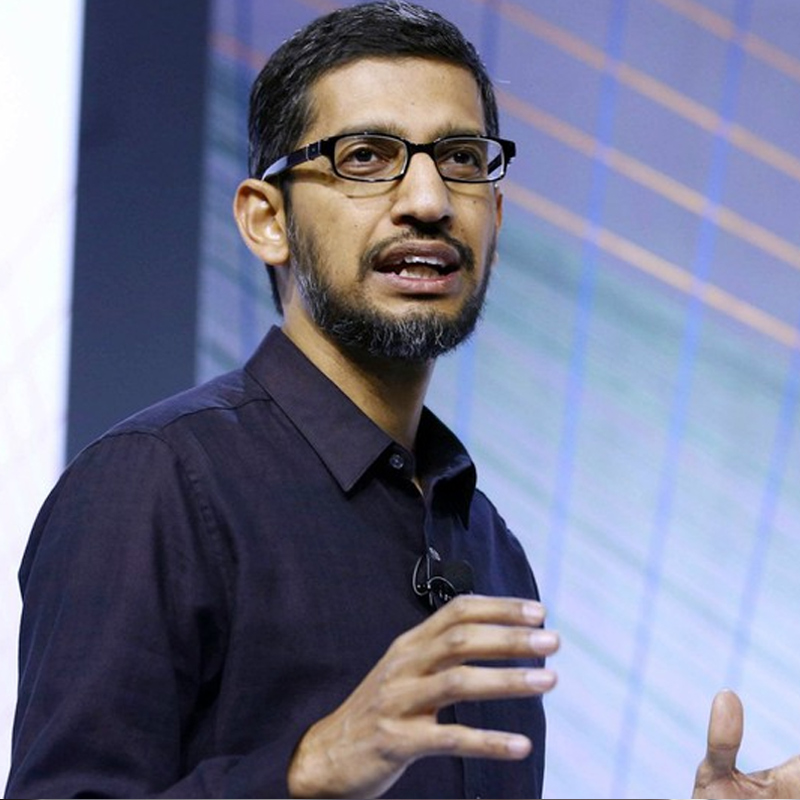
    MUMBAI: Google has announced the launch of Digital Unlocked, a training program to empower thousands of Indian SMBs with essential digital skills that will enable them to get online and start using the power of the internet to grow their business. Google also previewed My Business Websites, an easy-to-use offering to help businesses to have a rich, mobile optimised digital presence that will be launched later this year. Making the announcements at an event held in the city today, Google CEO Sundar Pichai spoke to representatives from hundreds of small and medium business from across the country on the benefits of the web and digital technology.

    My Business Websites will be available in English, Hindi, Bengali, Telugu, Marathi, Tamil, Urdu, Gujarati, Kannada, and Malayalam.

    Google India reaffirmed its commitment to digitally empower India’s 51 million strong small and medium business community.

    During his address, Sundar Pichai said, “The Internet is a powerful equalizer and we are motivated to bring the benefits of information and technology to as many people as possible. Building for everyone and making it available in the hands of as many people is at the heart and core of what we do. And we do this by investing in open ecosystems.”

    Referring specifically to small and medium businesses, Pichai added, “the Internet and digital technology will be an engine of growth for the Indian economy. Today, anyone can become an entrepreneur, a developer, or a creator, but it is important that they have the right tools and skills to digitize. We believe it is important for us to invest in training and equipping these individuals and small businesses to accelerate their journey of growth.”

    Setting the context for the initiative Google unveiled a joint research study with KPMG titled “Impact of internet and digitisation on SMBs in India”. The study reiterates that 68 per cent of the 51m Indian SMBs are offline. Highlighting the macro-economic impact of the internet, the research found that rising penetration and greater uptake for digital by SMBs could help increase their contribution to India’s GDP by 10 percentage points, taking it up to 46-48 per cent by 2020. Ascertaining the benefits of going digital for small businesses, it determined that profits of digitally engaged SMBs grow twice as fast compared to offline SMBs. Likewise digitally engaged businesses are able to grow their customer base significantly with 52 per cent catering to customers beyond their home city versus only 29 per cent offline SMBs. The report cites the lack of understanding of the benefits of digital technologies and technical skills as the essential reasons for being offline.

    With Digital Unlocked, Google is committed to ensuring that every single small business in India that wants to go digital has access to quality training. In keeping with the varied learning needs of the millions of businesses in India, we’ve built this program across online, offline and mobile. The offline training is being conducted in partnership with FICCI and over the next three years, 5,000 workshops will be held across 40 Indian cities. The online training comprises a set of 90 self-paced video tutorials, curated specifically for India and is available free of charge at g.co/digitalunlocked. The tutorials cover a comprehensive set of topics ranging from building a web presence and driving online growth to reaching customers over mobile and video. The trainings are certified by Google, Indian School of Business and FICCI.

    Further, for India’s mobile-first audience, Google also launched Primer, a free mobile app uniquely designed to teach digital marketing skills in a quick, easy and interactive way. It is available for download through the Google Play and iOS app store. Primer also works offline and is currently available in English and Hindi with Tamil, Telugu and Marathi versions coming shortly.

    At the event, Google also previewed My Business Websites, aimed at equipping the vast majority of small businesses with a simple way to start their digital journey by creating a free, mobile optimised website, easily and instantly. Available for Google My Business users later in the year, this new feature will provide simple, templated, editable websites for small businesses created from their data and photos on Google Maps.

    Several small businesses that have leveraged Google’s products and technologies were also present at the event. Three of them – Walnut, Go Co-op and Maganlal Dresswalla – were in conversation with Sundar Pichai and shared their journey to digital using Google offerings including Google My Business, Google AdWords as well as the Google Cloud Platform.

    The announcement today is a continuation of Google’s efforts to support Digital India. Last year Google had launched Google My Business, a program aimed at helping small medium businesses get an online presence on Google Search and Google Maps, without having to invest in a website or domain. Over 8 million Indian SMBs are already on these platforms, with thousands more coming online every month.

  • 68 per cent SMEs offline; Google plans smartphone-optimised regional websites

    68 per cent SMEs offline; Google plans smartphone-optimised regional websites

    MUMBAI: Google has announced the launch of Digital Unlocked, a training program to empower thousands of Indian SMBs with essential digital skills that will enable them to get online and start using the power of the internet to grow their business. Google also previewed My Business Websites, an easy-to-use offering to help businesses to have a rich, mobile optimised digital presence that will be launched later this year. Making the announcements at an event held in the city today, Google CEO Sundar Pichai spoke to representatives from hundreds of small and medium business from across the country on the benefits of the web and digital technology.

    My Business Websites will be available in English, Hindi, Bengali, Telugu, Marathi, Tamil, Urdu, Gujarati, Kannada, and Malayalam.

    Google India reaffirmed its commitment to digitally empower India’s 51 million strong small and medium business community.

    During his address, Sundar Pichai said, “The Internet is a powerful equalizer and we are motivated to bring the benefits of information and technology to as many people as possible. Building for everyone and making it available in the hands of as many people is at the heart and core of what we do. And we do this by investing in open ecosystems.”

    Referring specifically to small and medium businesses, Pichai added, “the Internet and digital technology will be an engine of growth for the Indian economy. Today, anyone can become an entrepreneur, a developer, or a creator, but it is important that they have the right tools and skills to digitize. We believe it is important for us to invest in training and equipping these individuals and small businesses to accelerate their journey of growth.”

    Setting the context for the initiative Google unveiled a joint research study with KPMG titled “Impact of internet and digitisation on SMBs in India”. The study reiterates that 68 per cent of the 51m Indian SMBs are offline. Highlighting the macro-economic impact of the internet, the research found that rising penetration and greater uptake for digital by SMBs could help increase their contribution to India’s GDP by 10 percentage points, taking it up to 46-48 per cent by 2020. Ascertaining the benefits of going digital for small businesses, it determined that profits of digitally engaged SMBs grow twice as fast compared to offline SMBs. Likewise digitally engaged businesses are able to grow their customer base significantly with 52 per cent catering to customers beyond their home city versus only 29 per cent offline SMBs. The report cites the lack of understanding of the benefits of digital technologies and technical skills as the essential reasons for being offline.

    With Digital Unlocked, Google is committed to ensuring that every single small business in India that wants to go digital has access to quality training. In keeping with the varied learning needs of the millions of businesses in India, we’ve built this program across online, offline and mobile. The offline training is being conducted in partnership with FICCI and over the next three years, 5,000 workshops will be held across 40 Indian cities. The online training comprises a set of 90 self-paced video tutorials, curated specifically for India and is available free of charge at g.co/digitalunlocked. The tutorials cover a comprehensive set of topics ranging from building a web presence and driving online growth to reaching customers over mobile and video. The trainings are certified by Google, Indian School of Business and FICCI.

    Further, for India’s mobile-first audience, Google also launched Primer, a free mobile app uniquely designed to teach digital marketing skills in a quick, easy and interactive way. It is available for download through the Google Play and iOS app store. Primer also works offline and is currently available in English and Hindi with Tamil, Telugu and Marathi versions coming shortly.

    At the event, Google also previewed My Business Websites, aimed at equipping the vast majority of small businesses with a simple way to start their digital journey by creating a free, mobile optimised website, easily and instantly. Available for Google My Business users later in the year, this new feature will provide simple, templated, editable websites for small businesses created from their data and photos on Google Maps.

    Several small businesses that have leveraged Google’s products and technologies were also present at the event. Three of them – Walnut, Go Co-op and Maganlal Dresswalla – were in conversation with Sundar Pichai and shared their journey to digital using Google offerings including Google My Business, Google AdWords as well as the Google Cloud Platform.

    The announcement today is a continuation of Google’s efforts to support Digital India. Last year Google had launched Google My Business, a program aimed at helping small medium businesses get an online presence on Google Search and Google Maps, without having to invest in a website or domain. Over 8 million Indian SMBs are already on these platforms, with thousands more coming online every month.

  • Gionee elevates Deepika Singh

    Gionee elevates Deepika Singh

    MUMBAI: Gionee India has promoted Deepika Singh as the director for marketing communications. Singh has been heading the company’s important communications and corporate affairs portfolio for the last one and a half years.

    Singh, along with managing and directing company’s internal and external communications, will also support the company’s brand building initiatives and sales growth across regions.

    Singh’s elevation comes at a time when Gionee is looking to aggressively push its current market share of five per cent upwards. Singh’s role is intended to augment the core team in strengthening brand communications and build preference and loyalty for Gionee among a fast increasing customer base. As part of Gionee’s concerted push to foster community connect, Singh will also be responsible for spearheading the company’s CSR initiatives, developing appropriate social responsibility goals and metrics and overseeing their implementation.

    Gionee India Country CEO and MD Arvind R Vohra said, “We are looking to beef up our core management team in India with fresh thinking and talent that blends multiple skills and experiences. This is the year when we will focus on taking Gionee to the next level of growth, while becoming one of the most loved brands in India. I believe Deepika has all it takes to deliver on this mandate and we are excited to promote her to this new role.”