Tag: Sky

  • Sky adds Channel 4’s 4oD to a catch-up TV service

    Sky adds Channel 4’s 4oD to a catch-up TV service

    MUMBAI: UK pay TV service provider Sky customers will be able to access that the company says is a complete catch-up TV service following the addition of 4 on demand (4oD) to its On Demand service.

    The upgrade comes at no charge for Sky customers who have connected their Sky+HD box to broadband and can download catch-up content at a push of a button. New figures show that the surge in connections has continued in the early part of 2013, with the total number of connected Sky+HD boxes now surpassing two million and continuing to grow rapidly.

    With the launch of 4oD, catch-up content from Channel 4‘s portfolio of channels – including Channel 4, E4 and More 4 – will be available alongside hundreds of hours of great content from Sky 1, Sky Atlantic, Sky Living, Sky Arts, the BBC, ITV, Channel 5, the History Channel, National Geographic and others. Taken together, it means that Sky+ offers the most complete catch-up TV service in the UK, so customers never need to miss out on shows.

    At the same time, older shows and series from the Channel 4 archives will also become available to download from the library section of Sky‘s On Demand service, where box-sets of classic shows and series are available. Channel 4 series available on Sky will include ‘The Inbetweeners‘, ‘Shameless‘, ‘Spaced‘ and ‘The IT Crowd‘.

    In addition to joining the On Demand service on Sky+, Channel 4 is also the first terrestrial network to offer its channels and programmes on Sky Go, Sky‘s award-winning internet and mobile TV service. Sky Go users can now enjoy Channel 4 and More4 live on their laptop, smartphone, or tablet, with E4 and Film4 to follow shortly.

    In addition, a range of classic Channel 4 shows will be available within the On Demand section of Sky Go. And for Sky customers who upgrade to Sky Go Extra, those Channel 4 shows can be downloaded to watch offline, so they can enjoy TV on the move even when they‘re not connected to the internet.

    And finally, More4 HD joins Sky‘s line-up of HD channels, giving Sky‘s 4.5 million HD customers an even greater choice of their favourite TV in HD. Film4 HD will also join the Sky platform in September, further extending Sky‘s market-leading line-up of HD channels.

    Sky director of TV products Luke Bradley-Jones said, “The way people enjoy TV is changing as customers embrace technology to take control over their viewing. We know customers have busier lives than ever, which is why we‘ve created the most comprehensive catch-up service in the UK.

    “Over 2 million Sky customers have already connected their Sky+ box to the Internet so they can enjoy our full catch-up and On Demand service. But we are working hard to get even more Sky homes connected as we know our customers love the control and flexibility it gives them – it‘s a perfect complement to Sky+.

    “Offering great TV from Channel 4 on demand on Sky+ and on Sky Go at no extra charge is all part of our continued commitment to offer our customers the best combination of content and innovation.”

    Channel 4 director of commercial, business development Sarah Rose said, “The launch of our successful VOD service, 4oD, on the Sky on demand and Sky Go platforms this month will extend the reach of our content to enable even more viewers to enjoy our wide range of programmes. And through the recent arrival of More4 HD and much anticipated launch of Film4 HD in September, we‘re delighted to complete the roll out of our HD portfolio”.
  • Sky unveils new subscription service Sky Go Extra

    Sky unveils new subscription service Sky Go Extra

    MUMBAI: UK pay TV service provider Sky has launched a brand new subscription service, Sky Go Extra, which lets customers download films from Sky Movies and content from channels such as Sky 1 and Sky Atlantic to watch when and where they want, without the need for a WiFi or 3G/4G connection. The service also lets Sky Go Extra customers register for Sky Go on up to four, rather than two, internet-connected devices.

    Available to all Sky TV customers for just ?5 per month, the new service delivers even more flexibility to Sky customers by letting them download movies and TV shows depending on their Sky TV subscription to their smartphone, tablet, laptop or MacBook via WiFi to watch offline later. So whether in a car, on a flight or on the train or Tube, Sky customers will be able to enjoy a wide range of content anywhere, not just where they can find a reliable WiFi or high-speed mobile connection.

    The launch of the new service builds on the success of Sky Go, which offers Sky customers access to live and on demand programmes and films from up to 43 channels on a wide range of internet-connected devices including laptops, smartphones, tablets and games consoles. Sky Go now attracts more than 3 million unique users each quarter.

    In addition to being able to download content, Sky Go Extra customers are also able to register for Sky Go on up to four, rather than two, internet-connected devices, giving Sky households even more flexibility over when and where they enjoy the service.

    Sky Go Extra is the first mobile TV subscription service in the UK and Ireland to offer Hollywood movies to download and watch offline. With a choice of hundreds of titles exclusive to Sky Movies available to download at any one time, Sky Go Extra customers who subscribe to the Sky Movies pack will be able to download blockbuster releases around six months after they have ended their run in cinemas. Once downloaded, customers can store the films on their portable devices for up to 30 days.

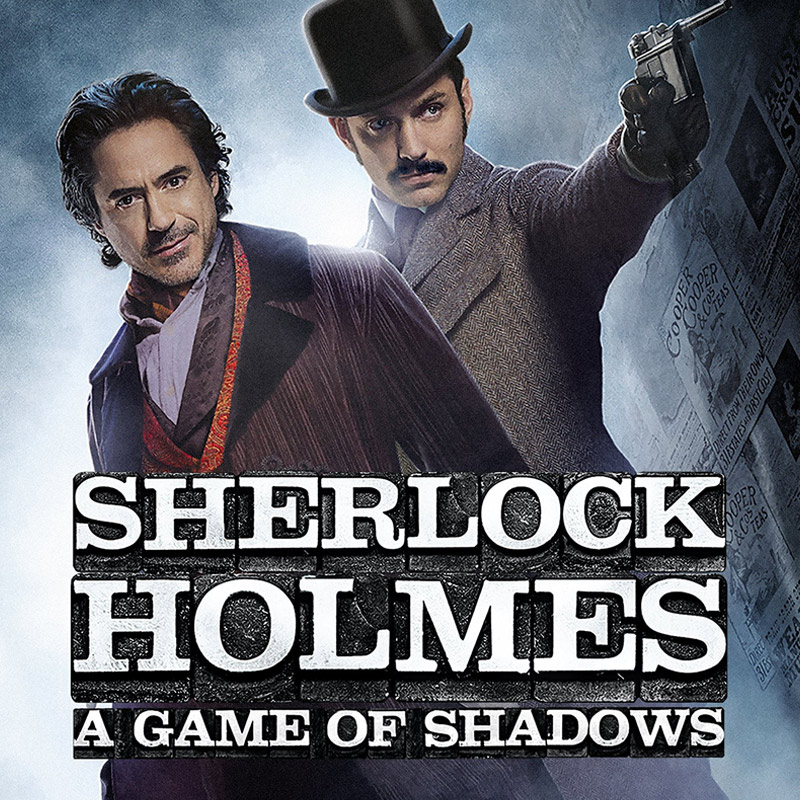
    Films such as ‘Avengers Assemble‘, ‘Sherlock Holmes: Game of Shadows‘ and ‘Pirates In An Adventure with Scientists‘ will all be available for download through the service, alongside the entire James Bond film catalogue, containing all twenty-two official Bond films. All titles are available exclusively to Sky Movies subscribers and will not be available on any other online movies subscription service for at least a year after they first appear on Sky Movies.

    Sky Go Extra customers will also be able to download the latest shows from channels including Sky Atlantic, Sky 1, Sky Living and Sky Arts, as well as partner channels such as Nickelodeon and Disney. This includes shows from the US ‘Girls‘ and ‘The Following‘ (Sky Atlantic), as well as Sky‘s shows such as ‘Stella‘, ‘An Idiot Abroad‘ and ‘Trollied‘ (Sky 1). Customers with a 64 GB iPad will be able to store in excess of 400 half-hour shows and more than 80 movies.

    Sky MD of sales, marketing Stephen van Rooyen said, "Building on the ever-growing popularity of Sky Go, Sky Go Extra lets Sky customers download great movies and TV shows to take with them to watch offline whenever and wherever suits them, as well as access to Sky Go on up to four internet-connected devices. Together with our comprehensive On Demand service and our range of award-winning apps, we continue to deliver helpful and innovative ways for Sky customers to enjoy even more flexibility over when, where and how they enjoy Sky."

    Last year millions of Sky customers used Sky Go to watch movies on demand, with ‘Bad Teacher‘, ‘Transformers: Dark of the Moon‘ and ‘Captain America: The First Avenger‘ the three most popular movies on Sky Go last year. Entertainment series on demand have also proven popular on Sky Go, with more than 2.5 million views of the second series of ‘An Idiot Abroad‘ and 1.1 million views of the latest season of ‘Game of Thrones‘.

    Sky Go Extra is the latest in a series of recent developments from Sky that help customers take full control of their TV viewing. This includes Sky‘s TV On Demand service through the Sky+HD box, which now delivers hundreds of hours of catch-up TV from the BBC, ITV, Channel 5 and Sky channels alongside on demand access to shows from a number of other leading channels including UKTV, MTV and Discovery. Sky also offers its customers a wide range of award-winning apps at no extra cost, including the popular Sky+ app, which can even be used as a remote control for the Sky+HD box.

  • BBC Trust approves plans to launch Freesat platform

    MUMBAI: The BBC Trust has provisionally approved UK pubcaster the BBC management’s proposal to develop and launch a free-to-view satellite platform, “Freesat”.

    BBC management envisages Freesat being achieved as a joint venture with other public service broadcasters. The Trust believes that the service would create significant public value by offering licence fee payers an additional means to access digital services, including the BBC’s digital television channels and radio services, which is subscription free and guaranteed to stay that way. It would be offered on the basis of a one-off initial payment only, to cover the cost of equipment and installation. The service would be future-proofed, through the designing in of high definition and personal video recorder compatibility, and would be marketed through retail outlets and via the internet. BBC management’s intention is to establish a joint venture company with other public service broadcasters to manage the marketing and technical aspects of the new platform. Set top boxes would be supplied by third parties working with retailers to a specification agreed with the joint venture company.

    The Trust has published its decision, and the evidence and analysis which informed its judgement, and opened a 28 day public consultation prior to making its final decision in April 2007.

    BBC chairman Chitra Bharucha said, “The BBC’s Royal Charter requires the Corporation to take a leading role in digital switchover which begins next year. From 2008 until 2012, as each UK nation and region switches to digital, all households that haven’t done so already will have to choose a new way to access television. One of the benefits arising from digital switchover will be greater choice for viewers. For those seven million homes yet to make the switch, it needs to be clear that the benefits of digital television do not need to equal ‘pay television’.

    “A new, guaranteed subscription-free satellite service would provide the public another option when deciding which platform to choose. Over half of those yet to switch fall outside the Freeview coverage area. For these homes, the new service would mean being able to access BBC digital services they have already paid for via their licence fee but until now have been unable to receive on a guaranteed subscription-free basis.

    “We have considered the market impact and whilst there may be some negative effects, in our view these should be balanced against the potential positive market impact of greater choice. Overall, we believe a “Freesat” service to be in the public interest and we hope that other public service broadcasters would join the BBC in a joint venture. We welcome all responses to our provisional conclusion during the consultation. “

    The BBC Trust has decided that Freesat meets the BBC’s Charter and Agreement definition of a ‘non-service’ activity and does not require a Public Value Test. Nonetheless, in reaching its provisional decision the Trust has considered the potential public value and market implications of launching the service.

    In particular, the Trust examined the proposition in four key areas:

    Whether the proposition would serve the best interests of licence fee payers:
    Of the 7 million homes yet to switch to digital, over half fall outside the Freeview coverage area. Inability to access free-to-view digital is an issue frequently raised by the public in its contacts with the BBC. For some, this would remain an issue until the analogue system is switched off entirely in 2012. The Trust considers failure to address this issue to be inconsistent with its public service duties.

    What public value the new platform might create:
    The Trust has provisionally concluded there is significant public value in the “Freesat” proposition. It believes such a service would have a positive impact by introducing choice to the market and a guaranteed subscription free alternative to Sky’s free satellite option. The costs to the BBC are modest and comparable with those of Freeview. Launching the proposition as a joint venture would further increase value for money.

    How the proposition fits with the BBC’s public service remit:
    The Charter and Agreement set out a number of public service duties for the BBC. The Charter includes a Public Purpose to help deliver the benefits of emerging technologies to the public, and to take a leading role in digital switchover. Meanwhile, the Agreement states that the BBC “must do all that is reasonably practicable to ensure that viewers, listeners and other users are able to access the UK public services that are intended for them”. The Trust has provisionally concluded that the objectives of the proposition are consistent with, and enhance, the BBC’s public service remit.

    The competitive impact of the proposals on the wider market:
    The Trust’s provisional conclusion is that the proposition would have some negative impact on the wider market but increase choice for consumers. The Trust’s view takes account of analysis of the proposition’s potential market implications carried out by its own independent advisers within the Trust Unit and external independent economists.

    Under the terms of the previous Charter the BBC submitted a proposal, approved by the Governors, to the Department for Culture, Media and Sport in June 2006 to launch a free open standard satellite service. However the Charter expired before the Secretary of State reached a decision and, in line with the terms of the new Charter, the decision now rests with the BBC Trust. The Trust received the open file from the Secretary of State in January. Further to detailed scrutiny at its Finance & Strategy Committee and the provision of further independent advice referred to above, the Trust reached its provisional conclusion at its meeting on 21 February.


  • Ofcom to look into Sky buying into ITV

    Ofcom to look into Sky buying into ITV

    MUMBAI: The Department of Trade and Industry (DTI) in the UK has ordered that country’s media watchdog Ofcom to investigate pay TV service provider BSkyB’s purchase of a stake in commercial broadcaster ITV.

    The aim is to see how this might affect pubclic interest.

    The British trade secretary, Alistair Darling, has asked Ofcom to review whether BSkyB’s purchase of a 17.9 per cent stake in ITV “raises public interest concerns about the number of different owners of media enterprises”.

    The move reports state is a victory for Virgin Media. It has been lobbying for an investigation. its argument is that the investment in ITV by a firm that Murdoch’s News Corp has a stake in threatens media plurality in the UK.

    Ofcom’s initial findings will be submitted by 27 April. This could result in the BSkyB stake in ITV being referred to the Competition Commission for a fuller investigation. Last year in November BSkyB had purchased for £940 million 17.9 per cent of ITV.

    Cable firm NTL now known as Virgin Media had tried to buy ITV for £5 billion. Sky says that its minority shareholding in ITV has no bearing on the considerations of the public interest test relating specifically to media plurality. It says that it is inconceivable to suggest that, as a result of a 17.9 per cent shareholding in ITV, Sky would be able to influence ITV’s broadcasting strategy or policies, including programming or editorial decisions, which remain entirely the responsibility of the board.

    Sky adds, “In its short history, Sky has fundamentally increased choice for viewers, consistently pioneered innovations, invested in and developed quality on-screen content, and is now challenging incumbent telecom and cable providers with lower-cost broadband and phone services. Sky makes a significant contribution to plurality in the highly competitive media sector.”

    Meanwhile BSkyB could take a hit of up to 20 million pounds if it loses a deal to show its basic channels on Virgin Media. Interestingly though analysts say that it is the other firm that could suffer more in the long run. The deal concludes on 28 February 2007.

  • Ofcom to review Sky’s DTT plan

    Ofcom to review Sky’s DTT plan

     MUMBAI: Last week UK pay TV service provider Sky had announced that it proposes to launch a new service on the digital terrestrial television (DTT) platform.

    Following a series of requests for clarity on the regulatory process regarding the proposed launch, UK media regulatory body Ofcom confirms that it will consult on any such proposals.

    Sky’s announcement noted that the launch of the new service will be subject to approval by Ofcom including the necessary variations to licences held by Sky and National Grid Wireless, which provides Sky with DTT transmission and multiplexing services.

    When Ofcom receives a request for approval of the necessary variations, the issues that would require consultation are likely to include:

    – Firstly, the impact on consumers of Sky’s proposal to use MPEG4 compression technology via new set-top boxes, in order to increase the amount of content which can be carried. Ofcom would need to assess:

    – The potential benefit of a rapid migration from the current compression standard MPEG2, to MPEG4 which will ultimately increase the number of channels available on digital terrestrial television.

    – The potential detriment associated with a reduction in the number of channels received by existing set-top boxes or digital televisions; The risk that existing set-top boxes or digital televisions might be incompatible with multiplexes broadcast using a combination of MPEG2 and MPEG4 coding;

    – The overall effect on consumer confidence in the digital switchover process.

    – Whether any variation to the channel line-up might unacceptably diminish the appeal of the channels to a variety of tastes and interests and whether a reduction in the current range of free-to-air channels would be compensated for by the proposed introduction of the new pay television channels.

    – Finally, the effect of any change to existing licence conditions and / or the need to include any new licence conditions to ensure fair and effective competition for the benefit of consumers.

    The content of the consultation and its timing will be announced once a request for an approval has been received. Ofcom’s normal consultation period is 10 weeks.

  • Sky to launch new pay service on DTT in UK

    Sky to launch new pay service on DTT in UK

    MUMBAI: UK pay TV service provider Sky is developing plans for the launch of a subscription television service on digital terrestrial television (DTT) this year.

    The new service will allow programmes – including sport and movies – through a conventional rooftop aerial and a DTT box for a monthly subscription.

    By bringing back pay-TV content to the DTT platform, Sky aims to create more choice for customers who are interested in upgrading from free-to-air to pay-TV. This the firm says represents an attractive commercial opportunity, benefitting from existing investments in programming and infrastructure, and attracting new customers to Sky over and above current plans for the growth of Sky’s satellite service.

    The line-up of channels on the new service will offer a range of content including sports, movies, entertainment and news. The sports service will include live coverage from the Barclays Premiership and other events. Full details, including branding, pricing and the complete channel line-up, will be revealed closer to launch.

    The new service will make use of existing capacity that Sky currently uses to broadcast Sky Three, Sky News and Sky Sports News. As a result, these channels will cease to be available free-to-air via DTT in advance of the launch of the pay-TV service.

    Sky plans to broadcast its pay-TV channels on DTT using the more efficient MPEG4 compression technology, bringing innovation to the platform and enabling Sky to offer four 24-hour video streams in place of the three Sky channels currently available, with further improvements expected in future. The pay-TV service will use a highly secure conditional access (CA) system similar to the one that Sky uses for its satellite television service.

    To access the service, customers will buy a new set-top box that includes the relevant CA software and MPEG4 decoder. It is anticipated that once the service launches multiple manufacturers will have the opportunity to produce compatible set-top-boxes and other DTT receivers.

    The launch of the new service is subject to approval by Ofcom of the necessary variations to licences held by Sky and National Grid Wireless, which provides DTT transmission and multiplexing services to Sky.

    Sky COO Mike Darcey said, ” We look forward to bringing some of Sky’s most popular content to digital terrestrial viewers. This will give families more choice and increase the availability of leading content and channel brands.”

  • BabyTV in alliance with Sky

    BabyTV in alliance with Sky

    MUMBAI: UK pay TV platform Sky has formed a deal with BabyTV the channel that target children below the age of three.

    From 5 February 2007 the channel will be available to Sky Digital viewers in the UK that subscribe to the Kids Mix package. In the UK the channel is already available on NTL and Telewest.

    Globally over 50 platforms carry babytv. From the outset, the Baby Channel was envisaged as more than just a television channel. It manifests on all media platforms – television, Internet, DVDs, books – and also in retail and merchandise. The idea is to become a one-stop shop for parents, a single venue where parents can get everything they require, beginning with information.


  • Endemol looks at more formats; eyes fiction

    Endemol looks at more formats; eyes fiction

    MUMBAI: A year has passed since global television format creator and distributor Endemol set up shop in India. Buoyed by success the company is looking to bring in more formats in India.

    As far as the fiction side is concerned India head Rajesh Kamath says that Endemol is evaluating the scene. By May it will have decided whether it wants to buy a stake in a production house or go on its own. In fact, before coming into India it had weighed the possibility of acquiring a production house in the fiction space. However it decided to enter the country as a production outfit rather than simply sell formats. It will kick off its fiction slate towards the end of the year.

    Says Kamath, “We are delighted at the success of Bigg Boss, Fame X on Sony and The Great Indian Laughter Challenge on Star One. We produce all three shows and it has been a learning experience.

    “Certainly shooting Bigg Boss day in and day out has been a challenge in terms of keeping the 100+ crew members motivated. They become like one family as the show becomes their life as it were for the shooting period. Earlier there were doubts as to whether the show would work as it was seen to be niche. However the success shows that if the format is unique, the participants are broad based and the audience understands the concept it will work. The Metro viewers were the early adopters as data from the Tam Elite Panel shows. Bigg Boss and Fame X get over next month.

    “We might bring one or both of them towards the end of the year. The temptation might be to do Bigg Boss immediately seeing that it has fared so well. However in the format business you have to create a sense of anticipation on the part of the viewer. So we wait for at least nine months before bringing a format back on air. I am confident that the second season of Bigg Boss will se more people particularity from the small towns jumping on the bandwagon. On the flip side Deal Or No Deal did not work but it is to be expected that not everything will work. Fame X is on an upward curve. As the number of participants goes down the involvement of the viewers goes up.”

    The question arises – what is next? There are two formats that Endemol is looking to sell and produce in India. Right now discussions are on with different broadcasters including Star and Sony. One format is called 1 vs 100. This is already airing in the US on NBC. Here you see one contestant pitting his knowledge against 100 others. It works like this. One contestant is in the hot seat answering a question. The 100 others are the audience members who also answer questions. The studio in fact has 100 screens and one answers by pressing one of three buttons.

    Each of the 100 contestants has a value say Rs 1000 in addition to the value of the question. If the contestant gets it right and say 30 of the audience members get it wrong then he gets that much money. For the next question the value of each audience member goes up depending on how many are remaining. If the person in the hot seat answers incorrectly he goes out and one of the audience members is randomly chosen to replace him. The catch is that if the person in the hot seat answers correctly and so do all the audience members then he gets no money for that question as nobody got eliminated.

    So it is a question of judging whether one should ask for an easy question or a difficult one. There are different genres one can choose from. A difficult question increases the chances of audience members and the person in the hot seat getting it wrong. The viewer at home can also participate through SMS. In some countries the person in the hot seat can choose to discontinue playing and walk off with what he has won. In other countries he must keep playing. The audience members in the US come from different walks of life and are segmented. So you could have five sports people, five businessmen etc.

    The other format is called Set For Life. This was recently introduced by Endemol globally. Here there are 15 buttons half of which are red and the other half are white. If one presses a white button one wins money and goes to the next stage. If one presses a red button one goes back a level. The logic is the same as the Snakes and Ladders board game explains Kamath. The prize money keeps increasing. Four red buttons and one is out.

    However there is a family member in an enclosed room who can see what is happening. This member can choose at any time to stop the game though the contestant keeps playing. So the contestant can win Rs one million when in actual fact the family member pressed the stop button when he had won half a million. It is a question of trusting the participant’s ability and also luck. So a contestant can press four red buttons and feel that he has lost when in actual fact the family member had pressed the stop button earlier.

    The firm is hoping to have at least one if not both these shows on air sometime in August- September. Kamath hints that 1 vs 100 has a better chance of making it first. It is also going to produce the second season of Fear Factor for Sony which it is is hoping to put on air sometime in June. This will be shot in South Africa or Malaysia. The production house is looking to increase the level of stunts involved. It is examining the possibility of having a boot camp where participants are put through a series of tests. It is thinking in terms of categorising the show as Extreme Fear Factor.

    Before all this though it is looking at a participation television show. This is where viewers call in to answer questions on a show. They pay for this privilege. Endemol is working on the business model of a show like this in terms of the technology platform, how the revenues are split, where does it come from? To what extent does it come from advertising? It will be aired either in early primetime that is at 7 pm or in the afternoon that is at around 1:30 pm or at midnight.

    It is hoping to put in a participation call TV show on air within a couple of months time either on Star or Sony. BrainTeaser is a possible format here. This is a word based show and has different variants. For instance one might be given the letter H as the start of a word and then clues. One has to guess the word. Then there is the scramble variant where words of eight or more letters are partitioned into four or five pieces, rearranged and presented. One has to unscramble them.

    It is also talking to kids channels about a kids format. However Kamath was loathe to discuss further details. He is also further down the line looking at a sports based format The Match which is a celebrity based football match. In the UK proceeds went charity and aired on Sky. Interestingly Endemol is looking to produce all formats that it sells in India. That is because of the success of Bigg Boss, Fame X and The Great Indian Laughter Challenge.

  • BSky reaches two million DVR boxes

    BSky reaches two million DVR boxes

    MUMBAI: UK pay TV service provider BSkyB says that the total number of Sky+ boxes installed in customers’ homes in the UK has broken through two million for the first time.

    The milestone was reached after the number of Sky+ boxes grew by more than 50 per cent in 2006, putting Sky on track to pass its target of 25 per cent Sky+ penetration well in advance of the original schedule of 2010.

    The company says that the rapid growth of Sky+ highlights increasing demand from customers for the ability to take control over their television viewing. With two million active boxes, almost five million viewers are using Sky+ to record without video tape, pause and rewind live TV, and record all episodes of a favourite series at the touch of a button.

    To give customers even more choice and control, Sky plans to introduce a number of new enhancements to Sky+ in 2007 that will revolutionise the TV experience even further. These innovations will include the ability to use the internet to set a recording on your Sky+ box even when you are away from home. Customers will simply log on to www.sky.com to programme their box remotely.

    Also in 2007, Sky will introduce a new enhancement giving Sky+ customers the chance to enjoy a selection of the week’s best programmes on-demand. The service will be available to more than one million Sky+ and Sky HD customers from launch, making use of additional recording capacity on the hard drive of more recent boxes.

    Sky CFO Jeremy Darroch said, “Sky+ has changed the way millions of people watch TV. In its own way, Sky+ has as dramatic an effect on the experience of TV as the iPod has with music. There’s no going back once you’ve experienced the ability to take control over the TV schedules and we’re planning new innovations in 2007 to make Sky+ even better.

    “Passing the milestone of 2 million Sky+ boxes keeps us on track to break through our target of 25 per cent penetration well ahead of schedule. The rapid growth of Sky+ shows strong customer demand for additional services and gives us great confidence as our multi-product strategy moves forward this year.”

    Viewing behaviour in Sky+ homes

    To coincide with the milestone of two million boxes, Sky has published new research findings highlighting how Sky+ is changing the TV viewing habits of families around the country. The data, garnered from the Sky View research panel, provides an accurate measurement of how customers are using Sky+ to record – or ‘time-shift’ – television programmes.

    Drama is the genre of programming most frequently recorded by Sky+ customers, accounting for 39.3 per cent of all time-shifted viewing. Other popular genres are documentaries (14.9 per cent), entertainment (13 per cent) and movies (9.5 per cent). In contrast, some genres of content remain at their most popular when consumed live. News and weather account for just 0.6% of time-shifted viewing by Sky+ viewers, while current affairs programmes account for 1.2%. (Source: Sky View)

    These trends are reflected in the ranking of channels whose programming is subject to most time-shifting by Sky+ viewers:

    With the ability to record two programmes simultaneously, Sky+ resolves scheduling clashes and allows customers to record peak-time shows to watch at a more convenient time.

    Sky View research shows that, in Sky+ households, time-shifting accounts for 22 per cent of all viewing of programmes originally scheduled between 9 pm and 10 pm and 17 per cent of all viewing of programmes scheduled between 10 pm and 11 pm.

  • Sky, Google unveil broadband alliance

    Sky, Google unveil broadband alliance

     MUMBAI: UK pay TV service provider BSkyB and the world’s most valuable media firm Google have announced plans to work together in bringing ground-breaking web-based services to Sky’s community of broadband internet customers.

    The set of multi-year agreements sees two of innovators in technology and entertainment join forces to create a customised experience for Sky Broadband customers.

    Sky will be Google’s first partner globally to deploy Google’s suite of search, advertising, communications and video services, all of which will be tailored and branded for Sky’s fast-growing broadband platform. Sky aims to ensure that its broadband customers enjoy the best possible online user experience with customised access to the full benefits of Google’s evolving suite of innovative products for PC, TV and mobile.

    Sky and Google will collaborate in three areas:

    Video: Sky will launch a multi-platform User Generated Video (UGV) portal powered by the first global deployment of Google’s syndicated video content tools. The site will allow users to edit, upload and share their own video content, including the facility to upload and download from a mobile phone. The UGV portal will form part of a content-rich experience for Sky Broadband customers that will enhance the appeal of Sky’s broadband services, build community and promote Sky content to online audiences.

    Communications: Sky Broadband customers will enjoy access to an online communications platform. This will include a fully customised version of Google’s email product, ‘Google Mail’, which will use the popular ‘@sky.com’ email address. Powered by Google with a user interface and functionality customised to Sky’s unique specifications, the platform will also offer access to key communications applications that attract and deepen relationships with internet users, such as contacts, calendar and instant messaging.

    In addition, Sky will explore opportunities to provide further services such as Google’s VoIP (voice over internet protocol) telephony services, enhanced storage and future product developments.

    Search and advertising Google will provide its search tools and targetted search advertising across Sky’s portfolio of online sites. The two companies will also explore future forms of web, TV and mobile advertising. Revenue generated by click-throughs on sponsored links will be shared between Sky and Google, increasing Sky’s exposure to the fastest growing segment of the UK’s advertising market.

    Sky CEO James Murdoch said, “These agreements will bring Sky customers a valuable set of services from the world’s leading search company, including cutting edge tools for video sharing and communications. Google has pioneered many of the web’s most loved and used features, so I’m delighted that Sky Broadband customers will be the very first

    online community to enjoy such unrivalled range and quality as well as a commitment to further innovation.

    In a short time, Sky says that it has emerged as an effective challenger by offering high-quality broadband that offers greater value than traditional cable and telcos. Sky says that it is on track to build a large and successful broadband business and is increasingly well positioned to participate in the rapid growth of online search and advertising.’

    Google chairman and CEO Eric Schmidt said, “Google is committed to giving people the power to explore, create and communicate. This alliance with Sky brings together two of the most innovative media and technology companies for the benefit of users. We will be delivering exciting new services for Sky Broadband customers all over the UK. We’re delighted to team up with Sky in one of the world’s most dynamic markets and we look forward to working together in the years to come.”