Tag: Skore

  • ‘Get Naughtier,’ says Skore in its latest campaign

    ‘Get Naughtier,’ says Skore in its latest campaign

    Mumbai: Skore, the sexual wellness brand from TTK Healthcare has launched a campaign titled ‘Get Naughtier’. The campaign, conceptualised by Isobar, the dentsu India digital agency, comprises two digital films that revolve around couples who are driven by enhancing pleasure while showcasing the range of Skore products.

    The insight behind the campaign was based on sales data and studies of social chatter that shows how couples are more than willing to explore intimacy and try something new. Additionally, the campaign positions itself as more than just a condom brand by exploring the naughty side to normal life via situational comedy that showcases the lovemaking adventures of different couples.

    “The category, though creatively fertile, invariably invites a lot more restrictions and censor from mainline media. I am just thrilled that the client was willing to explore a digital-only eco-space to market such never-before advertised products,” stated Isobar India national creative director Aalap Desai. “Not only are the media touchpoints relevant to the consumers for whom the products are meant for but also it’s one of those rare and truly integrated campaigns covering content, social media, performance, influencer marketing and OTT films via a singular narrative. In a way, the challenge thrown at us by the mainstream media only egged us to think naughtier!”

    “Skore has been one of our favourite clients to partner with given the kind of portfolio they have and the kind of campaign experimentation that they are willing to do. Today, a couple’s approach to pleasure has evolved. They are looking to maximising the experience and Skore’s diverse portfolio of Pleasure products gives them diverse ways of doing so. The insight of the campaign is very interesting as is the smart way of having this conversation around pleasure,” added Isobar India managing partner Rahul Vengalil.

    The ad films have been directed by Mukesh Sehgal and produced by Amol Sonawane of Take Two Production.

    https://www.youtube.com/watch?v=TgUy1I4BgpQ

    To generate buzz over multiple touchpoints cohesively, the campaign has its legs on social media, influencer marketing, digital films and OTT media. The campaign also aims to drive up the conversational quotient further with branded content pieces in association with platforms like Alright and LBB, said the brand.

    TTK Healthcare Ltd head of marketing Vishal Vyas said, “We have consciously tried to create content that will resonate with young people. We wanted to communicate succinctly that we are more than a condom brand, offering interesting sexual wellness and pleasure products such as vibrating rings, flavoured lube variants, pheromone activating spray for men and pleasure gel for women. In a category that’s hard to advertise, stereotyped with sleaze and one that invites moral trolling, consumers are barely aware of the diverse offerings in addition to the large range of diverse condoms we have. This campaign deals with these smartly and tries to normalise experimentation and extended playtime for couples’ sans judgement or guilt.”

  • Need for condom brands to target the rural audience

    Need for condom brands to target the rural audience

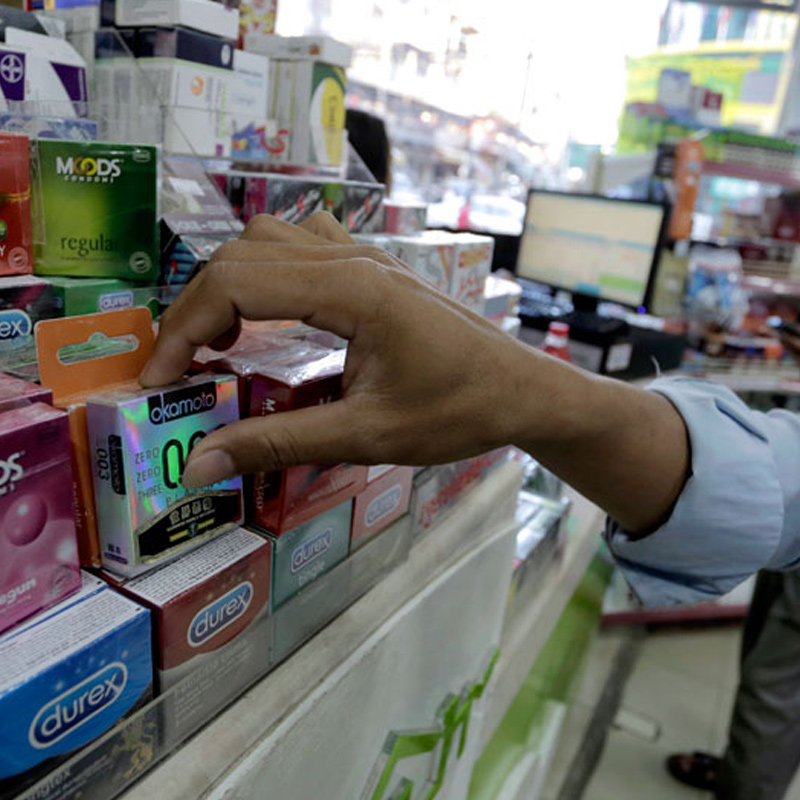
    MUMBAI: Sex is perhaps the most rampant taboo in India. Despite the economic and technological advancements, sexual discourse in the country is yet to witness a significant evolution. From sex education in school to conversations at home, the country in a sense continues to avoid addressing the elephant in the room. The cultural conditioning, especially in a country as large and diverse as ours, tends to have major implications on industry and market economics. Marketers and advertisers tend to feel handicapped when operating around no-go-zones. That's the space India's condom companies find themselves in.

    In India, Condoms advertising continues to be a tug of war between advertisers and the regulatory authorities. Companies create an advertisement, spend millions on marketing, only to find out that ASCI and MIB have slapped them with charges to withdraw or modify the ad. There is no running away from the fact that Indians have a conservative approach to sex. And When condom brands try to titillate and opt for sleazy advertising, they compound the problem.

    This rather 'controversial' category has always had its challenges and limitations when it comes to product marketing. The ‘Sanskaari’ Indians don't want to see condom ads on television, hoardings or radio. Maybe, that’s the reason we tend to notice fewer condom brands around us. 

    While the situation is still better in urban and metro cities, one wonders what the scenario is like in rural pockets of the nation where topics like condom and sex are considered 'impure' and 'grubby'. 

    The overall condom penetration in India is only six per cent. According to several studies and surveys, the Indian condom market is projected to reach $180 million by 2022. This is on account of rising consumer awareness about HIV, STI and other sexually transmitted diseases. The booming e-commerce business, rising young population and an increase in the average marriageable age are other contributing factors that have played a role in effecting this change.

    The market is primarily dominated by Manforce with a 32 per cent share, followed by Moods at 12 per cent, Skore at 10 per cent, Kamasutra at eight per cent, Kohinoor at eight per cent and Durex at around three per cent along with local brands. 

    The National Family Health Survey in its 2015-16 survey revealed that the knowledge of contraceptive methods is almost 100 per cent in India and 99 per cent of married women and men aged between 15-49 know of at least one such method. Sounds like a good number, right? However, the condom penetration (usage) in India is extremely low, with the urban sector clocking around six per cent and the rural a mere four per cent.

    GRAPH.jpg

    The rural market is still small in India and contributes to about 27 per cent of the 1073 crore condom market in India as per a Nielsen report. But the good news is, it has grown by 16 per cent in terms of value in 2017. Usage of condom in smaller pockets has increased in the last five years due to modernisation, digital penetration and availability of low cost smartphones and data.

    The segment is still unorganised with major private players taking the lead in developed regions. They spend millions on advertising and marketing themselves in the eyes of modern consumers. Case in point: Manforce signed pornstar-tuned-Bollywood actor Sunny Leone, Durex snapped up Bollywood actor Ranveer Singh after he admitted that he was ‘addicted to sex’, SKORE condoms went international and signed cricketers Chris Gayle and Dwayne Bravo. The result? These brands are now at the top of brand recall in the eyes of consumers.

    But the rural scene is majorly dominated by local players. Retailers often take advantage of the consumer discomfort and display brands that allow them good margins, which in most cases are local companies.

    At such a point, it is crucial for national brands to create brand visibility for the audience that isn't really big on television or digital. In order to increase the penetration in smaller segments of India, JK Ansell has launched low value products under the portfolio of KamaSutra brand. Interestingly, Kamasutra currently does not advertise or market its product in rural regions, as 95 per cent its sale comes from the developed cities.

    Brands such as Durex, KamaSutra, Moods and SKORE prefer staying away from rural marketing and undertaking any awareness campaigns. But maybe its time they look into these markets as the next phase of growth is bound to stem from tier two and three towns.

    c20204cb-952a-4b9a-94c7-3eaaf22b798f.jpg

    Most condom brands look at targeting the younger generation in rural areas aged between 20-24 in the hinterland, where condom usage is greater. JK Ansell GM for marketing Ajay Rawal said, “Condom consumption is generally in the age group of 18-30 years. Beyond this, owing to sterilisation and IUD post marriage, the condom usage generally dips. So, the younger generation is where the future lies and hence we want to effectively tap into this segment.”

    Durex's pack of three condoms costs around Rs 55 whereas Skore, Manforce and KamaSutra are priced at Rs 25. Among local brands, Cobra condoms are sold at Rs 14, KIK at Rs 15 and Invigra's pack of 4 at Rs 30. 

    All said and done, distribution and social awareness still remains a challenge in the rural segment for major players as it is still serviced by low price condoms and free condoms (NIRODH) distributed by the Government of India. 

    Sales through modern trade outlets and the digital media are further driving the off take in the category, giving consumers more time during the transactions.The good news is that the rural consumers have taken a step towards accepting quality products rather than settling down with basic low value cheap condoms. 

    But that's not enough. The need of the hour, for condom companies and India as a country, remains the challenge of permeating social awareness down to the last mile.

    Also Read :

    I&B tightens up on condom ads on TV

    Time for condom brands to review their storytelling

    'Sanskari' India wants condom ads off primetime

    MIB recants, says only explicit condom ads banned during the day