Tag: Skill India

  • Deadline extended for Pmvision2art creative contest

    Deadline extended for Pmvision2art creative contest

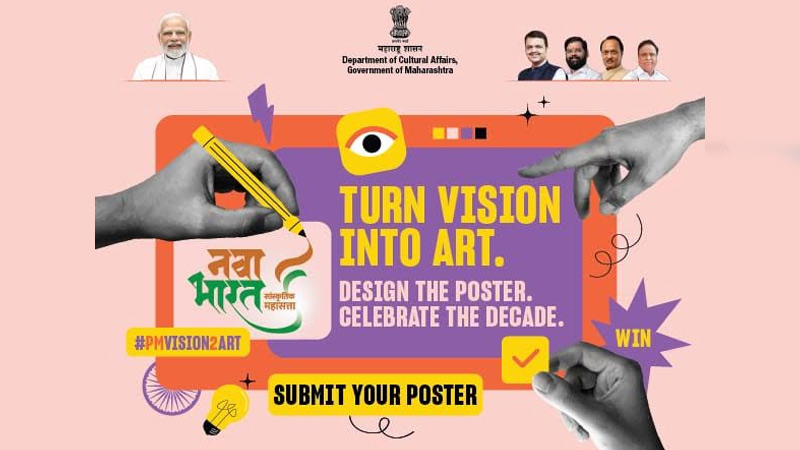
    MUMBAI: Brush up your creativity. The government of Maharashtra’s department of cultural afairs, in collaboration with the Advertising Agencies Association of India, has extended the deadline for the Turn Vision into Art: Pmvision2art campaign to 15th October 2025.

    The nationwide initiative invites designers, agencies, and creators to craft iconic posters celebrating India’s transformative programmes over the past decade, from Make in India and Digital India to Swachh Bharat AbhiyanAtmanirbhar Bharat, Beti Bachao Beti Padhao, Skill India, and the International Day of Yoga.

    Seventy-five winning entries will be showcased at major art galleries, featured in a commemorative coffee-table book, and highlighted on national platforms to inspire millions. Poster submissions should be A2 size and entries can be made via www.pmvision2art.com.

    Minister of cultural affairs Ashish Shelar said, “Creativity has the power to shape how we remember history and imagine the future. Turn Vision into Art is our invitation to the nation’s creative minds to capture the essence of India’s progress through art.”

    With this extension, the campaign offers artists a golden opportunity to make their mark while celebrating a decade of India’s visionary initiatives.

  • Britannia Marie Gold My Start Up Season 2 finale

    Britannia Marie Gold My Start Up Season 2 finale

    New Delhi:- Britannia Marie Gold, a 60+-year-old favorite brand of homemakers and the 3rd largest biscuit brand in India, announced the ten winners of its annual women entrepreneurship initiative, Britannia Marie Gold My Start-Up campaign. Under the aegis of this initiative, the 10 winners were felicitated and awarded INR 10 Lakhs each to kick-start their business ventures. Britannia Marie Gold My Startup is a platform for aspiring homemakers to fuel their entrepreneurial dreams, become financially independent, and transform themselves into job creators.

    In addition to financial assistance, the current edition of the Britannia Marie Gold My Start-Up initiative provides 10,000 homemakers access to India’s first-ever customized online skill development program, in partnership with National Skill Development Corporation (NSDC). The online course imparts these homemakers with the necessary entrepreneurial skills, boosting their confidence as they take their first step towards a self-reliant future. Britannia is confident that many of the homemakers who undergo the skill development training will move on to become entrepreneurs.

    Launched in February 2020, the 2nd edition witnessed, within a span of 3 months over 1.5 million applications from across the country and an overwhelming participation form 32 states and Union Territories. The means of entries was opened to include telephone call, web and WhatsApp. Over 25% of the entries came in via WhatsApp.  Following weeks of deliberation by an external jury who mulled over lakhs of applications, the Britannia Marie Gold team shortlisted 50 finalists.

    Britannia Industries Ltd Chief Commercial Officer,  Gunjan Shah,  said, “This is a very important initiative for Britannia driven by one of our flagship brands, Britannia Marie Gold. In its current edition, the initiative is touching the lives of over 10, 000 women and their families and we are privileged to be able to do so. Britannia is committed to provide a platform for aspiring women entrepreneurs to present their business ideas and stand a chance to gain financial help and skill development to set off on their entrepreneurial journey.”

    Britannia Industries Ltd Head of Marketing Vinay Subramanyam said, “Becoming entrepreneurs enables our award-winning homemakers to also become job creators who can transform many lives around them. One successful woman entrepreneur opens a wide window of opportunities for many, as was proven by our last year’s winners. We are delighted that through this initiative, we are introducing to the entrepreneurial world 10 more homepreneurs and skilling 10,000 homemakers to power their entrepreneurial journey. We strongly believe that when women become self-reliant and financially independent, entire families and societies and eventually, the country progresses.”

  • E-comm ecosystem to create 1.45 million jobs by ’21: KPMG-Snapdeal

    E-comm ecosystem to create 1.45 million jobs by ’21: KPMG-Snapdeal

    MUMBAI: Ecommerce sector is powering employment generation in India, a report by Snapdeal & KPMG has concluded.

    Snapdeal, in partnership with KPMG today released the findings of a study examining the macro-impact of the e-tail industry and the associated ecosystem, on the employment landscape in India. The study titled Impact of Ecommerce on Employment in India focuses on the role of e-tail in socio-economic development, outlining the alignment of measures with key government initiatives like Make in India, Digital India, Start-up India and Skilling India, among others.

    Highlights from the Study
    o  E-tail and allied ecosystem (logistics, warehousing, IT, ITeS) is expected to create direct employment for around 1.45 million workforce by 2021
    o  Logistics and warehousing sector is expected to be the largest contributor (approximately 55%) to direct employment opportunities in e-tail
    o  E-tail is expected to add 0.4 million high-skilled jobs by 2021
    o E-commerce in improving the socio-economic environment
    o  Impacted employment generation beyond metros –  70% of the online sellers expected to come from smaller towns by 2018-19
    o  Driving women empowerment and self-sustainability –  20% of total online sellers today are women
    o  Government initiatives like Make in India, Digital India, Start-Up India, Skill India will fuel growth and generate further employment for e-commerce

    The study further outlines the potential challenges and shares recommendations on the different roles that various participants like the government, industry bodies and e-commerce companies themselves can play in building more employment avenues and up-skilling.

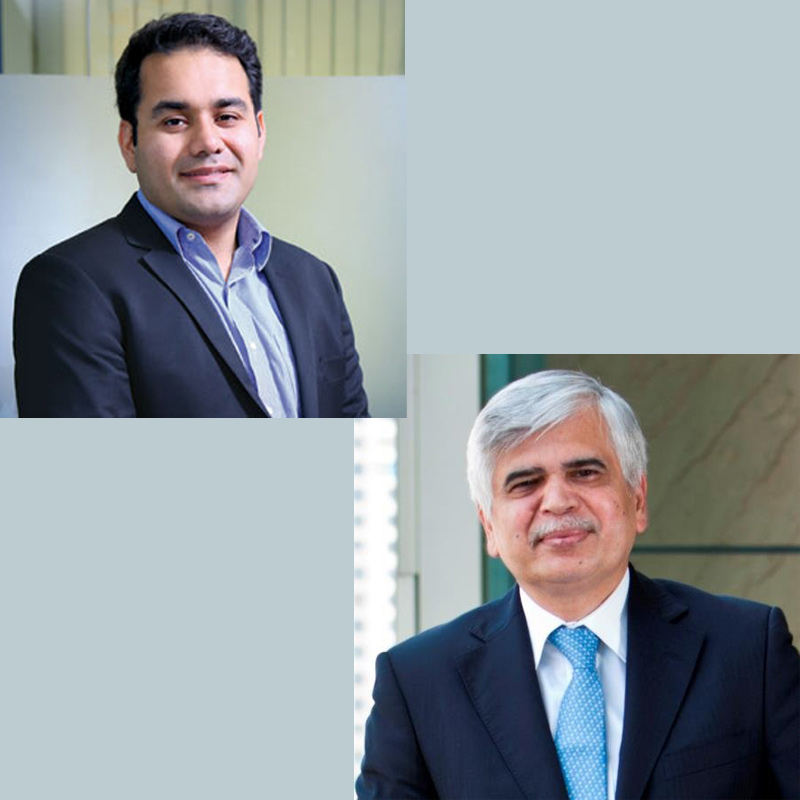
    Snapdeal Co-founder and CEO Kunal Bahl said, “The impact of e-commerce industry on the entire employment landscape has been the most exciting part of India’s digital growth story, and yet often the least spoken about. Through this report, we aim to highlight how the industry is generating direct and indirect jobs in core and associated industries, creating entrepreneurship opportunities in the deepest pockets of India and how it is influencing the socio-economic fabric of the country for a more balanced development.  At Snapdeal, we are working towards building the most reliable and frictionless digital commerce ecosystem in the country and we recognize the deep-seated role of our talent pool, our sellers and other associated partners in achieving this. We felt the need to conduct a systematic study to identify opportunities and challenges, that will further build models and skill sets to foster a mature, sustainable employment avenue. Our entrepreneurial culture and initiatives play a pivotal role in up-skilling our workforce for addressing the consumption needs of India.”

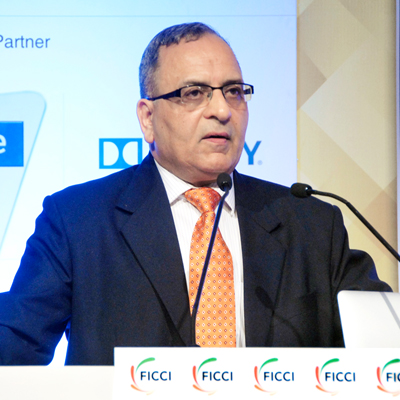
    KPMG India CEO Richard Rekhy said, “The contribution made by the e-commerce industry in employment creation is something that has been recognized for a while now. This report highlights how this impact can be increased multi-fold by facilitating an ecosystem of growth for the industry – developing a skilled workforce, promoting entrepreneurship, improving physical infrastructure, facilitating participation of SMEs and MSMEs, defining clear regulatory frameworks, and providing easier access to funds, etc. to name a few areas which require attention. These measures will ensure that growth in this industry becomes self-sustaining to support the expanding employment opportunities that it can offer.  With innovation and mobile e-commerce leading the way, this industry also looks to propel growth and generate abundant demand for IT/ITeS professionals in the years to come.”

    This report is part of a series of initiatives that Snapdeal has undertaken to build wider understanding about the evolving e-commerce landscape, and its seen and unseen impact on the country’s economy. This follows a previous study by KPMG, Impact of E-commerce on SMEs in India, which focused on creating an ecosystem for MSMEs and leveraging e-commerce for their growth.

  • E-comm ecosystem to create 1.45 million jobs by ’21: KPMG-Snapdeal

    E-comm ecosystem to create 1.45 million jobs by ’21: KPMG-Snapdeal

    MUMBAI: Ecommerce sector is powering employment generation in India, a report by Snapdeal & KPMG has concluded.

    Snapdeal, in partnership with KPMG today released the findings of a study examining the macro-impact of the e-tail industry and the associated ecosystem, on the employment landscape in India. The study titled Impact of Ecommerce on Employment in India focuses on the role of e-tail in socio-economic development, outlining the alignment of measures with key government initiatives like Make in India, Digital India, Start-up India and Skilling India, among others.

    Highlights from the Study
    o  E-tail and allied ecosystem (logistics, warehousing, IT, ITeS) is expected to create direct employment for around 1.45 million workforce by 2021
    o  Logistics and warehousing sector is expected to be the largest contributor (approximately 55%) to direct employment opportunities in e-tail
    o  E-tail is expected to add 0.4 million high-skilled jobs by 2021
    o E-commerce in improving the socio-economic environment
    o  Impacted employment generation beyond metros –  70% of the online sellers expected to come from smaller towns by 2018-19
    o  Driving women empowerment and self-sustainability –  20% of total online sellers today are women
    o  Government initiatives like Make in India, Digital India, Start-Up India, Skill India will fuel growth and generate further employment for e-commerce

    The study further outlines the potential challenges and shares recommendations on the different roles that various participants like the government, industry bodies and e-commerce companies themselves can play in building more employment avenues and up-skilling.

    Snapdeal Co-founder and CEO Kunal Bahl said, “The impact of e-commerce industry on the entire employment landscape has been the most exciting part of India’s digital growth story, and yet often the least spoken about. Through this report, we aim to highlight how the industry is generating direct and indirect jobs in core and associated industries, creating entrepreneurship opportunities in the deepest pockets of India and how it is influencing the socio-economic fabric of the country for a more balanced development.  At Snapdeal, we are working towards building the most reliable and frictionless digital commerce ecosystem in the country and we recognize the deep-seated role of our talent pool, our sellers and other associated partners in achieving this. We felt the need to conduct a systematic study to identify opportunities and challenges, that will further build models and skill sets to foster a mature, sustainable employment avenue. Our entrepreneurial culture and initiatives play a pivotal role in up-skilling our workforce for addressing the consumption needs of India.”

    KPMG India CEO Richard Rekhy said, “The contribution made by the e-commerce industry in employment creation is something that has been recognized for a while now. This report highlights how this impact can be increased multi-fold by facilitating an ecosystem of growth for the industry – developing a skilled workforce, promoting entrepreneurship, improving physical infrastructure, facilitating participation of SMEs and MSMEs, defining clear regulatory frameworks, and providing easier access to funds, etc. to name a few areas which require attention. These measures will ensure that growth in this industry becomes self-sustaining to support the expanding employment opportunities that it can offer.  With innovation and mobile e-commerce leading the way, this industry also looks to propel growth and generate abundant demand for IT/ITeS professionals in the years to come.”

    This report is part of a series of initiatives that Snapdeal has undertaken to build wider understanding about the evolving e-commerce landscape, and its seen and unseen impact on the country’s economy. This follows a previous study by KPMG, Impact of E-commerce on SMEs in India, which focused on creating an ecosystem for MSMEs and leveraging e-commerce for their growth.

  • NOFN being revamped to improve broadband connectivity, Rs 110,000 crore earned from spectrum auctions: Mukherjee

    NOFN being revamped to improve broadband connectivity, Rs 110,000 crore earned from spectrum auctions: Mukherjee

    NEW DELHI: President Pranab Mukherjee today said the architecture and design of the National Optical Fiber Network (NOFN) is being revamped to rapidly take broadband connectivity to Indian villages under Bharat Net.

    In his address to the joint sitting of both houses of Parliament on the first day of the Budget Session, the President said, “Transparent and efficient auction of spectrum has fetched highest ever price of about Rupees one lakh ten thousand crore.”

    He said policies like Spectrum trading and sharing have been finalised for optimum utilisation of resources.

    Mukherjee added that the recent interventions and subsequent rationalisation of duty structure in mobile handset manufacturing industry has led to near doubling of mobile handset production in the current year.

    According to Mukherjee, setting up world-class infrastructure for Electronics manufacturing across the country remains a priority for the Government. As many as 29 Electronic Manufacturing Clusters are under development.

    The country recorded the highest ever software exports during 2015. “By spreading the network of Common Service Centers and setting up BPOs in small towns and linking land record modernization with the use of space technology, my Government is taking the benefits of Digital India to common citizens. The Digital India Programme will give a big boost to citizen empowerment and knowledge economy,” the President added.

    Building upon the success over the past year, the Government’s endeavour is to scale new heights in Space. “Focus will be on completing the constellation of the Indian navigational satellites in 2016 to cater to indigenous navigation and location-based services,” Mukherjee said.

    Noting that “radio has once again emerged as the people’s medium,“ Mukherjee said the good response to the successful and transparent bidding for the first batch of private FM Radio for phase III “augurs well for the medium.”

    He noted that establishment of new radio stations has received a fresh impetus. The bidding of the first batch of private FM Radio for phase III comprised 135 channels in 69 cities.

    The Government had taken several measures to improve the quality of governance. People’s participation in policy making through initiatives like MyGov had taken firm roots, he said, adding that the Government had taken up an initiative for providing 500 e-governance services through Public Private-Partnership in 12 states of the country.

    Noting that youth are the future of the country, Mukherjee said ensuring Yuvaon ko Rojgaar through massive employment generation is a top goal for the Government. “We are driving job creation through an integrated set of initiatives including Make in India, Start up India, Mudra, Skill India, etc.”

    A series of reforms have been initiated to help convert job seekers into job creators. The Government has launched the Start-Up India campaign, which would deepen, expand and support the innovation eco system in the country.

    The Government’s innovative initiatives have helped India jump up 12 places in the latest rankings by the World Bank on Ease of Doing Business. “Notably, the Make in India initiative has achieved a 39 per cent increase in FDI inflow despite an adverse global investment climate.”

    Noting that sports is the best way to Swasth India, he said the Government “successfully hosted the 12th South Asian Games from 5 to 16 February, 2016 at Guwahati and Shillong in which more than 3500 sportspersons from all the SAARC countries participated. The games were the biggest ever sporting event in North East India.”

  • NOFN being revamped to improve broadband connectivity, Rs 110,000 crore earned from spectrum auctions: Mukherjee

    NOFN being revamped to improve broadband connectivity, Rs 110,000 crore earned from spectrum auctions: Mukherjee

    NEW DELHI: President Pranab Mukherjee today said the architecture and design of the National Optical Fiber Network (NOFN) is being revamped to rapidly take broadband connectivity to Indian villages under Bharat Net.

    In his address to the joint sitting of both houses of Parliament on the first day of the Budget Session, the President said, “Transparent and efficient auction of spectrum has fetched highest ever price of about Rupees one lakh ten thousand crore.”

    He said policies like Spectrum trading and sharing have been finalised for optimum utilisation of resources.

    Mukherjee added that the recent interventions and subsequent rationalisation of duty structure in mobile handset manufacturing industry has led to near doubling of mobile handset production in the current year.

    According to Mukherjee, setting up world-class infrastructure for Electronics manufacturing across the country remains a priority for the Government. As many as 29 Electronic Manufacturing Clusters are under development.

    The country recorded the highest ever software exports during 2015. “By spreading the network of Common Service Centers and setting up BPOs in small towns and linking land record modernization with the use of space technology, my Government is taking the benefits of Digital India to common citizens. The Digital India Programme will give a big boost to citizen empowerment and knowledge economy,” the President added.

    Building upon the success over the past year, the Government’s endeavour is to scale new heights in Space. “Focus will be on completing the constellation of the Indian navigational satellites in 2016 to cater to indigenous navigation and location-based services,” Mukherjee said.

    Noting that “radio has once again emerged as the people’s medium,“ Mukherjee said the good response to the successful and transparent bidding for the first batch of private FM Radio for phase III “augurs well for the medium.”

    He noted that establishment of new radio stations has received a fresh impetus. The bidding of the first batch of private FM Radio for phase III comprised 135 channels in 69 cities.

    The Government had taken several measures to improve the quality of governance. People’s participation in policy making through initiatives like MyGov had taken firm roots, he said, adding that the Government had taken up an initiative for providing 500 e-governance services through Public Private-Partnership in 12 states of the country.

    Noting that youth are the future of the country, Mukherjee said ensuring Yuvaon ko Rojgaar through massive employment generation is a top goal for the Government. “We are driving job creation through an integrated set of initiatives including Make in India, Start up India, Mudra, Skill India, etc.”

    A series of reforms have been initiated to help convert job seekers into job creators. The Government has launched the Start-Up India campaign, which would deepen, expand and support the innovation eco system in the country.

    The Government’s innovative initiatives have helped India jump up 12 places in the latest rankings by the World Bank on Ease of Doing Business. “Notably, the Make in India initiative has achieved a 39 per cent increase in FDI inflow despite an adverse global investment climate.”

    Noting that sports is the best way to Swasth India, he said the Government “successfully hosted the 12th South Asian Games from 5 to 16 February, 2016 at Guwahati and Shillong in which more than 3500 sportspersons from all the SAARC countries participated. The games were the biggest ever sporting event in North East India.”

  • I&B secy Bimal Julka stresses value of social media in reaching out to people

    I&B secy Bimal Julka stresses value of social media in reaching out to people

    NEW DELHI: Information and Broadcasting Ministry Secretary Bimal Julka has said social media initiatives of the government had provided people a platform to communicate directly with the government through methods such as Crowdsourcing, which encouraged such innovations.


    He stressed the need for qualitative information flow and interface of citizens with the communication strategy of the government. “This has led to people centric communication and facilitated enhanced outreach and visibility of government communication across platforms,” he said.


    Julka said this in discussions with Queensland University of Technology, Australia vice chancellor Professor Peter Coaldrake, here today.

    “The communication paradigm has undergone a shift with a 360 degree approach being adopted to address the communication needs and challenges,” he said.


    He also referred to flagship schemes of the government namely Digital India, Skill India, Make In India, which had provided an opportunity to media units to reach out to defined target audiences. 


    He specifically highlighted the use and effectiveness of initiating Talkathons, which provided a direct interface with the people leading to effective citizen centric communication. “Such initiatives would encourage a culture of inclusive and participative decision making,” he said.
     

    During the meeting, Julka and Professor Coaldrake reviewed the current training mechanism between the Ministry and QUT with regard to in-service training of Indian Information Service officers. Both agreed that the future training agenda should include contemporary issues related to media and communication studies. They emphasized that Skill Development was critical for in-service training of officers handling government communication.