Tag: SK Arora

  • Content regulation draft to be redone

    Content regulation draft to be redone

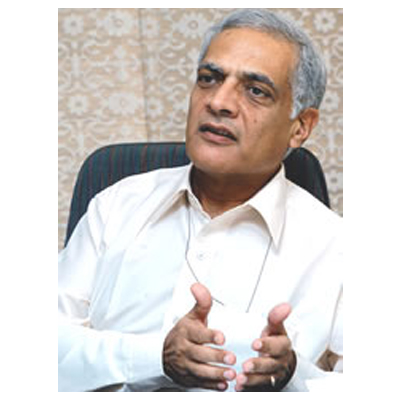
    NEW DELHI: Unhappy with the draft that has been prepared on content regulation, information and broadcasting secretary SK Arora has asked the panel responsible to rework it.

    Though no specific reasons were cited, the ministry is apparently unhappy with the way some of the issues have been dealt with as also the length of the 65-page draft, which is seen as being too unwieldy.

    Earlier in the week, Arora, who heads a 30-member committee comprising representatives from industry, trade and consumer bodies, conveyed his observations to a sub-panel handling the content regulation draft.

    However, no time frame has been set for the work to be redone, which is an indicator that the government might bring in such a regulation through an existing piece of legislation instead of waiting for the proposed Broadcast Bill 2006 to be enacted into law.

    The draft aims at regulating and setting parameters for content to be aired on TV and radio networks, including broadcast of adult fare and sting ops done by news channels.

    A peek into a section of this draft also highlights that the proposed legislation could not only hamper functioning of news channels, but is also intrusive.

    If okayed by lawmakers in its present state, it could well be the end of sting operations and coverage of issues where high profile politicians and personalities are involved.

    Sample this part: TV channels must not use material relating to persons personal or private affairs or which invades an individual’s privacy unless there is an identifiable public interest reason for the material to be broadcast.

    Who decides what constitutes an individual’s privacy? The government or the regulator, of course.

    Examples of public interest would include, according to the draft, revealing or detecting crime, protecting public health or safety, exposing misleading claims made by individuals or organizations or disclosing incompetence that affects the public.

    Nowhere does the proposed regulation dwell on misuse of official power by a public personality — an issue that’s increasingly becoming rampant in India.

    The draft then goes on to state that news should not jeopardize any ongoing criminal investigations and (TV channels) should avoid a trial by media since “a man is innocent till proven guilty by law”.

    Now this could also mean that if a politician’s son is being tried by law for using drugs in the official residence, TV news should not do extensive coverage of the incident. However, the draft regulation is silent what should be done in case such accused themselves go on air and ‘use’ the media to influence opinion making.

    “Channels mounting sting operations with use of hidden cameras and recording devices are required to strictly adhere to the rules prescribed,” the draft states, going on to put the onus on TV news channels of proving such a programme is in public interest.

  • Broadcast Bill still has minefields to clear before becoming law

    Broadcast Bill still has minefields to clear before becoming law

    So the government again renews its long-in-the-trying attempt to get broadcast regulation in place. Is it just us or is this feeling of déj? vu that it may be another exercise in futility shared by the industry as well?

    Still, that doesn’t take away the importance of having a comprehensive legislation for the sector that is estimated to be worth Rs 427 billion in 2010 according to the PricewaterhouseCoopers report presented at this year’s Ficci Frames convention.

    The Broadcasting Bill has been dangling on an uncertain thread for close to a decade now. Several information and broadcasting (I&B) ministers in several governments, who have tried to maneuver it past the corridors of the houses of Parliament and into law, have come and gone. All have failed; none have had the drive to push it through. It has proved to be an untouchable piece of legislation; a hot potato that is dropped every time an effort is made.

    The Bill tries to address the issue of encouraging domestic originating content on TV channels by mandating a 15 per cent share for it.
    _____****_____

    Another attempt is being made to enact the covered-with-dust Bill. A draft has been prepared for the Union Cabinet’s persual and initial indications are that it is going to impact almost everyone in the broadcasting food chain. It is slated to be introduced in Parliament during the Monsoon session by not-even-a-year-in-the-seat I&B minister Priya Ranjan Dasmunsi.

    I&B ministry secretary SK Arora has been working for a long time on putting together the document. Help has been sought from several quarters while drafting the Bill: the US FCC, Casbaa in Hong Kong, other consultants, consumer groups and interested parties.

    The Bill tries to address the issue of encouraging domestic originating content on TV channels by mandating a 15 per cent share for it. Then it caps cross media ownership at 20 per cent, and even share of voice for a TV channel or cable TV network nationally at 15 per cent. A Broadcasting Regulatory Authority of India (Brai) is to be set up (have we not heard this one before?), which will monitor the content on TV channels and oversee the broadcast industry in all its aspects the same way as the Telecom Regulatory Authority of India does in the telecom sector.

    No broadcaster or cable TV operator is going to cede power and control they have acquired over the years they have been operating in India.
    _____****_____

    The first piece of legislation is more than welcome and should in the medium to long term give a boost to local TV production and more so animation. Of course, it goes without saying that it is in the interest of local broadcasters to create local content that appeals to audiences and there’s no running away from it if they are seeking to make money out of the market. That they have so largely shied away from doing so, may be part of their business plan. There will be some bickering about this by some of the players.

    Of course, the government will have to specify whether the 15 per cent content cap relates to fresh domestic prime time content or to recycled content. Remember some broadcasters might buy garbage worthy shows dirt cheap and put them on air late at night in order to fulfil the legislative norms.

    Additionally, a transition period will have to be specified so that the domestic production industry gears up to deliver the quality animation and programming that is demanded internationally, so that international broadcasters can – if they want – buy worldwide rights.

    On the whole, over time the 15 per cent imposition could well catapult TV documentary makers and animation studios into the next level. Though some argue that the cap should be higher, it is a good start.

    That is just the soft part of the Bill though. Trying to control share of voice and restricting cross media ownership are two clauses that are arguably going to get the entire Bill stuck in a quagmire; lot of it political. Reason: hectic lobbying is going to commence to do away with them. It is these clauses which in the past have prevented the Bill from becoming a law. And, it is quite likely to do the same once again.

    No broadcaster or cable TV operator is going to cede power and control they have acquired over the years they have been operating in India. Many of their business models are based on this power.

    The setting up of Brai is another moot point. It’s about time a content watchdog was set up. The other option is that the industry kowtows to a xenophobic government’s every content concern and censorship demand.

    Additionally, the draft Bill fails to clearly address broadcasting in a converged era to hand held devices and mobile phones.

    A key question everyone is asking: will the Bill go through this time? It looks unlikely to have an easy ride and, in all probability, will be knocked into another shape and form. Or, it may end up being still born. Its passage will depend on how much pressure the I&B mandarins — and the Congress-led coalition government — are willing to withstand not only from the Opposition, but also allies, some of whose sympathisers have big media dreams in East and South India.

  • Prasar Bharati financial rejig near completion

    Prasar Bharati financial rejig near completion

    NEW DELHI: The Indian government is close to taking a final decision on the financial restructuring of pubcaster Prasar Bharati, which manages Doordarshan and All India Radio.

    A group of ministers (GoM) set up to look into the issue has finalised its report, which now will be vetted by the information and broadcast ministry before being put up at a cabinet meeting.

    A government official, while confirming that the restructuring report is complete, said, “The GoM and I&B ministry will have to finalise the format in which it will be put up before the Cabinet as the broad contours have been thrashed out.”

    Though the matter is likely to go to the Cabinet after the present session of Parliament gets over in a couple of weeks’ time, the official refrained from giving a time frame for a formal announcement in this regard.

    One of the options mentioned in the report, according to sources, is the government holding an equity stake in Prasar Bharati Corporation in lieu of the assets (including real estate and infrastructure), which would be transferred from government books to the Corporation.

    However, the GoM has attempted to tread carefully on the issue of the sensitive status of employees of Prasar Bharati.

    Almost 99 per cent of the over 45,000 employee base of Prasar Bharati is treated as part of the government and enjoy various perks as government servants.

    Transferring the employees to Prasar Bharati, an autonomous body created under an Act of Parliament, will make them lose some of the privileges like low-cost housing facility.

    The government official said the cabinet will have to take a final view on such matters.

    Employee status has been a ticklish issue within and outside Prasar Bharati with various employees’ unions of the Corporation opposing any change in their status, least of all being categorized as private sector employees.

    The workers’ unions had even petitioned Prime Minister Manmohan Singh last year to scrap the Prasar Bharati Act and revert DD and AIR to full government control.

    A committee, headed by I&B secretary SK Arora, was appointed by the government on 30 March, 2005 with the mandate to suggest a viable capital and financial structure for the cash-strapped Prasar Bharati to facilitate the strengthening of its functioning.

    The terms of reference of the panel was to propose a viable capital and financial structure for Prasar Bharati, while taking into account the broadcaster’s role as a pubcaster and the need to maximise revenue-earning potential through commercial operations.

    This panel was to submit its report to a GoM that was to add its own perspective.

    Though Prasar Bharati closed the last financial year ended 31 March 2006 with a record revenue mop up of Rs 12.47 billion, the gap between expenditure and income is still huge.

    For FY07, Prasar Bharati has set itself a revenue target of Rs 15 billion.

  • Delhi HC orders Government to implement CAS within four weeks

    Delhi HC orders Government to implement CAS within four weeks

    NEW DELHI / MUMBAI: In a decision that could have major ramifications for the Indian television industry, the Delhi High Court has ordered the government to enforce the rollout of addressability in cable pay television (conditional access system or CAS) in India within four weeks.

    Delivering its verdict on a writ petition filed by a bunch of MSOs, after reserving the judgement for several months, the court also directed the government to pay damages worth Rs 100,000 to the petitioners. The court has ordered the government to make haste on the report of the Telecom Regulatory Authority of India (Trai), which has been pending before it since October 2004.

    The court has ordered the government to revoke its notification of 27 February 2004 that scrapped the rollout of CAS in the three metros of Mumbai, Delhi and Kolkata in phases (it eventually got implemented only in Chennai). This in effect will revive the notification of 10 July 2003 which provided for partial CAS in these three metros.

    The Delhi HC also said that the government cannot denotify an earlier notification on CAS and keep the issue in limbo. The government has the right to appeal against the order in Delhi HC and Supreme Court.
    No immediate reaction, however, was available from the government as information and broadcasting ministry officials said that the court verdict is being “studied in its entirety.”

    The court gave the order in response to a writ petition filed by MSOs in response to the government’s decision to withdraw CAS. The petitioners include Hathway, INCablenet and RPG’s cable company that was bought over by Siti Cable last year.

    Reacting to the court direction on CAS, MSO Alliance president Ashok Mansukhani said that their viewpoint stands vindicated. “The verdict is a clear direction to the government to start the process of CAS, which will help bring transparency in the market and choice to consumers.”

    Added Hathway Cable & Datacom CEO K Jayaraman: “We will cooperate wholeheartedly with the government to roll out CAS.”

    But with Tata Sky preparing to launch in June, is the timing too close for cable to have an advantage over direct-to-home (DTH)? “The deployment of digital cable is going to be in a phased manner as directed by the court in line with the last notification. It will evolve first in the notified areas of the metros specified, like south Mumbai and Delhi. Besides, cable networks who can offer value additions to subscribers like data and telephony will stand to gain. Also, analogue cable will be available,” said Siticable CEO Jagjit Kohli.

    Will supply of boxes at such a short notice be a matter of concern? Cable Operators’ Federation of India head Roop Sharma brushes aside such criticisms saying, “The cable industry has enough stock of set-top boxes.”

    Welcoming the judgement, Sharma further said, “This would break the monopoly of broadcasters and bring respite to consumers also.”

    However, National Cable and Telecom Association president and owner of Delhi’s Home Cable Network Vikki Chowdhry was more cautious in his reaction, saying the full text of the court order has to be seen before jumping to any conclusion.

    According to Chowdhry, if the court order pertains to CAS rollout in only south zones of some cities, as once had been discussed earlier, then the impact would be neutralised and “create legal and operational problems.”

    Chowdhry added that if the south zone formula was implemented by the government, then his company would appeal against it to higher authorities, including the Supreme Court.

    The court dismissed the government’s contention that implementation of CAS was unjustifiable. The government has been ordered to compensate the MSOs for losses incurred due to the non implementation of CAS to the tune of Rs 100,000.

    In January, information and broadcasting secretary SK Arora appeared before the court and sought three months time to implement CAS in the country. The request was rejected by Justice Vikramjit Sen. Petitioner Hathway Cable Datacom’s counsel Indu Malhotra submitted that the government was only buying time to delay the implementation of CAS.

    Additional solicitor general PP Malhotra, who appeared for the government, had submitted that the issue of CAS had been decided by another division bench of the High Court in December 2003.

    CAS rollout plan as originally envisaged in 2003:

    * Initial 15-day period will be used primarily for creating consumer awareness about CAS, procurement of set-top boxes by cable operators and MSOs, and for broadcasters of pay channels to conduct promotional campaigns.

    * Each of the three notified metro cities (Delhi, Mumbai, and Kolkata) would be divided into four zones for the purpose of staggered rollout of the addressable system of transmission of pay channels.

    * After the initial 15-day period, within a one-month time frame, in Zone A in each metro, pay channels can be watched only with the use of STBs. Pay channel consumers in this zone will be charged, in addition to the price of the basic tier plus taxes, only for the individual channels of their choice as per the pre-announced rates set for them.

    Consumers of free-to-air (FTA) channels, who will not need an STB, will be charged only the basic FTA channel package charge plus taxes. In zones B, C, and D, cable operators will charged only for the basic tier plus taxes for all channels, including all available pay channels.

    * From Day 1 of the second month onwards, CAS will take effect in Zone B in each metro, while in zones C and D subscribers will pay only for the basic tier plus taxes for all channels.

    * And so it follows in Zone C from Day 1 of the third month onwards and Zone D from Day 1 of the fourth month onwards.