Tag: Siya Ke Ram

  • DSP Mutual Fund snaps up marketing powerhouse Aparna Kulkarni

    DSP Mutual Fund snaps up marketing powerhouse Aparna Kulkarni

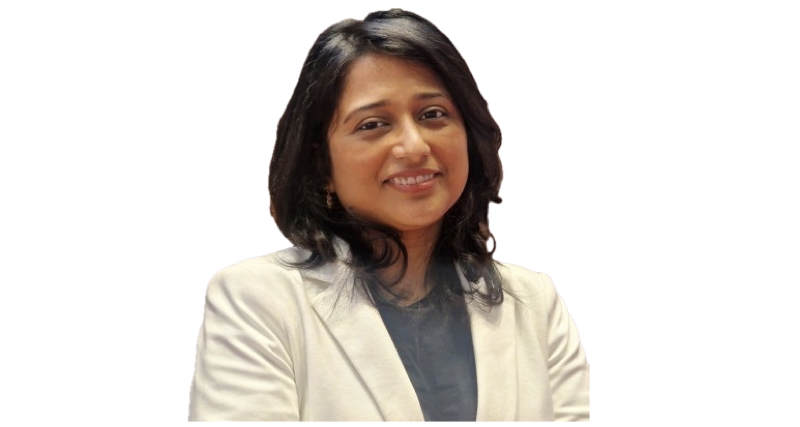
    MUMBAI: Aparna Kulkarni has stepped into the role of vice president of consumer marketing at DSP Mutual Fund, leaving behind a glittering six-year stint at the Natural Diamond Council.

    At the Natural Diamond Council, Kulkarni built what she calls “the world’s biggest content publishing platform” for natural diamonds, masterminding celebrity campaigns and driving digital performance.

    Her impressive media background includes key positions at Times Network, where she headed marketing for premium movie channels, and Star India, where she managed high-profile shows including Siya Ke Ram and MasterChef India.

    Kulkarni now takes charge of brand marketing and investor education at DSP, bringing her content expertise and digital savvy to the financial services firm at a time when mutual funds are racing to connect with India’s rapidly expanding retail investor base.

    From entertainment to luxury to finance, Kulkarni’s fast-paced career shows no signs of slowing as she takes on this latest challenge at the respected fund house.

  • Star Bharat experiments with early morning slot

    Star Bharat experiments with early morning slot

    MUMBAI: Star Bharat is all set to experiment with weekend morning slot by launching a three-hour programming band from 5 August. The channel won’t air original programming but will broadcast its library content. The channel will telecast three mythological shows. The new time band will start at 7 am with Siya Ke Ram, followed by Mahabharat at 8 am and Devon Ke Dev Mahadev at 9 am.

    Siya Ke Ram and Devon Ke Dev …Mahadev were produced by Nikhil Sinha under the banner of Triangle Film Company. The former presents the epic Ramayana from Sita’s perspective. It was originally aired in November 2015 and went off-air in November 2016. Mahadev originally premiered on 18 December 2011 and was one of the longest-running shows on Life OK (now Star Bharat). It was dubbed into several languages and ran until 14 December 2014 for a total of 820 episodes. The series revolves around the legend of Lord Shiva.

    Swastik Productions’ Mahabharat originally aired from September 2013 till August 2014. The mythological television drama series was based on the Sanskrit epic with the same name.

    Star Bharat replaced Life Ok from 28 August 2017 with the launch of five new shows besides Life OK’s Savdhaan India. During its launch, the channel had three hours of fictional programming on the weekday and an hour of weekend programming.

  • Lacklustre viewership may force SET to pull off ‘Prithvi Vallabh’: Anirudh Pathak

    Lacklustre viewership may force SET to pull off ‘Prithvi Vallabh’: Anirudh Pathak

    MUMBAI: Sony Entertainment Television’s (SET) bet on magnum opus Prithvi Vallabh didn’t go as planned for the channel. The show, according to its producer Anirudh Pathak, is likely to go off air from 1 July after completing its 45th episode.

    Since its launch in January, Prithvi Vallabh has been getting mixed reviews. The channel had earlier planned to divide the show into two seasons of 40 episodes each but the failure to garner the desired viewership has compelled SET to rethink this strategy.

    Speaking to Indiantelevision.com, Pathak said that there is a need to better think about characters while picking historical plots. “I thought Prithvi would do well as the story of an untold tale from the soils of Indian dynasty. But it’s unfortunate that it didn’t. It’s a learning for me. Now, I know that if one is producing a historical show, they should make sure that the audience knows about the character. For historical shows, only a well-known character can garner good ratings. I personally feel that shows with a classic storyline should not be run on the weekends. Had it been a daily soap, the show could have garnered better ratings,” he said.

    Prithvi Vallabh was the first show to come out of SET’s new sub brand SET Originals. Based on the book by well-known Gujarati writer Kanaiyalal Maneklal Munshi, it depicts the history, mystery, vengeance and a love story between two arch-rival warriors Prithvi and Mrinal living in a kingdom far away.

    Pathak is no stranger to the genre having produced titles such as Devon Ke Dev..Mahadev, Siya Ke Ram and Mahakumbh, which have done fabulously well. Prithvi Vallabh was also the first show under his own banner launched in 2015.

    A student of Sanskrit, Pathak has been keen on working on mythological and historical shows. His interest began in the early TV years when saas-bahu sagas were dominant and the mythological and historical genres were not even considered to be capable of engaging viewers. “When I was doing saas-bahu shows, nobody, at that time, wanted to invest their money on big-budget serials. But now, they do. And since I always had an inclination towards myths and history, I decided to work on these genres. After Devon Ke Dev..Mahadev became a hit I was pretty much convinced that the Indian audience has the appetite to consume such content,” he added.

    The storytelling format has also changed since families that once used to get together and watch TV are now watching independently on their phones. So much so that people even in remote areas are consuming and comparing content such as Breaking Bad and Game of Thrones with Indian shows.

    Pathak feels that channels will now focus on finite content and gradually long-running shows will cease to exist.

    Pathak started his career as a writer with a crime show entitled Mujrim Kaun that aired on Sahara channel. After that, he worked with Balaji Telefilms as a writer for renowned shows like Kyunki Saas Bhi Kabhi Bahu Thi, Kavyanjali, KumKum and Karam Apna Apna. During his tenure with Life OK, he also helmed other acclaimed shows such as The Adventures of Hatim. Post Life OK, he was the name behind Siya Ke Ram, a show which depicted Ramayana from Sita’s point of view.

    Pathak has created Chandrashekhar for Star Bharat, a show honouring one of the greatest freedom fighters of India, Chandrashekhar Azad. The show captures the entire life of Azad and what made him one of the undisputed fearless freedom fighters of all times. He is also making another historical show named Shankaracharya- based on the life of Adi Guru Shankaracharya, an Indian philosopher.

    In the near future, he is in talks with Colors for his upcoming historical show, which is a recreation of magnum opus Mughal-E-Azam. He is also planning to crack a deal with Eros Now on the mytho-historical genre for his upcoming digital series.

    Also Read :

    Ace creative visionary Anirudh Pathak helms his first individual project ‘Prithvi Vallabh’

    ‘Prithvi Vallabh’ is 20% history, 80% mystery: Anirudh Pathak

    Star Plus readies new mythological series ‘Siya Ke Ram’

  • Star Bharat announces the launch of Chandrashekar

    Star Bharat announces the launch of Chandrashekar

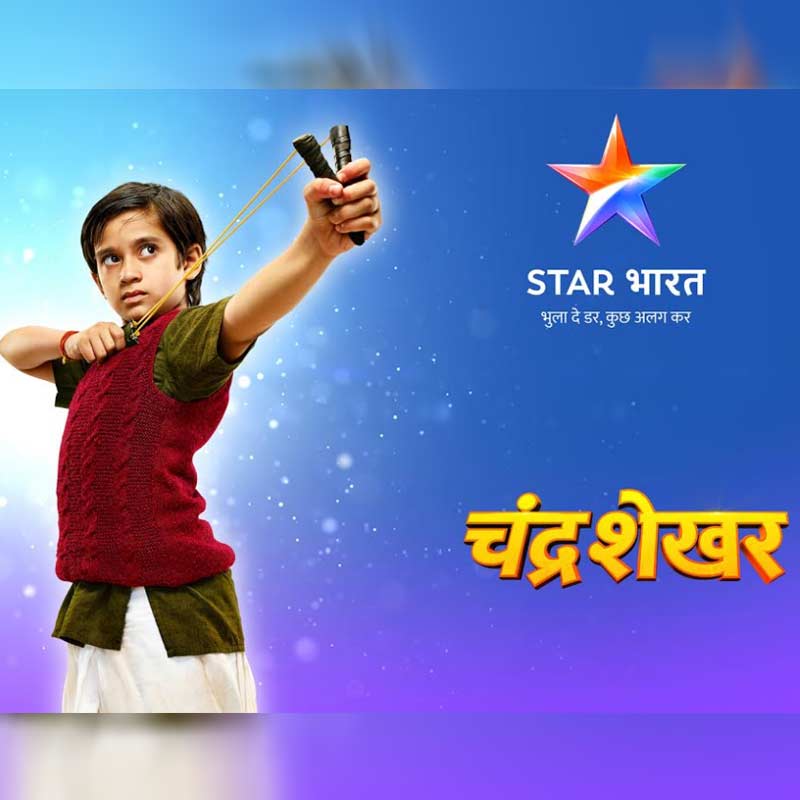
    MUMBAI: Star Bharat announces the launch of its marquee show Chandrashekar a finite fiction series that narrates the story of firebrand freedom fighter Chandrashekar Azad in about 110 episodes. Set to launch on March 12th at 10 pm the series will capture each incident which marks the change from an ordinary young boy to the maverick revolutionary who decided to stand up for what he believed in. The show echoes the channel’s brand proposition ‘Bhula De Darr Kuch Alag Kar’ and inspires its viewers to overcome their fears. 

     Produced by Anirudh Pathak of Mahadev, Siya ke Ram, and Mahakumbh fame, the show set in pre-Independence India, charts Chandrashekar Tiwari’s transition from a young carefree 8-year-old to Chandrashekar Azad, whose mere mention made the British government break out in cold sweat. This show projects Chandrashekar as a multi-faceted personality, driven by the core philosophy that to fear is to die many times over. Inspired by his life, writer’s galaxy production has recreated his formative years based on events documented about this great hero.

    Star Bharat Spokesperson said, “We believe in content that inspires change. Like our other clutter breaking shows, Chandrashekar too breaks the mould of a typical freedom struggle saga. Instead, it focuses on the minutiae of his life, the little details, the many twists and turns in his life that made him what he was – a towering revolutionary who knew no fear. Chandrashekar is a seamless fit with Star Bharat’s brand philosophy of ‘Bhula de Darr, Kuch Alag Kar’. We hope our show inspires our audience to work through their fears, overcome obstacles to meet their goals just like Chandrashekar did.”

    Accomplished writer-producer Anirudh Pathak added, “Chandrashekar, even while it narrates the journey of one of India’s greatest revolutionaries, is also an inspiration. It shows that if our focus is right then come what may we will achieve what we set out to. Not many people know that Chandrashekar belonged to a remote village and by his sheer grit, determination, and courage came to be regarded as the commander in chief of the revolutionary army. This is also the story of a mother-son relationship, a journey of mother to motherland story where the mother is the source of Chandrasekhar’s courage and bravery. Chandrashekar resonates powerfully with Star Bharat’s brand philosophy of “Bhula de Dar, Kuch Alag Kar.”

    Chandrashekhar will feature Ayaan Zuabir Rahmani as young Chandu, Sneha Wagh as Chandu’s inspirational mother Jagrani Devi and  Satyajeet Sharma as Sitaram Tiwari, Chandu’s father.

  • Star Plus enhances fiction programming; goes seven days

    Star Plus enhances fiction programming; goes seven days

    MUMBAI: Star India’s Hindi general entertainment channel (GEC) Star Plus is all set to redefine its fiction programming.


    The channel will run its primetime shows all seven days from Monday to Sunday.


    All the shows between 8.00 PM to 10.30 PM slot will be aired on Saturdays and Sundays as well.


    A source close to the development informed Indiantelevision.com, “The step is taken to give fiction more importance. The channel is going to aggressively promote and back its fiction programming. This is why the reality show Nach Baliye’s season 8 has been kept on hold for atleast two months.”


    The channel had already extended its early primetime slot by stretching all the shows slotted between 5 pm to 7.30 pm to all seven days. Mohi – Ek Khawab Ke Khilne Ki KahaniMere Agne MeinSuhani Si Ek Ladki, Saath Nibhana Saathithya  and Yeh Hai Mohabbatein.


    On the other hand shows like Siya Ke Ram at 8 pm, Silsila Pyar Ka at 8:30 pm , Diya Aur Baati Hum at 9pm, Yeh Rishta Kya Kehlata  Hai at 9:30 pm, Tamanna  at 10 pm and channels upcoming show Dehleez at 10 :30 pm was slated on weekdays only. But now after Star’s decision to extend the weekday programming the shows will run all seven days.

  • Star Plus enhances fiction programming; goes seven days

    Star Plus enhances fiction programming; goes seven days

    MUMBAI: Star India’s Hindi general entertainment channel (GEC) Star Plus is all set to redefine its fiction programming.


    The channel will run its primetime shows all seven days from Monday to Sunday.


    All the shows between 8.00 PM to 10.30 PM slot will be aired on Saturdays and Sundays as well.


    A source close to the development informed Indiantelevision.com, “The step is taken to give fiction more importance. The channel is going to aggressively promote and back its fiction programming. This is why the reality show Nach Baliye’s season 8 has been kept on hold for atleast two months.”


    The channel had already extended its early primetime slot by stretching all the shows slotted between 5 pm to 7.30 pm to all seven days. Mohi – Ek Khawab Ke Khilne Ki KahaniMere Agne MeinSuhani Si Ek Ladki, Saath Nibhana Saathithya  and Yeh Hai Mohabbatein.


    On the other hand shows like Siya Ke Ram at 8 pm, Silsila Pyar Ka at 8:30 pm , Diya Aur Baati Hum at 9pm, Yeh Rishta Kya Kehlata  Hai at 9:30 pm, Tamanna  at 10 pm and channels upcoming show Dehleez at 10 :30 pm was slated on weekdays only. But now after Star’s decision to extend the weekday programming the shows will run all seven days.

  • ‘Costume drama is not everybody’s cup of tea:’ Nikhil Sinha

    ‘Costume drama is not everybody’s cup of tea:’ Nikhil Sinha

    With the increase in the number of television channels in India, the demand for content producers has gone up, which in turn has seen many a new players making their entry into the industry that was once monopolised by a handful few. One such new production house is Triangle Film Company helmed by Nikhil Sinha, which has made its mark in a short-period with its social, historical and mythological shows.


    After producing shows like Baba Aisa Var Dundho, Akbar Birbal, Adventure of Hatim and Devo Ke Dev Mahadev, Sinha’s Triangle Film Company is now busy with its new show Siya Ke Ram on Star Plus.


    In conversation with Indiantelevision.com’s Sonam Saini, Sinha shares his views on the television content space in India, his experience of producing costume dramas and more. 


    Excerpts:


    From director of photography to producer of ‘Baba Aisa Var Dundho,’ how has been the journey so far?

    The journey has been superb and amazing so far from director of photography to director to producer. It has been like an accreditation from one to another.


    What according to you is the most challenging genre for television production?

    The entire production game itself is a very challenging task. From direction to production everything is a task. When it comes to genres, then obviously costume dramas are the most challenging ones because they are more elaborate and scaled.


    While in social dramas, you can make a show with 70 – 80 people in a unit, in costume dramas no less than 200 – 300 people are involved. Moreover, a lot of aspects are involved from pre-production to set-designing to shooting and graphics. So there are more layers here and hence it’s more challenging.


    Apart from television, has Triangle Film Company started creating content for other platforms?

    We are working on a few concepts for the digital platform but there’s nothing concrete as yet. We believe that when we do something for the digital platform, it needs to have a unique proposition and we’re waiting to find that.


    From the company’s launch to now, how would you rate yourself in terms of creating unique concept shows?

    From the time I started my company, we have worked on five shows including Baba Aisa Var Dundho, Devo Ke Dev Mahadev, Adventure of Hatim, Akbar Birbal and Siya Ke Ram. Moreover, we produced four shows in five years and they all are quite unique. They have been the most talked about shows for their concept and production. Therefore, we have been able to fulfil the vision that the company was launched with. I am happy with the way we are producing shows, which will be remembered over the years.  


    What sets Triangle Film Company apart from the other content production houses in the industry?

    The desire to deliver quality content, which oozes positivity. In all our shows, we have tried to cover different strata of society. We are not only making shows for the masses but also for the elite and niche classes.


    Our show Mahadev was watched by everyone across the country. The idea is to create the content for the entire family and the society as a whole and that’s what makes us different from the others.


    We have set the bar high and that I believe is the most important thing. So every time we create a show, we set a higher benchmark in the industry so that we can compete with the western world. That is the basic philosophy that we follow.


    Mythology has become a popular genre on Indian television and you’ve also dabbled in the genre. What’s the lure there given that they are more expensive in terms of production?

    The more expensive the show, the more hard work it requires. You have to have more scale, bigger sets and a host of people are required. It is basically the nature of accepting challenges that is what drives us towards the mythological genre. Moreover, costume drama is not everybody’s cup of tea. It takes a lot of courage and hard work to produce such shows. 


    Are mythological shows a profitable proposition?

    Whether you do a social, fantasy or mythological show, the profit is always calculated in terms of ratio or percentage. If you have Rs 1 lakh and the profit margin is five per cent, then you end up making a profit of Rs 5 lakh. It is a percentage, which is important and that percentage remain the same, no matter what the production is. So the kind of return one gets depends on the kind of money spent.


    To produce a costume drama, you have to invest lot of money. People talk about the revenue generated from costume dramas but nobody sees the amount of investment that a producer puts in. 

    But like I said, whether it is social drama or a costume drama, the percentage remains the same.


    Siya Ke Ram is a story from Sita’s perspective. What was the idea behind coming up with a show like this and how is it different from other traditional mythological shows?

    Conceptually, Ram and Sita’s story has always been seen in a very typical format, which has been like a bakhti-rass. So to touch the story at a micro level from a human point of view was very important. So far the show has been doing that and it has been accepted by the audience. 


    In terms of approach and visuals, not a lot of money was invested in the show. However, what is more important is how the show is conceived and not much was spent on making it. You can have all the money in the world and no product, and at the same time limited money can give you good output. Siya Ke Ram is that kind of show, which doesn’t have too much money in it but looks rich. The idea was to create a very different show, which was the biggest challenge because we created a benchmark with Mahadev.


    Siya Ke Ram has created a new trend in terms of visuals, and how a production can look grand on Indian television.


    This is the second time you are working with Devdutt Pattanaik. How was the experience working with him? 

    Enlightening! With the kind of answers, philosophy and insights that he has, it has been a great experience working with him.


    Can you elaborate on the association? Is he helping you out with his insights on screenplay given that he has penned a book called ‘Sita’?

    On shows like Mahadev and Siya Ke Ram, it is philosophy that matters and these characters are made out of that philosophy of life. In order to decode, understand and make it in a story format, you need someone who can explain it to you and that’s the role he played in the show. He provides the philosophy on the subject.  


    In just a few weeks, the show gained immense popularity. Did you expect that response? What according to you has worked in the show’s favour?

    Yes, we put a lot of hard work into it and we went many extra miles. We are expecting more popularity from this. I think we’ve only just started and in coming days, this show has the potential to become the biggest show in India. The visuals and unique story line is getting a lot of traction and people are now getting connected with the characters.


    Is the company also looking at producing non-fiction shows?

    I have never restricted myself to any one kind of genre. I am open to all the genres as a director also and as a producer too. If something interesting comes up, then I will definitely do that it.


    How has 2015 been for Triangle Film Company?

    It was good but it was mostly a year of preparing for Siya Ke Ram.


    What is your opinion on Intellectual Property staying with the channel? Don’t you think it should be remain with the production house?  

    Certainly, it should. The IP should remain with the person who conceived the idea.


    Nowadays they have a different definition and our previous generation has given away this right to the channel because 25 years back, the IP of a show vested with the production house. However, somehow it went to channels and now we are the victims.


    The IP should remain with the producer or at least should be shared with the producer because the person who is creating and putting in all the hard work doesn’t get anything out of it. Whereas the person who is providing the platform for telecast gets everything. It’s not very fair but I hope it will change soon. 


    With the number of channels increasing every year, how is Triangle poised to cater to the increasing content demand?

    We have to expand ourselves and create many more programmes now. The need of the hour is immense and we will certainly rise up to the occasion and churn out more content for multiple platforms.


    According to you, what is lacking in the television content production space in India? And how does Triangle aim to fill that void?

    Television is one place where we can the herd mentality being followed. If one channel creates a trend, others immediately start chasing the same and it becomes the routine. What’s more, the audience also laps up these trends. I believe that the audience hasn’t created us but we have created the audience. Twenty years back people loved shows likeBuniyad or Bharat Ek Khoj, which were intelligent shows even when the literacy rate was much lower. Now, even though the literacy rate is much higher and people have advanced and are modern, they still tend to like clichéd shows. I would say the fault is ours because the audience sees what we throw at them.


    I have realised that since a couple of years, television viewership has also declining because of poor content. We should take the responsibility of delivering quality content. While it might not reap us benefits immediately, it will definitely help us to build the platform in the future.


    What according to you were the key production highlights and landmarks on Indian television in 2015?

    According to me, nothing happened good. There were no remarkable or promising launches on Indian television in 2015.


    With so many production companies in the fray, making and selling content to broadcasters is a fragmented business. How difficult is it to sustain growth in such a scenario?

    Earlier, it was a monopolised business but competition was inevitable. Television production is a space for everybody and anybody. Competition is good as it only makes you work hard in order to sustain.


    Content production is an expensive proposition. Has the company broken even since launch?

    Yes, certainly… long back. We are not a channel where the investment is huge and the reward is good. Production houses work on a project basis and not on a yearly basis.


    What can we expect from Triangle in the coming year?

    Good, nice and bigger shows in the future, which are a class apart and will raise the level of our industry.

  • ‘Costume drama is not everybody’s cup of tea:’ Nikhil Sinha

    ‘Costume drama is not everybody’s cup of tea:’ Nikhil Sinha

    With the increase in the number of television channels in India, the demand for content producers has gone up, which in turn has seen many a new players making their entry into the industry that was once monopolised by a handful few. One such new production house is Triangle Film Company helmed by Nikhil Sinha, which has made its mark in a short-period with its social, historical and mythological shows.


    After producing shows like Baba Aisa Var Dundho, Akbar Birbal, Adventure of Hatim and Devo Ke Dev Mahadev, Sinha’s Triangle Film Company is now busy with its new show Siya Ke Ram on Star Plus.


    In conversation with Indiantelevision.com’s Sonam Saini, Sinha shares his views on the television content space in India, his experience of producing costume dramas and more. 


    Excerpts:


    From director of photography to producer of ‘Baba Aisa Var Dundho,’ how has been the journey so far?

    The journey has been superb and amazing so far from director of photography to director to producer. It has been like an accreditation from one to another.


    What according to you is the most challenging genre for television production?

    The entire production game itself is a very challenging task. From direction to production everything is a task. When it comes to genres, then obviously costume dramas are the most challenging ones because they are more elaborate and scaled.


    While in social dramas, you can make a show with 70 – 80 people in a unit, in costume dramas no less than 200 – 300 people are involved. Moreover, a lot of aspects are involved from pre-production to set-designing to shooting and graphics. So there are more layers here and hence it’s more challenging.


    Apart from television, has Triangle Film Company started creating content for other platforms?

    We are working on a few concepts for the digital platform but there’s nothing concrete as yet. We believe that when we do something for the digital platform, it needs to have a unique proposition and we’re waiting to find that.


    From the company’s launch to now, how would you rate yourself in terms of creating unique concept shows?

    From the time I started my company, we have worked on five shows including Baba Aisa Var Dundho, Devo Ke Dev Mahadev, Adventure of Hatim, Akbar Birbal and Siya Ke Ram. Moreover, we produced four shows in five years and they all are quite unique. They have been the most talked about shows for their concept and production. Therefore, we have been able to fulfil the vision that the company was launched with. I am happy with the way we are producing shows, which will be remembered over the years.  


    What sets Triangle Film Company apart from the other content production houses in the industry?

    The desire to deliver quality content, which oozes positivity. In all our shows, we have tried to cover different strata of society. We are not only making shows for the masses but also for the elite and niche classes.


    Our show Mahadev was watched by everyone across the country. The idea is to create the content for the entire family and the society as a whole and that’s what makes us different from the others.


    We have set the bar high and that I believe is the most important thing. So every time we create a show, we set a higher benchmark in the industry so that we can compete with the western world. That is the basic philosophy that we follow.


    Mythology has become a popular genre on Indian television and you’ve also dabbled in the genre. What’s the lure there given that they are more expensive in terms of production?

    The more expensive the show, the more hard work it requires. You have to have more scale, bigger sets and a host of people are required. It is basically the nature of accepting challenges that is what drives us towards the mythological genre. Moreover, costume drama is not everybody’s cup of tea. It takes a lot of courage and hard work to produce such shows. 


    Are mythological shows a profitable proposition?

    Whether you do a social, fantasy or mythological show, the profit is always calculated in terms of ratio or percentage. If you have Rs 1 lakh and the profit margin is five per cent, then you end up making a profit of Rs 5 lakh. It is a percentage, which is important and that percentage remain the same, no matter what the production is. So the kind of return one gets depends on the kind of money spent.


    To produce a costume drama, you have to invest lot of money. People talk about the revenue generated from costume dramas but nobody sees the amount of investment that a producer puts in. 

    But like I said, whether it is social drama or a costume drama, the percentage remains the same.


    Siya Ke Ram is a story from Sita’s perspective. What was the idea behind coming up with a show like this and how is it different from other traditional mythological shows?

    Conceptually, Ram and Sita’s story has always been seen in a very typical format, which has been like a bakhti-rass. So to touch the story at a micro level from a human point of view was very important. So far the show has been doing that and it has been accepted by the audience. 


    In terms of approach and visuals, not a lot of money was invested in the show. However, what is more important is how the show is conceived and not much was spent on making it. You can have all the money in the world and no product, and at the same time limited money can give you good output. Siya Ke Ram is that kind of show, which doesn’t have too much money in it but looks rich. The idea was to create a very different show, which was the biggest challenge because we created a benchmark with Mahadev.


    Siya Ke Ram has created a new trend in terms of visuals, and how a production can look grand on Indian television.


    This is the second time you are working with Devdutt Pattanaik. How was the experience working with him? 

    Enlightening! With the kind of answers, philosophy and insights that he has, it has been a great experience working with him.


    Can you elaborate on the association? Is he helping you out with his insights on screenplay given that he has penned a book called ‘Sita’?

    On shows like Mahadev and Siya Ke Ram, it is philosophy that matters and these characters are made out of that philosophy of life. In order to decode, understand and make it in a story format, you need someone who can explain it to you and that’s the role he played in the show. He provides the philosophy on the subject.  


    In just a few weeks, the show gained immense popularity. Did you expect that response? What according to you has worked in the show’s favour?

    Yes, we put a lot of hard work into it and we went many extra miles. We are expecting more popularity from this. I think we’ve only just started and in coming days, this show has the potential to become the biggest show in India. The visuals and unique story line is getting a lot of traction and people are now getting connected with the characters.


    Is the company also looking at producing non-fiction shows?

    I have never restricted myself to any one kind of genre. I am open to all the genres as a director also and as a producer too. If something interesting comes up, then I will definitely do that it.


    How has 2015 been for Triangle Film Company?

    It was good but it was mostly a year of preparing for Siya Ke Ram.


    What is your opinion on Intellectual Property staying with the channel? Don’t you think it should be remain with the production house?  

    Certainly, it should. The IP should remain with the person who conceived the idea.


    Nowadays they have a different definition and our previous generation has given away this right to the channel because 25 years back, the IP of a show vested with the production house. However, somehow it went to channels and now we are the victims.


    The IP should remain with the producer or at least should be shared with the producer because the person who is creating and putting in all the hard work doesn’t get anything out of it. Whereas the person who is providing the platform for telecast gets everything. It’s not very fair but I hope it will change soon. 


    With the number of channels increasing every year, how is Triangle poised to cater to the increasing content demand?

    We have to expand ourselves and create many more programmes now. The need of the hour is immense and we will certainly rise up to the occasion and churn out more content for multiple platforms.


    According to you, what is lacking in the television content production space in India? And how does Triangle aim to fill that void?

    Television is one place where we can the herd mentality being followed. If one channel creates a trend, others immediately start chasing the same and it becomes the routine. What’s more, the audience also laps up these trends. I believe that the audience hasn’t created us but we have created the audience. Twenty years back people loved shows likeBuniyad or Bharat Ek Khoj, which were intelligent shows even when the literacy rate was much lower. Now, even though the literacy rate is much higher and people have advanced and are modern, they still tend to like clichéd shows. I would say the fault is ours because the audience sees what we throw at them.


    I have realised that since a couple of years, television viewership has also declining because of poor content. We should take the responsibility of delivering quality content. While it might not reap us benefits immediately, it will definitely help us to build the platform in the future.


    What according to you were the key production highlights and landmarks on Indian television in 2015?

    According to me, nothing happened good. There were no remarkable or promising launches on Indian television in 2015.


    With so many production companies in the fray, making and selling content to broadcasters is a fragmented business. How difficult is it to sustain growth in such a scenario?

    Earlier, it was a monopolised business but competition was inevitable. Television production is a space for everybody and anybody. Competition is good as it only makes you work hard in order to sustain.


    Content production is an expensive proposition. Has the company broken even since launch?

    Yes, certainly… long back. We are not a channel where the investment is huge and the reward is good. Production houses work on a project basis and not on a yearly basis.


    What can we expect from Triangle in the coming year?

    Good, nice and bigger shows in the future, which are a class apart and will raise the level of our industry.

  • Colosceum & Fortune join hand for Star Plus’ new 10.30 pm fiction show

    Colosceum & Fortune join hand for Star Plus’ new 10.30 pm fiction show

    MUMBAI: Colosceum Media has joined hands with producer Farhan Salaruddin’s Fortune Productions to co-produce Star Plus’ new fiction series titled Dehleez.

    The show is slated to go on air from 22 February and will be aired in the 10:30 pm time band, wherein currently Star Plus airs the repeat telecast of its mythological show Siya Ke Ram. 

    A source close to the development informs Indiantelevision.com that the per episode production cost of Dehleez will be approximately Rs 7 – 8 lakh.

    Dehleez is a courtroom drama based in Delhi, which will focus on the bureaucracy of our nation. The show revolves around the life of an aspiring girl, who stands for the right things in life.

    This new fiction show on Star Plus in the 10.30 pm time band will be pitted against Hindi GECs shows like Colors’ new fiction show Krishandasi, Sab TV’s new romcom Woh Teri Bhabhi Hai Pagle, Zee TV’s Lajwanti , Sony Entertainment Television’s popular show Crime Patrol Dial 100, Life OK’s Savdhaan India: India Fights Back and  &TV’s comedy show Bhabhi Ji Ghar Par Hai.

    Colosceum Media has previously produced popular reality shows like Masterchef India, Roadies, Spiltsvilla and Power Couple as well as co-produced shows like Shri Krishna, Meera and Bani –Ishq Da Kalma.


  • Colosceum & Fortune join hand for Star Plus’ new 10.30 pm fiction show

    Colosceum & Fortune join hand for Star Plus’ new 10.30 pm fiction show

    MUMBAI: Colosceum Media has joined hands with producer Farhan Salaruddin’s Fortune Productions to co-produce Star Plus’ new fiction series titled Dehleez.

    The show is slated to go on air from 22 February and will be aired in the 10:30 pm time band, wherein currently Star Plus airs the repeat telecast of its mythological show Siya Ke Ram. 

    A source close to the development informs Indiantelevision.com that the per episode production cost of Dehleez will be approximately Rs 7 – 8 lakh.

    Dehleez is a courtroom drama based in Delhi, which will focus on the bureaucracy of our nation. The show revolves around the life of an aspiring girl, who stands for the right things in life.

    This new fiction show on Star Plus in the 10.30 pm time band will be pitted against Hindi GECs shows like Colors’ new fiction show Krishandasi, Sab TV’s new romcom Woh Teri Bhabhi Hai Pagle, Zee TV’s Lajwanti , Sony Entertainment Television’s popular show Crime Patrol Dial 100, Life OK’s Savdhaan India: India Fights Back and  &TV’s comedy show Bhabhi Ji Ghar Par Hai.

    Colosceum Media has previously produced popular reality shows like Masterchef India, Roadies, Spiltsvilla and Power Couple as well as co-produced shows like Shri Krishna, Meera and Bani –Ishq Da Kalma.