Tag: Siti Networks

  • Siti relooks at broadband as cable subscription drove revenues in FY18

    Siti relooks at broadband as cable subscription drove revenues in FY18

    BENGALURU: In FY 2017 (fiscal or year ended 31 March 2017, previous year), the Essel Group’s Siti Networks Ltd (Siti) was all gung-ho about broadband. In its annual report for fiscal 2017, the company said that it had become the largest multi-system operator (MSO) and a leading wired broadband services provider. The tone of the company’s 2017 annual report showed that Siti was fired up by the doubling of broadband revenue in FY 2017 as compared to FY 2016 to Rs 97 crore (about 8 per cent of total revenue for fiscal 2017) from Rs 48.6 crore (about 4 per cent of total revenue for fiscal 2016). The company’s broadband operations added 7.2 lakh home passes during the year taking the total footprint to 16.1 lakh homes. Broadband customer base grew to 2.28 lakh by Q4 2017 exit, up 73 per cent year-on-year (y-o-y). Further, Siti said in its FY 2017 annual report that it planned to channelise more capital to its broadband division, which it then felt was a highly scalable opportunity.

    Cut to FY 2018 and the story has changed. Siti’s broadband operations with a total footprint of 16.8 lakh homes had a base of 2.5 lakh customers.  Siti added just about 22,000 broadband subscribers in fiscal 2018, and y-o-y broadband revenues grew by only 4 per cent to Rs 101 crore in FY 2018.The company said that it was working on building a growth strategy in the sector.

    Quoting from its fiscal 2018 Annual report:

    “We are also looking closely at better and centralised inventory controls, besides identifying unsustainable locations running on IP bandwidth with the objective of phasing them out. We also aim to focus more aggressively on high definition (HD) penetration, broadband expansion, and improving monetisation in digital addressable system (DAS) phase III and IV areas.”

    At another place in the 2018 annual report Siti states:

    “In broadband, your company is looking to deepen its penetration levels in its existing markets to better utilise existing capital expenditure incurred. Going forward, we are also looking to arrive at an ideal business model that will allow us to grow profitably and sustainably in this segment, especially considering the disruptive pricing environment prevalent in mobile internet currently and the entry on new entities in wired broadband.”

    It must be noted that broadband contributed to just about 8 percent and 7 percent to Siti’s revenues in FY 2017 and FY 2018 respectively. Cable business is and has been the major revenue earner for Siti.

    While its broadband business has not met with Siti’s expectations, its cable business and more so subscription revenue has been the revenue growth driver. Cable subscription (Video) revenue in FY 2017 grew 39 per cent to Rs 569 crore as compared to Rs 410.2 crore in FY 2016. Siti’s cable subscription revenue grew 41 per cent in fiscal 2018 to Rs 799.7 crore as compared to the previous year. Carriage revenue, which had grown by 17 per cent in FY 2017 to Rs 300.1 crore from Rs 256.8 crore was almost stagnant in terms of growth in FY 2018. It grew by about 1.3 per cent to about Rs 303.8 crore in fiscal 2018. Siti’s activation revenue has also been almost constant and will taper off once its entire subscriber base has been digitised, since this is generally a one-time revenue. Activation revenue in FY-2016 was Rs 170.6 crore, it was Rs 170.1 crore in FY 2017 and was Rs 175 crore in FY 2018. Advertisement revenue had declined in FY 2017 to Rs 13.5 crore from Rs 32 crore in FY 2016 has increased in FY 2018 to Rs 18.5 crore.

    Siti has yet to report profit after tax and reward its shareholders with dividends. But, the good thing is that Siti’s operating profits (EBITDA) without activation revenue have grown 2.6 times in FY 2018 to Rs 150.7 crore from Rs 58.6 crore. Overall EBITDA including activation has grown 41.9 per cent in FY 2018 to Rs 324.5 crore from Rs 241.2 crore in the previous year.

    All numbers in this report are consolidated unless stated otherwise.

    Siti’s position with regards to broadband is more of a norm rather than an exception. Many other MSOs’ and LCOs’ that have also been providing broadband internet services have had muted numbers from this business stream in FY 2018 as compared to the previous year. This implies either a slow growth or even de-growth of subscriber numbers, reduced ARPUs’ or even both.

    Mukesh Dhirubhai Ambani’s Reliance Jio Infocomm Ltd (Jio) has been the biggest disrupter that has got both wireless and wireline internet service providers struggling to match up. With its plans to start FTTH wired internet services, with strategies that many in the industry term as ‘predatory’, it is likely to make the ground difficult to sustain and grow for incumbents.
  • Siti Networks operating EBITDA up by 146% at Rs. 549 million

    Siti Networks operating EBITDA up by 146% at Rs. 549 million

    MUMBAI: SITI Networks has released its Consolidated Financial Results for Q1FY19, ending June 30, 2018.

    In line with SITI’s Profitable Growth Strategy, SITI has maintained persistent elevation in Operating EBITDA reporting 146 per cent growth over first quarter of last fiscal. SITI reported Operating EBITDA of Rs.549 Mn in Q1FY19 as against Rs.223 million on Y-o-Y basis.

    The company’s Operating EBITDA Margin expanded by 892 bps to ~17 per cent. This has been driven by Subscription Revenue surge of 26.3 per cent to Rs. 2,149 million and nearly flat growth in expenses.

    SITI has initiated a country-wide monetization increase program in June 2018. This has resulted in a 17 per cent increase in ARPU. The Company has also improved its subscription collection efficiency, surpassing 93 per cent in June 2018 exit, which has further risen to 97 per cent exit July’18.

    The Company’s active digital subscriber base also reached 11.7 Mn by end of the first quarter with 3.5 lakh fresh additions. The company now serves ~55 Mn+ consumers in ~580+ locations across the country. SITI’s HD base also increased to 3.56 lakh by adding 41,000 subscribers in the quarter.

    In preparation for the New Tariff Order, SITI is working on Smart Tiered Packaging to offer customers bespoke options and great value. This will further help SITI in implementing the New Tariff Order regime later in this fiscal. The Company has undertaken significant technological and process enhancements for its Subscriber Management System while initiating training and education modules for all stakeholders on the New Tariff Order.

    As an Industry first, SITI implemented the “eMIA Initiative” to ensure digitization of agreements with all partners.

    To drive employee engagement and enhance operating efficiencies, SITI launched a customized app for its employees called “My SITI”. This has helped to promote a high-performance culture across the organization through real-time monitoring and evaluation of various operational and strategic parameters. With a clear focus on last mile connect, a customer engagement application is under beta testing phase which will provide real-time details of consumer package, profile information
    & social connect.

    While commenting on the results, SITI Networks chief business transformation officer Rajesh Sethi said, “SITI had a great start to FY19 with strong improvement across all operational metrics. Our “Customer First” strategy helped drive superlative 146% Operating EBITDA growth coupled with expansion of 892 bps in the margins.

    While we increased our Subscription Revenue nearly 26 per cent year on year, we have further initiated an ARPU increase program and the results will be visible in the coming Quarters.

    With the New Tariff Order notification, we are well positioned to move to the new regime. Our systems and processes are ready for this seismic transformation of last mile operations.

    In FY19, we intend to drive efficiencies along with solid EBITDA and Margins growth, in line with our core strategy of profitable and sustainable growth.”


  • Cable TV, DTH players cautiously optimistic on Jio fiber competition

    Cable TV, DTH players cautiously optimistic on Jio fiber competition

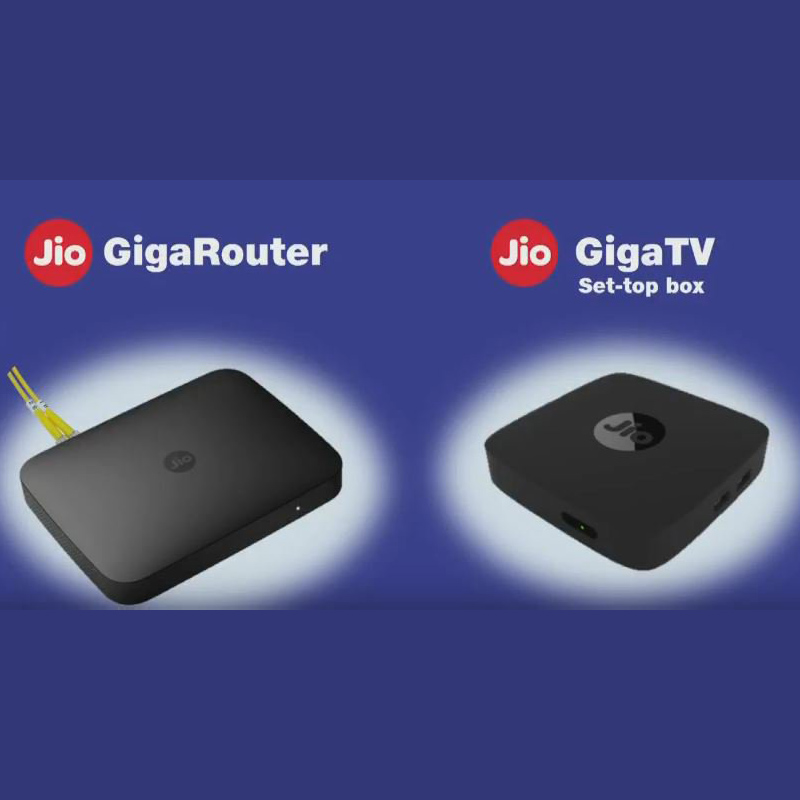
    MUMBAI: The terminator…, oops sorry, the disruptor is back. And, this time it is targeting India’s multi-billion-dollar cable TV and DTH businesses with promises to unleash high-speed fixed line fiber-based broadband services that aims to “connect everyone, and everything, everywhere” — at least in 1,100 cities to begin with. No wonder the legacy businesses are eyeing the announcement on the launch of Reliance Jio GigaFiber project with a mix of healthy skepticism and optimism.

    “It will be a challenge, but then this would increase general awareness about fixed-line broadband (FLBB) services as penetration of wired broadband is pretty low,” Kerala Communicators Cable Ltd (KCCL) CEO Shaji Mathews told Indiantelevision.com when asked about the big bang launch of Jio GigaFiber from 15 August 2018, which is also backed by Reliance Industries’ money power.

    According to Mathews, Jio GigaFiber rollout would help getting the focus back on good quality FLLB services as “over the years the industry in general had been focusing on and talking more about wireless broadband”. KCCL is an initiative of independent cable TV operators in Kerala under the guidance of Cable Operators Association (COA), an umbrella union of over 4,000 local cable operators functioning all over the southern state.

    What about the gorilla in the room? Mathews, who has spent almost a life time in the cable TV business, was of the opinion that Jio’s entry into the FLLB segment would “bring true value to real players as the capable cable ops will survive” the competition. “Moreover, as the cable companies are already on ground with existing businesses, they have an added benefit of existing fiber optics,” he added optimistically.

    Echoing similar sentiments SITI Networks Limited chief business officer Rajesh Sethi, while accepting further disruption — as in Jio fiber — was expected in the content delivery eco-system, said, “As we keep pace with changing technological trends, the industry is expected to become more multifaceted, efficient and customer centric.”

    A senior rep from another MSO company who didn’t want to be named felt that with the entry of cash-rich companies like Reliance Jio, it would help legacy players to “focus better” on the core business. “The new venture of Jio will also bring back investors’ focus on the sector, apart from increased awareness among consumers,” the MSO company exec added while talking to Indiantelevision.com.

    India’s FLBB penetration was expected to increase to 10.3 per cent from the present single digit share by year 2022 as per Singapore-based Media Partners Asia research. As content and applications were also getting heavier and denser in size gradually, there were fair chances that Jio could disrupt the market, while other players have equal opportunity too in this segment, the MPA analysis had stated some time back.

    An immediate effect of the Jio fiber project announcement was that shares of listed MSO companies like Hathway Cable & Datacom, Den Networks, GTPL Hathway and SITI Networks dropped in the early part of trading on Indian bourses. It must also be mentioned that shares of Reliance Industries too had dipped in early trading as RIL chairman Mukesh Ambani was addressing the shareholders at yesterday’s company annual general meeting.

    While the spotlight may be falling on cable operators and MSOs, there is no denying the fact that Jio GigaFiber could also impact the business plans of DTH platforms and incumbent telecom players like Airtel, Vodafone and even State-run BSNL as Jio plans to offer not only just FLBB, but also a host of other telecom and TV services, apart from smart solutions for the retail consumer’s home, in general.

    India’s DTH players, for example, felt that while fiber-based broadband services could be a good option for high-rise residential complexes in urban Indian cities, it would be a challenge to lay fiber in far-flung hilly areas or take the lines into homes in those places where houses are horizontally laid out.  

    For cities like Mumbai, Bengaluru and Gurugram, having rows and rows of high-rise gated residential complexes, fiber based broadband services was a good opportunity, but it would be an expensive affair for a row of houses, DTH operator Dish TV’s managing director Jawahar Goel was quoted by BloombergQuint as saying. He added: “For delivering the cable and DTH services, we will always have the competitive edge, as our cost is lesser.”

    Telcos like Bharti Airtel, considered India’s biggest operator in terms of market and subscriber shares, however, are expected to react to the impending Jio competition in FLLB by cutting subscription rates and handing out higher monthly data packages to consumers at reduced costs.

    Over the last few months, Airtel, for example, has been aggressively attempting to sell its high-speed digital fixed line broadband services to existing consumers in Delhi and National Capital Region, which includes areas like Gurugram and places like Vaishali and Kaushambi in Ghaziabad district and Noida — all having rows of high-rise residential complexes of various sizes with varied population.

    Meanwhile, telecom industry body Cellular Operators Association of India (COAI), which has been at loggerheads with member Reliance Jio over a slew of issues in the past, yesterday termed Jio’s fixed-line fiber broadband system as a “game changer” and said the company garnering over 200 million mobile users in a short span of time is “commendable”, according to a Press Trust of India report from New Delhi.

    “The announcements made by Mukesh Ambani (RIL chairman) have positioned RJio as an extensive technology company rather than just a telecom service provider. This is an interesting development and once the plans laid out today start taking shape, we can expect new streams of revenue to be initiated that will benefit the industry,” COAI director-general Rajan S Mathews was quoted by the wire service as having said in a statement.

    The PTI report also took note of a latest note from JP Morgan that said while there were no details yet on pricing of the upcoming optic fiber broadband service, it was of the view that given Jio’s customer acquisition strategy, the launch pricing should effectively be at a “large discount” to current broadband and set top box pricing prevalent.

  • Siti bullish on broadband: Rajesh Sethi

    Siti bullish on broadband: Rajesh Sethi

    Mumbai: Despite uncertainty in many quarters, these are interesting times for people following the multi-system operator (MSO) industry. Recently, Siti Networks Ltd (Siti) released its Q2 and H1 results for 2017-18, reigniting the hope for growth in the industry. Announcing growth in operating EBITDA, the company outperformed the competition in set-top box (STB) seeding by adding nearly 2.3 million boxes in the first half of the year as against near flat growth by other companies in the industry.

    For Siti, this forms the bedrock for future growth as monetisation of these boxes in H2 will bring incremental revenue benefit to the company. In the cable television distribution business, STB seeding, monetisation of seeded STBs, and collection efficiency are the core performance metrics.

    The broadband space is exploding with Reliance Jio having announced its impending entry and trial runs across various cities in the country. Siti is looking to leverage existing infrastructure and improve extraction levels. The company will look at a number of business models to ascertain what is the right fit in this business.

    In an email interaction, Rajesh Sethi spoke to Indiantelevision.com on a wide range of issues. Here’s what he had to say:

    What is the direction you are taking to turn around the fortunes of Siti Networks?

    We are one of the largest distribution platforms in the country and are working on the ethos of ‘demand more.’ We will leave no stone unturned to deliver the best to our customers while ensuring enhanced shareholder value. On the video front, this is going to be the last year of major seeding as we consolidate our market dominance. The focus will be on improving monetisation, collection efficiency, and prepaid implementation. We are well prepared to execute the tariff order as soon as the judgment is passed on the same.

    On the broadband front, we are looking to leverage our existing infrastructure and improve extraction levels. We will be selective in our broadband expansion and will look at a range of business models to ascertain what suits us best. The focus is on four pillars of people, process, product, and corporate governance with emphasis on compliances, systems and processes, harnessing inbuilt operating leverage, and making the organisation more agile and lean.

    What is your strategy to prune losses in the time to come?

    In the video business, seeding to capture the opportunity offered by digitisation, subsequent monetisation improvement, and enhanced collection efficiency will be the key priorities. These factors will form the bedrock for strong sustainable growth and ensure recurring cash flows.

    Broadband is a field that we are quite bullish on. Uptake in broadband is dependent on 4G pricing, which definitely is now looking to increase. Broadband growth will come from primarily form Tier 2 and 3 cities rather than the bigger cities. Broadband revenue performance will also see uptick with increasing customer base, churn, and fault rate control.

    Cost optimisation is a major lever in coming back to profitability and we are looking to rationalise our bandwidth, general and administrative, content, and HR costs to drive increased savings. The tariff order is expected to come by end of this fiscal and will substantially moderate content cost growth; content cost is expected to become a pass through.

    These actions are expected to contribute towards improved recurring cash flows and better profitability.

    How soon do you see a revival in the cable industry?

    The revival you speak of is already underway as Phase 3 and 4 monetisation has started happening and this will only move up, eventually being at par with monetisation levels in Phase 1. The bulk of Phase 4 seeding will be completed this fiscal and you will see strong subscription revenue growth lead by volume and monetisation increases. Thereafter, it is a steady state perpetuity business.

    The tariff order will moderate content cost growth as customer choice will dictate the content they view. At the same time, broadband is a big opportunity that will spur long-term growth and drive convergence. The industry is in a transitory phase and things will improve significantly in a year’s time.

    Why hasn’t digitisation helped the dynamics of the industry as envisioned?

    Ever since the announcement of digitisation, there were multiple delays due to a variety of factors. Phase 3 and 4 deadlines were delayed by more than a year due to multiple petitions, regulatory uncertainty, and other factors. As we speak, the tariff order is pending in the Chennai high court. Most DPOs incurred huge capital expenditure in upgradation of the network and purchasing STBs. The costs were incurred upfront and, therefore, monetisation got delayed.

    In addition to these delays, regulatory guidelines such as MIA/SIA also faced delays in enforcement. You are seeing this turbulence as we are in transition right now…once things settle down, you will witness strong recurring cash flows. The content delivery value chain will become more streamlined and the balance of power will shift to the DPOs.

    How important is it to have a lean workforce? Do you have a retrenchment strategy in place?  

    We have been focusing on areas where we can bring efficiencies into the system and one such effort in right sizing was executed in Q2 of 2017-18. This is a regular practice in most mature industries and allows the organisation to become leaner and agile. With this, we have given more latitude to our current employees by adding joint responsibilities in the video and broadband space in terms of delivery. We are focussed on employee growth with regular training sessions being held to upgrade skill sets and clearly delineating what is expected from them. Recently, we also rolled out our seven core values that define our DNA and influence behavior. We want to inculcate and sustain a high-performance culture in this company. These are the guiding principles in our efforts to take SITI to greater heights.

    What is your vision for Siti Networks?

    We are the leading content provider in the country and will continue to sustain our preponderance in video. Simultaneously, broadband is a natural transition for an entity like ours. Customers have already shown indication towards moving to non-linear on-demand entertainment and we expect broadband penetration to see a huge increase. Hence, we are moving towards delivering non-linear content. This will be the future of content consumption and Siti is preparing earnestly for it.

    We are also working with our technology partners to bring innovative products to the market. Our vision is that we should be at the forefront of providing world-class technology to customers.

    How do you see the company evolving over the next two years?

    Siti will have consolidated its primary growth lever of video with strong recurring cash flows taking place. We will be offering substantial HD, OTT, and other VAS services. In addition, we intend to push the pedal on broadband and ensure we have sizeable presence in the high-speed-wired broadband space. We could go in for some inorganic expansion as well.

  • Sanjay Berry rejoins Siti Networks

    Sanjay Berry rejoins Siti Networks

    MUMBAI: Sanjay Berry has been appointed as chief financial officer of Siti Networks.

    Berry joined Siti Network in December 2016 but after four months he quit the organisation. Prior to this, he was working with Bharti Airtel as corporate financial controller.  

    In his 25 years of work life he has had experience with computer sciences corporation, Patni Computer  Systems,  HCL  Technologies  and  Arthur  Andersen  &  Associates.  

    Commenting on the appointment,  chief business transformation officer  Rajesh Sethi said, “We welcome back Sanjay Berry on board. He brings with him specialized expertise of handling the finance function at large & diverse range of industries.  Siti Networks  has  been  a  pioneer  in  compliances  and  adherence  to regulations.  Berry will play an instrumental role in further strengthening systems, processes  &  compliances.  He  also  brings  to  us  a  competitive  edge  in  strategizing business, and accomplishing organizational goals.”

    Berry will be based at the corporate office of Siti Networks, Noida.

    Also Read:

    Siti Networks appoints Sanjay Berry as CFO

    Siti Networks’ operating profit more than doubles in first quarter

  • Rajesh Sethi re-designated chief biz transformation officer of Siti Networks

    MUMBAI: Rajesh Sethi, who had been appointed as executive director and CEO of Siti Networks sometime back, has been re-designated as  chief  business  transformation officer of the company with immediate effect.

    Before joining Siti Networks, Sethi served as CEO at Taj Television’s Ten Sports from 2013 to 2016 when it was still a subsidiary of Zee Entertainment. In a strategic decision last year, Zee sold its sports business, comprising TV channels marketed under Ten Sports brand, to Sony Pictures Network India. 

    Siti Networks also informed BSE that the the board of directors of the company at its meeting held on 14 July 2017, approved  the  appointment  of  Sidharth  Balakrishna  as a whole-time director of the company with immediate effect.

    Balakrishna has over 13 years of experience in the energy, infrastructure and education sectors. In the past he has led strategy and headed projects including in the fields of oil & gas, renewable energy, education, water and vocational training. Balakrishna has  also  been  a  strategy consultant with Accenture and KPMG. 

    ALSO READ: 

    Rajesh Sethi succeeds Wadhwa as ED & CEO of SITI Networks

    SPN India-SITI Networks dispute: TDSAT directs SITI to sign SPN RIO agreement (updated)

  • Rajesh Sethi succeeds Wadhwa as ED & CEO of SITI Networks

    NEW DELHI: Senior media expert Rajesh Sethi has been appointed Executive Director CEO of SITI Networks Limited, as V D Wadhwa is stepping down.

    Wadhwa has been asked by the management to help in smooth transitioning by being with Sethi over the next couple of months.

    Sethi has over 22 years of experience in varied industries like Media, Insurance and Automotive sector across India and South East Asia.

    Sethi joined Ten Sports (Taj Television – a then subsidiary of Zee Entertainment) in July 2013 as Chief Executive Officer, where he spearheaded the turnaround and divestment of Ten Sports from multi year losses to a profitable entity and has placed the Distribution & Placement Business on a consistent growth path.

    Before joining Zee Entertainment, Sethi has been associated with large conglomerates like Tata, General Electric and Allianz with a proven track record of progressive leadership and entrepreneurial success. He specializes in enhancing Stakeholder value through large-scale Business Transformation, Leadership Development, Innovation, Organization change management and Customer strategies.

    Sethi completed his under graduation in Mechanical Engineering and received his Executive Education from Harvard Business School, Kellogg School of Management & INSEAD and is a GE certified Quality Green Belt.

    He has been conferred with prestigious awards of “Rashtriya Udyog Ratna” by N.E.H.R.D.O. and “Global Indian Achievers Award for Business Excellence 2012″ by Economic Development Forum.

    Speaking on his tenure at SITI Networks, Wadhwa said, “It was one of my most satisfying careers at SITI. Under the guidance of the Board, we have managed to establish SITI as one of the leading profitable players today. I thank the Board for the opportunity and wish Rajesh and his team all the success.”

    Commenting on his new role, Sethi said “Post our very successful turnaround & divestment of Tensports and thereafter implementation of Digitisation of our broadcasting business, I am very excited to further transform our Delivery Platform with SITI Networks which has immense growth possibilities & opportunities. The sector is on the cusp of reinventing itself with smarter Business Models and ways of delivering & connecting to customers with varied products and services”.

    In a statement, the Board placed on record its appreciation for the role played by Wadhwa during his tenure in turning around the business profitably and inculcating the highest ethical standards and professional work culture in the Company.

  • Siti Networks’ CFO Sanjay Berry resigns after four months

    MUMBAI: Barely four months into the new role, Sanjay Berry has resigned from the position of the chief financial officer of Siti Networks. Siti Networks Ltd, a sister company of Zee group, today informed the BSE Limited and National Stock Exchange that Berry has resigned with effect from the close of business on 28 April, 2017.

    Siti Networks had appointed Berry in December 2016. Prior to the Siti role, Berry was working as the corporate financial controller with Bharti Enterprises. Berry has been handling finance function with expertise in financial management, compliance and internal controls.

    In his 25 years of work life, he had varied experience with computer sciences corporation, Bharti Airtel, Patni Computer Systems, HCL Technologies and Arthur Andersen & Associates.

    Also Read: Siti Networks appoints Sanjay Berry as CFO

    Furnish details of cable connections, Delhi Govt asks operators, MSOs wary of cascading effect

  • SPN India-SITI Networks dispute: TDSAT directs SITI to sign SPN RIO agreement (updated)

    MUMBAI: In a dispute between cable TV MSO SITI Networks and Sony Pictures Networks (SPN) India, the Telecom Disputes Appellate Tribunal (TDSAT) has ruled that the former should sign the existing reference interconnect Offer (RIO) of the latter.

    SITI Networks had approached the arbitrator saying that India’s leading broadcast network was threatening to disconnect its signals from it. And that it was imposing an “unjustified subscription fee hike” to renew its channel carriage agreement with it. This at a time when the nation is under the spell of SPN India’s biggest property the highly popular and most watched Indian Premier League (IPL).

    The MSO’s counsel appealed to the tribunal that SITI should be permitted to avail of the signals of the channels of SPN India on the same terms and conditions of the expired agreement till the latter publishes a new reference interconnect offer (RIO) as per the new TRAI regulations.

    SPN India’s counsel retaliated by saying that the MSO cannot seek an entitlement to the earlier subscription rates of the expired agreement for the former’s channels as its subscriber base had grown and the broadcast network deserved an increase in subscription fees.

    SPN India’s counsel further argued that since there is no valid agreement, the signals to SITI Networks platform should be disconnected unless the MSO executed the existing RIO as per the TRAI regulations.

    The TDSAT then directed SITI Networks to sign the existing SPN RIO within one week of the order (to avoid disconnection of signals) and with a provision to switch to the new RIO once the same is published as per the new TRAI regulations.

    The tribunal also asked both SITI Networks and SPN India to submit their detailed statements of accounts within the next 10 days so that it could help them settle their dispute on outstanding dues.

    Even as SPN India claimed that it had won a favorable order from the tribunal (no official comment was, however, available from it), a SITI Networks official spokesperson responded to indiantelevision.com saying that the “unjustified hike in subscription fees demand has been turned down by TDSAT and the court has directed to sign the agreement on a RIO basis in accordance with the prevailing regulations.”

    In addition to this, SITI Networks also appeared pleased that the tribunal has “asked the parties to submit their statement of accounts and the related invoices in reference to the outstanding issue.”

  • Hathway’s Panesar succeeds Wadhwa as AIDCF head

    Hathway’s Panesar succeeds Wadhwa as AIDCF head

    MUMBAI/NEW DELHI: Hathway Cable & Datacom’s Video Business CEO T S Panesar has taken over as the new president of the All-India Digital Cable Federation (AIDCF), the apex body of digital cable television players.

    Panesar was unanimously elected at AIDCF’s 11th governing council meeting held in New Delhi. He succeeds SITI Networks ED and CEO V D Wadhwa who completed his two-year term as the founder-president of the Federation.

    Panesar has over 20 years of experience in media and entertainment industry, both on the broadcasting and distribution side.
    The governing council also appointed SITI Networks COO Anil Malhotra as he vice-president and Fastway Transmissions Private Ltd CEO Peeush Mahajan as the treasurer of the Federation.

    AIDCF placed on record its appreciation for the immense contribution made by Wadhwa as the founder and first president of the Federation over two years ago. Under his aegis, the federation earned its stripes with MIB, TRAI, DoT, Ministry of Finance and all the other industry bodies i.e. IBF, DTH Federation, CII, FICCI, ASSOCHAM etc in the media & entertainment Sector.

    The Federation has played key role in bringing all the major players of the industry controlling over 70 per cent of the business under one umbrella and have taken up the issues concerning the cable industry by liaising with the concerned government department/ministry as well as with the other industry bodies of the broadcasters and DTH operators besides playing key role in resolving the deadlock in implementation of phase III of digitization.

    On giving over the baton to Panesar, Wadhwa said, “A solid foundation has been laid for addressing all the concerns of the industry and I am confident that under the leadership of Panesar and active participation by all the members, the federation would further gain strength and shall be able to create an environment for the profitable growth of the cable industry.”

    Commenting on his appointment as the AIDCF president, Panesar said, “I am deeply honored and privileged to be appointed to lead the federation. It’s a big challenge and responsibility entrusted upon me and I look forward to working closely with all members to bring further changes in the environment. Having seen the evolution of the cable & broadcasting industry from the analogue to the digital regime, we are now at the cusp of a another major shift in light of the new regulation which is aimed at improving transparency, empowering customers to exercise choice and ensuring orderly growth of all stakeholders in the eco-system. We strongly believe that technology should be leveraged to address the changing needs of the industry. Together, we will strive towards strengthening our bond with all stakeholders to deliver a world class service to the consumers and improve customer satisfaction levels.”

    AIDCF secretary -general Saharsh Damani said, “With digitisation entering into last phase and focus on wired broadband gaining traction for all the members, I am sure that, under Panesar’s leadership, the digital cable industry will enter into the next orbit of momentum and growth.”