Tag: sitcoms

  • Adult internet TV site launches in the US next month

    Adult internet TV site launches in the US next month

    MUMBAI: This is an initiative in the US that seeks to boost adult content on the tube using the online route.

    An adult streaming site Adultinternet.TV will launch next year on 6 January. It will have reality shows, news, sitcoms and cartoons.

    The unique proposition that the site will offer is that it will function in the same manner as a free to air broadcaster. It will not charge a fee and instead will rely on ads as its source of revenue. That is what makes it different from a site that merely streams porn.

    The sites co-founder Mark Newman was quoted in a report in wired.com saying that a special software would be used for putting in the ads. “We had to invent a lot of stuff that no one has done before, like real-time tracking for advertisers.” Mark also designed his own wireless transmission system for live streaming.

    What is new here is that the site will not just have people taking off their clothes at the flick of a switch. As mentioned earlier there will different kinds of shows, including soap operas. Newman is hoping that this will serve as a strong alternative to pornographic films.

    The venture has reportedly created so much buzz among the adult industry and viewers that the channel is launching nine months earlier than originally planned. The software that has been created for the site is another strong value proposition and can form a separate revenue stream in itself that could fetch millions of dollars even if visitors do not take to the content in a big way.

  • “I see no original work on television today” : Sanjay Chhel

    “I see no original work on television today” : Sanjay Chhel

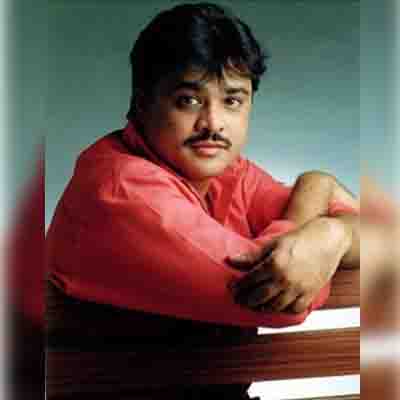
    Director, writer and lyricist Sanjay Chhel is popularly called the king of one-liners. His terrific sense of humour which never fails to tickle the funnybone reinstates the enviable niche he has carved for himself in the world of comedy. His down to earth demeanor makes it hard to believe that he has to his credit some of the most memorable serials on television like Naya Nukkad, Filmi Chakkar, Philips Top Ten, Mast Mast Hai Zindagi and Dekh Tamaasha Dekh to name a few.

    His work in Bollywood includes blockbuster films like Rangeela , Yes Boss, Daud, Kacche Dhaage, Pehla Nasha, One Two Ka Four, Kahin Pyaar Na Ho Jaye , Phir Bhi Dil Hai Hindustani and Halo which won a National Award in 1996. Recently, he has taken over the director’s reins for Yahoo, another comedy written by him .He has also penned the lyrics for songs in Khoobsurat, Halo, Kya Dil Ne Kaha as well as the hugely popular Nikamma Kiya Is Dil Ne which has been rated as the largest selling number of 2002.

    Currently, he is working on the script of Humari Bahu Malini Iyer, a sitcom which will soon be launched under the Sridevi Productions banner on Sahara TV.

    Excerpts of a tete-a-tete he had with indiantelevision.com’s Agnes Sebastian

    When and how did you get bitten by the writing bug?
    I am an ardent fan of theatre and had written many one act plays during my college days. I began my career as a scriptwriter with a regional channel in Ahmedabad before the satellite invasion took place. Since then, I have worked on many television and film scripts.

    What are the essential requisites of a good writer?
    A writer should be able to conjure interesting concepts and characters. He should be able to churn out stories that reflect society. He should be innovative and should have the courage to experiment and the conviction to accept failure in his stride.

    Which medium do you prefer writing for – the small screen or the silver screen ?
    Personally, I prefer writing for films as writing for television has many disadvantages. Firstly, there is no review of work as a result of which the quality of work suffers. Also, a lot of work goes unnoticed on television. In the case of films, the writer gets due credit and instant recognition. The work gets documented , thus there is archival value of the work which unfortunately does not happen in television.

    Writing for television is like writing daily reports for a newspaper whereas writing for movies is like writing literature.

    The Indian audience is dull. We are conservative and not educated enough to enjoy sitcoms

    What does writing for sitcoms entail and how different is it than writing for soaps?
    Comedy is very serious business and more than talent, it requires hard work. It is primarily the art of presenting daily life in a precise yet funny manner. To write a funny script one needs to think out of the box and understand the audience he is addressing. A surprise element is absolutely essential and clichés need to be avoided. As far as writing for soaps is concerned, one needs to be closer to reality and address situations that actually occur in real life.

    What is your opinion of the sitcoms currently on air?
    I seen no original work on television today. Nobody is willing to take a risk or go against the tide. A writer should innovate and experiment such that he goes for subjects that bring in a breath of fresh air and are tangential to the ones that currently dominate the world of television. The same old jokes are being retold time and again. Unfortunately, a sense of humour is completely lacking in television today. Moreover the Indian audience needs to relax a bit.

    What do you have to say about channel interference in a scriptwriters arena?
    I have heard of scripts being turned around to suit channel preferences. This is unfortunate as a script is a work of art, a creation that should not be tampered with. The usual victims are primarily the newcomers in the field who have no say.

    Fortunately for me, I started writing for television when I had already established myself as a successful film scriptwriter . So I haven’t faced any such problem so far .

    What kind of remuneration can television scriptwriters expect?
    In our country, the remuneration of a television scriptwriter hugely depends on his star value and the number of hits he has delivered. I wouldn’t be able to quote the exact figure for a newcomer in this field but am sure it’s not much.

    ________________________________________________________________________

    There is a dearth of good actors / actresses in the comedy genre.
    ________________________________________________________________________

    How many scripts are you working on currently?
    On an average, I work on three to four scripts simultaneously as we don’t have the luxury to decide which script is going to work and which isn’t. A scriptwriter has to be prepared for all kinds of unforeseen circumstances and be tuned to the happenings around him. I write for a minimum of four to five hours every day and take ideas from the every day happenings, newspapers and books.

    Who decides the success of a script?
    Though there is no doubt that the director plays an important role in the execution of a script, in the case of sitcoms it primarily depends on the actors. There is a dearth of good actors / actresses in the comedy genre. Currently there are only a chosen few who have the wit, timing and the chemistry required to project humor to the discerning audience.

    What in your opinion is lacking in television today?
    What comes on television nowadays lacks life. It talks of a world that doesn’t really exist.

    As far as family dramas go, I cannot express my views as I don’t watch them. I feel I have enough problems of my own and don’t need to take on their additional woes as well. As far as sitcoms are concerned, I feel that the Indian audience is dull. We are a conservative audience and are not educated enough to enjoy sitcoms.

    Also, the channels are conservative and are not willing to give new talent a chance. As a result the audience is tired of seeing the same old faces with similar antics, we need new actors, new faces to do justice to the script.

  • “Corporatisation has not succeeded in the entertainment sector” : producer Asit Modi

    “Corporatisation has not succeeded in the entertainment sector” : producer Asit Modi

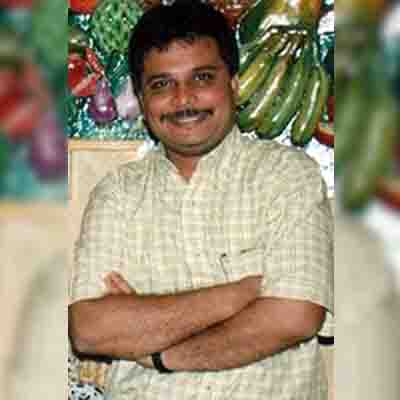
    In a short span of four years, Asit Modi has carved a niche for himself as a producer of successful sitcoms. 

    Modi, who started off as an independent TV producer with Hum Sab Ek Hain on Sony, went on to produce Yeh Duniya Hai Rangeen for the same channel. He has recently come up with Meri Biwi Wonderful, an Indian adaptation of the hugely successful 1960s series Bewitched.

    Meri Biwi Wonderful carries a novelty factor in that it combines comedy with elements of abracadabra and the supernatural.In a tete-a-tete with indiantelevision.com correspondent Amar, Modi comes across as a man who has a lot of passion and love for his work. Excerpts –

    How did you start off as producer?
    I have been involved with theatre in almost all capacities since college. In 1988, it struck me that producing TV software could be a viable business. After that, I starting learning the nuances of the television medium and after three years was able to produce my first serial in Gujarati. In 1995, I co-produced Kabhi Yeh Kabhi Woh for DD Metro and later co-produced Rajani starring the late Priya Tendulkar for the same channel. Hum Sab Ek Hain was my first independent work as producer and it came on air in 1998.
     
    Which subjects appeal to you? You seem to be a sitcom specialist.
    (Laughs) No, no. In fact, I would love to do varied subjects. It’s just that after the success of Hum Sab Ek Hain, the channel started feeling more confident about entrusting comedies to me. But I would love to work on other genres.
     
    “In the wake of growing competition one needs to be all the more alert to changing viewer preferences”
     
    How was ‘Meri Biwi Wonderful’ conceived?
    Meri Biwi Wonderful, as you know, is based on the popular comedy Bewitched that was produced by Columbia Tristar in the mid sixties. The concept was given to me by the channel and I was asked if the same could be adapted in the Indian context. After working on the concept, I felt confident that it would indeed succeed with our viewers. See, it has a big novelty factor in it. For the first time on Indian TV, a sitcom is laced with magic and the supernatural.

    In fact, I am proud to be associated with a Columbia Tristar production even if it is in an indirect way.

     
    Has the recent trend of dailies made it difficult for producers like you to get good weekly slots?
    Yes, I would feel so. Ideally, comedies work best as weeklies. But personally I am confident of making a good daily sitcom if I get a chance. I have, in fact, carefully studied most daily sitcoms to analyse why most of them have not worked.

    I have also acquired the rights of over 1,500 stories written by a veteran writer Tarak Mehta for Chitralekha. I hope to adapt them into successful TV serials some day.

     
    All your programmes have been on Sony. Is there any specific reason behind it?
    No. In fact, I would love to work with all the channels. It’s just that I have a great rapport with Sony. They have shown tremendous faith in me and I feel all the more motivated to live up to that faith.
     
    Do you find channel EPs overbearing in their attitude nowadays?
    Well, I would say they are more involved in all respects. We need to understand that in the wake of growing competition one needs to be all the more alert to changing viewer preferences. There have been occasions when I have had to re shoot a few scenes but I have taken it positively.
     
    What are your sources of funding?
    It’s my own money and the revenues from my earlier serials, which I plough back into the business.
     
    Who are your favourite directors on TV?
    B P Singh, Gautam Adhikari and Raju Parsekar are among my favourite directors. I love thrillers and would love to create a riveting thriller myself some day. All of B P Singh’s work is very crisp and stylishly shot. The man’s passion comes out in all his serials.
     
    “As long as a comedy is able to make people forget their worries and cheer them up, it’s commendable”
     
    Which are the areas you are personally involved with as producer?
    I’m involved with each and every area. Right from the story to the casting to the actual execution, I contribute in every possible way. I produce what I love and leave no stone unturned in ensuring that my serials conform to the highest quality. For Yeh Duniya Hai Rangeen, I had created a sprawling housing complex at MBC studio to give a realistic setting.
     
    Don’t you have any plans for Neela Telefilms going corporate?
    I do not have a plan as such. See, corporatisation has not been very successful in the entertainment sector. Because once you make your production unit a manufacturing factory, your individual involvement and passion that is so important for a quality product gets diluted. Of course, I want to expand and take up more serials but I would never undertake such volumes that I cannot bring out without my whole-hearted involvement going into it.
     
    Of late, do you feel there has been a surfeit of slapstick on TV?
    Well, I have never believed in categorisation of comedies. I only believe that there is something called good comedy and something called bad comedy. As long as a comedy is able to make people forget their worries and cheer them up, it’s commendable.
     
    Would you have produced ‘Raamkhilawaan CM & Family’?
    Well, that’s a difficult question to answer as it is very hypothetical. See, even in comedies one has to make sure that there is something to hook the women audiences. As far as a political satire goes, on a concept level it runs the risk of alienating the women viewers. But when I saw a couple of episodes of Raamkhilawaan I found it exciting overall.

    My decision on whether or not to produce a sitcom like Raamkhilawaan would have depended on several contingent factors.

     
    “Once you understand the writer – his mind, his strengths and weaknesses, it’s becomes relatively easy to get out of him what you are looking for”
     
    Who are your favourite writers?
    I have no favourites as such. I believe writing is a tough job and most writers who are in the business are reasonably good and talented. It’s more a question of striking the right understanding with them, which happens over a period of time. Moreover, producers who are really passionate about their stories have their own take on it. I feel once you understand the writer – his mind, his strengths and weaknesses, it’s becomes relatively easy to get out of him what you are looking for.
     
    Which are the projects you have in the pipeline?
    I have always taken up projects selectively. Right now, I’m working on two other projects. One is a social drama, while the other is a thriller. But both of them are at the concept level right now.
     
    It must be tough financially for an individual producer with just one serial on air. Do you have some other business that keeps you financially stable?
    Yeah, but TV is my passion and I’m obsessed with it 24 hours of the day. The only other business I would like to start some day is setting up a restaurant because good food is a major weakness for me.