Tag: SIRI

  • Guest article:  Here’s how to create an impact on your millennial customers

    Guest article: Here’s how to create an impact on your millennial customers

    Mumbai: The first generation to surf the internet was the millennials. Those people, who were born between 1981 and 1996, rely primarily on search engines to find the information they need. In fact, a survey reveals that Google searches are the origin of almost 90 per cent of millennials’ online experiences. Therefore, millennials are a fantastic demographic to target with search engine optimisation (SEO). Millennials should be perceived in the following ways:

        They are keyword-driven, meaning they search for specific, brief terms.
        More inclined to think that a highly ranked website indicates a company’s reliability and dependability.
        Frequently access internet information on mobile devices, such as aesthetically pleasing web designs.
        Use email frequently.
        Utilise social media often.
        Frequently look for video content.

    Though less dependent on technology than Gen Z, this generation nonetheless prioritises technology. Millennials place a great deal of attention on SEO because they frequently use search engine results to locate the information they’re looking for.

    Like prior generations, they also use email and social media sites more frequently. Although not as frequently as Gen Z, millennials were the first generation to utilise mobile phones to access the web and watch videos.

    You need a plan that binds several marketing channels and content types together in order to promote them. Develop your social media presence, publish videos, send marketing emails, and make sure your website is mobile-friendly.

    Why use SEO to reach millennials?

    Following statistics reveal typical millennials traits and consumer behaviour:

        A study showed that more than 90% of internet experiences begin with a Google search.
        More than nine out of ten Millennials (93% of those aged 23 to 38 this year) own a smartphone.

    The “go-to” place for practically everything for millennials is search engines:

        Between 5 and 10 hours of information are read online each week by 23% of millennials.
        When it comes to connecting with millennial consumers, SEO is without a doubt the best option for brands. 65% of smartphone users, regardless of the brand or business that offers them, look for the most pertinent information when conducting Internet searches.
        The most effective way to increase brand awareness for millennials is through SEO.
        A higher search engine ranking increases credibility, trust, and brand recall.
        Users of search engines convert more frequently than users of social media. 61% of local searches result in purchases, and 72% of those who do them go to the local businesses.

    Creating effective SEO strategies for millennials

    Be present in both places at once:

    You must be present everywhere you may be in order to be found and remembered, including both online and offline platforms. Engage millennials by posting SEO-optimised material on well-known channels including Twitter, Instagram, Facebook, desktop, emails, blogs, and more. To develop a better content strategy, find out which platform is preferred by each age group.

    For instance, millennials are big on Facebook and Instagram. According to studies, these should be the top two social media sites to employ when marketing to those under 35. Additionally, studies show that LinkedIn might help you reach more male millennials than Twitter because LinkedIn makes creative use of short hashtags and phrases.

    The millennial generation can be attracted to you by achieving top rankings on Google or other search engine pages by default, and constant branding and link development can draw attention to your brand website.

    Focus on high-quality content:

    Visibility is crucial, but so is the quality of the content. Millennials will be interested in rich content that is combined with clever SEO. Since research demonstrates that most purchasing decisions are driven more by an emotional connection than by rationality, it must be both educational and motivating.

    Furthermore, information must not be preachy, protracted, or boring because millennials strongly dislike all of these things. Another strict no-no is traditional hard selling or push marketing. Make sure to produce original content that speaks to their liberal and empathetic viewpoints. Ultimately, you need to provide content that reflects the ideals that your audience can relate to.

    Be mobile-friendly:

    For millennials, smartphones are a way of life. One of the most crucial SEO advices for millennials is to focus on SEO while creating content that is mobile-friendly.

    Focus on voice searches:

    Use voice searches; they are growing significantly thanks to Siri, Cortana, Echo, and Google Home. Instead of the more conventional writing style of typed sentences, voice searches require a more relaxed, conversational approach. Additionally, voice search terms may be longer on average because speaking is simpler than typing, giving you more room for content. Get a plan for voice search going that is based on natural language phrases since it’s an excellent SEO trend for millennials.

    Final Thoughts

    The bottom line is that effective SEO techniques increase brand recognition and sales. It’s critical to understand both what to do and what not to do when creating SEO content for millennials. Avoiding an autocratic style and working to personalise the content as much as you can are the keys to capturing the attention of millennials.

    The author of this article is Auburn Digital Solutions co-founder & managing director Ashish K Tripathi.

  • Powering television with voice-based search

    SINGAPORE: For many years, effective voice-based search technologies have eluded businesses that have tried to bring next-generation input methods to customers. Command-based speech systems have been perceived as ineffective and hard for viewers to use. However, the widespread adoption of smartphones and tablets, and their minimised keyboards, has led to a renewed interest in this genre of technology. For example, Apple’s Siri and Amazon’s Alexa have progressed beyond basic menu navigation functions. In fact, any device with a microphone has potential for speech-based commands, and can become an intelligent discovery system that uses a sophisticated entertainment brain to understand customer desires.

    This technology is important and under-explored by the TV industry, which often appears to have been left behind in terms of intuitive discovery functionality. For content providers, voice-based search and recommendation should be a core part of their customer service provision to provide customers with accessibility to their favourite shows and genres.

    Speaking the viewer’s language

    With the chaos of content available today, consumers have preferred selections and considerations across cast, plot and genre. Conversational interfaces simulate natural communication qualities and remove the need to conform to hierarchical menu structures. Most importantly, the technology must understand when a user is drilling into a particular genre in detail, or when they have lost interest and have completely switched topics.

    To be successful, natural language search needs to encompass a variety of different points, each crucial to success:

    Disambiguation: Natural language technology must understand and interpret the user’s intent. For example, the phonetic sound “Kroos” can be interpreted to apply to Tom Cruise or Penelope Cruz, and the system should be able to understand what the user is looking for in relation to the original query.

    Statefulness: During a dialogue with a user, the system should be able to maintain context, and understand that people change their minds quickly. For example, the user could say that they are “in a mood for thrillers,” then jump to “Bond” and then to “old ones”. Ideally, the system should understand these requests, and serve up a series of older James Bond films for the viewer to select from.

    Personalisation: Conversational systems need to understand their users on an individual basis. For example, the system should learn that a user based in New Zealand who asks “when is the game tonight” wants to know about their local team, and if they say, “when is the Blacks game” they mean the rugby team All Blacks.

    Taking understanding to the next level

    Behind successful natural language technology lies excellent search capabilities. New technologies such as graph, have introduced high-quality and relevant search results to consumers everywhere, setting a benchmark across industries. Unlike a traditional database, a graph is much more scalable and flexible because it allows the connection of all sorts of information to records, without the reliance on “tables.”

    In the context of TV, most consumers have viewing patterns that can be mapped to provide highly personalised results to searches. This is more accurate than user-based profile creation or ‘thumbs up/down’ ratings that are both error-prone and do not automatically take into account users’ changing tastes and preferences over time. The ability to make personalisation precise and extremely relevant – what the industry is now terming hyper-personalisation – is correlated to the knowledge graph’s semantic capabilities.

    At its core, a quality conversational search engine should include the following aspects:

    Knowledge graph: This graph maps search results to intent, and prioritises those results based on the weight of their connection and should be able to:
    -Look at named entities in media, entertainment and geography and extract, de-duplicate and disambiguate the entities across sources
    -Recognise similarities and build relationships between entities
    -Identify a multidimensional view of popularity and how audience interest in the entities shift over time
    -Generate a large vocabulary such as keywords and sub-genres to help search systems identify relevant content

    Personal graph: Crucial to true conversational systems, the personal graph tunes the conversational system to individuals to enable natural conversations around the user’s preferences and context. The personal graph is:
    -Based on statistical machine learning
    -Able to learn individual behavioural patterns and interests
    -Learns how time and device affect recommendations

    At the front end of the system, the conversational query engine is required to bind all aspects together. This brings together key algorithms to map and learn linguistic features and provide content discovery features to customers.

    Intuitive search and recommendation

    Natural language technology backed with knowledge graphs can provide a revolution in TV search and recommendation. Based on excellent metadata that covers actors and actresses, content synopsis and even famous quotations from films, TV providers can create a second to none entertainment brain that offers customers speedy and accurate access to their favourite shows, and similar content that they might enjoy. Voice-based discovery around knowledge graphs is no gimmick – it is set to change the way that people interact with their TV sets – as long as service providers make it personalised, intuitive and natural.

    public://Sue Couto.jpg Sue Couto is the senior vice president, APAC Sales, at TiVo. Views expressed here are of the writer’s, and indiantelevision.com may not subscribe to them.


  • ‘Siri- the living scarecrow’, short film with dash of fiction but sea of truth

    ‘Siri- the living scarecrow’, short film with dash of fiction but sea of truth

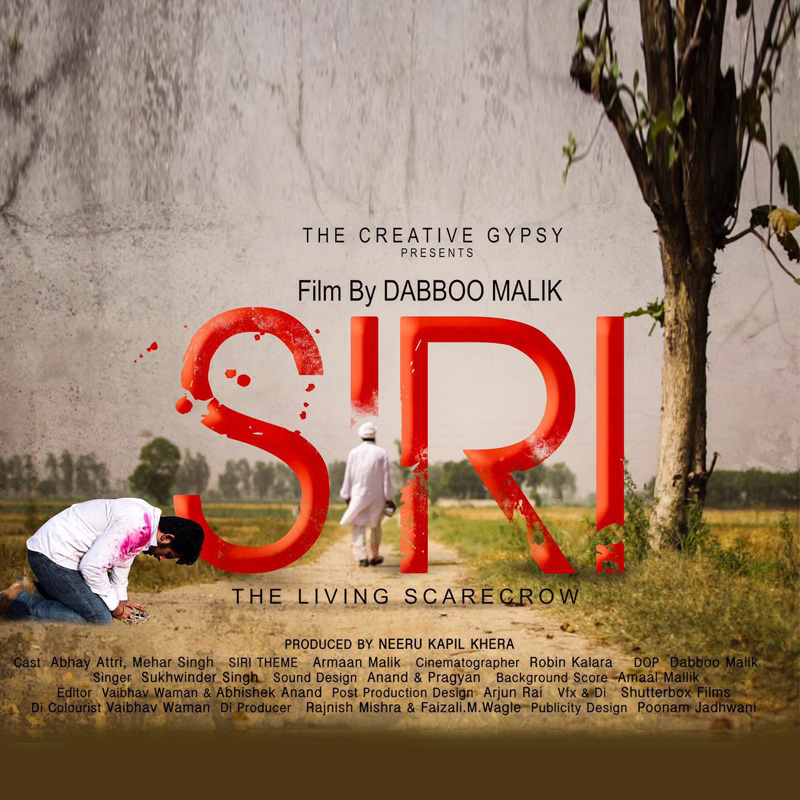
    MUMBAI: Imagine the life of a man living like a mere scarecrow with no one to share his emotions with! Much disturbing isn’t it? Neeru Khera’s The Creative Gypsy has come up with a new short film titled as SIRI – the living scarecrow. The movie talks about Siri, a worker and farmer in the earlier times working for big landlords and getting paid 1 /13th share of the harvest as his compensation.

    As times changed and technology took over the farm work, Siri was reduced to just a farm servant living a life of almost a scarecrow. The share now turned into salary per month and he became just like a guard man of the farms. 

    “This is not a preachy film. We have not gone into the hardships of a farmer’s life. This film is a story of a 75 year old farmer living alone in a large agricultural land. He misses his family his wife his only son who are not there with him. So much happens in one night that it will surprise you though not with overly dramatic emotional presentation. We had a great time interacting with the farmers and knowing the stories of their lives,” said Khera.

    Slated to launch today, this moving short film depicts the world of the aggressive rich and rude urban youth clashing with a poor farmer which changes everything for them.

    Though abandonment of parents is a truth touching people from all walks of life, the reality is much more graver than what we hearsay. In those times, lot of poor families abandoning their old parents to fend for themselves who started taking up for jobs at farm merely became scarecrows in a life of total loneliness.This story is based on one such man who waited for his son to come and take him after he abandoned him. He waited for his son for years but he never came .

    public://IMG_3696.JPG

    The story is a slice of life from the farmlands of India but its core emotions finds its voice in various parts of the world and echoes for eternity. 

    She further added, “This is not a anti system film, it’s pure heart and a slice of life of a farmer where loneliness is the biggest enemy.”

    The 20 minute film is made by Dabboo Malik and has an interesting song composed by Sukhwinder Singh. The theme song has been sung by Armaan Malik. 

    Shot on Cannon 5D and GoPro for some interesting and difficult shots, the lead in the movie does not come from an acting background. The film was shot in patiala and in the heart of Punjab and stars Abhay Attri as the lead man as a hardcore patiala boy. 

    “I gave a freehand to Dabboo to make this movie. I only sat for the editing work. It was very difficult for us to shoot as Siri’s are only found in inskirts and were not keen on coming in front of the camera.”

    The role of the protagonist has been played by Mehar Singh who has spent  his entire life at the fields. He has never been out of there and virtually spends his life as a living scarecrow.

    “Mehar Singh has never acted in any film before and he still lives there doing his duty. It’s so real that it makes you feel the pain and loneliness of this man,” added Khera.

    In the past, Khera’s channel has also been credited with the revolutionary web series All About Section 377 directed by Amit Khanna. The duo is all geared up for the second season of the series which will be taken to the villages of India. Apart from being in touch with various sponsors to get on board,  the series will have a transgender angle to it and is estimated to launch by October.  

    With the success of her last two series, one thing that is bound to happen is a larger appetite for concepts like these. Kudos to her and the team for such wonderful efforts!


  • ‘Siri- the living scarecrow’, short film with dash of fiction but sea of truth

    ‘Siri- the living scarecrow’, short film with dash of fiction but sea of truth

    MUMBAI: Imagine the life of a man living like a mere scarecrow with no one to share his emotions with! Much disturbing isn’t it? Neeru Khera’s The Creative Gypsy has come up with a new short film titled as SIRI – the living scarecrow. The movie talks about Siri, a worker and farmer in the earlier times working for big landlords and getting paid 1 /13th share of the harvest as his compensation.

    As times changed and technology took over the farm work, Siri was reduced to just a farm servant living a life of almost a scarecrow. The share now turned into salary per month and he became just like a guard man of the farms. 

    “This is not a preachy film. We have not gone into the hardships of a farmer’s life. This film is a story of a 75 year old farmer living alone in a large agricultural land. He misses his family his wife his only son who are not there with him. So much happens in one night that it will surprise you though not with overly dramatic emotional presentation. We had a great time interacting with the farmers and knowing the stories of their lives,” said Khera.

    Slated to launch today, this moving short film depicts the world of the aggressive rich and rude urban youth clashing with a poor farmer which changes everything for them.

    Though abandonment of parents is a truth touching people from all walks of life, the reality is much more graver than what we hearsay. In those times, lot of poor families abandoning their old parents to fend for themselves who started taking up for jobs at farm merely became scarecrows in a life of total loneliness.This story is based on one such man who waited for his son to come and take him after he abandoned him. He waited for his son for years but he never came .

    public://IMG_3696.JPG

    The story is a slice of life from the farmlands of India but its core emotions finds its voice in various parts of the world and echoes for eternity. 

    She further added, “This is not a anti system film, it’s pure heart and a slice of life of a farmer where loneliness is the biggest enemy.”

    The 20 minute film is made by Dabboo Malik and has an interesting song composed by Sukhwinder Singh. The theme song has been sung by Armaan Malik. 

    Shot on Cannon 5D and GoPro for some interesting and difficult shots, the lead in the movie does not come from an acting background. The film was shot in patiala and in the heart of Punjab and stars Abhay Attri as the lead man as a hardcore patiala boy. 

    “I gave a freehand to Dabboo to make this movie. I only sat for the editing work. It was very difficult for us to shoot as Siri’s are only found in inskirts and were not keen on coming in front of the camera.”

    The role of the protagonist has been played by Mehar Singh who has spent  his entire life at the fields. He has never been out of there and virtually spends his life as a living scarecrow.

    “Mehar Singh has never acted in any film before and he still lives there doing his duty. It’s so real that it makes you feel the pain and loneliness of this man,” added Khera.

    In the past, Khera’s channel has also been credited with the revolutionary web series All About Section 377 directed by Amit Khanna. The duo is all geared up for the second season of the series which will be taken to the villages of India. Apart from being in touch with various sponsors to get on board,  the series will have a transgender angle to it and is estimated to launch by October.  

    With the success of her last two series, one thing that is bound to happen is a larger appetite for concepts like these. Kudos to her and the team for such wonderful efforts!


  • Google buys new startups-Emu and Directr

    Google buys new startups-Emu and Directr

    MUMBAI: Google recently acquired two start-up companies; a movie making app Directr and a messaging app Emu. The acquisitions were made to augment its messaging technology and its video advertising business.


     The move was confirmed by the Emu team on its website. The announcement said, “As of 25 August 2014, we’ll be shutting down the Emu app. It will no longer be available in the App Store and existing users won’t be able to send, receive or download messages.”


    Founded by a former employee of Apple and Google Gummi Hafsteinsson and Dave Feldman, who previously worked for Microsoft and Yahoo, Emu, the instant mobile messaging app also integrates Siri or Google Now-like virtual assistant.


     “We know it’s an inconvenience and we regret that,” Emu said on its website.


    The Emu messenger app made its debut on Android in October last year, while the Emu for iPhone app began in April this year.


    Google’s YouTube unit acquired a mobile-video app Directr- a two-year old company used by small businesses to create marketing promotional videos. According to an announcement by the company, the app will now be available free without the in-app fees, which was up to $500 for the premium offering.


    Corroborating the acquisition, the Directr team said “We are incredibly excited to take the next step on that journey and announce that we are joining the video ads team at YouTube. For now, everything you love about Directr is staying the same and we’ll continue to focus on helping businesses create great video quickly and easily. One immediate bonus: Directr will soon be all free, all the time.”


    Directr offers a mobile app for Apple iOS platform that makes it easy for small businesses to shoot, edit and upload short videos. It assists users with frame selection and building a storyboard, adding background music, and subtitles. The Directr iOS apps come in two variants; one for personal use and one for business.


    YouTube also declared the acquisition on Google+ saying, “Directr is joining the YouTube ads team, where they’ll help us make it easier for advertisers to create and upload awesome videos.”