Tag: SingTel

  • Airtel’s digital arm Xtelify launches ‘Airtel Cloud’

    Airtel’s digital arm Xtelify launches ‘Airtel Cloud’

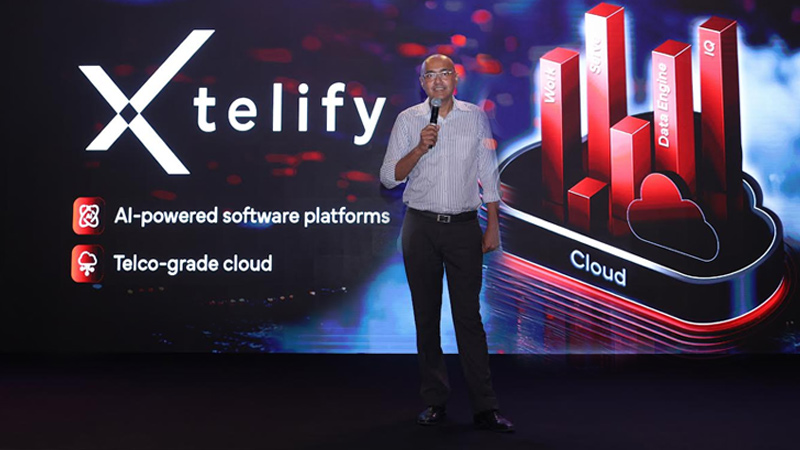
    MUMBAI: Xtelify, a fully-owned subsidiary of Bharti Airtel (‘Airtel’) housing all of Airtel’s digital assets and capabilities, launched a sovereign, telco-grade cloud platform – ‘Airtel Cloud’. Tailored to handle 140 crore transactions per minute for Airtel’s own use in India, this sovereign cloud platform is now being extended to meet the ever-evolving needs of businesses in India. Hosted on next-gen sustainable data centres, with Gen-AI based provisioning, and managed by 300 certified cloud experts, the highly secure and reliable Airtel Cloud offers IaaS, PaaS and advanced connectivity and guarantees secure migration, effortless scaling, lower costs and no vendor lock-ins.

    Xtelify also launched an AI-powered, future-ready software platform that will help telcos all around the world rid themselves of underlying complexity, improve customer experience, lower churn and raise ARPU. Addressing every layer of the telecom value chain, the solution comes with a converged data engine for AI led insights and intelligence at scale, a Workforce platform for real time task streamlining and an experience platform for managing every element of the customer journey for a telco.

    Xtelify signed three global partnerships for the newly launched platform.

    1. With Singtel, Xtelify will deploy an enterprise-grade, plug-and-play transformative platform – ‘Xtelify Work’ equipping Singtel’s field teams in Singapore with AI-powered capabilities like fleet optimization, automated task management and real-time tracking and governance that will enhance their productivity.

    2.  With Globe Telecom, Xtelify will deploy its cutting edge, next-generation, AI-powered customer services platform – ‘Xtelify Serve’ in Philippines. This will help Globe Telecom in elevating it’s customer experience at scale through omni-channel service assurance, streamline business processes and intelligent data-driven operations.

    3.  With Airtel Africa, Xtelify will provide its software platforms, which includes Data Engine, Work and IQ. Deploying Xtelify Data Engine and Xtelify Work will empower Airtel Africa’s 150K-strong field team across 14 countries with market insights for micro-targeted strategies and unlock critical use cases like spam and fraud protection for their customers across Africa. Xtelify IQ will enable secure, real-time, omnichannel customer engagement, enhancing both service quality and customer experience.

    Gopal Vittal, Vice Chairman and MD  ̶  Bharti Airtel, said, “It is a very pivotal moment in our history as we take our world class, home grown platforms of Airtel Cloud and software solutions to businesses in India and telcos all over the world. We are privileged to have signed on partnerships with three top tier companies already – Singtel, Globe Telecom and Airtel Africa.”

    “Within Airtel, we have been actively harnessing digital innovations at unmatched scale to transform our services and enhance customer experience at Airtel for many years now. This has involved powering over 590 million customer touchpoints and solving some of the most complex telecom challenges in the world. All this is enabled by Airtel Cloud where all our applications run at a very compelling cost. Today, we are also excited to take our telco-grade, sovereign-cloud platform and help businesses in India innovate faster, scale smarter and stay secure in today’s rapidly-evolving digital landscape. All controls of our cloud will reside strictly within the country ensuring zero possibility of any entity outside India being able to access any part of this data or its working”, Vittal added.

    Singtel Singapore CEO Ng Tian Chong said: “We are always looking for ways to better equip our field engineers so we can deliver the best possible experiences to our customers. This platform enables us to reimagine our workflows with AI at the core, improving both efficiency and customer service. By optimising dispatch and resource management, our engineers can reach customers more quickly, resolve issues with greater accuracy and reduce our overall carbon footprint. We’re also able to enhance productivity, strengthen governance, and ultimately deliver more value to our customers.”

    Globe Telecom president and CEO Carl Cruz said, “At Globe, our North Star has always been our deep desire to help uplift the lives of Filipinos by creating meaningful, reliable, and human-centered experiences. This partnership with Airtel and Xtelify is a bold step forward in that aspiration, empowering us to serve our customers with greater empathy, intelligence, and speed. By integrating Xtelify’s AI-powered Case Management Platform into our operations, we bring to life our commitment to best-in-class service across every journey, from the first touchpoint to final resolution. This transformation enables a more seamless and transparent experience for our customers, where concerns are addressed with clarity, accountability, and genuine care.”

    “We are proud to collaborate with Airtel and Xtelify, two like-minded partners equally committed to raising the bar for customer experience globally. Together, we are not just launching a platform, we are building a new standard for service excellence, one that helps bring our shared vision of a more admired and more customer-centric telco to life,” Cruz added.

    “We are excited to have Xtelify as a core technology partner, enabling us to deliver meaningful digital advancements and enriching the lives of millions across Africa,” said Airtel Africa group chief information officer, Jacques Barkhuizen.
     

  • Yusuf Batliwala joins Hero Esports as global partnerships head

    Yusuf Batliwala joins Hero Esports as global partnerships head

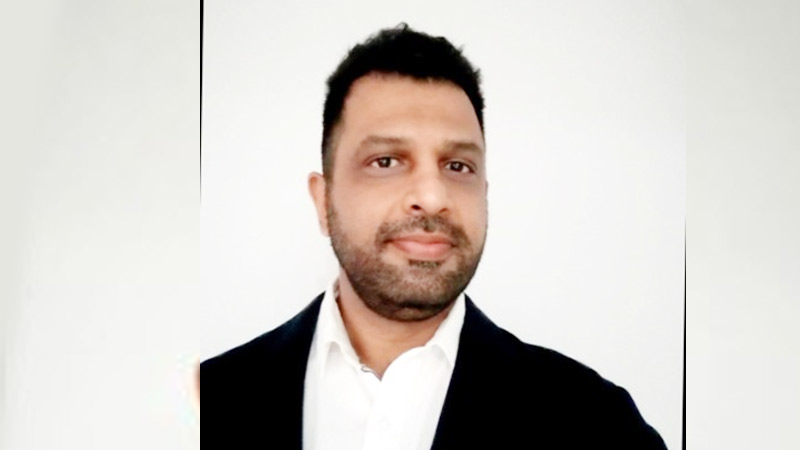
    MUMBAI: It’s a power move in the world of competitive gaming. Yusuf Batliwala has been appointed senior director for global partnerships at Hero Esports, bringing with him nearly two decades of cross-continental experience across entertainment, media, and gaming. Based out of Singapore, Batliwala officially took charge in June 2025.

    Batliwala’s new role will see him leading Hero Esports’ global partnership strategy forging collaborations, securing brand alliances, and expanding the company’s footprint in international markets. With esports exploding into a mainstream spectacle, Hero Esports appears to be stacking its deck with strategic firepower.

    Before joining Hero Esports, Batliwala served as senior sponsorship strategist for the Esports World Cup Riyadh 2024, a high-stakes tournament that cemented Saudi Arabia’s place on the global esports map. He was previously associate director for strategic partnerships at Singtel, where he shaped digital entertainment initiatives across Southeast Asia. His diverse experience also includes stints with Bytedance, BBC, and Getty Images.

    Having worn multiple hats from content sales and sponsorships to strategic partnerships and business development Batliwala is no stranger to navigating the fast-evolving intersections of media, tech, and culture.

    With Hero Esports expanding rapidly across Asia, Batliwala’s appointment signals the company’s ambition to level up its global playbook. As esports matures into a billion-dollar business, industry insiders will be watching closely to see how Batliwala’s deal-making and brand-building expertise helps unlock the next phase of Hero’s journey.

    Game face on the global esports arena just got a little more interesting.

  • Laying of data transmitting submarine Asia Direct Cable completed

    Laying of data transmitting submarine Asia Direct Cable completed

    MUMBAI: After a gap of almost eight years, a new intra-Asia undersea cable has just been readied for operation connecting China (Hong Kong SAR), Japan, and Singapore .The Asia Direct Cable (ADC) submarine cable is owned by the ADC Consortium and consists of multiple pairs of high-capacity optical fibers. It is designed to handle over 160 tbps of traffic, allowing for the efficient transmission of data across east and southeast Asia. 

    The ADC is a global consortium comprised of leading communications and technology companies, including NT (Thailand), China Telecom, China Unicom, PLDT Inc, Singtel, SoftBank Cor., Tata Communications and Viettel.
    It will be providing essential infrastructure to meet the growing demand for data transmission in the region and creates new opportunities for communication and society’s future.

    This milestone marks a crucial step in supporting the increasing communication needs of Asia and the world. It represents the culmination of collaborative efforts and partnerships with stakeholders from various countries.

    “This new cable marks a significant milestone, providing a vital foundation to support the ever-growing communications needs of Asia and the world. The milestone represents the culmination of our efforts to overcome numerous challenges, made possible through steadfast collaboration and partnerships with esteemed stakeholders from various countries, including NEC. We are confident that this cable system will significantly contribute to the development of the AI industry in the Asia region,” said ADC Consortium chairperson Koji Ishii.

    “The consortium is extremely satisfied with the successful completion of this cable,” said ADC Consortium co-chairperson Billy Li. “It offers the greatest cable capacity and essential diversity required for Asia’s major information hubs, enabling telecom carriers and service providers to optimize their network and service planning for sustainable growth.”

  • Multi-territory video streaming service Hooq files for liquidation

    Multi-territory video streaming service Hooq files for liquidation

    MUMBAI: Multi-territory video streaming service Hooq said last week that it has filed for liquidation as giant players are looking more into streaming services and the competition intensifies across the globe.

    The service was launched in 2015 by the Singapore-based telecom company Singtel and was also backed by Warner and Sony. Along with India, Hooq was also available in the Philippines, Thailand and Indonesia.

    “Singapore Telecommunications Ltd (“Singtel”) wishes to announce that HOOQ Digital Pte Ltd (“HOOQ”), a joint venture company in which Singtel has an indirect 76.5 per cent effective interest, has commenced a creditors’ voluntary liquidation. The liquidation of HOOQ is not expected to have any material impact on the net tangible assets or earnings per share of Singtel,” it said in a stock exchange filing.

    According to media reports, Hooq said in a statement that it had been unable to grow fast enough to keep up with global and regional rivals, and also noted “significant structural changes” in the over-the-top (OTT) video market in the five years since its launch.

    “Global and local content providers are increasingly going direct, the cost of content remains high, and emerging market consumers’ willingness to pay has increased only gradually amidst an increasing array of choices,” said Hooq.

    “Because of these changes, a viable business model for an independent, over-the-top distribution platform has become increasingly challenged,” it added.

    Hooq has appointed Messrs Lim Siew Soo and Brendon Yeo Sau Jin as its joint and several provisional liquidators. A shareholder meeting and creditors’ meeting have also been set for 13 April.

    Back in 2018, Hooq struck a unique deal with India’s leading streaming service Hotstar. Under the partnership, HOOQ’s 6,000 hour catalogue of Hollywood TV shows and movies were made  available for Hotstar Premium users. It also started offering more than Pay TV channels to their premium offering in partnership with brands across Asia.

    Experts already warned about upcoming consolidations and exits in the media industry. Towards the end of 2019,  Hong Kong-headquartered PCCW Media’s Asian video streaming service Viu also  decided to fold its India operations.

  • Dish TV waives off 30-day lock-in period for pay channels, channel bouquets

    Dish TV waives off 30-day lock-in period for pay channels, channel bouquets

    MUMBIA: India’s biggest direct-to-home operator Dish TV has waived off the 30-day lock-in period for pay channels and select channel bouquets it had levied earlier.

    This lock-in period, which was earlier introduced by the DTH operator, prevented consumers from unsubscribing to a channel they had opted for until the duration of the lock-in period.

    Consumers can now drop and opt for channels without these restrictions.

    According to some subscribers, however, there is no change made to the seven-day lock-in period for sports channels.

    Dish TV is by far the largest DTH player in the country and probably the second largest globally. As on 31 December 2018, Dish TV claimed a net active subscriber base of 236 lakh (23.6 million, 2.36 crore).

    Two major DTH players – Airtel Direct TV (Airtel DTH) and the merged Dish TV Videocon d2h entity (Dish TV) have about 55 percent of the market share of private DTH subscribers in the country. During CY 2018, these two players added 17.06 lakh (1.706 million, 0.1706 crore) subscribers, or 58.2 percent of the net subscribers that were added by all the 5 private DTH players in the country. Airtel DTH added 10.63 lakh (1.063 million, 0.1063 crore) net subscribers, while Dish TV added 6.43 lakh (0.643 million, 0.0643 crore) during the period under review.

    Earlier in the week a report by CNBC-TV18 claimed that Singapore Telecommunications Ltd (Singtel) and Bharti Airtel are jointly looking to buy a stake in Dish TV in a bid to compete with Reliance Jio.

    The duo is looking to acquire the promoter’s 60 per cent stake in Dish TV for around Rs 6150 crore. As part of Bharti Airtel’s plan to raise $4.6 billion, Singtel is likely to buy stock in it worth $525 million through shares and bonds.

    GIC, the parent company of Singtel via Temasek Holdings, also owns about 20 per cent in Tata Sky and could hint at a future possibility of further consolidation in the DTH sector.

  • Singtel’s CAST adds HOOQ to OTT content line-up, three-month trial offered

    Singtel’s CAST adds HOOQ to OTT content line-up, three-month trial offered

    MUMBAI: Singtel’s OTT video portal app CAST is bringing a new world of entertainment to Singtel postpaid mobile, fibre broadband and Singtel TV customers with the addition of HOOQ.

    HOOQ’s extensive library of over 20,000 movies and TV series can be viewed on mobile, tablets, and even big TV screens enabled with Android TV and Google Chromecast. Customers will be spoilt for choice with programmes by HOOQ’s network of studio partners such as Sony Pictures, Warner Bros., Disney, DreamWorks, Lionsgate and over a hundred Asian studios. From Hollywood blockbusters such as Captain America: the First Avenger, Guardians of the Galaxy Vol. 2 and Thor, to popular shows such as The Flash and Supergirl, HOOQ is the only video-on-demand service in Singapore to offer selected Hollywood movies from 90 days of cinema release and TV series with same-day telecasts as the U.S.

    Singtel MD – home, at consumer Singapore Goh Seow Eng said, “Hollywood, Asian and kids’ content is extremely popular with our customers. We are pleased to offer HOOQ’s vast selection in the palm of their hands or comfort of their own homes. We will continue to expand CAST’s content library for our customers’ enjoyment.”

    HOOQ CEO Peter Bithos said, “We are very excited about our partnership with Singtel and proud to bring Singaporeans more of the latest! Binge now on Supergirl, The Flash and Lucifer before catching the latest season the same day as the U.S.! Soon, HOOQ will be bringing three of Marvel’s latest series – Marvel’s Inhumans, Marvel’s Runaways and Marvel’s Cloak and Dagger – the same day as the U.S. telecast! We are always looking for new ways and new titles to keep Singaporeans HOOQ’d month after month!”

    As an introductory offer, Singtel postpaid customers can get a three-month trial on HOOQ with a 12-month contract and pay only S$4.90/month subsequently.

    For customers who opt for a non-contract subscription, they will pay only S$7.90/month.

    HOOQ is the latest addition to CAST’s wide range of content such as Aneka Plus, Asian Plus, Fox+, Variety Plus, Viu Premium and more.

    Singtel postpaid customers can subscribe to HOOQ and enjoy:

    · The best of Hollywood – movies available from 90 days of cinema release and the latest TV series on the same day telecast as the U.S.

    · The largest selection of the best hits – 20,000 movies and TV series for the price of one movie ticket

    · Entertainment for the whole family – including younger kids who can catch their favourite animated series such as Transformers: Robots in Disguise, Mr. Bean and more

    · Unlimited online viewing using up to five devices – download anytime, anywhere

    · An ad-free experience – uninterrupted viewing without ads

  • HOOQ raises US$ 25 million from Sony Pictures, others; open to outside investors

    HOOQ raises US$ 25 million from Sony Pictures, others; open to outside investors

    MUMBAI: Southeast Asian streaming platform HOOQ, a Netflix challenger, has raised US$25 million (Rs 1.7 billion) in capital from existing investors — Sony Pictures, Singtel and Warner Brothers, it was announced through a stock exchange filing from Singtel.

    HOOQ went live in Indonesia, Philippines, India and Thailand in 2015. Recently launching in India, Amazon Prime Video is now an international challenger.

    HOOQ CEO Peter Bithos said that the company was preparing to welcome outside investors.

    The filing stated that Singtel had invested an additional US$ 15.5 million with the other investors contributing the remainder. It was also disclosed that HOOQ had earlier raised US$ 70 million, taking the total recent investment to US$ 95 million.

    HOOQ was founded two years ago by the trio with Singtel having a majority holding. Following the deal, the companies retained the same shareholding with Singtel owning 65 per cent; Warner and Sony each taking 17.5 per cent.

  • HOOQ raises US$ 25 million from Sony Pictures, others; open to outside investors

    HOOQ raises US$ 25 million from Sony Pictures, others; open to outside investors

    MUMBAI: Southeast Asian streaming platform HOOQ, a Netflix challenger, has raised US$25 million (Rs 1.7 billion) in capital from existing investors — Sony Pictures, Singtel and Warner Brothers, it was announced through a stock exchange filing from Singtel.

    HOOQ went live in Indonesia, Philippines, India and Thailand in 2015. Recently launching in India, Amazon Prime Video is now an international challenger.

    HOOQ CEO Peter Bithos said that the company was preparing to welcome outside investors.

    The filing stated that Singtel had invested an additional US$ 15.5 million with the other investors contributing the remainder. It was also disclosed that HOOQ had earlier raised US$ 70 million, taking the total recent investment to US$ 95 million.

    HOOQ was founded two years ago by the trio with Singtel having a majority holding. Following the deal, the companies retained the same shareholding with Singtel owning 65 per cent; Warner and Sony each taking 17.5 per cent.

  • ATF 2016 discusses secret sauce for Asian OTT’s successes

    ATF 2016 discusses secret sauce for Asian OTT’s successes

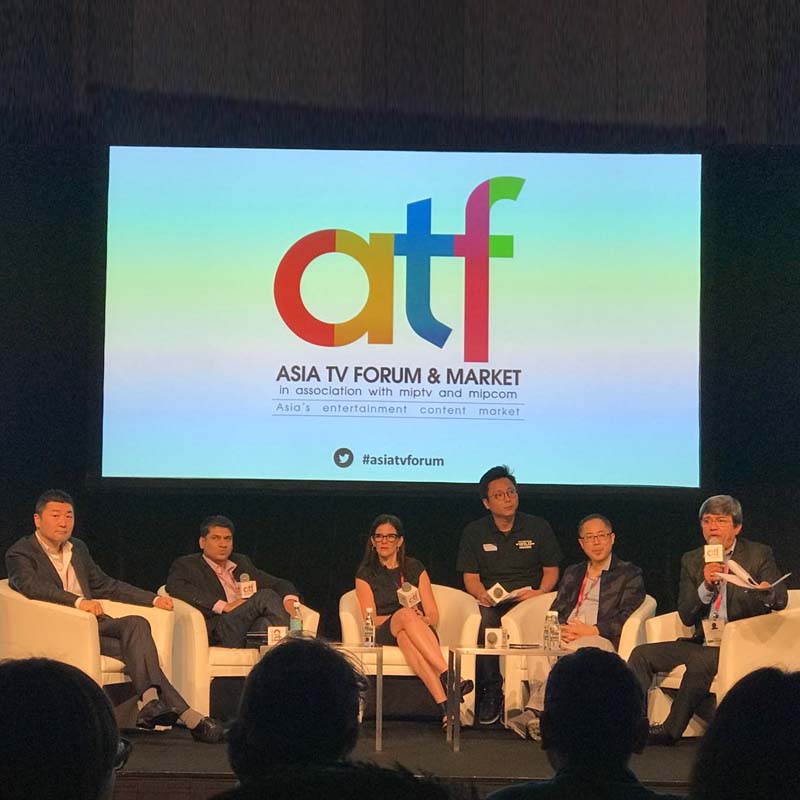
    SINGAPORE: The media and entertainment industry is known for its dynamic and unpredictable nature. With digital media taking an upward turn, over the top services are slowly making a mark and challenging traditional viewing methods. To address how effective are the various OTT models, the pre-ATF market conference on 6 December witnessed the session ‘View From Over The Top.’

    The discussion was led by IndianTelevision.com group founder, CEO and editor-in-chief Anil Wanvari, and covered the scope of the new content buyers in the online evolution and the success in re-aligning company strategies to meet new demands.

    The panelists consisted of an interesting bunch of execs whose services are as different as chalk and cheese: Hulu Japan (Japan), chief content officer, Kazufumi Nagasawa; Singapore-based Hooq co-founder and chief content officer, Krishnan Rajagopalan; LeTV (China), chief executive producer, Hao Fang; and US-based AwesomnessTV head of worldwide distribution, Rebecca Glashow.

    Wanvari set the ball rolling by questioning whether OTT as a business concept is a pipe dream or a reality. “OTT services have not really made a dent on viewing habits for a large part in Asian markets where television viewing is still rating high with consumers,” he stated. “Yet close to 100 or so OTT/VOD services have launched in various Asian nations. No one knows what the right business model is — Is it AVOD? Is it TVOD? Or, is it SVOD? Or is it a freemium model? Or is it a telco-bundled/TV set-bundled service? What is the pricing sweet spot? How much time will it take to build them into viable businesses? It looks like the OTT industry looks like what the cable and satellite TV industry did in the early nineties across Asia. The broadcasters were making losses and kept on bleeding for a decade or so. Will the same happen to OTT? And, what could help accelerate its fortunes better? Is it data costs? Or consumer education?”

    The panelists then went to on to talk about how they were each dealing with the market’s challenges. With China being the largest market in terms of mobile subscribers, LeTV took a strategic decision to bundle its streaming service platform with ‘Le’ mobile phones and in Hong Kong with its TVs. Consumers got LeTV free for varying periods as it was built into the price of the hardware.

    On the other hand, Hooq, being a comparatively young player in the market, Rajagopalan mentioned that the Asian audience is slowly getting used to the idea of paid services. Hooq has strong partnerships with telcos such as Singtel, Airtel, Vodafone, Globe Telecom, Telkomsel in different regions as it rolls out. Partnering with other companies has enabled Hooq to reach out to consumers who might be unaware of Hooq or don’t want to shell out money as it’s a SVOD service. Hooq launched in Singapore in end-November adding to Indonesia, Philippines, India and Thailand – countries in which it has been investing.

    AwesomnessTV follows a completely different approach; it perceives itself as a content creator for all the screens – TV, theatre, mobile, tablet – and its MCN strategy is totally a separate kettle of fish. Its advantage is that it has a strong millennial content focus on account of it strong digital talent. This has landed it deals with various platforms: Verizon for its Go90 mobile service; with ITV2 in the UK for which it is developing a millennial targeted commissioned programme block. A slate of feature films is also in the offing.

    And because its productions have a slew of digital stars it uses their online social media following to tease their fans and lure them to watch the content it creates for the other screens. Glashow said that she was in Asia to explore and evaluate opportunities and build partnerships to help it with its Asian foray. With enough money from its varied parents right from Verizon to Dreamworks Animation and Hearst Entertainment, it can afford to be ambitious for the continent as well.

    Hulu Japan – which is owned wholly by the broadcaster Nippon TV after Hulu exited a few years ago — follows the SVOD model, and has partnered with the Japanese major telco DoCoMo. As far as content is concerned, Nagasawa said that the OTT service has an international to domestic content ratio of 50:50. The service offers its users a smorgasbord of international top series as well as domestically produced content. Production budgets vary from 10,000 dollars to as much as a million dollars.

    Nagasawa said he has plans to make Hulu a one-stop-destination for consumers as the company plans to expand its linear streaming service to include transactional video on demand (TVoD) and electronic sell-through.

    Speaking about original content production, Hooq which recently released the trailer of its first original co-produced show ‘On The Job’ at ATF, Rajagopalan commented: “We have converted a movie into a TV series and are paying more than what goes into the production of a TV show as with multiple business models existing, content differentiation is the key to success. And that’s where the focus should be.”

    Stressing the same fact, Fang added, “While creating our content, we almost feel as if we are buying a building as it costs us around RMB four to five billion! We want to produce more original content but it is difficult.”

    When asked by Wanvari what kind of content and partners are the panelists looking for, Ramagopalan said that it all depends on how differentiated the content is. Glashow advised, “Before producing anything, know your audience and then reach out to them. For us, our client is the audience and so we take feedback from them and listen to what they want.” And, Fang revealed that LeTV is keeping an open mindset and is willing to participate with everyone.

  • ATF 2016 discusses secret sauce for Asian OTT’s successes

    ATF 2016 discusses secret sauce for Asian OTT’s successes

    SINGAPORE: The media and entertainment industry is known for its dynamic and unpredictable nature. With digital media taking an upward turn, over the top services are slowly making a mark and challenging traditional viewing methods. To address how effective are the various OTT models, the pre-ATF market conference on 6 December witnessed the session ‘View From Over The Top.’

    The discussion was led by IndianTelevision.com group founder, CEO and editor-in-chief Anil Wanvari, and covered the scope of the new content buyers in the online evolution and the success in re-aligning company strategies to meet new demands.

    The panelists consisted of an interesting bunch of execs whose services are as different as chalk and cheese: Hulu Japan (Japan), chief content officer, Kazufumi Nagasawa; Singapore-based Hooq co-founder and chief content officer, Krishnan Rajagopalan; LeTV (China), chief executive producer, Hao Fang; and US-based AwesomnessTV head of worldwide distribution, Rebecca Glashow.

    Wanvari set the ball rolling by questioning whether OTT as a business concept is a pipe dream or a reality. “OTT services have not really made a dent on viewing habits for a large part in Asian markets where television viewing is still rating high with consumers,” he stated. “Yet close to 100 or so OTT/VOD services have launched in various Asian nations. No one knows what the right business model is — Is it AVOD? Is it TVOD? Or, is it SVOD? Or is it a freemium model? Or is it a telco-bundled/TV set-bundled service? What is the pricing sweet spot? How much time will it take to build them into viable businesses? It looks like the OTT industry looks like what the cable and satellite TV industry did in the early nineties across Asia. The broadcasters were making losses and kept on bleeding for a decade or so. Will the same happen to OTT? And, what could help accelerate its fortunes better? Is it data costs? Or consumer education?”

    The panelists then went to on to talk about how they were each dealing with the market’s challenges. With China being the largest market in terms of mobile subscribers, LeTV took a strategic decision to bundle its streaming service platform with ‘Le’ mobile phones and in Hong Kong with its TVs. Consumers got LeTV free for varying periods as it was built into the price of the hardware.

    On the other hand, Hooq, being a comparatively young player in the market, Rajagopalan mentioned that the Asian audience is slowly getting used to the idea of paid services. Hooq has strong partnerships with telcos such as Singtel, Airtel, Vodafone, Globe Telecom, Telkomsel in different regions as it rolls out. Partnering with other companies has enabled Hooq to reach out to consumers who might be unaware of Hooq or don’t want to shell out money as it’s a SVOD service. Hooq launched in Singapore in end-November adding to Indonesia, Philippines, India and Thailand – countries in which it has been investing.

    AwesomnessTV follows a completely different approach; it perceives itself as a content creator for all the screens – TV, theatre, mobile, tablet – and its MCN strategy is totally a separate kettle of fish. Its advantage is that it has a strong millennial content focus on account of it strong digital talent. This has landed it deals with various platforms: Verizon for its Go90 mobile service; with ITV2 in the UK for which it is developing a millennial targeted commissioned programme block. A slate of feature films is also in the offing.

    And because its productions have a slew of digital stars it uses their online social media following to tease their fans and lure them to watch the content it creates for the other screens. Glashow said that she was in Asia to explore and evaluate opportunities and build partnerships to help it with its Asian foray. With enough money from its varied parents right from Verizon to Dreamworks Animation and Hearst Entertainment, it can afford to be ambitious for the continent as well.

    Hulu Japan – which is owned wholly by the broadcaster Nippon TV after Hulu exited a few years ago — follows the SVOD model, and has partnered with the Japanese major telco DoCoMo. As far as content is concerned, Nagasawa said that the OTT service has an international to domestic content ratio of 50:50. The service offers its users a smorgasbord of international top series as well as domestically produced content. Production budgets vary from 10,000 dollars to as much as a million dollars.

    Nagasawa said he has plans to make Hulu a one-stop-destination for consumers as the company plans to expand its linear streaming service to include transactional video on demand (TVoD) and electronic sell-through.

    Speaking about original content production, Hooq which recently released the trailer of its first original co-produced show ‘On The Job’ at ATF, Rajagopalan commented: “We have converted a movie into a TV series and are paying more than what goes into the production of a TV show as with multiple business models existing, content differentiation is the key to success. And that’s where the focus should be.”

    Stressing the same fact, Fang added, “While creating our content, we almost feel as if we are buying a building as it costs us around RMB four to five billion! We want to produce more original content but it is difficult.”

    When asked by Wanvari what kind of content and partners are the panelists looking for, Ramagopalan said that it all depends on how differentiated the content is. Glashow advised, “Before producing anything, know your audience and then reach out to them. For us, our client is the audience and so we take feedback from them and listen to what they want.” And, Fang revealed that LeTV is keeping an open mindset and is willing to participate with everyone.