Tag: Singapore

  • ATA to be telecast on Star World and Channel V

    ATA to be telecast on Star World and Channel V

    MUMBAI: The eighteenth Asian Television Awards (ATA) that will be held on 5 December in Singapore will be telecast on Fox’s Asian channels Star World and Channel V. The awards ceremony will air across five feeds between the two channels and will reach audiences in Hong Kong, Taiwan, Singapore, Malaysia, Thailand, Indonesia, Philippines and Vietnam.


    ATA this year has attracted nearly 1250 entries from 14 countries across Asia-Pacific. 189 channels from 98 broadcasters, as well as 65 independent production companies, will compete in 38 categories under the three groups of ‘programming’, performance’, and ‘technical & creative’. The top four categories are ‘terrestrial channel of the year’, ‘cable and satellite channel of the year’, ‘terrestrial broadcaster of the year’ and ‘cable and satellite channel of the year’.


    This year, 22 Indian programmes have been selected for it with a majority from the TV18 group and the NDTV group.


    This will be ATA’s first ever regional broadcast on Fox’s International Channels. It will also be telecast on Singapore’s terrestrial broadcaster MediaCorp TV.

  • Pay TV growth spurred by BRIC nations, says ABI Research

    Pay TV growth spurred by BRIC nations, says ABI Research

    MUMBAI: India is just a year into the process of digitisation, and, in another year, it is quite likely all of the nation’s 100-odd million cable TV homes will be having a set top box (STB) perched on top of their TV sets. The rapid spread of the STB and pay TV is ensuring that India increasingly pops up in research reports on pay TV as a major contributor of growth. Other countries which are also helping spike pay TV growth are Brazil, Russia and China.


    Take a dekko at the latest report released by international research firm ABI Research. It states that the pay TV subscriber base across the world surpassed 886.5 million at the end of Q3 2013, a six per cent YoY increase and generated $ 62.6 billion service revenue. Maintaining its Q2 2013 status, BRIC (Brazil Russia India China) nations were a major contributor and will continue to be in the future years, ABI has stated.


    The research predicts that by 2018, global pay TV subscribers will shoot to more than 1 billion out of which BRIC countries will be responsible for 68 per cent of total net additional subscribers.


    “Emerging markets are key drivers of global growth in pay-TV subscribers as developed markets are experiencing flat growth rates,” said ABI Research VP and practice director Jake Saunders.


    The US Pay TV market grew at less than one per cent as compared to Q3 2012, due to increasing cord cutting by cable TV subscribers who are switching over to cheaper OTT services such as Netflix and Hulu. According to the report, approximately 1.7 million subscribers were lost from cable TV last year in North America. However, revenues increased due to high ARPUs (Average Revenue per User) driven by increasing HD and advanced DVR (Digital Video Recorder) subscribers.


    European countries also showed marginal growth with less than two per cent increase than Q3 last year. Service providers in Spain lost over seven per cent of their pay TV subscribers and Italy over two per cent as compared to a year ago due to the weak economic environment. However, markets such as the UK, France and Germany along with other Western Europe countries saw IPTV subscribers increase by 1.9 million from Q3 2012 to Q3 2013.


    According to a 2012 report by the Singapore-based Media Partners Asia (MPA) overall pay TV subscribers in India were expected to cross 170 million in five years. Much like the US, India is also set to see revenue increase due to HD TV sets. India has one of the lowest ARPUs in the world at approximately Rs 140 ($ 2.2) but the industry is optimistic that it will grow to Rs 550 ($ 8.73) once digitisation is complete.

  • Digital Asia Festival 2013 announces shortlist

    Digital Asia Festival 2013 announces shortlist

    MUMBAI: The Digital Asia Festival Awards, honouring the best digital marketing communications across Asia Pacific, has announced this year’s shortlist.


    Chaired by Jason Kuperman, vice president of Omnicom Digital Asia Pacific, India, Middle East and Africa, the jury consists of 40 industry professionals with a mix of leading client marketers, digital media practitioners and agency strategists, judged 506 pieces of work based on strategy, creativity and innovation, execution and results with a total of 80 entries making it onto the shortlist. Japan leads with the most shortlisted entries (14), followed by Australia (13), New Zealand (10), China (9), Hong Kong (9), India (7), Singapore (7), The Philippines (5), Malaysia (4) and Thailand (2).


    Commenting on the judging process so far and the quality of the work, some jury members had the following to say in a release:  


    “I found this year’s entries seamlessly integrating technology into the creative leap turning the communication into truly refreshing and engaging consumer experiences. Several of the shortlists had started with a fabulous consumer insight and market/media opportunity that had never been explored before. We saw a lot of first-of-its-kind innovations and we could see technology playing along beautifully with the big idea. That’s a very encouraging sign,” said Tigress Tigress founder, CEO and CCO Meera Sharath Chandra.


    “Judging the DAF awards this year demonstrates that the region is thinking big and acting big in digital.  It’s no longer just an add-on to a TV campaign, but brands and agencies are genuinely looking at how they can build participation throughout their initiatives.  In a world where we often seem to be obsessed with daily posts on Facebook, it’s brilliant to see how much scale and impact can be really achieved with digital innovation,” said Iris Worldwide planning director, APAC regional Paul Gage.


    “The work that stood out for me was based on a single sharp insight and a strong idea – simply presented and well executed. Several entries made me go, Aha, wish I had thought of it,” said Infosys global head – digital marketing Ashok Lalla.
    The winners of the 2013 awards will be announced online through www.digitalasiafestival.com on 18 November.

  • 22 Indian programmes shortlisted for Asian TV Awards 2013

    22 Indian programmes shortlisted for Asian TV Awards 2013

    NEW DELHI: 22 nominations have been shortlisted from India for the Asian Television Awards 2013. Of this, a majority are a part of TV18 group and NDTV bouquet.


    The event will be organised by the publication ‘Television Asia Plus’ at Singapore’s Resorts World Sentosa, Compass Ballroom on 5 December.


    A total of 238 entries spanning 12 countries have made the cut to compete for glory at the 18th annual presentation of the region’s most prestigious industry awards.


    Leading the pack, with multiple nominations across several categories are Discovery Networks Asia-Pacific, FOX International Channels and MediaCorp.


    Karan Thapar and Cyrus Broacha are among the presenters who have made it to the nominations.


    The Indian entries are:


    BEST DOCUMENTARY PROGRAMME (ONE-OFF/ SPECIAL)


    Everest: Indian Army Women’s Expedition
    Discovery Networks Asia-Pacific
    Discovery Channel
    Singapore
    Produced by Robin Roy Films


    Access 360° World Heritage: Taj Mahal
    FOX International Channels Asia
    National Geographic Channel
    Hong Kong
    Produced by Infocus Asia


    CHILDREN’S PROGRAMME
    Mystery Hunters (India Version)
    Discovery Networks Asia-Pacific
    Discovery Kids
    Singapore
    Produced by BBC Worldwide Media


    Bhoot Raja aur Ronnie
    Turner International India
    C08, POGO
    Produced by Fireworks Productions


    BEST SINGLE NEWS STORY/REPORT (10MINS OR LESS)
    Medical Education for Sale
    TV18 Broadcast
    CNN-IBN


    Right To Be Heard You Matter show – With Nafisa Ali
    TV Today Network
    Headlines Today


    BEST COMEDY PROGRAMME
    The Week That Wasn’t
    TV 18 Broadcast
    CNN-IBN


    BEST GENERAL ENTERTAINMENT PROGRAMME
    India’s Got Talent Season 4
    Fremantle India Television Productions
    Viacom 18, Colors


    BEST GAME OR QUIZ PROGRAMME
    Disney Q Family Mastermind
    BBC Worldwide Productions India
    Disney India, Disney Channel


    BEST REALITY SHOW
    What Not to Wear (India Version)
    Discovery Networks Asia-Pacific
    TLC
    Singapore
    Produced by BBC Worldwide Media


    Mission Covershot
    NGC Network (India)
    National Geographic Channel
    Produced by FremantleMedia India


    BEST INFOTAINMENT PROGRAMME
    Bollywood@100
    A+E Networks | TV18
    History TV 18


    BEST TALK SHOW
    The Big Fight
    New Delhi Television
    NDTV 24X7


    We The People: Every Woman’s Battle (Cinema: A Culture of Misogyny?)
    New Delhi Television
    NDTV 24X7


    We The People: Rape: Our National Shame
    New Delhi Television
    NDTV 24X7


    BEST ADAPTATION OF AN EXISTING FORMAT
    Jhalak Dikhhla Jaa – Dancing with the Stars
    BBC Worldwide Productions India
    Viacom 18 Media, Colors


    BEST CROSS-PLATFORM CONTENT
    The Citizen Journalist Show
    TV 18 Broadcast
    CNN-IBN


    BEST CURRENT AFFAIRS PRESENTER BEST CURRENT AFFAIRS PRESENTER
    Karan Thapar
    Devil’s Advocate
    TV 18 Broadcast
    CNN-IBN


    BEST SPORTS PRESENTER/COMMENTATOR
    Gaurav Kalra
    Go for Glory
    TV 18 Broadcast
    CNN-IBN


    BEST COMEDY PERFORMANCE BY AN ACTOR/ ACTRESS
    Cyrus Broacha
    The Week That Wasn’t
    TV 18 Broadcast
    CNN-IBN


    Best Cinematography
    Appurva N. Sinnarkar
    Style In The City
    NGC Network (India)
    FOX Traveller
    Produced by Wizcraft International Entertainment


    Nihki Tandon & Varun Dutt
    Life Mein Ek Baar – When Angels Dare
    NGC Network (India)
    FOX Traveller
    Produced by Endemol India

  • Amagi Media Labs enables ETV to generate custom feed for Singapore

    Amagi Media Labs enables ETV to generate custom feed for Singapore

    MUMBAI: Geo-targetted advertising was started in India by Amagi Media Labs that enabled channels to have particular ads in particular regions. But it didn’t just stop there. It has also started creating local feeds for channels that want to air in other countries.

    According to Amagi, at times, certain shows are not allowed to be aired in other countries due to broadcast regulations, so it is replaced with regional shows. Local content to cater to local audiences can also help in getting targeted advertising in the country.

    In the latest move, the channel has partnered with Eenadu Television to provide custom feed for ETV Telugu in Singapore through Amagi’s cloud enabled broadcast solution. Amagi’s localisation platform at SingTel’s Mio TV will be doing the job for the channel. Earlier, another Telugu network had done the same in Singapore. Maa Network’s Maa TV and Maa Movies also aired local shows to its viewers in Singapore earlier this year.

    ETV Telugu wanted to bring their linear feed to Singapore and it was asked to opt out of two hours of its programming. Using Amagi’s cloud based platform, they have been able to create a local feed for Singapore audiences. “We had a requirement to replace couple of hours of programming on every day basis for our distributor in Singapore while justifying the RoIs,” said Eenadu TV vice president Bapineedu.


    Amagi’s technology helps channels save a lot of resources of creating a new feed using satellite or fiber.

     “The system is designed in a manner such that the content masking process works in parallel to the satellite broadcast’s processes and scheduling,” said Amagi co-founder and CTO Srividhya S. “Unlike the traditional triggering mechanism used, Amagi’s barcoding based approach offers workflow flexibilities and 100 per cent accuracy in identifying and replacing content assets.”

    Recently Amagi has perked up on its geo targeted advertising for Nickelodeon and HUL as well as Zee TV.

  • ‘Made for TV, as seen on YouTube’ at Asia TV Awards

    ‘Made for TV, as seen on YouTube’ at Asia TV Awards

    NEW DELHI: The 18th Asian Television Awards (ATA) will work with YouTube in organising a seminar titled “Made-for-TV, As Seen on YouTube”.

    The seminar will be held on 5 December at the Grand Copthorne Waterfront Hotel, Singapore, as part of the annual ATA showcase, organised by Television Asia Plus, a publication of Contineo Media.

    “Made-for-TV, As Seen on YouTube”, one of the premium tracks for the Showcase, will feature representatives from the Asia Pacific YouTube team. Currently confirmed is YouTube APAC director of partnership and operations Gautam Anand, who will present a keynote and engage in panel-style discussions in the presence of conference attendees. Also presenting will be YouTube APAC manager of content partnerships Wiwi Goh.

    “With more people going online every day, including here in Asia, digital media is increasingly crucial for content creators. With a platform like YouTube, creators can find new ways of distributing their content to new audiences and build up fan communities around the world,” says Gautam Anand.

    The seminar will address how YouTube can empower content producers and content rights owners/ broadcasters to not only build audiences, but monetise both legacy and new content. Included in the seminar are case studies and panel discussions, with practical tips on how best to reach audiences via YouTube. Attendees will also be acquainted with YouTube’s Content ID tools that can help track, block and even monetise content, allowing one to best structure content creation strategies on the online platform.

    The “Made-for-TV, As Seen on YouTube” seminar is part of the ATA Showcase, a full-day conference of seven tracks opened to all trade members and aspiring media professionals. At the Showcase, each year’s award nominees; regional directors, producers and creative talents, will come together and engage in an intimate theatre-style dialogue. These industry professionals will share their experiences in content production, technical expertise, as well as post production. Attendees can choose from six other Showcase tracks – “Scripted Programming”, “Formats/ Reality”, “Sports Programming”, “Factual/ Documentary”, “Children/ Preschool” and “Technical & Creative”; which will collectively introduce a wide variety of nominated ATA projects that cover the entire broadcast spectrum from production, to performance, to post-production. Some of the speakers from the 2012 ATA Showcase included representatives from Beach House Pictures, The Moving Visuals Co., Most Wanted Pictures, The Group Entertainment, Ochre Pictures, Southern Star Entertainment, Media-Stable, Fuji Television Network, Inc., FOX International Channels, Turner Broadcasting System Asia-Pacific, YouTube, and Viki.

    “The ATA Showcase is our attempt to give producers and content creators a voice to articulate their experiences in producing their nominated works. We are confident that attendees will benefit tremendously from the rich experiences of these industry professionals,” said Contineo Media CEO Raymond Wong. “In addition, our collaboration with YouTube is a testament to our commitment to not only empower content creators, but also to arm them with knowledge and expertise to take their content from existing broadcast platforms to new and emerging digital ones that are truly the next drivers of industry growth.”

    Registration for the full-day ATA Showcase has already started.

  • India leads in those using video conferencing for new businesses

    India leads in those using video conferencing for new businesses

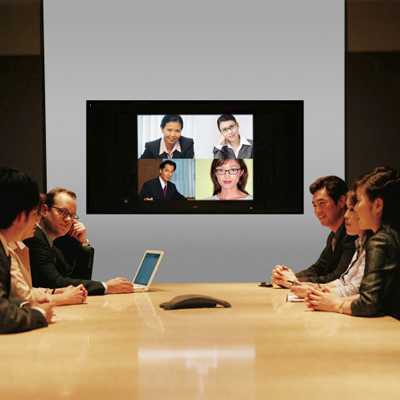
    NEW DELHI: Polycom, has announced that almost all (96 per cent) business decision makers believe video conferencing removes distance barriers and improves productivity between teams in different cities and countries, with India, Brazil and Singapore showing significant usage.

    According to the “Global View: Business Video Conferencing Usage and Trends” survey of more than 1,200 business decision makers, conducted by Redshift Research and commissioned by Polycom, video conferencing is an essential tool helping improve team collaboration and closing the physical and cultural gap between colleagues doing business across distances. 

    India leads the way in using video conferencing for new business with 60 per cent of respondents saying they use or would use video conferencing for new business. This was followed by Russia and Brazil at 49 and 44 per cent, respectively.  Across the globe, 38 per cent of respondents use video, or would use video, for new business.

    The survey found that video is becoming more pervasive in businesses across the globe.  When asked to choose their preferred methods of communications today, respondents ranked video conferencing third (47 per cent) after e-mail (89 per cent) and voice/conference calls (64 per cent), and those same business leaders and managers expect video to be their most preferred collaboration tool in three years (52 per cent), followed by e-mail (51 per cent) and voice/conference calls (37 per cent).  Respondents who use video conferencing today said the three biggest advantages are: better collaboration between globally dispersed colleagues (54 per cent), greater clarity of topics being discussed (45 per cent) and more efficient meetings (44 per cent).

    Over three quarters of decision-maker respondents (76 per cent) are now using video conferencing at work with 56 per cent of video users taking part in video calls at least once a week.  The survey found that in Brazil, India and Singapore that number jumps up significantly, as more than two-thirds of respondents in those countries use video conferencing at least once a week. 

    The survey also revealed that 83 per cent of respondents, and almost 90 per cent of those in their 20s and 30s, use consumer video conferencing solutions at home today, and almost half of all respondents use video conferencing at home at least once a week. 

    “The growing popularity of video conferencing at home, especially by millennials entering the workforce, is a big driver of increased preference for and adoption of video collaboration in the workplace,” said Polycom EVP and chief marketing operator Jim Kruger.

    “Some key factors to making video as popular in the office as it is at home is ensuring it’s easy to use, providing a high quality connection, delivering enterprise-grade security, and participants’ willingness to accept and adapt to cultural differences as they communicate across borders.  We’re seeing businesses around the world defy distance every day using video collaboration, including increasing productivity, enhancing employee engagement, improving time to market and helping to save lives,” he added. 

    The study also showed that laptops and desktops are the most popular devices for business video conferencing (75 per cent of respondents), followed by conference rooms (48 per cent) and mobile devices (42 per cent).  As video conferencing continues to become more pervasive, in three years laptops and desktops are still expected to be the most preferred device (72 per cent), while mobile devices and conference room usage will increase to 55 and 51 per cent, respectively.

    The survey provided sharp insights from video conferencing users into which behaviours constitute an ideal video meeting, and which are distracting for business decision makers. 

    The survey found the top three most important criteria for an ideal video meeting are: the ability to hear everyone clearly (69 per cent); technology that is straight forward and easy to use (60 per cent); and Good eye contact with colleagues/ everyone is clearly visible (58 per cent).

    Respondents who use video conferencing said the most distracting things, which should be avoided during video meetings, are: Mobile phone going off during a meeting (58 per cent), people attending from inappropriate places – e.g., public transit, in stores (52 per cent), people who are multi-tasking or look distracted – e.g., tapping on keyboard – (51 per cent), and inappropriate background distractions such as colleagues, music, noise (50 per cent).

    The Polycom survey shed light on different opinions between users of video collaboration in various countries, where one activity may be distracting in one country but accepted in another. 

    When asked if people not wearing business attire was a distraction, respondents from India, Singapore and Poland topped the list (30, 26 and 21 per cent, respectively), and on the other end of the spectrum, 13 per cent or fewer of respondents in the UK, France, Russia and The Netherlands find attire to be a distraction.

     In the Asia-Pacific (APAC) region, international communications (between colleagues in different countries) ranked as the most important use of video conferencing (65 per cent), versus 57 per cent for inter-country communications. 

    The U.S. leads the way in leveraging video conferencing for recruitment and hiring, as 32 per cent of video respondents said they use or would use video for this purpose, followed by APAC at 28 per cent.  

    In the Europe, Middle-East and Africa (EMEA) region, respondents were mostly using video conferencing to empower flexible working environments, which was cited as the second highest reason for using the technology, after “connecting with colleagues across the country.” 

    As access to video conferencing increases to virtually all employees with a mobile device or laptop, the survey found that video users in various business functions within organisations use video to defy distance in slightly differing ways: 

    CEOs and founders rated flexible working and inter- office/local meetings (50 per cent each) as their top reasons they use or would use video conferencing, followed by international meetings (46 per cent), new business/sales and company/department meetings (39 per cent each), and during an average week, the marketing function uses video collaboration the most frequently (64 per cent use video at least weekly) in an organisation, followed by IT/engineering and facilities (62 per cent use video at least weekly).  However, when it comes to daily usage of video at work, the HR function is the power user (32 per cent indicate they use video conferencing daily), followed by sales executives (28 per cent indicate they use video conferencing daily). The IT/engineering and manufacturing/supply chain functions are most likely to use video collaboration for international meetings, with 61 and 58 per cent of respondents, respectively, saying they use or would use video to collaborate face to face with colleagues internationally. In fact, according to the survey results, these are the two job functions that use video collaboration more for international meetings than local, in-country video meetings.

    All respondents, regardless of role, predominantly used video conferencing for inter-office meetings, followed by international inter-office meetings. Overwhelmingly, respondents said it is important to try and understand different country cultures when meeting using video conferencing (97 per cent) and 89 per cent of respondents called for etiquette rules to be established to help them better use video conferencing for business. 

    To help business better navigate these differences and drive more effective use of video conferencing, Polycom is launching Polycom’s Guide to Collaborating Across Borders, an insightful new guide designed to help readers understand the nuances of doing business across the globe.  This guide is one of several new resources for business leaders across almost every enterprise function – from IT to HR to the C-suite – to learn how video conferencing can help them defy distance and achieve their goals more quickly and efficiently. 

  • Single window service for film shooting to become operational shortly: Tewari

    NEW DELHI: A single window service for promoting cinema tourism is all set to become operational shortly.

    Speaking at the Cinemascape 2013 conclave in Mumbai today, Information and Broadcasting Minister Manish Tewari observed that India with its rich heritage and diverse geography has great potential as a destination for film shooting but the current system of multiple clearances at various levels made it an unattractive destination for filming.

     “Increasingly therefore, most Indian filmmakers have gravitated towards foreign destinations for outdoor shoots. Any lost opportunity is a revenue loss for the country,” he remarked.

    India has a great potential to become a destination for film shooting but the current system of multiple clearances at various levels make it an unattractive destination for filming, says Manish Tewari

     Tewari said the government has now decided to address the issue by establishing a single window service for granting clearances for film shootings in India. He informed that a Committee on Promotion and Facilitation of Film Production in India has been set up. It is chaired by the secretary in the ministry, with senior representatives from the Ministries of External Affairs, Home Affairs; Tourism; Culture; Railways; Civil Aviation; Defence and Department of Revenue etc.

     The state governments have been asked to nominate the nodal officers for film clearance. The minister said Standard Operating Procedures are being developed to accord clearances for film shooting by domestic and foreign producers in India.


    Tewari stressed on the need for a sound legal architecture for promoting cinema as a form of creative expression. While conceding that law and order is a state subject, he said film certification falls in the central domain. He said, “There is an urgent need to update laws relating to film certification and exhibition and I am happy to inform that the committee headed by Justice Mukul Mudgal has submitted its recommendation along with a model bill to replace the existing Cinematograph Act 1952.”

     He said the recommendations of the committee as well as the model bill will be published on the website of the ministry to seek wider public consultation. The minister assured the film fraternity that by the middle of 2014, India would have a contemporary law to deal with cinema.

     Dwelling on the issue of taxation and fiscal incentives for the film and entertainment sector, the minister called upon the industry representatives to set up a committee of experts to draw a comprehensive strategy, which could then be submitted to the Finance Minister on behalf of his ministry.

    Participating in a panel discussion, noted film maker Mukesh Bhatt said 76 different permissions have to be obtained for film shooting in India, while Indian producers are given a red carpet welcome in some of the cine-tourism nations like Switzerland, New Zealand, South Africa, Thailand, Malaysia and Singapore. Bhatt acknowledged that the Ministry’s effort is a welcome first step.

  • Seven Indian channels added to StarHub TV in Singapore

    Seven Indian channels added to StarHub TV in Singapore

    MUMBAI: Festive season is the time when channels make the best use of the opportunity served to them. This time, it’s also happening overseas as StarHub TV, Singapore’s only cable operator service has decided to give its viewers a treat of seven new Indian channels to view, increasing its lineup of channels from the country to nine.

    The channels that are now a part of the bouquet include: Life Ok, NDTV 24 X 7, NDTV Good Times, Verna, Zee Tamizh, Zee Khana Khazana and Zee TV HD. While the channels became a part of StarHub from 18 October, subscribers can get a free preview till 4 November.

    StarHub TV also has a facility called ‘Anywhere TV’ that allows subscribers to view TV on their personal devices through a subscription plan. Except for Life OK, remaining six new channels along with three others Vannithirai, Zee Cinema and Zee TV can be viewed through ‘Anywhere TV’.

    “India is a colourful country with a rich cultural tapestry,” said StarHub TV head of media business unit Lee Soo Hui. “The diversity of content across these seven new channels will ensure that our customers are now spoilt for choice when it comes to Indian programmes,” she added.

    As part of Diwali celebrations, the existing channels will also be available for free from 1 to 4 November. These include Colors, Asianet, Channel V India, Sony, Star Gold, Sony Max, Star Plus, Star Vijay, Sun Music, Sun TV and Zee News apart from the nine that will be available on ‘Anywhere TV.’

    A ‘Manoranjan’ pack gives eight entertainment channels including Life Ok and Zee TV at $25.90 per month while the NDTV pack comes at $6.24 per month. Verna and Zee Tamizh are available at a la carte price of $8.56 and $6.42 respectively per month.

  • ‘Best Corporate Consultancy in the World 2013

    ‘Best Corporate Consultancy in the World 2013

    MSLGROUP, Publicis Groupe’s strategic communications and engagement consultancy, was named the ‘Best Corporate Consultancy in the World 2013’ by The Holmes Report, one of the most authoritative commentators in the communications industry. The recognition is a testimony to the consultancy’s strengths in helping its clients establish, protect and expand their business through strategic reputation management and corporate advisory practices.


    Paul Holmes, editor of The Holmes Report, said of the award, “MSLGROUP has quietly pulled together one of the most formidable corporate capabilities in the world…providing an impressive range of financial communications and corporate and public affairs counsel.” This highly prestigious acknowledgment comes within weeks after The Holmes Report appointed MSLGROUP as ‘Asia-Pacific Consultancy of the Year.’


    Glenn Osaki, Asia President, MSLGROUP, said: “In Asia, more and more of our clients are turning to MSLGROUP for higher value communications advisory. This has given us the opportunities to provide counsel beyond communicating a business strategy but for the shaping of it. To ensure that we stay close to our clients’ business, we have focused on strengthening our Strategic Communications Advisory in Asia, including investing to ensure that we have the strongest talent in public affairs and government relations in China, India and Singapore, as well as establishing our regional Financial Communications practice in Hong Kong in 2012.”


    Highlights from MSLGROUP in Asia include multiple high-level and cross-market advisory work across the region for clients including P&G, Coca-Cola, Walmart, Business Software Alliance, and Invest in France Agency. MSLGROUP is playing a large role to provide integrated communications for leading companies in India, including Dell and United Technologies (UTC). The China team regularly advises C-suite executives on all issues related to communications with significant impact on business strategy, including its 15+ year client, IKEA. Since 1997, Genedigi Group in China has been providing strategic public affairs and corporate communications counsel to a large number of Fortune 500 companies and Chinese firms.


    On the global scale, examples of MSLGROUP’s world-class advisory includes its strategic corporate counsel for UTC across its diversified aerospace and building systems industries, which has helped UTC to become one of the most admired companies in the world; a 15-market thought leadership and public affairs campaign for the World Gold Council; Kekst’s work on the American Airlines bankruptcy and subsequent merger with US Airways; reputation and issues management for Google in Germany and Italy; and CNC’s work on the Vodafone/KDG takeover and Lufthansa’s sale of BMI to British Airways.


    Olivier Fleurot, CEO of MSLGROUP commented, “We have long believed in the power of a holistic and truly global group offering that is based around the expertise of best-in-class regional entrepreneurs. Knitting these units together with our dynamic teams in the fast-growing economies of India and Brazil is providing us with a leading edge for our clients worldwide today.”