Tag: Sinclair

  • India tunes into the future: D2M phones set to beam broadcast content straight to mobiles

    India tunes into the future: D2M phones set to beam broadcast content straight to mobiles

    MUMBAI: Say hello to television without the internet. At Waves 2025, India’s flagship World Audio Visual & Entertainment Summit to be held at Jio World Centre in Mumbai, a game-changing coalition of technology players will unveil the roadmap to bring direct-to-mobile (D2M) broadcasting to the fingertips of Indian consumers.

    The ambitious push is led by FreeStream Technologies, an IIT Kanpur-incubated deeptech startup, alongside mobile giants Lava International and HMD Global, powered by chipsets and infrastructure from Tejas Networks (formerly Saankhya Labs), with global validation from US-based broadcasting behemoth Sinclair Inc.
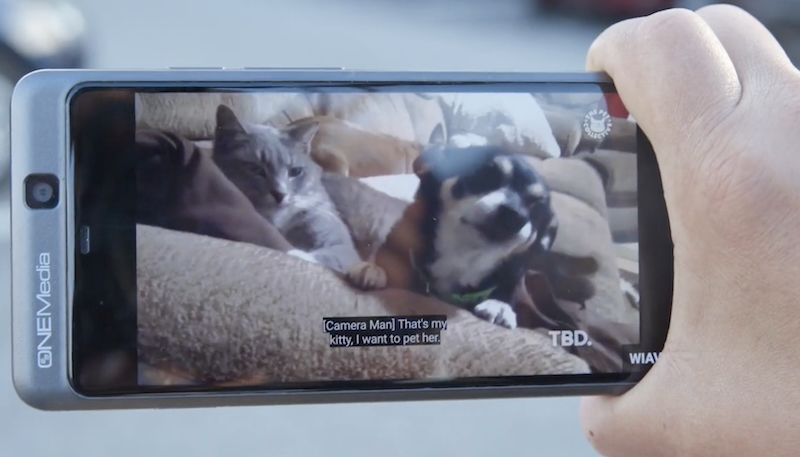
    The tech, hailed as a breakthrough in both communications and accessibility, allows live TV, emergency alerts, educational content, and multimedia programming to be delivered directly to mobile phones via terrestrial broadcast signals — bypassing internet or mobile data altogether.

    “This is India’s moment to lead the world in next-gen broadcasting. Lava and HMD are laying the foundation of a robust device ecosystem, and their commitment to scaling up proves D2M is more than a proof of concept — it’s a national opportunity,” said FreeStream Technologies director Sumeet Nindrajog.

    Lava, known for its made-in-India ethos, is ensuring that the price-point doesn’t become a hurdle. “Our D2M featurephone design cleverly integrates the modem and apps in a way that keeps costs low — something that has always defined Lava,” said Lava International executive director Sanjeev Agarwal.

    HMD — the home of Nokia phones — is matching that energy. “HMD has always been about delivering meaningful innovation. With D2M, we’re enabling consumers to access live content and alerts on their devices, without needing Wi-Fi or mobile data,” said HMD CEO & VP India & APAC. Ravi Kunwar. “This is a global first, and we’re proud to be building it in India.”

    Behind the scenes, it’s Tejas Networks’ award-winning SL-3000 D2M chipset — the tech’s beating heart — that makes it all possible. A product of Saankhya Labs (now part of Tejas and the Tata Group), the chip is designed for mobile broadcast reception, even in dense or low-connectivity environments.

    “This isn’t just about watching TV — this is about creating a national broadcast backbone that can deliver everything from emergency alerts to targeted education, from CDN offload to next-gen advertising,” said Tejas Networks  EVP and co-founder of Saankhya Labs Parag Naik. “It’s an empowerment platform, aligned with PM Modi’s vision of a digitally empowered India and Viksit Bharat.”

    Tejas has also built out the full core network platform to support nationwide rollout — integrating both broadcast and broadband layers, a capability rare even by global standards.

    From the other side of the Atlantic, Sinclair Inc, a pioneer of ATSC 3.0 — the broadcasting standard enabling D2M — praised India’s swift strides. “The adoption of ATSC 3.0 in affordable mobile devices underscores the foresight of our global investments, and vindicates our ‘mobile-first’ strategy,” said Sinclair Inc president & CEO Chris Ripley. ““India is now in the driver’s seat. Our next focus is B2X — Broadcast to Everything — which will be vital to achieving the goals of 6G and next-gen applications.”

    Sinclair’s One Media unit has been working with Indian partners to future-proof mobile broadcasting as a core digital infrastructure. Their role isn’t just investor — they’re co-developers and global evangelists.

    Backed by policy momentum and partnerships with Prasar Bharati, the D2M ecosystem has already undergone field trials across live networks. The next step? Nationwide field deployment, with Lava and HMD readying devices for market at scale.

    D2M is now not just a tech demonstration — it’s a political, social and commercial opportunity:
    * To decongest mobile data networks,
    * To deliver content equitably across rural and urban India,
    * And to anchor India’s leadership in media-tech manufacturing.

    With global standards, Indian R&D, and mass-market readiness coming together, Waves 2025 could well be remembered as the moment India turned its phones into broadcast hubs.

  • ChyronHego unites broadcasters to source, compile US Covid2019 data

    ChyronHego unites broadcasters to source, compile US Covid2019 data

    MUMBAI: ChyronHego today announced that the company has been collaborating with Nexstar, Sinclair, and Quincy Media to source and aggregate current US statistics on the spread of the Covid2019 down to the county level. Working with ChyronHego, the competing broadcast groups have united to ensure that local broadcasters nationwide can provide their viewers with the information they need to navigate the crisis.

    With reporters on the ground at call-letter stations, the broadcasters are uniquely positioned to gather and contribute data that reflects the current impact of the virus across all 50 states and Washington, DC ChyronHego is aggregating and organizing this data, along with information from leading health organizations, to support more accurate and timely updates at the national, state, and local levels.

    "We undertook this initiative because we saw a clear need for better, more readily available information on the spread of Covid-2019," said Drew Hahn, senior vice president, customer success at ChyronHego. "We knew that with our technology and the human resources of our broadcast partners, we could help to ensure that local news outlets have the tools and information they need to tell this story for their communities. Our hope is that by presenting more complete data than is available from other sources, with granular detail down to the county level, we can support journalists in originating local news stories that educate and inform their viewers."

    Founded by former journalists, NewsTicker is a robust, web-based content management platform for the creation of on-screen ticker displays. Leveraging the powerful data management capabilities of PRIME Graphics, NewsTicker makes it easy for local stations to deliver localized channel branding, with seamless display of weather alerts and other breaking news stories. The HTML 5-based user interface ensures producers can control shows remotely from their laptops or tablets.

    Nexstar, Sinclair, and Quincy Media have standardized on NewsTicker at the local level, and combined with NewsTicker's other call-letter stations, their stations cover almost all of the United States. Employees from ChyronHego and the four broadcast groups worked after hours and on weekends to bring the COVID-19 database to life quickly, the sooner to help local communities get through the crisis and get back on their feet.

    "Through unprecedented and unselfish cooperation, broadcast industry leaders are demonstrating the vital and powerful role journalism can play in serving local communities," added Hahn. "Our team worked day and night to help make this collaboration a success. We're proud that the database we've created ultimately will help people and communities across the US to stay informed and stay safe in this very difficult time."

    Information about the full ChyronHego product portfolio, including the NewsTicker ticker and branding solution, is available at www.chyronhego.com.

    ChyronHego is headquartered in New York with operations in 11 countries. ChyronHego is a portfolio company of Vector Capital, an investment and management firm dedicated to the growth of technology companies.

  • Convergence: Sinclair Broadcast co ties up with India’s Saankhya

    MUMBAI: ONE Media 3.0, a wholly-owned subsidiary of Sinclair Broadcast Group, Inc. has announced an agreement with Saankhya Labs, a leader in the development of Cognitive Software Defined Radio (SDR) chips, to accelerate the development of ATSC 3.0 (the Next Generation standard) chipsets.

    Under the agreement, Saankhya Labs will begin the development of a global standards supporting ATSC 3.0 chipset that will enable various type of consumer devices to receive the Next Generation television standard. Those devices will include televisions, cell phones, tablets, dongles, gateways and automotive units.

    The intent is to accelerate and stimulate the activities associated with the incubation of the ATSC 3.0 chipset development as a pre-cursor to a full-fledged development program. During the project incubation stage, key team members of Saankhya Labs will engage in chip architecture definition and algorithm identification in collaboration with Sinclair and ONE Media 3.0 technical leads.

    The complete ATSC 3.0 standard is on track for final approval by the standard-setting body in the coming months and governmental approval for use in the U.S. is expected by year-end. This new standard promises to revolutionize the broadcast industry by permitting mobility, convergence with broadband Internet platforms, addressability, conditional access, increased capacity and dramatic quality improvements. Early development of the chipsets anticipating final approval should accelerate adoption of the dramatic new capabilities enabled by the standard as broadcasters begin deployment.

    “We are pleased to begin working with Saankhya Labs to fast-track development of a global ATSC 3.0 device ecosystem that is focused on mobility, and provides support for all global broadcast transmission standards,” said Sinclair’s Vice President for Advanced Technology Mark Aitken.

    “ONE Media 3.0 and Sinclair, as digital innovators and the largest U.S. broadcaster, are committed to “mobile first” services, advanced data delivery as well as emergency and educational connectivity. Saankhya Labs’ software defined technology will allow us to exploit the underlying flexibility of the Next Generation standard in evolving beyond ‘3.0’ in support of the unique needs of large markets like the United States and India.”

    “We are excited to partner with One Media 3.0 and Sinclair to develop an ATSC 3.0 chipset that is set to revolutionize the mobility broadcast and data delivery services industry. Based on ‘Pruthvi,’ Saankhya’s award winning Software Defined Radio (SDR) platform, the next generation ATSC 3.0 chipset will enable true convergence of networks and devices. The new-age chipset bears testimony to Sinclair and Saankhya’s commitment to innovate and Make in India,” said Saankhya Labs CEO Parag Naik.

    Sinclair is one of the largest and most diversified television broadcasting companies in the country. Including pending transactions, the Company owns, operates and/or provides services to 173 television stations in 81 markets, broadcasting 513 channels and having affiliations with all the major networks.

    ONE Media 3.0, LLC, a wholly-owned subsidiary of Sinclair, was formed for the purpose of developing business opportunities, products and services associated with the ATSC 3.0 “Next Generation” broadcast transmission standard and TV platform. Saankhya Labs, founded in 2007, is a fabless semiconductor company specializing in the development of Cognitive Software Defined Radio (SDR) communications processors and modules supporting a broad range of emerging data communication standards.