Tag: Simon Nelson

  • CNN’s Inventing Tomorrow explores the impact of Covid2019 on education and self-learning

    CNN’s Inventing Tomorrow explores the impact of Covid2019 on education and self-learning

    MUMBAI: When schools closed their doors around the globe to contain the spread of Covid2019, what followed was the biggest home learning experiment the world has ever seen.

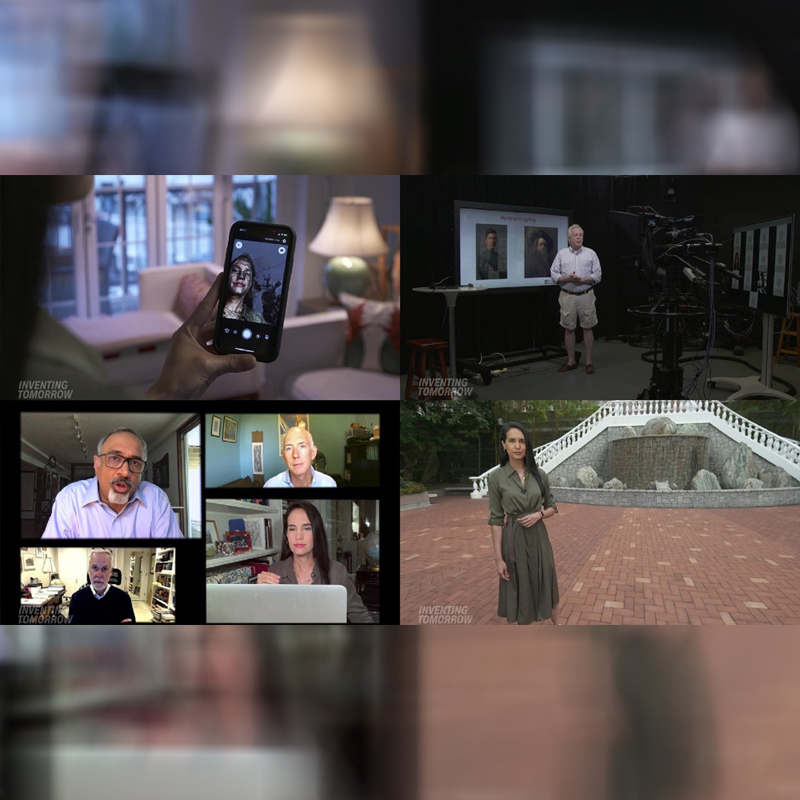
    In the latest edition of Inventing Tomorrow: Tech in a Time of Pandemic, CNN’s Kristie Lu Stout examines the technologies that have reshaped education for students, teachers and parents.

    As schools across Asia begin to reopen, Lu Stout reports from Hong Kong University (HKU), where Keith Richburg, the director of their journalism faculty, outlines how higher education has adapted to the digital transition and whether HKU will maintain online classes in the future.

    Lu Stout speaks to experts from ed-tech and remote learning to hear how these industries have rapidly developed periphery of the conventional education system.

    CNN hears from Simon Nelson, CEO of FutureLearn, Sanjay Sarma, VP of open learning, Massachusetts Institute of Technology and Paul LeBlanc, pr,esident, Southern New Hampshire University, on how prepared educational institutions were for the shift to online learning and whether online teaching will ever be as attractive as traditional tuition.

    With millions of people furloughed or laid off during the lockdown, adult education courses and self-improvement apps are also experiencing a huge boom. Lu Stout speaks to Luis von Ahn, the co-founder and CEO of Duolingo, about how the language-learning app uses AI to tailor the experience to each student and how long it takes to develop proficiency in a new language.

    CNN Inventing Tomorrow Education Trailer from CNN Creative Mktg on Vimeo.

  • BBC Vision launches new multiplatform strategy

    MUMBAI: The BBC has announced that its integrated multimedia broadcast and production group BBC Vision will have a new strategy for multiplatform commissioning, content creation and delivery.

    BBC Vision is looking to double investment in multiplatform, with an additional £30 million in funding over the next three years, subject to the BBC’s reprioritisation plans. A new architecture has been created for BBC Vision on the web.

    For the first time, every television programme will have its own website with web support provided at three prioritised levels: Basic (created automatically), Enhanced (for 50+ programmes a year) and 360 (rich content for 15+ programmes a year);

    There will be a new suite of user tools for rating and sharing content, improved search and navigation for users. There will also be a new, simpler commissioning process for multiplatform initiatives with a single point of commission (ie one genre commissioner for both TV and multiplatform elements), and one commissioning route via a standard e-commissioning system.

    BBC Vision will also organise new, ring-fenced investment for mobile commissioning in three areas: Mobile television (clips and broadcast TV), social media, and location specific initiatives.

    To craete awareness there will also be a year-long communication campaign to share audience research, market knowledge and BBC Vision’s requirements in-house, across the BBC, and with the wider independent sector. BBC Vision director Jana Bennett says, “BBC Vision was created in part to place the BBC at the heart of the multimedia landscape. We have a real advantage that’s born out of our scale and the range of our talent and skills here. I believe that together we can define this new creative space in terms of public service content and populate it with ideas that are distinctive and innovative.”

    BBC Vision controller of portfolio and multimedia Simon Nelson says, “It’s too easy to dismiss the multiplatform opportunity as simply getting our programmes onto new devices or creating websites alongside programmes. The lack of a commercial imperative and the privilege of licence fee funding oblige [the BBC] to drive innovation and break new ground in attempting to serve all audiences in the UK. We will be able to liberate our content from the limitations of the live linear schedule…

    “We can use the two-way nature of new media platforms to transform our relationship with licence fee payer collaborating with audiences in the creation of content and participative experiences.”