Tag: Sim

  • Airtel and Blinkit team up for 10-minute SIM delivery, KYC in your home

    Airtel and Blinkit team up for 10-minute SIM delivery, KYC in your home

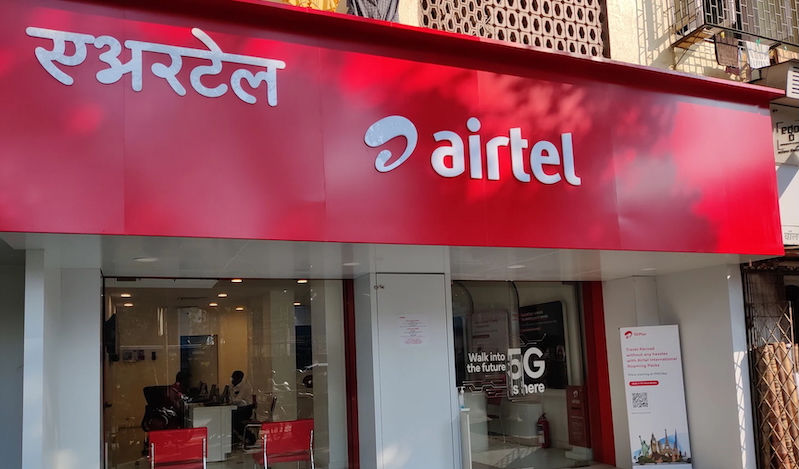
    MUMBAI: Bharti Airtel and Blinkit have cooked up a speedy new service, delivering SIM cards to customers’ doorsteps in a mere 10 minutes. This ground breaking partnership, a first for any Indian telco, is now live in 16 cities, promising to get customers  connected quicker than a rabbit out of a hat.

    “Simplifying customer lives is central to everything we do at Airtel.Today we are thrilled to partner with Blinkit for 10-minute SIM card delivery to customers’ homes across 16 cities and in due course of time we plan to expand this partnership to additional cities.” declared Airtel CEO Siddharth Sharma, CEO – connected homes and director of marketing, Airtel.

    For a paltry Rs 49 convenience fee, customers can choose between prepaid or post paid plans, or even port their existing number to Airtel. Once the SIM arrives, a quick Aadhaar-based KYC process gets them up and running, all from the comfort of their own homes.

    “To save customers time and hassle, we’ve collaborated with Airtel to deliver SIM cards directly to customers in select cities, with delivery in just 10 minutes. Blinkit takes care of the delivery, while Airtel makes it easy for customers to complete self-KYC, activate their SIM, and choose between prepaid or post paid plans. Customers can also opt for number portability, all at their convenience,” said Blinkit founder & CEO Albinder Dhindsa.”No more queuing in shops, no more waiting around. We deliver the SIM, and Airtel handles the self-KYC. It’s a win-win.”

    The service is currently available in major cities like Delhi, Mumbai, and Bangalore, with plans to expand further. And if customers get stuck, Airtel’s help centre is just a tap away on the Airtel Thanks App, or a quick call to the support line. But, they better be quick, the SIM needs to be activated within 15 days.

  • TRAI issues regulations relating to VAS for pre-paid consumers

    TRAI issues regulations relating to VAS for pre-paid consumers

    NEW DELHI: Realising that its earlier regulations relate only to subscription-based value added services, the Telecom Authority of India (TRAI) has directed all access service providers to ensure that the value added service (VAS) for products embedded in the SIM application Tool Kit (STK) of SIM card is provided to the consumer only after obtaining the explicit consent of the consumer in accordance with a procedure specified by the regulator.


    The directive has to be implemented by all access service providers including the Bharat Sanchar Nigam Ltd (BSNL) and Mahanagar Telephone Nigam Ltd (MTNL) within sixty days.


    The new directive has been issued under section 13, read with sub-clauses (i) and (v) of clause (b) of sub-section ( 1) of section 11 of the TRAI Act 1997 and clause 11 of the Telecom Tariff Order 1999 to ensure compliance of terms and conditions of license and to protect the interest of consumers.


    The process of providing value added service for products embedded in the SIM card:


    (a) For obtaining explicit consent through consumer originated SMS:


    Step 1: The consumer explores the VAS link in the SIM Application Tool Kit (STK) of the SIM card and clicks the link.


    Step 2: The service provider after receiving the message/information shall inform consumer through SMS  regarding the  value added service requested; its validity; the  charges thereof and the consumer shall be asked to confirm the request within sixty minutes by sending ‘yes’ to the specified number;


    Step 3: If no confirmation is received from the consumer, the request of the consumer shall not be processed;


    Step 4: If the consumer confirms his   request, the value added service platform of the service provider shall deliver the product on the mobile number of the consumer and the consent logs shall be stored in the system of the service provider in an un-editable format;


    Step 5: The consumer shall receive an SMS immediately after delivery of the product to the consumer, informing the consumer about charges deducted and the balance remaining;


    (b) For obtaining explicit consent through third party consent gateway:


    Step 1: The consumer explores the VAS link in the SIM Application Tool Kit (STK) of the SIM card and clicks the link.


    Step 2: The service provider after receiving the message/information shall inform the   consumer through SMS regarding  the value added service requested; its validity; the charges thereof, and the consumer shall be forwarded to the “Consent Gateway” set up by the service provider and managed by a third party;


    Step 3: The “Consent Gateway” shall seek the second consent of the consumer;


    Step 4: The consumer shall give his consent by pressing the relevant key, and the consent logs shall be stored in the system of the service provider in an un-editable format;


    Step 5: The “Consent Gateway” shall forward the consent of the consumer to the value added service platform of the service provider;


    Step 6: The value added service platform of the service provider shall deliver the product on the mobile number of the consumer;


    Step 7: The consumer shall receive an SMS immediately after delivery of the product to   the consumer, informing the consumer about the charges deducted and the balance remaining.


    TRAI said the genesis of some of the complaints is that a number of value  added  service products are embedded in  the SIM card and in many cases the consumer accidentally or unknowingly clicks these  products and the customer is immediately charged  for the service, without being                                    provided with any information regarding the applicable charges and also without being offered any opportunity to give consent as to whether he wants to proceed or not.


    The regulator said this emerged during its monitoring the compliance of the directions pertaining to the activation and deactivation of value added services and while examining some of the complaints received by the Authority relating to activation of value added services without consent. 

  • Cannes Palme d’Or goes to Turkey’s Nuri Bilge Ceylan for feature and to Simón Mesa Soto for shorts

    Cannes Palme d’Or goes to Turkey’s Nuri Bilge Ceylan for feature and to Simón Mesa Soto for shorts

    NEW DELHI: Renowned Turkish filmmaker Nuri Bilge Ceylan has won the Palme d’or for his film Winter Sleep on the conclusion of the 67th Cannes Film Festival.


    The award – to the best of the 18 in competition – was presented to him by the American actress Uma Thurman and the American director Quentin Tarantino. The Jury was presided over by Jane Campion.


    Nuri Bilge Ceylan said: “This is a huge surprise for me, I wasn’t expecting it. I don’t know what to say. This year marks the 100th anniversary of Turkish cinema, which is a happy coincidence. I would like to thank the Festival de Cannes for supporting this long project. Thank you to the Jury, to Thierry Frémaux and Gilles Jacob. I would like to dedicate this Palme d’or to the young people of Turkey and to those who lost their lives during the year. Thank you very much”. 


    The film also won the top award given by The FIPRESCI (International Association of film critics) jury headed by Esin Kücüktepepinar of Turkey.


    While Titli by Kanu Bahl from India was highly lauded, the film that was selected for Un Certain Regard and Gitanjali Rao’s 19-minute animated romance True Love Story in the Critics’ Week failed to make any mark. Behl was also a contender for the Camera d’Or, the award for feature directing debut.


    Sergio Leone’s Per un pugno di dollari (A Fistful of Dollars) presented by Quentin Tarantino, was screened at the end of the ceremony.


    Le Meraviglie (The Wonders) by Alice Rohrwacher received the Grand Prix award while the best Director Award went to Bennett Miller for Foxcatcher.


    The Jury Prize ex-aequo went to Mommy by Xavier Dolan (the youngest winner at 25) and Adieu Au Langage (Goodbye to language) by the renowned Jean-Luc Godard.


    The best acting awards went to actress Julianne Moore in Maps to the Stars by David Cronenberg and actor Timothy Spall in Mr Turner by Mike Leigh. Mr Turner also won the award of the Vulcan Award for Technical Artist of the Jury of the CST to Dick Pope, director of photography, for bringing to light the works of Turner.


    The Best Screenplay Award was awarded to Andrey Zvyagintsev and Oleg Negin for Leviathan.


    The Palme d’Or for Short Films went to Leidi by Simon Mesa Soto.


    A Special Mention – Ex-aequo – was made of A?ssa by Clément Trehin-Lalanne and Ja Vi Elsker (Yes we love) by Hallvar Witzo.


    The Un Certain Regard Prize went to Fehér Isten by Kornél Mundruczó. FIPRESCI gave the Un Certain Regard award to Jauja by Lisandro Alonso.


    The Jury Prize went to Turist by Ruben Östlund while the Un Certain Regard Special Prize was awarded to The Salt of the Earth by the lauded Wim Wenders and Juliano Ribeiro Salgado.


    The Ensemble Prize was given to Party Girl by Marie Amachoukeli, Claire Burger and Samuel Theis, and the film also received the Camera d’Or award in the Un Certain Regard, while the Best Actor Award went to David Gulpilil in Charlie’s Country by Rolf de Heer.


    In the Cinefondation category for student films, the first prize went to Skunk by Annie Silverstein from the Texas University at Austin in the United States, while the second prize went to Oh Lucy!  by Atsuko Hirayanagi of the NYU Tisch School of the Arts Asia, Singapore and the third prize was given jointly to Lievito Madre by Fulvio Risuleo of Centro Sperimentale di Cinematografia, Italy and The Bigger Picture by Daisy Jacobs of the National Film and Television School in the United Kingdom.


    The Nespresso Grand Prize in the Critics’ Award category went to The Tribe by Myroslav Slaboshpytskiy, which also received the France 4 Visionary Award. It additionally got the Gan Foundation Support for Distribution.


    The SACD Award went to Hope by Boris Lojkine.


    A Ciambra by Jonas Carpignano received the Sony CineAlta Discovery Prize for short film and the Canal+ Award for short film went to Crocodile by Gaëlle Denis.


    In the Directors’ Fortnight section, the Europa Cinema Label, the SACD Prize and the Art Cinema Award went to Love At First Fight (Les Combattants) by Thomas Cailley. The film also received the FIPRESCI award.


    The Illy prize for short film was given to Heartless (Sem Coraç?o) by Nara Normande and Ti?o.


    A special mention was made of It Can Pass through the Wall (Trece si Prin Perete) by Radu Jude.


    Ceylan’s film is a 210 minute morality tale about a former actor who runs a hotel in remote Anatolia. As winter approaches, he is alone with his young wife and her sister going through a divorce. The cold weather makes the hotel not only a shelter but a site where the three must confront their growing feelings of animosity.


    Mommy, like the films of Jean Luc Godard, has broken ground, and ironically Dolan shared the jury prize with the French New Wave director with the daring hand held camera and jump cuts. Godard’s film Adieu au Langage (Goodbye to Language) in the official competition uses colorized scenes and fragmentation in a rather well shaped non-linear narrative. Dolan’s “Mommy” represents a paradigm shift for cinematic language. Defying established aspect ratios, Dolan and his director of photography André Turpin used a perfectly square 1.1 instead of today’s widescreen formats. Mommy shot on 35mm explores futuristic Canada with new mental-health laws in this film about a mother with a violent son.