Tag: Sikkim

  • Ziox ropes in Sushant, also investing Rs 3 bn

    MUMBAI: Ziox Mobiles, under the aegis of Sun Air Voice, has roped in Sushant Singh Rajput, as its brand endorser. Both, the brand and its ambassador ride on the precepts of resilience, hard work and steady growth.

    Ziox has also chalked out a detailed expansion plan and the roadmap for FY 2017-2018 with the total investment of over Rs. 2 bn which shall span for a year.

    It announced its plan to set up two manufacturing units (in Sikkim and Noida) and R&D facilities apart from the existing New Delhi unit. With an additional investment of Rs. 1bn, Ziox aims to achieve an estimated revenue of Rs. 10 bn and a sale of 10 million product units.

    Ziox CEO Deepak Kabu said: “With Sushant on board, it will help augment sales and further its reach in the market.”

    Sushant said, “I love how this brand designs its products to suit every need of its customers and are constantly innovating.”

  • Five regional centres of India’s premier drama school to open in other parts of country

    Five regional centres of India’s premier drama school to open in other parts of country

    NEW DELHI: The Delhi-based National School of Drama, which has formed the training ground for some of the best television and film personalities, is to get five regional centres in different parts of the country, Parliament has been told.

    This follows the recommendations made by the Broad Based Committee for opening up of five regional centres across the country.

    The NSD Society proposes to establish one regional centre each at Kolkata, Mumbai/Goa, Jammu and Kashmir, and the North-East besides upgrading the existing Regional Resource Centre (RRC) at Bengaluru to become a full-fledged regional centre.

    Culture Minister Mahesh Sharma said these regional centres are to be established in consultation with the concerned State Governments who were required to provide accommodation for the purpose.

    So far, only Karnataka has allotted land for the purpose at Bengaluru. NSD has started one year teaching training programme in the Bengaluru Chapter commencing from academic session 2014-15.

    In addition, under consolidation of Out-reach Programme in the North-East Region, NSD has opened its Centres in Sikkim and Tripura. 

    Several actors like Om Puri, Naseeruddin Shah, Shabana Azmi, Nadira Babbar, Kulbhushan Kharbanda and others and filmmakers like M S Sathyu have made major contributions to the NSD, many of them beginning their careers here.

  • Five regional centres of India’s premier drama school to open in other parts of country

    Five regional centres of India’s premier drama school to open in other parts of country

    NEW DELHI: The Delhi-based National School of Drama, which has formed the training ground for some of the best television and film personalities, is to get five regional centres in different parts of the country, Parliament has been told.

    This follows the recommendations made by the Broad Based Committee for opening up of five regional centres across the country.

    The NSD Society proposes to establish one regional centre each at Kolkata, Mumbai/Goa, Jammu and Kashmir, and the North-East besides upgrading the existing Regional Resource Centre (RRC) at Bengaluru to become a full-fledged regional centre.

    Culture Minister Mahesh Sharma said these regional centres are to be established in consultation with the concerned State Governments who were required to provide accommodation for the purpose.

    So far, only Karnataka has allotted land for the purpose at Bengaluru. NSD has started one year teaching training programme in the Bengaluru Chapter commencing from academic session 2014-15.

    In addition, under consolidation of Out-reach Programme in the North-East Region, NSD has opened its Centres in Sikkim and Tripura. 

    Several actors like Om Puri, Naseeruddin Shah, Shabana Azmi, Nadira Babbar, Kulbhushan Kharbanda and others and filmmakers like M S Sathyu have made major contributions to the NSD, many of them beginning their careers here.

  • DAS Phase III stay extended in Uttar Pradesh, Telangana and Andhra Pradesh

    DAS Phase III stay extended in Uttar Pradesh, Telangana and Andhra Pradesh

    New Delhi: With the Supreme Court stating that the stay on Phase III of digital addressable system by the Bombay High Court is not pan-India, stakeholders in three states – Andhra Pradesh, Telangana, and Uttar Pradesh – have received further extensions for varying periods.

    While the Hyderabad High Court has clubbed the two cases of Andhra Pradesh and Telangana and granted a four week extension, the Allahabad High Court extended the stay for three more months.

    The Hyderabad High Court which received the counter-affidavit from the Information and Broadcasting Ministry, gave time to the petitioners in both Andhra Pradesh and Telangana – AP MSOs Federation and Federation of Telangana MSOs – to file their replies,

    The plea taken by both the petitioners had been the shortage of set top boxes, which had in late December led to a two month extension.

    The Supreme Court had made the observation on an appeal by the Indian Broadcasting Foundation, which was subsequently withdrawn.

    In Allahabad, where the petitioners have also taken the plea of shortage of STBs, the High Court directed I&B Ministry as well as the Telecom Regulatory Authority of India to file counter-affidavits within four weeks.

     “In the meanwhile, we direct the respondents not to disconnect the cable TV network operated by the petitioner through the analogue system for a period of three months from today,” the court said.

    DAS Phase III has already been stayed for varying periods by High Courts in Assam, Maharashtra, Sikkim, Odisha, and Chhattisgarh, for the entire states, apart from Tamil Nadu where prolonged legal cases have been pending since Phase I.

    In Karnataka, three individual stakeholders have got stay orders in Mangalore and Mysore areas while there is no state-wide stay. However, MSOs and Local Cable Operators in various parts of Karnataka told indiantelevision.com that transmission is still being use in analogue mode even in areas that fall in Phase III but for which no stay has been obtained.

    Interestingly, Ministry sources admitted to indiantelevision.com that there was a misreading of the Bombay High Court directive. The Court had merely refereed to the Kusum Ingots & Alloys Ltd vs the Union of India 2004 case to say that if one High Court gives a stay, another High Court can act in similar fashion if the facts are similar – in this case, shortage of STBs. Thus, they agree that the High Court stay was only confined to Maharashtra and not pan-India.

    The Bombay High Court passed a unique judgment stating that the Hyderabad High Court order would be applicable across India as per the Supreme Court judgment in.

    Meanwhile, The Ministry has filed a similar petition and sought not merely vacation of the stay orders by various High Courts, but also clubbing the cases together.

    The meeting of the Phase III and Phase IV Task Force – the first to be held after the 31 December deadline of Phase III – was told by Ministry Joint Secretary (Broadcasting) R Jaya that the percentage achievement had increased from 76.45 per cent as on 30 December 2015 to 90.44 per cent as on 15 February 2016.

    It was also claimed that the seeding of set top boxes by multi system operators increased from 6.91 million (69.1 lakh) to 12.43 million (124.3 lakh) for the same period.

    DAS Phase III covers 33.18 million (331.8 lakh( TV households across 29 states and five Union Territories, after changes made in updates for various states.

    Although Phase III was aimed at covering all remaining urban areas in the country, Ministry sources admitted that several urban may now be clubbed with the rural areas where the deadline is 31 December 2016.

  • DAS Phase III stay extended in Uttar Pradesh, Telangana and Andhra Pradesh

    DAS Phase III stay extended in Uttar Pradesh, Telangana and Andhra Pradesh

    New Delhi: With the Supreme Court stating that the stay on Phase III of digital addressable system by the Bombay High Court is not pan-India, stakeholders in three states – Andhra Pradesh, Telangana, and Uttar Pradesh – have received further extensions for varying periods.

    While the Hyderabad High Court has clubbed the two cases of Andhra Pradesh and Telangana and granted a four week extension, the Allahabad High Court extended the stay for three more months.

    The Hyderabad High Court which received the counter-affidavit from the Information and Broadcasting Ministry, gave time to the petitioners in both Andhra Pradesh and Telangana – AP MSOs Federation and Federation of Telangana MSOs – to file their replies,

    The plea taken by both the petitioners had been the shortage of set top boxes, which had in late December led to a two month extension.

    The Supreme Court had made the observation on an appeal by the Indian Broadcasting Foundation, which was subsequently withdrawn.

    In Allahabad, where the petitioners have also taken the plea of shortage of STBs, the High Court directed I&B Ministry as well as the Telecom Regulatory Authority of India to file counter-affidavits within four weeks.

     “In the meanwhile, we direct the respondents not to disconnect the cable TV network operated by the petitioner through the analogue system for a period of three months from today,” the court said.

    DAS Phase III has already been stayed for varying periods by High Courts in Assam, Maharashtra, Sikkim, Odisha, and Chhattisgarh, for the entire states, apart from Tamil Nadu where prolonged legal cases have been pending since Phase I.

    In Karnataka, three individual stakeholders have got stay orders in Mangalore and Mysore areas while there is no state-wide stay. However, MSOs and Local Cable Operators in various parts of Karnataka told indiantelevision.com that transmission is still being use in analogue mode even in areas that fall in Phase III but for which no stay has been obtained.

    Interestingly, Ministry sources admitted to indiantelevision.com that there was a misreading of the Bombay High Court directive. The Court had merely refereed to the Kusum Ingots & Alloys Ltd vs the Union of India 2004 case to say that if one High Court gives a stay, another High Court can act in similar fashion if the facts are similar – in this case, shortage of STBs. Thus, they agree that the High Court stay was only confined to Maharashtra and not pan-India.

    The Bombay High Court passed a unique judgment stating that the Hyderabad High Court order would be applicable across India as per the Supreme Court judgment in.

    Meanwhile, The Ministry has filed a similar petition and sought not merely vacation of the stay orders by various High Courts, but also clubbing the cases together.

    The meeting of the Phase III and Phase IV Task Force – the first to be held after the 31 December deadline of Phase III – was told by Ministry Joint Secretary (Broadcasting) R Jaya that the percentage achievement had increased from 76.45 per cent as on 30 December 2015 to 90.44 per cent as on 15 February 2016.

    It was also claimed that the seeding of set top boxes by multi system operators increased from 6.91 million (69.1 lakh) to 12.43 million (124.3 lakh) for the same period.

    DAS Phase III covers 33.18 million (331.8 lakh( TV households across 29 states and five Union Territories, after changes made in updates for various states.

    Although Phase III was aimed at covering all remaining urban areas in the country, Ministry sources admitted that several urban may now be clubbed with the rural areas where the deadline is 31 December 2016.

  • MIB burning midnight oil to find ways to counter battery of High Court orders staying DAS

    MIB burning midnight oil to find ways to counter battery of High Court orders staying DAS

    NEW DELHI: Considering the odds it is facing from various High Courts all over the country for extending the deadline for implementing Phase III of Digital Addressable System (DAS), the Ministry of Information and Broadcasting (MIB) has to find a way to get even justice for the ultimate stakeholder — the consumer.


    Perhaps because of that, the last few days have been very busy in the corridors of fifth and sixth floors of Shastri Bhavan in the capital, which houses the MIB, with officials holding several meetings to find a way to stop the snowballing of the orders that commenced from Hyderabad and found a boost in the arguments in the Bombay High Court based on the Kusum Ingots case of 2004, which encouraged multi system operators (MSOs) and local cable operators (LCOs) in other states.


    At present, the implementation remains stayed for varying periods in the states of Andhra Pradesh, Assam, Maharashtra, Orissa, Sikkim, and Telangana, apart from Tamil Nadu where prolonged legal cases have been pending since Phase I. A petition has already been filed in the Karnataka High Court and is listed for 8 January.


    Ministry sources confirmed to Indiantelevision.com that meetings had been held with legal experts and particularly with Government counsel.


    There was also general consensus on filing a petition by the Government in the Supreme Court, particularly as the apex court had on an earlier occasion relating to the Cable Television Networks (Regulation) Act 1995 and orders issued thereunder that High Courts have to be cautious when giving orders on matters relating to policy.  


    Government legal experts advised that an appeal could be filed against any of the High Court orders in the Supreme Court and the apex court could be asked to transfer all linked matters to Delhi to be heard together.


    However, it needs to be seen whether this will be in the form of a writ petition or an appeal against the various High Courts – a decision left to a battery of legal experts.


    MSOs said, however, that this would impose a lot of financial burden on them as they could ill-afford to hire counsel in the Supreme Court. 


    Even as the Ministry would obey the directives of the various High Courts, which had extended the DAS deadline by various periods ranging between eight to 12 weeks, it would prepare to oppose the decisions.


    A senior Ministry official said that even as the Ministry was waiting to see all the High Court orders, it was working on how plans to thwart the implementation of Phase III could be prevented – if necessary through legislative processes.


    The official also expressed the view that the cases would in fact benefit the direct to home (DTH) and Headend In The Sky (HITS) players and would affect the last mile operator (LMO).


    The sources said they had evidence to show seeding of set top boxes (STBs) to the extent of 76 per cent as revealed in the 13th Task Force meeting on 30 December. 


    Meanwhile, legal opinion is divided on whether the Kusum Ingots case, which was referred to in the Bombay High Court could be used by a High Court to direct a pan-India stay.


    The broadcasters and channel distributors are united on one view: the government should not give any extension on its own, as that would lead to a further delay in not just the Phase III and Phase IV (slated for December 2016) but also pockets of Phase I and Phase II, which have still not implemented digital addressable systems.


    It is also learnt that both broadcasters on the one hand and the channel distributors and major MSOs on the other, are pressing the government to move the apex court to get a single ruling instead of different High Court orders.


    However, it was admitted by the stakeholders that there was very little progress as far as indigenous STBs are concerned with just one or two players making local boxes despite the ‘Make in India’ campaign, and the government had to be proactive in this regard.


    The attempt would be to prevent the High Courts from staying implementation of Phase III under which analogue signals were to be switched off after midnight on 31 December, 2015.


    One representative of a broadcaster said switching back to analogue on getting a High Court stay did not cause any technical difficulty, but it raised problems relating to accounts and agreements already agreed upon.


    Be that as it may, the consumer who has already spent money on acquiring STBs hopes his efforts will not go waste in haste.

  • DAS Phase III: MIB’s big dilemma

    DAS Phase III: MIB’s big dilemma

    MUMBAI: The past fortnight has seen High Court directives in five different states make a mockery of the 31 December, 2015 deadline set by the government for the Phase III roll out of digital addressable system (DAS).


    The courts have urged the Ministry of Information and Broadcasting (MIB) to not act against multi system operators (MSOs) and cable operators who have not been able to place set top boxes (STBs) in homes for two months. In essence, the DAS sunset date has been extended in Andhra Pradesh, Telangana, Sikkim, Maharashtra, Odhisa, Tamil Nadu and now Guwahati.


    The Bombay High Court specifically cited a Supreme Court judgment and noted that a stay granted by a high court on a central notification in one state would be applicable in other states as well. That was the case of Kusum Ingots vs the Union of India, in 2004. (http://indiankanoon.org/doc/1876565/)


    The question on everyone’s mind is: would other petitioners in other states under the DAS Phase III ambit also approach their respective High Courts for relief? Hence, did it make sense for broadcast networks to continue with digitally encrypted signals, which they had resorted to once the clock struck midnight of the new year?


    Most of them including Viacom18, Star India, Zee and Sony thought it did not. Hence, they have all switched on their analog signals a day or so after switching them off.


    Now that has put the MIB in a bit of a quandary. The team lead by MIB secretary Sunil Arora – and including special secretary JS Mathur, and joint secretary RS Jaya apart from other members – have been driving DAS III digitisation and were quite clear that no extension should be given. 


    Sources indicate that one line of action being considered by the MIB is to approach the Supreme Court for relief against the restraint orders granted by the various courts. Experts such as Supreme Court advocate KV Dhananjay have argued against the stance taken in the Kusum Ingots case by the courts. (http://www.legallyindia.com/Blogs/some-hc-judges-are-becoming-terribly-ignorant-of-our-constitution)


    Whether the MIB will go ahead and approach the Supreme Court or not is a moot point, but the industry is putting its might behind it. Most of the industry associations like the Indian Broadcasting Foundation, the DTH Operators Association and the MSO Alliance have all reportedly urged the ministry to move the apex court.


    Industry believes that the extension is unlikely to serve any purpose, as cable operators knew of the phased rollout of DAS as much as for the past three to four years and hence they could have prepared for it. Complaining about a shortage of STBs or interconnect agreements or capital post the sunset date is simply facile, professionals state. 


    “The analog switch off is mandatory,” says an industry observer. “Digitally encrypted signals need to be the only mode of television delivery via satellite in India in Phase III areas. Private DTH operators and the government owned FreeDish can deliver television wherever there are signal dark areas courtesy cable TV’s unpreparedness. The government needs to approach the courts to ensure that DAS Phase III proceeds as soon as possible.”


    We will have to wait and watch if it does.

  • Sikkim joins three others states excluded from DAS Phase III

    Sikkim joins three others states excluded from DAS Phase III

    NEW DELHI: The extension of Digital Addressable System (DAS) by three different High Courts affecting four states does not augur well for the Information and Broadcasting Ministry, which may see a catapulting of such cases as reports pour of just over 50 per cent of seeding of set top boxes (STBs).
     
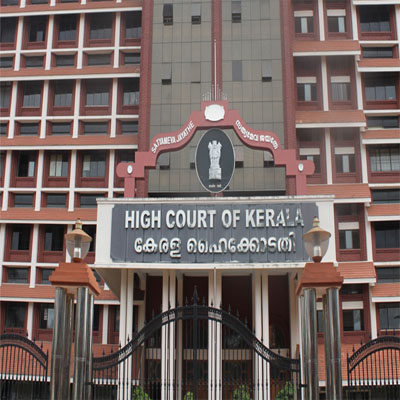
    After the extension of deadline in both Telengana and Andhra Pradesh, the Sikkim High Court has ordered a stay on analogue cable television signals switch-off until 28 March. A stay had been ordered after the first phase by the Madras High Court for Tamil Nadu, which also remains in force, though the Madhya Pradesh High Court has rejected a petition by Om Systems of Indore challenging Section 4A of Cable Television Networks Regulation Act 1995.
     
    Phase III stipulated for analogue signals to be switched off in all urban areas of the country by 31 December, 2015.
     
    Justice Meenakshi Madan Rai of the Sikkim High Court said in her order on a petition by All Sikkim Cable Operators Association that subscribers will be affected for no fault of theirs. The petition was filed through Association president Roshan Rai.
    In the arguments, it was contended that multi-system and local cable operators had to bear a high cost of migrating to a digital addressable service (DAS) and there were no investors; the difficult terrain of the state was not conducive to laying of optical fibre Cables (OFC) required for Digital networks; Set-Top-Boxes were not easily available in the country; and time limits for migration to digital regime are almost impractical.
    The court also noted that the Association had written to Information and Broadcasting Ministry Secretary Sunil Arora on 26 November, 2015 apprising him of the constraints faced by the MSOs and LCOs and requesting for an extension of the deadline but the Ministry did not care to reply.
    The Court turned down a plea by Telecom Regulatory Authority of India (TRAI) to be impleaded. 
    The directive by the Hyderabad High Court was notable in that Justice Vilas V Afzalpurkar went against an order given by a division bench of which he was a member in the same court relating to Phase III on 20 August, 2013.
  • Modified list of DAS areas in Goa, Meghalaya, Sikkim sees 61 changes

    Modified list of DAS areas in Goa, Meghalaya, Sikkim sees 61 changes

    NEW DELHI: In an updated list issued today, the Information and Broadcasting Ministry has made deletions and changes in the areas to be brought under Phase III of Digital Addressable System (DAS) in Goa, Meghalaya and Sikkim by the end of the month.


    These include a total of 6q changed including 57 areas deleted from the list of Goa, two deleted in Sikkim, and two changed in Meghalaya.


    The Government had first notified the list of areas under Phase III on 30 April and later modified the lists for 16 States/UTs and another eight States/UTs on 16 October and 2 November respectively.


    The changes made in Goa, Meghalaya and Sikkim are based on comments/data received from the State/UT Governments.


  • 160 MSOs get 10-year licences under DAS for specified areas; 27 denied permission

    160 MSOs get 10-year licences under DAS for specified areas; 27 denied permission

    NEW DELHI: With addition of two more multi-system operators (MSO) from Sikkim and Bihar, the total number, who have been granted permanent registration for 10 years to operate the digital addressable system during the last two months has gone up to 158 as compared to 142 by December-end.


     Most of these MSOs had been given provisional permission earlier. Thus five more MSOs have been granted permission after 5 March till 25 March.


     The MSOs, who have received permission after 5 March are Siti Maurya Cable Network Pvt. Ltd for areas in all districts in the state of Bihar except Madhepura and Arawal; Sikkim Digital Network for Gangtok city and Kabi, Phodong, Mangan, Chunthang, Lachen, Lachung, Ranka, Ranipool, 32 Mile, Singtam, Central Pandam, Namthang, Majitar, Rangpo, Duku, Pakyong, Rorathang, Rhenock, Rongli Aritar, Dalapchand, Legship, Geyzing, Pelling, Tasiding, Yuksom, Soreng, Dentak, Reshi, Sombaria, Daramdin, Melli, Bermoik, Temi, Tarku, Namchi, Jorethang and Romang; International Cable Network for Bhojpur, Buxar and Rohtash; SaiStar Digital Media Private Limited for Ahmedabad, Rajkot, Surat, and Vadodara under Phase II, all other areas under Phase III and Phase IV; and Maharaja Entertainment for pan India in all Phases of DAS.


    The list of MSOs, who have been refused permission as on 28 February has gone up to 27 from 26 with one more MSO being denied permission. Some of those in the cancelled list applied as early as March 2013.


    MSO sources, however, said that the approved list was in addition to the 140 whose names had been approved earlier in March last year.


    The Ministry website mib.nic.in has listed the areas and the date from which the MSOs have been given permission.