Tag: Sidharth Pisharoti

  • Eatigo partners with CleverTap to boost dining reservations

    Eatigo partners with CleverTap to boost dining reservations

    Mumbai: Online restaurant reservation platform Eatigo, collaborates with CleverTap – the all-in-one engagement platform, to enhance customer engagement and boost reservations. Through CleverTap’s AI-powered recommendations engine, Eatigo was able to offer its users relevant and timely recommendations with precision, ensuring higher conversions. The platform’s orchestration and analytics capabilities enabled Eatigo to coordinate complex, multi-channel marketing campaigns at scale and track the performance of its campaigns.

    Set up in 2013 with a mission to “connect empty tables with empty stomachs”, Eatigo has expanded rapidly, seating over six million diners, and accumulated over 6000 restaurants across Hong Kong, Singapore, Thailand, Malaysia, and the Philippines.

    By harnessing CleverTap’s AI/ML-powered capability suite: Clever.AI, Eatigo was able to hyper-personalise its engagement through more than 10 automations and nearly 100 journeys. As a result, Eatigo’s users were two times more likely to make reservations. Additionally, CleverTap’s Liquid tag and journey features enable Eatigo to create omnichannel experiences that capture diner’s attention and drive reservations.

    Commenting on the collaboration, Eatigo regional marketing lead Surakan Kittiperakorn said, “Collaborating with CleverTap has granted us access to their comprehensive and dynamic suite of capabilities, enabling us to achieve our goals and grow our business in the Southeast Asia region. Utilizing CleverTap for local campaigns has helped us craft personalized marketing campaigns and messaging that resonates deeply with our users. The precision and efficiency of their AI-powered recommendations have significantly boosted our engagement metrics, allowing us to connect diners with the perfect dining experiences. We are excited about the future and look forward to continuing to innovate and grow with the support of CleverTap’s robust platform.”

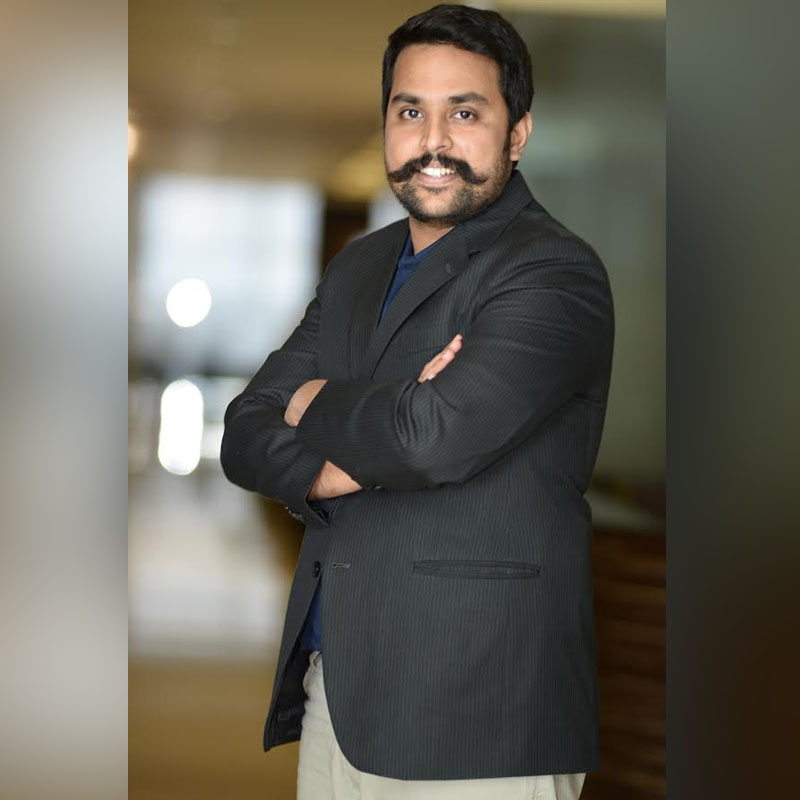
    CleverTap chief revenue officer Sidharth Pisharoti said, “In today’s highly competitive restaurant industry, customer engagement and personalized experiences are crucial for success. At CleverTap, we understand the unique challenges faced by businesses in this sector and are committed to providing innovative solutions that drive growth and customer satisfaction. Our AI-powered platform enables companies like Eatigo to harness the power of data to create tailored marketing strategies that resonate with their audience. We are thrilled to support Eatigo in their mission to enhance the dining experience and are excited to see the impact our collaboration has had on their reservation rates.”

    Eatigo leveraged CleverTap’s AI-based recommendation engine to tackle a few obstacles. When the customer cancels their reservation, the engine comes up with five other options to increase conversion rates. If another user scrolls through the options but doesn’t make a reservation, the engine offers custom suggestions to convince them. Furthermore, CleverTap’s engine proactively reaches out to customers who made their last reservation a month ago, via a multi-channel approach to increase the chances of their return to the app.

  • Canifa achieves 54 per cent higher app conversion rate with CleverTap

    Canifa achieves 54 per cent higher app conversion rate with CleverTap

    Mumbai: CleverTap, the all-in-one engagement platform has announced that leading Vietnamese fashion brand Canifa, has achieved 54 per cent higher app conversion rate after deploying CleverTap.  

    Canifa has more than 100 physical outlets across Vietnam and a strong online presence. Canifa strives to create smooth and differentiated customer journeys and the same principle is extended to the shopping experience built on the mobile application. The tools previously used by Canifa had several limitations, leading to data silos, negatively impacting real-time personalization. This posed a significant challenge as they sought to win tech-savvy consumers within the Vietnamese fashion market, a fiercely competitive sector.

    CleverTap’s integrated approach to customer engagement made them the perfect fit for Canifa. By unifying data from disparate sources, CleverTap helped Canifa build a detailed customer profile with granular insights on preferences etc. Owing to the competitive nature of the fashion sector, it was essential to establish top-of-mind recall. For this, CleverTap leveraged various engagement channels – SMS, push, In-App messages, email, etc. to ensure consistent mindshare amongst users. Of these channels, Push Notifications and App channels played a  pivotal role, ensuring timely and personalized interactions.  

    Benefits following CleverTap’s implementation:

    ● 7 per cent boost in revenue per user (60-day period)

    ● 7 per cent boost in retention (60-day period)

    ● 50 per cent increase in conversion rate (MoM)

    ● 4 per cent increase in stickiness (60-day period)

    ● 20 per cent increase in retention rate  

    ● 54 per cent boost in app conversion rate  

    Canifa martech expert Hoang Quoc Khanh said, “CleverTap is a single, powerful tool that enables our marketers to independently design and deliver individualized experiences at speed and scale. We have seen our conversion rates increase by 54 per cent, and our revenue per user by 7 per cent. This level of unprecedented growth helped ensure we retain our position as leaders in the  Vietnamese fashion market. We look forward to deploying CleverTap’s platform for the upcoming  brands within our diverse portfolio, anticipating similarly stellar outcomes.”

    CleverTap chief revenue officer Sidharth Pisharoti said, “Partnering with a market leader such as Canifa within a hyper-competitive market was both a challenge and an opportunity for us. Because in today’s fast-paced fashion landscape, trends shift rapidly, and adaptability is key.  Canifa’s impressive 7 per cent increase in revenue per user demonstrates CleverTap’s ability to positively impact customer business. And we look forward to playing a pivotal role in Canifa’s  future successes.”

  • WinZO achieves 40 per cent growth in retention rate with Clever Tap

    WinZO achieves 40 per cent growth in retention rate with Clever Tap

    Mumbai: CleverTap, the all-in-one engagement platform announced that mobile gaming platform, WinZO, has achieved 40 per cent growth in retention rate following the CleverTap rollout.

    Founded in 2018, WinZO has over 175 million users, making it the mobile social gaming platform. WinZO hosts more than 100 games across multiple formats in more than a dozen regional languages.

    WinZO provides product value and fosters user retention. The challenge was to quickly analyse data to enhance user retention. CleverTap’s integrated partnership with WinZO’s technology stack, to nurture more robust customer relationships, bolster user engagement, and increase retention rates. Currently WinZO has 5 billion micro in-app transactions every month, and delivers highly personalised experiences to gamers.

    Commenting on development WinZO strategy and growth Angad Sehdev, “In the current highly competitive environment, where users have an abundance of options with numerous apps and brands competing for their attention, our goal is to craft experiences that are highly responsive and based on real-time interactions,”

    He further added, “CleverTap doesn’t just provide data; it equips us with the insights, segmentation, and tools needed to execute swiftly. In this kind of an ecosystem, if you’re not acting on the data in real time, you lose your user base. You need to understand what the user wants before the user has even expressed the need.”

    CleverTap offers comprehensive tracking and analytics, enabling WinZO to gain insights into customer interactions with its products. This real-time feedback on new app updates aids in refining rollout strategies.

    CleverTap chief revenue officer Sidharth Pisharoti said, “Customer retention has always been at the heart of everything we do at CleverTap, and we’re thrilled to have helped WinZO increase their retention rates by 40%. It’s been an immense pleasure working with WinZO over the last 5 years. Today, they are one of India’s largest mobile gaming platforms. This is a result of their deep understanding of customer behavior and the team’s ability to deliver on those expectations. As WinZO embarks on an ambitious journey to expand its user base to 700 million and introduce new gaming formats, CleverTap remains a steadfast partner in this tech-driven gaming revolution.”

  • SonyLIV banked on Akamai to leverage ad insertion for India-SA series

    SonyLIV banked on Akamai to leverage ad insertion for India-SA series

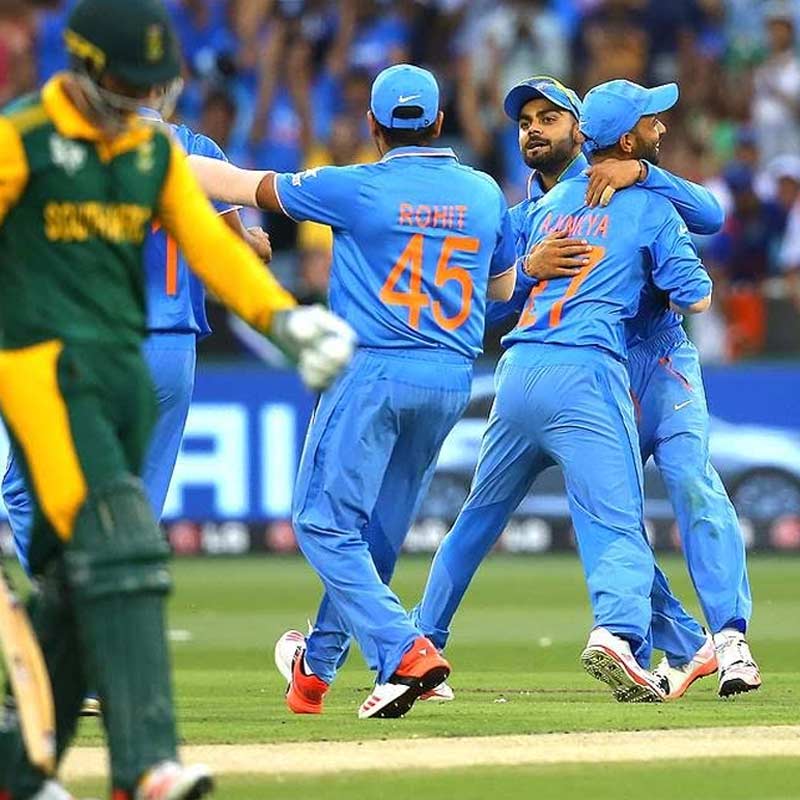
    MUMBAI: SonyLIV, which provides multi-screen engagement to users on all devices, leveraged Akamai’s dynamic ad-insertion capabilities during the India-South Africa cricket series held over January and February 2018.

    Akamai Technologies regional VP, media Asia Pacific and Japan Sidharth Pisharoti said, “SonyLIV has a vast library of original content. However, in India, few entertainment options have the capability to attract mass audiences like cricket. While the challenge on the one hand is to keep audiences engaged with a TV-like experience, the equally hard part is ensuring that advertisers see value in leveraging digital platforms to drive views and consequently, revenue through advertisements. With Akamai’s capabilities, we were able to successfully deliver what audiences and advertisers wanted over the course of the India-South Africa series.”

    SonyLIV was the official and exclusive mobile and internet broadcaster for the India tour of South Africa series and delivered it to millions of users seamlessly across a variety of devices. Digital advertisers gained the most through the course of the series with Akamai’s dynamic ad insertion delivering targeted advertisements during the live stream. With this partnership, SonyLIV achieved a near 100 per cent ad fill rate without compromising on the viewing experience for users.

    Commenting on the partnership, SonyLIV EVP and business head Uday Sodhi said, “The India Tour of South Africa series was a huge success for SonyLIV and our audiences had a seamless experience throughout. We partnered with Akamai and leveraged their technology and added it to our already existing capabilities. The series was a huge hit with all the brands we associated with.”

    Pitch Madison’s Advertising Report for 2018 projects advertising spend on digital platforms to reach Rs 11,629 crore in 2018, representing a 19.5 per cent increase over the Rs 9,303 crore spent in 2017. In 2017, the spend on mobile was 78 per cent (Rs 7,256 crore) of the total digital outlay. Video represented 35 per cent (Rs 3,300 crore) of the total spend. This indicates a strong reflection of growing consumer trends in the country. A report by MoMagic Technologies found that 40 per cent of Indians prefer to watch advertisement videos on their mobile phones over other media. Additionally, as per IDC, India is the fastest growing smart phone market globally with a total of 124 million units shipped in 2017.

    Powered by advertising technology expert Yospace, Akamai’s dynamic ad insertion is designed to help content providers offer greater monetisation opportunities through online advertising, while maintaining a TV-like experience for viewers at scale.

    Also Read:

    2017: The year OTTs went regional in India

    Regional OTT content more than just catch-up TV    

    Sports fans power 35-40% of traffic on SonyLiv

  • Indian players have an edge over global OTT platforms: Akamai’s Sidharth Pisharoti

    Indian players have an edge over global OTT platforms: Akamai’s Sidharth Pisharoti

    Starting from one of the biggest Information Technology companies, Wipro Technologies, as a technical facilitator, he pursued young professionals program in general management from Indian Institute of Management, Calcutta. Soon after attaining a degree, he joined American content delivery network (CDN) and cloud services provider Akamai Technologies, Inc. as a relationship manager of emerging customer group in December 2006. Presently serving the company as the regional VP for media in APAC and Japan, Sidharth Pisharoti is a goal-oriented professional known for his alertness in innovating and bringing in new ideas to improve business processes.

    In an interview with indiantelevision.com’s Megha Parmar, Pisharoti shares interesting insights on a variety of topics, including the growing OTT space in India, impact of 4G, changing consumer behavior and the way forward for the entire digital eco-system. Edited excerpts from the interaction:

    Akamai Technologies, Inc. is an American content delivery network (CDN) and cloud services provider headquartered in Cambridge, Massachusetts. The company’s advanced web performance, mobile performance, cloud security and media delivery solutions are said to be revolutionizing how businesses optimize consumer, enterprise and entertainment experiences for any device, anywhere.

    Edited excerpts from the interview:

    Q: Akamai provides several products like web performance, cloud security, media delivery, etc. In a country that’s increasingly getting digital, who would be your Indian customers and how are each of these products faring?

    Akamai is very focussed on India. We are the largest content delivery platform in the world, which also applies to India. We have 3000+ servers, 59 networks across 14 cities in India. If you look at our customer base, we probably have 265 customers here and these are across different industry verticals. We have the customers who are amongst the top five IT services, media services, commerce services segments, apart from top three three stock exchanges in the country. So, whether you talk about IT, media and entertainment, e-commerce, retail or finance, we have customers across all these verticals.

    Q: Over The Top (OTT) is the new buzzword in India as the number of players, both global and local, grows. What is your take on it?

    If we focus on the media and OTT space, it is growing at   fast pace in India. If you look at the number of OTT platforms that are providing content, it is increasing by the day and so are the audience. The good news here is that not just the services are available, but the consumer pattern, behaviour and the adoption too are growing by the day. Earlier, there was a notion that mostly sports, cricket and live cricket are in demand. But that notion has changed a lot in the recent past. It’s not just live content but also on-demand content, episodic content and anytime content that is available out there which is being consumed by the users.

    Q: What could be the reasons for this change in consumer behaviour and consumption patterns?

    What is happening now is that there are more smart phones being available in the market. Even at Akamai, a big chunk of our delivery is happening to smart phones apart from the traditional internet devices. There are two major developments in India.

    First, the smart phone market has changed and accessibility has improved. Today, you can get a decent Android device at Rs 4,000, which is pretty affordable as compared to what it was four-five years ago. Second, the overall infrastructure has improved. Not just launch of Reliance Jio has spurred on other players, but availability of 4G across the different networks has improved too as compared to what it was one year ago. Today, 4G is available almost throughout the country and with Jio’s arrival the reach has further improved.  

    Both the factors are equally important for any kind of content to be consumed, especially when you are talking about OTT, which is primarily consumed by personal computing devices. The screen size is getting smaller and the consumers are increasing. We are moving away from demography of people who believed in the family viewing experience to having a personal single screen for each member in the house.

    Q:When you say more people are consuming more on smart phones, is the time spent on viewing too increasing? If yes, who are these people and what are they watching?

    The viewing time is definitely increasing. If we look at purely episodic content as video on demand (VOD), the viewing time has increased from what it was 18 months ago.  The average time spent was 5-7 minutes, but it has gone up to as high as about 18-20 minutes now. This is a three-fold jump than what the average session brings in. We are seeing an improvement in the viewing time because of these two reasons. Content providers are ready to provide good quality videos without any buffering or start time. That is the experience the consumer wants — he wants a television-like experience. Because content creators are able to provide uninterrupted content, the viewership is going up. It is not yet as big as TV’s, but it is getting there.

    People are watching from across various demographics though we are yet to nail down a particular type of individual watching. We are having difficulty in pinpointing that as of now, but consumers from tier 2 and tier 3 cities and towns are increasing and are coming to our platform.

    Q: What do you think will be the impact of 4G in India? Do you think it will open up choked and inadequate availability of bandwidth?

    Absolutely. We are already seeing 4G’s effects. More and cheaper bandwidths are available with consumers that are improving consumptions. The consumption was not that great earlier because of two factors. One, the availability and affordability of good quality phones and, second, data costs were high. Even four month back, before the launch of Jio, we were talking about Rs 200/ GB. Today we are talking about Rs 50 per GB. I think, in a year from now even this is going to substantially come down. Data has to become like any other affordable commodity. When it becomes the new normal for the consumers, the industry is obviously going to be impacted.

    Q: While players are still experimenting with their models, what, according to you, will stay in long term?

    See, you have to shift the deal. The consumer will either pay for content or for data. Expecting them to pay for both the things is pushing it a bit too much. Today, the reason behind content creators predominantly offering ad-driven content is because they can’t charge for it as the consumer is already paying for the data. When data becomes cheaper, that is when these creators or broadcasters with their platforms can charge for the content.

    To answer your question, it has to be a dual approach. There has to be content that is available on the `freemium’ model with some part being free of cost, that is advertising-supported, and some behind the pay wall for which the subscribers will need to pay. The Indian consumers will adapt to this model slowly. The day data becomes cheaper and easily accessible, that day content providers can make lot more earnings from subscription perspective.

    Q: When you talk about `freemium’ model, payment gateways remain a crucial part. Will making payments online become easier with ongoing digitization and government push towards cashless transactions in the aftermath of currency demonetisation?

    If you had asked me that question a month ago, I would have said this is definitely a challenge. But, now with demonetization happening and the country trying to moving to a cashless economy, cajoled by the PM Modi government to increase of digital wallets, etc, the scenario is undergoing a change. That is good news for all the online players. Not just OTT, but anyone who is selling or buying online benefits from these changes.

    I think in the medium to long term, the problem will resolve, but, right now, not many consumers are comfortable transacting online. It’s less of being comfortable or paying than choosing what they should pay for. For them, paying for data and content is like a double whammy. With data becoming cheaper, consumers will be willing to pay for content. With the new norms that the government is pushing, it will be easier for the consumers to pay through digital wallets.

    Q: A lot of online content creators are betting big on the kids’ space with original content. Do you think there’s demand for kids’ content in India?

    I think it’s a very good genre to be in. If you remove T-Series and Eros content, some of the biggest YouTube channels in India focus on kids’ content and would definitely have large subscriber base. Such channels have original content created by small companies who are purely creating it for kids. So people who are producing kids’ content are going to be benefitted. It is a big genre, which is has eluded the focused of big OTT players.

    Q: What about the regional markets in India?

    Not many players have looked at it separately and are primarily providing content in Hindi or English. If you look at the OTT space today, some of the big players do have regional content, but their catalogue of regional content is not as complusive as their Hindi catalogue. Though a small quantity of original regional content is being produced, OTT platforms are also syndicating it content from some of the south  Indian media houses. Eventually, each of these markets, for example states of Kerala,  Andhra Pradesh or Tamil Nadu, will have one local OTT player who will be the biggest local player in that market with local content. And, there will be cross syndication. So the national players will definitely syndicate content of all languages, but local players will focus on content of their region’s language and will syndicate content from other languages. I think that is the future. Just like the television space where there a few national level TV channels and many in local languages.

    We will have one or two big OTT players — we are already seeing the emergence of two very big ones platforms at a national level — and then we will see each of the Indian states having one big local player.

    Q: But will that not clutter the space or confuse the consumers? What if they want international as well as their regional content together on one platform?

    The current and future generations are the new subscribers or consumers who are getting online. They are already digital and understand only the digital language.  For many of these consumers TV or cable is non-existent as most of their video consumption is online. Unlike in the US, where there are two large players who are catering to the whole market, the scenario in India is different because in the West primarily there is one language (English) that is popular. We have a huge population with different cultures, speaking different languages and dialects and, hence, there is space for more than just two local players.

    Q: Apart from infrastructure problem, what are the other challenges in the current digital space?  

    Another challenge is to put together the video eco-system. Most of these OTT  companies or the media houses are used to broadcast business because that is their bread and butter. In the last 20 years, they have been working on broadcast and they know that after the content is ready, they have to push it through satellite or cable to people’s homes. But digital is a different ball game. Once the content is prepared, it has to go through its own video platform for it to be ready for a satellite or mobile phone. The biggest challenge is the digital media workflow. The first step is content preparation, which basically means that once you get content that’s to be broadcast, you have to encode it or convert it into a format that can be consumed digitally. Then, you have to re-package it to ensure that it fits all the different softwares on different devices.

    The next step is to transport it to all these formats, repackage it again to make sure storage is proper for a content management system and then send it to a content delivery platform. Then you have to get it on your video player and how do you plan to use it in your analytics and reports. This entire media platform workflow is not easy to manage and is a big challenge when lot of people move from traditional broadcast or regular online streaming to a pure OTT platform. The complexities are very high and that is a challenge.

    Q: Online video consumption has also increased digital piracy. Isn’t this a big challenge for content owners too?

    The good news is that there are lot of companies, including us, who offer security services. Using these services combined with DRN, content protection is possible. Security is like insurance. Can someone give you a 100 percent security? No. But, can you give 99.9 per cent security? Yes. Simply because technology is available today. Whether it is securing your application or data centre or media content, Akamai has a a range of security offerings, which help the media customers to help the customers.

    Second, I also believe that piracy exists when there is non-availability of content or when it is expensive to acquire or view. It happens when someone finds some content at a cheaper price than the legal content. But, today content providers are either giving it for free or are offering it at a very nominal price. Hence, they are killing piracy by making content more accessible. People who are involved in digital piracy are not succeeding because that content is anyway available in high quality on a particular device at affordable rates. So, why would a person go and buy pirated content? This is the case for majority of content. Digital piracy is slowly getting killed. The only problem is movies. But again with platforms like Hotstar, they are releasing movies within four-five weeks of a movie’s release.

    Q: Different mix of companies have got into digital space with even DTH operators now active in this space. Who will be the next bunch of customers for them? What is the scenario there?

    It’s an interesting proposition. I believe you will probably have only one leader in that space too. On one hand, you have folks like Tata Sky who have already moved to that model and are leading in that space. On the other hand, you have dittoTV , which offers you a TV-kind of a service. And, then you have telcos like Reliance Jio, which gives similar kind of service. It will be interesting to see how that plays out. I think there will be a consolidation eventually. I don’t think that for a pure play of a bouquet of channels service,  like each of these players are offering, you can have three to four players.

    It’s about curated content, original content and watching content from wherever the consumer wants. As the market is so fragmented, some of the content syndication deals will be interesting. But, I think they will all reach a point wherein they will realise that rather than syndicating the content, it is better to have it under own network as it is more lucrative. When this happens, you will stop seeing content syndication as well. We have to wait and watch. From DTH point of view, we can have more than one large player.

    Q: Do you see Netflix becoming successful in India? Should the Indian platforms worry about its entrance?

    Netflix, as of right now, is a very urban Indian phenomenon. It produces some original content and some premium content that is consumed by a certain section of the population. It can also turn out that their content strategy for India changes in the longer run. As of now, Netflix is not eating into the viewership base of a Hotstar or a Voot. Both these platforms have their separate viewership base, but that might change when the content that they offer changes or gets popular in India.

    I think these Indian players air some of the shows on their platform first before they go on TV. They air some shows before 24-hour of its TV release. Though it is premium subscription, it is available. So, it is not catch-up television. Their strategy is if-you-want-content-before-TV- we-are-providing-it. Eventually, consumers will start accepting that. That is the plan — consumers should first come to a digital platform and then move on to traditional TV broadcast.

    In the longer run, unless global players have a different content strategy for India, I don’t think they can have (subscriber) numbers like some of these local players do. I think the local players have a big edge over Netflix or any other global platform. Incidentally, globally too Netflix has changed its strategy and has started producing original content. It could be either the studios have stopped giving them content or are giving content at a that makes it difficult for content to be monetised by the OTT platform. So, Netflix has started becoming a media house itself. Same thing has to be India specific.

    Q: What are your predictions for the digital eco-system in the year 2017?

    The future should see is decent amount of consolidation.  In terms of pure play Indian content, I think the players who are leading, will continue to lead at a national level. Locally, there is space for few players that will cater to certain languages. Over the next two to three years, content syndication will go down as each of these platforms will get more consumers and, in turn, generate revenues through subscription. Global players will definitely enter India and will get only a handful of subscribers unless their content strategy is different. To achieve that, they will have to spend a lot of energy, resources and money in India. We can probably have maximum of 10 OTT players — three at national level, two global and couple of local providers.

  • Indian players have an edge over global OTT platforms: Akamai’s Sidharth Pisharoti

    Indian players have an edge over global OTT platforms: Akamai’s Sidharth Pisharoti

    Starting from one of the biggest Information Technology companies, Wipro Technologies, as a technical facilitator, he pursued young professionals program in general management from Indian Institute of Management, Calcutta. Soon after attaining a degree, he joined American content delivery network (CDN) and cloud services provider Akamai Technologies, Inc. as a relationship manager of emerging customer group in December 2006. Presently serving the company as the regional VP for media in APAC and Japan, Sidharth Pisharoti is a goal-oriented professional known for his alertness in innovating and bringing in new ideas to improve business processes.

    In an interview with indiantelevision.com’s Megha Parmar, Pisharoti shares interesting insights on a variety of topics, including the growing OTT space in India, impact of 4G, changing consumer behavior and the way forward for the entire digital eco-system. Edited excerpts from the interaction:

    Akamai Technologies, Inc. is an American content delivery network (CDN) and cloud services provider headquartered in Cambridge, Massachusetts. The company’s advanced web performance, mobile performance, cloud security and media delivery solutions are said to be revolutionizing how businesses optimize consumer, enterprise and entertainment experiences for any device, anywhere.

    Edited excerpts from the interview:

    Q: Akamai provides several products like web performance, cloud security, media delivery, etc. In a country that’s increasingly getting digital, who would be your Indian customers and how are each of these products faring?

    Akamai is very focussed on India. We are the largest content delivery platform in the world, which also applies to India. We have 3000+ servers, 59 networks across 14 cities in India. If you look at our customer base, we probably have 265 customers here and these are across different industry verticals. We have the customers who are amongst the top five IT services, media services, commerce services segments, apart from top three three stock exchanges in the country. So, whether you talk about IT, media and entertainment, e-commerce, retail or finance, we have customers across all these verticals.

    Q: Over The Top (OTT) is the new buzzword in India as the number of players, both global and local, grows. What is your take on it?

    If we focus on the media and OTT space, it is growing at   fast pace in India. If you look at the number of OTT platforms that are providing content, it is increasing by the day and so are the audience. The good news here is that not just the services are available, but the consumer pattern, behaviour and the adoption too are growing by the day. Earlier, there was a notion that mostly sports, cricket and live cricket are in demand. But that notion has changed a lot in the recent past. It’s not just live content but also on-demand content, episodic content and anytime content that is available out there which is being consumed by the users.

    Q: What could be the reasons for this change in consumer behaviour and consumption patterns?

    What is happening now is that there are more smart phones being available in the market. Even at Akamai, a big chunk of our delivery is happening to smart phones apart from the traditional internet devices. There are two major developments in India.

    First, the smart phone market has changed and accessibility has improved. Today, you can get a decent Android device at Rs 4,000, which is pretty affordable as compared to what it was four-five years ago. Second, the overall infrastructure has improved. Not just launch of Reliance Jio has spurred on other players, but availability of 4G across the different networks has improved too as compared to what it was one year ago. Today, 4G is available almost throughout the country and with Jio’s arrival the reach has further improved.  

    Both the factors are equally important for any kind of content to be consumed, especially when you are talking about OTT, which is primarily consumed by personal computing devices. The screen size is getting smaller and the consumers are increasing. We are moving away from demography of people who believed in the family viewing experience to having a personal single screen for each member in the house.

    Q:When you say more people are consuming more on smart phones, is the time spent on viewing too increasing? If yes, who are these people and what are they watching?

    The viewing time is definitely increasing. If we look at purely episodic content as video on demand (VOD), the viewing time has increased from what it was 18 months ago.  The average time spent was 5-7 minutes, but it has gone up to as high as about 18-20 minutes now. This is a three-fold jump than what the average session brings in. We are seeing an improvement in the viewing time because of these two reasons. Content providers are ready to provide good quality videos without any buffering or start time. That is the experience the consumer wants — he wants a television-like experience. Because content creators are able to provide uninterrupted content, the viewership is going up. It is not yet as big as TV’s, but it is getting there.

    People are watching from across various demographics though we are yet to nail down a particular type of individual watching. We are having difficulty in pinpointing that as of now, but consumers from tier 2 and tier 3 cities and towns are increasing and are coming to our platform.

    Q: What do you think will be the impact of 4G in India? Do you think it will open up choked and inadequate availability of bandwidth?

    Absolutely. We are already seeing 4G’s effects. More and cheaper bandwidths are available with consumers that are improving consumptions. The consumption was not that great earlier because of two factors. One, the availability and affordability of good quality phones and, second, data costs were high. Even four month back, before the launch of Jio, we were talking about Rs 200/ GB. Today we are talking about Rs 50 per GB. I think, in a year from now even this is going to substantially come down. Data has to become like any other affordable commodity. When it becomes the new normal for the consumers, the industry is obviously going to be impacted.

    Q: While players are still experimenting with their models, what, according to you, will stay in long term?

    See, you have to shift the deal. The consumer will either pay for content or for data. Expecting them to pay for both the things is pushing it a bit too much. Today, the reason behind content creators predominantly offering ad-driven content is because they can’t charge for it as the consumer is already paying for the data. When data becomes cheaper, that is when these creators or broadcasters with their platforms can charge for the content.

    To answer your question, it has to be a dual approach. There has to be content that is available on the `freemium’ model with some part being free of cost, that is advertising-supported, and some behind the pay wall for which the subscribers will need to pay. The Indian consumers will adapt to this model slowly. The day data becomes cheaper and easily accessible, that day content providers can make lot more earnings from subscription perspective.

    Q: When you talk about `freemium’ model, payment gateways remain a crucial part. Will making payments online become easier with ongoing digitization and government push towards cashless transactions in the aftermath of currency demonetisation?

    If you had asked me that question a month ago, I would have said this is definitely a challenge. But, now with demonetization happening and the country trying to moving to a cashless economy, cajoled by the PM Modi government to increase of digital wallets, etc, the scenario is undergoing a change. That is good news for all the online players. Not just OTT, but anyone who is selling or buying online benefits from these changes.

    I think in the medium to long term, the problem will resolve, but, right now, not many consumers are comfortable transacting online. It’s less of being comfortable or paying than choosing what they should pay for. For them, paying for data and content is like a double whammy. With data becoming cheaper, consumers will be willing to pay for content. With the new norms that the government is pushing, it will be easier for the consumers to pay through digital wallets.

    Q: A lot of online content creators are betting big on the kids’ space with original content. Do you think there’s demand for kids’ content in India?

    I think it’s a very good genre to be in. If you remove T-Series and Eros content, some of the biggest YouTube channels in India focus on kids’ content and would definitely have large subscriber base. Such channels have original content created by small companies who are purely creating it for kids. So people who are producing kids’ content are going to be benefitted. It is a big genre, which is has eluded the focused of big OTT players.

    Q: What about the regional markets in India?

    Not many players have looked at it separately and are primarily providing content in Hindi or English. If you look at the OTT space today, some of the big players do have regional content, but their catalogue of regional content is not as complusive as their Hindi catalogue. Though a small quantity of original regional content is being produced, OTT platforms are also syndicating it content from some of the south  Indian media houses. Eventually, each of these markets, for example states of Kerala,  Andhra Pradesh or Tamil Nadu, will have one local OTT player who will be the biggest local player in that market with local content. And, there will be cross syndication. So the national players will definitely syndicate content of all languages, but local players will focus on content of their region’s language and will syndicate content from other languages. I think that is the future. Just like the television space where there a few national level TV channels and many in local languages.

    We will have one or two big OTT players — we are already seeing the emergence of two very big ones platforms at a national level — and then we will see each of the Indian states having one big local player.

    Q: But will that not clutter the space or confuse the consumers? What if they want international as well as their regional content together on one platform?

    The current and future generations are the new subscribers or consumers who are getting online. They are already digital and understand only the digital language.  For many of these consumers TV or cable is non-existent as most of their video consumption is online. Unlike in the US, where there are two large players who are catering to the whole market, the scenario in India is different because in the West primarily there is one language (English) that is popular. We have a huge population with different cultures, speaking different languages and dialects and, hence, there is space for more than just two local players.

    Q: Apart from infrastructure problem, what are the other challenges in the current digital space?  

    Another challenge is to put together the video eco-system. Most of these OTT  companies or the media houses are used to broadcast business because that is their bread and butter. In the last 20 years, they have been working on broadcast and they know that after the content is ready, they have to push it through satellite or cable to people’s homes. But digital is a different ball game. Once the content is prepared, it has to go through its own video platform for it to be ready for a satellite or mobile phone. The biggest challenge is the digital media workflow. The first step is content preparation, which basically means that once you get content that’s to be broadcast, you have to encode it or convert it into a format that can be consumed digitally. Then, you have to re-package it to ensure that it fits all the different softwares on different devices.

    The next step is to transport it to all these formats, repackage it again to make sure storage is proper for a content management system and then send it to a content delivery platform. Then you have to get it on your video player and how do you plan to use it in your analytics and reports. This entire media platform workflow is not easy to manage and is a big challenge when lot of people move from traditional broadcast or regular online streaming to a pure OTT platform. The complexities are very high and that is a challenge.

    Q: Online video consumption has also increased digital piracy. Isn’t this a big challenge for content owners too?

    The good news is that there are lot of companies, including us, who offer security services. Using these services combined with DRN, content protection is possible. Security is like insurance. Can someone give you a 100 percent security? No. But, can you give 99.9 per cent security? Yes. Simply because technology is available today. Whether it is securing your application or data centre or media content, Akamai has a a range of security offerings, which help the media customers to help the customers.

    Second, I also believe that piracy exists when there is non-availability of content or when it is expensive to acquire or view. It happens when someone finds some content at a cheaper price than the legal content. But, today content providers are either giving it for free or are offering it at a very nominal price. Hence, they are killing piracy by making content more accessible. People who are involved in digital piracy are not succeeding because that content is anyway available in high quality on a particular device at affordable rates. So, why would a person go and buy pirated content? This is the case for majority of content. Digital piracy is slowly getting killed. The only problem is movies. But again with platforms like Hotstar, they are releasing movies within four-five weeks of a movie’s release.

    Q: Different mix of companies have got into digital space with even DTH operators now active in this space. Who will be the next bunch of customers for them? What is the scenario there?

    It’s an interesting proposition. I believe you will probably have only one leader in that space too. On one hand, you have folks like Tata Sky who have already moved to that model and are leading in that space. On the other hand, you have dittoTV , which offers you a TV-kind of a service. And, then you have telcos like Reliance Jio, which gives similar kind of service. It will be interesting to see how that plays out. I think there will be a consolidation eventually. I don’t think that for a pure play of a bouquet of channels service,  like each of these players are offering, you can have three to four players.

    It’s about curated content, original content and watching content from wherever the consumer wants. As the market is so fragmented, some of the content syndication deals will be interesting. But, I think they will all reach a point wherein they will realise that rather than syndicating the content, it is better to have it under own network as it is more lucrative. When this happens, you will stop seeing content syndication as well. We have to wait and watch. From DTH point of view, we can have more than one large player.

    Q: Do you see Netflix becoming successful in India? Should the Indian platforms worry about its entrance?

    Netflix, as of right now, is a very urban Indian phenomenon. It produces some original content and some premium content that is consumed by a certain section of the population. It can also turn out that their content strategy for India changes in the longer run. As of now, Netflix is not eating into the viewership base of a Hotstar or a Voot. Both these platforms have their separate viewership base, but that might change when the content that they offer changes or gets popular in India.

    I think these Indian players air some of the shows on their platform first before they go on TV. They air some shows before 24-hour of its TV release. Though it is premium subscription, it is available. So, it is not catch-up television. Their strategy is if-you-want-content-before-TV- we-are-providing-it. Eventually, consumers will start accepting that. That is the plan — consumers should first come to a digital platform and then move on to traditional TV broadcast.

    In the longer run, unless global players have a different content strategy for India, I don’t think they can have (subscriber) numbers like some of these local players do. I think the local players have a big edge over Netflix or any other global platform. Incidentally, globally too Netflix has changed its strategy and has started producing original content. It could be either the studios have stopped giving them content or are giving content at a that makes it difficult for content to be monetised by the OTT platform. So, Netflix has started becoming a media house itself. Same thing has to be India specific.

    Q: What are your predictions for the digital eco-system in the year 2017?

    The future should see is decent amount of consolidation.  In terms of pure play Indian content, I think the players who are leading, will continue to lead at a national level. Locally, there is space for few players that will cater to certain languages. Over the next two to three years, content syndication will go down as each of these platforms will get more consumers and, in turn, generate revenues through subscription. Global players will definitely enter India and will get only a handful of subscribers unless their content strategy is different. To achieve that, they will have to spend a lot of energy, resources and money in India. We can probably have maximum of 10 OTT players — three at national level, two global and couple of local providers.