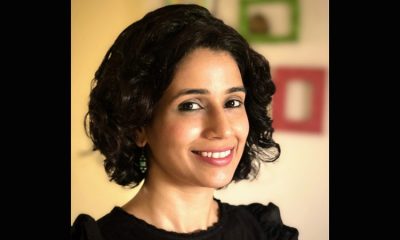
Tag: Siddharth Shekhar

  • AI writes the next scene in storytelling

    AI writes the next scene in storytelling

    MUMBAI: From scripts to circuits, storytelling just got smarter. At FICCI Frames 2025, the stage buzzed with ideas as tech titans from Jiohotstar, Meta, and Google explored how artificial intelligence is reshaping the way India watches, interacts, and connects with stories.

    In a session titled “The AI-Powered Media Revolution: From Personalisation to Interactive Storytelling,” the panel featured Jiohotstar chief product officer Bharath Ram, Meta India group director – finserv, media, travel and services Shweta Bajpai, and Google India head of industry for tech, media & telecom Siddharth Shekhar, moderated by NDTV Entertainment editor Abira Dhar

    Bharath Ram highlighted how Jiohotstar’s India-built AI is revolutionising both content and advertising. “The biggest advantage of developing AI solutions in India is the ability to iterate fast, learn fast, and build products rooted in local sensibilities,” he said, adding that Jiohotstar’s vast catalogue, from Special Ops to Bigg Boss, provides fertile ground for AI-driven insights.

    “Our AI helps us decode what truly captures viewers’ imagination and connects brands to audiences more meaningfully,” he explained, noting that smarter prediction models are already enabling advertisers to reach the right audience at the right moment.

    Taking storytelling beyond the screen, Bharath also spoke about the rise of fandom participation, where viewers don’t just watch content, they live it. “People want to be part of the story. The future lies in building interactive experiences that let fans express their passion,” he said, hinting at Jiohotstar’s plans to boost audience engagement across its entertainment properties.

    The discussion painted a vivid picture of a media landscape in motion, one where AI transforms viewers into collaborators, and platforms like Jiohotstar, Meta, and Google are scripting a new era of personalised, participatory entertainment.

    Because in the age of AI, the story doesn’t just unfold, it evolves with you.

  • AI transforms storytelling as FICCI FRAMES sparks a creative dialogue

    AI transforms storytelling as FICCI FRAMES sparks a creative dialogue

    MUMBAI: Artificial intelligence didn’t just enter the chat, it rewrote the entire script. At FicciFrames 2025, the session The AI-Powered Media Revolution brought together some of the sharpest minds shaping India’s digital future. What unfolded was not just a tech talk, but a lively, layered dialogue on how AI is blurring the lines between human creativity and machine intelligence.

    Moderated by NDTV’s Abira Dhar, the panel featured Kamolika Gupta Peres, vice president at Autodesk; Shweta Bajpai, director of global business group at Meta India; Bharath Ram, CEO of JioStar; and Siddharth Shekhar, director of Youtube and partnerships at Google India. Together, they painted a compelling portrait of an industry in flux, one that’s shifting from “lights, camera, action” to “data, algorithm, imagination.”

    Bharath Ram opened with a distinctly Indian optimism. “India doesn’t just adopt technology, it adapts it,” he said, highlighting how JioStar’s AI innovation is home-grown and hyperlocal. “Our teams think in Hinglish, dream in code, and build for Bharat.” With AI now powering recommendation engines, dubbing tools, and predictive analytics, he said the focus is on making tech intuitive for every kind of viewer from rural smartphone users to urban binge-watchers.

    Meta’s Shweta Bajpai brought the creator’s perspective, describing AI as “the invisible hand that now guides discovery.” Over 50 per cent of what users see on Instagram today is AI-recommended, she shared, adding that engagement time is up by 7 per cent on Instagram and 6 per cent on Facebook. “It’s not just about clicks anymore,” Bajpai said. “It’s about chemistry between people and the content they didn’t even know they wanted.” She noted that thanks to AI, small-town entrepreneurs and regional creators are finding audiences that once felt unreachable. “Creators from Surat, Kochi, and Indore are building national fandoms powered by algorithms that understand local flavour.”

    Google India’s Siddharth Shekhar widened the lens, calling AI “the great equaliser” for India’s next billion users. “Technology can’t just be smart, it must be inclusive,” he said. Google’s partnership with the Maharashtra government, using AI to improve agriculture, education, and healthcare outcomes, exemplifies that mission. He also revealed that YouTube has paid Indian creators over Rs 21,000 crore in the past three years, a staggering indicator of how the creator economy has matured. “Every vlogger, musician and stand-up comic is now a micro-entrepreneur,” he said.

    Autodesk’s Kamolika Gupta Peres brought an artist’s insight into the mix, describing how AI is democratising design. “Today, a student in Nashik with a laptop can create visuals that once needed an entire studio,” she said. AI tools, she explained, are not replacing artists but accelerating their ideas. “It’s like having an assistant who never sleeps and never runs out of coffee.”

    But amid all the tech euphoria, the panel didn’t ignore the elephant in the algorithm ethics. Deepfakes, misinformation and bias in machine learning models were hot topics. Shekhar noted that Google’s SynthID watermark system helps label synthetic or AI-generated content, a key step towards building public trust. Bajpai added that Meta now tags AI-generated posts and allows users to flag potential fakes, a move designed to balance creativity with accountability.

    As the discussion veered towards the emotional limits of AI, Bajpai dropped a memorable line: “AI understands patterns; humans understand irony.” The audience chuckled, but the point stuck creativity still needs a pulse. Peres echoed that sentiment, reminding the room that technology is a tool, not the tale. “AI can help tell stories faster, but the human imagination still gives those stories heart,” she said.

    The conversation turned lively again when Dhar jokingly asked whether AI might someday win a Filmfare Award. Ram was quick to reply, “Only if it learns how to deal with Indian censorship!” Laughter rippled through the room, but behind the humour lay a serious undertone the growing need to rethink content regulation in the AI era.

    As Ficci Frames marked its 25th year, the panel felt symbolic, a moment where India’s creative and tech powerhouses came together to imagine the next quarter-century. From scriptwriting bots to personalised ad targeting and real-time dubbing, AI is already changing how entertainment is produced and consumed.

    Still, as Shekhar concluded, “The future of storytelling will be co-written part human, part machine.” Or as Dhar signed off wryly, “If my phone starts recommending my next question, I’ll know AI has truly taken over.”

    From boardrooms to bedrooms, algorithms are now the new auteurs. And if FICCI Frames 2025 proved anything, it’s that the story of Indian media’s future just like AI itself has only begun to write its first draft.

  • Brands must tap into the emotional value of digital: Google’s Siddharth Shekhar

    Brands must tap into the emotional value of digital: Google’s Siddharth Shekhar

    Mumbai: Digital adoption is no longer a mere consequence of the pandemic. It has become an integral part of life for many who took to the internet because of the unprecedented situation. “Brands, therefore, need to be, not just Covid-proof, but also future proof,” said Google industry head – telecom, media, and entertainment Siddharth Shekhar.

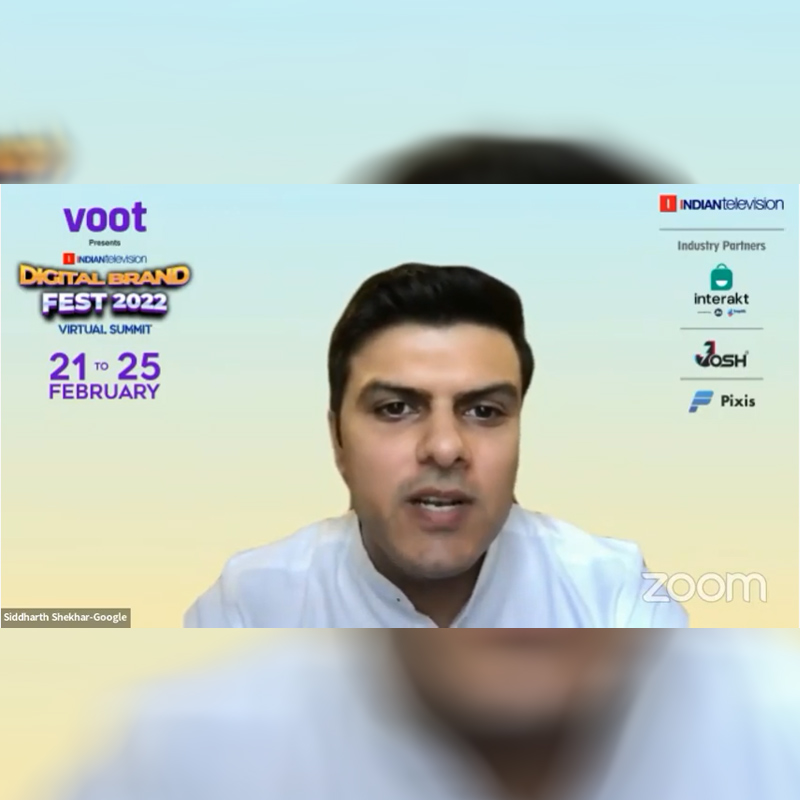
    Shekhar was delivering the keynote address on ‘Decoding Current Digital Trends’ at the inaugural edition of the ‘Digital Brand Fest 2022’ being organised by Indiantelevision.com from 21 to 25 February 2022. The five-day virtual summit is presented by Voot. Interakt, Josh, and Pixis have joined as industry partners.

    Sharing the findings of the Google annual ‘Year in Search 2021’ report, Shekhar outlined five key trends under the broad themes – ‘Digital Mainstreamed’, ‘Lives Re-examined’, ‘Bridging Distances’, ‘Truth Seekers’, and ‘Growing Inequalities’.

    Digital Mainstreamed: Millions of consumers who migrated online in 2020 have demonstrated the staying power of digital from shopping to services to new users, who may have begun their online journeys due to necessity, now proactively deepening their usage. Speed, convenience, and price are some of the reasons why more consumers are now choosing a digital-first lifestyle, irrespective of offline mobility picking up.

    In 2021 India posted higher digital adoption than other regions like the US, EU, and China. The country has 600 million smartphone users and their number is increasing by 25 million every quarter. Users accessed more than four industries through digital channels in 2021. 65 per cent of Indians went online to buy a product they previously bought in-store. Search interest in online shopping and D2C brands grew by 32 and 533 per cent, respectively. Time and cost-saving, flexible payment options, diversity of offerings, improved delivery services as well as ease of tracking were their primary motivation.

    Search interest in virtual try-on increased by 55 per cent, while YouTube search interest in short video grew more than 100 per cent. “Among media consumption trends, streaming on CTV took off in a big way. Short-form videos became one of the largest sources of online entertainment. Even when people take a break from the screen, they are opting for formats like podcasts and audiobooks to stay informed and entertained. Live commerce is expanding its reach, with virtual try-ons becoming more common,” remarked Shekhar. 

    Lives Re-examined: As a result of introspection and revaluation of lifestyle choices and values, people are looking for more comfort in their personal and professional lives. They are placing more value on spending time with families which are echoed in their online searches.

    Search interest in the hybrid workplaces also grew by 350 per cent as people consider returning to offices in a hybrid set-up. “Even as restrictions ease, a blended way of living is likely to stay. Trends point towards a semi-remote future of work with 70 per cent of organisations in India looking at hybrid work models,” Shekhar observed.

    Holistic wellness with an emphasis on physical, emotional, and mental health is playing a bigger role in the decision-making process. There was an 80 per cent increase in search interest for online doctor consultation.

    Bridging Distances: Covid 19 still being a top concern in APAC, people in India feel more cautious about resuming normal activities, as compared to the global average. With one in two Indians saying they will not host events at home, festivals are now going virtual.

    “However, fears haven’t overtaken the need for personal connection and belonging. People are finding new ways to connect with each other,” shared Shekhar. “63 per cent users searched how to celebrate differently amid the pandemic, and some have also found new brands to help them do so.” This was also indicated by search interest in group orders growing by 85 per cent. Interest in virtual versions of offline activities also registered a 120 per cent increase.  

    Digital Brand Fest 2022: Decoding digital transformation for tech-led future

    Truth Seekers: People have become more aware of the spread of false information. 80 per cent of those surveyed say it is now more important for them to have trusted sources of information, as compared to pre-covid times. Searches about frauds and scams have grown by up to 35 per cent; trusted websites were searched +38 per cent.

    “Consumers want brands to be accountable and transparent at every step of the value chain. This is reflected in increased searches for delivery tracking and official stores (+80 per cent) of popular brands. They are doing extensive research prior to making a purchase. For as many as 31 per cent shoppers, authenticity is the key issue with online marketplaces.”

    Growing Inequalities: “Dubbed as ‘inequality virus’, the pandemic has exposed many societal fractures along the lines of wealth, race, language, gender, and more. Not everyone has equal access to the support systems they need,” observed Shekhar.

    Searches show the anxiety that consumers face when transacting in a foreign language. Up to 40 per cent say they won’t make a purchase unless they can access information in their local language. Search interest in songs and videos in local languages is also on the rise. Pandemic-induced unemployment in India has increased search interest in job security by 53 per cent. There was also a 38 per cent growth in searches for buy-now-pay-later financing options.

    Summarising the marketing implications of these trends for brands, Shekhar suggested that “brands must move forward with digital as an elementary strategy and not a complementary one. This will entail solutions such as bringing the storefront closer to shoppers, agile omnichannel strategies, owned or D2C channels that enable the building of bespoke brands presence and experience, and tapping into the emotional value of digital to build customer loyalty by delivering  at each touchpoint.”

    As consumers are becoming increasingly concerned about privacy, ‘building trust as brand equity’ is now more important than ever. “Brands will need to use first-party data more effectively to find the right balance between privacy and personalised interactions while preparing their own digital ecosystem without third-party cookies,” noted Shekhar.  He also advised businesses to “not let language be a barrier, and work towards closing technical, financial and accessibility gaps for consumers across the board.”

    For more details on the event, click here

  • Digital Brand Fest 2022: Decoding digital transformation for tech-led future

    Digital Brand Fest 2022: Decoding digital transformation for tech-led future

    Mumbai: Indiantelevision.com is organising a five-day event ‘Digital Brand Fest 2022’ from 21 to 25 February to explore and understand the new forces driving the digital transformation for a tech-led future. The week-long virtual summit is presented by Voot. Interakt, Josh and Pixis have joined as industry partners.

    The industry stands at a crucial juncture today. As the internet empowered consumers with more choices, digital became the new battleground for brands to test their marketing skills and retain their connect with consumers whose preferences were changing faster than ever. Whether it was the boom in influencer marketing or the popularity of short-video platforms, brands did not hesitate in jumping onto the digital bandwagon to up their marketing game.

    As we enter into 2022, Indiantelevision.com is taking this opportunity to bring a host of industry experts together on one platform to discuss these trends shaping the future. Digital Brand Fest 2022 will have brands, advertisers, tech platforms discuss all these developments and more. The virtual event will also look at the changes in consumer behaviour and how it has impacted the industry’s growth.

    The event will begin on Monday, 21 February with a keynote on ‘Decoding Current Digital Trends’ by Google industry head – telecom, media and entertainment Siddharth Shekhar.

    It will be followed by two-panel discussions – ‘Human X Machine’ and ‘SMS, Notifications and Whatsapp Marketing’. The first session moderated by Indiantelevision.com founder CEO and editor-in-chief Anil Wanvari will have Bharat Arora (Taboola), Nikhil Kumar (mediasmart and Affle company), Mehul Desai (Integral Ad Science), Rohan Chincholi (Havas Media Group India) and Salil Shanker (Amnet India) as panelists.

    On the second panel moderated by Niraj Ruparel (GroupM) are Ahshad Jussawala (Jio-Haptik), Jayant Kshirsagar (CleverTap), Madhur Acharya (WOW Skin Science), Priya Patankar (PhonePe), Ritesh Ghosal (Soptle) and Suchit Sikaria (SUGAR cosmetics).

    The discussion on 22 February will commence with Rapido’s Amit Verma, BigBasket’s Arun Jayaraman, Pixis’ Neel Pandya, Essence’s Sonali Malaviya, Snowflake’s Vimal Venkatraman, and Fresh to Home’s Vanda Ferrao deliberating on ‘Performance Marketing, Partnerships for good ROI’. The panel will be moderated by Xaxis India’s Dimpy Yadav.

    The second session will explore ‘Digital Marketing – The New Dynamic Shift Post Pandemic’ with BharatPe’s Ashish Agarwal, Omnicom Media Group’s Bharat Khatri, GoKwik’s Chirag Taneja, Godrej’s Michelle Francis, Adlift’s Neha Pandey and Network 18’s Puneet Singhvi as panellists and Chetan Asher of Tonic Worldwide Media as the moderator.

    Day three (Wednesday, 23 February) will witness another insightful session on ‘Engaging Communities and Driving Culture through Social Media’ moderated by Kosal Malladi from Madison Digital. Panellists include Sharechat’s Akshat Sahu, Cleartrip’s Himanshi Tandon, Zivame’s Khatija Lokhandwala, Trell’s Manikanta Yadavalli, Kalyan Jewellers’ Rupesh Jain and Puma’s Shreya Sachdev.

    On Thursday, 24 February a TBA-moderated panel will delve into ‘Content Marketing’ trends with Kunal Bhardwaj from Upstox, Maninder Bali from Vedantu, Pallavi Chelluri from Moglix, Samir Sethi from Policybazaar.com and Sharmin Ali from Instoried.

    ‘CTV 101’ and Gen Z X Short Video’ will be key themes discussed on the last of the summit, Friday, 25 February. The first panel moderated by Anil Wanvari includes Gijsbert Pols from Adjust, Mete Bargmann from Magnite, and Vijay Anand Kunduri from PubMatic.

    The second session will have Lenskart’s Anupam Tripathi, OML’s Gunjan Arya, Verse Innovation’s Nakul Puri, Bombay Shaving Company’s Siddha Jain and WATConsult’s Sahil Shah as speakers.

    For registration, click here.