Tag: Siddharth Roy Kapur

  • UTV delays release of five films

    UTV delays release of five films

    MUMBAI: After a number of its big films failed to make an impact at the box office over the last 18 months, UTV has postponed the release of over five small and medium films, involving investments of Rs 1 billion.


    The films affected by the production houses’ action are Paan Singh Tomar, Phillum City, animation film Arjun: The Warrior Prince, the David Dhawan comedy Peter Gaya Kaam Se, Season‘s Greetings and the Amitabh Bachchan-starrer Shoe Bite.


    These films are in a completed state. UTV Motion Pictures chief executive officer Siddharth Roy Kapur, however, said that some of the films would be released next year.


    While Paan Singh Tomar is scheduled to release in March 2012, Arjun… will release in May next year. Peter Gaya Kaam Se and Phillum City are direct-to-TV releases that will be aired across the UTV network in the first quarter of 2012. Season‘s Greetings is still in production.


    “The only film on which we have had to take a creative judgement call is Hook Ya Crook,” Roy Kapur added.

  • UTV to produce Delhi Belly writer’s directorial venture

    UTV to produce Delhi Belly writer’s directorial venture

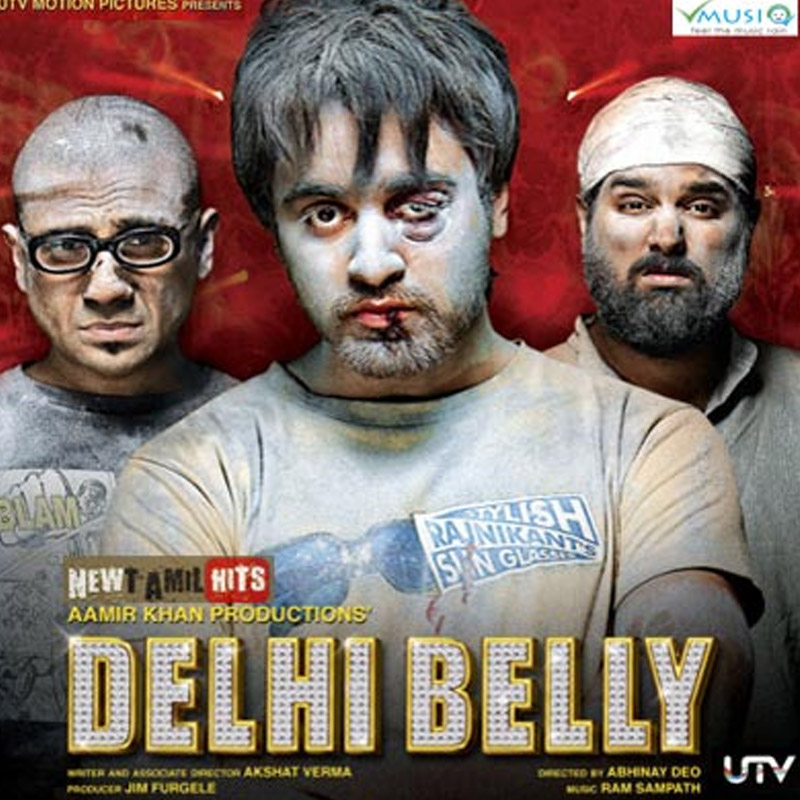
    MUMBAI: Going by the way Aamir Khan‘s latest film Delhi Belly got an all-round appreciation, UTV Motion Pictures has jumped into the ring to produce writer Akshat Verma’s first, yet untitled, directorial venture.

    The film will be a comic thriller and is being scripted by Verma himself.

    Speaking on UTV‘s associating with Akshat, UTV Motion Pictures CEO Siddharth Roy Kapur said, “As a studio, we have always believed in backing upcoming talent who have the potential to bring entertaining cinema to audiences. The fantastic script written by Akshat was undoubtedly one of the key reasons behind the success of Delhi Belly and judging by his concept and vision, we believe he‘ll write and direct a superb film”.

    “Working with UTV on Delhi Belly was a fantastic experience for me. To have a major studio get behind your film completely enables you to do your best work – I‘m inspired and excited to be working with UTV again on my next film,”observed Verma.

    UTV has lined up a slate of films to be released in the rest of the year. These include films like My Friend Pinto, Barfii, Rowdy Rathore, Ghanchakkar, Joker and Ek Main Aur Ekk Tu.
     

  • ‘The ability to de-risk is more now’ : UTV Motion Pictures chief executive officer Siddharth Roy Kapur

    ‘The ability to de-risk is more now’ : UTV Motion Pictures chief executive officer Siddharth Roy Kapur

    UTV has expanded its movie slate for the fiscal and is eyeing a revenue of Rs 4.5 billion from this segment, up 43 per cent from the year-ago period.

    Upping its operations over the years, UTV has a roster of 12 movies this fiscal. UTV‘s scale-up goal: to have a peak pipeline of 15 movies a year.

    Narrowing its risks, UTV has indulged in a high element of pre-sales activities. The environment has been conducive as prices for satellite TV telecast rights have ballooned with Viacom18 planning the launch of a Hindi movie channel next year. The syndication model, widely popular last year, is being thrown out of the window.

    After delisting from London‘s Alternative Investment Market (AIM), UTV Motion Pictures is not looking at raising further capital as the business has reached a self-generation mode.

    In an interview with Indiantelevision.com‘s Sibabrata Das, UTV Motion Pictures chief executive officer Siddharth Roy Kapur talks about the balance film studios need to perfect between scale and a de-risked strategy.

    Excerpts:

    Indian movie studios were talking of scale a few years back. Now de-risking seems to be the mantra. Is it because in the process of scale some of the studios burnt their fingers?
    Building scale and de-risking are not parallel processes. It is just that the ability to de-risk is more now with the overall slate of movies going up.

    But the trend is to lock in the music and satellite television telecast rights before the theatrical release of the movies. Haven‘t studios increased the pre-sales deals this fiscal?
    The opportunities have definitely increased as the market for satellite TV rights has heated up with a broadcaster planning to launch a Hindi movie channel. The syndication model, widely popular last year, is being thrown out of the window. As broadcasters are chasing exclusive rights, the rates have gone up. This is working out well for the broadcasters and the producers.

    Also, with a diversified and expanded slate, studios have been able to derive higher values. We at the early part of the fiscal, for instance, had locked in Rs 2.37 billion from pre-sales of different rights.

    Aren‘t you in the process sacrificing an upside potential?
    We are offered a premium even before the movie is out. And if we foresee a significant upside potential, we do not go for pre-sales. We decide on a film-to-film basis.

    We have also come out with new models. In case of Raajneeti, we did a satellite deal based on the theatrical performance of the film. We looked at higher slabs based on the performance index.

    But don‘t you have a de-risking approach for each movie?
    We have developed the ability to de-risk on each movie. As a strategy, we look at de-risking on the satellite and music rights front. On the theatrical distribution front, we prefer to handle it ourselves.

    With pre-sales opportunities on the rise, aren‘t you tempted to scale up further?
    We have managed to scale up to 12 movies a year and have a diversified slate in terms of genre and talent. We have a mix of movies ranging between as low as Rs 30 million and as high as a blockbuster can cost. We have the ability to release in 45 countries.

    As for the future, we are looking at a 12-15 movie slate. We feel that it is not a feasible model to scale up more if you are to maintain the same level of quality control.

    Around 50 per cent of the slate will be through co-productions. UTV will, however, handle the marketing and distribution of these movies.
    ‘We are looking at a 12-15 movie slate a year. We feel that it is not a feasible model to scale up more if you are to maintain the same level of quality control‘

    So are we going to see a slower growth in the top line?
    We are on course to achieve a turnover of Rs 4.5 billion this year (up from Rs 3.15 billion). There will be organic growth and we will also do bigger movies.

    With more multiplexes and digitisation coming up, there will be growth in theatrical revenues. We also don‘t see a softening in rates for satellite TV rights in the near future as broadcasters have planned for their growth.

    Our focus, though, will be on profitability. We are confident of posting a 20 per cent year-on-year bottom line growth for the next three years.

    UTV Motion Pictures delisted from London‘s Alternative Investment Market. Is it now looking at raising funds for its movie business?
    We are pretty much well funded and have no fund raising plan. The business has reached a self-generation mode.

    Is the slate firmed up for the next fiscal as well?
    We are sitting in a pretty position and expect to see strong growth in the next fiscal. We have only 3-4 titles to lock up. Our pre-planning is well in place. As a studio, we stand in a unique position as we are a producer and not a content aggregator.

    Is UTV looking at aggressively producing movies in regional languages, particularly Tamil and Telugu?
    We are keeping watch on how the regional play is emerging. But our focus will be totally on the Hindi slate. Strategically, Bollywood is our core business. We may do a one off movie in the regional space on a tactical basis.

    In the south, the game is riskier and the ability to de-risk lower. The theatrical dependence is huge in the south. The sensibilities are also different.

    In the revenue mix, how much does theatrical account for?
    The box office accounts for 55 per cent of the revenue mix, while 20-25 per cent comes from sale of satellite TV rights. Music accounts for 5-7 per cent, overseas for 7-10 per cent; home video for 3-5 per cent and the remaining comes from new media. Going ahead, theatrical will fall to 50 per cent while new media will increase.

    Piracy impacts our overseas home video revenues. We see that compensated over the years by the growth in the new media space. The launch of 3G in India will also augment our new media revenues.

    Has there been a correction on the cost front?
    Costs have fallen to a suitable level for the industry as a whole, but a lot more needs to be done.

    UTV has expressed concern over the rise in marketing costs. How far has the industry come together on this issue?
    There has been a 10-15 per cent increase in promotion and publicity expenses over last year. The industry spends around 50 per cent of the theatrical revenue for domestic marketing, if one calculates the net distributor share to each of the producers. Due to the competitive framework and the increase in media options, we tend to out-shout each other. We are advertising more than we need to.
    A meeting took place among some film producers and everyone seems to be committed to see that this gets corrected as it is affecting our profit margins. It is work in progress and a solution, hopefully, should be on sight soon.

    UTV has shied away from releasing films during the IPL Indian Premier League). Will you be more conscious to plan the movie releases in such a way that bumpiness does not happen from quarter to quarter?
    UTV will have some releases during the IPL this time. While we are looking at ways to ensure that bumpiness does not take place, the right release date is our top priority.

    Yash Raj Films is trying to create a segment for youth films. Do you think the industry has matured for a segmentation approach?
    The first task is to find a great story. This may or may not include some target groups. But the secret to success is working on interesting scripts. Working backwards is not always the solution.

  • ‘We want to be strategically well entrenched in the Bollywood market’ : Siddharth Roy – UTV Motion Pictures CEO

    ‘We want to be strategically well entrenched in the Bollywood market’ : Siddharth Roy – UTV Motion Pictures CEO


    UTV Motion Pictures Plc (UMP Plc) has emerged as one of the top film production companies, challenging established players in scale and box office hits across different genres and budgets. The roster includes Jodhaa Akbar, Race, Fashion and Mumbai Meri Jaan.

    Listed in Alternative Investment Market (AIM) of the London Stock Exchange, UMP has set its eyes on good scripts, filmmakers, and talent while scaling up. Taking a cautious approach on film acquisitions, the company’s focus has been to set up a good team and produce movies on their own.

    UMP has also attempted to line up an international IPR basket with movies like The Namesake and The Happening. The adventure has been mixed so far and 2009 could see a retrenchment of such plans, though a $2 million project is being produced singularly by UTV for the first time in the US.

    Riding with a series of hits, UMP targets a revenue of Rs 3-3.5 billion this fiscal. The company has also inked syndication deals with Zee and Colors to maximise revenue opportunities while retaining the first airings for UTV’s Hindi movie channel.

    Finding the turf too competitive and price-driven at this stage, UTV has exited the home video business. The company inked a deal with Moser Baer, licensing for five years the home video rights for 25 movies produced till June 2009.

    With Walt Disney an equity partner, UTV has grabbed the distribution rights of Disney’s Hollywood content for the Indian market. This has not halted UTV from entering into a string of relationships with Hollywood majors including Fox.

    In an interview with Sibabrata Das, UTV Motion Pictures CEO Siddharth Roy Kapur talks about the challenges that film producers face with pressure on star costs and RoI (return on investments) and how the company has grown into a powerhouse in such a short span of time.

    Excerpts:

    UTV has cut costs in its broadcasting operations due to economic slowdown. Will the motion pictures business see a similar scale back plan?
    We will maintain the same pace as we did in 2008. There is no scale back plan. We released 10 movies in 2008. For 2009, we have 15-18 movies in the release pipeline.

    The capital employed in the movie business till the first half of Fy’09 is Rs 7.26 billion. Will the deployment see the same pace?
    Yes, we will maintain that pace – or even deploy more capital. We could see some rationalisation in star prices and production costs. We have started talking to talent and they are being receptive. We are also trying to generate more efficiencies in the production process and in the print and publicity expenditure.

    The Namesake and The Happening has been UTV’s efforts to build an international IPR basket. Will 2009 see a retrenchment in these plans as we don’t hear of any movie with Will Smith or others kicking off in the year?
    We are making a $2 million film called Ex Terminators. This is the first time that UTV will be producing on its own a film in the US. We realise that holding an IPR for Hollywood movies has great value as the DVD market is very strong in the US. The threatical exploitation is, in any case, a perishable commodity. But we want to be strategically well entrenched in the Bollywood market. We will be involved in international projects on an opportunistic basis. We are still in talks with Will Smith and are trying to find the right script and movie to make with him.

    In a bid to scale up, several Indian film studios have burnt their fingers by acquiring movies at high cost. Has UTV consciously decided to stay out of such acquisitions?
    A few months ago, acquisition costs had really shot up, making it difficult to recover money from some projects. But studios have their own strategies as they are in different stages of life cycle. Our focus, though, has been to put in place a production and development team. We have also cemented a strong relationship with talent.

    Acquisition prices will see a change as we are entering a period of economic slowdown. Though we acquired two movies (Race and Kismat Konnection) out of the 10 that we released in 2008, it is not part of our overall business plan. Our strategy is to produce our own movies. We are not looking at acquisition to scale up.

    Do you see pressure on revenues this fiscal because of recession?
    We expect our turnover to grow to Rs 3-3.5 billion this fiscal. And in FY’10 we hope to notch up Rs 4-5 billion. This will not include the revenues from The Namesake and The Happening.

    ‘We could see some rationalisation in star prices and production costs. We have started talking to talent and they are being receptive

    How much did two of your biggest hits – Jodhaa Akbar and Race – contribute to the kitty?
    They accounted for 30 per cent of our total revenues in 2008. But we also had hits in Fashion, Welcome, Aamir, Mumbai Meri Jaan, Oye Lucky! Lucky Oye! and The Happening.

    Our business model is to produce a few big budget movies while lining up mid-range and small films. We do not want to put all our eggs into one basket. We make movies in different genres, with different makers, and in different budgets. We are developing various labels to address different segments. The common thrust across all the segments is to have quality that is really consistent.

    Will the RoI improve in the coming years?
    The RoI for studios is dicey. While for single producers it is good, for distributors it is difficult. For us, it falls in the 10-15 per cent range. It should stay similar in FY’09. Cost structures (star cost) make any change in RoI difficult.

    UTV Motion Pictures did a deal with Disney to distribute their Hollywood content in India. How big a revenue opportunity will this throw up?
    India is a small market for Hollywood content. We will be paid a commission by Disney for disitributing the movies. We want to maintain the revenue opportunities with more prints and language dubs.

    Walt Disney has done a co-production with Yash Raj Films. But despite having a stake, why haven’t they gone ahead with a joint Bollywood movie project with UTV?
    We are talking to them on various scripts.

    Why did UTV decide to exit the home video business?
    We want to focus in the content creation and aggregation business. We will be in the theatrical distribution business because we want to have a presence in the last mile to the exhibition theatre. There is tremendous competition in the home video segment and based on commercial and strategic considerations, we decided to license our home video rights to Moser Baer for the next five years. Moser Baer will have the rights to all our movies that are released till June 2009.

    We will handle the home video business in overseas markets and have offices in US, UK and Dubai.

    Will we see a more aggressive regional movie lineup from UTV in 2009?
    Mainstream film producers getting into regional cinema will happen, but it will not be their main activity. Regional language films are heavily dependent on theatrical revenues. Satellite TV and home video rights, in fact, are sold together and form a minor portion of the revenue mix. Though the launch of regional channels has led to a rise in revenues from TV rights, it is still not large enough for us to justify making more movies in this space.

    For us, the RoI falls in the 10-15 per cent range. Cost structures (star cost) make any change in RoI difficult

    Do Bollywood films make a more strong multiple revenue stream?
    Theatrical accounts for 55-60 per cent of the total revenue kitty while satellite rights make up 15 per cent and home video 5-7 per cent. Music and overseas rights contribute 10 per cent each. Going forward, home video and music will increase while satellite rights will fall as broadcasters come to terms with the slowdown in the economy.

    Will UTV continue to do syndication deals?
    We have done syndication deals with Zee and Colors. We will continue with the syndication model as we have our own Hindi movie channel. Unless, of course, we get a very good pricing for a 3-year or 5-year deal.
    Will UTV’s big drive in 2009 be scaling up?
    Our focus in 2008 was to get the team in place and work with right scripts and talent while scaling up. We will continue to build on that in 2009. We will explore all revenue opportunities including new ones like pay-per-view (PPV) on DTH. We offered Oye Lucky! Lucky Oye to DTH operators on PPV mode within a short time of theatrical release. This is a massive opportuinity in future and we intend to properly monetise the satellite market in a big way.
    UTV has invested in gaming companies. How are you exploiting the new media opportunities?
    We have mobile gaming for all our movies. For developing console gaming, it would require a long lead time and we do not have the product yet for it.
  • ‘Britannia Tiger Hungamthon’ ropes in Ajay Jadeja to kick off the event

    ‘Britannia Tiger Hungamthon’ ropes in Ajay Jadeja to kick off the event

    MUMBAI: The second season Hungama TV’s kid’s marathon just got bigger. The Hungamthon this time round has roped in former Indian cricketer Ajay Jadeja to flag off the event, for which Britannia Tiger has come on board as the official brand sponsor. With the addition of a third city this year, the Britannia Tiger Hungamthon ’06-07 will be held on 7, 14 and 28 January in Mumbai, Delhi and Kolkata respectively.

    To add star power to the event, the cast of UTV produced film Hattrick – Rimmi Sen and Kunal Kapoor will extend their support to the runners.

    Hungama TV has tied-up with sports association Athletic Federation of India to ensure appropriate adjudication for the entire event. This year the race will be divided into two categories of the ‘Masters’ and ‘Blasters.’ The applicable age for participants is between 8-15 years, while the Masters will consist of 8 – 12 year olds who would run for 2 km, the Blasters will include 13 – 15 year olds who would run for 3 km.

    The entire event will not be telecast but snippets of it will be shown in Feburary next year.

    To ensure participation, an on going school contact program across 100 schools each in Mumbai, Delhi and Kolkata was rolled out in November. The channel states that last year the distribtution of forms to the various schools claims to have garnered maximum response from the kids. Additionally, this will be supported by a mass media promotion comprising of print, radio and internet. The channel has tied up with Times NIE and TTIS as print partners and ABP and Telegraph to promote the event in Kolkata. The radio partners are Red FM 93.5 and Total Sports Asia the event partners.

    What’s more, this year the event has lured more advertisers including Set Wet Nottee and Bournvita as co-presenting sponsors, the associate sponsors are Boomer, Dabur Chyawanprash, Sustacal, Haldiram’s Chips and Dukes Waffy. The water partner is Oxyrich and the Multiplex partners are Cinemax and PVR Cinemas.

    Speaking about the Britannia Tiger Hungamthon, UTV senior vice president marketing and communications Siddharth Roy Kapur said that much like last year the event would have a carnival feel with a holding area for parents and kids that will have food and games stalls. “In addition to the Hungama characters interacting with the kids, there will also be a live band performing at the venue.”

    Application forms are available at Cinemax chain in Mumbai and PVR chain in New Delhi as well as on the website www.hungamatv.com.

  • Hungamathon 2007 to kick off in January; Kolkata also to host

    Hungamathon 2007 to kick off in January; Kolkata also to host

    MUMBAI: Hungama TV is back with the second season of its unique property Hungamathon, which is slated to be held in January 2007. The mini marathon will be adding Kolkata to Mumbai and Delhi, where the event was held last year.

    “Over 20000 kids ran in the Mumbai and Delhi Hungamathon last year and our expectations have risen even higher for the hunt this year! We plan to make Hungamathon 2007 one of the most fun-filled events of the year – one that kids will look forward to,” says UTV Sr. Vice President – marketing and corporate communications Siddharth Roy Kapur.

    Hungamathon 2005 witnessed the participation of close to 20,000 kids across Mumbai and Delhi with eight brands that sponsored the event. This year the race is open to kids between 8-15 yrs. There are two categories, the ‘Masters’ for age group 8 – 12 years that would run 2.5 km and the ‘Blasters’ for the age group 13 – 15 years who would run 4 kms.

    In its second season, an intensive school contact program covering 100 schools will be rolled out in the month of November in Mumbai, Delhi and Kolkata to ensure maximum participation. Application forms will also be available online on www.hungamatv.com.

    Hungama TV has tied-up with sports association, Athletic Federation of India for Hungamathon 2007 to ensure appropriate adjudication for the entire event.

    In addition, the channel has another reason to cheer as it completes two years this week, as per the latest tam data (TAM Period: 10 – 16 September 2006), Hungama TV has emerged as the number 1 channel in the kids space by a GRP of 153 and highest TVR growth of 28 per cent amongst all its competitors in the kids’ space, informs an official release.

    “Innovative initiatives like ‘Hungamathon’, ‘Rasna Full Toss’, ‘Parle G Hungama Captains Hunt’, ‘Oral B John aur Kaun’ amongst others has helped us to successfully catapult Hungama TV to the number one spot amongst kids channels and hugely strengthen the channel’s brand equity in the last two years,” adds Kapur.