Tag: Siddharth Roy Kapur

  • Fourth Indian Screenwriters Conference to focus on stories that reflect ‘India’s Reality’

    Fourth Indian Screenwriters Conference to focus on stories that reflect ‘India’s Reality’

    MUMBAI: The television and film writers are pulling their socks for the fourth edition of Indian Screenwriters Conference. The Film Writers Association, Mumbai are set for the conference on 3 and 4 August 2016 at St. Andrew’s Auditorium, Bandra West – Mumbai.

    During 4ISC, the prominent names from the writer fraternity, along with writer-directors, producers, TV channel representatives and film lovers, would network and indulge in stimulating discussions revolving around various issues concerning screenwriting and screenwriters in India. The theme in the fourth edition is So Near So Far: Do our stories reflect India’s Reality? The issues relevant to writing profession will also be addressed in the conference.

    The first conference, held at FTII, Pune, in August 2006, was attended by 275 writers.The second, at the Indira Gandhi Institute of Development Research, Mumbai, in December 2008; saw 575 screenwriters and writer-directors attending it. Third ISC at St. Andrew’s Auditorium, Bandra, in February 2013, had the participation of 700 screenwriters. The event has been garnering popularity over the years. The association is claiming the fourth edition to grow bigger.

    The sessions will tackle the theme from different angles. The sessions included are- Little Big Films: Small films, driven by strong scripts and the passion of the filmmakers, are increasingly ending up as surprise successes. What is the scope and future of such efforts?

    Serial Killers: Does our current TV content reflect our times and society? Why are we stuck in some unchangeable grooves? What is the way out?

    Writers & Producers: Partners or Adversaries?: Writers feel they are undervalued while producers complain of lack of quality scripts. How can this relationship be made more collaborative, more mutual, and more productive for both?
    The Feminine Factor: Are female actors getting better roles now? Is our audience comfortable only with stereotypical women characters? Are we ready to have a more realistic gender equation on screen?

    The Digital Explosion: Is the Internet the answer to our creative and economic issues?
    The Business of TV Writing: The leverage of the TV writer is growing; it appears, with him/her turning into a producer. Is this the model for all TV writers to move towards?

    Well known poet Ashok Vajpeyi will be the chief guest of the conference, while journalist P. Sainath will deliver the keynote. Other expected penalists are- Javed Akhtar, Gulzar, Siddharth Roy-Kapur (Disney), Ronnie Screwvala (UTV), Gaurav Banerjee (Star), Ritesh Sidhwani (Excel), Anooj Kapoor (SAB), Danish Khan (Sony), Ravina Kohli (Epic), Vishal Bhardwaj, Jaideep Sahni, Sriram Raghavan, Rajat Kapoor, Hansal Mehta, Juhi Chaturvedi, Jayesh Patil, Aatish Kapadia, Purnendu Shekhar, Shridhar Raghavan, Nagraj Manjule, Neeraj Ghaywan, Sonali Jaffer, Shashi Mittal, Varun Grover, Himanshu Sharma, Sudip Sharma, Saurabh Tiwari, Biswapati Sarkar (TVF).

  • Fourth Indian Screenwriters Conference to focus on stories that reflect ‘India’s Reality’

    Fourth Indian Screenwriters Conference to focus on stories that reflect ‘India’s Reality’

    MUMBAI: The television and film writers are pulling their socks for the fourth edition of Indian Screenwriters Conference. The Film Writers Association, Mumbai are set for the conference on 3 and 4 August 2016 at St. Andrew’s Auditorium, Bandra West – Mumbai.

    During 4ISC, the prominent names from the writer fraternity, along with writer-directors, producers, TV channel representatives and film lovers, would network and indulge in stimulating discussions revolving around various issues concerning screenwriting and screenwriters in India. The theme in the fourth edition is So Near So Far: Do our stories reflect India’s Reality? The issues relevant to writing profession will also be addressed in the conference.

    The first conference, held at FTII, Pune, in August 2006, was attended by 275 writers.The second, at the Indira Gandhi Institute of Development Research, Mumbai, in December 2008; saw 575 screenwriters and writer-directors attending it. Third ISC at St. Andrew’s Auditorium, Bandra, in February 2013, had the participation of 700 screenwriters. The event has been garnering popularity over the years. The association is claiming the fourth edition to grow bigger.

    The sessions will tackle the theme from different angles. The sessions included are- Little Big Films: Small films, driven by strong scripts and the passion of the filmmakers, are increasingly ending up as surprise successes. What is the scope and future of such efforts?

    Serial Killers: Does our current TV content reflect our times and society? Why are we stuck in some unchangeable grooves? What is the way out?

    Writers & Producers: Partners or Adversaries?: Writers feel they are undervalued while producers complain of lack of quality scripts. How can this relationship be made more collaborative, more mutual, and more productive for both?
    The Feminine Factor: Are female actors getting better roles now? Is our audience comfortable only with stereotypical women characters? Are we ready to have a more realistic gender equation on screen?

    The Digital Explosion: Is the Internet the answer to our creative and economic issues?
    The Business of TV Writing: The leverage of the TV writer is growing; it appears, with him/her turning into a producer. Is this the model for all TV writers to move towards?

    Well known poet Ashok Vajpeyi will be the chief guest of the conference, while journalist P. Sainath will deliver the keynote. Other expected penalists are- Javed Akhtar, Gulzar, Siddharth Roy-Kapur (Disney), Ronnie Screwvala (UTV), Gaurav Banerjee (Star), Ritesh Sidhwani (Excel), Anooj Kapoor (SAB), Danish Khan (Sony), Ravina Kohli (Epic), Vishal Bhardwaj, Jaideep Sahni, Sriram Raghavan, Rajat Kapoor, Hansal Mehta, Juhi Chaturvedi, Jayesh Patil, Aatish Kapadia, Purnendu Shekhar, Shridhar Raghavan, Nagraj Manjule, Neeraj Ghaywan, Sonali Jaffer, Shashi Mittal, Varun Grover, Himanshu Sharma, Sudip Sharma, Saurabh Tiwari, Biswapati Sarkar (TVF).

  • FICCI FRAMES: Broadcasting stalwarts feel it is possible to survive the digital wave

    FICCI FRAMES: Broadcasting stalwarts feel it is possible to survive the digital wave

    MUMBAI: Is the past too old to be relevant in the future, and will it actually ‘perish’ if ‘change’ does not take place?

    These questions were discussed by panelists at a session to discuss the formula to Survive the digital wave: Change or perish.

    On the dias were The India Today Group Chairman and Editor-in-chief Aroon Purie, Discvery Asia Pacific Managing Director and President Arthur Bastings Viacom 18 group CEO Sudhhanshu Vats, Disney India MD Siddharth Roy Kapur, NDTV Group Director and CEO Vikram Chandra, and Hungama CEO Neeraj Roy, and the session was moderated by Pranjal Sharma with questions also coming from the delegates.

    “The fundamental is still the same, produce quality and you will have consumers and that’s the way forward as far as I am concerned,” asserted Purie.

    Bastings said staying with the mood of the occurrences is a must. “We cannot only have a channel. We need to have, whatever is there in the ecosystem. Once you have everything you can decide your core business and the rest depending on the performances you can plan your investments,” he added.

    During the course of the discussion, the AVOD model was questioned numerous times. Offering content for free is habit forming which might hurt the ecosystem and what is happening to TV now can happen to OTT too a few years later.

    Vats, whose Viacom’s digital AVOD offering VOOT was launched recently, said: “The consumer is paying. He may not be paying me but is paying for the data. As the payment mechanism develops, bundling can happen. So to say that the consumer is not paying is actually not a correct conclusion.”

    Kapur had a somewhat different point of view as compared to Vats. ‘Waiting for later’ was is not a saleable proposition for him. “We launched 500 channels and did not make consumer pay anything for it. We believe if we form a habit that consumers will later come, pay and watch, does that mean that we open a series of screens and let people walk in for free. I do not think so.”

    “Yes, people are watching movies on mobile phones but that does not mean theatre screens are going away” he added

    Chandra said there was room for profits and opportunities, “It is possible to monetize and it is possible to make profits. But you cannot put archival content, you need to create content exclusively for that very platform and only then will you taste success. The mindset that I will put archival content on digital is a slightly wrong mindset that the broadcasters have been following.”


  • FICCI FRAMES: Broadcasting stalwarts feel it is possible to survive the digital wave

    FICCI FRAMES: Broadcasting stalwarts feel it is possible to survive the digital wave

    MUMBAI: Is the past too old to be relevant in the future, and will it actually ‘perish’ if ‘change’ does not take place?

    These questions were discussed by panelists at a session to discuss the formula to Survive the digital wave: Change or perish.

    On the dias were The India Today Group Chairman and Editor-in-chief Aroon Purie, Discvery Asia Pacific Managing Director and President Arthur Bastings Viacom 18 group CEO Sudhhanshu Vats, Disney India MD Siddharth Roy Kapur, NDTV Group Director and CEO Vikram Chandra, and Hungama CEO Neeraj Roy, and the session was moderated by Pranjal Sharma with questions also coming from the delegates.

    “The fundamental is still the same, produce quality and you will have consumers and that’s the way forward as far as I am concerned,” asserted Purie.

    Bastings said staying with the mood of the occurrences is a must. “We cannot only have a channel. We need to have, whatever is there in the ecosystem. Once you have everything you can decide your core business and the rest depending on the performances you can plan your investments,” he added.

    During the course of the discussion, the AVOD model was questioned numerous times. Offering content for free is habit forming which might hurt the ecosystem and what is happening to TV now can happen to OTT too a few years later.

    Vats, whose Viacom’s digital AVOD offering VOOT was launched recently, said: “The consumer is paying. He may not be paying me but is paying for the data. As the payment mechanism develops, bundling can happen. So to say that the consumer is not paying is actually not a correct conclusion.”

    Kapur had a somewhat different point of view as compared to Vats. ‘Waiting for later’ was is not a saleable proposition for him. “We launched 500 channels and did not make consumer pay anything for it. We believe if we form a habit that consumers will later come, pay and watch, does that mean that we open a series of screens and let people walk in for free. I do not think so.”

    “Yes, people are watching movies on mobile phones but that does not mean theatre screens are going away” he added

    Chandra said there was room for profits and opportunities, “It is possible to monetize and it is possible to make profits. But you cannot put archival content, you need to create content exclusively for that very platform and only then will you taste success. The mindset that I will put archival content on digital is a slightly wrong mindset that the broadcasters have been following.”


  • ‘Fitoor:’ Confusing and dry

    ‘Fitoor:’ Confusing and dry

    Fitoor is projected as ‘Based on the 19th century writer, Charles Dickens’ Great Expectations.’

    A story of an orphan, his phases in life and his manipulation by various people unknown to him. Being a 19th century saga, it is about star-crossed lover and all the formulae like rich poor romance, evil forces, invisible benefactors that exists in our movies even now. The makers choose the scenic Kashmir for the Kent marshlands to tell their story.

    Aditya Roy Kapur is an orphan under the care of his sister and brother-in-law living in Kashmir when the trouble is at its peak in the valley. He helps his brother-in-law who is an iron smith but has a knack for art as in drawing as well as sculpting. Then the film goes back into Dickens’ 19th century. Aditya is summoned by the Begum, Tabu. The film takes the liberty of introducing a Begum to Kashmir, the land of Maharajas. Tabu holds sway over the township and has a backstory to tell. 

    Tabu lives in a palatial house with her cute young daughter, Tunisha Sharma (to grow up as Katrina Kaif) who is enamoured by young boy Aditya. Her love for him happens after bossing over him for a time. Earlier, while only young Aditya was in love with her, now it is mutual. On the birthday of Tunisha, Aditya’s sister is felled by a bomb. When he reaches her home next day, she has already been dispatched to London for further studies by Tabu.

    Tabu has an agenda. She also sends Aditya to London to study art in which he shows talent. Otherwise, in a slow moving saga, the story moves fast here. Aditya becomes a celebrity in London and also comes across Katrina (grown up Tunisha). He is very much in love with her, she is partly in love with him because, she has, by now, found a suitor in Rahul Bhat, a Pakistani guy who studied with her in London.

    The script’s resistance ends here because it goes haywire here onwards. What follows is what you would have seen in hundreds of Indian movies from the industry’s inception till last week. Katrina is set to marry her Pakistani suitor, Rahul. Because, even if she loves Aditya, Rahul, a politician in Pakistan would mean status. As it happens in such love stories, Aditya goes berserk. 

    Actually, it is about Tabu, who was betrayed and playing with the lives of Aditya and Katrina for her personal reasons. 

    Actually, the whole narrative is so confusing and messed up, it is injustice to Dickens. Often during a film, you don’t fathom all things till they are unfolded at the end; trick with Fitoor is that you don’t understand what the film and issues were about even when you leave the cinema hall and reach home!

    Fitoor is poorly put together script, which unfolds like a mismatched jigsaw puzzle. A simple old fashioned Dickens’ story remixed for MBA aspirants. Direction is aimless. Good editor would have cut down this film to about 45 minutes. Musically, there is one number to like. The only highlight is the cinematography of the film, which is excellent. 

    Talking of performances, only Tabu stands out besides the young kids playing Katrina and Aditya. Aditya seemed to show some improvement but carried the same expressions throughout. Katrina has lost her charm and fails to appeal. 

    Fitoor, a love story, despite its opportune Valentine weekend will not be able to cash in.

    Producers: Abhishek Roy Kapoor, Siddharth Roy Kapur
    Director: Abhishek Roy Kapoor
    Cast: Aditya Roy Kapur, Katrina Kaif, Tabu, Aditi Rao Hydari, Rahul Bhat, Akshay Oberoi, Lara Dutta.

    ‘Sanam Re:’ Juke box!

    With few writers around, filmmakers seem to be going back into past for film themes. Sanam Reresorts to an old-fashioned love triangle, sort of about cursed lovers never meant to come together. 

    Pulkit Samrat is a small town lad who has landed in Mumbai to make it good. His grandpa, Rishi Kapoor, used to be a photographer, afflicted by Alzheimer’s, he is incapable of running his shop anymore and wants the property to be appropriated by his wards. Pulkit is summoned back home for the purpose.

    Back home, Pulkit is full of the memories of his childhood love, Yami Gautam, who he has not seen since he left for Mumbai.

    In this script of convenience, Pulkit has to visit Canada on an urgent assignment. There, he cultivates Urvashi Rautela purely for personal reasons. But, as it happens in such love triangles, Yami surfaces just then. 

    Actually, there is no story in this love story. But, being a T-Series home production, the film has some very popular numbers and the film seems just like an excuse to package them.

    Performances are generally routine as the roles offer no depth. Rishi Kapoor is the star talent in this film but has little to offer. The location being scenic, the film looks good visually. Direction is purely functional. The film could have done with some trimming. Musical score is an asset which can help the film to an extent through its Valentine’s Day opening weekend.

    Producers: Bhushan Kumar, Krishan Kumar
    Director: Divya Khosla Kumar
    Cast: Pulkit Samrat, Yami Gautam, Urvashi Rautela, Rishi Kapoor

  • ‘Fitoor:’ Confusing and dry

    ‘Fitoor:’ Confusing and dry

    Fitoor is projected as ‘Based on the 19th century writer, Charles Dickens’ Great Expectations.’

    A story of an orphan, his phases in life and his manipulation by various people unknown to him. Being a 19th century saga, it is about star-crossed lover and all the formulae like rich poor romance, evil forces, invisible benefactors that exists in our movies even now. The makers choose the scenic Kashmir for the Kent marshlands to tell their story.

    Aditya Roy Kapur is an orphan under the care of his sister and brother-in-law living in Kashmir when the trouble is at its peak in the valley. He helps his brother-in-law who is an iron smith but has a knack for art as in drawing as well as sculpting. Then the film goes back into Dickens’ 19th century. Aditya is summoned by the Begum, Tabu. The film takes the liberty of introducing a Begum to Kashmir, the land of Maharajas. Tabu holds sway over the township and has a backstory to tell. 

    Tabu lives in a palatial house with her cute young daughter, Tunisha Sharma (to grow up as Katrina Kaif) who is enamoured by young boy Aditya. Her love for him happens after bossing over him for a time. Earlier, while only young Aditya was in love with her, now it is mutual. On the birthday of Tunisha, Aditya’s sister is felled by a bomb. When he reaches her home next day, she has already been dispatched to London for further studies by Tabu.

    Tabu has an agenda. She also sends Aditya to London to study art in which he shows talent. Otherwise, in a slow moving saga, the story moves fast here. Aditya becomes a celebrity in London and also comes across Katrina (grown up Tunisha). He is very much in love with her, she is partly in love with him because, she has, by now, found a suitor in Rahul Bhat, a Pakistani guy who studied with her in London.

    The script’s resistance ends here because it goes haywire here onwards. What follows is what you would have seen in hundreds of Indian movies from the industry’s inception till last week. Katrina is set to marry her Pakistani suitor, Rahul. Because, even if she loves Aditya, Rahul, a politician in Pakistan would mean status. As it happens in such love stories, Aditya goes berserk. 

    Actually, it is about Tabu, who was betrayed and playing with the lives of Aditya and Katrina for her personal reasons. 

    Actually, the whole narrative is so confusing and messed up, it is injustice to Dickens. Often during a film, you don’t fathom all things till they are unfolded at the end; trick with Fitoor is that you don’t understand what the film and issues were about even when you leave the cinema hall and reach home!

    Fitoor is poorly put together script, which unfolds like a mismatched jigsaw puzzle. A simple old fashioned Dickens’ story remixed for MBA aspirants. Direction is aimless. Good editor would have cut down this film to about 45 minutes. Musically, there is one number to like. The only highlight is the cinematography of the film, which is excellent. 

    Talking of performances, only Tabu stands out besides the young kids playing Katrina and Aditya. Aditya seemed to show some improvement but carried the same expressions throughout. Katrina has lost her charm and fails to appeal. 

    Fitoor, a love story, despite its opportune Valentine weekend will not be able to cash in.

    Producers: Abhishek Roy Kapoor, Siddharth Roy Kapur
    Director: Abhishek Roy Kapoor
    Cast: Aditya Roy Kapur, Katrina Kaif, Tabu, Aditi Rao Hydari, Rahul Bhat, Akshay Oberoi, Lara Dutta.

    ‘Sanam Re:’ Juke box!

    With few writers around, filmmakers seem to be going back into past for film themes. Sanam Reresorts to an old-fashioned love triangle, sort of about cursed lovers never meant to come together. 

    Pulkit Samrat is a small town lad who has landed in Mumbai to make it good. His grandpa, Rishi Kapoor, used to be a photographer, afflicted by Alzheimer’s, he is incapable of running his shop anymore and wants the property to be appropriated by his wards. Pulkit is summoned back home for the purpose.

    Back home, Pulkit is full of the memories of his childhood love, Yami Gautam, who he has not seen since he left for Mumbai.

    In this script of convenience, Pulkit has to visit Canada on an urgent assignment. There, he cultivates Urvashi Rautela purely for personal reasons. But, as it happens in such love triangles, Yami surfaces just then. 

    Actually, there is no story in this love story. But, being a T-Series home production, the film has some very popular numbers and the film seems just like an excuse to package them.

    Performances are generally routine as the roles offer no depth. Rishi Kapoor is the star talent in this film but has little to offer. The location being scenic, the film looks good visually. Direction is purely functional. The film could have done with some trimming. Musical score is an asset which can help the film to an extent through its Valentine’s Day opening weekend.

    Producers: Bhushan Kumar, Krishan Kumar
    Director: Divya Khosla Kumar
    Cast: Pulkit Samrat, Yami Gautam, Urvashi Rautela, Rishi Kapoor

  • Disney to go all out to promote ‘Beauty and the Beast’ theatrical presentation in Delhi with twelve shows

    Disney to go all out to promote ‘Beauty and the Beast’ theatrical presentation in Delhi with twelve shows

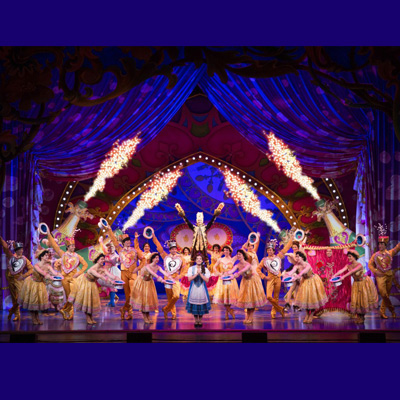
    NEW DELHI: For the first time, audiences will witness on stage the presentation of Walt Disney’s ‘The Beauty and the Beast’ with eighteen Indian actors and around one hundred other dancers.


    The performance is set to take place at the indoor Thyagaraja Stadium which had been built in south Delhi for the Commonwealth Games 2010. There will be twelve shows from 19 December.


    The shows are being presented by the Disney Theatrical Group, which marked its entry with this performance in Mumbai with 27,000 people seeing it in ten shows.


    The 18 artistes were selected from more than 8,000 entrants from all over the country in 1000 physical auditions.


    Disney India Managing Director Siddharth Roy Kapur told indiantelevision.comthat it had taken six months of hardcore rehearsals and three months of auditions before the first show in Mumbai.


    Asked why Disney Theatrical Group had come to India twenty years after its debut on Broadway, he said that finding the right kind of venues and the requisite trained talent pool had been a major constraint.


    When it was pointed out that reality shows had shown there was ample talent in the country, he said they were not suitably trained and were raw. There was no professional theatre group in India for English productions.  


    He said that Disney will go 360 degrees to promote and publicise the Delhi event, with the use of social media, newspapers, television, and websites. In addition, there may be small events to publicise the event.


    Declining to give any figures, he said the amount to be spent on publicity and marketing would be very small in comparison to the cost of putting up the show.


    He said that the decision of taking this show to other cities, or doing other plays, would be decided after a full assessment sometime next year.


    Speaking at the press meet, he said this was a new genre for Disney in India and was a very large production in an effort to take Disney ‘live to the people’.


    Disney Theatrical Group had first come on Broadway in 1994 and over 128 million had seen its performances there.


    He said it was a coincidence that the first production on Broadway had also been ‘Beauty and the Beast’ and it had run for thirteen years with 35 million people in 28 countries having seen it.


    Meher Mistry who plays Belle, Edwin Joseph (who belongs to Delhi and is from St Stephens College) and plays the Beast, and Pooja Pant who is also from Delhi presented songs on stage. Others present included the eminent music director Leslie Lewis. The choreography has been done by Terence Lewis while Varsha Jain has done the exquisite set design.

  • Disney throws birthday party for Mickey Mouse; Snapdeal, Future Group join in

    Disney throws birthday party for Mickey Mouse; Snapdeal, Future Group join in

    MUMBAI: The countdown to Mickey Mouse’s birthday on November 18 was laden with daily celebrations across Disney’s network. The 18-days long extravaganza that started on 1 November culminate on Mickey’s Birthday saw a series of new creative initiatives from the network’s end.

    “This month is special to all our consumers, be it young or old, as everyone has experienced Mickey Mouse’s magic at some point in their lives,” says Walt Disney  India, Content and Communication, VP,  Vijay Subramaniam. “Mickey Mouse is Disney’s biggest revenue making intellectual property,” he adds.

    To further strengthen the Mickey Mouse franchise in the country, the network has rolled out series of varied and engaging content throughout the 18 days, while at the same time making optimum use of its network, both digitally and electronically, to promote and propagate the event.

    Not only did the network run content extensively throughout its Disney branded channels, it also allowed several other broadcasters to use the content for their own Disney special programs, albeit giving content credit to Disney’s in house team.

    “We made some of this Mickey Mouse birthday specials available to other news channels and other content partners on a limited marketing and sharing basis ,” Subramaniam explains, adding that few of the channels have already aired this specials.

    Part of the celebrations were the 90 sec long videos that saw several well-known Bollywood celebrities wishing Mickey Mouse ‘Happy Birthday’ in their own creative way. The who’s who of Bollywood from Shahid Kapoor, Alia Bhatt, Abhishek Bachchan, Akshay Kumar, Farah Khan are few of the celebs who feature in the video titled ‘Stars wish the Superstar a Happy Birthday.

    “We compiled the videos throughout the year from the various shows Mickey had with the celebrities. It was great to see them come together for Mickey. With them on board we were able to reach a wider section of viewers,” Subramaniam points out.

    Further elaborating on the fresh content that the channel had devised for the occasion, Subramaniam said, “In the last couple of years we have witnessed a huge craze for the Mickey shorts we rolled out globally. So for Mickey’s birthday celebration we decided we’d premiere one new short each day,” shares Subramaniam.

    Continuing with its concept of ‘short and sweet,’ the network also released a number of video listicles that aired throughout the network at regular intervals during these last 18 days. “We created fun content around everything that Mickey stands for in a listicle format,” Subramaniam states, citing ‘18 really funny Mickey moments’ as an example.

    Mickey’s birthday celebration wasn’t limited to content alone. Brands didn’t miss the chance in making optimum use of their Mickey Mouse merchandise on the occasion.

    On 18 November, Future Group’s private label  Tasty Treat kick started its  Mickey Mouse birthday celebration across 500 Future Group stores including at Big Bazaar, Food Bazaar, Nilgiris etc. by maintaining a birthday party ambiance with danglers and confetti, photo ops with Mickey cut outs, and even releasing a special Mickey Mouse birthday TVC. The campaign is to continue till 30 November.

    Snapdeal too has added its share to the merchandise promotion by giving discounts on Mickey Mouse products. The online major was also running a Mickey birthday contest on their website and gratifying 20 winners with Disney hampers.

    While Mickey Mouse’s presence in the country is strong, one may argue that the anticipation for his birthday doesn’t compare to the fervour the character enjoys internationally. Subramaniam however finds it unfair to compare the two markets.

    “The fact is that US is the birthplace of Mickey Mouse, with over 80 years of legacy on its side, whereas in India, Disney as a company is only 11 years old. If you think of the numbers, it is amazing how well the company has grown here. The kind of traction that we have enjoyed for last couple of years is beyond impressive. What’s evident is that Mickey as a character is universally loved, and more so when you add a local touch to him, and that’s exactly what we have done this year,” Subramaniam.

    The local flavour that Subramaniam speaks of is a ‘birthday anthem’ compiled by the network that which went on air on 18 November. What makes it even more special is that it has inputs by viewers in from across the country in 18 different regional languages.

    Amongst all their endeavours to connect the local audience with Mickey, the most effective is perhaps the Magic Mix that sees the network do a special rendering of popular Bollywood numbers with animation from their popular series.

    ‘Happy Birthday Mickey Magic Mix’ has taken the popular song Happy Birthday from the Disney produced dance extravaganza ABCD 2 and turned into and entertaining mash up for everyone to enjoy.

    All the content for Mickey Mouse birthday specials, has been heavily promoted and aired extensively across the networks channels. Apart from that, the content is also available on all their digital platforms including their official website, YouTube channel (over 1.3 million subscribers), twitter and Facebook (over 3 lakh likes) pages.

    Adding the cherry to its social media cake is the new application on Facebook that takes digital interaction to the next level.

    “We have done something special on Facebook. Mickey lovers can add Mickey ears on their Facebook page with just a click of a button, by going to the ‘Happy Birthday Mickey’ app that you can access through our Facebook’ page,” Subramaniam adds in parting.

  • Disney’s theatrical production Beauty and the Beast makes an impressive debut

    Disney’s theatrical production Beauty and the Beast makes an impressive debut

    MUMBAI: When the history of Indian theatre is written sometime in the future, historians will make references to the pre- and the post Beauty and the Beast era. The date: 21 October 2015 will be enshrined as the day that changed the Indian musical theatre world.  That was the day that Disney India had an exclusive premier of its one-year in production international theatrical musical.


    It played to a packed house consisting of Bollywood stars, directors, producers, broadcasters, distributors and a select high net worth client list of Citibank credit cards (apparently it willingly shelled out Rs 5 crore plus to be associated with the musical) at the National Sports Club of India Dome  in Mumbai.


    Disney India MD Siddharth Roy Kapur  was cock-a-hoop with delight about the response to the first performance. “We have made an impression on an audience consisting of entertainers, I think the rest of the journey is going to go well,” he said. “Disney International chairman Andy Bird responded to my wanting to bring Disney’s Theatrical Production to India with Beauty and the Beast. I thank him for that.”


    Watching spell bound were film makers and artistes and industry barons like Subhash Ghai, Vishal Bhardwaj, Emraan Hashmi, Mini Mathur, Ashutosh Goawarikar, Kabir Khan, Vishal Bharadwaj, Rakeysh Omprakash Mehra, Vidya Balan, Soha Ali Khan, Imtiaz Ali, Anurag Basu, Nikhil Advani,Ayan Mukherji, Rajkumar Hirani, Shabhani Azmi, Aditya Roy Kapur, Madhur Bandarkar,  Anil Thadani and Raveena Tandon, Manyata Dutt, Ronnie and Zarina Screwvala, Amol Gupte, Ramesh Taurani, Nikhil Meswani, Sudanshu Vats, Tarun Katiyal, among scores of others.


    It’s not as if attempts at upping the ante for musical theatre have not been made in India before. We had the showman Alyque Padamsee period in the eighties during which shows like Evita (probably the longest running musical in India), Jesus Christ Superstar, Joseph and his Amazing Technicolor Dreamcoat, Greased Lightning,  The Wiz, sold out  in venues like the NCPA, Sophia, Homi Bhabha Auditorium in Mumbai. Then in recent times his daughter Rael Padamsee has been behind the production of  The Sound of Music and Grease. But while their efforts are praiseworthy, they pale in comparison to the scale that Beauty and the Beast was mounted upon.


    Estimates are that Disney India may have signed a cheque of Rs 22 crore for the production which will continue in Mumbai for 10 more shows till end this month. Delhi is slated to follow later. Most of the other Indian efforts at adaptations have budgets which are a fraction of that.


    The “different international” experience commenced at the venue itself with clear signage directing the traffic to the red carpet. And there was Siddharth Roy Kapur to greet his guests along with international Disney executives. Once you got past the gates with your bar coded ticket giving you entry you walked into a spacious dome theatre constructed for the Beauty and the Beast.  Rows upon rows of seats gave it a seating capacity of about 2,000-2,500.


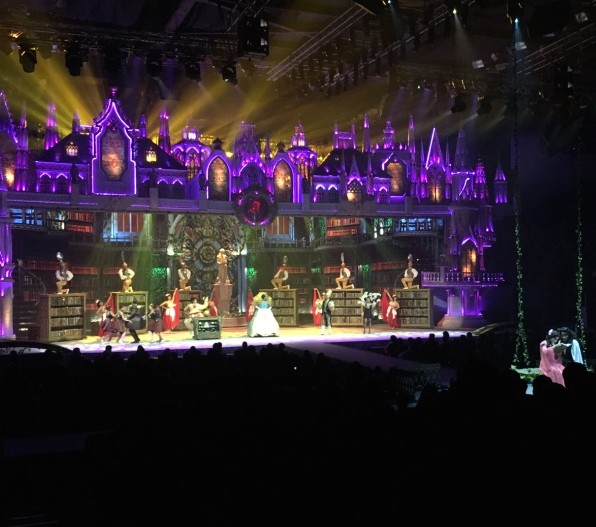
    A half moon shaped lavish and large set (160 ft x 70 ft – normally used only for big budgeted televised awards shows) with ramps bisecting the front audience vertically and horizontally (giving it an H-shape) from those in the middle greeted the fans. Constructed by art director Varsha Jain at a cost of around Rs 1.80 crore, it is the centre-piece of Beauty and the Beast’s Indian production. It probably is the biggest stage ever constructed by Disney for the show anywhere in the world.  Then there is the attention to detail and quality that Varsha has put into the set. You are almost lulled into believing that you are in the village with its marketplace, its main street, the roadside café, the bakery, the vendors, where Belle lives in her small home with her father.


    A few minutes later the stage transforms itself into the dark castle wherein resides the young prince who was cursed to be a beast on account of his arrogance with a beggar. From the dark exterior to a well lit dining room to the dungeon to the balcony to the porch the shifts happen quickly.


    3D Projection mapping, LEDs and large curtains, focused lighting – every trick in the book has been used to make the transitions easy and seamless. Additionally the props too have a sense of realism about them as compared to the shoddy fare that we often see in use in Indian theatrical productions.


    It obviously is director Vikranth Pawar ‘s (he of Jhumroo and Zangaroo fame) vision. And choreographer Terence Lewis has ridden with him and made use of every inch of the stage and beyond for the sequences during the play. And he has adapted the choreography including styles such as ballet, jazz, breakdance and even classical ballroom dance depending on the scene’s requirement.  One of the most memorable ones is the opening act  with the song “Belle” wherein there are more than 60 actors and dancers on stage and you can’t seem to get enough of any of them.  Overall the production has more than 250 dancers back stage through its 130 minute duration.


    The musical  score  – like the original by Alan Menken  – by Leslie Lewis for the Indian edition is flawless. Recorded in Prague with a Philharmonic Orchestra and mastered in Los Angeles, it is  Lewis at his best, something that even Menken has acknowledged.


    The costumes by Gavin Miguel – around 400 of them – for both the lead and support cast  again are a class apart and make the show probably the biggest costumed theatrical show in India so far. The impeccable make up and hair design by Pallavi Devika take us back to the time and the place of the fairy tale. Vocal trainer Suzanne D’Mello  is reported to have put her heart and soul into lifting the singing performances of the cast, and it shows for almost the entire duration of the show.


    The technical production and direction are another highlight of the show and credit for that should go to Vikas and Vevek Menon (from Production Crew). Apparently, the lighting is being technically directed and programmed by foreign crew while it is being manned by Beckett.


    Onto the cast. The deep, grain rich voice of Amitabh Bachchan as he introduces the long-loved fairy taile sets the tone for its quality. Meher Mistry as Belle fits  and plays her part to the T, effortlessly becoming self-assured, vulnerable, loving, distraught and then joyous as she progresses from her ennui with the boor Gaston to meeting up with the Beast and her disgust with him transforming into love. And her singing is near perfect throughout as she easily croons the demanding tracks with lyrics from famed writers such as Howard Ashman and Tim Rice.


    Edwin Joseph essays the role of the Beast with finesse and a gentle touch. His agony at being trapped in an ugly body, his realization of his love for Belle, his heroic battle while saving Belle from the wolves, and then his joy at his transformation into a handsome young prince are emotion-filled scenes. The young 21 year older is someone we will hear a lot more of both for his acting and singing prowess. Veteran actor Bugs Bhargava as Cogsworth and Nichols Brown as Lumiere, Sanjiv Desai as Maurice, and the actors who play Lefou, Gaston, Mrs Potts, Ayudh Jatin Parikh (as Chip) deserve a mention for fabulous performances.


    In summation,  Disney India’s Beauty and the Beast was made in India but better than world class. And that was echoed by almost all those who watched it to the end. Something that should warm the cockles of Narendra Modi’s heart.


  • LMO – consumer collaboration is key to successful digitisation: IDOS

    LMO – consumer collaboration is key to successful digitisation: IDOS

    GOA: Collaboration is the only way for the Indian digital industry to go forward – particularly if it involves the last mile operator (LMO) as well as the subscriber. This was the core of the opening of the Indian Digital Operators Summit (IDOS) 2015 organised by Indiantelevision.com along with Media Partners Asia on the theme of ‘Defining the Digital Future.’


    Speakers at the summit, which is being held at The Lalit, Goa from 24 – 25 September, stressed that it was time to stop fighting with each other in courts or other forums and to move forward together since digitisation was inevitable.


    Speakers in the opening session of IDOS 2015 were clear that though the government was the largest gainer by way of taxes etc, it could not be depended upon and it was for the stakeholders to move forward on their own if the Phase III and IV digitisation deadlines set by the government had to be achieved. 


    Describing the scenario as a marathon race, Viacom Group CEO Sudhanshu Vats said it was critical for all stakeholders to collaborate and yet compete at the same time.


    The industry also needed to keep in mind the fact that the consumer is running ahead and everything depends and changes according to what he wants.


    In order for the market place to evolve, it was imperative that all stakeholders moved forward in a collaborative spirit. The policy makers, unfortunately, are the last in this race as they are slowest. So frustration will set in if everyone looks to the government as the winner.


    “Digitisation is being looked at myopically but it is necessary to look at it along with the consumer. Over the Top services will shortly take over in a big way. It is therefore important to realize that while each platform has a different technology, it’s important to keep pace. Players have to be pro-active and customise for all the 1.2 billion viewers,” Vats said. 


    Walt Disney India MD Siddharth Roy Kapur said it was important to see how consumers were rapidly moving from just a single screen scenario to usage of multiple platforms. “That is the reason why I prefer to use the expression ‘video content delivery business’ instead of television business. There is a strong need to put consumers at the centre of the whole media business,” he added.


    However as a result of multiple screens coming in, the level of attention span per screen has been declining. “Stakeholders have to keep this in view while planning their strategies. Content creation therefore has to change accordingly and companies need to find ways to get the consumer to value the content,” he added.


    He also stressed on the need for companies to look at each other as partners and move ahead to derive more value and average revenue per user (ARPU).


    Hinduja Group’s Grant Investrade MD Tony D’Silva said his company had carried out various studies before launching their Headend In The Sky (HITS) platform – NXT Digital. “All these studies showed that the last mile operator, who had built this industry with his sweat and blood, had to be taken along, and the consumer was a key stakeholder,” he said.


    It was clear that the first beneficiary through taxation, service tax, entertainment duty or licence fee was the government. However, the government has done little to support the industry. On the other hand, the second beneficiary was the broadcaster, which received 75 to 80 per cent of the revenues. “He therefore must play a key role in this journey,” D’Silva said. 


    Considering what these stakeholders – government and broadcasters – get, it was necessary that the two help other stakeholders if digitisation had to be achieved. 


    Digitisation will also help bring about transparency in a scenario where the LMOs had been declaring just around 15 – 20 per cent of their subscriber numbers.


    NXT Digital has been designed in a manner in which the LCO/LMO does not lose proprietorship of their business and did their own broadcasting deals as well as pricing and packaging as per market rates. The HITS platform also enabled LCOs to obtain set top boxes at their own convenience with easy funding and set up local channels in order to compete with other digital platforms like direct-to-home. NXT Digital had worked out a fee of just Rs 50 per subscriber per month and is offering 500 channels.


    It also ensured encryption at three stages: in the NXT system, at the LCO level and at the STB-end. GPS had been provided to the STB to ensure any movement was detected. It is therefore clear that the LCO has to be helped if Digital Addressable Systems (DAS) has to succeed. Perhaps the biggest problem was to get the consumer to pay, and the LCO needs to be aided in this task.


    In a presentation of the present scenario, MPA executive director Vivek Couto said that it was important for stakeholders to get their act together as digital penetration was only at 50 per cent so far. “It is also necessary to remember that Phase III and Phase IV comprise a large chunk than the first two phases,” he added.


    According to Couto, around 70 per cent of the content contribution was coming from players like Viacom, Sony, or Fox. Adding that the low rate of internet connectivity around the country was a major issue, he said, “The Indian pay TV business will remain competitive and reach its peak in the next three years, but research and collaboration is very critical for this.”


    Indiantelevision.com founder CEO and editor-in-chief Anil Wanvari said in his opening remarks that in order to meet their targets, stakeholders had to have commitments and take tough decisions. “However, the large number of legal cases and problems of agreements between various stakeholders must make them realise that DAS will not succeed in this manner,” Wanvari emphasised.


    At the same time, Wanvari was also of the opinion that LCOs and LMOs had to change and forge partnerships in order to move forward. 


    The government on its part must do something about taxation along with opening up for greater foreign direct investment (FDI).