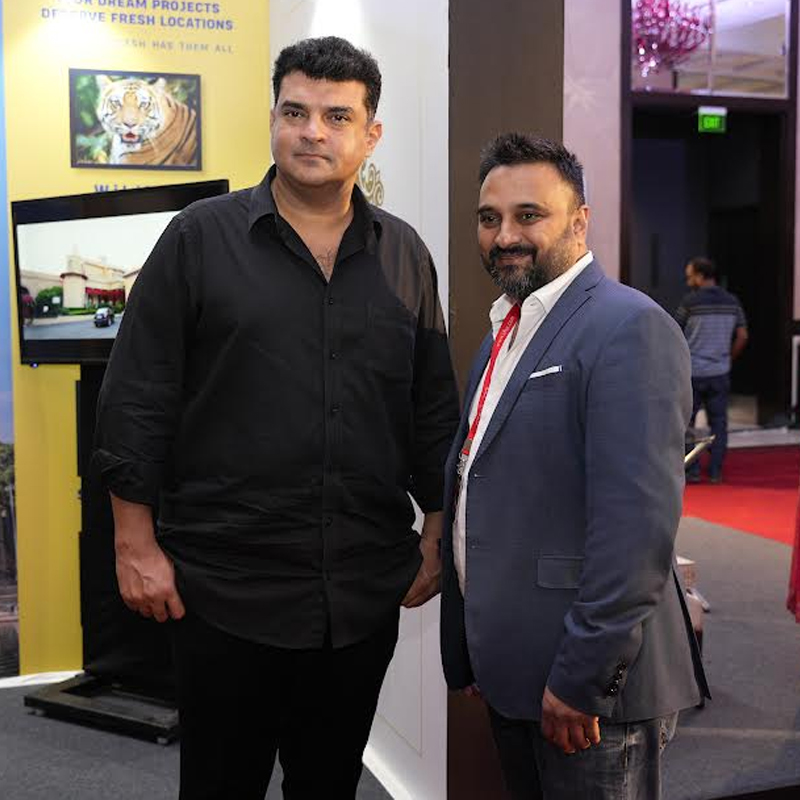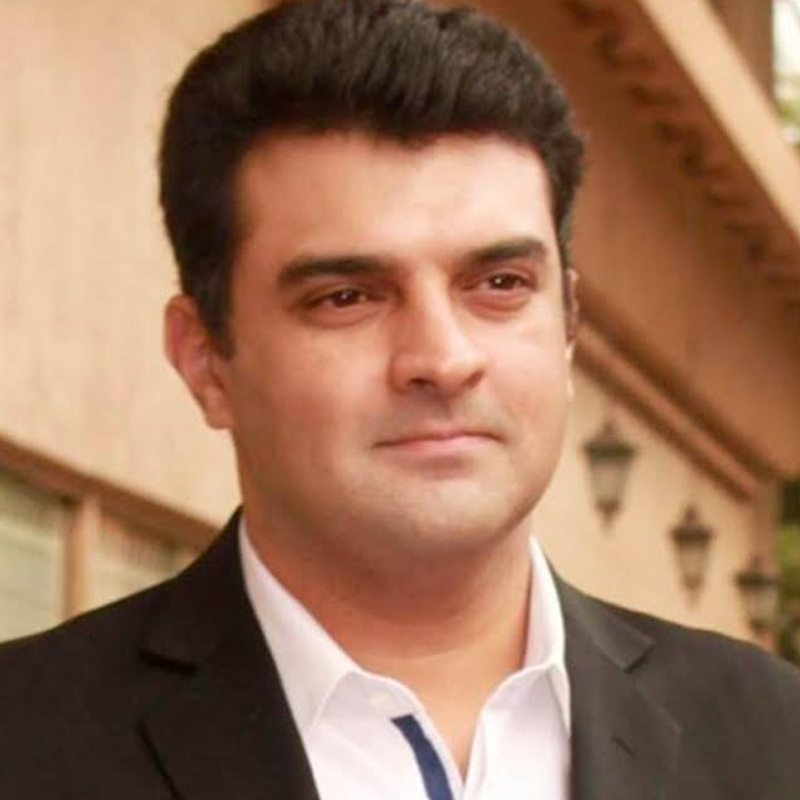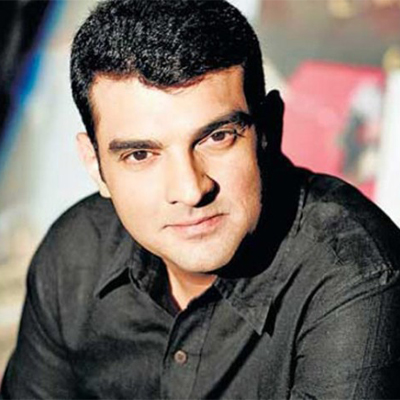
Tag: Siddharth Roy Kapur

  • From reel to real change as IMDb maps 25 years of indian cinema

    From reel to real change as IMDb maps 25 years of indian cinema

    MUMBAI: Lights, camera, reflection! As IMDb turned the spotlight on 25 Years of Indian Cinema (2000–2025), a new script of change unfolded, one where superstardom is shared, stories are decentralised, and the audience now holds the director’s chair.

    In a spirited roundtable hosted by Anupama Chopra for The Hollywood Reporter India, industry stalwarts Siddharth Roy Kapur, Kiran Rao, Sameer Nair and Raj Nidimoru dissected the shifting contours of India’s cinematic universe. The conversation, anchored in IMDb’s landmark report, delved deep into how streaming, social media, and audience evolution have rewritten Bollywood’s rulebook.

    “Stardom has been democratized,” said Siddharth Roy Kapur, noting how the halo once reserved for a handful of megastars has now spread across platforms and personalities. Rao agreed, adding that today’s fascination lies less with the cult of celebrity and more with the craft itself. “It’s stopped being all cult of personality. There are so many more artists now that people are interested to watch,” she said, highlighting how Youtubers, comics, and digital creators now rival traditional film stars in influence.

    Raj Nidimoru pointed out the industry’s long-standing blind spot, the lack of sustained investment in building women’s stardom. “The hero is treated like a franchise,” he said, “but the same pipeline doesn’t exist for actresses. You can’t expect overnight success for female-led films when you haven’t built that equity over time.” His words struck a chord, echoing an industry still learning to give its heroines equal narrative and commercial weight.

    The conversation turned south quite literally as Kapur acknowledged the audacious ambition of regional cinema. “There’s something to be said for the ambition of South films,” he remarked, attributing their boldness partly to the less corporatised funding ecosystem. “They go all in. That chaos fuels creativity.”

    Nidimoru added a telling anecdote from his Stree shoot in Chanderi: “The cook was watching a dubbed Telugu film that’s all they watched.” For him, the distinction between North and South cinema no longer holds. “It’s one Indian film industry now,” he said.

    Sameer Nair proposed a compelling concept CSR for creativity. “The industry needs its own form of CSR Creative Social Responsibility,” he said, urging filmmakers to balance profit with purpose. “For all the commercial stuff we aspire to, we must ensure creativity is preserved and shared almost like saving the knowledge of the race.”

    As the discussion drew to a close, it was clear that Indian cinema’s next 25 years won’t just be about bigger budgets or bolder scripts but about inclusion, integrity, and imagination.

    After all, the story of Indian cinema has never been just about stars on screen. It’s about who gets to shine next.

    Watch the full discussion here


  • “Follow your gut’, says Siddharth Roy Kapur as he shares his success mantra at IIFTC

    “Follow your gut’, says Siddharth Roy Kapur as he shares his success mantra at IIFTC

    Mumbai: In a fireside chat at the India International Film Tourism Conclave 2022, producer Siddharth Roy Kapur gave out his success mantra to a discerning audience consisting of 20 countries who had come to pitch their locations to Indian filmmakers—’Follow your gut.’

    In a discussion with the South Swedish Film Commission head & European Film Commission Network co-president Mikael Svensson, Roy Kapur Films founder, MD Siddharth Roy Kapur said that he had always been in love with the story before he decided to produce it. Commenting on the occasion, he said, “When we decided to produce Rang De Basanti in 2005, many people warned us that the film may not work well, as in the ending, the cast dies, but we followed our gut. The success of the film paved the way for many more such projects and newcomers in the industry. Ronnie Screwvala backed talent whose stories we loved, irrespective of what the market or trade pundits might think.”

    Answering a question by Mikael Svensson on his personal favourite film as a producer, Kapur answered, “The Last Film Show,” without batting an eyelid. Continuing the conversation, he said, “The Last Film Show is one of my favourite films as it makes the viewers fall in love with cinemas. An Indian Oscar is long overdue and all of us are keeping our fingers crossed. We Indians have a special grammar in our films, unlike others, namely the song and dance sequences. Many people might not like them, but I strongly feel that they should survive. Our country has space for both international cinema, regional cinema, and Hindi language cinema—due to the large audience size and the large Indian diaspora spread globally, whenever we start a film, it is primarily the Indian audience that we keep in mind.”

    Commenting on the South Indian Film Industry, Kapur said, “The South Indian cinema is having its renaissance moment. The audiences have started accepting and appreciating such films.” On what goes behind choosing a shooting location for the film, the 48-year-old filmmaker said, “We as filmmakers, want to be true to the script and hence prefer to shoot at the actual locations as in the script. However, budget sometimes plays a role, and if we get something that may not look like a force fit but still be in our budget, then we select that location.”

    Svensson also told the audience a lesser-known fact about the ex-president of the Producers Guild of India. He used to love acting in school and college and was the head of his college dramatics society. Kapur laughingly said, “Producers are acting all the time. I enjoyed acting in school and college, but being an actor professionally is different. I realised the differences early on and became a producer, as I believed it suited me more as a person.”

    The evening was the second day of the three-day film tourism event, featuring over 50 international companies from over 20 countries coming to Bollywood, Mumbai to woo Indian filmmakers. The event saw participation from countries including Azerbaijan, Abu Dhabi, Krakow, Kazakhstan, Montenegro, Norway, Oman, Panama, Poland, Sri Lanka, Sweden, and Yas Island, to name a few.

  • Producers Guild of India elects Shibasish Sarkar as president

    Producers Guild of India elects Shibasish Sarkar as president

    Mumbai: Shibasish Sarkar was unanimously elected as president of the Producers Guild of India at the first meeting of its newly constituted Guild Council of Management, which was held immediately after the 68th annual general meeting on 21 September.

    Shibasish is currently the chairman and CEO of International Media Acquisition. His most recent position was as group CEO of Reliance Entertainment, which is part of the Reliance ADA group.

    President-elect Shibasish Sarkar said, “In his six years as guild president, Siddharth has been a tireless, passionate, and committed champion for our industry at a time of unprecedented challenges. I look forward to building on what he has accomplished and working alongside my colleagues to help address the challenges and build on the opportunities we have before us as an industry.”

    Shibasish Sarkar is a media and entertainment industry professional with over 29 years of corporate experience in multiple verticals such as films, television, animation, gaming content, and digital & new media platform operations.

    Welcoming the president-elect, the incumbent president Siddharth Roy Kapur said, “It has been a pleasure and an honour to serve the production fraternity and I am delighted to pass the baton on to the able hands of Shibasish. I am sure he will do a stellar job and add further lustre to the Guild’s reputation for spearheading the industry’s interests.”

    Shibasish was a member of the senior leadership team and served as a director and member of the board of several group companies.

    He has held senior positions at Viacom 18, UTV Disney, and Godrej Sara Lee prior to joining Reliance, with a focus on establishing a new business, scaling up operations, and driving sustainable growth through key alliances, managing stakeholders, talent partners, and cross-functional teams.

    His academic credentials include being a certified chartered accountant, a cost accountant, a company secretary, and an MBA with a marketing specialisation.

  • Siddharth Roy Kapur re-elected as president of Producers Guild of India

    Siddharth Roy Kapur re-elected as president of Producers Guild of India

    Mumbai: Roy Kapur Films founder and MD Siddharth Roy Kapur has been re-elected as president of Producers Guild of India at the 67th annual general meeting (AGM) of the association held virtually on 29 September. Reliance Entertainment’s Shibasish Sarkar was named as vice president of the industry body.

    Another key development was the expansion in ranks of women producers in leadership roles. Emmay Entertainment and Motion Pictures LLP’s Madhu Bhojwani and Netflix India’s Ambika Khurana joined incumbents Apoorva Mehta, Manish Goswami and Sunjoy Waddhwa as vice presidents of the guild while Sol Productions’ Fazila Allana joined incumbent Ashim Samanta as treasurer.

    Kapur, who has been serving for six consecutive years as the president of the guild, announced that he would not be making himself available for re-election next year. With Kapur at the helm, the guild has spearheaded multiple industry initiatives to increase the market size and reach of Indian content and include advocacy of producers interests on matters like legislation, taxation and ease of doing business.

    The ongoing pandemic has thrown unprecedented challenges at the production industry. At the AGM, members were apprised of the key activities and developments during the year, including formulating rigorous SOPs for safe shooting, advocating for shooting resumption, organising vaccination camps for members and facilitating financial assistance to daily wage workers through donations by guild members.

  • Wiip partners with Roy Kapur Films to produce The Anarchy

    Wiip partners with Roy Kapur Films to produce The Anarchy

    MUMBAI: William Dalrymple’s best-selling historical book on colonialism The Anarchy: The Relentless Rise of the East India Company is getting an adaptation for the small screen.

    Independent production house Wiip has teamed up with India’s Roy Kapur Films to adapt the tome, which traces the rise of The East India Company and the fall of Mughal Empire. The Anarchy was recommended by former US president Barack Obama amongst his top reads in 2019. The book was recently listed as a finalist for the  Cundill History Prize 2020, one of the most prestigious awards in the world for non-fiction writing.

    Executive producers lined up for the venture are Wiip’s Paul Lee and Mark Roybal, Roy Kapur Films’ Siddharth Roy Kapur and XPat Productions’ Naz Haider and Siva Natarajan. Roy Kapur Films bought the rights to the book earlier in June this year.

    Wiip and RKF will bring onboard a diverse international team of writers to create a global series both in scale and quality.

    “Siddharth is not only India’s most formidable producer, but he is also a true gentleman. We are beyond thrilled to be partnering with him, along with our good friends at XPat, on The Anarchy. Paul, the Wiip team and I are humbled — and to be honest, slightly terrified — that Dalrymple has entrusted us with his epic masterpiece. There couldn’t be a more opportune moment for adapting The Anarchy into a television event,” said Wiip’s Mark Roybal, as quoted by Variety.

    The Walt Disney Company India former MD and current president of the Producers Guild of India Siddharth Roy Kapur produced 2016’s most successful movie Dangal. It was India’s biggest worldwide grosser of all time.

    “I believe that stories that are compelling, relevant and authentic have the potential to resonate with audiences across all nationalities and cultures, whichever part of the world those stories may come from. We are delighted to be working with Paul, Mark and their team at Wiip to bring to life this fascinating book and to create what we envision to be the definitive story of the colonization of the Indian sub-continent,” added Roy Kapur.

    Dalrymple will act as creative consultant for the show. The Historian-author has penned bestsellers like City of Djinns, White Mughals and In Xanadu.

  • M&E industry appreciate film, Digital India-focussed interim budget 2019

    M&E industry appreciate film, Digital India-focussed interim budget 2019

    MUMBAI: The government today announced the interim budget for 2019 in the parliament and has been gaining a lot of praise from the people for its pro-poor and pro-middle class approach. However, the media and entertainment section received little attention this time. Apart from a slight reference to anti-piracy laws and single-window clearance for ease of shooting films, the budget speech refrained from mentioning the industry.

    However, there is still positivity in the media sector regarding the budget, especially from the entertainment fraternity. Producers Guild of India president Siddharth Roy Kapur said, “We are delighted that the immense contribution of Indian cinema towards employment generation in the country has been acknowledged and applauded in Parliament during the presentation of the Union Budget. The announcement of a single-window clearance mechanism for Indian filmmakers filming within India is a significant step and has the potential to play a huge role in boosting tourism in the country. The amendments in the anti-camcording provisions will support the industry’s growth by curtailing illegal recordings of films in cinema halls and will go a long way towards reducing piracy.”

    Film producer Anand Pandit lauded the interim budget saying, “As a member of the film industry and a producer, I believe that the single window clearance that is being given by the government in this budget to filmmakers is an extremely welcome move. It will make the ease of getting shooting permissions very accessible and a lot less time will be spent in getting the same. I believe this budget looks at filmmakers and the industry as a major force in the country and I congratulate Shri Modiji for his vision in understanding our problems and finding a solution for us. By streamlining the process, producers like me will be able to make films far easier and in shorter amount of time."

    Harkness Screens senior vice president sales and marketing – Asia Preetham Daniel reflected the same sentiments saying, “In relation to entertainment industry, single window clearance for filmmakers is a good move as it will remove the hurdles in content generation.  Anti-piracy initiatives by the government is a big step forward. Moving from smart cities, digital villages will pave way for better penetration of content in all formats. India has an average screen density of 1 screen per population of 155000. Such positive measures in fiscal budget for entertainment industry coming along with GST rates rationalisation for film exhibition sector will certainly add steam and bring impetus to the growth pace of Indian Entertainment Industry. We are now well positioned to see the industry flourishing.”

    BookMyShow appreciated the budget’s recognition of India’s startup ecosystem’s contribution to the economy and the creation of a Digital India in Vision 2030. It also said, “It is probably for the first time in several years that the entertainment industry has been hailed as a force of employment generation. We whole-heartedly support the government’s move to curb piracy through the introduction of the anti-camcording provision in the Cinematography Act. With these measures, we expect the regulatory framework of the entertainment industry to significantly change for the better.”

    The statement further added, “While the Finance Minister has offered incentives to the film industry, it is also worth recognising the huge scope that live entertainment offers, for employment and growth of the Indian economy. We hope that the GST Council along with the government can find solutions to streamline the existing tax structures for this sector as well and bring it below the current rate of 28 per cent, to enable a well-rounded ecosystem.”

    MX Player CEO Karan Bedi said, “The Union Budget’s provision for a single clearance window for Indian filmmakers would come as a welcome and positive step to film producers and movie studios across the country. The amendments in the Anti-Camcording provisions would also complement the industry’s efforts to snub illegal movie recordings in theatres and encourage the consumption of original content.” 

    Viacom18 group CEO and MD Sudhanshu Vats said, “The Hon’ble FM Shri Piyush Goyal has provided a tremendous fillip to the Indian entertainment industry with the provision of single window clearance for films, in the Union Budget 2019. Such policy provisions that seek to enhance ease of doing business will help the ~Rs 156 billion industry grow at a faster clip. I also welcome the move to include anti-camcording provisions as part of the Cinematography Act. This will ensure that in-theatre pirated recordings now become a penal offence and will act as a strong deterrent to piracy.”

    Apart from that, digital agencies are also very positive about the interim budget 2019. The emphasis on Digital India, including conversion of one lakh villages into digital over next five years, by the government in its budget speech has got the hopes high for them.

    Ethinos Digital Marketing MD Siddharth Hegde said, “This is a positive budget from digital perspective and clearly the government is determined not only on delivering on its current promises but also delivering on its promise of a complete digital revolution in India. The 10 point agenda for 2030 and the set up of digital villages are going to drive digital inclusion. The low data costs are going to drive more for the rural population online and we are likely to see an explosion in vernacular content. This is also likely to give marketers an option to have a more measurable pipe to the rural masses. This budget is a great start and we welcome the move by the government."

    Vertoz founder and chairman Hiren Shah mentioned, “The interim budget has laid out a clear vision for the country’s development in the coming decade, and Digital India plays an important role with the government stressing on the development of digital infrastructure and digital economy. Coupled with the government’s vision of converting one lakh villages into digital villages, we will see a deeper penetration of the internet not only in tier II and III markets but also in rural areas. Currently, we have only scratched the surface and the support from the government can help the industry reach its full potential with respect to market penetration.”

    He added, “This will broaden the horizon for digital advertising, and consequently for programmatic advertising, in these markets, thus providing an opportunity to brands and marketers to cater to the customer needs with bespoke products and services.”

    Speaking on the artificial intelligence program that the government has introduced with the budget, Hiren shared, “We are also happy to see artificial intelligence (AI) as a focal part of the budget for Digital India. This support will ensure that AI, supported by big data, will enable the industry to successfully analyse consumer patterns with minimized human intervention. This also brings in the benefits of automation such as more efficiency and faster processing of data for advertising, thus allowing brands to get sales faster and within an effective timeline.”

    White Rivers Media co-founder and CEO Shrenik Gandhi contended, “The interim budget, as expected was short yet powerful. A lakh digital villages will not only strengthen the bottom of the pyramid but also empower them with the digital universe. Rebate in tax slabs is a great move for not only the middle class but also young self-made professionals. Not many budgets empower this section of voters and the same is an applaud-worthy move.”

    TRA CEO N Chandramouli shared an interesting insight into how easing of loans for MSME sector, in turn, will benefit the advertising market. He said, “The 2 per cent interest subvention for MSME is definitely a great thought along with the easing of loans through PSB loans under 59 minutes scheme. Together they will give a boost to the industry which contributes to 69 per cent employment in the country.  This will also boost the adjunct services industry that caters to MSME sectors like advertising, market research, training and public relations which in turn will also have a positive cascade on the services sector.”

  • Producers Guild of India amends by-laws Makes it mandatory for members to implement ‘The Sexual Harassment of Women at Workplace’ (Prevention, Prohibition and Redressal) Act 2013 (PoSH)

    Producers Guild of India amends by-laws Makes it mandatory for members to implement ‘The Sexual Harassment of Women at Workplace’ (Prevention, Prohibition and Redressal) Act 2013 (PoSH)

    Mumbai: Producers Guild of India at its Extraordinary General Meeting (EGM) on 14th November, 2018 in Mumbai unanimously passed a resolution to amend its by-laws thereby making  it  mandatory  for  all those  members  who  fall  under  the  purview  of  the  The  Sexual Harassment of Women at Workplace (Prevention, Prohibition and Redressal) Act 2013 (PoSH), to implement the requisite laws including constitution of Internal Complaints Committee (ICC) and accordingly submit a declaration to the Producers Guild of India confirming enforceability of necessary PoSH guidelines within their organisation.

    Prior to the EGM, Producers Guild of India also conducted a workshop through a specialized external agency  which  made  a  comprehensive  presentation  highlighting  various  facets  and  provisions required to be statutorily executed under the PoSH Act 2013. The objective of the EGM along with the workshop was not only to educate members on the legal provisions of the PoSH Act 2013 but also  sensitize  them  about  the  growing  need  and  urgency  to  institute  and  implement  robust processes at their workplaces.

    President of  the  Producers  Guild  of  India, Siddharth  Roy  Kapur  stated  that “It  is  incredibly heartening to see the unanimous support that our members have extended towards the initiatives taken  by  the Guild  to  help  make  workplaces  in  our  industry  safe  spaces  for  women.  We  are committed  to  working  closely  with  our  members  to  ensure  complete  compliance  with  PoSH guidelines across the industry.”
     

  • Siddharth Roy Kapur unanimously re-elected as the President of the Producers Guild of India, at its 64th Annual General Meeting held on 28th September in Mumbai.

    Siddharth Roy Kapur unanimously re-elected as the President of the Producers Guild of India, at its 64th Annual General Meeting held on 28th September in Mumbai.

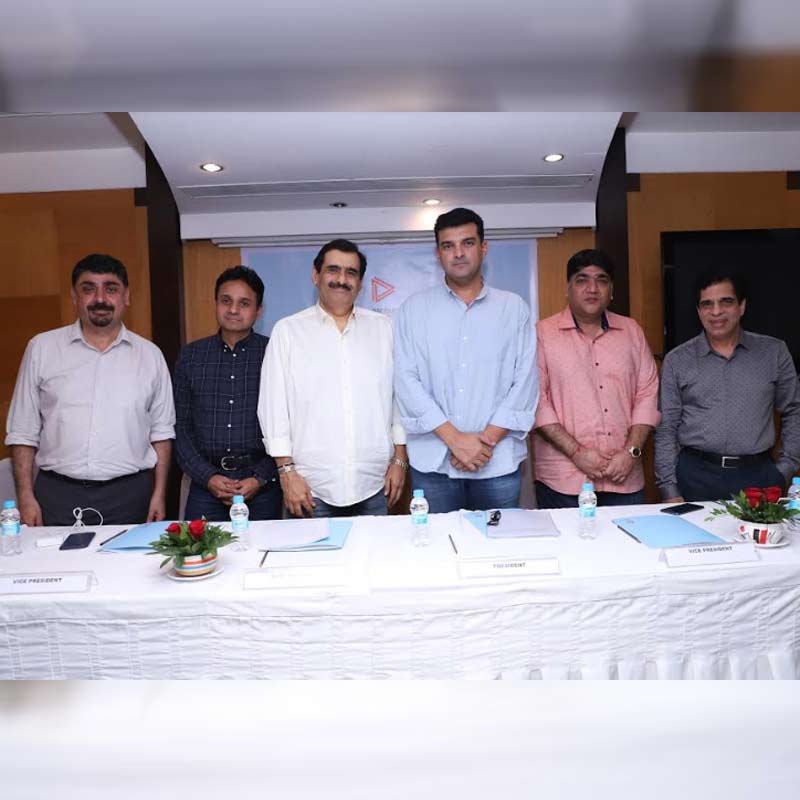
    Mumbai, 28th September 2018: Siddharth Roy Kapur has been re-elected as the President of the Producers Guild of India. He has previously served as the President since January 2017. It was a unanimous decision taken at the first meeting of newly appointed Guild Council on 28th September 2018.
    In addition, Sunjoy Waddhwa the eminent television producer has also been elected as the Vice President of the Producers Guild of India. At the same time Priti Shahani and Fazila Allana have been nominated to the Guild Council of Management along with Milan Luthria and Akshaye Widhani who have been included in the Guild Council as Special Invitees.

    Vijay Singh, Manish Goswami and Apoorva Mehta continues to be part of the Guild Management team as Vice Presidents in addition to Ashim Samanta who will also continue as the Treasurer.
    As the President, Siddharth Roy Kapur has been the leading voice of the industry over the past two years. The Guild has recently signed key strategic alliances such as the one with United Kingdom’s Producers Alliance for Cinema and Television and has engaged with key industry and Government stakeholders successfully.
    Kulmeet Makkar, the Chief Executive Officer of the Producers Guild of India stated that “Guild has emerged as the most recognised and respected forum for industry progress under the leadership of Siddharth Roy Kapur and we are moving towards becoming an all-encompassing producers’ body considering the growing importance of television and strong emergence of new media such as Netflix India who have recently joined Guild as its member”.

    Siddharth Roy Kapur is an eminent Producer of several critically acclaimed and commercially successful films. He founded his own film and digital media production house Roy Kapur Films after a long and successful stint at Disney and UTV. He was recently named as one of Variety Magazine’s Top 500 influential people in entertainment globally, amongst only 12 Indians to feature on this list.

  • New initiatives at FICCI Frames 2018

    New initiatives at FICCI Frames 2018

    MUMBAI: The 19th edition of FICCI Frames to be inaugurated by the I&B and Textiles minister Smriti Irani on March 4 is all set to be a grand event.

    There are a lot of interesting sessions lined up with few new initiatives this year.

    The annual media and entertainment global convention will kick-start on the 4th evening with the launch event, which will be followed by the CEOs round-table addressed by Maharashtra Chief Minister Devendra Fadnavis.

    The 4-day event that will commence from the 4th and conclude on the 7th will see the who’s who from the media and entertainment industry attend, including the likes of Karan Johar, Shabana Azmi, Siddharth Roy Kapur, Nandita Das among many others.

    One of the major attractions will be the launch of a content market, which is expected to bring over 70 buyers and sellers of content from across the world to this platform.

    FICCI FRAMES CONTENT MARKET – A CONTENT BUYER AND SELLER PARADISE

    The 1st edition of the Content Market is aimed at facilitating the business of Content. Over 70 buyers from across the globe have been invited for the bazaar, including the likes of 102 Distribution, Edko Films, Shoreline Entertainment, Spuul, Top Entertainment, Aurora Global Media Capital, Front Row entertainment, Alpha Violet Sarl and Indian companies like Zee enterprises, Star, Eros Now, Reliance entertainment among others.

    In the first edition of the market, a special screening facility has also been set up to introduce festival programmers and key buyers to a highly curated slate of new Indian films. Festival programmers from International film festivals such as London, Venice, Edinburgh among others will also be in attendance.

    With over 100 sellers and over 70 buyers of content expected to be part of the 1st content market organized by FICCI, this sets the ball rolling for greater content exchange.

    Speaking about the 1st content market Leena Jaisani, FICCI said “This is being organized with the support and advise from the media and entertainment industry professionals. There was a dearth for such a market and with this first step, we hope to move ahead towards filling this void and facilitating more business for content.”

    International Women’s Day Celebrations with Women Leaders at FICCI FRAMES

    On 5th March, few women leader will get together to discuss women empowerment in the digital era, the rise of women movements, and how the community can support the development of more women leaders in the future.

    Led by Maya Hari, Managing Director of Asia Pacific at Twitter, who will be moderating the session, the panel will feature Director of Lipstick under my burkha Alankrita Shrivastava Actor Gul Panag, Author of Face at the window Kiran Manral; Deputy Editor of Rolling Stones India, Nirmika Singh and film producer and founder of IconicBot, Vishakha Singh

    Other Important sessions
    Few of the other important sessions would include discussions on Film Tourism, The future of TV in India, Box Office Collections of films, Biopics made in India, Women Power in Films, Screen density in India, Digital Revolution, Investments in Sports, Fake News, Low budget content heavy films, Regional Films going beyond regions, Films making money internationally, GST in Entertainment sector and Cyber security.

    There will also be a masterclass with Director Anand L Rai, a case study on web series Breathe along with a workshop on Facebook.

    Annual Media and Entertainment reports to be launched

    The annual media and entertainment report on figures related to entertainment industry and an Economic Contribution Report (ECR) for 2018 will also be launched.

  • Maharashtra CM supports film industry’s demand for 18% GST

    NEW DELHI: Maharashtra chief minister Devendra Fadnavis has assured the film industry that he will support the demand to lower the GST rate to 18% in the forthcoming GST Council meeting. At the same time, the state government also agreed to rationalise any additional entertainment tax likely to be imposed by the local bodies in the GST regime.

    Fadnavis was speaking during the consultation meeting held by the information and broadcasting ministry chaired by minister M Venkaiah Naidu with the film industry earlier this week in Mumbai.

    Fadnavis announced that the present licensing regime in the state will be removed and the model law for cinema licensing will be introduced within 60 days. He was referring to points made on Cinema licensing for new screens as well as modification of existing screens. He announced that the Single Window facilitation cell has been formed in the state for shooting of films, Television programmes and other audio-visual mediums.

    The meeting was held at the instance of the Film and Television Producers Guild of India to raise industry’s concerns on the adverse impact of the proposed GST rate of 28%. The industry representatives deliberated on various challenges and opportunities for the film industry including recommendations of the Shyam Benegal Committee for changes in the film certification process, taxation, scarcity of Cinema Screens and Piracy.

    On the issue of piracy, both the central and state governments completely endorsed the industry’s views on an immediate need to amend existing laws such as Information Technology, Cinematograph, and Copyright Acts to protect the legitimate rights of copyright owners.

    The film industry complimented the chief minister on the formation of Maharashtra Intellectual Property Crime Unit (‘MIPCU’) as an initiative to enforce strong anti-piracy measures.

    Guild President Siddharth Roy Kapur said: “A rate of 18% GST or lower on cinema tickets would be in line with global taxation norms for the film sector and would go a long way in ensuring the long-term health of the industry. The film industry is identified as a priority sector in many countries around the world and therefore not only are the tax rates on films usually lower than the national average, but in many countries the industry is also provided numerous incentives to drive growth and employment in the sector. I do hope our Central and State governments will look at the Indian film industry through a similar lens in the future.”

    He added: “I am delighted by the response from both the Maharashtra State and the Central Government in the meeting, with both the Union Minister for Information & Broadcasting and the Chief Minister of Maharashtra strongly supporting and endorsing our suggestions on various matters of concern, from GST to piracy to screen density. We are hopeful that their actions in the future will provide the much-needed impetus the Indian film industry needs, to realize its vast untapped potential.”