Tag: Sibabrata Das

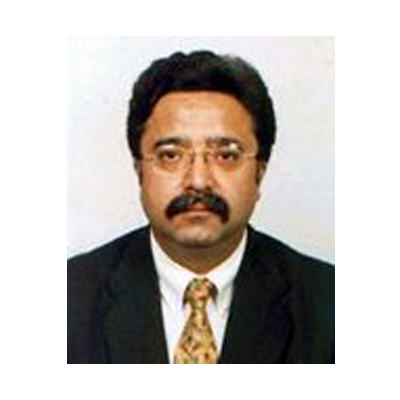
  • ‘The real value of cricket is now going to show up’ : Rohit Gupta – SET India executive vice president ad sales and revenue management

    ‘The real value of cricket is now going to show up’ : Rohit Gupta – SET India executive vice president ad sales and revenue management

    Cricket, cricket and cricket. That is the exciting scorecard SET India will have for display in the fiscal 2006-07.

    A lineup of eight sponsors that is set to gobble up 50 per cent of the inventory. A bulk deal with Dentsu that eases the pain of selling individually to clients. Sony’s ad target: Rs 5 billion upwards. A figure that many in the industry are sceptical about, but the team at SET India is confident of achieving.

    Centring around the World Cup will also be a slew of high-profile programme launches. The aim: to give SAB TV and Sony TV the much-needed lift.

    In an interview with Sibabrata Das, SET India executive VP ad sales and revenue management Rohit Gupta talks about how media agencies should go beyond ratings and rates to work with broadcasters for deriving value from sports and other big properties. The industry with 70 million cable & satellite (C&S) homes, he says, is under-served and undervalued.

    Excerpts:

    What exactly is the deal with Dentsu?
    Dentsu has bought a high proportion of inventory on Max for the two ICC tournaments. By coming in early, the agency has ensured that its clients get into the World Cup without paying a real high premium (settling between the sponsorship and spot rates). The deal has put less pressure on us to individually sell that many spots.

    Was there a proposal to handle the entire inventory on a minimum guarantee (MG) and revenue share basis?
    Dentsu did make an offer. But we couldn’t have done that in India because of ICC restrictions. Besides, we were clear that we wouldn’t do one block deal. We still have to maintain our relationship with other agencies and clients.

    Is the Dentsu deal going to be a trendsetter in sports selling even as acquisition costs for cricket TV telecast rights go up?
    It definitely is an eye opener for a lot of people. What Dentsu has done, most agencies should start doing – engaging with broadcasters well in advance. Agencies shouldn’t try to beat the ground pricing always. As much as I have to sell, they have to buy. Everything can’t boil down to rates; then you will never get value. Where are the CPRPs (cost per rating point) for Super Bowl in the US? There is something called an ‘impact buy.’ Cricket should be looked at from that perspective; it not only brings in new audiences but is also a religion in the country.

    Is SET India targeting an advertising revenue of Rs 5 billion from the two ICC tournaments?
    I can’t disclose the exact figures. But we are going to double our revenues from the last World Cup.

    How?
    Just look at the cable and satellite (C&S) viewing universe which will have more than doubled from 32.5 million homes in the 2003 World Cup to 70 million by the time the March 2007 edition kicks off in the Caribbean. That would mean a potential viewership of over 300 million glued on to their TV sets.

    Besides, the two tournaments sit on a perfect timing with brands being active from October (festival season) to April (summer spending). Add to this the advantage of the Champions Trophy being played in India.

    We will use the World Cup to lift Sab to the next level. With cricket and Fame X, we have a far more aggressive growth plan for the channel

    How much money have you tied up from the eight sponsors?
    I can’t go into the specific details, but 50 per cent of the total inventory is consumed by the two presenting (Reliance Infocomm and Nokia) and six associate (Pepsi, Hero Honda, Maruti, Hewlett Packard, LG Electronics and ITC Foods) sponsors. We have sold the two tournaments together as they involved huge outlays from clients. We will eat into the share of the biggest channel’s revenues.

    What are the brands you target for Extraa Innings?
    This is a very big property for us and we sell it to a separate set of sponsors. We target smaller brands who do not have that kind of budgets to be on the World Cup matches itself. Extraa Innings is not just wraparound programming but is fun and entertainment. We monetise every property that we have.

    How much of a revenue advantage will the Hindi feed on Sab TV be?
    Doordarshan gets 30 per cent of its viewership from C&S homes because of the Hindi commentary. Our aim is to eat into this. We are, thus, simulcasting 18 key matches on Sab in Hindi. We are offering value to the advertisers who would have also bought on DD. We want to own the entire C&S homes.

    During the last World Cup, SET India’s strategy was to push Max. Are you working out a similar strategy with Sab this time?
    We will use the World Cup to lift Sab to the next level. We did that with Max during the last World Cup and raced ahead of Zee Cinema, which had an early mover advantage, in one year’s time. We have planned big launches like Fame X (the refurbished version of Fame Gurukul) on Sab TV. We have also recently put up a clutch of comedy shows.

    Have you changed the positioning of Sab TV after buying it out?
    When we acquired Sab TV, it had a fuddy, duddy image with an appeal in the Hindi heartland. As this old image restricted growth in ad revenues, we felt the need to reposition it as a youthful, light hearted channel. Sony as a network stands for the youth brand. With cricket and Fame X, we obviously have a far more aggressive growth plan for Sab. Our aim is not to make Sab TV a flanking but a strong channel standing on its own.

    Sony is in talks to acquire stake in Ten Sports. Do you feel the need of a complete sports channel?
    I wouldn’t like to offer comments on this.

    Is the time right to hive off Max into a complete movie channel in the changing scenario?
    With so much of cricket happening now, it is certainly good to have a sports channel. Because in a hybrid channel, you are disrupting the viewership and revenues. But it all depends on what properties you are acquiring. For us, Max has worked well as a hybrid channel. We have been able to marry together both the passions – movies and cricket. The ICC property we had offered major tournaments every two years; we could change gears effectively. Max is no more a poor cousin of Sony, but rakes in ad revenues over Rs 1 billion (from around Rs 280 million before the World Cup) purely on its movie strength. Whether we will continue down this road, I don’t really know. I wouldn’t at this stage be able to comment for the future.

    How will revenue support high telecast fees for the next World Cup bid?
    The industry will have to use new ways. As TV telecast rates climb higher and higher, we may have tie-ups with agencies and clients at the time of bid. We don’t know – all that may happen to minimise risks. We will have to explore all options. Cricket, after all, will be a dominant monopoly at least for the next ten years. Of course, other sports like football will emerge. But cricket will continue to rule in viewership and revenues.

    Will advertising back up such acquisition costs or the model be driven by subscription revenues?
    Ad rates will have to go up. When Harish Thawani starts selling this time, he will have to get real pricing because his company Nimbus has paid that kind of money to get the telecast rights for cricket in India. He couldn’t do that last time because he didn’t have a channel. The real value of cricket is now going to show up because the new rights where people have paid huge money are now coming in. So the next 6-8 months in cricket is going to be exciting because you will see the rates go up substantially. Otherwise, somebody is going to get bankrupt.

    We will also see money shift from on ground to on-air advertising. The value of on ground properties is diminishing.

    What about subscription revenues?
    Direct-to-home (DTH) and conditional access system (CAS) will form a revenue component when the ICC bid comes up this time. We had factored in some inflows from DTH when we made the bid last time, but it got delayed by two years. For us, it has been advertisement-led and we have successfully achieved that.

    With Zee TV on a resurgence, how has the slip in Sony TV’s ratings affected the revenues?
    As a network, our ad sales will grow by 30 per cent this fiscal. Sony TV saw a blip last quarter but with the launch of Jhalak Dikhla Jaa we are sorting it out. We will also be using cricket in a big way to promote our properties and are launching Big Brotherimmediately after the Champions Trophy. Unlike the last World Cup, we have planned up big show launches just after the tournament.

    Isn’t Pix slow to take off?
    We have now got the distribution right. We will start focussing on selling. We are looking at premium brands as the positioning of the channel is for SEC A.

    Pix has a library from MGM but lacks new movies which HBO and Star Movies are able to telecast. How do you plan to correct that?
    The two movie channels show premium new titles only once a quarter. We don’t plan to have those titles for at least the next one year. But that won’t affect us. We have a good library. Besides, there is space for three English movie channels.

    What are the plans for AXN?
    We will continue to do at least three big local ground events. That is the advantage AXN has against its competing channels. We integrate events with the local brands. Man’s World is also coming up. AXN is a youth and adventurous channel which telecasts action titles.

    Is there concern that the World Cup almost coincides with the implementation of CAS?
    We see it as an opportunity. The World Cup will drive CAS. Much like brands being born out of the World Cup. We have seen how the top two players in any sector (consumer durables, telecom, automobiles, etc) have used cricket to grow. That is the power cricket has over audiences in India.

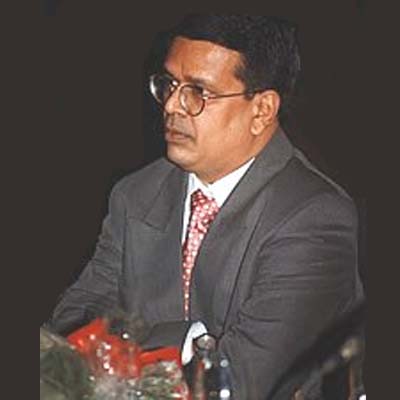
  • ‘Trai has come up with the correct CAS economics’ : K Jayaraman – Hathway Cable & Datacom MD & CEO

    ‘Trai has come up with the correct CAS economics’ : K Jayaraman – Hathway Cable & Datacom MD & CEO

    The Telecom Regulatory Authority of India (Trai) has laid out a fertile ground for digital cable TV take off. The formula is simple: price everything low and large volumes will create a viable market dynamics.

    India has seen it in mobile phones. The lessons will repeat itself in the television industry. Despite the initial blip, the industry will correct itself and grow as at the centre of this pull of gravity rests the consumers.

    Broadcasters are not in tune with this logic. Their programming costs are rising. So why not let them have the freedom of pricing their products?

    The cable operators, along with the consumers, are in love with the a la carte pricing of pay chanels at a maximum of Rs 5. The multi-system operators (MSOs) feel that a new business model is being set.

    In an interview with indiantelevision.com‘s Sibabrata Das, Hathway Cable & Datacom managing director and CEO K Jayaraman argues how every stakeholder will eventually stand to gain. The a la carte pricing will make digital cable popular while the revenue share across the value chain has been “very accommodative.”

    Excerpts:

    Do you agree with what the Telecom Regulatory Authority of India (Trai) has fixed as the price and revenue share under conditional access system (Cas)?
    The regulator has come up with the correct economics. Consumers will have choice and at a real affordable cost. The a la carte pricing of channels at a maximum of Rs 5 in Cas areas will increase the penetration of set-top boxes (STBs) and drive in volumes. The revenue share allocation across the value chain is also very accommodative. Broadcasters will get 45 per cent share and have access to advertising revenues as well. While multi-system operators (MSOs) will have 30 per cent and carriage fee, local cable operators are also given a fair share with full revenue on the free-to-air (FTA) package and a 25 per cent share on pay channel revenues. Also, the government will get more tax revenues.

    Broadcasters complain that the maximum price of Rs 5 per channel is too low and doesn‘t take into account their high programming costs.
    When subscription becomes transparent, the rate has to be low. For digital technology to take off, we need such a price regulation. Let us face the reality: these are the consequences of a new environment and a change in business model. Besides, the price regulation is only for one year. Free market will prevail and price will be discovered eventually.

    With a la carte pricing, cable bills are expected to drop. How will falling ARPUs (average revenue per user) affect the cable companies?
    Nothing can be worse than the current model. But under Cas, we will, at least, have a legally sanctioned revenue, albeit lower. No doubt we will get a Hindu rate of return. But we will not have under-reporting of subscribers. We are happy that a proper business model is being set. Revenues Will grow once the business model settles. Everybody will be on the move. As consumers have choice, broadcasters will have to worry about pricing their channels correctly within a maximum of Rs 5. If they do that, then MSOs can also make money. We will have to focus on providing quality cable TV service. If we don‘t do that, we have competition from direct-to-home (DTH) service and will face threat of being wiped out.

    Cable companies will also have to subsidise the boxes. Do they have the resources to absorb subsidy costs and still scale up?
    All of us will have to be in investment mode because the business model is changing. The initial subsidy on each box will work out to Rs 1,500. This is the price we have to pay for a change in the business model. But this can be squared off once it settles down. The price of STBs will fall by 15-20 per cent with a surge in volumes. Cable companies will have to raise resources, either through debt or equity. For those who can‘t, survival will be tough. The telcos like Reliance Infocomm are waiting to step in. We should be prepared for a high volume, low margin game. Distribution, initially, is a volume business.

    Won‘t your traditional business from non CAS areas be a support?
    Yes, we will have other businesses to run: internet, non CAS placement fee, ad revenues from local cable channels. We will also have carriage fee from FTA channels in a CAS system. For cable companies to cover up their overhead and variable costs (STBs), they will have to do other related businesses.

    A la carte pricing will drive down our ARPUs. But we are happy that a proper business model is being set

    Like having a well-rounded revenue stream?
    If you are a composite cable company, you will survive. We will have to provide video, voice and data through a common pipe. Standalone players will have a tough time. We, for instance, are preparing to launch voice over internet protocol (VoIP) services by the last quarter of this year. Test runs are currently on. We are also be aggressively pushing digital cable TV in non CAS markets. We recently launched in Jalandhar, having rolled out our digital services earlier in New Delhi, Mumbai, Pune, Bangalore, and Hyderabad.

    Do you see DTH having a perceptional advantage over cable?
    DTH platform providers are well capitalised and have a more long term vision. Their ARPUs can also settle higher as they better their products. But they have a huge variable cost in occupying transponder space. Cable companies, in contrast, have already made the investments and have low operating costs. Of course, now they will have a variable cost towards procurement of boxes. But they have an existing relationship with customers and cable is two-way enabled. Digital cable can also offer more channels. Composite cable companies with focus on multiple revenue streams can effectively fight DTH.

    How are you planning to infuse capital to fund digitisation?
    We will raise Rs 1 billion as debt to fund the first phase of CAS The bulk of the investments will be towards subsidising the STBs. Funding will also be required in setting up VoIP and expanding broadband infrastructure.

    Is it a good time to acquire last mile operators?
    If cable companies have the resources, acquisition of last mile will make sense. In the CAS areas where you have an administered price regime for one year, the payback period will be longer. But once the price is market-based, then recovery will be faster as more channels come under the pay system and people start subscribing to them. Even in non CAS areas, acquisition will provide size upon which a digital platform can be built later. But in case of Hathway where we have limited resources, we would rather put the money in placing more STBs.

    Will Valuations of cable companies go up under CAS?
    CAS will bring some semblance of order into the business. But it is a long term roll out and needs cash flow. What is more important is that cable companies will attract capital, whether in the form of equity, debt or convertible bonds.

    Will there be a consolidation in the industry?
    Consolidation will happen wherever digitisation is required because of new technology and service requirements.

    Zee network‘s Wire & Wireless India Ltd (WWIL) is planning to launch a headend-in-the-sky (Hits) platform and has expressed intent to make inroads into south and western suburbs of Mumbai. Do you see territorial warfare among MSOs returning?
    Hits is right now viewed more as a fashion statement. We are delivering digital without having Hits. If it is necessary, then everybody will do it. As far as poaching of operators go, it is an open ground. Cable companies who focus on good service and have capital to create capacity will turn out winners. Competition is not a one-way street.

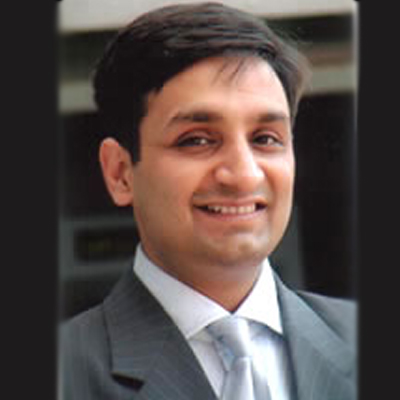
  • ‘We will be a Rs 5 billion company by 2008’ : Atul Goel – E-City Ventures CEO

    ‘We will be a Rs 5 billion company by 2008’ : Atul Goel – E-City Ventures CEO

    His is a tale that is not just about multiplexes. E-City Investments and Holdings chief Atul Goel is hooking up a film exhibition, distribution and digital delivery business.

    At the centre of this game is the multiplex business. Fun Multiplex Pvt Ltd is on a massive scale up exercise, planning to ramp up from 23 screens to 150 by FY08 while acquiring 100 single screens to gain a pan-India presence.

    E-City Digital Cinemas will deliver movies to theatres via satellite as well as hard disk in a format that operates on low margins but is profitable. Being part of the Essel group, it will use the Essel Shyam facility at Noida near Delhi which is also utilised by Zee for uplinking its channels.

    Goel recently got IL&FS to invest Rs 1 billion for a 26 per cent stake in E-City Entertainment, the hived off entity that handles real estate development. His next big target: a combined turnover of Rs 5 billion by FY08.

    In conversation with Indiantelevision.com’s Sibabrata Das & Bijoy AK, Goel unveils the expansion plans he has chalked out for E-City.

    Excerpts:

    Why did you decide to hive off the multiplex and real estate businesses into separate companies?
    The best way to attract investors is to divide the two segments of business. They can enjoy their own valuations and investors. For instance, the investors in real estate may not necessarily want to take exposure in the multiplex business. We got Infrastructure Leasing & Financial Services Ltd (IL&FS) to pick up a 26 per cent stake in E-City Entertainment, which handles real estate development like setting up malls, for Rs 1 billion.

    Are you in the hunt for an investor in the multiplex business as well?
    Fun Multiplex Pvt. Ltd. still needs to scale up as we ended the last fiscal with a turnover of just Rs 450 million and a net profit of Rs 60 million. We are planning to pump in Rs 2.5 billion and have 150 screens by FY08. We have already put in Rs 300 million. We plan to raise money in a debt-equity ratio of 1.5:1. Our target in FY08 is to have a total income of Rs 2.5 billion and operating profit of Rs 720 million by FY08.

    What makes you project such a fast rate of growth in two years?
    The revenues will come mainly because of newer developments. We have 23 screens and are opening up three properties this month. We, in fact, will be adding 10 more screens by 15 August.

    Do you see revenue growth also coming from increase in ticket rates?
    Pricing power will continue to be more a movie-based strategy rather than a rate hike in tickets across the board. In case of Krrish, we increased the ticket rates. We will also see the emergence of differential pricing for off-time shows. We have, for instance, lowered the rates for early morning screenings.

    Multiplex operators are in a build up phase and Inox has even taken the acquisition route in Kolkata to enhance its pan-India presence. How are you planning to scale up your operations?
    We are also planning to take the inorganic route. We will be acquiring single screen theatres across the country. We aim to have 100 single screens by FY08. This will be in addition to the 150 multiplex screens we will have by then.

    The future trend could be special alliances between distributors and multiplex operators

    Multiplex operators have been made to pay more for premium film content by Yash Raj Films (YRF). When YRF asked for an increase in revenue share for the Aamir Khan blockbuster Fanaa, you took a hard stance. What made you compromise later?
    Initially, all the multiplex operators protested against the hike. But the unity didn’t stay and some of them went ahead to sign the new terms with YRF. Let me reiterate here that we were in a pure business deadlock and not a confrontation of any kind.

    Has YRF, with a lineup of Hindi blockbusters like Fanaa, Krrish and Kabhie Alvida Na Kehna, started a trend where film content distributors would push for higher revenue shares from multiplex operators?
    We are not in a position where we can take a hard stance against YRF. We have a business relationship going with them and are showing Krissh. The new terms are exceptional to YRF but with such high ratios, we can only break even. The future trend could be special alliances between distributors and multiplex operators.

    Are you in any such alliance with a big distributor?
    It is too early to carve out such relationships. In fact, we urge the distributors not to start hiking rates or getting into special relationships with certain multiplexes at this stage. The industry needs to scale up the infrastructure, there is an opportunity sitting out there. We should take measures that grow rather than kill the industry at this early stage.

    Have you taken a cautious approach in the film distribution business?
    E-City Films (ECF) has distributed Hindi movies like 36 China Town in Gujarat where we control 90 theatres. The market is fragmented and will take time to consolidate. Some companies are also acquiring some movies for distribution at unrealistic prices. We are cautious and have no plans to set up a film distribution outfit overseas. For international movies, our strategy is to distribute 10-12 a year. In the past, we have distributed Alexander (December 2004), One Dollar Curry (February 2005), Million Dollar Baby (March 2005) and Sahara (July 2005). Among ECF’s recently acquired movies are Astronaut Farmer, Babel, Miss Potter and Michael Clayton.

    Have you closed down your content syndication business?
    It is in a state of lull now, but we have revival plans.

    What are the expansion plans for E-City Entertainment after IL&FS has taken a stake in it?
    We are investing Rs 1 billion each for the Kanpur and Coimbatore properties. Lucknow will attract a further funding of Rs 250 million. We have already pumped in Rs 2.17 billion in developing four projects (Rs 600 million for Andheri in Mumbai, Rs 750 million in Lucknow, Rs 550 million in Ahmedabad and Rs 270 million in Chandigarh). We will have 10-15 properties by FY08. We expect our turnover to climb from Rs 210 million to Rs 800 million by then. As these are rental incomes, E-City Entertainment will always be a profitable venture.

    How are you funding these properties?
    We will be raising fresh equity. But we have not started talking with anybody yet.

    When is E-City Digital Cinemas starting satellite delivery of movies to cinema theatres?
    We plan to launch it by the end of this month. We will be using the uplinking facility of Essel Shyam at Noida near Delhi. Currently, the hard disk is physically distributed to the 22 theatres in Gujarat (we control 90 theatres there) which we have taken on long term hire basis. We are using Real Image’s encryption technology so that piracy is safeguarded. The movie is first converted into digital master using the telecine machine, after which it can be taken on to D5 tape or captured directly on the encoding server. After encryption and compression, the movie is uplinked to the satellite via transmission server and downloaded at the playout local server which is installed at the theatre. A digital projector is used for screening of the film. E-City Digital Cinemas will target A-class towns where the current net collections are over Rs 100,000 per week.

    How many theatres will have the digital system?
    We plan to digitise 500 screens by FY08. We have already acquired 30 cinemas including a few in Mumbai. The business operates on low margins and, on a turnover of Rs 300 million last fiscal, we have reached a break even situation. As we ramp up theatre acquisitions, we expect our revenues to touch Rs 2.5 billion by FY08.

    So will E-City Holdings go for an initial public offering (IPO) or will the different entities have separate listings?
    We haven’t decided anything yet. We have no IPO plans, as of now. But by FY08 the entire venture will be a Rs 5 billion company.

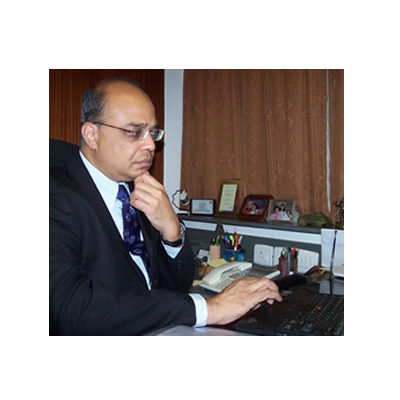
  • ‘Zee Telefilms to see ad revenue growth of 12 – 15% in FY07’ : Rajiv Garg – Essel Group CEO of corporate strategy and finance

    ‘Zee Telefilms to see ad revenue growth of 12 – 15% in FY07’ : Rajiv Garg – Essel Group CEO of corporate strategy and finance

    Cable and direct-to-home (DTH) is where Zee Telefilms Ltd (ZTL) chairman Subhash Chandra is planning to put the accelerator on. Wire and Wireless India Ltd (WWIL), the cable outfit, will enjoy an investment of Rs 5 billion to lay out a digital platform, gear up for triple play and expand in value-added services. And to fight Tata Sky in the DTH business, he will pump in Rs 2.5 billion over two years.

    Zee News Ltd. (ZNL), which will have news and regional channels under its umbrella, is looking at a turnover of Rs 2.5 billion this fiscal. The listing of these demerged companies is expected to be in September-October.

    In an interview with Indiantelevision.com’s Sibabrata Das, Essel Group CEO of corporate strategy and finance Rajiv Garg talks about the reasons for the demerger and the expansion plans of these separate entities.

    Why did Zee Telefilms Ltd (ZTL) decide to demerge its businesses into separate entities?
    The driving argument for demerger was that all these businesses had become big in themselves. Huddled together under Zee, they were not given the right strategic focus as the company was very broadcast-oriented. In cable, for instance, we felt that we were not doing justice to its growth potential. Also, in certain lines of activity the government regulations were impinging upon the growth prospects of the company. The idea was to see if we could create that focus and comply with the government guidelines. With so many technological advances taking place, we felt it was the right environment to carry this out. We decided to create independent governing structures and managements, delink cable from broadcasting, and put together certain news-bearing channels into an independent entity.

    Why was the direct-to-home (DTH) business housed in complex structures which did not allow for tax efficiencies?
    The idea was to provide specialist services in specific entities. As the competencies lay in them, the DTH business was spread across three outfits. Integrated Subscriber Management Systems Ltd, for instance, has an expertise in such areas like subscriber billing. Siticable has been negotiating content from the time the cable industry began in India. New Era Entertainment formed the marketing and ad sales arm. The aim was to create a revenue-sharing arrangement with ASC Enterprises Ltd (Ascel), the DTH license holder. When we did this structuring, there was no service tax applicable to the industry which was introduced later. We did not anticipate taxation developments to happen so quickly and cause financial inefficiencies. Besides, demerger will provide clarity of structure and add value to shareholders.

    Since regulation allows for a broadcast cap of 20 per cent, why didn’t ZTL hold stake in the DTH business?
    It would have happened in due course. We were in no hurry as we wanted to present the DTH platform as broadcast neutral. The internal intention was to acquire equity once the key relationships came in.

    What does the demerger process in the DTH business involve?
    In the first stage, Siticable will hive off its cable TV business into Wire and Wireless India Ltd (WWIL). The residual Siticable and its wholly owned subsidiary New Era Entertainment Network Ltd will then merge with Ascel, thus consolidating all the DTH operations under one company. Zee Telefilms shareholders will get 23 shares of Ascel for every 10 shares held.

    How did you arrive at this exchange ratio and why did you prescribe for a subsequent cancellation of shares?
    It is the independent valuer (Deloitte Haskin & Sells) who came up with this ratio. As for cancelling three of every four shares held in Ascel, this is to bring back the capital base to the pre-merger level. The paid-up equity of Ascel would have bloated to around Rs 1.66 billion after the merger, up from the base of Rs 411 million. This would have been too large an equity for a company of this size. So we wanted to compress the capital base. We could have given a predetermined base, but didn’t know the ratio the valuer would arrive at.

    DTH revenues will touch Rs 8 billion in FY08 as subscribers rise to 3.15 million and ARPU to Rs 310

    Zee’s operating revenues from the DTH line of business was Rs 818 million in FY06 while losses stood at Rs 790 million. What is the investment plan and how do you see subscribers and average revenue per user (ARPU) size up over the next two years?
    The net expense for DTH operations so far is Rs 3.8 billion. We are planning to pump in a further Rs 2.5 billion over the next two years. But we are sitting on a dynamic model and if Tata Sky and us are aggressively competing, there is a possibility of the subsidy amount further increasing. It is a factor of what strategies we adopt to develop our subscriber base. By the end of FY06, we reached close to one million subscribers. We project a gross revenue of Rs 3.2 billion in FY07 on a subscriber base of 2.4 million and an ARPU of Rs 250 (up from Rs 190) mainly because of the launch of value-added services. And in FY08, we see ourselves growing to a revenue of Rs 8 billion as subscribers rise to 3.15 million and ARPU to Rs 310.

    When do you expect to sign up with Sony and how do you see content growing?
    We expect Sony to happen within a month. Gradually, the content kitty is filling up. We are also looking at creating new DTH channels. Our plan is to expand to 200 channels.

    Will transponder space be a limitation?
    We will have to find space. We may have NSS when Doordarshan’s DD Direct vacates the satellite to move to Insat 4B. We are also talking to Isro (Indian Space Research Organisation) to launch a dedicated satellite for us.

    Are your Korean set-top vendors planning to set up a manufacturing facility in India?
    I don’t think it is viable at this stage. The volumes are too small for us to ask our STB vendors to manufacture in India. When we scale up to five million (boxes a year), then it may be a feasible project.

    Which do you think will attract investors first, the DTH or cable company?
    Both have attractive growth paths. We are looking at a mix of debt and funding coming from strategic or private equity investors.

    Are you looking at a small dilution initially of up to say 26 per cent?
    It all depends on what is the offer. Yes, if you initially dilute a small stake you have the advantage of discovering value as the company grows. But we have a flexible approach and it all depends on how lucrative the proposal is.

    Have you started talking to investors?
    We have been approached by many, but nothing is imminent yet.

    Will WWIL infuse massive capital towards digitisation of cable and triple play?
    We know the cable business has a lot of undiscovered value and will be giving it a big push. WWIL has a business plan which would take in an investment of Rs 5 billion over three years to drive digitisation, broadband and triple play rollout. It is a classic example of how the focus has been lacking and we have not taken advantage of the technology advances. We are looking at a million digital cable subscribers in the first year as we bundle service and hardware together in some form of subsidy. We also plan to make the network available to telecom operators for voice. Valuation of the cable business can only go up as the industry is badly suppressed. Conditional access system (CAS), digitisation and triple play will liberate the industry and growth in revenues can be rapid.

    How much debt you will raise to fund the expansion?
    We are looking at a debt-equity ratio of 1:1. The net worth of the company currently is not that strong to support that size of debt. We are, after all, planning to pump in Rs 5 billion to expand the business.

    What was the need for restructuring Zee News again?
    The restructuring started a couple of years ago when the uplinking guidelines were changed. Since we had a substantial foreign holding in ZTL, broadcasting of news and news-bearing channels were placed on a separate footing. Gradually as a response we shifted news gathering and uplinking to a separate company, Zee News Ltd, which was in compliance with the guidelines.

    But in the last few months, we have been mutilating this model as we found that there is a lot of strategic gap or clarity between the thinking of the producer (Zee News), the distributor (Zee Telefilms) and the team that exploits the commercial rights (Zee Telefilms) to such channels. So we thought we would close the gap and put everything in an entirely separate entity. All strategic decisions should be taken in an integrated manner by one team – be it production, news gathering, programme slotting, distribution or commercial exploitation.

    So what were the strategic gaps?
    The differences sprung because there was a revenue sharing arrangement between the two, but I can’t give you the minute details. It is not a good idea tactically to unite even if both of them are part of the same family.

    Zee news and regional channels had a combined turnover of Rs 2 billion in FY06. Were regional channels brought under Zee News Ltd (ZNL) because they could add to the company’s topline growth?
    The main reason for this kind of arrangement is that they are news-bearing channels; the regional channels have a strong component of current affairs and news programming. One of the consequences of this combination, of course, can be fattening of the topline. We are projecting a revenue of Rs 2.5 billion in FY07 and Rs 2.9 billion in FY08.

    As part of the restructuring, 137 ZNL shares will fetch 100 shares in ZTL. But with the total foreign shareholding in ZTL at 54.69 per cent, how does ZNL fall within the regulatory cap of 26 per cent?
    ZTL chairman Subhash Chandra will be transferring his foreign holdings (22.77 per cent is foreign promoters holding in ZTL) to an investment company in India. Also, foreign institutional investors (FIIs) will be given preference shares to bring the cap under limit (FIIs hold 31.51 per cent in ZTL).

    When are you planning the launch of Tamil and Malayalam language channels? How much are the new southern channel launches consuming as investments?
    The two channels should see launch in the current fiscal and in FY08. Along with the Kannada launch, the total investments would be in the region of Rs 350 million.

    With the demerger, won’t the topline of core Zee Telefilms see an erosion?
    Even after physically transferring the topline out, there is enough of a mandate to register growth. We have the number two and three (Zee Cinema and Zee TV) channels in the country. If they continue to focus on the products they have, their growth path is mandated. The flagship channel, Zee TV, is seeing a surge in ratings and ad rates.

    For core ZTL (after demerged businesses), we expect an advertising revenue growth of 12-15 per cent in FY07. While international business will sustain its 10-12 per cent growth (adding of channels and gain from Middle East), domestic subscription will stay steady. Overall, the core ZTL (after demerged businesses) will see a growth of 10 per cent in the current financial year.

    Will the bottomline look healthy after hiving off the loss-making businesses?
    The pullout is of minor loss-making businesses. The impact will largely even out as Zee News and the regional channels were profit-making. Still, there will be some positive outcome.

    How will Zee Sports play out on ZTL’s bottomline, particularly after bagging at a whopping price of $219.15 rights to 25 offshore cricket matches over five years?
    Zee Sports is at a development stage and there will be investments made for the long term development of the channel. There is a particular sequence in which we have to pay and the outgo for the first year will be $5.04 million per match. That will give us reasonable time to drag on the investments and build the channel. Besides, we will be bidding for other major sports properties including the ICC World Cup which is coming up for grabs.

  • ‘We are targeting a 50% growth in 2006-07 on the back of the Fifa World Cup’ : Sricharan Iyengar – ESPN Software India Ltd vice president sales and marketing

    ‘We are targeting a 50% growth in 2006-07 on the back of the Fifa World Cup’ : Sricharan Iyengar – ESPN Software India Ltd vice president sales and marketing

    ESPN Star Sports (ESS), a monopoly in satellite sports broadcasting for years, has found challengers like Ten Sports, Max and Zee Sports with cricket content being fragmented. The latest thorn in the playing field is Harish Thawani who walked away with the coveted four-year India cricket rights from BCCI (Board of Control for Cricket in India) for a humungous $612 million.


    For ESPN and Star Sports, the running in the current fiscal has been particularly tough. India-Zimbabwe series was the only India-playing cricket property ESS had. Market observers say subscription revenues from cable TV have seen a substantial dip, with various estimates putting the fall in the region between Rs 1.3 billion to Rs 1.7 billion.


    But ESPN Software India Pvt Ltd vice-president, sales and marketing Sricharan Iyengar has strongly dismissed these as “baseless rumours” in the market. According to him, the two sports channels have become strong brands which consumers want because of their all-round sports content. The company has managed to sustain its subscription revenues from cable TV operators, he says. Besides, direct-to-home (DTH) has thrown up an added opportunity even as Dish TV has managed to gather close to one million subscribers.


    In an interview with Indiantelevision.com’s Sibabrata Das, Iyengar talks about the important properties that ESS has for the next two years including the Fifa football World Cup. Responsible for overseeing the marketing and distribution functions of ESPN and Star Sports across South Asia, he says ESS has a target of 50 per cent growth in revenues for the 2006-07 fiscal. He also elaborates on how ESS has created a wholesome sports network while pursuing with aggressive buying of cricket rights.


    Excerpts.

    Having lost sizeable amount of India-playing cricket, has ESPN Star Sports (ESS) entered into a phase of de-growth in subscription revenues?


    We have been able to sustain our revenues in the current fiscal (ended June, 2006) on the back of other sports like football and hockey. We have achieved this despite the absence of key driver programming. The only India-playing cricket property we had was the India-Zimbabwe series, but we had to share it with Doordarshan. This shows that the ESS brand stands for delivering all-round sports. And it is this that makes us optimistic about the future.

    Does this mean that you will return to the growth path in the coming year?


    There is no reason for us to feel that the business is unhealthy. We are, in fact, targeting a 50 per cent growth next year on the back of the Fifa World Cup and two India-playing cricket series. Actually, for the next two years, we have 9-10 driver events one behind the other (including India-South Africa, India-England, Natwest, Asia Cup, India-Australia, VB series and Euro Cup). We see healthy growth from the hotel business as well which we started two years ago. The peripheral markets like Pakistan, Bangladesh and Sri Lanka are also expected to grow. Significant contributions will come from direct-to-home (DTH) with the new operator, Tata Sky, preparing for launch by the middle of the year.

    But isn’t it hurting to be off several cable networks like ICC in Pune?


    The de-activation rate is just 7-8 per cent. The fact is that the viewer wants our channels because we have a spread of content across sports. Which is why in DTH, we are charging Rs 40 per month on a 100 per cent declaration. That is the power of the brand. As for our contract with ICC, we had certain commercial demands which were not agreed upon. We have consciously sold DTH in Pune. There are 20,000 people who have bought DTH in that market. For all the hoopla about we not having cricket content, all this seems to be negotiating talk. There are short term bottlenecks, but these are taken care of by total market economics.

    So what are the goals you have set to achieve with the World Cup?


    We expect the strong content will provide us the handle to get our channels back on some of the cable networks where we were off and drive in higher revenues. Besides, it will help us reduce the average credit period in the market. With the World Cup, we will also start focusing in rural markets. We have packages for these operators – starting from Rs 3,000 per month. What we need to do now is sell them.

    How will you use the World Cup to drive your other football properties?


    We plan to make the World Cup bigger than India cricket. That, at least, is what we will strive for. The frenzy has to flow into the rest of the football properties that we have and drive in more viewership for the English Premier League (EPL) and Spanish League. The World Cup will create a bunch of new superstars who audiences will follow even after the event is over. Undoubtedly, the two leagues where these superstars will play are the EPL and the Spanish League. We hope to improve the stickiness for that kind of football as well. The big challenge for us is to exploit the World Cup in driving a new spike for football in future.

    ‘We should have marketed EPL and PHL five years back when we dominated cricket content. As market leaders, we should have used the opportunity to popularise multiple sports as drivers’

    How are you promoting and marketing the World Cup?

    Consumer interest levels are high and the World Cup offers us a brilliant marketing opportunity. On the content front, we have designed special line of programming as a build up to the event. We have already started from 13 April a 13-episode series that will bring alive the magical moments from World Cup performances of Pele, Maradona, Platini and others. Starting from 22 April, we have Fifa Marathon which profiles the past and the present stars, the teams who have and will make a difference at the World Cup.


    And from 3rd-24 May, we will show Fifa Preview, a series that will profile stars, coaches and also analyse each nation’s prospects against teams within their groups. Then there is a series of six half-hour programmes that will feature stories on the most surprising and shocking results in the World Cup. (Fifa Stories from 25 May-1 June).


    We are also doing contests around the World Cup. We have a tie up with Adidas for identifying nine kids who will be sent from India to carry the Fifa flag. We will invest heavily in hyping up the World Cup – even in pubs and public screenings. It is a big bang product for us and we will do extensive marketing around it.

    Is ESS’s entire focus now on shifting from a cricket-led to a wholesome sports network?

    A very large part of our focus is on how to develop alternative sports and generate viewership for properties like football and Premier Hockey League (PHL). The challenge is to diversify into more driver sports. Like in the US which has a love for baseball, basketball, American football and ice hockey. As our content has a wide spread of leading sports events, we have to create value for the entire network. While we are broadbasing our channels in other sports as well, we recognise the value India-playing cricket has in this country. We will continue to follow an aggressive policy of buying this cricket so that we can drive our channels to greater growth in future.

    Does that explain why ESS made a desperate bid to grab the India cricket rights from the Board of Control for Cricket in India (BCCI)?

    There was no desperate bid from us. We are not in investment mode. We made our calculations and believed we would have made a profit on the amount that we bid had we bought it at that price. Perhaps, startups like Zee Sports have their own strategies and feel that they need to be in investment phase.

    Why then did you revise your bid from $230 million (global rights including India) to $308 million and subsequently to $400 million (just for India territory)?

    Since our first bid, the rates have gone up and new revenue streams of DTH have emerged which was not there two years back when we made our estimate. Even IPTV is emerging on the horizon.

    How big is DTH today?

    With Tata Sky coming in, we will see quicker absorption of new technologies. This will expand the market size for addressability. Already, we have Dish TV claiming close to one million DTH subscribers.

    Have you concluded deals with any IPTV players?

    We are in talks with Reliance Infocomm, Bharti, MTNL and BSNL. We expect some form of IPTV to launch by the year-end.

    ‘The Chennai experiment has killed the market with just five per cent of TV homes watching pay channels. Given our Pune experience, it is ridiculous to believe that such a small TV viewing population is wanting to watch sports’

    Why do you think no headway is being made on the conditional access system (CAS) front which will speed up the rollout of digital cable TV?

    The CAS meetings have become shouting matches with the main aim being to paint the other side black. All are bothered about their own selfish interests. Nobody has a genuine industry perspective.

    What is the perspective you have?

    Unless each value chain works, the system will crumble. There is no joint interest in pushing the technology. As long as the transition is seamless, we do not have a problem. But it should not become a fiasco like in Chennai. DTH is not mandated. So why have a mandated CAS? The way we see it is that a vast majority of consumers in these CAS cities are happy in paying their cable bills for the services that they currently enjoy. There is only a small minority who want to buy less channels and reduce their cable bills. Let these customers be given a choice of migrating to CAS and buying set-top boxes to pay for the channels they want to watch. Why disturb the entire city and create blackouts?

    Aren’t broadcasters unnecessarily worried about the lack of infrastructure for the smooth rollout of CAS?

    The Chennai experiment has killed the pay-TV market. I don’t want to get into who is responsible but the fact is that we have just five per cent of TV homes watching pay channels. And given our Pune experience, it is ridiculous to believe that such a small TV viewing population is wanting to watch sports.

    Aren’t the cable operators better prepared this time for CAS rollout than in 2003?

    Well, the last mile operators are certainly more open about CAS this time because of impending threat from new technologies like DTH and IPTV. But there are other issues and the entire industry has to get together.

    Are you in support of the downlink policy?

    It is the government of India who decides the policy for the country. All we are saying is that we should know in advance what events are going to be shared with the national broadcaster so that we can work out our business model accordingly.

    Wouldn’t you prefer exclusive content which you needn’t share with Doordarshan?

    Yes, exclusivity would help drive our affiliate revenues better.

    But doesn’t it compensate with the advantage that you would have by selling advertisements for DD as well?

    The incremental ad revenue from DD may not be enough to offset the subscription revenue downside that we would have to suffer throughout the year if we are to lose exclusivity. Yes, downlinking policy is going to limit my business. But we are willing to live with it, no issue on that. All that we want is more clarity and we don’t want it with retrospective but prospective effect.

    Have you worked on minimum guarantee (MG) as a model to ramp up subscribers from cable operators?

    We have not used it as a business model across the country except in a few markets like Bihar.

    Would you support cable networks in markets where your signals have been de-activated or is this weapon blunted by the truce on the ground among the operators?

    We will definitely do all that is possible to remain the most widely distributed channel. This includes supporting new technologies, providing decoder boxes to new operators wherever we can, and funding free-to-air (FTA) headends.

    Is ESPN Plus ready for a commercial launch?

    We are toying with the idea of a third channel but have put it on experimental mode. We are yet to decide on what final shape it should take.

    What are the lessons ESS has learnt over the last few years which has seen the fragmentation of sports properties like cricket?

    We feel that we should have marketed EPL and PHL five years back when we dominated cricket content. As market leaders, we should have used the opportunity to popularise multiple sports as drivers.