Tag: Sibabrata Das

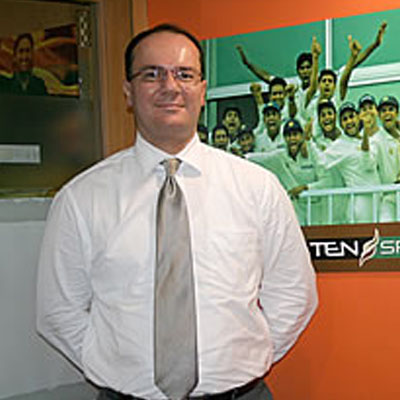
  • ‘Sports broadcast ad market to grow to Rs 7 billion this year’ : Rukin Kizilbash – Taj Television India GM

    ‘Sports broadcast ad market to grow to Rs 7 billion this year’ : Rukin Kizilbash – Taj Television India GM

    It has been a busy and somewhat testing time for Ten Sports. Last year Zee took a 50 per cent stake in its parent Taj Television while this year the channel has had to make do without any India cricket showcase. As a result, it has had to push other properties.


    Additionally, a plethora of cricket rights that it holds come up for bidding in the coming months. Indiantelevision.com’s Sibabrata Das and Ashwin Pinto caught up with Taj Television India GM Rukin Kizilbash to find out more.


    Excerpts:

    How has not having India cricket this year impacted Ten Sports?
    It has impacted us quite a bit. It is a fact of life that things are not as smooth without India cricket. For each India series you make in the region of Rs 700 million to Rs 1 billion. Last year, Ten Sports had one series. The year before, there were two.


    However our reach and GRPs have not been impacted. This is in part due to WWE (wrestling). Our reach is at 30 per cent.


    Next year should be better though as we will have India’s tour of Zimbabwe and Sri Lanka.

    But wouldn’t it be a crucial phase for Ten Sports as two prime properties – Pakistan and Sri Lanka boards – come up for bids next year?
    It will be a crucial 12 months for us as the rights for Pakistan, Sri Lanka and West Indies come up for renewal. But we expect to renew our contracts.

    Will the acquisition price for these rights shoot up with Sony back in the race and the others showing hunger to pocket more cricket properties?
    I don’t think that the acquisition price will shoot up drastically. India, after all, visits them just once in four years. So when you buy board rights, you basically buy one India tour. It is not like the ICC events where India always participates.

    Why is it that you recently bought the South Africa rights for just one year?
    We got the rights for South Africa and Zimbabwe for one year. We will hopefully get these rights for five years once the current period gets over. India visits South Africa in 2010.

    Is cricket saturated in terms of ad rates?
    No! We believe that the spot rate can keep going up. To give you a parallel, in the US a 30-second spot for the Super Bowl sells for $2.5 million. For us it sounds unbelievable but in the US clients like Budweiser and Microsoft are willing to spend $25 million on one match. They create campaigns just for that event. An India series costs $4 million to sponsor. So there is room to grow.


    We sold the India Pakistan series last year for Rs 350,000 for a 10-second spot. I believe that ESPN Star Sports sold the final of the T20 World Cup for Rs 750,000 per 10 seconds. The next India versus Pakistan series could see spots sold for Rs 500,000 per 10 seconds – or even more. Advertisers realise that India cricket is the only way to reach the entire country at one shot. Even the highest rated soap does not reach the entire country. Its primary audience is the Hindi belt.

    Which is why the sports broadcasting market is going to see ad revenue growth this year?
    We expect the sports broadcast ad market to be in the region of approximately Rs 7 billion this year, up from Rs 4.5 billion a year ago.

    Industry estimates Ten Sports’ ad revenue to be around Rs 600-700 million this year. Is this true?
    I can’t comment on our revenue figures.

    In terms of rates, how do India cricket series stack up
    against each other?

    India versus Pakistan would be number one, followed by the series against Australia. A series against South Africa would be third. Clients need India cricket to create a big bang. Also a lot of the ad rates depend on when a series is held. Is it coinciding with the summer season or Diwali?

    To what extent did T20 rejuvenate cricket?
    It turned the sport upside down. It is certainly worth a lot more from an advertisers perspective than a 50 over ODI. The ratings for the T20 World Cup were double what you got for the India Australia ODI series. There is a lot more viewer retention as it lasts for just three hours. The instant cricket that T20 offers fits in with today’s lifestyle.

    IPL and ICL will not get in each other’s way. One initiative is from the governing body, while the other is from a private player trying to boost the game’s popularity and reach. They can co-exist

    Have ratings gone up for other sports?
    Not substantially. There has been some growth though for tennis, soccer. Moto GP has also shown a decent jump. We have gone from maybe 0.2 to 0.4.

    And what about ad rates?
    We are seeing a surge in football. When we telecast the World Cup in 2002, we got an ad revenue of $2.5 million. We believe ESPN Star Sports got around $8.5 million this World Cup.


    The ad revenue you get from a non-India series like Australia versus South Africa is probably about the same as what you make for a season of Uefa Champions League.

    How do you view the opportunities for broadcasters to grow other sports in India?
    The opportunities are there for other sports to grow. Soccer, hockey, tennis are doing quite well, which we are trying to develop. Having said that, Indian cricket drives the sports broadcasting space. The challenge is to take the other sports on par with India cricket.


    We have to figure out how to deliver more TRPs and revenues from these sports. India will evolve from being a one sports nation but it will take time – and a lot of marketing effort from sports broadcasters to push these properties.

    Can you offer an example of a non cricket sports event that has grown through nurturing?
    A good example of nurturing is the soccer World Cup. The response it got last year surpassed all expectations.


    When EPL first started airing in India not many people were familiar with it. It has developed over the years due to sustained coverage. We will be doing the same with our properties including motorsports.

    What marketing innovations are being done by Ten Sports to push these events?
    We are doing an On Tour innovation. This is a six-month on-air promotion and the sponsors are Tata Sky, Idea and McDonalds. We take four contest winners each month for a different event. We started off in September with WWE in Paris. In October we took them to Kuala Lumpur for the MotoGP. This month is the Uefa Champions League and next month is Sri Lanka Cricket.


    In January, we will be featuring South Africa cricket. In February, there will be horse racing in Dubai. And we are marketing them in different ways.

    Do you see Olympics becoming bigger in India this time?
    I would rather say that the Olympics as an event was bigger in the 1970s and 1980s compared to now. For next year I have heard that ESPN is looking to air it, besides DD. If that happens then the event will get a bigger marketing push that usual. Still the fact that Indian participation in the Olympics as well as performance is limited means that interest will accordingly be limited.

    What are the rights you have recently bagged?
    We have bought the soccer rights to the Dutch and French leagues. We believe that if we nurture them they can over the next three years reach the status of EPL.


    In terms of upcoming rights, the Australian Open tennis Grand Slam rights are currently being bid for. Wimbledon rights come up next year.

    There is a trend of sports broadcasters doing long-term deals with a few clients. Is Ten Sports examining this route?
    No! We prefer to do yearly deals as we know exactly what is on our calendar. Also if you do a long-term deal, you do not know what the ad rates will be the next year and the year after that. You could be under-selling.


    Another issue is that if I say lock in Pepsi for three years, then I exclude Coca-Cola and who knows? Maybe next year Coca Cola ups their marketing budget and launches three new products. I miss out on that action. With long-term deals you run the risk of ticking off companies by blocking them completely off the channel. These companies will then be more than happy to hop on to a rival channel.

    How do you see the ICL and IPL faring?
    ICL will rock. At the moment there is some uncertainty as it is a new format. But once it starts, it will catch on in a big way. You have established names, good production values, good stadium facilities. There will be Bollywood glamour. So it will be a fun experience for the family.


    While it is early for me to say anything about IPL, I don’t think that they will get in each other’s way. One initiative is from the governing body while the other is from a private player trying to boost the game’s popularity and reach. They can co-exist.

    After acquiring stake, why did Zee decide to sell ads through Ten Sports for its own sports channel?
    We already have a dedicated ad sales team in place. We are selling ICL for them. We are selling it on air while they are selling it on-ground. Sometimes we package some of Zee Sports’ properties along with our channel. At other times like for Indian soccer, it is done separately.


    It also depends on the client. If say someone like an LG is spending Rs 10 million, he may want to split it between the two channels. So we work out a package. We have products that Zee Sports does not have and vice versa. So it helps us sell better. It is a joint effort in terms of sales.

    Are you looking at organising a sports event at a
    grassroots level?

    Yes! We are working with Zee. We have identified three sports and we are deciding how to go about things. We might create an event from scratch or we might associate with an existing one and take it to another level. Zee is working with soccer. ESPN is working with hockey. We too are looking at a sport.

    In terms of other sports, do you see soccer or hockey
    becoming a number two sport?

    It is difficult to say which will come out on top. Hockey has picked up with our recent win and the whole Chak De spirit. Unfortunately, we are not playing in the Champions Trophy. Hockey has had its ups and downs. In terms of soccer, the Champions League is taking off. Both sports will depend on how India fares at them. But currently, soccer is bigger than hockey.

    How is Ten Sports gearing up for new media? And is marketing on the mobile going to go beyond just SMS?
    We are planning to do this next year. We are talking with Idea and Reliance in terms of how to take this forward. We are looking for a bigger platform.

    You did a film innovation last year where you aired
    sports films. Are you planning more of the same?

    Absolutely! We are planning to have the next batch soon. It is a question of getting sports movies. We are currently showing a series Simply the Best. Each episode looks at a great sports person like Sir Donald Bradman, Jesse Owens. Mohammed Ali, Sachin Tendulkar.

    Is a one-sport channel like a Golf channel economically
    viable with new distribution platforms like direct-to-home emerging?

    I think that a couple of years down the line it will be. When DTH reaches 5 million homes, you will see niche channels dedicated to topics like cooking, golf, travel and action adventure coming up.

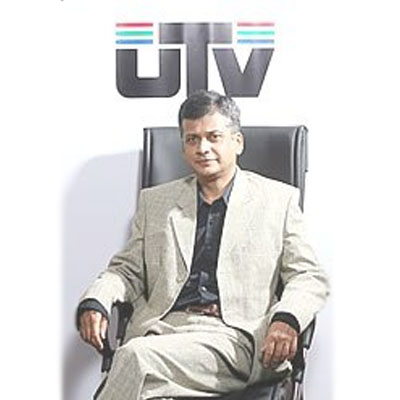
  • ‘Strategic investor will take stake in the broadcasting entity’ : Shantanu Aditya – UTV Global Broadcasting executive director and V&S Boardcasting CEO

    ‘Strategic investor will take stake in the broadcasting entity’ : Shantanu Aditya – UTV Global Broadcasting executive director and V&S Boardcasting CEO

    UTV is lining up nine channels and is planning to bet Rs 6 billion in it. The company is in talks with strategic investors to support its broadcasting venture which will be under the umbrella of UTV Global Broadcasting.

    The aim is to try and carve out a place in the youth and niche segments. The three TV verticals UTV wants to operate on are Genx Entertainment which will roll out the four youth-centric Bindass channels, UTV News for the business news channel, and V&S Broadcasting for movie and Hindi speciality channels.

    The company expects the Hindi movie channel to drive this bouquet of pay channels along with Bindass.

    In an interview with Indiantelevision.com's Sibabrata Das and Renelle Snelleksz, UTV Global Broadcasting executive director and V&S Broadcasting CEO Shantonu Aditya chalks out the road ahead for UTV's plans in the broadcast space.

    Excerpts:

    How is UTV arranging funds for the slew of nine channels it plans to launch?
    The total investment requirement for these nine channels is Rs 6 billion. While UTV will be investing Rs 1.5 billion as part of its contribution, the balance will be raised by a combination of equity at a premium and any other suitable instrument.

    Is UTV in talks to rope in strategic or financial investors?
    We are in advanced talks to get a strategic investor who will hold minority stake and come in at a premium.

    Will the strategic investor take stake in UTV Software Communications, which is the listed entity, or in the broadcasting arm?
    It will be in the broadcasting entity and not in UTV Software Communications. The broadcasting initiatives are under UTV Global Broadcasting. It has three wholly owned subsidiary companies – Genx Entertainment, V&S Broadcasting and UTV News Ltd. I wouldn't be in a position to comment on exactly where the investor is going to take a stake.

    Does UTV Software Communications have a stake in UTV Global Broadcasting?
    UTV Global Broadcasting is privately held. But this equity ownership arrangement could change after the investor is roped in.

    UTV had earlier announced that Genx, which would launch the Bindass channels, would be a joint venture with Astro as an equal partner. So is it that the three subsidiaries would be having different partners and still you would have an investor in the parent company?
    It is premature to discuss this at this stage.

    Is there a possibility of Astro picking up stake in UTV Global Broadcasting?
    As I said earlier, we can't comment on this at all.

    Will UTV News Ltd. have a separate structure as news channels uplinking from India come under a 26 per cent cap on foreign investment?
    We will abide by the current guidelines on investment in news channels.

    Speculation is that a group of Indian investors are going to invest in the news channel?
    We are speaking to a number of interested investors. It will be premature to mention any specific names at this stage.

    Will you be launching Bindass it in the first week of September?
    We will be progressively rolling out all the nine channels by mid-2008. Bindass, the youth Hindi general entertainment channel, will be up soon. This will be followed by Bindass Movies.

    Will they be pay channels?
    All our channels will be pay from the first day of launch. The first two channels are priced together at Rs 20 in non-Cas (conditional access system) and Rs 10 in Cas markets.

    'If you have a good acquisition and syndication strategy, you can build a successful Hindi movie channel'

    What are the other two channels to be launched by Genx under the Bindass brand?
    They will be in the regional space. Most probably they will be Tamil and Telugu language channels. But we are currently conducting research to support this.

    What are the four channels being launched by V&S Broadcasting?
    We will be launching a Hindi movie channel which will drive our distribution bouquet along with Bindass. We will have a world movie channel and there will be two Hindi speciality channels. We are also launching an English business news channel as we feel there is a considerable gap between viewer expectations and what they get right now.

    What are the scheduled dates for these channel launches?
    We are launching the World movie channel in November. The two Hindi speciality channels should be up in January and February. The business channel is targetted for a January launch and we should be ready with the Hindi movie channel in February.

    UTV had tied up with Palador Pictures for the world cinema venture with Olive as the brand. But with the split and Palador getting back all the titles, isn't it a setback for UTV?
    We have already acquired 150 titles and are looking at 300 at the time of launch. We will be screening the best of contemporary cinema and see a big opportunity in this. There are award winning titles and there are also good films from Bosnia, Iran and Argentina.

    Will high-priced DVDs be an important source of revenue and support system for this kind of cinema which will in any case attract niche audiences?
    We will have DVDs and theatrical release. We haven't decided whether we should go in for a high pricing or a volume strategy. But the channel has to drive by itself.

    How will you make a mark in the Hindi movie channel space when the existing players are entrenched, many more are on eve of launch, and acquisition costs are high?
    We are looking to launch with a bank of 300 titles, of which 50 films have already been acquired. The dynamics of the business is also changing. I see a syndication model coming into place and a lot of sharing of titles across channels. You may not see clean straight exclusive deals over a longer period as in the past. There will be a variety in the way you purchase movie rights.

    If you have a good acquisition and syndication strategy, you can build a successful model. Movie channels are platform agnostic and audiences are loyal to titles.

    While several broadcasters are eyeing the GEC space, why is it that UTV decided to foray into the niche genres of special interest channels?
    We have consciously decided to stay away from launching a general entertainment channel primarily because there has been a drop in viewership of 30 per cent in the Hindi GEC space in the age bracket of 15 – 35 years. The market needs segment-dedicated channels – and that is the domain we are entering into.

    Distribution of the new channels is a critical area. Have you set aside huge carriage costs?
    Carriage charges are a challenge. However, we have signed contracts with almost all the multi-system operators (MSOs) for our first set of channels.

    Have you stitched deals also with the direct-to-home (DTH) operators?
    I can't comment at this stage.

    Given the current media boom that the industry is witnessing, how are going to attract and retain talent?
    We have already recruited around 170 people for our broadcasting business. We are drawing in talent through a combination of compensation and stock options. Retention is a big part of our strategy.

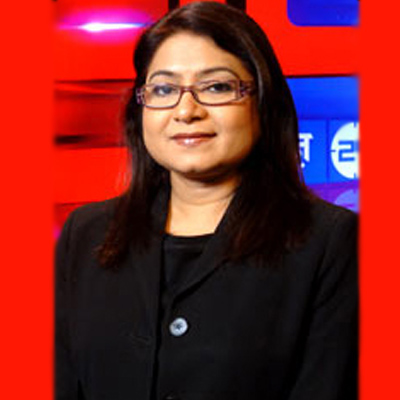
  • ‘Line between credibility and sensationalism is becoming thinner ‘ : Anurradha Prasad – B.A.G Films and Media Limited MD

    ‘Line between credibility and sensationalism is becoming thinner ‘ : Anurradha Prasad – B.A.G Films and Media Limited MD

    B.A.G Films & Media Ltd. managing director Anurradha Prasad has her plate full. Having created a long list of popular TV shows, she now has her eyes fixed on FM radio, TV channels, animation and feature films.

    The company has spun separate subsidiary outfits for each of these activities. The news channels will be housed under B.A.G Newsline Network while the non news broadcasting venture will be under B.A.G Glamour.

    FM Radio is under B.A.G Infotainment and is operating under the Radio Dhamaal brand while animation will be via a joint venture with Sieindesign Co.

    In an interview with Indiantelevision.com’s Sibabrata Das, Prasad talks of the changing face of news television with the growth of tabloidisation, the excitement of FM radio and her plans to create a vertically integrated media empire.

    Excerpts:

    Are TV content companies in India under compulsion to foray into broadcasting space as an effort to scale up their business?
    We can go on doing a service job and generate ratings for the broadcasters. But the fundamental problem is that we have no ownership of those shows. So how do we do a forward and backward integration? We were already doing a 360 degree of content; now we have decided to do a 360 degree of media. If we don’t do it now, then when will we? We have taken the organisation into a position of strength. Now is the time to take the leap.

    Is the decision to have control over your destiny a fallout of B.A.G Films losing flagship shows like Sansani as Star News decided to do it themselves?
    It had nothing to do with Star retrenching our shows. It was actually a two-way process and the pullout happened in May-June. We were actually contemplating on our future course of action nine months back and last December we took a call. Having done content, we had learnt a whole gamut of things and we decided to move from B2B to B2C. The things started unfolding when we bid for FM radio stations and created a new company structure. We did our first placement in January.

    Were you looking at a model like Balaji Telefilms where a broadcaster picks up stake in the company and you venture into TV channels space enjoying an assured content supply?
    That is a good business model as it provides a huge element of security. But we wanted to be on our own. Surely, we run a higher risk. But India today is all about challenges. If we don’t take that up right now, we will have slipped an opportunity.

    You mean to say that this is the right timing?
    Media is attracting huge interest and is going to rule the entire consumer process. The whole distribution rejig is also happening. Cas (conditional access system) is being made mandatory, direct-to-home (DTH) platforms are up. Other media vehicles like mobile TV and internet are emerging . The cost paid for distribution is going to drop.

    We have created tried and proven content. We have already set up an infrastructure and have the resource network in place. What we have to do now, and correctly, is marketing, positioning and distribution. For us, it is a very calculative challenge.

    In the broadcasting space, why did you decide to get into the news and lifestyle genre?
    For the last two years, there has been growth in these genres. And they have been eating into the audience share of the general entertainment channels (GECs).

    Are Hindi news channels growing at the cost of the GECs because of crime shows and tabloidisation of news?
    The drama in the news channels is an important driver for getting eyeballs because GECs are totally focused on women. As the GECs provided no alternative for male and young viewers, they went to news channels.

    Won’t it be tough as you are entering at a time when the news market is getting fragmented among 4-5 players?
    The competition is huge and in the process people are going to any level to grab eyeballs. They are expanding the viewership through non fiction entertainment and are getting only TRP-driven. But in the process, they have never marketed their product or channel; they have sold cheap. The truth is that you can have a large number of eyeballs, but you may not necessarily enjoy fat revenues. People who watch news channels are not necessarily what the advertisers want. The perception you have created is very important. Which is why NDTV may have less viewership than some of the competitors but enjoys more revenues than them.

    Isn’t tabloidisation the winning bet for grabbing audiences in the Hindi news space?
    The non fiction entertainment in Hindi news channels has created a new kind of TV. But there are no isms being followed and the editorial staff is getting edgy in this battle for TRPs. We started tabloidisation in India with the properties (Sansani, etc) that we created for Star News. But even in that space, nobody could question our credibility. That is getting lost, especially in the last two years. And some of the good properties which are getting created outside this, are not being marketed or sold properly.

    How could you establish credibility in this genre which thrives on sensationalism?
    When we did Sansani, it was the most credible crime show. We did research and stood by our stories. We provided all the drama but also reflected the interest of the people; several tantriks who were duping people were exposed. More than programming, it was the helpline that added to the credibility. When others took the crime genre, they never did justice to it.

    As a serious organisation which is in the business of news, you can’t be doing certain things which are not credible. That line between credibility and sensationalism is very thin. And it is becoming thinner because of the growth of this genre.

    Do you see this trend growing?
    The cost of making some of this kind of programming, particularly relating to ghosts, is cheap – and there is an audience for this. But I don’t see this going on and on. It is also a happy India that we are in now.

    We plan to make a combined investment of Rs 4 billion in our broadcasting business

    Will we see opinionated news in your network?
    We will carry the opinion of the people. We should have the guts to say whatever we want to say. Otherwise, why should we be in the news business?

    How much will you be investing in your Hindi news channel?
    We plan to make a combined investment of Rs 4 billion in our broadcasting business. We are launching four channels – two in the news space, one lifestyle and `Bliss’ which will be all about mind, body and soul. For the news venture, we are pumping in Rs 2.5 billion. While the first will be a general Hindi news channel, we are still strategising on the second one. We expect to launch the Hindi news and lifestyle channels in October-November. We are using the Insat satellite and have applied for a teleport licence.

    Are you diluting 25 per cent stake each in the two broadcast companies, B.A.G Newsline Network and B.A.G Glamour, to raise Rs 2 billion?
    I can’t comment on it.

    Are India Bulls promoter Sameer Gehlaut and Kolkata-based High Growth Distributors individually picking up 12.5 per cent in each of the two companies? Have you raised Rs 1 billion each from them?
    We are a listed company. We can’t comment at this stage.

    How different will the lifestyle channel be?
    We are trying to create a new space. It will be a celebrity-driven, aspirational channel.

    For the FM radio business, would you require to raise fresh capital in B.A.G Infotainment?
    Our fund requirement is Rs 480 million. We have offloaded 10 per cent in the subsidiary company to IDBI Bank. B.A.G Films is investing through internal accruals and we have also tied up debt. We are adequately capitalised.

    Are you in talks with foreign investors?
    We will launch our brand and grow the business. We will create value before we decide to go in for a further dilution.

    When will all the 10 stations get launched?
    We have already launched Hissar and Karnal. Patiala is coming up next, followed by Muzaffarpur, Ranchi and then Jalgaon. We should have launched all our stations by August-September.

    What is the strategy behind bidding for the stations in the northern region and the sugar belt of Maharashtra?
    We believe that the towns we have selected will push for the radio revolution that has come so late in India. And the cities we have selected in the northern region falls within one extended stretch of tourist belt. Ranchi is an upcoming capital while Jabalpur is fully Hindi. In Maharashtra, the sugar belt has money.

    Will your stations have a common distinct personality?
    The tagline is `Hila ke rak de.’ This is because the belt we have selected, particularly in the north, is high on energy. We have trained our RJs accordingly. We will be a mass-based station as we have to first get the radio culture in those places.

    What are the plans for the animation business?
    We have entered into a joint venture with Sieindesign Co, a firm which has a presence in the production, distribution and licensing of animation movies and TV series. We will see this segment growing.

    How do you see growth in the parent company which will house the TV and film production business?
    We will continue to do fiction programming for general entertainment channels as we see no friction there with our new lines of broadcasting business. The scope, in fact, will broaden as a slew of new channels are in the process of being launched.

    We have also launched an international show Yeh Vaada Raha for Ary Digital, Dubai available in Pakistan, UAE, USA and UK. This is our first step towards going international. We are also foraying into Bengali feature Films with Ami,Yaseen aur amaar Madhubala. Directed by Budhadeb Dasgupta, it is set for release in October. All these efforts should give us topline and bottomline growth.

  • ‘PPC plans to pump in Rs 5 billion over three years’ : Shailendra Singh – Percept Holdings joint MD

    ‘PPC plans to pump in Rs 5 billion over three years’ : Shailendra Singh – Percept Holdings joint MD

    These are busy times for Percept Holdings as it plans to build a strong growth engine in the entertainment space. The company has a war chest of Rs 5 billion and 17 movie projects are in pipeline. Talks are also on with Rupert Murdoch’s estranged heir Lachlan Murdoch to sell 30-40 stake in Percept Picture Company.


    Murdoch has already entered into a JV to form Percept Talent Management. Percept is also looking at scaling up its sports marketing business.


    In an interview with Indiantelevision.com’s Sibabrata Das and Ashwin Pinto, Percept Holdings joint MD Shailendra Singh elaborates on his ambition to become one of the top Bollywood studios in India.


    Excerpts:

    Percept has identified entertainment as an important growth engine. Inside entertainment, is it mainly movies?
    In communications, the margins now are pretty tight and competitive. We will continue to give it due attention as it is our bread-and-butter. But we want to also build strong pillars in media and entertainment. We have done on ground events, live shows and celebrity endorsements for the last so many years. We realise that we now have to be aggressive in the movie space as we spot dynamic changes in the marketplace.

    How much is Percept Picture Company (PPC) planning to invest in the venture?
    We are planning to pump in Rs 5 billion over three years. We have already lined up 17 projects and our investment over the next one year will be in the region of Rs 2 billion.

    Will Lachlan Murdoch pick up a stake to support PPC’s growth plans ?
    We are in talks to sell 30-40 per cent stake to Lachlan Murdoch. There is a strong possibility of an association as we share a strategic fit. We have already entered into a 50:50 joint venture with his company Illyria Pty Ltd (Australia) to launch a new initiative in the business of talent management. We believe Murdoch can provide a lot of strategic inputs. Historically, we have always been with partners for strategic rather than pure funding reasons.

    What is the brand of movies that PPC will be making?
    We make movies for all audiences and our ultimate goal is that in 2010 the consumer should identify our films as a PPC film. We want to catch everybody – from a six-year to a 60-year-old adult. That is because we make clean films. We have made a conscious effort that our films should not expose cleavages. India is a traditional society and we have to maintain our values.

    Which is why you have made movies like Hanuman for the kids?
    We have such a large kids population and yet we haven’t put our focus on kids films. So we made Makdee. Hanuman has the drama, romance and climax to succeed – and it did! We are now making a sequel to Hanuman.


    Our kids have been growing up on Disney and Hollywood. Is that fair? We have our own mythology, superheroes. PPC plans to come up with two animation films soon. Hanuman’s sequel returns and will be released in November 2007. The second is an international film that will be released in summer 2008.

    Have you locked up with different directors for multiple movies so that you can widen the slate of your offerings?
    We created challenging cinema not just for the kids but also for the metro urban audience. We made MP3, Corporate. We have also touched rural viewers and made movies like Malaamaal Weekly. There is a lot of strategic thinking that goes into filmmaking and it comes from the long years that we have spent towards understanding the consumer. Our relationship with firms like Airtel and Hero Honda among others, have helped us achieve this.

    Percept has been involved in 18 completed films that include Page 3, Corporate, Malamaal Weekly, Home Delivery, Traffic Signal and Hanuman. And the directors we have locked in for multiple movies include Nagesh Kukunoor, Priyadarshan and Madhur Bhandarkar. We lay a lot of focus on directors rather than on stars.

    The perception in the industry is that you hijacked Sahara’s movie business?
    Not really. We made our first film eight years ago called Pyaar Mein Kabhie Kabhie with newcomers. Then we made a movie called Makdee. We made Phir Milenge independently and then gave it to Sahara. When we were involved in the management of running Sahara One, anything that we did on the content side we gave it to Sahara. Even today, we are keen to offer Sahara the rights to movies like Hanuman (sequel) and Malaamaal Weekly (sequel) if they want it.

    But Sahara was left with no contracts with directors?
    Madhur Bhandarkar came to us because he shared a comfortable relationship with us. That is how this industry works. Sahara One’s movie business received a setback as they lost key people in the organisation to TV 18. And let me reinforce this again; we continue to enjoy a strong relationship with Sahara as an agency. They have been our client for over 13 years.

    Do you stick your neck out and make the cinema you believe in?
    There is a huge demand for quality and niche cinema. This is
    risky, but it also helps build a brand. The advantage we have is that we also own P9, an in-house marketing company. And we are not shy of partnering with our competition at this stage. We, for instance, had Adlabs distribute a movie for us. We know that we are playing a tricky game but this is the only way we can produce 12-14 films a year. It is crucial that we are successful at this stage. The ultimate aim is to own the entire value chain.

    Which is why you acquired Spiderman3 to spruce up your distribution?
    We had been waiting for the right product to launch our distribution business; Spiderman3 was obviously the most appropriate. Initially we will be concentrating on Hollywood films as we believe that there is a huge untapped market for them in India but in due course we will start pursuing Bollywood film distribution as an independent business vertical.


    The decision is completely demand driven. We believe that while all other aspects of cinema like production, marketing and even exhibition have seen radical changes in recent years, the distribution business continues to be as it was and we are confident that we will be able to make a big difference in this area. The unprecedented success of Spiderman3 is proof that effective distribution can really help create super success.


    Currently we have allocated well over $10 million for infrastructure development and acquisition of content for Hollywood and Bollywood distribution. We will be targeting all big Hollywood releases in the year.

    Are you getting into home video?
    We will be launching our home video label by late 2007. It will include all our films but we will be pursuing others as well. We are developing our plans at the moment but there is a likelihood that this could be an acquisition or a joint venture.


    The pricing today is competitive. We will keep our DVDs probably in the Rs 60 region. But our plan is to provide some value add; we will give more than a movie. And we are trying to provide a total solution. We recently bought two animation films and a South Indian film for a 360 degree distribution on all platforms. This shows that we have arrived as a brand. It is my dream that PPC will be that kind of a studio where people will see value in the knowledge that we carry as opposed to production details.

    Independent producers will not survive by making two films a year. Getting critical mass fast is the order of the day

    Are you planning to produce regional movies?
    We are in the process of setting up a joint venture with one of South India’s largest and most respected studios and that will give us an entry into the south Indian film industry which produces almost as many films as Bollywood.

    Since Sahara contracted you to run their entertainment business for a particular period of time, hasn’t this fuelled your ambition to get into the broadcasting space?
    Owning a channel is not on the radar. It is a tough business and needs years before it can turn profitable. We want to make content for broadcasters and, if asked, help run a channel. We want to be experts at creating content for all platforms whether it is TV, mobile, cinema. We have just launched our mobile content division.

    Is it fair to say that on the TV content side you haven’t made much progress?
    We were running Sahara One as management consultants.
    In the process, we produced television shows and launched a television division for ourselves. Due to our selfish interests, we only focused on supplying content for Sahara One. This included Shobhaa De’s chat and India’s first live game show. We did six shows for Sahara One. We also outsourced to other production houses.

    How has the experience with Sahara One helped you capitalize on the opportunity?
    For us, it was like taking a diploma course at Harvard. Our first task was to build a broadcasting image which was upwardly mobile and young. We changed the name of the channel, its look and logo. We then had to create content that the consumers wanted. This was tough as the channel was carrying a hangover of the past of Sahara Manoranjan.


    The second stage was to appropriately monetise the current library. We had to clean up several film contracts that were done before we took over. We had to do a lot of fire fighting.


    After that, we began a new era. We brought into our basket several films like Page Three. Sahara only lost money on Home Delivery.


    We also strategically launched Filmy and we created a unique space in a market where there was already a clutter of three other Hindi movie channels (Zee Cinema, Max, Star Gold with B4U not making much impact).

    The common opinion is that Percept gained at the cost of Sahara?
    The market cap of Sahara One has gone up after we took charge. Investors also came in.

    How do you plan to make a mark in the TV content business?
    We are getting back as far as TV content is concerned. The market thought that we are an in-house production company for Sahara. We had to change that perception. It took us some time to do that.


    To go big we need to get into formats. In India, we think of big ideas and execute small. We are trying to create formats that we can produce here and then get it exported globally.

    Do you see a studio system emerging?
    Absolutely. You will have six top studios including Yash Raj Films, Adlabs, UTV and PPC. You need the muscle to play the game. Independent producers will not survive by making two films a year. Getting critical mass fast is the order of the day.

    In the field of sports marketing, do you see any alternate emerging to cricket?
    There is no true second sport challenging cricket. I am confident that the sponsors, media and fans will bring cricket back.


    The issue is that when the World Cup debacle took place, people wondered if they should support other disciplines. Is putting all the eggs in one basket good for business? That thinking did happen. The BCCI should have had a chat with the sponsors to sort out the issues concerning the future of cricket.

    With stars like Sachin, Saurav, Dravid and Kumble probably retiring at the same time, how will it affect money coming in from sponsors?
    You create the next level. As brand marketers, that is what we do. You create Dhoni, Yuvraj Singh. The fans and marketers create the next level with the help of new talent that is seen as being cool.


    When we thought that Shah Rukh was God, Hritik came into the picture. Clients need to have brand consultants who will tell them that there is an age and a time to position yourselves in a certain manner.

    Are you looking at sports marketing for other sports?
    We are looking at soccer and baseball. We have identified four corporates and we are talking to them about the benefits of being associated with these sports. It is a tough task as the federations do not want it. The facilities at the stadiums are awful.

    Why baseball?
    Baseball is about a ball and bat. It is an American sport and we have a hangover for all things American. It is a throw ball sport and anyone can do it. The challenge is to make it commercially successful. We have bought some rights. We are looking at a 10-15 year programme which is interesting. We can play baseball in existing cricket stadiums at night. Infrastructure is not an issue.

    What are the expansion plans for Percept Talent Management (PTM) after Lachlan Murdoch has bought a stake in the company?
    PTM is the talent management wing of Percept Holdings. PTM will identify, acquire raw talent, and give them the much needed professional edge required to catapult their career into the big league. PTM will ensure that they provide effective and efficient turnkey solutions to their talents. I see huge potential for this business going forward. We will leverage the great depth of talent resident in India and abroad through this partnership with Lachlan Murdoch.

    How do you see yourself creating an entertainment empire? Will it rest on movie as the backbone?
    Entertainment is not just Bollywood. Cricket and Bollywood are huge in India. But there is so much more happening with the advanced technology these days – gaming, mobiles, retail, exhibitions etc. We will look at various opportunities based on our consumer research and feedback and look to providing services at various touch points. For example, Percept Holdings plans to bring a unique Bollywood experience (cafe, rides, Bollywood tours, 3D gaming booth etc) for Indian filmbuffs. We’ll offer a slice of what Brand Bollywood could be like in a 50,000-100,000 square feet area in Mumbai. We also have a separate vertical at PDM called PDM-Entertainment which will create and IPR new entertainment properties for clients.

  • Moser Baer entertainment business CEO Harish Dayani : Harish Dayani- Moser Baer entertainment business CEO

    Moser Baer entertainment business CEO Harish Dayani : Harish Dayani- Moser Baer entertainment business CEO

    Moser Baer is shaking up the home video market with its low pricing. While VCDs are available at Rs 28, DVDs are priced at Rs 34.


    Will the market dynamics change as new players like Adlabs hatch plans to enter the business?


    In an interview with Indiantelevision.com’s Sibabrata Das and Ashwin Pinto, Moser Baer entertainment business CEO Harish Dayani elaborates on how the home video market will never be the same.


    Excerpts:

    Why did Moser Baer decide to get into the entertainment and home video market?
    Moser Baer is the world’s second largest optical storage manufacturer. As we make 10 million discs a day, we have economies of scale. We can manufacture a disc at a price that not too many people in the world can match. Having such a strong backend in this form of business, we were somewhere in the commodity space. The obvious forward integration for us was to add content. In India, there is nothing like entertainment as far as replication on a product like a disc is concerned. This is where the whole thing started around a year ago – and we had the money to do it.

    When several home video players like Time have folded up, what made you think that Moser Baer could fix it right?
    We felt there were gaps in the industry which we could fill. The home video market is fragmented and has local players. We saw an opportunity in this to have a pan India presence. Distribution is another area that needed attention. Also, consumer branding is important.

    How did you take care of the content?
    We realized that if we were to be a major player, we needed to own content on a large scale. We acquired 7000 movie titles and have become the largest content owner, controlling one-third of the entire film production chain. We picked up content from different sources (including from Time). We decided to be the first company that deals with home video in all languages.

    Isn’t regional films a significant component of this?
    We have close to 1800 Hindi titles. The rest is regional – Tamil, Telugu, Marathi, Punjabi, etc. Besides, we have around 600 international titles sourced mainly from independent producers.

    But how do you source top content when the big Bollywood studios like Yash Raj Films have set up their own home video labels?
    We simply can’t. But there are many who don’t have their home video labels. And we ourselves will be in the film production business.

    Pricing seems to be an important strategy for Moser Baer. How much volumes do you have to reach to make this a profitable business model?
    People say that Moser Baer sells products at a low price. For us, price was the outcome of other factors; it definitely was not the starting point. Surely, we wanted to have a pricing that the masses would find attractive. So we priced DVDs at Rs 34 and VCDs at Rs 28. And it is not that we are operating under negative margins.

    When you start buying big Bollywood movies and have to pay a high content cost, will your operating margins not puncture?
    We have all kinds of movies. For me, a 1950 film is as important as Munnabhai as it will generate a certain amount of interest among a certain section of audience and be commercially viable. The concept of old and new movies are irrelevant. In terms of recent titles, we have films like Life Mein Kabhie Kabhie, Ek Chalis Ki Last Local. Apne has yet to come. We also have two films of Venus.

    How do you align with the international studios as they are already having exclusive distribution deals with the other home video players?
    We will be busy for a year with the amount of titles that we have. Even if we release 30 titles a day, it will take me over a year and I am not a magician. In terms of tying up with big international studios, the question is in terms of adding value. We are setting up our business. When we have established ourselves, then we can talk to other players with confidence and authority. We have to demonstrate how our business model works.

    How are you sprucing up your distribution network?
    When we were toying with the idea of entering into the home video market, we realized that we could have a strong backend but that does not necessarily make for a business model. Home video distribution, or for that matter the entire entertainment distribution, is wholesale-oriented. Entertainment firms have a few select group of wholesalers; what the wholesalers do after they get the product, nobody knows. We felt the need for a distribution network that is similar to an FMCG system. We wanted to have our own distributors spread across the country.


    Most home video businesses have 20-40 distributors across the country. We have 500. We feel that every town must have a distributor. We do not want to depend on a wholesaler in a large town who will cater to a small town. We tell distributors to give the product to retailers in their area. Entertainment product in this country is available in some 20,000 stores. Our product is available in 100,000 shops and we are just two months old. The aim is to take this to a chain of 300,000.

    What are the margins you are offering to the distributors?
    The wholesale distributor has a five per cent margin while the retailer enjoys a 25 per cent margin.

    Home video market is fragmented and has local players. We saw an opportunity in this to have a pan India presence. We decided to be the first company that deals with home video in all languages

    How crucial is branding as part of Moser Baer’s strategy?
    The myth in the entertainment industry is that people just go and buy titles at any price and it does not matter who is selling them. We want to break that myth. Our message is that Moser Baer is adding a lot of value in terms of the quality of manufacture. We have a certain image. It is not just Munnabhai MBBS; it is Moser Baer Munabhai MBBS. It is important that we reinforce faith in our product in the mind of the consumers.

    Will you have your own stores as part of the branding exercise?
    We have two – one in Pondicherry and the other in Ahmedabad. We will have 50 by the end of the year and 250 by the end of 2008.

    How has the deal with Pyramid Saimira helped expand your reach?
    Pyramid Saimira makes and distributes films. We have the first right of refusal for home video rights. They also have a chain of theatres and have deals with malls. We are looking at opening Moser Baer franchisee stalls there. Our products will be available in the vicinity where people come. We are also talking to tie up with other theatre and mall owners.

    Are you looking at entering the rental market?
    Firstly, this is an unauthorised business. If someone buys a Moser Baer disc for commercial exploitation, then it is against the law. We do not have plans to enter the rental business. However, we are not trying to discourage this. If somebody approaches us to do business with them, we would consider licensing our content.

    How about getting into alliances with broadcasters so that you can acquire wholesome rights?
    We look at satellite content only if we find that we are not getting the home video rights. Do I need to align with other players? If I have 7000 titles and another firm comes up to me and says that he also has 7000 titles, then we might join hands to tackle the market together. This way we can take our own decisions that would be best for us.

    What are the plans on the film production front?
    We have signed a co-production deal with filmmaker Anubhav Sinha for a basket of 12 movies. We have also signed up with Anthony D’Souza (Ishaan) and Priyadarshan. We are also negotiating with four big filmmakers. The first movie to kick off, though, is Shaurya.


    We will also produce movies that we will release for the home video market. This should happen sooner than later. We also plan to get into the film distribution business but at a later stage.

    Are you looking at producing regional language movies?
    We have signed with Prakash Raj for three films in Tamil and are also looking at other languages. Our eventual aim is to make films in all languages.

    How much are you pumping in for your entertainment business?
    We intend to invest Rs 5 billion over three years. A major chunk of this, of course, will be towards the home video business.

    With low pricing, what growth can we expect in the home video sector?
    Our estimate is that it would grow at four to five times the current size in three years. We want to have a 50 per cent share of this.

    Is the home video market dynamics up for total change?
    Will consumers look at our price and wonder why other titles from other firms are priced much higher? Possibly. That is for them to decide. Some players may charge higher but eventually the price will come down from where it is now for everybody. I don’t believe premium or popular content can command a three figure price. The home video business model will be viable for those who are able to stay around in it.

    You have moved into HD DVD. Won’t the conflict between the two incompatible formats Blu Ray and HD DVD prevent quick uptake of the technology?
    This is still five years away from happening in India. VCD players still dominate, though the number of DVD homes is growing.

    Does Moser Baer nurture ambitions of eventually becoming a studio?
    Consolidation is happening in the entertainment space across the globe. This will also happen in India. Corporates are entering into the movie business and aggregation is taking place. We are also trying to be in the different entertainment value chains.

  • ‘Higher price cap than Rs 5 would have allowed us to play within that float’ : Anuj Gandhi – SET Discovery president

    ‘Higher price cap than Rs 5 would have allowed us to play within that float’ : Anuj Gandhi – SET Discovery president

    SET Discovery has been riding high on the wave of ICC cricket for over four years. Having the ICC Championship and World Cup in a single year, the company is targeting a 40 per cent growth in turnover to end 2006-07 at Rs 4.5 billion.


    In an interview with Indiantelevision.com’s Sibabrata Das, SET Discovery president Anuj Gandhi talks of the challenges digital cable faces and how the distribution scenario would shape up in future to impact the pay-TV broadcasting business in India.


    Excerpts:

    Are you happy with the way Cas has rolled out so far?

    We are terribly disappointed. The multi-system operators (MSOs) were not fully prepared. Their systems were not in place and there weren’t enough set-top boxes (STBs). Some operators were even providing boxes without smart cards.

    MSOs say broadcasters created an uncertain environment till the end by approaching the courts. Isn’t it true that they got very little time for actual preparedness?

    There was enough indication that Cas would happen. We were challenging the pricing and not introduction of Cas. Broadcasters signed their contracts with the MSOs on time. Some local cable operators (LCOs) who were against Cas, moved the courts but could get nothing in their favour. If Cas has to take off, this blame game has to stop. All the stakeholders have to play their role.

    Is it a case of low consumer demand for boxes?

    That is a separate issue and, if need be, can be tackled with different marketing schemes. We are in a situation where the MSOs aren’t quite ready. There is lack of information flowing into us, the subscriber forms have not been filled up, and in some Cas markets analogue signals are available of popular general Hindi entertainment channels in prime time.

    Why then couldn’t this market substantially move to direct-to-home?

    DTH is more expensive. It has a higher entry price and there is no big subsidy on the STBs. Besides, DTH operators took time to service this market. With cable operators not capitalising heavily on Cas, we have lost an opportunity to create a build up for a massive ramp up in demand for STBs at the time of the World Cup.

    Will the World Cup drive a 40 per cent penetration in STBs as predicted by some positive analysts?

    We see the World Cup acting as a catalyst and expect the STB penetration to touch 45-50 per cent in the Cas markets. Only when we reach that level can all the stakeholders make money. Already DTH service providers Tata Sky and Dish TV have announced their schemes for the World Cup. MSOs should also be sorting out their issues and coming out with a plan for the big event.

    Is SET Discovery targeting a revenue of Rs 4.5 billion in 2006-07 on the back of the World Cup?

    We have set an aggressive target this year and are going to hit it. We will benefit from key cricketing events like the ICC Champions Trophy and the World Cup. Besides, we had cricket on Ten Sports. For the first time, we would be capturing revenues from DTH as we signed up Dish TV and Tata Sky during the year.

    Will Cas affect the business?

    In the overall scenario, Cas has a very limited number of cable and satellite homes. Besides, Cas has come into effect only in the last quarter of the fiscal.

    Do you see broadcasters dropping prices of their weaker channels in a bid to push sale of STBs?

    With a price cap on a la carte channels at Rs 5, it won’t make business sense to further drop rates. The whole justification for this is to have higher volumes. But we could have got the current levels of box penetration with a more liberal pricing.

    DTH growth for the last six months has been as we had expected. It is only digital cable numbers which have been disappointing

    Are you suggesting a price ceiling but at a higher rate?

    This would have allowed us to play within that float. We could have weighed the weaker channels, observed their relative strengths in the marketplace, and come up with a differential pricing while staying competitive. The whole subscription model at Rs 5 doesn’t give us scope for such pricing play and is unfair to niche channels. There is precious little that content providers can do and dropping prices would be bad for the MSOs as well. Besides, we haven’t yet got any billing data from the MSOs on the Cas subscribers to chalk out a strategy.

    Are you planning to take any action as the deadline has crossed?

    It should have come to us by 15 February, but we haven’t received any information from them yet. If we don’t get any feedback from them in the next few days, we will issue them notices as specified by the Telecom Regulatory Authority of India (Trai) in order to safeguard our interests.

    Trai is trying to push for voluntary Cas. How do you think this can speed up in other parts of the country?

    Digitisation is a reality but will take a while to happen. Cas has been a learning process and we have to evolve a phase-wise strategy for digitalisation. We have to fix a sunrise and a sunset date where we have to give adequate time taking into account availability of boxes, prices and investments by MSOs.

    MSOs are saying that broadcasters should be more understanding and not ask for more subscribers in voluntary digitalisation as the collection of money from the LCOs doesn’t improve. Isn’t entering into commercial agreements between MSOs and broadcasters crucial for the success of voluntary Cas?

    The analogue and the digital markets have to be distinguished. The MSOs can’t argue that they can’t recover money and so can’t pass it on to us. Then how will broadcasters make money from voluntary Cas? There has to be some incentive for broadcasters to push for digitalisation.

    In the newly notifuied Cas market, we are seeing a three-MSO play. Do broadcasters welcome such a strong wave of consolidation?

    There shouldn’t be a problem so long as the business is transparent. If there was one monopoly player emerging in the cable TV distribution arena, then it would have concerned us. Besides, the market is large enough for other players to emerge. And the independent operators who have aligned with the MSOs would continue to remain as franchisees. We don’t see them disappearing from the chain.

    Will carriage spread to new towns where Tam has expanded its reach?

    It is too soon to say how carriage will impact in Tam’s new panel. A lot will depend on how the channels are getting affected. The market has more or less stabilised. Broadly, however, as ratings towns get added, carriage will move there. But I don’t see budgets of broadcasters towards carriage really bloating. What would happen is that they would be picking and choosing the places where they want better placement and carriage.

    When do you see DTH significantly contributing to the kitty of the pay-TV broadcasters?

    It will take DTH a while for getting those numbers. But it has certainly started impacting the business because MSOs are having to think twice before blacking out channels so that they don’t upset their subscribers. And DTH growth for the last six months has been as we had expected. It is only digital cable numbers which have been disappointing, but we will soon see that changing too.

    SET Discovery will have no cricket to play with in the next fiscal while in the GEC space, Sony TV is dropping in ratings. How tough will it be for the company to post growth?

    Cricket, no doubt, is a big play in India. In a MSO market, you can still do with no big impact hitting us. But when you go down into the interiors, this is the only driver. We have grown rapidly for over four years on the back of cricket. We will try to maintain what we have and ask for realistic increases. But we have no channel as such that will make carriage on cable networks a problem; there is strength in our bouquet.

  • ‘Expanding home video relationships with the Hollywood studios into other areas will be a big ticket for us’ : Subroto Chattopadhyay – RPG Enterprises – Ent. Sector president and CEO

    ‘Expanding home video relationships with the Hollywood studios into other areas will be a big ticket for us’ : Subroto Chattopadhyay – RPG Enterprises – Ent. Sector president and CEO

    Saregama, India’s oldest music company, is in makeover mode. Having slipped into the red with a net loss of Rs 211 million in the nine-month period ended 31 March 2004, the RPG Group company has chalked out a five-year growth plan in music, movies, TV content, home video, events and digital formats.


    The man responsible for this new script: RPG Enterprises – Entertainment Sector president and CEO Subroto Chattopadhyay. The company has turned around and in FY06 posted a net profit of Rs 88.7 million on a turnover of Rs 1.19 billion.


    The focus so far has been to put in place the management bandwidth for running the businesses. Now it is all set to execute these plans and scale up operations as a content company available on all platforms.


    In an interview with Indiantelevision.com’s Sibabrata Das, Chattopadhyay talks of the efforts made to regain the grand old company’s status as a creative hothouse and of the challenges he faces in establishing Saregama as an entertainment powerhouse with stress on bottomline.


    Excerpts:

    How has Saregama managed to turn around after slipping into the red?

    We have put in place a five-year strategy. We have decided where to place our bets and where to withdraw. We, for instance, have taken a stance that we won’t get into owning radio stations. We have divided our businesses, are getting into adjacent areas and have identified touch points.

    What is the plan for the music business with T-series grabbing the lion’s share in acquiring rights to new Hindi movies?

    We have decided to be a content company in music and not a distributor of CDs and cassettes. We will create, acquire and make available to consumers music while remaining platform agnostic. We will be exploiting different delivery systems like mobile and radio. That is a positioning we have taken as part of our restructuring strategy. And we are buying music rights for new Hindi movies like Gangster, Bluff Master, Anwar, Kaliyug and Vivah.

    Have you tied up with the mobile and FM radio station operators?

    We are doing such deals through the Indian Performing Rights Society (IPRS) and the Phonographic Performance Ltd (PPL). That is a strategic decision which we took upfront. We have tied up with all the mobile operators. We also see upside in revenues from radio stations which would soon be springing up across the country. Out of our total revenues, 15 per cent comes from digital format. Our earnings from digital exploitation should go up. Digitisation is critical to our business model.

    What are your digital initiatives?

    We are launching an entertainment portal and it is likely to be called saregama.com. The aim is to make it the digital supermarket of entertainment. Consumers can download music and later on we will add movies. We are behind schedule by four months as we are adding many other features.

    How much of Saregama’s library is digitised?

    We have digitised 190,000 out of the 300,000 tracks we own. We will have the remaining content digitised and work on it will start by April-May. This process, in fact, has helped us discover our vast library. We, for instance, came to know that we have 30,000 tracks in Tamil. The challenge is for us to go out and make our products locally relevant.

    Valuations are too high at this stage for acquisitions. We are in the make rather than buy mode

    Saregama had stopped producing movies as it started losing money. Why is it making a re-entry?

    When we sat down and took stock of the company, we decided that we had to be on the content side of the business. We identified our second vertical should be films because it is adjacent to music. The ecosystem is changing and we believe technology will have an impact. The game will change dramatically and we won’t have to depend entirely on the current star-loaded model.

    What is the business model you are adopting?

    We have identified creative people to head the business. We have taken on board BR Sharan of Lalita-ji Surf ad fame and noted film actor-director Aparna Sen who will look after the Hindi and Bangla movies. We will be producing movies in these two languages initially. Bangla is a widely spoken language and the overseas population (including Bangladesis) is large. There is shortage of good content and we can create a business out of this market. Noted cinematographer Vijaylakshmi will also be involved.

    What will be the budget size and how many movies will Saregama be producing in a year?

    We may start with mid-budget movies and see how we can scale up along the way. We have just taken in the people and will be firming up the business plan within three months. We will try and build a financial logarithm to movie making. Our focus will be to make good movies with strong scripts.

    Saregama already produces TV content in the southern languages. Will you be expanding into Hindi as well?

    We produce 14 hours of programming per week for the Sun group of channels. We will be transferring that capability to the other languages. We have Sharan, Sen and Vijaylakshmi to take care of the TV content business.

    Saregama was in negotiations to buy controlling stake in K Balachandar’s TV content company Min Bimbangal, but the talks failed. Is there a conscious decision not to take the acquisition route?

    We are in the phase where we realise that capability build up is crucial to us. We were in the buy mode, but now have decided to be rather in the `make your own product’ mood. Valuations are too high at this stage and the overall company philosophy is that we make rather than buy. It is because of a mix of both these reasons that we are not acquiring.

    Do you have plans to ramp up your home video business?

    We are exclusive partners with some major Hollywood studios like Paramount, Warner Bros, Universal, Dreamworks and MGM for distribution of their home videos in India. We have access to 20,000 films and it contributes around Rs 250-300 million to our revenues. It is a nice business to be in. If we can expand our relationships with the studios into other areas, it will be a big ticket for us. We also distribute Hindi movies but our fundamental positioning in the home video segment is that we provide the best of international flavour.

    Moser Baer has entered the home video segment and drastically dropped down prices of VCDs and DVDs. How do you see that impacting the industry?

    We don’t believe in price drops as a competitive strategy if we can hold them firm. People, after all, buy content. They will pay more for better content.

    Will you be getting into event management as well?

    We will have a presence in this vertical as it brings consumers and entertainment together. Our broad plan is to be available for music, home video, theatrical, domestic and international consumers.

    Saregama was earlier thinking of merging its two overseas subsidiary companies RPG Global Music and Saregama Plc. Is that plan dead now?

    We are happy being in the state of status quo. Our focus is to first fix the business and create clean surpluses in each subsidiary company so that they become robust. We use them to deliver products to consumers in different areas of the world. While Saregama Plc focuses on the UK, US, Europe, Canada, Caribbeans and South Africa, RPG Global looks at Middle East, South East asia and New Zealand. And as India globalises, our subsidiaries will become good and strong.

    What is the status of HamaraCD.com?

    We are changing the positioning and it will become B2C. Consumers can place an order and we will get it delivered to them.

    How much will Saregama be investing for expanding its business?

    We will be firming up our fund requirement after we decide what we will make and what we will buy. We are evaluating our options and haven’t taken the decision yet. We have been busy cleaning up our operations and strategising to be in businesses where our performance not only becomes successful but also sustainable.

    Won’t Saregama forego a big opportunity by chalking out a slow process of growth while some media companies are taking an aggressive route?

    We have been funding our growth from internal operations and internal accruals. Our purpose is to keep tight control and make the businesses sustainable. Our ability to accelerate will be better two years later. We have not yet become a creative hothouse as we were earlier. We are preparing ourselves towards that. The entertainment industry needs management bandwidth to run the businesses. None of that was required in this industry earlier. But those days are gone.

    Will you not then be left with too little space in the marketplace?

    We will be moving fast in the areas of exploitation, music and cinema content. We have formed business units and are building competitive advantage and strategy for them. If those dots join up, then it will be very exciting for us.

  • ‘Investors are waiting for Cas to roll out before they come up with definite valuations’ : Ravi Mansukhani – IMCL director-in-charge

    ‘Investors are waiting for Cas to roll out before they come up with definite valuations’ : Ravi Mansukhani – IMCL director-in-charge

    Cable TV is in the midst of transition. We are seeing Cas being just implemented. Consumers are wanting set-top boxes (STBs) so that they can see their favourite pay channels. Multi-system operators (MSOs) are gearing up so that demand doesn’t outstrip supply. They know this is their last chance: if they don’t do it right, direct-to-home (DTH) will take over and they will become dinosaurs.


    In an exclusive chat with Indiantelevision.com’s Sibabrata Das, IndusInd Media and Communications Ltd director-in-charge Ravi Mansukhani discusses the dynamic changes taking place in the area of cable TV, the exciting prospects for digitisation, and the challenges that lie ahead as way of competition from emerging technologies.


    Excerpts:

    HTMT had earlier decided to consolidate its media businesses under InNetwork Entertainment Ltd (INEL). What made it change track and bring IndusInd Media and Communications Ltd (IMCL) as the umbrella entity?

    Suddenly the cable distribution business, which is with IMCL, has become big and is heading towards transparency under conditional access system (Cas). It has got a definite growth path now. That was not the case earlier and we thought we would bring everything under INEL which is the content company. The track has changed and content will sit on distribution. So we are merging In2Cable ( the broadband subsidiary) and INEL into IMCL. The parent company for the consolidated media business will be HTMT (an existing listed entity). The demerged IT/ITES entity will be listed under HTMT Technologies.

    While Zee Telefilms has demerged its media entity, your restructuring process is actually consolidating the media business. Is this because the different lines of media business are still having nascent revenues?

    We couldn’t have separated the different media activities as we don’t have size at this stage. We are only demerging the IT/ITES business from the media activities as we believe these have separate identities, will need independent focus, and can unlock value for the shareholders.

    Will HTMT (residual) also house the real estate business?

    The company will have the media businesses, Shop 24 Seven (shopping channel) and the real estate business. The demerger process is underway and a listing is expected by February-end after the restructuring process gets the necessary regulatory approvals.

    Isn’t this a strange mix for an investor in the company?

    There is some real estate property which was sitting there earlier in the company. Since we aren’t expanding on that at this stage, we are leaving it as it is. Real estate may become a play later.

    How much cash will be allocated towards expanding the media business?

    We will have Rs 5 billion for this. This will be used for new business initiatives, acquisitions and funding the expansion of the media and entertainment business.

    Like Zee’s Wire & Wireless India Ltd (WWIL), are you planning to make last mile acquisitions to expand your network?

    We are adopting a different business plan where we want to partner rather than buy out operators. WWIL, on the other hand, wants to acquire 51 per cent in cable networks. Our expansion plan includes offering to operators shares in HTMT (after demerger) as they form an integral part of our distribution chain. This will be based on the subscribers they declare. No decision has been taken as to the exact ratio that would be on offer.

    Will one share be issued to operators for every declared subscriber?

    We are working towards that.

    Do you think your strategy will be more acceptable?

    We have decided that is the best way to go forward, even in the non Cas (conditional access system) areas. By becoming shareholders, operators won’t perceive us as a threat. They can own their network while we make the investments on technology and digital cable. This way they can retain their customers, particularly as they face threat from DTH and other digital cable service providers. We are not exercising the buying option yet. If they want to sell, we may step in later. And by having ownership over the network, it would be in their interest to drive up ARPUs (average revenue per user) and launch value-added services.

    Will ARPUs fall?

    Initially, it will fall or stay flat. The subscriber ARPU in the Cas areas where we are operating is Rs 250. We see this going up to $10 (Rs 450) in two years and, perhaps, to $15 (Rs 675) in five years because of value-added services. Our topline is going to be rammed in the first year, but the bottomline is going to improve immediately as we will have an assured distribution margin.

    Would you prefer inducting a strategic rather than a private equity investor?

    We would favour a strategic than a pure financial investor. We feel inputs from a strategic partner would give us a competitive edge.
    But the possibility of roping in an investor would likely be after the listing of the two entities.

    We are not looking at customer acquisition via bouquet packages. For the ground to open up territorially for the MSOs, it will take time.

    Are investors keen to know about the content side of your story?

    Investors at this stage basically want to know our distribution plan. Our focus right now is on the distribution side of the business. Perhaps, by April we will have an investment plan for content and the other lines of media business.

    Have you initiated talks with global major Liberty which has shown interest in entering into India?

    There are a bunch of them who are interested in India’s cable story. But all the investors are waiting for Cas to roll out before they come up with definite valuations.

    Multi-system operators (MSOs) have announced bouquet packages. Do you see this as a price war to win consumers or local operators from rival networks?

    Our schemes are directed to make our existing consumers happy. We are not looking at customer acquisition via packages.

    Isn’t there a conscious effort to protect your turf from WWIL, which wants to poach operators to increase its thin presence in Mumbai, and DTH service providers like Tata Sky?

    We took care to offer a better quality package than WWIL or Tata Sky. We are offering six months of free subscription for consumers who have to pay just Rs 1500 (plus taxes) in the Cas areas. We are offering three bouquet packages – Star loaded (Sitara with 18 pay channels), Sony-led (Sona with 20 channels) and Zee-Turner (Zabardast with 35 channels). Under the STB rental scheme, we are offering the Optimiser package (Star and Sony bouquets) at Rs 120 (second TV set Rs 55) and the Super Saver scheme (Star, Sony and Zee bouquets) at Rs 190 (second TV set Rs 100). DTH has a high entry barrier as installation of the boxes are costlier than cable. And for the ground to open up territorially for the MSOs, it will take time.

    With WWIL intending to poach operators, do you have a truce on the ground with Hathway Cable & Datacom?

    We would like to keep the peace on the ground.

    With Cas already on, do you see a situation where demand for STBs will outstrip supply?

    We are confident of tackling it. We have in stock 168,000 STBs and have seeded over 40,000 boxes. We are installing more than 5,000 boxes a day. People are waking up as the pay channels are blacked out. We are ready to meet the surge in demand. We have also ordered for over 100,000 STBs from a Korean vendor.

    How keen are you to beef up the content side?

    We will put all our energies into distribution now. Once we have a solid distribution platform, then we are actually de-risking on the content front. We want to get into movie production and are looking at the distribution chain as well. We have earlier done movie financing and have funded around 14 movies from the current crop.

    Are you going to line up special channels for Cas subscribers?

    We are launching thematic channels without advertisement breaks. We have already started In Digital Premium which was made available first in Mumbai. It will also be seen in Delhi and we have movies in different themes – action-oriented, comedy and drama. We are planning to charge Rs 5-10 per movie. We will add more channels.

    What are your plans for CVO?

    The cable movie channel is highly popular and is licensed across 55 cities. But it has been stagnating over the last few years. With our distribution growing, it will bounce back into the growth path. We continue to acquire movies. Last year, we bought 150 movies.

    Revenues from cable internet and content have been depressed. How are you planning to promote your broadband business?

    We are revamping our broadband business. We will be aggressive on pricing. Our focus so far was on quality, not price. We never believed in LAN-based (local area network) internet. Now we will be doing that model. For the last two years, we concentrated on consolidating and upgrading our networks. Even we will start VoIP (Voice over Internet Protocol). We have this system connecting all our Hinduja offices across the globe. We will have to see how we can expand on that and launch commercially.

    What are your revenue projections this fiscal?

    We did Rs 1.6 billion last fiscal, with cable distribution accounting for Rs 1.38 billion, INEL Rs 170 million and In2Cable Rs 50 million. We are not sure how we would finally end up this fiscal as we expect the last quarter to be chaotic. But the topline should leapfrog by FY08.

  • ‘Cable ARPUs in Cas areas to touch Rs 400 in five years’ : Jagjit Singh Kohli

    ‘Cable ARPUs in Cas areas to touch Rs 400 in five years’ : Jagjit Singh Kohli

    Subhash Chandra is betting big on his cable TV business. Wire & Wireless Ltd (WWIL), the demerged entity of Zee Group, plans to invest Rs 7.14 billion over two years. A major chunk of this will be consumed by set-top boxes (Rs 3.28 billion) and customer acquisition (Rs 1.14 billion) as he attempts to hold grip in the distribution business.


    When WWIL gets listed sometime in January-February, investors will have a touch and feel of the valuation that cable business will enjoy in the digital era.


    Launching the aggressive drive, WWIL CEO Jagjit Singh Kohli says he has ramped up 250,000 customers at an average valuation pegged at Rs 2000 per subscriber. The ambitious target in year five: 9.6 million.


    In an interview with Indiantelevision.com’s Sibabrata Das, Kohli elaborates on the steps WWIL is taking to emerge as a leading multi-system operator (MSO) with plans to launch Headend-In-The-Sky (HITS) and STBs that have internet and VoIP (Voice over Internet Protocol) capabilities.


    Excerpts:

    Is WWIL close to roping in a strategic investor?

    We are in talks with both strategic as well as financial investors. They have shown interest in our business. We would go with anybody who gives us the maximum valuation.

    What is the valuation WWIL is now getting?

    The investors are discussing of valuations in the range beyond $600 million. Our expectations are higher. We are likely to get listed by mid-January or early February. The true valuations will come out then.

    Are investors valuing the cable TV business based on the number of subscribers or future revenues?

    In India, it is too early for a subscriber-based valuation. Investors are using the discounted cash flow method. The valuations are obviously based on our future target of touching 9.6 million subscribers. There are two reasons why we will get valued more: we are doing Headend-In-The-Sky (HITS) and we are using set-top boxes (STBs) designed by Pacenet which will offer multiple usages like internet and VoIP (Voice over Internet Protocol).

    MSOs will have to make major investments on STBs. Is it going to comprise as high as 46 per cent of your overall investments?

    We are planning to invest Rs 7.14 billion in the business over two years. For STBs, our fund requirement could be Rs 3.28 billion. We are planning to pump in Rs 2.21 billion towards hardware. Another area where we will be aggressive is customer acquisition. We plan to put in Rs 1.14 billion for this.

    What is the debt to equity ratio and how are you meeting the initial fund requirement?

    The ratio will be firmed up once we know the price WWIL quotes after getting listed in the exchange. That in a way will determine how much debt component we would require to raise. Our initial fund requirement is Rs 5 billion. We have lined up a debt of Rs 2.15 billion. We have already got Rs 500 million from Infrastructure Development Finance Corporation (IDFC).

    WWIL is on a drive to acquire customers. What is the price of acquisition?

    We are offering to cable operators a valuation of Rs 2000-3000 per subscriber. While WWIL will be a 51 per cent partner, the balance 49 per cent will be with the operators. We have already ramped up 250,000 subscribers in recent months through aggressive acquisitions.

    What is the average valuation for acquiring 250,000 subscribers?

    The average valuation works out to Rs 2000 per subscriber.

    Won’t you have to handle too many operators by doing JVs with them?

    We are making proposals to networks with decent size. In Mumbai, for instance, 12 local operators are creating a company and entering into a JV with us. We want to reduce the number of JVs. Otherwise, it will be impossible to manage.


    In some of our acquisition models, we make MSOs buy out the local cable operators.


    We have set a target of ramping up our direct subsciber base to 9.6 million within five years. We expect 7.6 million to receive digital cable. Our aim is to have 4.4 million through our own digital cable service and an additional 3.2 million through our HITS platform. We will have two million through analogue acquisitions. We have expanded operations from 35 to 43 cities. We plan to be in 66 cities in three years.

    WWIL has a thin presence in Mumbai. Even in the lucrative market of South Mumbai, which is a Cas notified area, you have a negligible presence. What are you doing to correct this?

    We have linked up optic fibre and have commissioned a digital headend a few days back at Worli. We will be in the Cas notified area of south Mumbai and several operators from rival MSOs are joining us. We have acquired control over 5 Star which operates in Andheri, a western suburb of Mumbai. We have also poached a few operators from Incablenet in Andheri East and others from rival MSOs are joining us.

    The average valuation of acquiring 250,000 customers works out to Rs 2000 per subscriber.

    How are you expanding your footprint in Delhi?

    In Delhi, we have acquired a 51 per cent stake in Satellite Channels. We have also signed up with Spectranet and Sanjay Cable Network. All these MSOs were disqualified for Cas as they were found not ready by the Telecom Regulatory Authority of India (Trai) for making the switchover to addressable system by 31 December. As for Kolkata, we are very much a dominant player after buying out Indian Cable Net (formerly RPG Netcom), a leading MSO, in May 2005.

    What is the price of the STBs?

    While the cost of the basic box is Rs 2000, the one with internet is Rs 2500 and internet plus VoIP Rs 3000. Customers can enjoy interactive games and online share trading through this. We are looking at a monthly fee of Rs 70 for internet and Rs 75-100 for movie-on-demand. Subscribers will have to pay Rs 1499 as deposit and Rs 45 as monthly rent. We haven’t, though, arrived at the final pricing. We plan to introduce the internet-enabled boxes after two months and those with VoIP sometime in April.

    Who are your STB vendors?

    We have Korean and Chinese vendors who will be supplying us the boxes. We have also ordered 200000 STBs from Bharat Electronics Limited (BEL).

    Earlier, in 2003 when Cas was to be introduced, Pacenet had ordered STBs from TVS Electronics. Why haven’t you included them in the list?

    We are also considering them. But at this stage it makes more business sense to import the boxes.

    Were you doing some tests with BSNL for VoIP?

    We were testing out whether our technology would work on BSNL’s network. The tests were successful.

    Is WWIL serious on launching a HITS platform or is it a mere hype?

    We are going to do HITS and have expressed our intent to broadcasters. This will provide us a national footprint and hasten the pace for digitisation in the country. We can tap cable operators even in places where WWIL has no presence. We have booked four transponders on Thaicom satellite with effect from 1 January, with the option of taking three more. We plan to launch HITS before the end of February.

    Do you see ARPUs (average revenue per user) falling in a Cas regime?

    For one year, it may come down. Let us not forget that cable TV rates have been suppressed for artificial reasons for too long. But by deploying STBs, this scenario is going to change. We may start off with an ARPU of Rs 250 per month, but like in case of cinema theatres with the launch of multiplexes, this will go up. By year five, we may be looking at ARPUs in the region of Rs 400.

    Hathway Cable & Datacom has come out with bouquet packages along with the a la carte choices. Will you offer something similar?

    We will be introducing a combo package where consumers who buy STBs on outright purchase and take annual subscription will be offered an attractive subsidy. This scheme will make available 100 TV channels. We will be offering under this at least 20 pay channels. We will be subsiding the boxes.

    Unlike DTH, broadcasters will have to make their pay channels available on an a la carte basis at a maximum rate of Rs 5 on cable networks in Cas areas. Will this mean that they will do content deals where they give their bouquets to MSOs at lower cost than to DTH service providers? Otherwise, MSOs can create bouquets picking and choosing the best channels and dumping the weaker ones in the bouquet.

    Yes. If broadcasters don’t do that, they will always be faced with the dilemma that the MSOs can pick and choose the stronger channels in their bouquet while ignoring the rest. The other reason why we should get better costs than DTH is because we have to share the revenue with the distributors and local cable operators across the value chain.

    How does cable compare with telecom operators in triple play service?

    Indian cable systems are ready to do telephony. They have pipes already laid including ethernet. The cable architecture throughout the country is in a position to provide triple play. All that is required is the box and IP can provide the return path for voice, data and interactive services.


    The public sector telcos, on the other hand, require strong compression technologies and ADSL2+ signals are good only for distances up to 1.5 km. The private sector telcos do not have a system suitable for large scale deployment and will require a high capital cost of $300 per line, even if we take the fact that their network is ready for IPTV (which is not the case). IPTV could have happened in markets where ARPUs are high. But India is not a high ARPU market.

  • ‘Trai has kept entry barrier low to make Cas acceptable’ : Nripendra Misra – Trai chairman

    ‘Trai has kept entry barrier low to make Cas acceptable’ : Nripendra Misra – Trai chairman

    The cable TV industry is on the cusp of change. The multi-system operators (MSOs) have chalked out plans to roll out digital cable, a transition that they believe will make their business models viable and add value to their networks.


    Perturbed by the cap on a la carte pricing of their channels at Rs 5, the broadcasters, on the other hand, have taken shelter in legal cases.


    Crucial to making Cas (conditional access system) a reality has been the role played by the Telecom Regulatory Authority of India (Trai). It has not only come out with a consumer-friendly tariff order but also made sure that progress is made by the MSOs on the implementation front.


    In this interview with Indiantelevision.com‘s Sibabrata Das, Trai chairman Nripendra Misra reiterates that digitalisation is the way forward. Cas will be implemented and even regulating direct-to-home (DTH) in areas of quality of service is on Trai‘s radar.


    Excerpts:

    How ready are the multi-system operators (MSOs) to implement Cas in the notified areas of Mumbai, Delhi and Kolkata?

    The progress is satisfactory and let there be no doubt in the minds of stakeholders that Cas is going to be implemented on the due date. There is no element of uncertainty. We already have reports of 10 MSOs (as of 16 December) having conducted the trial runs for testing out their digital systems under Cas. We want to be sure that there are no glitches in implementation of Cas and that the transition is smooth.

    In Delhi, Spectranet, Satellite Channels, Sanjay Cable Network and Star Broadband Services have been issued letters by the information and broadcasting ministry that they are not in a position to switchover to addressable system by 31 December as they are not ready with the digital systems including headend, Cas and set-top boxes (STBs). What is the action Trai has taken?

    There are four networks who we found are not in a position to roll out their service. We have asked the other MSOs (Hathway Cable & Datacom, Incablenet, Wire & Wireless India Ltd. and Home Cable Network) to step in so that consumers falling under the Cas belt of Delhi do not suffer blackout of their cable TV service. We are constantly monitoring the progress made by the MSOs.

    How many MSOs have applied for licence and got approval to operate in the Cas areas?

    There were 21 MSOs and five more applied later. Our focus is on 21. Out of this, as I told earlier, 10 (as of 16 December) have started trials.

    Estimates are that there are around 1.2 million cable & satellite homes in the Cas areas. Have the MSOs brought in adequate number of STBs?

    There are already a total of over 300000 boxes available with the MSOs. It is tough to estimate the exact number of C&S households in the Cas region. The whole cable TV industry is marked by high levels of under-reporting of subscribers. But supply shouldn‘t be a problem as the MSOs say that they can quickly import the STBs in case of demand. Their argument is that they shouldn‘t be stuck up with investments if Cas, for any reason, doesn‘t pick up. We expect 40 per cent of analogue subscribers converting into digital. That apparently is in line with the global trend. Digitisation is a way forward and consumers falling under the Cas notified areas should start ordering for STBs from now so that there is no crowding towards the end.

    What gives you the confidence that Cas will take off this time?

    Unlike in 2003, we now have a broadcast and cable regulator in Trai. We have kept the entry barrier as low as possible so that Cas can get accepted by everybody. Consumers also can select individual channels and we have fixed a price cap on a la carte channels at Rs 5. The tariff order also means that STBs are available on rental schemes with a fixed deposit amount (Rs 30 per month on a deposit of Rs 999 and Rs 45 for a deposit of Rs 250). Besides, this time there is competition from direct-to-home (DTH) with DD Direct, Dish TV and Tata Sky already offering their services. In fact, we have found medium-sized MSOs in some non Cas areas investing around Rs 15 million on diogital headends so that they can compete against DTH.

    The average monthly bill for digital cable TV subscribers will not see a sigificant drop as they will be loaded with an entertainment tax of Rs 45 (other areas different), Rs 45 as rent on the STB (if they pay a deposit of Rs 250) and a service tax. Add to this a payout of Rs 77 on free-to-air (FTA) channels and there is a slim chance of lowering down the bills. Would you agree?

    We shouldn‘t be talking of a system where we do not pay taxes. The taxes are applicable even under the current system. That is no way to calculate the cable TV subscription rates. Consumers can now pay as little as Rs 5 for the channel they want to see and limit their bills.

    ‘Regulating DTH in the quality of service area is certainly on our radar

    Will the rental schemes attract value added tax (VAT)?

    Yes. In any case, taxation is not a subject which falls within the purview of Trai.

    Consumers complain that costs will go up as they have to pay for the second TV set as well?

    We have decided not to regulate on the concessional rates for the second or more TV sets. Market forces should take care of that – as has been happening now. In any case, a large percentage are single TV households. We shouldn‘t regulate wherever we can, but only in areas where there is need.

    How long will this price of Rs 5 and a minimum subscription commitment of four months for any channel last?

    We are open to taking a relook at this. As we determined on a price as low as Rs 5, we also decided to balance it by asking consumers to subscribe a channel for at least a period of four months. After six months, we intend to first assess whether a review on the pricing and other related issues is necessary at all or not.

    Are you looking at coming out with some kind of regulations for non Cas territories?

    We are considering if we should step in and regulate the non cas areas so far as quality of service is concerned.

    Will Trai try to encourage various modes of digitalisation?

    We have a forward-looking approach. We generally feel digitisation is the road ahead. Besides mandated Cas, we are looking at voluntary spread of digitisation across all technologies. We will be having a serious of discussions from January-June. The first round table kicks off on 27 January. There are various alternatives – DTH, Cas, IPTV. We will be having a series of regional meetings where we want to discuss and review all these things. Then we will send our recommendations to the government.

    Is Trai going to regulate DTH as well?

    Perhaps, we need to look at regulating DTH in the quality of service area. It is certainly on our radar. As the DTH base grows, subscribers need to be protected. But DTH is at an infant stage and it may be too early to regulate it like cable. Let us not forget that cable TV has grown in India so far as an unorganised industry.

    As the DTH base grows, subscribers need to be protected. But DTH is at an infant stage and it may be too early to regulate it like cable. Let us not forget that cable TV has grown in India so far as an unorganised industry.